[Research Contribution] Sustainable Development – A Multidimensional Perspective on Happiness
10 October, 2025
Keywords: National Happiness, Sustainable Development, Asia-Pacific, Environment; Education; Economic Freedom; CO₂; Access to Electricity.
Facing the pressure of converging crises, including ecological, social, and economic challenges, GDP is no longer a sufficient measure of society’s expectations for a happy life. The study “Sustainable Development – A Multidimensional Perspective on Happiness” by an author from the University of Economics Ho Chi Minh City (UEH), analyzing 24 Asia-Pacific countries from 2014 to 2022, emphasizes the harmony among the three pillars of economy, society, and environment in the process of sustainable community development.

What is the Measure of a Nation’s Prosperity?
For many decades, GDP and other macroeconomic indicators have been considered the primary measures of a nation’s development. However, the development reality in many Asia-Pacific countries shows that economic growth must be accompanied by an increase in the population’s satisfaction and quality of life. Challenges such as social inequality, environmental pollution, declining institutional trust, and the pressures of urbanization have increasingly exposed the limitations of a purely growth-based approach. Against this backdrop, national happiness has become a focal point in discussions on sustainable development strategies, viewed as an alternative measure that more comprehensively reflects well-being and quality of life. This approach aligns with international trends, as seen in Bhutan’s Gross National Happiness (GNH) framework and the United Nations’ Sustainable Development Goals (SDGs). Analyzing the determinants of national happiness has become increasingly important, especially in the Asia-Pacific region, which is experiencing both rapid growth and significant environmental risks, thereby bringing both academic value and practical implications.
The Endeavor to Discover the Secret of a Happy Nation
Using a research sample of 24 Asia-Pacific countries from 2014 to 2022, with data collected from the “World Happiness Report,” the author examines variables from the three pillars of sustainable development. These include the proportion of agricultural land, CO₂ emissions per GDP, access to electricity score, corruption ranking, education expenditure, life expectancy, domestic material consumption, and economic freedom, and their impact on national happiness. Using panel data models (POLS, FEM, REM), diagnostic tests, and estimation methods like FGLS and GMM to address errors and potential endogeneity, the research team aimed to test the relationship between sustainability variables and national happiness.
Agricultural Land: According to the Organisation for Economic Co-operation and Development (OECD), agricultural land is land that is arable and under permanent crops or permanent pasture, including temporary crops like cereals, meadows, vegetable gardens, and orchards. Permanent pasture is land used for five years or more for forage, including natural and cultivated crops. Additional environmental indicators include organic agricultural land and genetically modified cropland. This indicator is presented as total area and by type of agricultural land, measured in hectares and as a percentage.
Carbon Intensity: Total annual Carbon Dioxide (CO₂) emissions are measured in kilograms per dollar of GDP based on territorial emissions, excluding emissions from traded goods. Emissions from international aviation and shipping are not included in the emissions of any country or region (Our World in Data, 2024).
Access to Electricity: Access to electricity is the percentage of the population with access to electricity. Electrification data is collected from industries, national surveys, and international sources (World Bank, 2024). This definition serves as a benchmark for measuring progress towards Sustainable Development Goal 7.1. Access to electricity requires a household to have initial access to enough electricity to meet basic daily needs. The United Nations also applies the World Bank’s Multi-Tier Framework approach to electrification.
Corruption Perception Index: According to Transparency International, corruption is defined as the abuse of entrusted power for private gain. The Corruption Perception Index (CPI) is the most widely used global corruption ranking, measuring the perceived level of public sector corruption in each country, as assessed by experts and business people. A country’s score indicates the perceived level of public sector corruption on a scale of 0 to 100, where 0 is highly corrupt and 100 is very clean.
Education Expenditure: According to the OECD, education is a fundamental part of modern human society. The more accessible educational opportunities are in a country and the higher the educational attainment of its society, the greater its overall well-being. Public expenditure on education is the direct public spending on educational institutions as well as education-related public subsidies to households managed by educational institutions. Public entities include ministries other than the Ministry of Education, local and regional authorities, and other public agencies. Expenditure includes spending on schools, universities, and support for educational services. This indicator is expressed as a percentage of GDP.
Health – Life Expectancy at Birth: According to the WHO, this is the average number of years a person is expected to live in a state of full health, free from disease and/or injury. Life expectancy at birth is one of the most commonly used indicators to assess health status. An increase in life expectancy at birth can be attributed to several factors, including rising living standards, improved lifestyles, and better education, as well as greater access to quality healthcare services. This indicator is measured in years for the total population and by gender.
Domestic Material Consumption per Capita: According to the OECD, Domestic Material Consumption (DMC) is the amount of material (by weight) used in an economy. That is, domestically extracted or harvested materials, plus imported materials and products, minus exported materials and products. The data includes metals, non-metallic minerals (construction minerals, industrial minerals), biomass (wood, food), and fossil energy carriers. This indicator is measured in tons per capita. The DMC indicator assesses the absolute level of resource use and allows for distinguishing consumption driven by domestic demand from that driven by export markets.
Index of Economic Freedom: Economic freedom is the fundamental right of every human to control his or her own labor and property. In an economically free society, individuals are free to work, produce, consume, and invest in any way they please. In such societies, governments allow labor, capital, and goods to move freely, and refrain from constraining liberty beyond the extent necessary to protect and maintain liberty itself. In the Fraser Institute’s report (2003), the index of economic freedom is divided into five major areas: (i) size of government: expenditures, taxes, and enterprises; (ii) legal structure and security of property rights; (iii) access to sound money; (iv) freedom to trade internationally; and (v) regulation of credit, labor, and business. The most comprehensive indices of economic freedom currently available are the Index of Economic Freedom from The Heritage Foundation and The Wall Street Journal, and the Economic Freedom of the World from the Fraser Institute (Rok Spruk, 2016).
National Happiness Index: Gross National Happiness (GNH) is considered another measure of progress, rather than a monetary unit. In fact, the development of this concept is the result of a search for a more comprehensive and psychological indicator than GDP, and the GNH measure is an alternative often mentioned when discussing progress, quality of life, and/or social development (Giannetti et al., 2015). The use of GDP to measure a nation’s happiness has fallen out of favor worldwide. Both the United Nations and the OECD advocate for happiness as a government policy goal, which is an encouraging sign, with many organizations supporting the consideration of happiness beyond GDP (Rojas, 2019). The measure of Happiness not only assesses income but also people’s circumstances in terms of health, family, and other aspects of well-being, which are even more important than material possessions and money (Kaklauskas et al., 2020). Fanning and O’Neill (2019) have shown that average happiness significantly decreases in countries with falling per capita consumption, as measured by carbon footprints or gross domestic product (GDP). On the other hand, sustainability measures and happiness measures show a positive correlation, where happier countries are, on average, more sustainable (Fanning and O’Neill, 2019).
Key Findings, Proposals, and Recommendations
In pursuit of the theme of sustainable development and to contribute to the journey of building “sustainable happiness” for the community, this study offers recommendations for stakeholders based on empirical results from the Asia-Pacific region. Through research and data analysis, this study supports the views of previous research, emphasizing the need to balance the three pillars of sustainable development: environment, society, and economy. This is not just the responsibility of leaders, governments, or any policymaking body; the importance mentioned here is the responsibility and action of every individual and organization in the community. Each of us is a link in the chain of the planet’s sustainable development.
The research team offers some new perspectives based on established foundations:
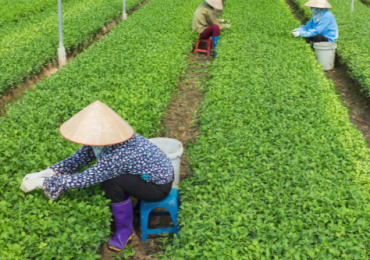
First, a reduction in agricultural land area promotes national happiness. This implies that leaders, governments, and national policymakers should promote sustainable urbanization, apply technology for advanced agricultural development, and focus on renewable energy, carbon taxes, green technology, and improving living spaces. A balance of supportive and punitive measures for behaviors affecting the living environment is needed.
Second, the findings emphasize the importance of the human-environment connection in reducing CO₂ emissions, once again linking this connection to the decisions of policymakers to increase support for environmental activities and encourage a collective focus on a sustainable future, not just in production and business but in all sectors.
Third, corruption increases income inequality and negatively impacts national happiness. The higher the corruption score, the lower the freedom and equality. Corruption also erodes public trust in government, causing feelings of injustice and inequality, which negatively affect satisfaction and quality of life. This implies that leaders must enforce laws and manage the state apparatus with strictness and fairness, from the individual to the largest organization.
Fourth, high life expectancy reflects not only improved health conditions but also the general standard of living. Therefore, supporting access to healthcare services and other welfare policies for all age groups is necessary, not just for human resources but also as an investment in the future, promoting sustainable growth.
Fifth, education is a key factor reflecting citizens’ cognitive levels. Thus, integrating the element of happiness in schools is a necessary action to broaden one’s worldview and thereby promote national happiness.
Sixth, domestic material consumption has a positive impact on happiness. This presents a challenge for economic developers, business owners, and investors in balancing economic and environmental interests. If this issue is not controlled, it will exacerbate the already alarming state of environmental pollution.
The recommendations from this study are hoped to motivate business owners to further develop products and train human resources on CSR issues and strive to improve their ESG scores. Investors need to consider their investment decisions more carefully and comprehensively, while supporting projects that benefit the environment and focusing on green cash flows as well as returns that contribute to the environment. In the relationship between production, business, and consumption, the research team is interested in guiding consumers towards organic, environmentally friendly products that not only benefit the consumer but also contribute to the green growth of the economy.
Author: MA. Tran Ha Quyen and associates – University of Economics Ho Chi Minh City
This article is part of the series spreading research and applied knowledge from UEH with the message “Research Contribution For All.” UEH cordially invites readers to look forward to the next UEH Research Insights newsletter.
News, photos: Authors, UEH Department of Communications and Partnerships

 Chia sẻ:



[Research Contribution] Co-innovating for a Sustainable Ocean Economy
12 December, 2025






[Podcast] Recommendations for University education development
14 February, 2025


[Podcast] Developing Vung Tau into a World-Class Tourism City
16 January, 2025


[Podcast] Postdigital Design Strategies for Media Art
6 January, 2025


[Podcast] NFTs – Artistic Innovation or Just a New Hype?
27 December, 2024


[Podcast] Boosting Employee Creativity with Constructive Feedback
23 November, 2024


[Podcast] “Dutch Disease” in Remittances and the Case of Vietnam
4 November, 2024


[Podcast] Latest approaches for sustainable universities
11 July, 2024


Data Law – Part 1: Necessity for a New Approach
18 May, 2024

Advertising Evaluation on Tiktok Platform
14 May, 2024

[Podcast] Advertising Evaluation on Tiktok Platform
13 May, 2024




Promoting Learner Autonomy in English Language Learning (Part 1)
24 November, 2023



ArtTech And Sustainable Development
27 October, 2023
Motivation of EFL Vietnamese Students in Economics-related Majors
12 October, 2023
Climate Change And Our Society: The Urgency Of Gender Inequality
12 October, 2023

People Analytics in Vietnam
10 March, 2022




Revolution in Experimental Economics
30 January, 2022

The Sharing Economy: Governance Issues in Vietnam
24 January, 2022

Employment Policy For Ho Chi Minh City in Post-social distancing Period
28 December, 2021

Lifelong learning at UEH: Towards a Sustainable University
28 December, 2021

Building a Decentralized Stock Market based on Blockchain Technology
24 December, 2021


Consumer price index from big data mining perspective (Big data)
17 November, 2021

Overview Of Digital Currency – Part 5: DIEM Private Stabilized Currency
11 November, 2021