[Research Contribution] The Role of Farmers in Building New Rural Areas in Ho Chi Minh City
8 September, 2025
Keywords: The role of farmers; Rural development; Sustainability; Community participation; Agricultural innovation.
Ho Chi Minh City, one of the most developed regions in Vietnam, cannot ignore the role of farmers in maintaining sustainable development. From the history of land reclamation to the present, farmers have shown their resilience and creativity in production; however, they also face modern challenges like climate change, unstable consumer markets and the need for technical innovation. To promote the role of farmers, the research author from the University of Economics Ho Chi Minh City (UEH) has emphasized the need to improve the intellectual level of the people, to support appropriate policies and to develop rural infrastructure. The participation of social organizations and enterprises in providing technical and financial training is also an important factor.
Major challenges for farmers in Ho Chi Minh City
Ho Chi Minh City has long been well-known for their strong development, thanks to the significant efforts of their people, especially the pioneering farmers who reclaimed land, established villages and built the foundation for prosperity. Historically, farmers in Ho Chi Minh City have overcome many natural challenges and demonstrated their resilience through the struggles for national independence. Today, they continue to affirm their proactive role in building new rural areas. In the context of the 4.0 industrial revolution, farmers face many impacts from participating in planning, infrastructure development to innovating production models and contributing to cultural, social and environmental activities. These changes require them to improve their cognition, skills and legal awareness to maintain an active role in economic development and protect the community. However, the major challenge for farmers in Ho Chi Minh City is the instability of the agricultural product consumption market, which affects their income and life. The linkage in the “Four Houses” model (the government, farmers, researchers, businesses) is not well connected, causing shortcomings in technical and economic support. In addition, climate change and natural disasters constantly threaten production activities. New rural development must be considered part of a sustainable socio-economic development strategy, with the active participation of farmers. To achieve this, there needs to be coordination from the government, the business community and scientific organizations to provide training programs, financial support and infrastructure development. Strengthening the “Four Houses” linkage will help farmers participate and benefit fairly, creating a foundation for stable development and improving the quality of life.
Promoting the role of farmers in building new rural areas in Ho Chi Minh City: Current situation and prospects
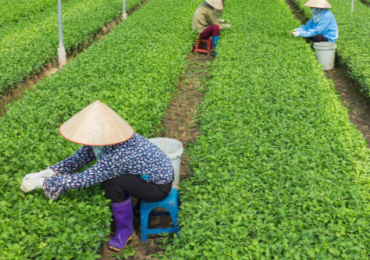
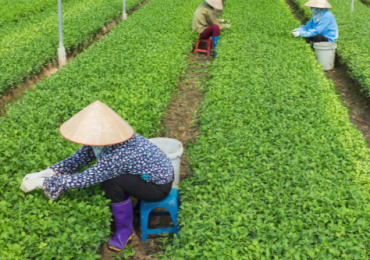
Ho Chi Minh City is the leading economic center of Vietnam, contributing greatly to the national GDP and having remarkable development in the industrial and service sectors. However, agriculture still plays an important role, especially in suburban districts like Cu Chi, Hoc Mon and Binh Chanh, where the construction of new rural areas relies on the role of farmers. Farmers in Ho Chi Minh City not only contribute to providing food for the city but also actively apply technology to production, creating high-tech agricultural production models. Methods of growing clean vegetables, hydroponics, and advanced livestock have assisted farmers in improving productivity and product quality. However, agricultural land is shrinking because of urbanization, resulting in difficulties in developing large-scale agriculture and forcing farmers to seek more sustainable production models.
In Ho Chi Minh City, farmers participate directly in the planning process for new rural development. Community meetings, organized by the government, create opportunities for farmers to share their needs, contribute experiences and propose appropriate solutions. They also actively monitor the progress and criticize projects to ensure the transparency and effectiveness of development programs. In addition, the cooperative model plays an important role in linking farming households, creating strong production groups to reduce costs and stabilize product output. These production links create conditions for farmers to access modern technology, improving production efficiency and meeting market demand.
Promoting the role of farmers in Ho Chi Minh City faces many challenges. Rapid urbanization has reduced the area of cultivated land, forcing some farmers to switch to other occupations. In addition, difficulties in accessing capital are also a major obstacle. Complicated administrative procedures and high mortgage requirements make it difficult for many farmers, especially low-income households, to access preferential capital sources to invest in production.
However, limitations in management skills and access to technology affect production efficiency. Many farmers maintain traditional management methods and lack knowledge of new production. This reduces production efficiency, leading to dependence on external support resources, while Ho Chi Minh City’s agriculture needs to move towards sustainable and self-reliant development. The government has implemented policies to encourage the development of high-tech agriculture while providing preferential credit and organizing training courses for farmers to improve their skills. In addition, the development of cooperatives and linked value chains has received support from the government, creating conditions for farmers to easily access capital and markets.
Enterprises have participated in building linked production value chains to ensure stable output and to minimize risks in the production process. This cooperation also facilitates farmers’ access to modern equipment, from automatic irrigation systems to greenhouse technology, which increases productivity and reduces production costs. In addition, social and non-governmental organizations actively contribute to raising awareness and skills for farmers. They have organized seminars, training sessions and sustainable development projects for farmers to improve their understanding of new production techniques and environmental protection. Support from these organizations provides farmers with access to new knowledge and encourages them to apply environmentally friendly farming methods for sustainable agricultural development.
Farmers in Ho Chi Minh City have constantly innovated and proactively applied high technology to production. Many farmers have deployed automatic irrigation systems, grown hydroponic vegetables and used greenhouses to control the production environment. These initiatives not only increase productivity but also protect the health of producers and consumers, thereby building trust from the market. In addition, many farmers in Ho Chi Minh City have also applied environmental protection initiatives. They have reused water from irrigation systems, used self-made organic fertilizers and minimized the use of chemical fertilizers. These initiatives contribute to protecting natural resources and reducing production costs, helping farmers increase their income.
Thanks to the active and proactive participation of farmers, the process of building new rural areas in Ho Chi Minh City has achieved many successes. Suburban areas have significantly improved in terms of transport infrastructure, irrigation systems and public services. These projects improve the quality of life for people and facilitate local economic development. The development of cooperatives and production linkages has created sustainable value chains for farmers to stabilize their incomes and improve their competitiveness. In addition, the application of high technology in production and environmental protection initiatives have made Ho Chi Minh City’s agricultural products reach higher standards, meeting domestic and foreign market demand.
Solutions to promote the role of farmers in building new rural areas in Ho Chi Minh City
To promote the role of farmers in building new rural areas, it is necessary to continue to improve the policy system and specific action programs. Financial support policies, agricultural extension and skills training need to be designed synchronously and flexibly. Ho Chi Minh City authorities should implement preferential loan packages with low interest rates to support farmers in investing in high technology. Non-refundable financial support should also be considered to encourage projects applying new technologies like automatic irrigation and greenhouses. Agricultural extension programs should be expanded with a wide network to provide farmers with easy access to information and modern techniques. Direct technical assistance on farms and the establishment of agricultural demonstration models are effective measures to help farmers learn and apply practical knowledge.
The legal system needs to be consistent and transparent to facilitate an environment for farmers. Reducing administrative procedures and digitizing the process of accessing support sources will help farmers easily participate in development programs. A transparent monitoring mechanism through online platforms needs to be developed to ensure fairness in policy implementation. Adjusting policies to suit the actual conditions of each locality like Cu Chi, Hoc Mon and Binh Chanh is necessary. Consulting from the farming community will help policies be implemented in the right direction and more effectively.
Infrastructure development is the foundation for farmers to participate more actively in production activities. Building and upgrading rural transport, electricity, clean water, and telecommunications systems will help improve farmers’ living and production conditions. Convenient transportation not only supports the transportation of agricultural products but also creates conditions for the development of processing and trade services, thereby increasing production value. A stable power supply will support the application of high technology in production. Providing clean water and improving the water supply system will help ensure public health and increase farming productivity. A developed telecommunications system will facilitate farmers’ access to market information, production techniques and online training programs.
Agricultural support services like providing materials, technical advice and post-harvest preservation need to be promoted for farmers to improve productivity and product value. Organizing fairs, exhibitions and developing e-commerce platforms will open up opportunities to access new markets and improve the competitiveness of Ho Chi Minh City’s agricultural products. Encouraging the development of agricultural product brands through trademark and geographical indication registration programs is necessary to create consumer confidence and increase product value.
The “Four Houses” linkage model – the Government, farmers, researchers and businesses – needs to be strengthened to ensure effective cooperation. The Government should play a regulatory and supervisory role, creating a transparent legal mechanism for parties to cooperate closely and fairly. Farmers need to proactively learn, apply new techniques and participate in the production chain. Researchers need to continue to research and transfer new technologies suitable to local production conditions. Enterprises should cooperate in providing inputs and ensuring outputs for agricultural products. Risk and benefit sharing mechanisms need to be clearly defined in cooperation contracts to create trust and sustainability.
Automation and digitalization technologies should be deployed to improve production efficiency. Monitoring systems, farm management software and automatic irrigation technology are typical examples. Biotechnology helps improve crop varieties, reduce the use of plant protection chemicals and improve product quality. Greenhouse and hydroponic technologies support stable production in unfavorable weather conditions and optimize water use. Blockchain and IoT help farmers manage transparent supply chains, reduce risks and increase product value. Technical training and farm management skills help farmers master modern farming methods and improve financial management. Local practical courses, online training programs and workshops will help farmers easily apply knowledge to production. Encouraging farmer participation through financial support programs and organizing competitions to apply technology will create motivation to learn and apply new technology.
The article was published in the Journal of Ethnic Studies of the State Council of Professorship. The full-text research article on The role of farmers in building new rural areas in Ho Chi Minh City can be accessed HERE.
Author: PhD. Bui Xuan Dung – University of Economics Ho Chi Minh City
This article is part of the series spreading research and applied knowledge from UEH with the message “Research Contribution For All – Research for the Community”. UEH cordially invites readers to read the next UEH Research Insights newsletter.
News, photos: The author, UEH Department of Communications and Partnerships

 Chia sẻ:



























[Research Contribution] Co-innovating for a Sustainable Ocean Economy
12 December, 2025













[Podcast] Recommendations for University education development
14 February, 2025


[Podcast] Developing Vung Tau into a World-Class Tourism City
16 January, 2025


[Podcast] Postdigital Design Strategies for Media Art
6 January, 2025


[Podcast] NFTs – Artistic Innovation or Just a New Hype?
27 December, 2024


[Podcast] Boosting Employee Creativity with Constructive Feedback
23 November, 2024


[Podcast] “Dutch Disease” in Remittances and the Case of Vietnam
4 November, 2024


[Podcast] Latest approaches for sustainable universities
11 July, 2024


Data Law – Part 1: Necessity for a New Approach
18 May, 2024

Advertising Evaluation on Tiktok Platform
14 May, 2024

[Podcast] Advertising Evaluation on Tiktok Platform
13 May, 2024





Promoting Learner Autonomy in English Language Learning (Part 1)
24 November, 2023





ArtTech And Sustainable Development
27 October, 2023
Motivation of EFL Vietnamese Students in Economics-related Majors
12 October, 2023
Climate Change And Our Society: The Urgency Of Gender Inequality
12 October, 2023






People Analytics in Vietnam
10 March, 2022





Revolution in Experimental Economics
30 January, 2022

The Sharing Economy: Governance Issues in Vietnam
24 January, 2022

Employment Policy For Ho Chi Minh City in Post-social distancing Period
28 December, 2021

Lifelong learning at UEH: Towards a Sustainable University
28 December, 2021

Building a Decentralized Stock Market based on Blockchain Technology
24 December, 2021



Consumer price index from big data mining perspective (Big data)
17 November, 2021

Overview Of Digital Currency – Part 5: DIEM Private Stabilized Currency
11 November, 2021