

14.2.2. Sustainable fisheries (community outreach)
Offer educational programme or outreach for local or national communities on sustainable management of fisheries, aquaculture and tourism
UEH promotes community education on marine resource management, aquaculture and sustainable tourism
In 2025, University of Economics Ho Chi Minh City (UEH) directly participated in community education and outreach on sustainable tourism management, linking natural resource conservation with responsible livelihoods. A key example was the Women4Mangrove project in Cu Lao Dung, where UEH worked with local authorities to hold a thematic knowledge-sharing session on 10 December 2025 covering mangrove conservation, the circular economy and community-based educational agritourism. Representatives of local authorities, women in the community, experts and other stakeholders participated, sharing knowledge and discussing community involvement in sustainable tourism models.
More broadly, UEH supports knowledge sharing and community engagement concerning sustainable fisheries, aquaculture and tourism. It connects applied research with consultation, dialogue and capacity development, particularly in the Mekong Delta and coastal areas.
- Programme description
UEH approaches sustainable fisheries through interdisciplinary work spanning environmental economics, natural resource governance, tourism development, innovation and policy research.
Activities address three areas:
- Sustainable fisheries and aquaculture management: Sharing research on resource use, aquaculture livelihoods, water management, production efficiency and climate adaptation.
- Sustainable tourism: Encouraging dialogue, consultation and knowledge sharing on green tourism, ecotourism, educational agritourism and community-based tourism.
- Community participation: Bringing together local authorities, residents, businesses and development organisations to identify needs, propose solutions and develop locally appropriate livelihood models.
Target groups include coastal residents, local women, fishers, aquaculture households, cooperatives, tourism businesses and public officials. Delivery methods include community projects, field surveys, consultations, workshops, research dissemination and capacity-building partnerships. Participation conditions vary by programme; free access should be claimed only where supported by the relevant evidence.
- Internal commitments and supporting policies
UEH’s approach to ecosystem protection and sustainable natural resource use is supported by its Green Campus Regulations, issued under Decision No. 2059/QD-DHKT-CSVC (2022), with a version publicly available on the UEH Green Campus website. The Vietnamese evidence identifies the following policy provisions. Their exact wording and numbering should be checked against the currently published regulation before THE submission.
Article 12, Clause 1 – Implementation and evaluation of the Green Campus initiative in 2023–2025, covering education, research, operations, governance and community engagement. This supports continued community engagement within UEH’s sustainability strategy.
Article 12, Clause 1 – Green Campus implementation and community engagement.
Article 13 – Responsibilities of university units. The evidence attributes to Clauses 7 and 8 provisions on cooperation with local communities, education and training for fishers, cooperatives and tourism operators, programme documentation, and awareness of overexploitation and illegal, unreported and unregulated (IUU) fishing. These specific provisions require confirmation against the official regulation.
Article 13 – Responsibilities of university units for community engagement.
Article 16 – Responsible procurement of goods and services, including environmental considerations and the sourcing of seafood products. This is relevant as supporting policy for responsible seafood consumption and procurement.
Article 16 – Responsible procurement and sustainable sourcing.
Article 21 – Water reuse policy, promoting water recovery and efficient resource use. This is indirectly related to ecosystem management rather than direct evidence of sustainable fisheries outreach.
Article 21 – Water reuse and resource management.
| Provision | Policy content | Relevance to indicator | Image evidence |
| Article 12(1) | Implementation and evaluation of the Green Campus initiative, 2023–2025, across education, research, operations, governance and community engagement. | Supports continuing community engagement. | 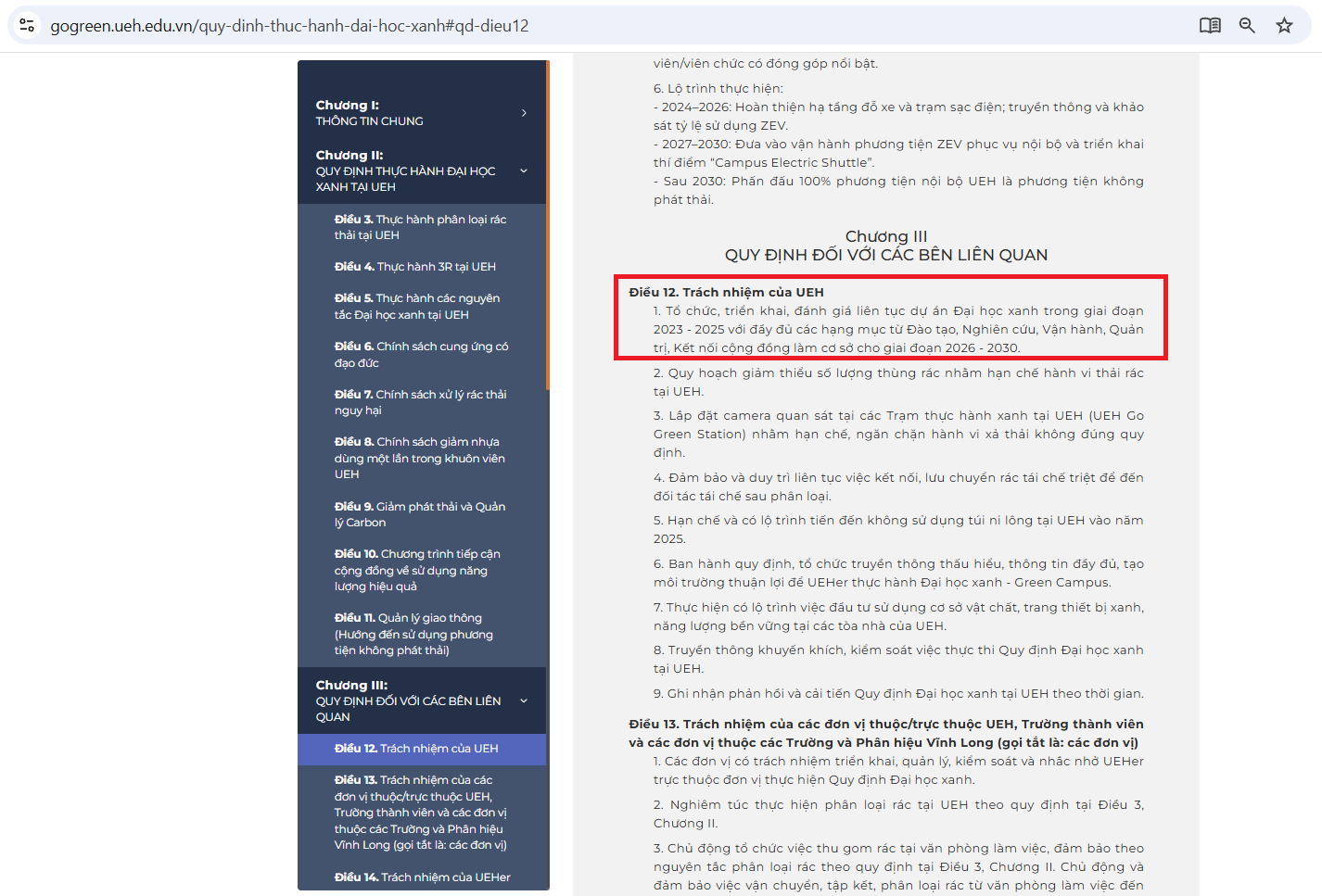 |
| Article 13 | The Vietnamese article cites Clauses 7–8 on community training, cooperation with fishers, cooperatives and tourism operators, documentation, and IUU fishing awareness. Verify exact provisions. | Potential basis for sustainable fisheries outreach; clause wording requires confirmation. | 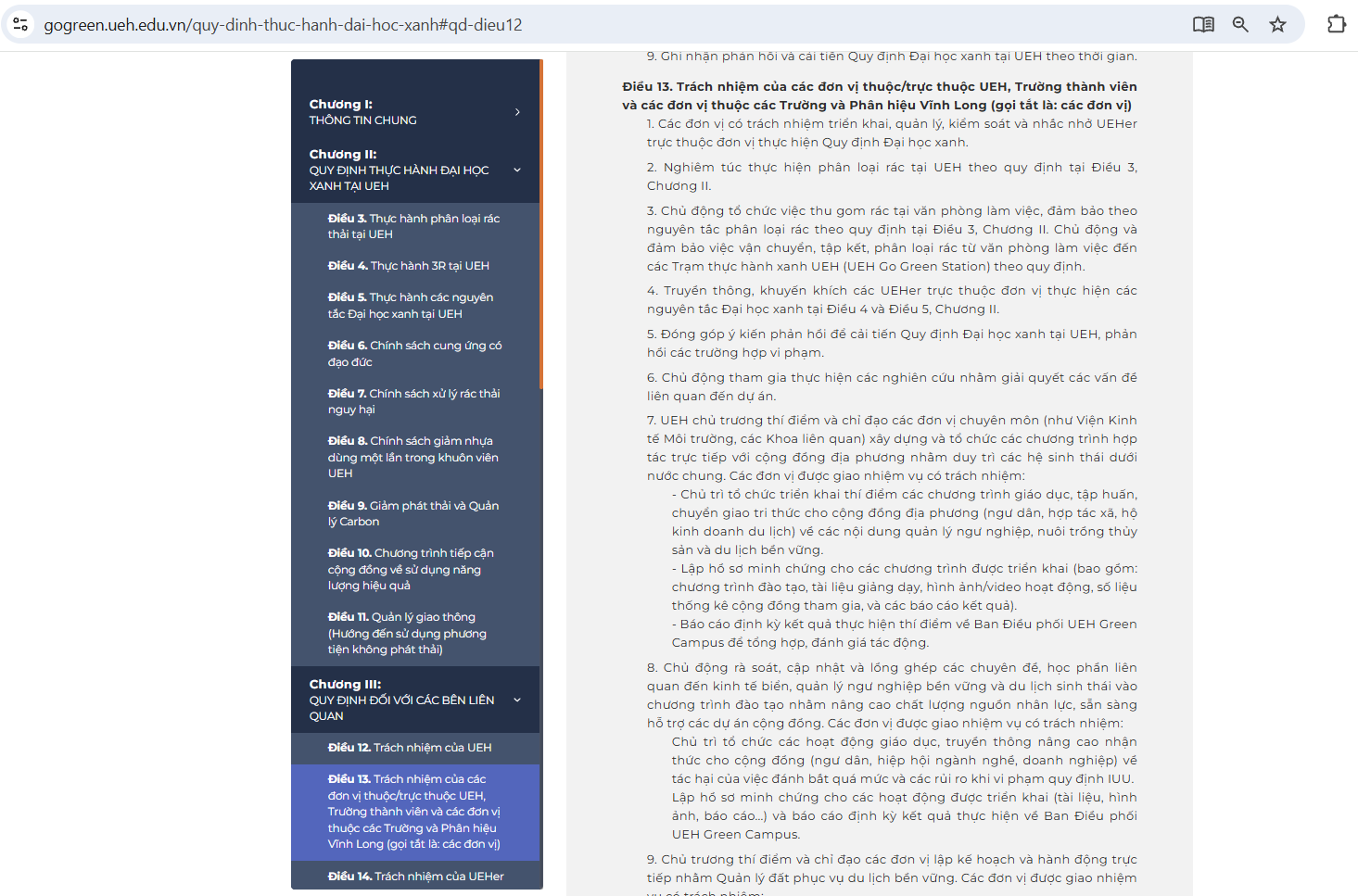 |
| Article 16 | Responsible procurement of goods and services, including environmental considerations and seafood sourcing. | Supports responsible seafood procurement. | 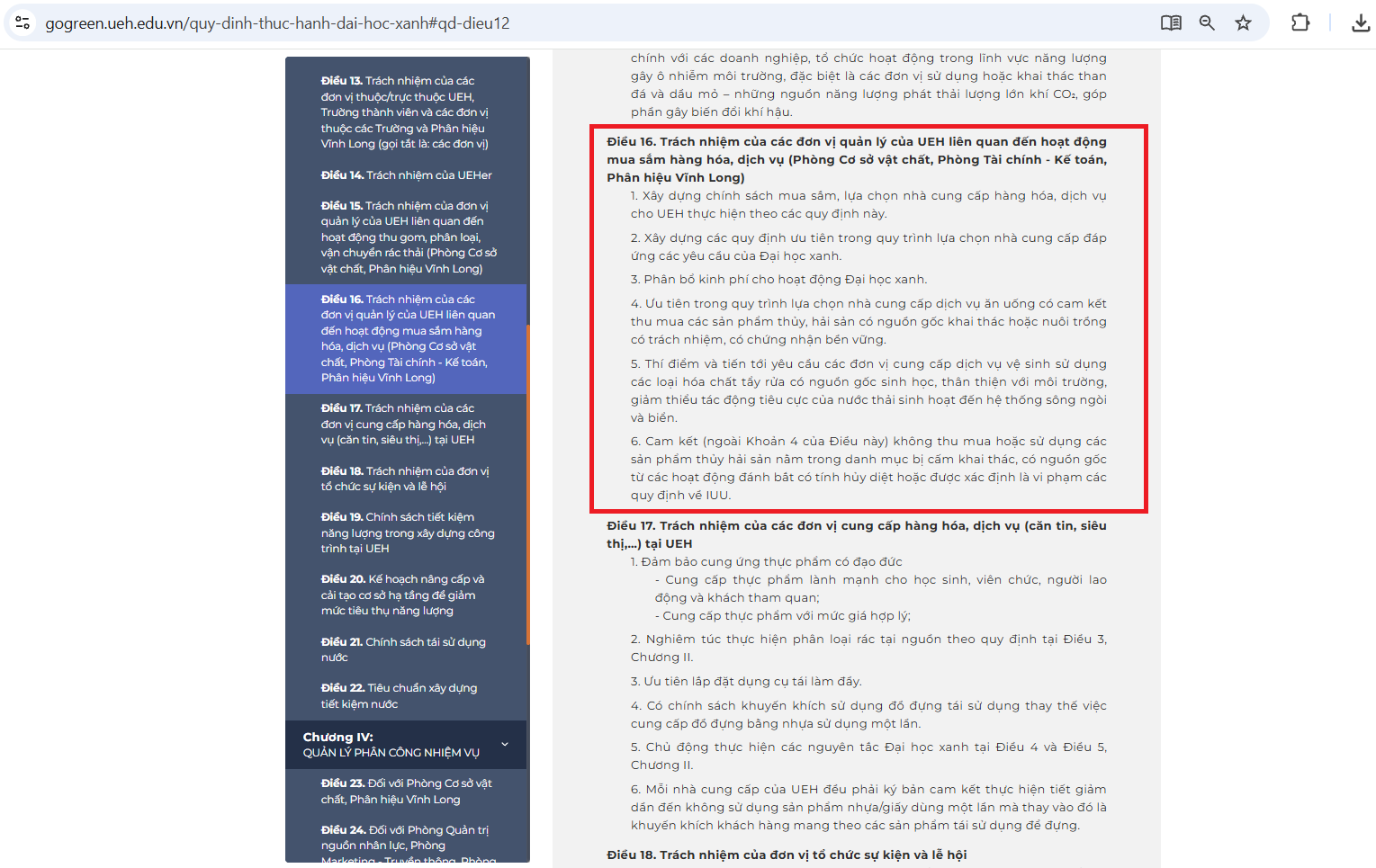 |
| Article 21 | Water recovery, reuse and resource efficiency. | Indirect link to aquatic ecosystem management. | 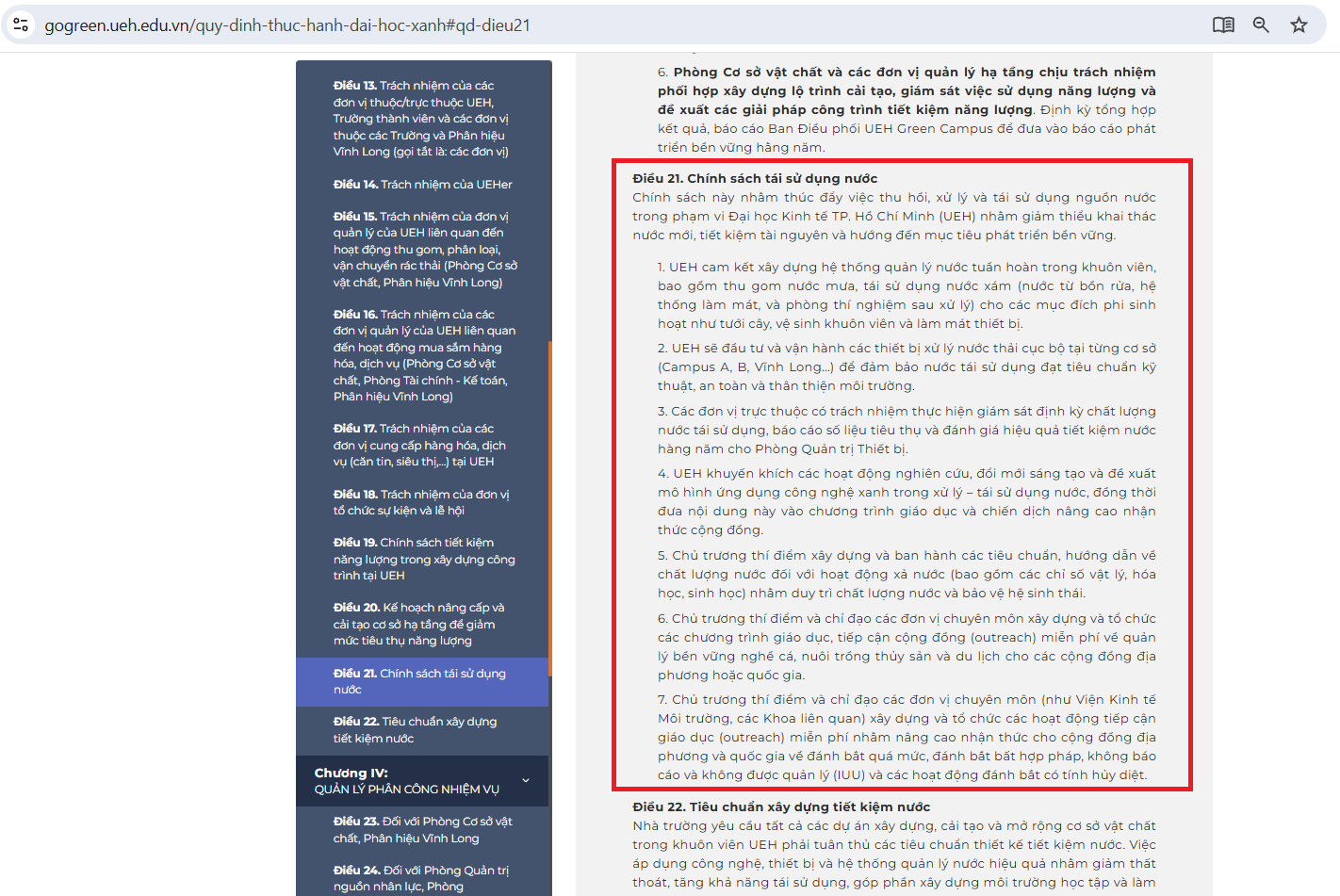 |
These policies express UEH’s institutional direction. Compliance with indicator 14.2.2 must also be demonstrated through actual educational or outreach programmes delivered to communities.
Policy source: https://gogreen.ueh.edu.vn/quy-dinh-thuc-hanh-dai-hoc-xanh
- Evidence of programmes and outreach activities
| No. | Programme / project | Format / category | Participation | Summary of activities and outcomes | Image / caption | Evidence source / link |
| 1 | Women4Mangrove – From Conservation to Livelihoods (10 Dec 2025) | Direct community outreach and consultation | Reported free | UEH and local authorities shared knowledge with women and community representatives on mangrove conservation, circular economy and community-based agritourism; discussed environmental criteria and livelihoods. | 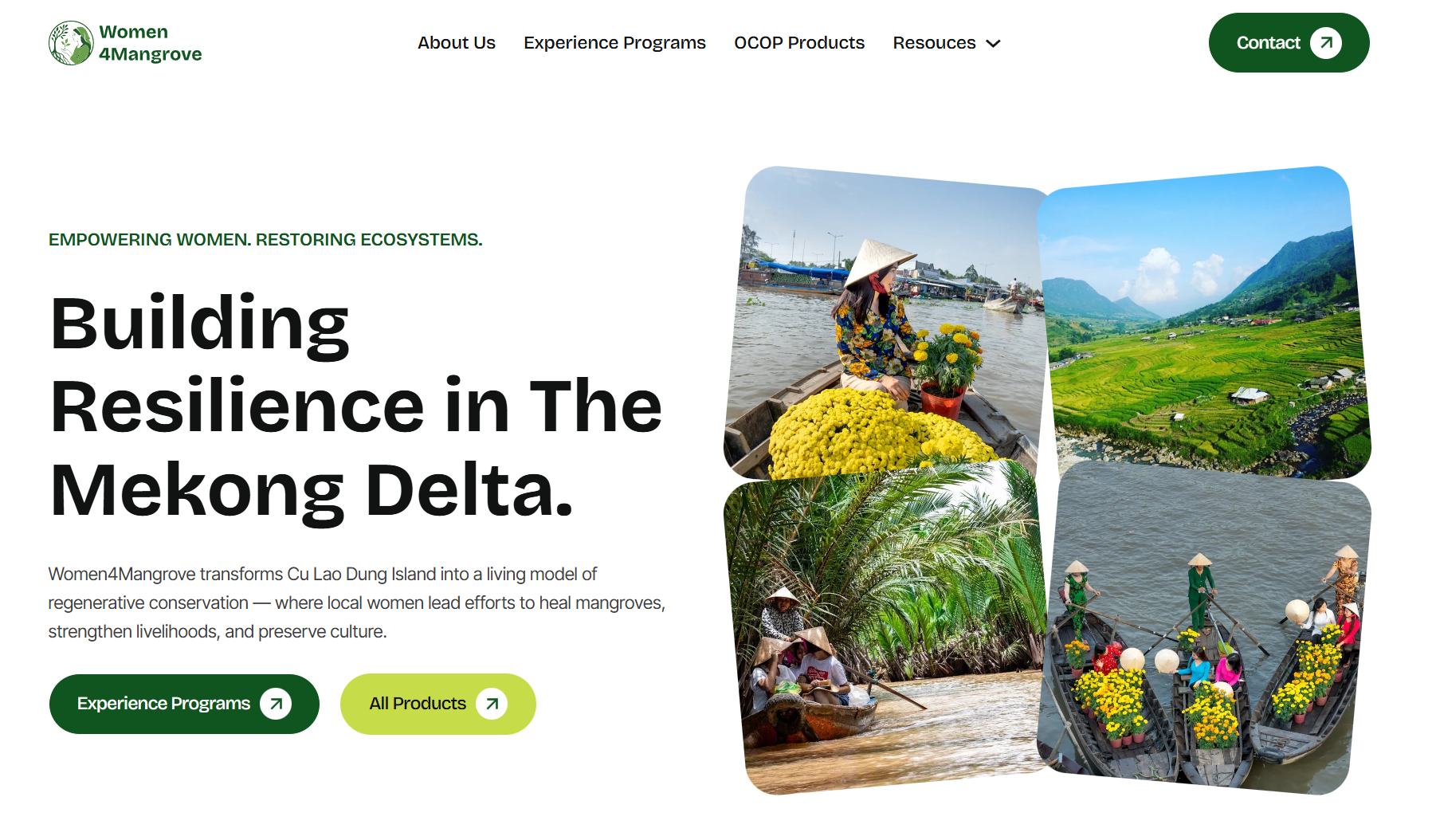 Women4Mangrove project |
UEH 75589; 75381; https://ueh.edu.vn/bao-chi/ra-mat-du-an-ho-tro-sinh-ke-ben-vung-cho-phu-nu-gan-voi-bao-ton-rung-75522 |
| 2 | IRDRC – Communication and Professional Conduct at Ba Den Mountain (18 Sep 2025) | Tourism workforce training | Over 60 staff; fees unverified | IRDRC and the destination management board trained more than 60 personnel in communication and visitor service; dedicated sustainability training needs verification. | 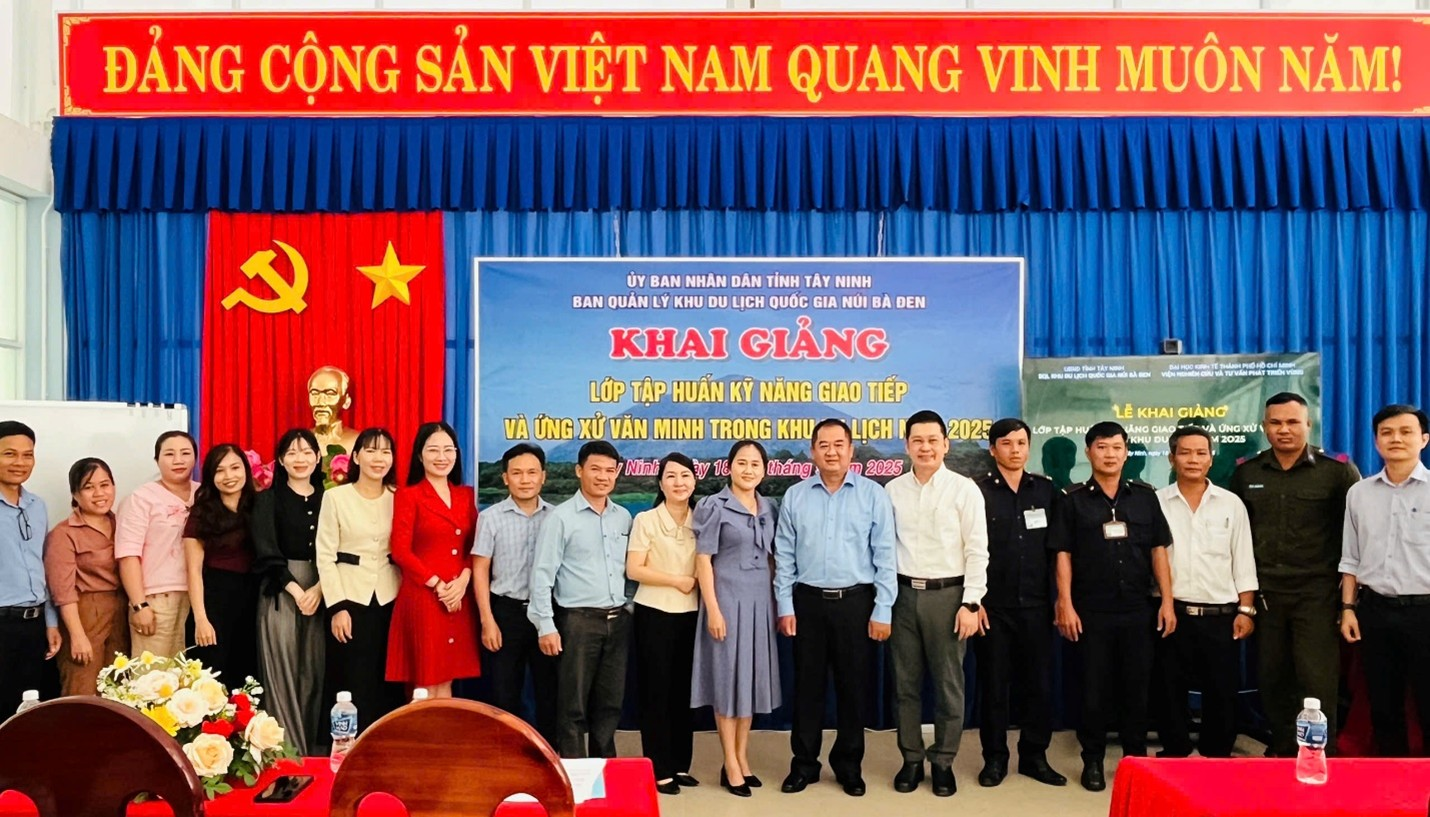 Opening Ceremony of the Training Course on Communication Skills and Professional Etiquette in Tourist Destinations |
https://irdrc.ueh.edu.vn/tin-tuc/le-khai-giang-lop-tap-huan-ky-nang-giao-tiep-va-ung-xu-van-minh-trong-khu-du-lich-tai-khu-du-lich-quoc-gia-nui-ba-den-nam-2025/ |
| 3 | UEH–NEU – Green Experiential Tourism Workshop (Dec 2025) | Scientific workshop and policy dialogue | Reported free | UEH and NEU discussed green experiential tourism criteria for coastal Mekong Delta provinces, including expert contributions from UEH Faculty of Tourism. | 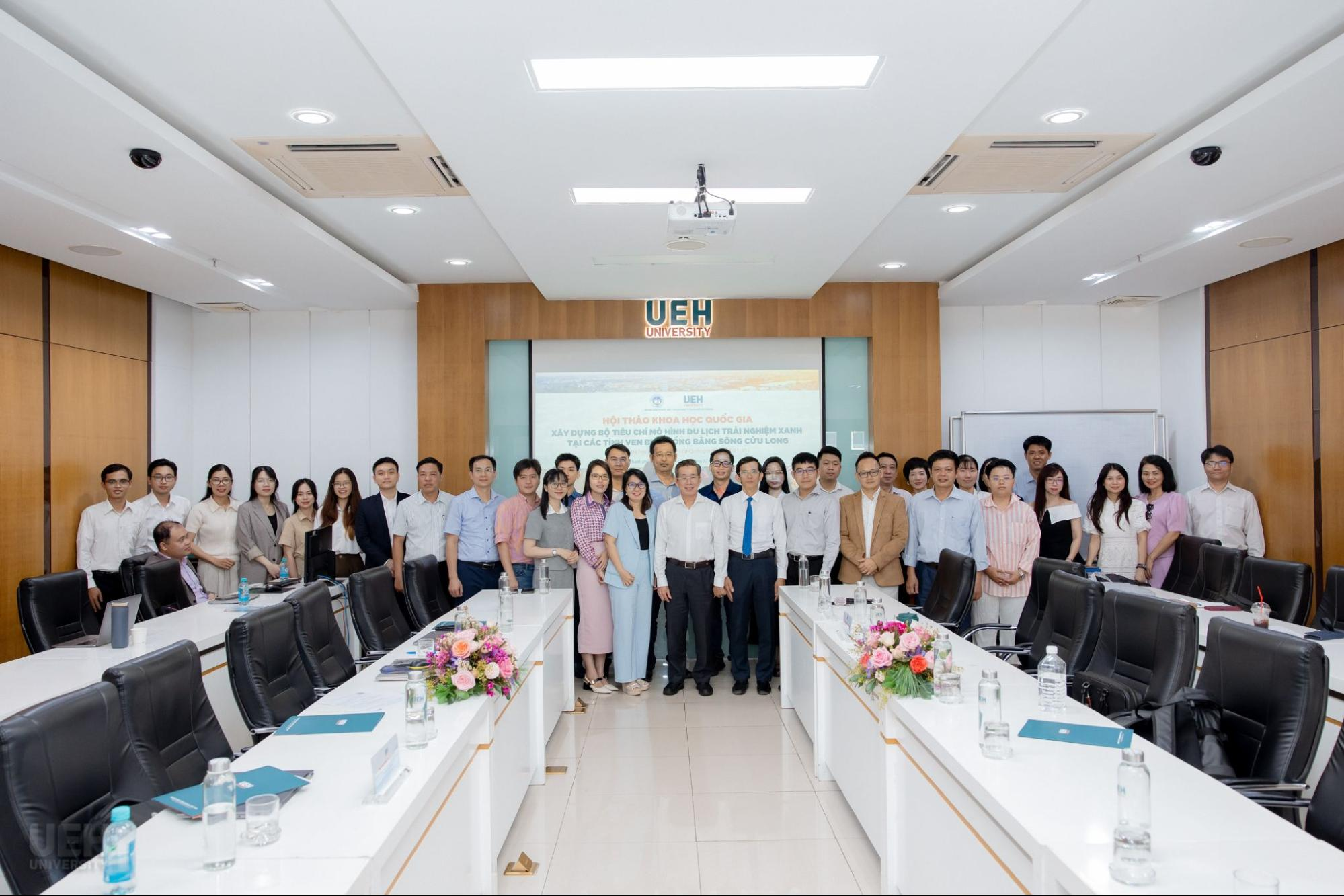 Green experiential tourism workshop |
https://www.ueh.edu.vn/bo-tu-nghi-quyet/chuoi-hoi-thao-khoa-hoc-quoc-gia-ueh-neu-thi-truong-bat-dong-san-va-du-lich-trai-nghiem-xanh-trong-chien-luoc-phat-trien-ben-vung-quoc-gia-75471 |
| 4 | Ocean Futures 2025 – Smart Technologies and Sustainable Coastal Living (1 Oct 2025) | International workshop and coastal dialogue | Reported free | UEH and Khanh Hoa partners held dialogue on smart technologies, marine economy, coastal livelihoods and sustainable coastal development. | 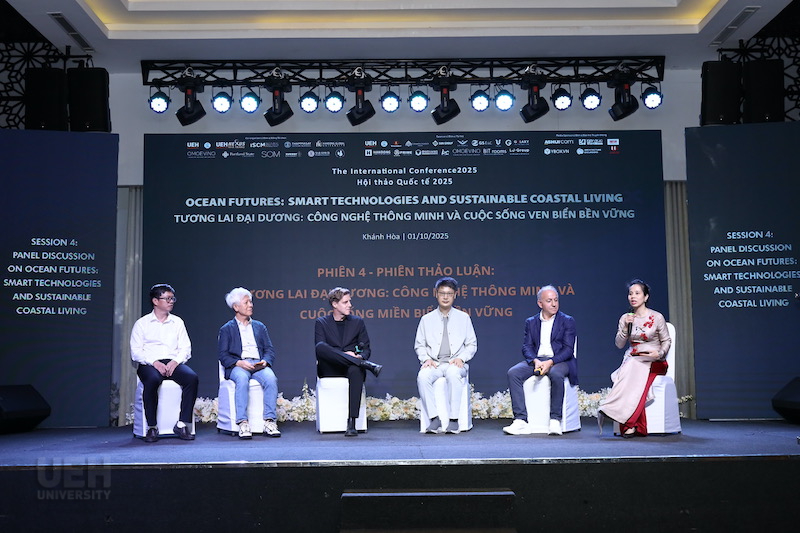 Ocean Futures 2025 workshop |
https://www.ueh.edu.vn/ueh-nexus-nha-trang/hoi-thao-quoc-te-tuong-lai-dai-duong-2025-tai-khanh-hoa-cong-nghe-thong-minh-va-cuoc-song-ven-bien-ben-vung–74916 |
| 5 | HAPRI – Water Management and Aquaculture Livelihoods (14 Jan 2025) | Research dissemination | Public research | UEH published research on freshwater and brackish-water management, agriculture and aquaculture livelihoods under climate change; not verified as direct fisher training. | 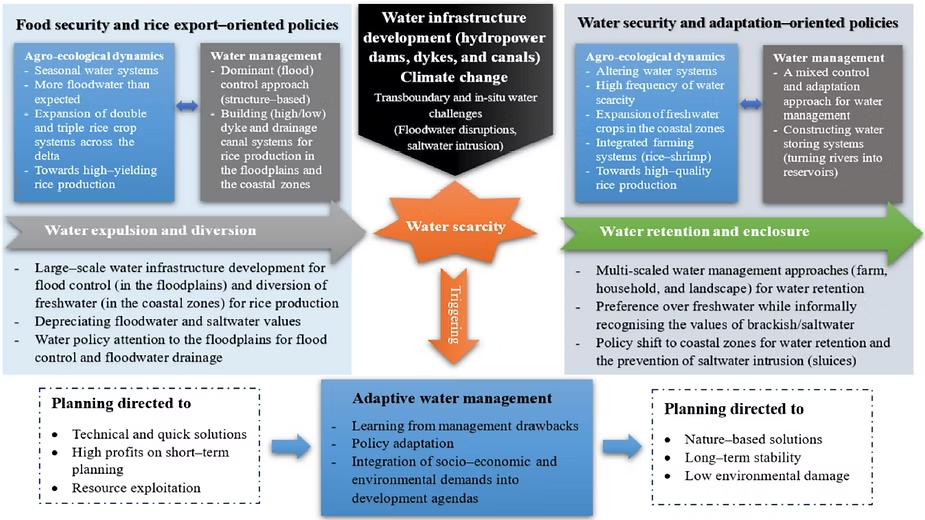 Adaptive water management research |
https://future.ueh.edu.vn/nam/2025/an-ninh-luong-thuc-va-nong-nghiep-ben-vung-tu-chinh-sach-den-thuc-tien-trong-boi-canh-bien-doi-khi-hau/ |
| 6 | HAPRI – Reducing Food Loss in the Mekong Catfish Value Chain (2025) | Applied research and capacity development | Research collaboration; fees unverified | HAPRI’s ACIAR/IDRC-supported project researched food loss, forecasting and value-chain improvements in Mekong catfish; community training not verified. | 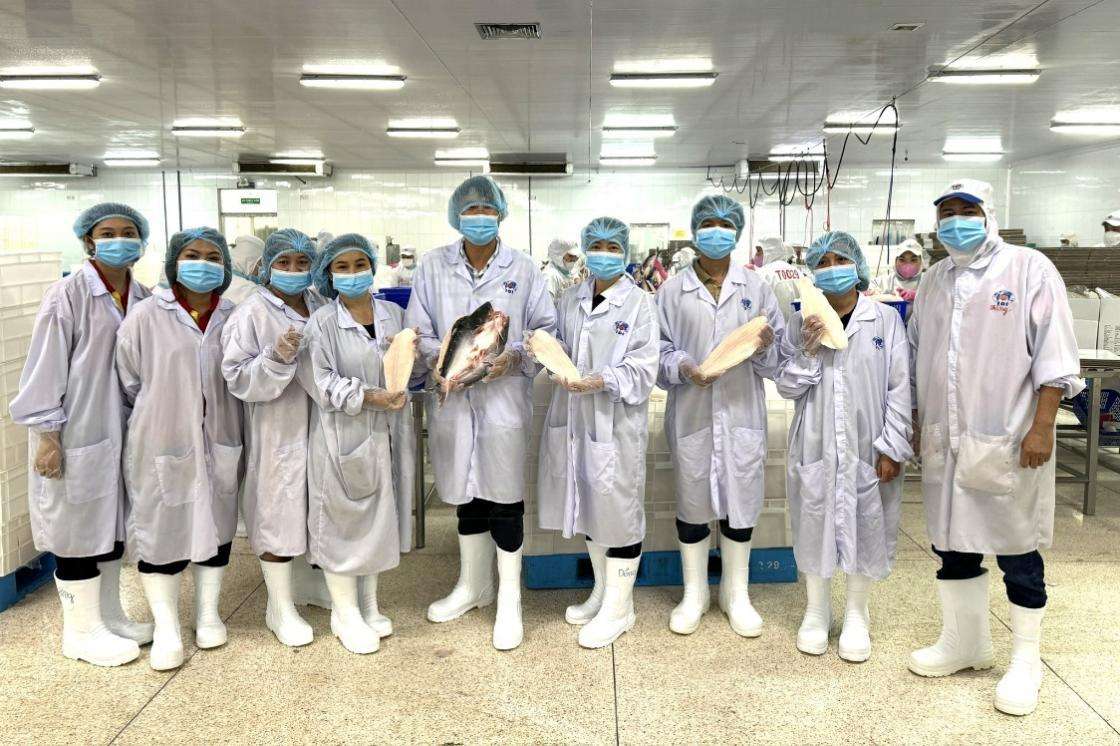 ODA-funded Project “Food Losses in the Catfish Value Chain in the Mekong River Basin” |
https://ueh.edu.vn/college/hapri/vi/hapri-ket-noi-tri-thuc-va-thuc-tien-vi-nong-nghiep-ben-vung-va-an-ninh-luong-thuc-75833 |
| 7 | UEH – Co-innovation for a Sustainable Ocean Economy | Fisheries co-management research dissemination | Public research | UEH shared research on marine co-management and fishing-community participation; no documented direct fisher training in 2025. | 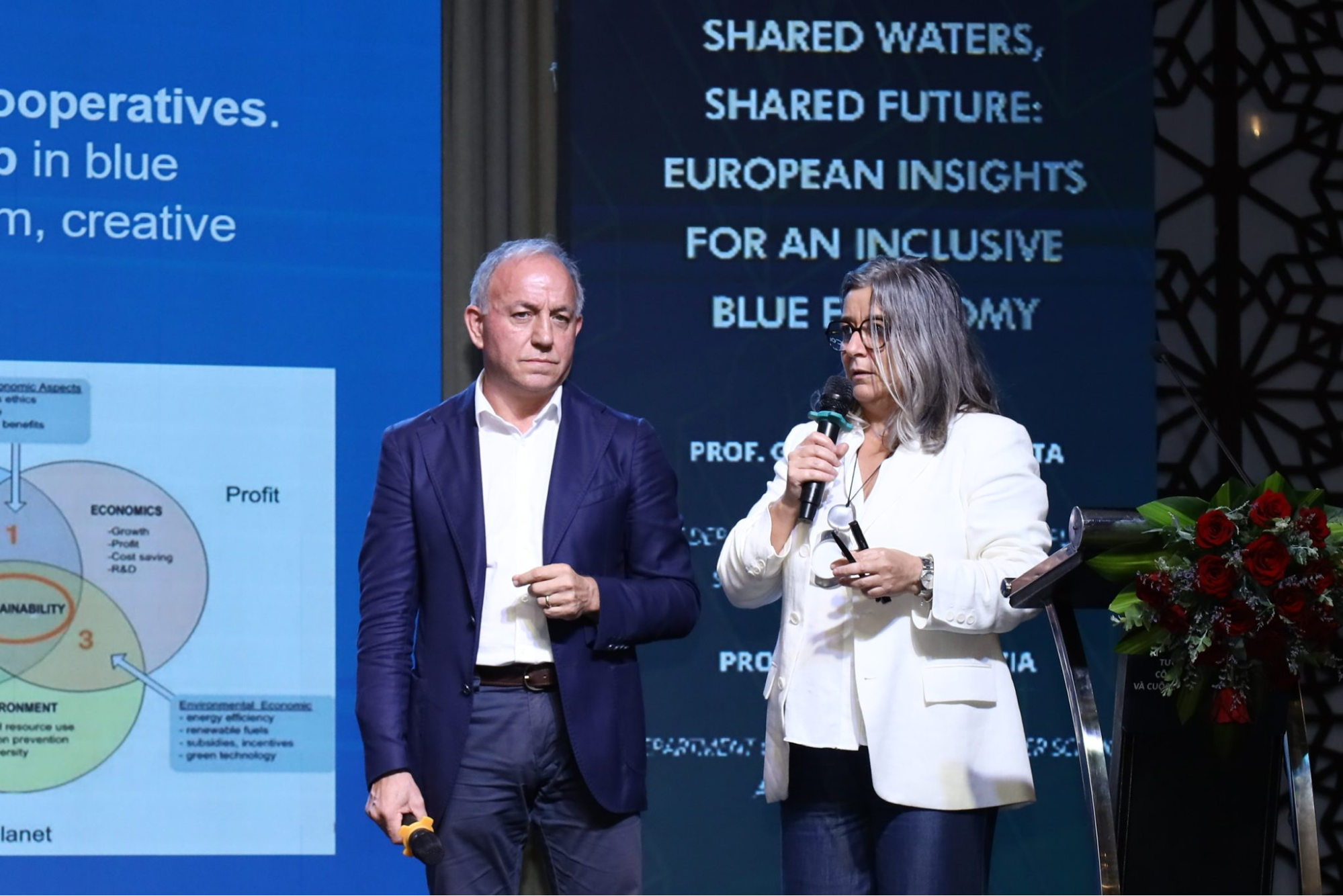 Research presentation |
https://future.ueh.edu.vn/chi-tiet-knowlege/research-contribution-dong-doi-moi-sang-tao-cho-nen-kinh-te-dai-duong-ben-vung/ |
| 8 | UEH – Public-sector Capacity Development, 2020–2025 | Public-sector training review | Specific course fees unverified | Review reports 163 courses and over 15,000 participant instances across all subjects during 2020–2025; not specifically sustainable tourism. | 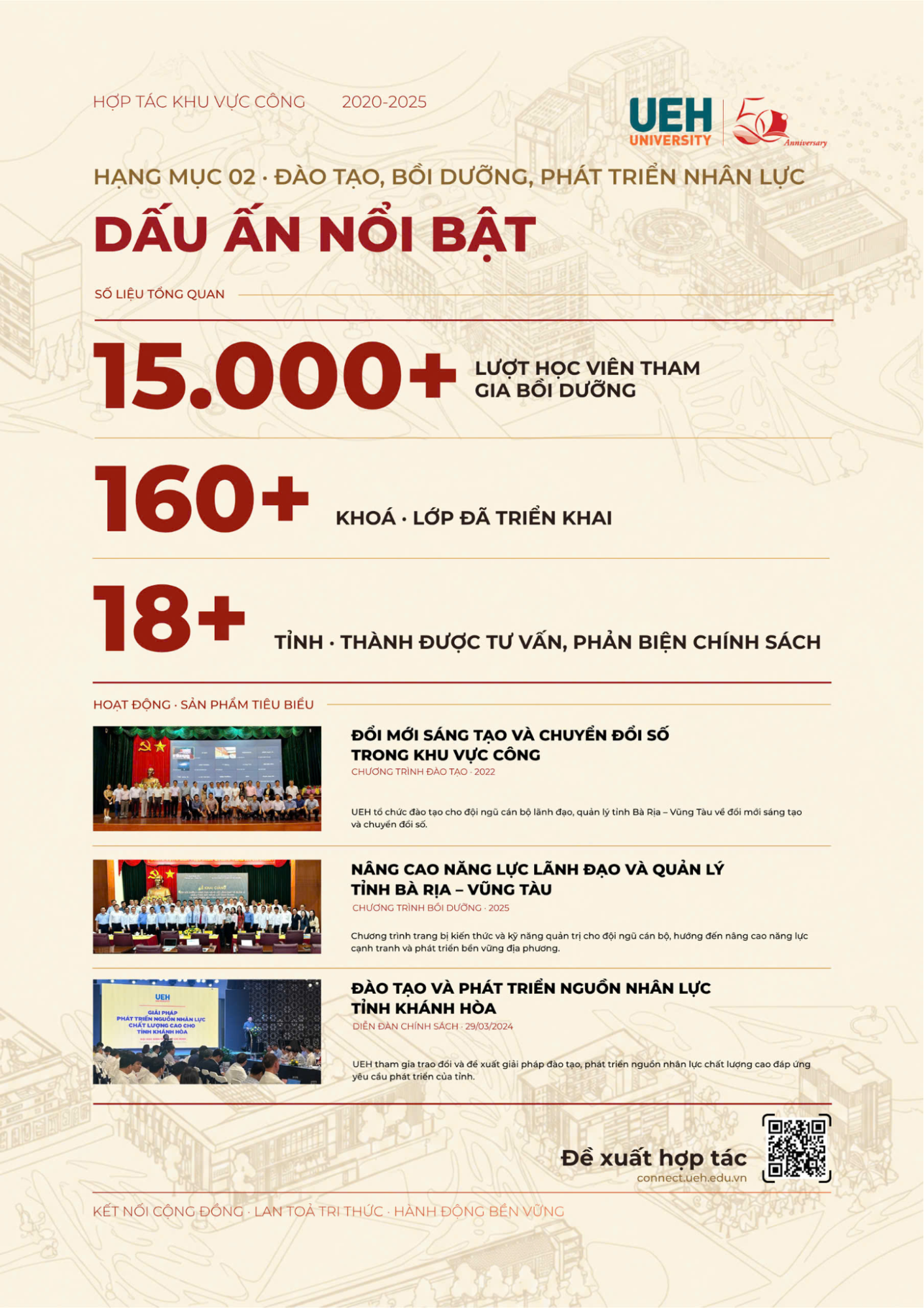 Public-sector training review |
https://ueh.edu.vn/ueh-mekong/cuoc-song-ueh-mekong/19-thoa-thuan-105-nhiem-vu-khoa-hoc-dau-an-ueh-dong-hanh-cung-khu-vuc-cong-giai-doan-2020-2025-78869 |
| 9 | YDCC 2025 – TOMI AI-based Shrimp Disease Detection | Aquaculture innovation | Reported free | TOMI initiative proposed AI detection of white spot disease in shrimp; not evidence of direct training for shrimp farmers. |  TOMI project team |
https://www.ueh.edu.vn/cuoc-song-ueh/tin-tuc/chung-ket-thu-thach-cong-dan-so-ydcc-2025-thuc-day-chuyen-doi-kep-vi-mot-dong-bang-song-cuu-long-ben-vung-75837 |
- Results of community education and outreach in 2025
UEH delivered community-facing knowledge sharing on sustainable tourism through Women4Mangrove in Cu Lao Dung. On 10 December 2025, working with local authorities, it engaged women, community representatives, experts and development partners in discussions of mangrove conservation, the circular economy and community-based agritourism. The session shared local needs-assessment findings, considered women’s livelihood aspirations and discussed environmental criteria, visitor conduct and business responsibilities for sustainable tourism models.
UEH also contributed to a UEH–NEU workshop on green experiential tourism in coastal Mekong Delta provinces and provided professional training for destination management staff through IRDRC. Research by HAPRI and EEPSEA on seafood value chains, marine governance and coastal livelihoods supplies relevant scientific foundations for future community education and policy engagement. These research outputs should be distinguished from directly delivered outreach.
Overall, the clearest directly documented 2025 community engagement activity is Women4Mangrove. Additional verification of participant access, fees and programme-specific learning outcomes would strengthen claims across the other activities.