

14.5.5 – Watershed management strategy
The University of Economics Ho Chi Minh City (UEH) advances watershed management solutions and the protection of aquatic ecosystems through scientific research, cooperation with local authorities, and implementation of the Green Campus Regulations promulgated under Decision No. 2059/QD-DHKT-CSVC. In 2025, UEH continued to strengthen the evidence base for freshwater and brackish-water management in the Mekong Delta, collaborated on community capacity building for water infrastructure management in Cu Lao Dung, and contributed to initiatives for mangrove conservation and habitat restoration along the Cai River. These activities support the development of water resource management approaches suited to local hydrological conditions, ecosystems, and livelihood needs.
1. Strategic Orientation
UEH’s approach to watershed management integrates water quality control, pollution reduction, aquatic habitat protection, and water resource use adapted to local ecological conditions. Through applied research, field surveys, and collaboration with authorities and communities, UEH promotes solutions for freshwater and brackish-water management, wetland protection, and estuarine ecosystem conservation, linking biodiversity protection, climate adaptation, and sustainable livelihoods.
UEH also maintains pollution-source controls under its Green Campus Regulations. In 2025, the Nguyen Van Linh Campus continued operating a wastewater treatment system with a design capacity of 550 m³/day, tracking water consumption and monitoring wastewater quality to help minimise impacts on receiving waters.
2. Internal Commitments and Supporting Policies
UEH issued Decision No. 2059/QD-DHKT-CSVC on the UEH Green Campus Regulations, effective from 2023 and applicable across its campuses. These regulations establish a foundation for environmental management, efficient resource use, waste control, research, and community collaboration. The regulations were updated in 2024 and continue to be reviewed and supplemented annually. In 2025, UEH maintained the implementation, monitoring, and evaluation of Green Campus activities while preparing the groundwork for the 2026–2030 period under Article 12, Clauses 1 and 9.
Under Article 12, Clause 1 , UEH assigns responsibility for the continued implementation and assessment of the UEH Green Campus Project across Education, Research, Operations, Governance, and Community Engagement. Article 12, Clause 9 establishes responsibility for receiving feedback and improving the regulations over time.
Requirements for waste segregation under Article 3 – Resource Conservation Practices and waste-discharge reduction under Articles 2 and 5 help reduce environmental pressures from UEH’s operations. In addition, Article 15, Clause 5 requires the replacement of cleaning materials and products with safe, environmentally friendly organic alternatives. Article 16, Clause 5 sets out an approach to piloting bio-based cleaning agents to reduce the negative impacts of domestic wastewater on rivers and marine environments.
Under Article 13, Clause 6 , UEH encourages its units to conduct research addressing issues related to the Green Campus Project. Article 13, Clause 7 establishes an intention to pilot direct collaboration with local communities to maintain shared aquatic ecosystems, including education, training, and knowledge-transfer activities.
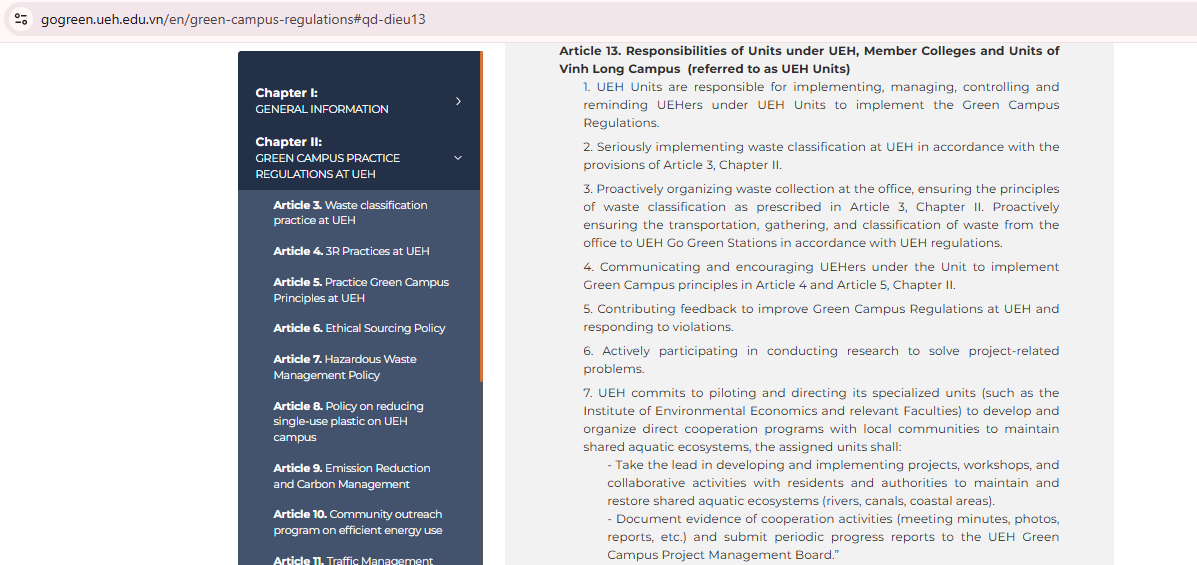
Article 13, Clause 7 of the Green Campus Regulations issued under Decision No. 2059/QD-DHKT-CSVC, concerning pilot programmes for direct collaboration between UEH’s specialist units and local communities to maintain shared aquatic ecosystems.
Public source: UEH Green Campus website, ‘Green Campus Regulations’
https://gogreen.ueh.edu.vn/en/green-campus-regulations#qd-dieu13
In addition, Article 13, Clause 10 sets out an approach to piloting initiatives to maintain and enhance on-campus biodiversity and monitor biological conditions at UEH facilities.
In 2025, UEH continued implementing the Green Campus Regulations, building on policies introduced in 2023 and updated in 2024, to promote research, water quality monitoring, pollution-source control, and biodiversity protection. These provisions underpin cooperation with authorities, communities, and technical partners in studying and managing water resources in response to local ecological conditions. By maintaining, reviewing, and improving these policies, UEH continued to develop a foundation for watershed management solutions linked to habitat conservation and aquatic biodiversity. Site-specific species-diversity data, survey findings, and evidence of implementation remain necessary to demonstrate how these strategic intentions are translated into watershed management practice.
3. Evidence of Programmes and Activities Implemented in 2025
| No. | Programme/ Project |
Format/ Category |
Description | Public Source |
| 1 | Women4Mangrove – Mangrove Conservation Linked to Community Livelihoods | Project launch; Mangrove conservation discussion; Community consultation | On 10 December 2025, UEH collaborated with the People’s Committees of An Thanh and Cu Lao Dung communes in Can Tho City to launch the Women4Mangrove project, together with a thematic discussion on mangrove conservation and sustainable livelihood solutions. The event brought together local authorities, experts, and community representatives to discuss forest conservation and mangrove ecosystem protection, with an emphasis on women’s empowerment and sustainable educational agritourism in the Mekong Delta. The project aims to establish a women-led nursery and tree-planting training centre, with a target of restoring 5 hectares of mangroves during its implementation. In 2025, the project also expanded international exchanges and learning opportunities in Thailand (November 2025) and the Netherlands (December 2025), helping refine its model and future expansion plans. 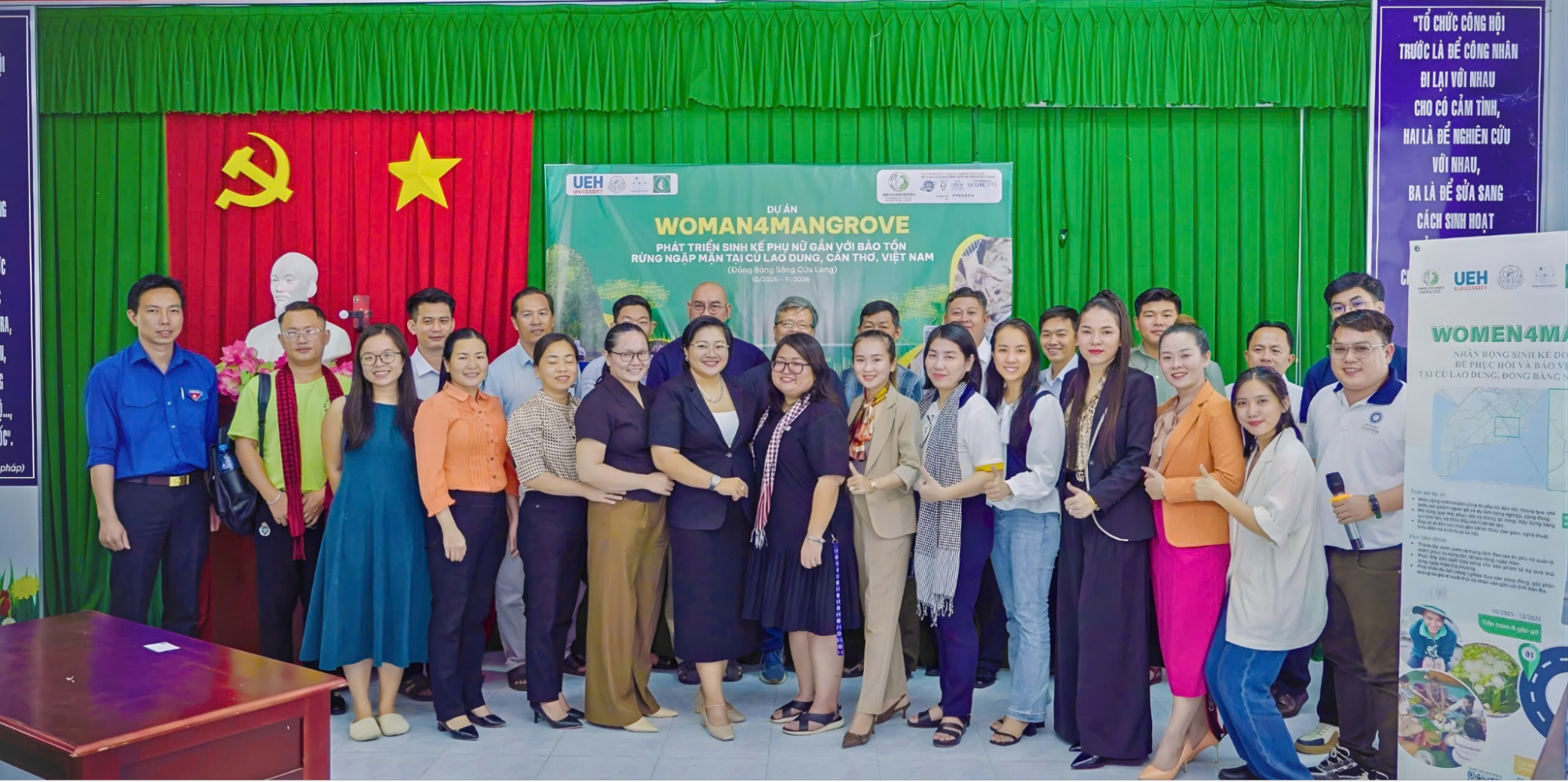 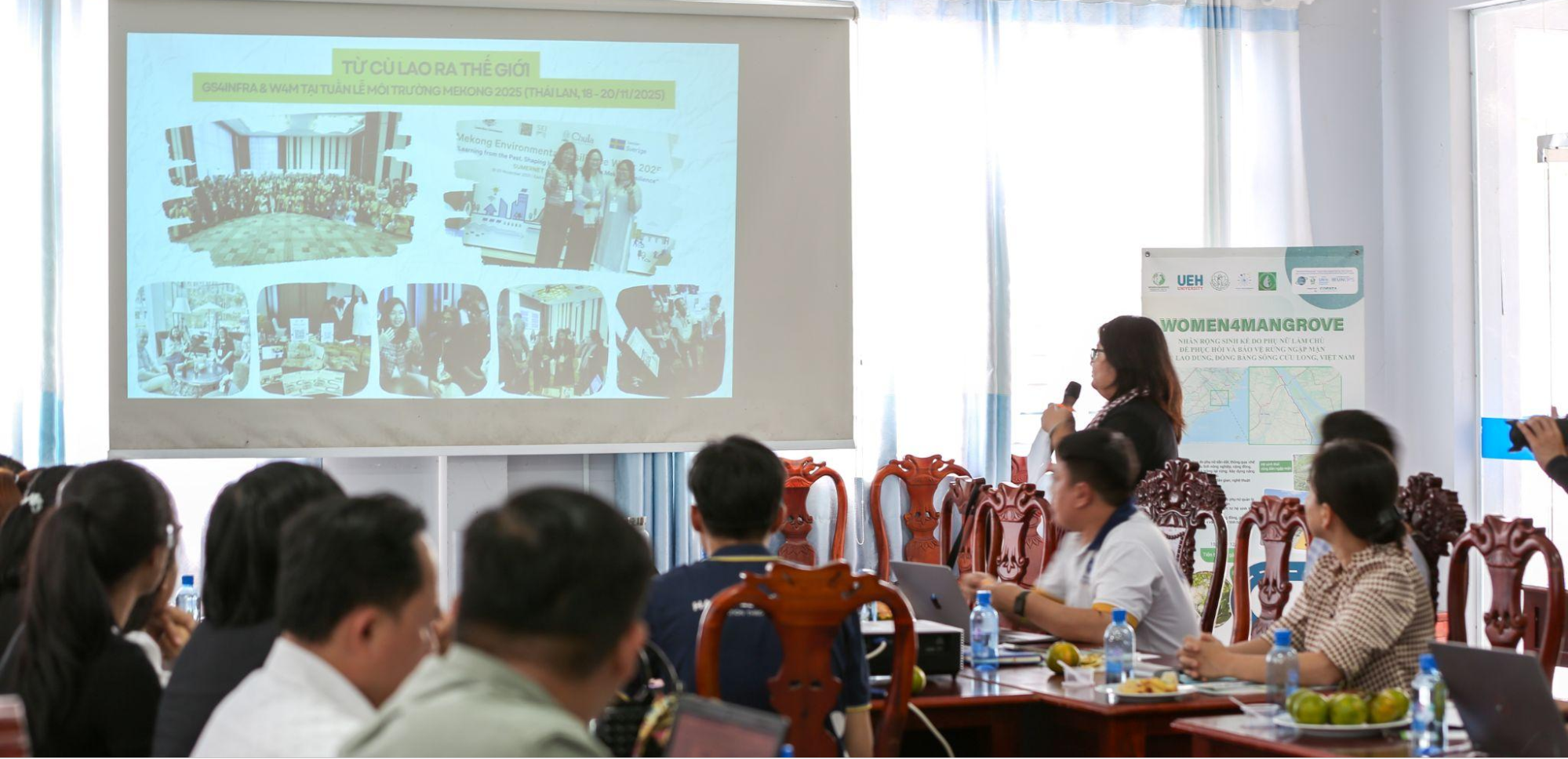
Delegates participating in and contributing to the discussion session
Delegates, partners, and the Women4Mangrove project team at an international professional exchange forum |
UEH Portal and Can Tho Newspaper, December 2025 https://www.ueh.edu.vn/khoa-hoc/du-an-women4mangrove-tang-cuong-bao-ton-dua-vao-cong-dong-va-du-lich-nong-nghiep-giao-duc-gan-voi-trong-rung-tai-dong-bang-song-cuu-long-75589 |
| 2 | GS4Infra Project – Strengthening Community Capacity for Water Infrastructure Management and Disaster Prevention in Cu Lao Dung, Soc Trang | Applied research; Collaboration with local authorities; Capacity-building training; Encouraging community participation in water resources and irrigation infrastructure management | On 2 January 2025, as part of the interdisciplinary GS4Infra project, a research team led by Nguyen Thi Thu Thuy, MA (UEH), worked with the Cu Lao Dung District Department of Agriculture and Rural Development to organise a capacity-building workshop for representatives of local authorities, social organisations, and residents. The workshop promoted equitable community participation in the planning, management, and decision-making of water infrastructure, particularly flood-protection dykes, irrigation canals, and salinity-control sluices. It combined analysis of saltwater intrusion, flooding, drought, and livelihood impacts with three participatory exercises: (1) jointly identifying and mapping major infrastructure in Cu Lao Dung and discussing challenges and opportunities in managing and using waterworks; (2) role-playing vulnerable groups, including women, children, older people, low-income residents, and ethnic minorities, to examine barriers to infrastructure access and propose equitable solutions; and (3) allocating a hypothetical budget among infrastructure priorities, including sluices, canal dredging, and related works, to practise investment prioritisation, planning, and resource allocation. Through these activities, UEH directly helped strengthen community capacity for water management suited to local conditions and promoted the inclusion of vulnerable groups in decisions about water infrastructure and climate adaptation.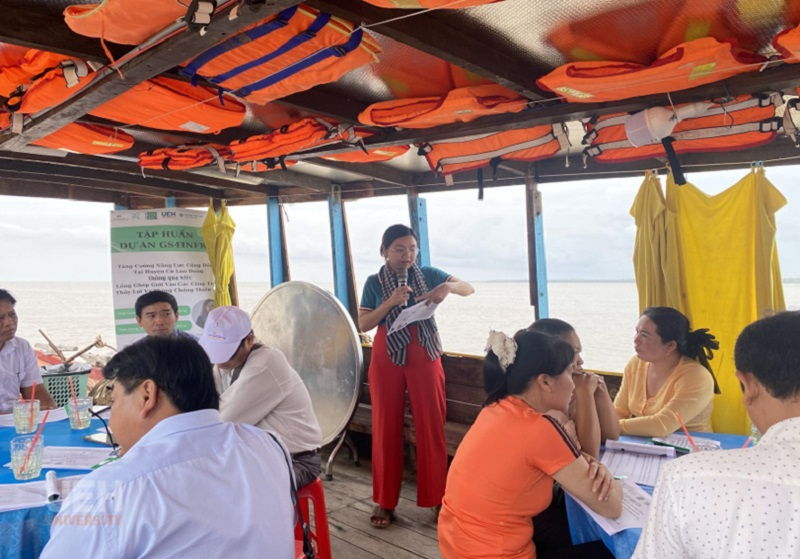 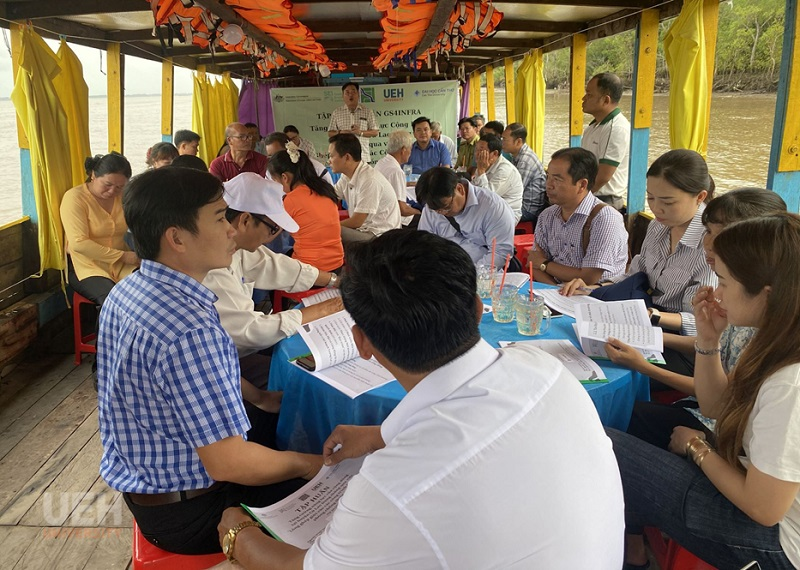
Capacity-building workshop held on a boat with participation from local representatives |
UEH Portal, ‘[GS4Infra Research Project] Community Capacity-Building Workshop in Cu Lao Dung District, Soc Trang’, 2 January 2025 https://ueh.edu.vn/cuoc-song-ueh/tin-tuc/du-an-nghien-cuu-gs4-infra-buoi-tap-huan-nang-cao-nang-luc-cong-dong-tai-huyen-cu-lao-dung-73128 |
| 3 | HAPRI – Research on Adaptive Water Resource Management in the Mekong Delta | Applied research; Scientific evidence for water management policy; Recommendations for sustainable water management practices | On 14 January 2025, UEH published an overview of research findings from the Health and Agricultural Policy Research Institute (HAPRI), highlighting studies by Dr Tran Anh Thong, Dr Tran Duc Dung, and Vo Van Oc, MA, on water security and adaptive management in the Mekong Delta. These studies examined challenges in managing freshwater and brackish water, particularly the imbalance between policies prioritising freshwater for rice production and demand for brackish water in aquaculture, with implications for ecosystems and farmers’ livelihoods. The researchers proposed better water management practices, including: (1) flexible water governance that balances freshwater and brackish-water needs according to local ecological conditions; (2) stronger water quality management, interprovincial coordination, and production models adapted to salinity intrusion; (3) multi-stakeholder governance allowing farmers and local communities to contribute to policymaking and irrigation infrastructure management; and (4) water reuse, improved irrigation efficiency, and nature-based solutions such as mangrove conservation and protection of soils and water resources.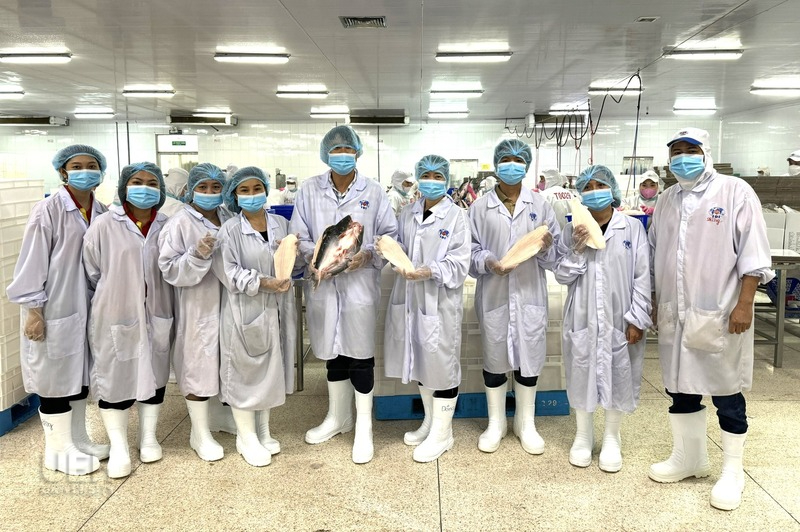 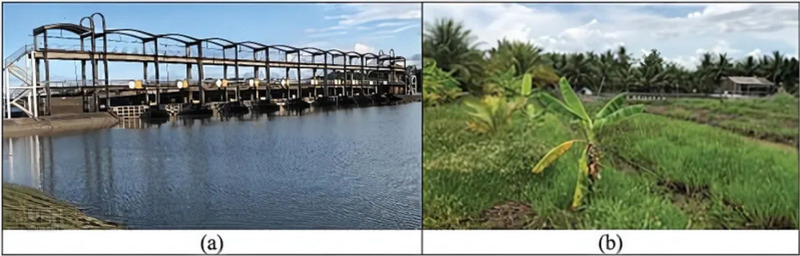
Research projects providing a scientific basis for water resource protection |
UEH Portal, ‘Food Security and Sustainable Agriculture: From Policy to Practice in the Context of Climate Change’, 14 January 2025 https://ueh.edu.vn/khoa-hoc/an-ninh-luong-thuc-va-nong-nghiep-ben-vung-tu-chinh-sach-den-thuc-tien-trong-boi-canh-bien-doi-khi-hau-73279 |
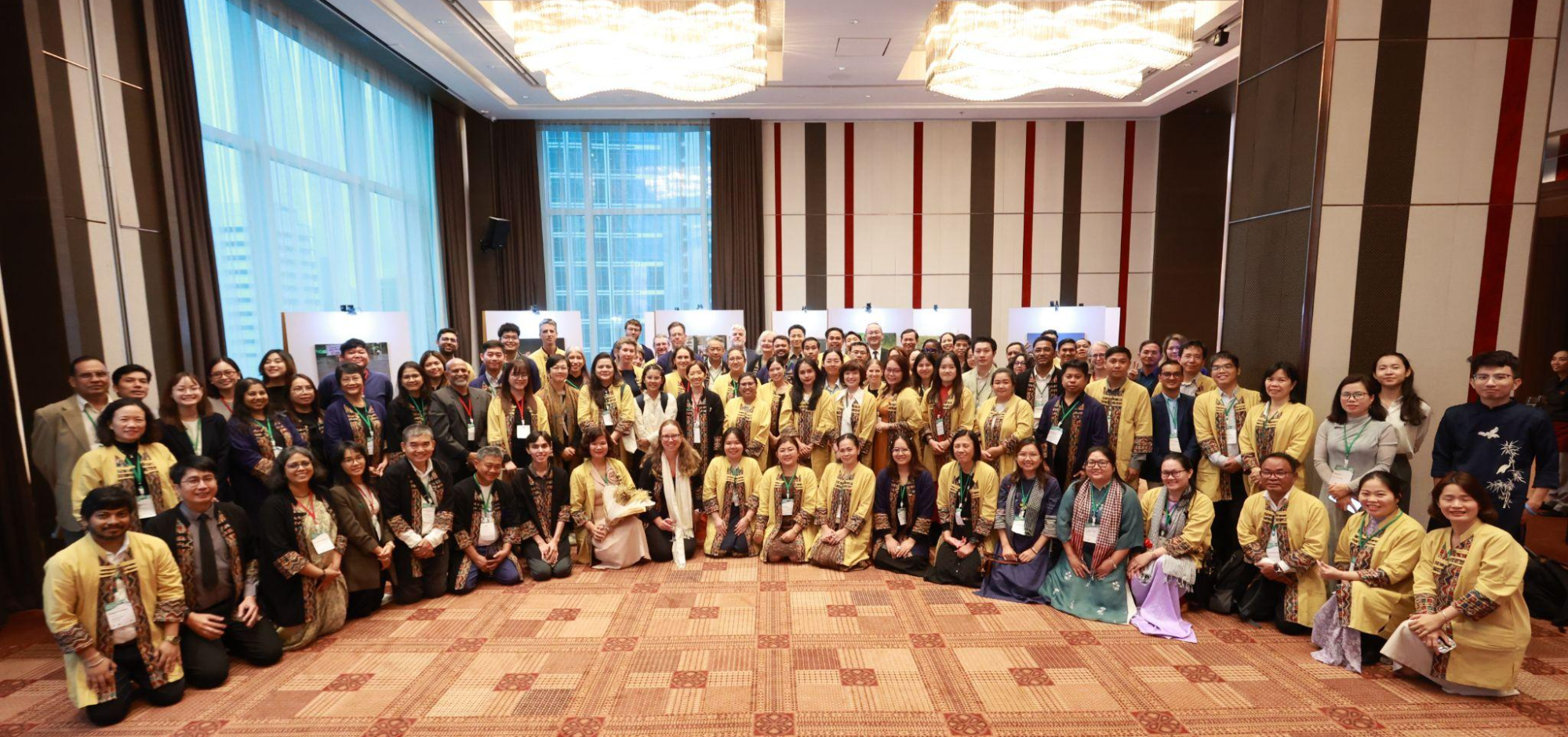
| 4 | Fourth International Design Competition – Sustainable Economic and Cultural Development through Connecting Urban Landscapes along the Cai River, Khanh Hoa Province | International design competition; Proposals for landscape restoration and sustainable land use | In 2025, UEH’s Institute of Smart City and Management (ISCM), UEH Nexus Campus, and the People’s Committee of Khanh Hoa Province jointly organised a competition to identify sustainable development solutions for the urban landscape along the Cai River in Khanh Hoa. Several proposals addressed wetland restoration, green spaces, and adaptation to riverside ecological conditions. Among them, ‘Nha Trang Elasticity’ and ‘Threshold – Design within the Pulse of Rising Water’ focused on wetland restoration, native vegetation, and public spaces adaptable to rising water levels. The competition thereby encouraged approaches to natural landscape conservation, riverside ecosystem restoration, and sustainable urban land use.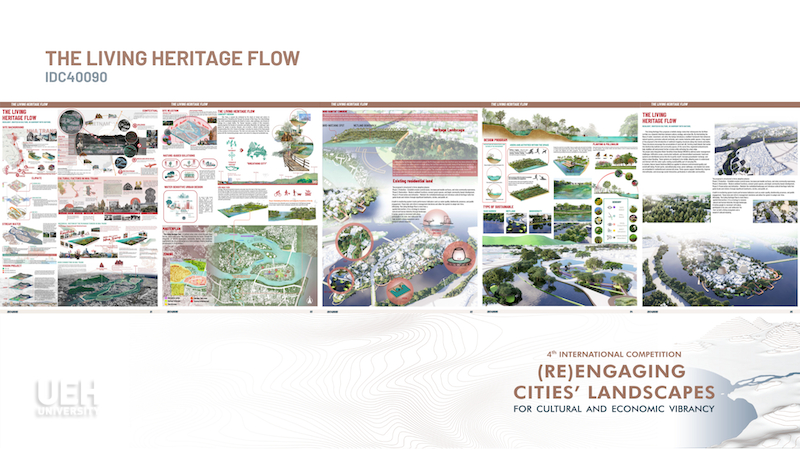 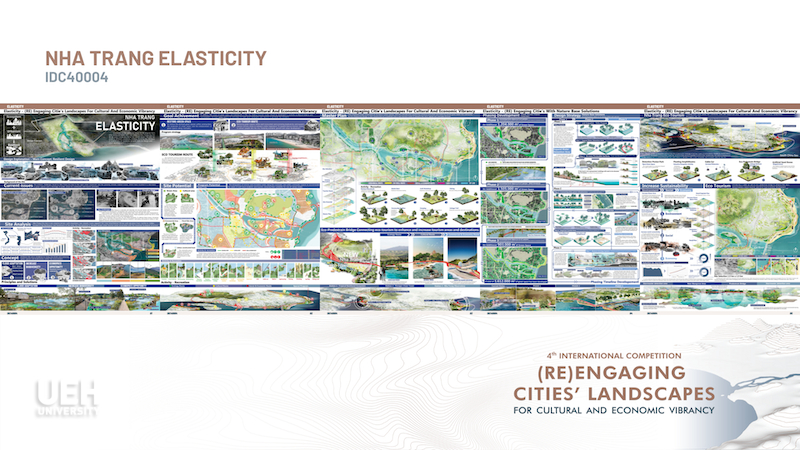 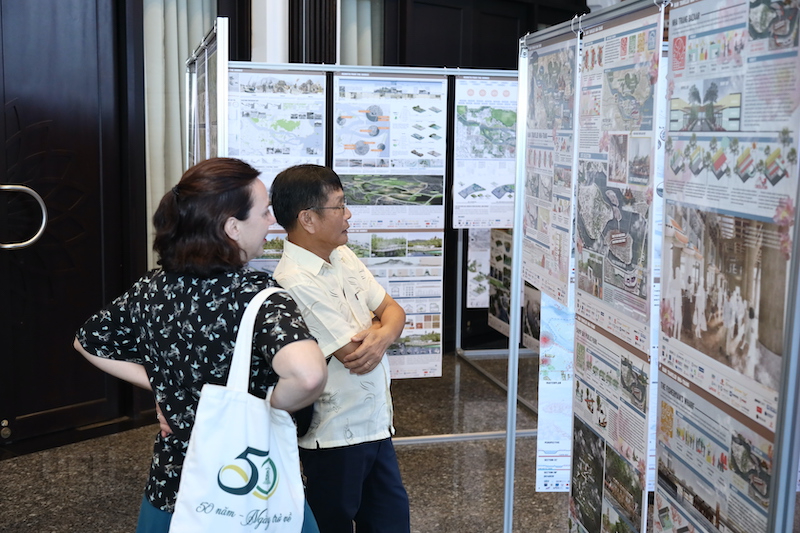
Exhibition of proposals to connect the urban landscapes along the Cai River in Khanh Hoa Province |
UEH Portal, ‘Fourth International Design Competition Awards Ceremony: Bringing Together Knowledge and Co-Creating Solutions for the Cai River Urban Landscape in Khanh Hoa Province’, 29 September 2025 https://www.ueh.edu.vn/cuoc-song-ueh/tin-tuc/le-trao-giai-cuoc-thi-thiet-ke-quoc-te-lan-4-cong-bo-nhung-y-tuong-phat-trien-ben-vung-tu-dong-chay-song-cai-khanh-hoa-74926?app=true&app=true |
- Conclusion
In 2025, UEH continued promoting water resource management and aquatic ecosystem protection through its Green Campus Regulations, applied research, and collaboration with local authorities and communities. These initiatives combined pollution-source control, research on hydrological and ecological conditions, and conservation solutions tailored to each area.
Notably, HAPRI’s research provided scientific evidence for adaptive freshwater and brackish-water management in the Mekong Delta. The GS4Infra project helped communities in Cu Lao Dung strengthen their participation in irrigation infrastructure management, while Women4Mangrove promoted mangrove conservation partnerships linked to local livelihoods. UEH’s collaboration with Khanh Hoa Province also contributed proposals for habitat restoration and wetland protection along the Cai River.
Through these activities, UEH progressively strengthened the scientific, policy, and community-partnership foundations for watershed management, seeking to balance water resource demands with natural ecosystem conservation. The results recorded in 2025 provide a basis for further development of a watershed management strategy reflecting local ecological conditions. Integrating site-specific aquatic species-diversity data, identifying corresponding conservation measures, and monitoring implementation outcomes remain priorities for improving the long-term protection, restoration, and sustainable use of aquatic ecosystems.