

The University of Economics Ho Chi Minh City (UEH) is committed to ensuring equal opportunities for all learners, particularly female students, to pursue and complete their academic programmes. Through an academic performance management system and gender-disaggregated monitoring of graduation progress, UEH can identify differences in academic outcomes and graduation prospects between female and male students and develop appropriate support measures. In 2025, UEH continued to provide academic advising, academic warnings, additional semesters, financial assistance and guidance on meeting graduation requirements. According to data publicly disclosed by the UEH Department of Training, the university-wide on-time graduation rate reached 83.6% in 2025, up from 74.6% in 2024. These efforts support programme completion and seek to narrow graduation gaps among student groups, contributing to SDG 5 – Gender Equality.
1. Monitoring Academic Progress and Gender-Disaggregated Graduation Rates at UEH
1.1. System for Measuring and Analysing Female Students’ Graduation Outcomes Compared with Male Students
As part of academic administration, UEH monitors students’ academic results and progress towards programme completion and analyses data by gender to identify differences that may affect graduation outcomes.
The monitoring system records key measures of academic progress, including grade point average (GPA), credits earned and completed on schedule, leave-of-absence status, participation in research activities, scholarships and on-time graduation status. Disaggregating data for female and male students enables the University to examine academic achievement and programme completion across these groups and identify learners at risk of delay.
For students whose academic results decline, whose credit accumulation falls short of requirements, or who encounter difficulties meeting academic conditions, support services coordinate with academic advisers and relevant units to provide guidance on adjusting study plans. Students can receive assistance with academic planning, course registration and completing the necessary requirements to continue their programmes.
This data-informed approach provides a basis for tracking gender gaps and strengthens opportunities for early intervention before academic difficulties persist and affect graduation outcomes.
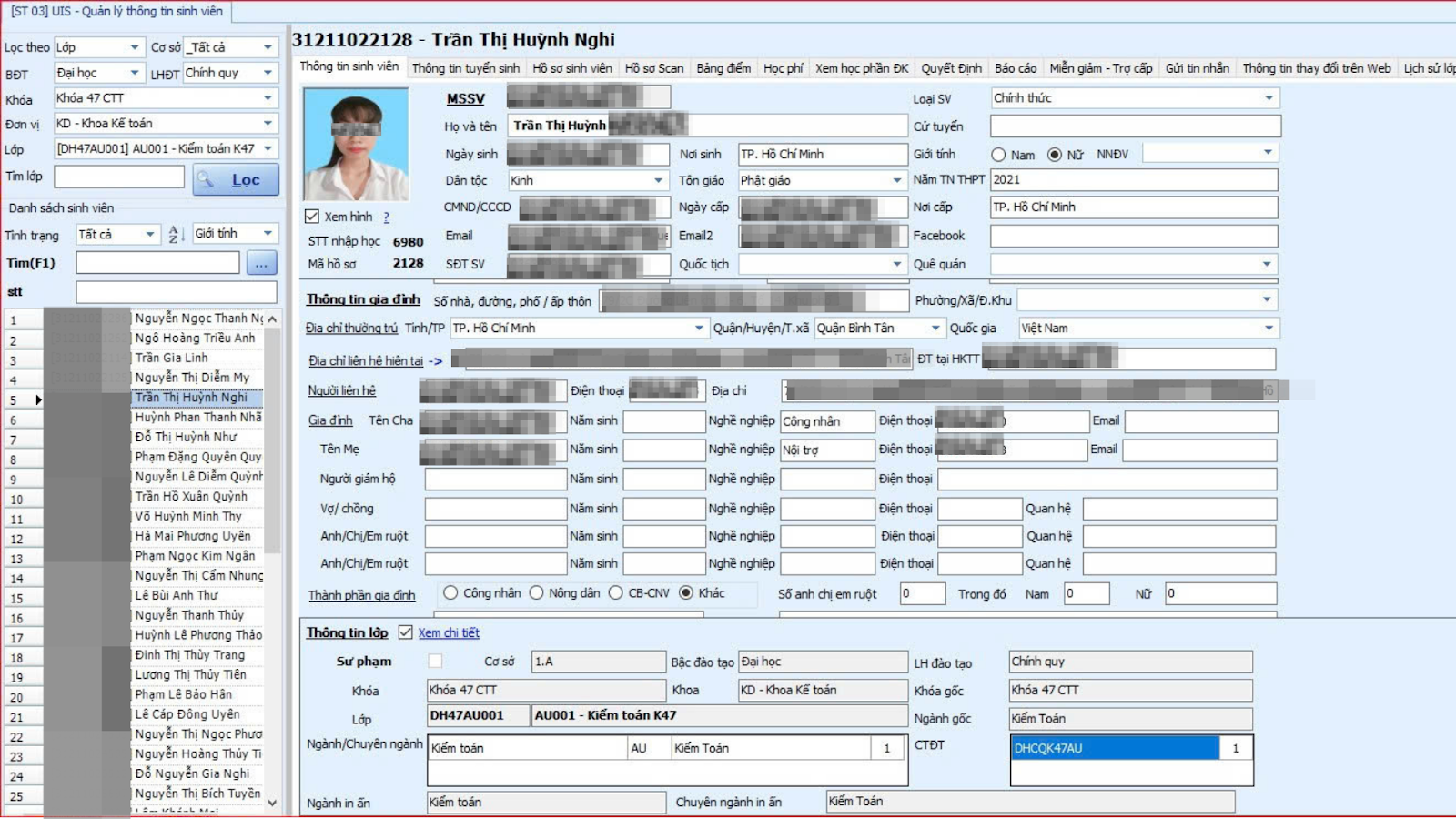
Student academic performance and graduation progress monitoring system
1.2. Gender-Disaggregated Graduation Outcomes at UEH in 2025
In 2025, UEH continued compiling graduation statistics by gender and level of study to monitor female and male learners’ participation and programme completion. Figures supplied by the UEH Department of Training cover full-time undergraduate programmes, part-time undergraduate programmes, master’s programmes and doctoral programmes.
Table. Graduation Outcomes by Gender at UEH in Academic Year 2025
| Level / Mode of Study | Total Graduates | Female | Male | Female Share |
|---|---|---|---|---|
| Full-time Undergraduate | 8,500 | 6,134 | 2,366 | 72.16% |
| Part-time Undergraduate | 789 | 558 | 231 | 70.72% |
| Total Undergraduate | 9,289 | 6,692 | 2,597 | 72.04% |
| Master’s | 1,109 | 656 | 453 | 59.15% |
| Doctoral | 21 | 10 | 11 | 47.62% |
| UEH Total | 10,419 | 7,358 | 3,061 | 70.62% |
According to statistics supplied by the UEH Department of Training, 10,419 learners graduated across UEH in academic year 2025, including 7,358 women (70.62%). At the undergraduate level, 9,289 students graduated, including 6,692 women (72.04%). At master’s level, 656 of 1,109 graduates were women; at doctoral level, 10 of 21 graduates were women.
Compiling graduation results by gender and level of study provides UEH with a basis for monitoring women’s participation and programme completion and informs analysis, evaluation and the development of appropriate academic support measures.
1.3. Academic Outcomes and Overall On-Time Graduation Rate in 2025
Alongside gender-based monitoring, UEH periodically publishes indicators of educational outcomes for institutional management and quality improvement.
According to the “Admissions and Training Performance Indicators” table in UEH’s public disclosures, the Department of Training reported:
| Performance Indicator | 2024 | 2025 |
|---|---|---|
| Overall Graduation Rate | 79.8% | 105.30% |
| Overall On-Time Graduation Rate | 74.6% | 83.6% |
The overall on-time graduation rate reached 83.6% in 2025, an increase of 9.0 percentage points from 2024. This indicates improvement within the scope of the graduation indicator publicly reported by UEH and provides a basis for continued analysis by learner group, including gender.
Monitoring graduation rates, on-time graduation and withdrawal indicators together helps UEH assess educational progress, identify potential barriers to student retention and design appropriate support measures.
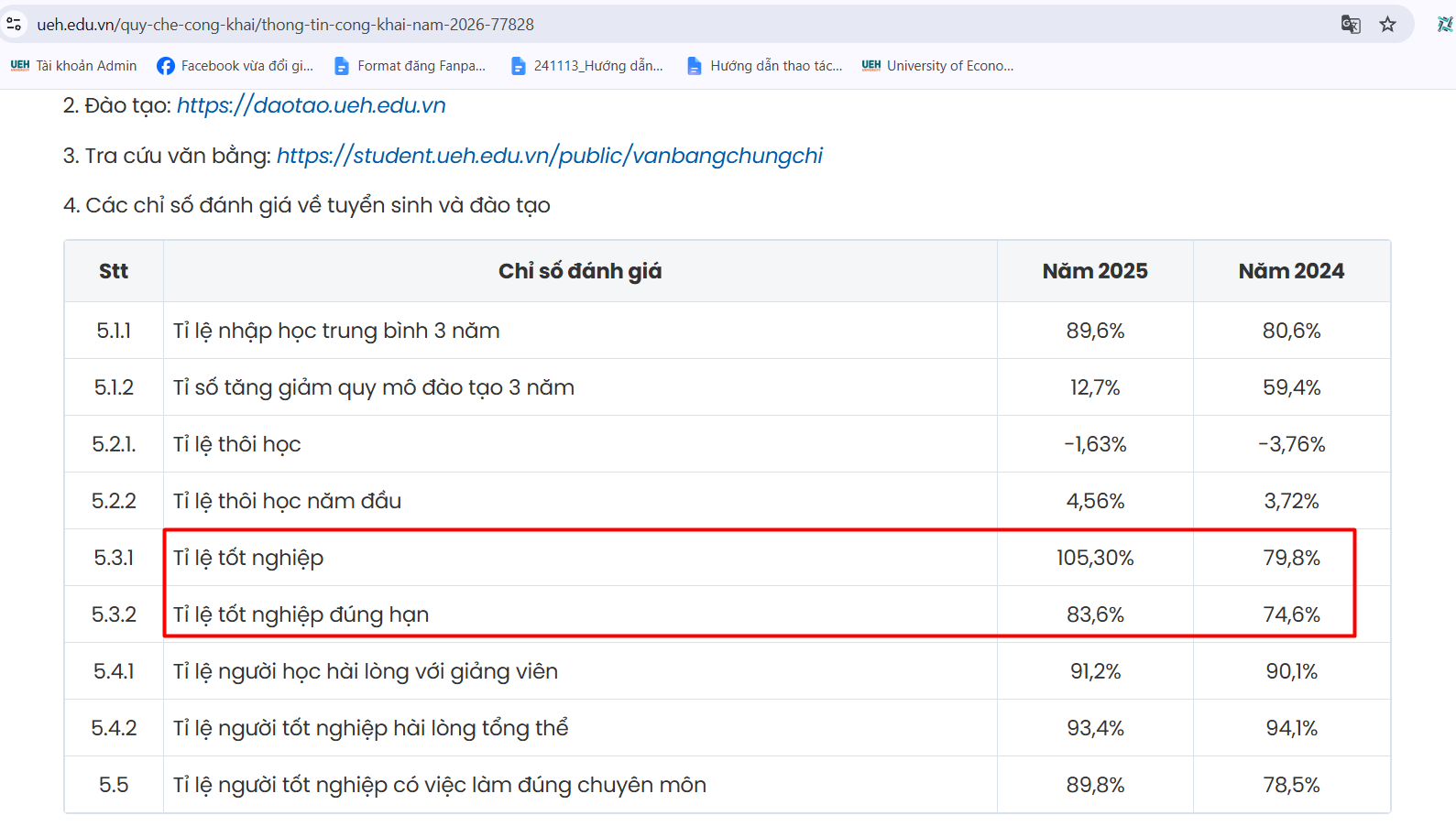
UEH’s published 2025 admissions and training performance indicators, highlighting the overall graduation rate and on-time graduation rate
Source: https://www.ueh.edu.vn/quy-che-cong-khai/thong-tin-cong-khai-nam-2026-77828
2. Measures to Support Academic Progress and Promote Equal Graduation Opportunities
2.1. Early Identification of Delayed Progress Through Academic Warnings
UEH operates an academic warning mechanism to identify students whose academic performance does not meet programme requirements, enabling them to adjust their study plans before delays extend their time to graduation.
For full-time undergraduate students covered by the relevant regulations, warnings are based on defined academic performance and credit accumulation criteria. Students may receive warnings if failed credits in a semester exceed 50% of registered credits, cumulative outstanding credits exceed 24, or semester and cumulative GPA fall below the thresholds specified for their year of study.
Warnings are issued at the end of the main semesters so that students can recognise difficulties, seek advice and adjust their academic pathways in a timely manner. The criteria apply generally and provide a basis for UEH to examine differences in academic risk between student groups.
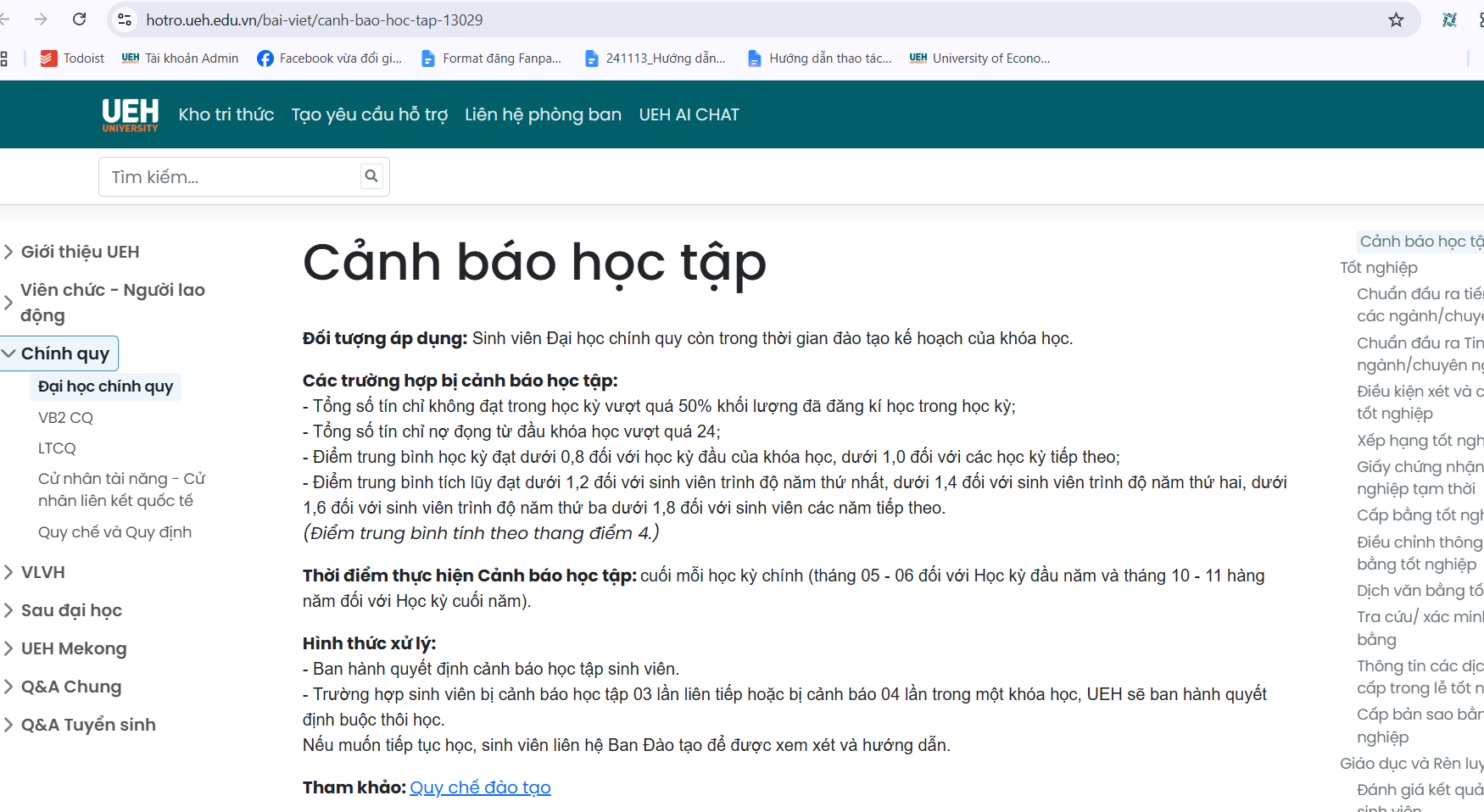
Public information about academic warnings
Source: https://hotro.ueh.edu.vn/bai-viet/canh-bao-hoc-tap-13029
2.2. Academic Advisers Support Students Throughout Programme Completion
Alongside the academic warning system, UEH maintains a network of academic advisers to help students develop study plans suited to their abilities and individual circumstances.
Under UEH’s published arrangements, each student class is assigned a faculty academic adviser. Advisers help learners plan their full course of study, select modules, understand curriculum requirements and resolve emerging academic difficulties.
Advising is supported through the Student Portal and UEH Academic Advising Platform, giving students access to information and semester-based consultations. The University also periodically evaluates advising activities, including guidance on study plans, administrative procedures and support for students facing special circumstances.
Through this mechanism, female and male students alike can access academic support, adjust their credit accumulation plans and reduce risks that could delay graduation.
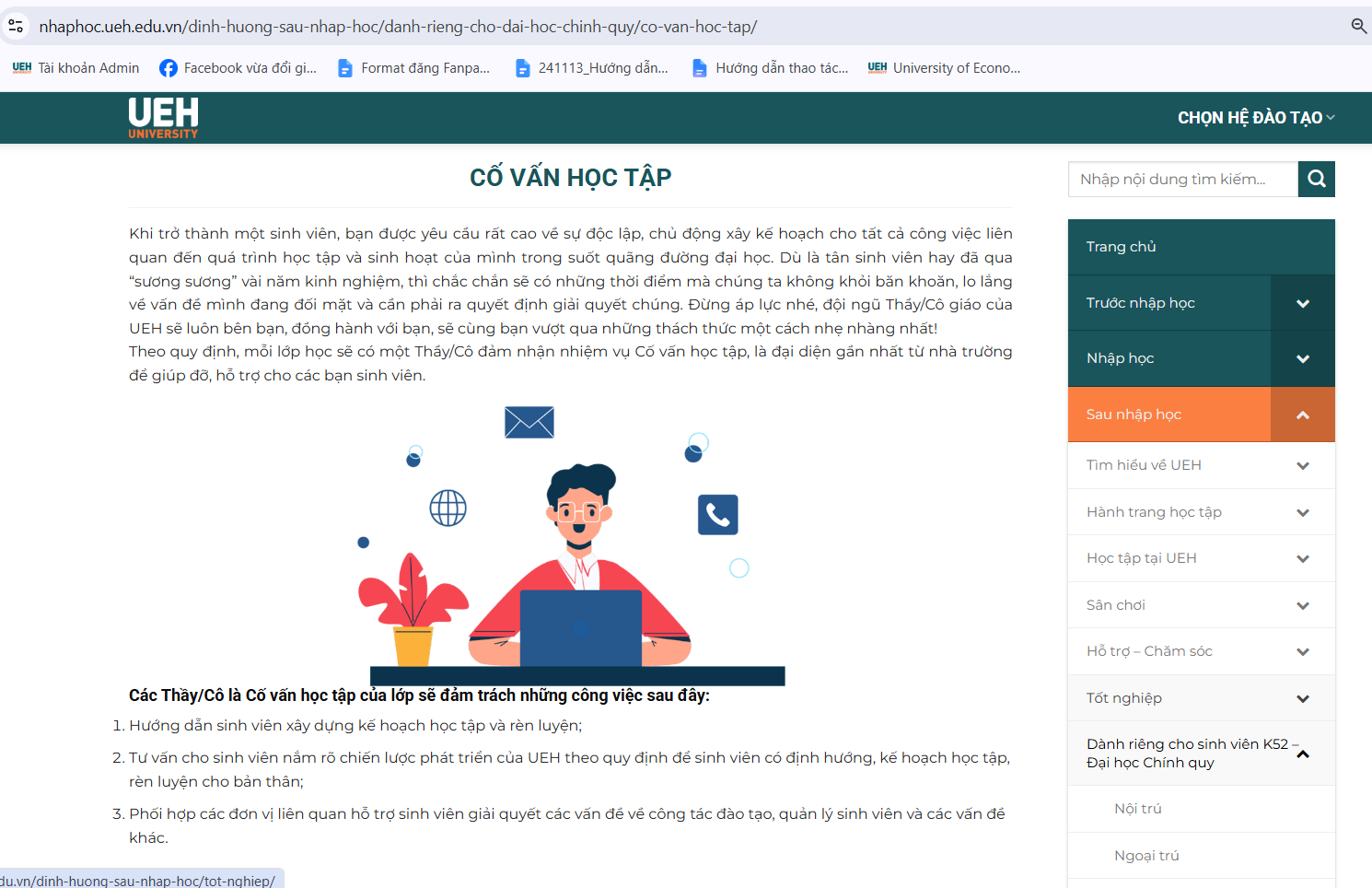
Academic advising information published on the UEH enrolment information portal
Source: https://nhaphoc.ueh.edu.vn/dinh-huong-sau-nhap-hoc/danh-rieng-cho-dai-hoc-chinh-quy/co-van-hoc-tap/
2.3. Flexible Credit Accumulation and Opportunities to Meet Graduation Requirements
To help avoid extended study periods, UEH offers main and supplementary semesters and allows students to register for repeated modules, improve academic results or request additional classes outside the standard schedule, subject to programme requirements and availability.
Supplementary semesters give students additional opportunities to complete outstanding modules, while demand-based course registration helps them adjust credit accumulation to their learning capacity and personal plans.
At the programme completion stage, UEH publicly sets out graduation assessment and recognition requirements, including module completion, learning outcomes and academic obligations under each programme. Multiple graduation review rounds each year allow eligible students to complete documentation and procedures when they meet the required conditions.
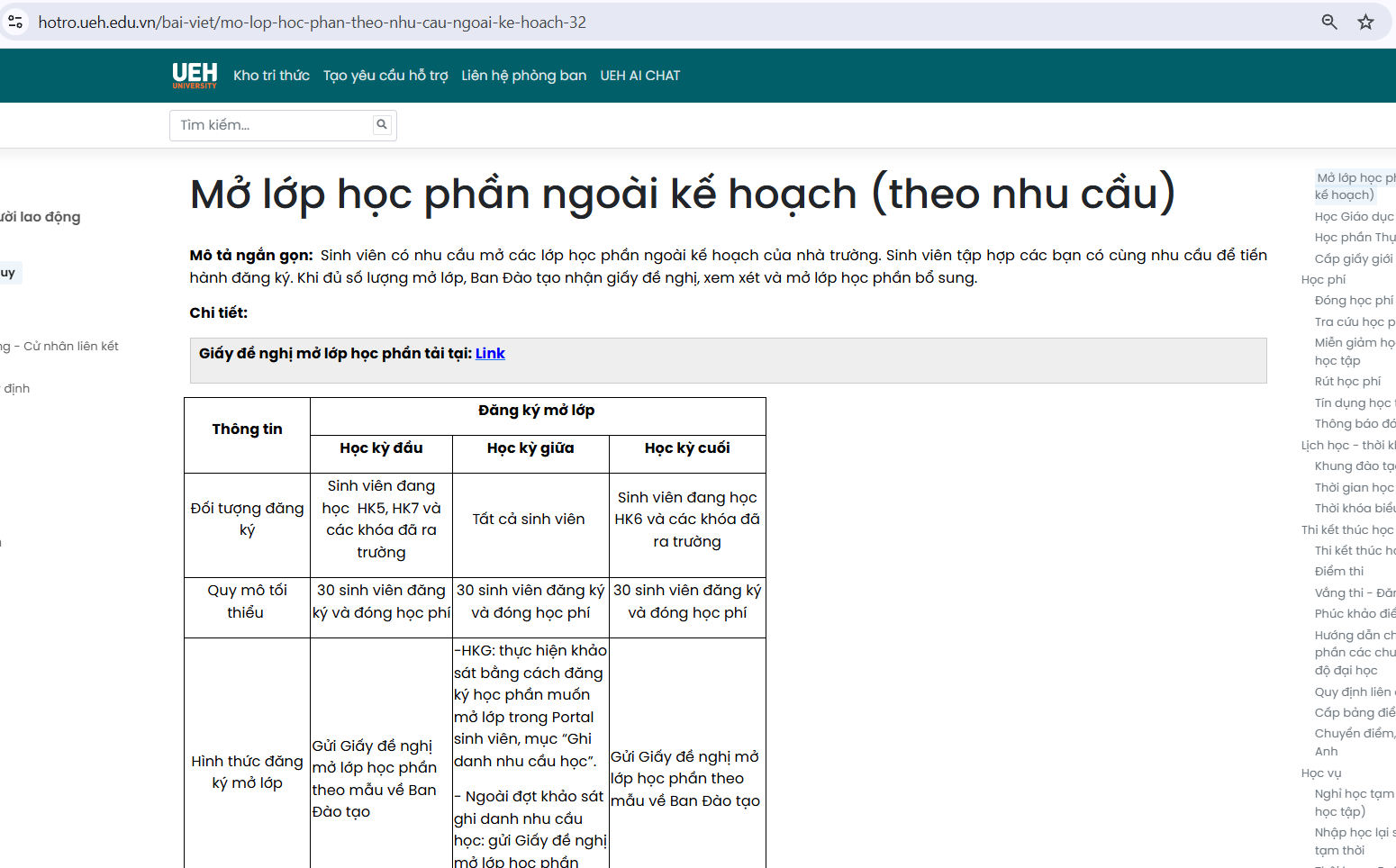
Information on graduation assessment and additional classes offered outside the standard schedule
Sources:
https://hotro.ueh.edu.vn/bai-viet/mo-lop-hoc-phan-theo-nhu-cau-ngoai-ke-hoach-32
https://hotro.ueh.edu.vn/bai-viet/dieu-kien-xet-va-cong-nhan-tot-nghiep-309
In 2025, UEH continued standardising information about programme learning outcomes, including Notice No. 826/TB-DHKT-DT dated 11 April 2025 on graduation requirements for Cohort 50 full-time undergraduate students. These guidelines help students identify requirements early and reduce the risk of delayed graduation due to missing information or unmet learning outcomes.
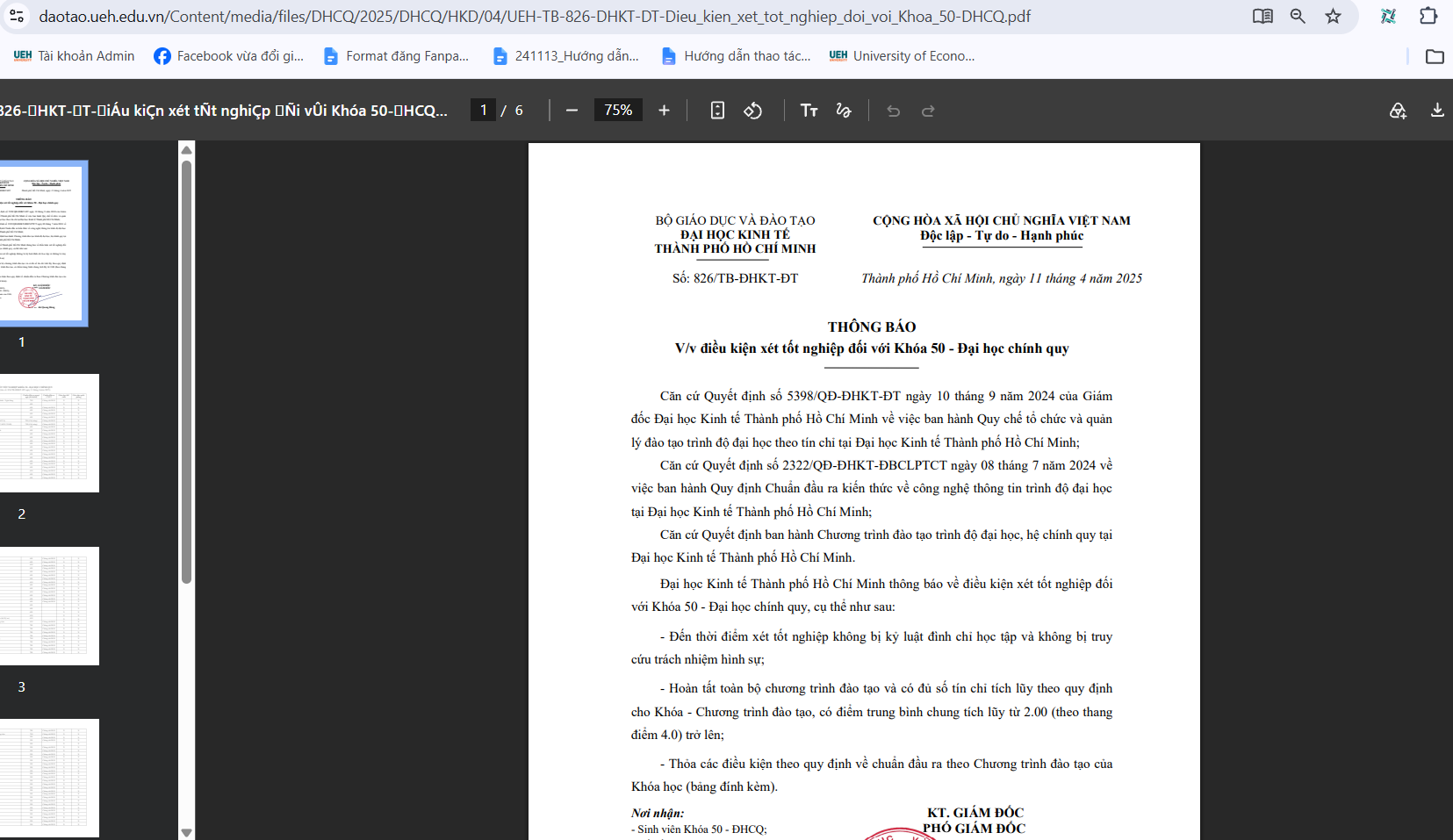
Notice No. 826/TB-DHKT-DT dated 11 April 2025 on graduation requirements for Cohort 50, issued by the UEH Department of Training
2.4. Financial Support to Reduce Interruptions to Study
Alongside academic measures, UEH implements financial support policies to reduce the effects of economic hardship on students’ continued participation in academic programmes.
In 2025, UEH introduced support for students affected by storms, flooding and other natural disasters, including a 10% tuition fee reduction subject to eligibility. According to public information from the Department of Student Affairs, support was provided under the relevant decisions and approved student lists, helping ease financial pressure on learners directly affected by disasters.
For female students experiencing financial hardship, access to general financial assistance schemes can help reduce the risk of interruption, leave of absence or delayed completion due to economic circumstances.

Information on tuition fee reductions for students affected by storms and flooding in 2025
Source: https://dsa.ueh.edu.vn/hoc-bong/dssv-giamhp-dot-1/
Source: UEH Department of Student Affairs – List of students receiving tuition fee reductions due to storms and flooding in 2025, including support levels and eligibility criteria.
3. Results of Graduation Monitoring and Support Measures in 2025
In 2025, UEH continued integrating academic performance monitoring with student support measures, from academic warnings and individual advising to supplementary semesters and guidance on fulfilling graduation requirements. These activities are provided on the principle of equal access, while creating a basis for analysing learning outcomes by gender and identifying and progressively addressing differences in graduation opportunities.
Summary of Policies and Activities Implemented in 2025
| Policy / Activity | Scope | Beneficiaries | Implementation | Results and Impact |
|---|---|---|---|---|
| Gender-Disaggregated Monitoring of Academic Progress and Graduation | UEH academic administration | Female and male students | Monitoring GPA, accumulated credits, leave-of-absence status, scholarships and on-time graduation to support comparison of outcomes between female and male students. | Establishes a data basis for identifying disparities and providing needs-based support. Source: UEH Future 5.6.7. |
| Public Disclosure of Graduation Indicators for 2025 | UEH, within the reporting scope of the Department of Training | UEH learners | Compilation of graduation rates, on-time graduation rates and other training indicators. | Overall on-time graduation rate: 83.6%, compared with 74.6% in 2024. Source: UEH Portal, article 77828. |
| Periodic Academic Warnings | Full-time undergraduate programmes | Students at risk of delayed progress | Warnings based on failed credits, outstanding credits and semester and cumulative GPA thresholds. | Supports early identification of academic risks and timely adjustments to study plans. Source: UEH Knowledge Base. |
| Academic Advising and Programme-Wide Study Planning | Classes assigned academic advisers under UEH regulations | Female and male students | Advice on module selection, credit accumulation, adjusting study plans and support during academic difficulties. | Improves access to support and opportunities to complete programmes according to individual circumstances. Source: UEH Enrolment Portal. |
| Supplementary Semesters and Demand-Based Course Offerings | UEH academic programmes | Students needing to repeat modules, improve results or adjust their study schedules | Opportunities to earn credits and complete outstanding modules. | Helps reduce the risk of extended study periods. Source: UEH Knowledge Base. |
| Publication of Cohort 50 Graduation Requirements in 2025 | Cohort 50 full-time undergraduate students | Students covered by the programme | Guidance on foreign language, information technology and other graduation requirements. | Helps students check and meet graduation requirements on schedule. Notice No. 826/TB-DHKT-DT, dated 11 April 2025. |
| Tuition Assistance for Students Affected by Natural Disasters in 2025 | UEH, subject to support eligibility | Students affected by natural disasters, including eligible female students | 10% tuition fee reduction under UEH’s published support policy. | Reduces financial pressure and helps prevent interruption of studies due to hardship. Source: UEH Department of Student Affairs. |
| Graduation Assessment and Recognition of Programme Completion | Programmes under the UEH academic schedule | Learners who meet graduation requirements | Review and recognition of graduation and programme completion under UEH regulations, with multiple graduation rounds each year. | UEH announced 6,833 graduates in the first 2025 graduation round and 4,395 in the second. Source: first-round announcement; second-round announcement. |
4. Continuing Gender-Based Monitoring and Improving Graduation Support
During 2023–2024, UEH reported that the gap between female and male students in on-time graduation rates narrowed from 1.0 to 0.5 percentage points, according to figures published in its sustainability evidence. These figures illustrate the role of gender-disaggregated tracking in assessing programme completion.
In 2025, UEH continued managing academic progress and expanding access to advising and assistance with graduation requirements. The university-wide on-time graduation indicator increased from 74.6% in 2024 to 83.6% in 2025, according to public disclosures by the Department of Training.
Combining data systems, warning mechanisms and support programmes enables UEH to continue examining gender-based outcomes, identify students who need assistance and promote fair opportunities for completing study programmes according to individual circumstances.
5. Conclusion
By monitoring academic performance and graduation outcomes by gender, UEH continues to develop data-informed academic governance oriented towards fairness, transparency and student support. Academic progress monitoring, advising, early warnings, supplementary semesters, financial assistance and graduation guidance help female and male students complete their programmes.
The improved overall on-time graduation rate in 2025 reflects changes in teaching administration and student support and provides a foundation for further analysis of graduation differences between genders and refinement of academic support measures.
By combining gender-disaggregated outcome measurement, early identification of delayed progress and appropriate support measures, UEH seeks to narrow graduation gaps, safeguard continuous learning opportunities and promote women’s equal participation in higher education, contributing to SDG 5 – Gender Equality.