


The University of Economics Ho Chi Minh City (UEH) maintained an institutional sustainable food purchases policy prioritising local and responsibly sourced products, as set out in its Green Campus Practice Regulation.
The policy requires university-managed food suppliers to meet food-safety and traceability requirements while prioritising local, organic and VietGAP- or HACCP-certified ingredients. In 2025, UEH applied these requirements to catering and food-service procurement at its Ho Chi Minh City campuses and UEH Mekong, integrating sustainability expectations into supplier selection and contract management.
Articles 6 and 16 of the Green Campus Practice Regulation establish responsibilities for supplier screening, documenting food origins and giving preference to food-service providers committed to responsibly sourced or farmed seafood. These measures link the university’s procurement decisions with sustainable food supply chains and responsible consumption.
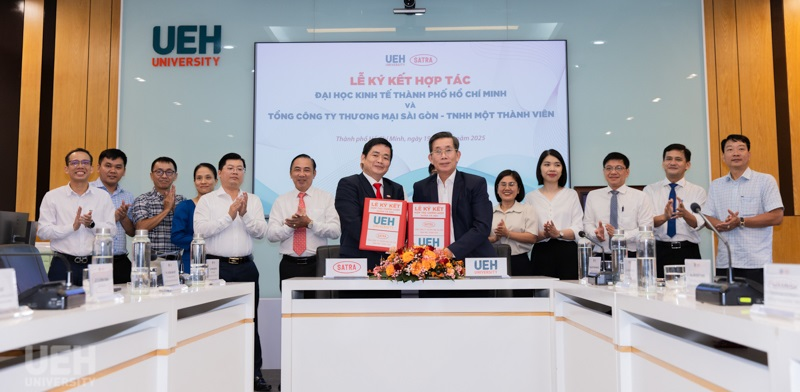
In June 2025, UEH signed a cooperation agreement with Saigon Trading Corporation (SATRA), providing a basis for future collaboration on traceable food supply and affordable retail channels. The agreement was a framework for potential implementation and should be distinguished from actual food purchases already documented in 2025.
| Policies / Activities | Target beneficiaries | Deployment | Results / Impacts |
| Regulations on Green Campus Practices (Decision No. 2059/QD-DHKT-CSVC) | Applicable to: procurement units (Facilities Department, Finance and Accounting Department, UEH Mekong), canteens, supermarkets, food suppliers, and event organizers at all UEH campuses.
Beneficiaries: students, staff, visitors to UEH; local producers. |
In 2025, UEH continued to apply the Green Campus Practice Regulations to the selection, procurement, and supply of food under the University’s management in Ho Chi Minh City and UEH Mekong. The specific priorities for sustainable food procurement are as follows:
Article 6, Clause 1 – Ethical Supply Policy: Requires purchasing food only from suppliers with food safety certificates, clear and traceable origins; prioritizing local, organic, or VietGAP/HACCP certified products. Article 6, Clause 4: Internal units are responsible for selecting suitable suppliers, maintaining records of origin, and reporting periodically to the UEH Green Campus Coordination Board. Article 6, paragraph 5: Suppliers who violate ethical, safety, or environmental standards are subject to suspension and inclusion on a non-compliant list. Article 16, paragraphs 1 and 2 – Responsibilities of the procurement management unit: Requires the development of procurement policies, supplier selection, and the incorporation of Green University criteria into the process of selecting suppliers of goods and services. Article 16, Clause 4: Priority shall be given to selecting food service providers that are committed to purchasing seafood from responsibly sourced or sustainably farmed sources with certifications. Article 16, paragraph 6: Commitment not to purchase or use aquatic products that are on the list of prohibited species, originate from destructive fishing practices, or violate regulations on illegal, unreported, and unregulated (IUU) fishing. These regulations establish a mechanism that prioritizes the procurement of food from local and sustainable sources, combining requirements for supplier selection and control with transparency in product origin.
Image: UEH’s Green Campus Practice Regulations Source of evidence: Regulations on Green University Practice – Green Campus (issued with Decision No. 2059/QD-DHKT-CSVC) (UEH Green Campus – currently in effect document) Source 1 – Green University Practice Guidelines, Sections 6 and 16: https://gogreen.ueh.edu.vn/quy-dinh-thuc-hanh-dai-hoc-xanh Source 2 – UEH Future, “12.2.1. Ethical Supply Policy”, November 3, 2025: https://future.ueh.edu.vn/1221-chinh-sach-cung-ung-co-dao-duc/ |
UEH maintains the policy of prioritizing sustainable food procurement within the scope of food procurement and supply activities under the University’s management.
The responsible units must implement the supplier selection criteria and track product origin in accordance with current regulations. 100% of canteens and food stores under UEH’s management are implementing the Green University Practice Regulations. 68% of the total cost of purchasing food ingredients at canteens is allocated to local suppliers in the Mekong Delta and surrounding areas, an increase of 3 percentage points compared to 65% in 2024. According to the 2025 aggregated results from the food service management unit, 46% of products within the scope of procurement statistics are certified organic, an increase of 6 percentage points compared to 40% in 2024. The results demonstrate that prioritizing local sourcing and organic food is not only stipulated in policy but also implemented in practice in food supply at UEH by 2025. |
| Cooperation agreement for the period 2025–2030 with Saigon Trading Corporation (SATRA) | Beneficiaries: UEH students, staff, and workers; farmers and producers in SATRA’s linked raw material areas. | On June 19, 2025, UEH and SATRA signed a cooperation agreement (effective from July 1, 2025 to June 30, 2030), which includes investment in facilities serving the UEH community, promoting responsible consumption, and welfare programs for staff and students.
According to the cooperation plan, SATRA will install vending machines, expand Satrafoods stores within the premises, and explore opening a Satramart supermarket at the Nguyen Van Linh location. Organize mobile markets at dormitories featuring clean produce from partner farming areas; offer “green hour with good prices” during lunch and dinner hours.
Image: Overview of the signing ceremony of the cooperation agreement between UEH and SATRA Source of evidence: UEH and Saigon Trading Corporation – Limited Liability Company (SATRA) signed a cooperation agreement (UEH Portal, June 20, 2025) – Original image file |
Based on this cooperation, UEH aims to research and gradually implement solutions to expand the supply channel for safe, traceable food, combined with price incentives and the introduction of agricultural products from linked raw material areas in the coming years.
The agreement with SATRA is defined as the result of establishing a cooperation relationship in 2025, complementing UEH’s policy of prioritizing sustainable food procurement; actual supply and procurement activities will be recorded at each implementation stage. This includes a commitment that 100% of products supplied to the UEH community will have clear origins; fresh produce will be electronically traceable. Clean agricultural products from the Mekong Delta and Central Highlands are being directly supplied to the UEH community through a raw material sourcing model. |
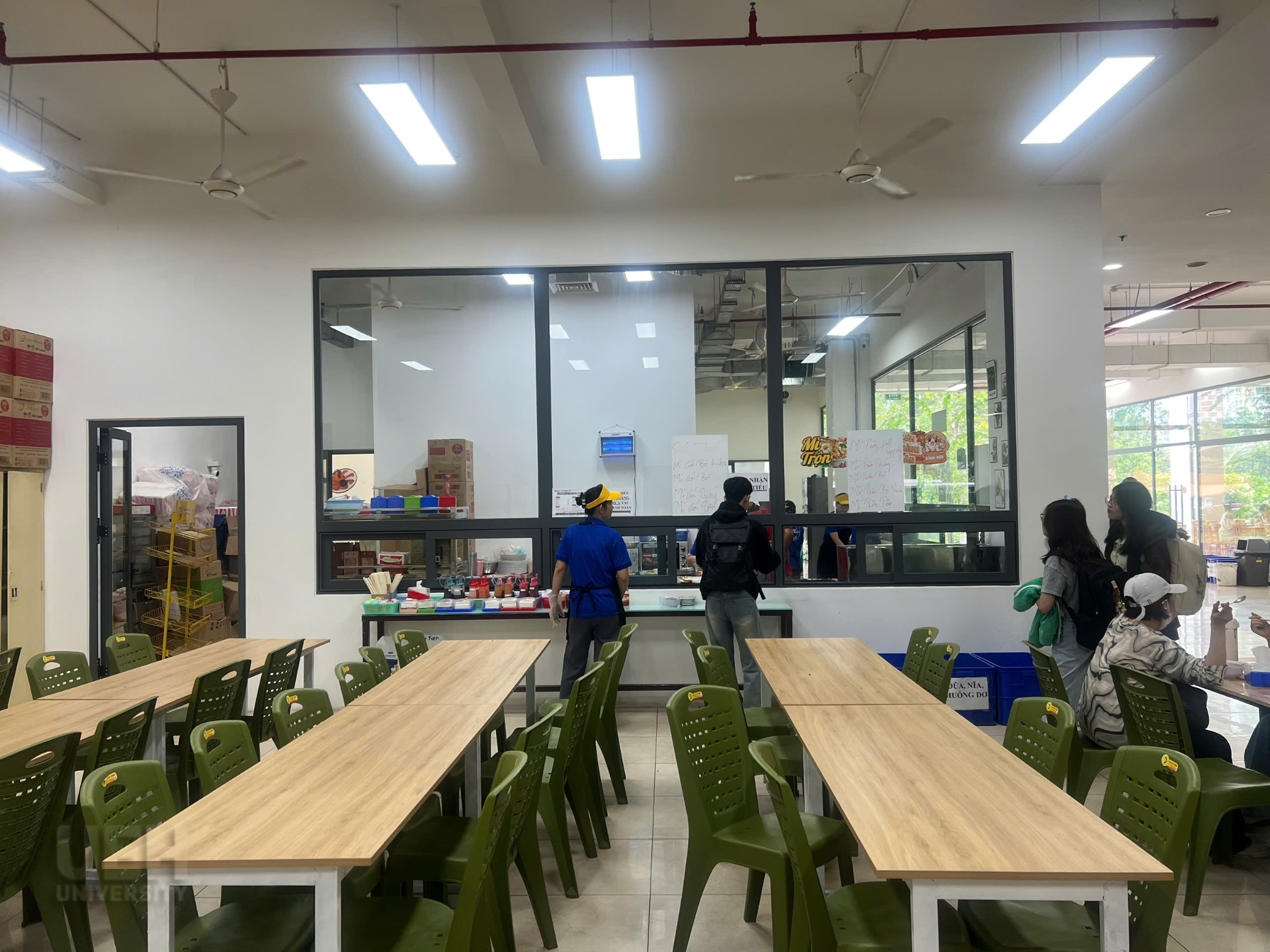
| Safe canteens, healthy choices, and reasonable prices at UEH campuses. | Beneficiaries: students, staff, and workers at UEH campuses and dormitories. | Canteens, supermarkets, and convenience stores are conveniently located at the Nguyen Van Linh campus and other campuses to serve the dining needs of students.
The cafeteria offers vegetarian and eco-friendly options at reasonable prices in accordance with the University Green Food Policy. Food Safety Action Month 2025: The Student Care Committee guides students in choosing clean food, maintaining hygienic canteens, and following a balanced diet based on the Ministry of Health’s nutritional pyramid.
Image: The canteen ensures quality service and meets the dining needs of students at the Nguyen Van Linh campus. Source of evidence: Nguyen Van Linh Campus – UEH’s green, smart, and international learning space (UEH Portal – page without a posting date, image uploaded September 13, 2025) – Original image file
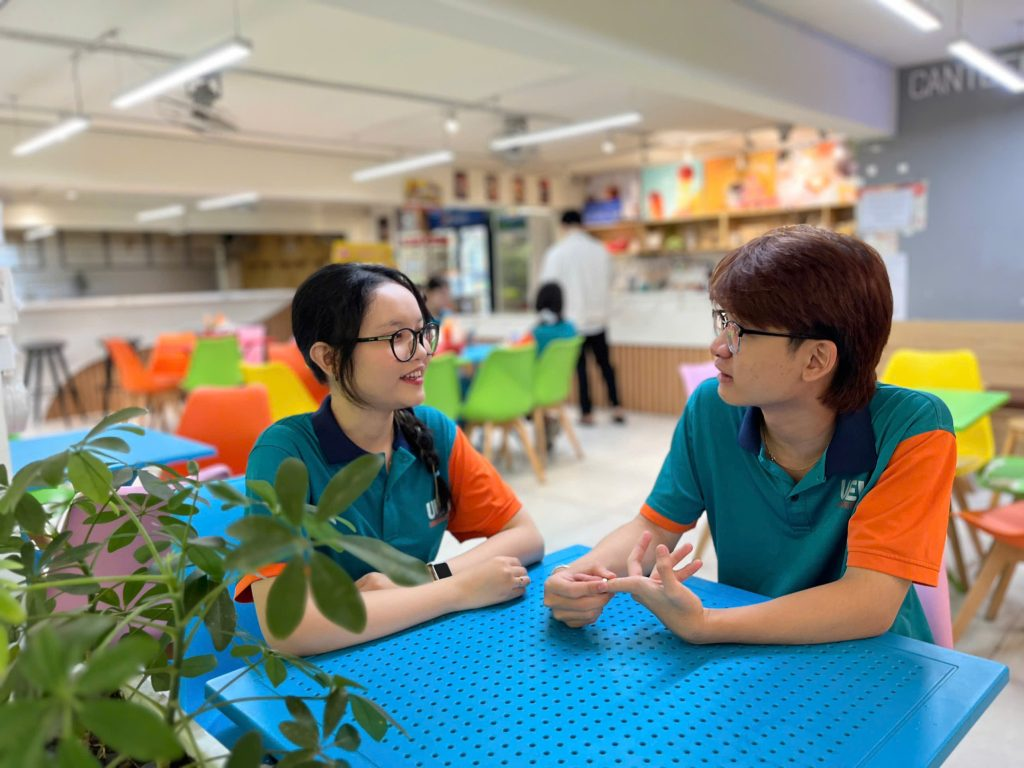
Image: UEH students choose clean and hygienic canteen areas as their dining spots. Source of evidence: Food Safety Action Month 2025 (UEH Portal, April 15, 2025) – Original image file |
Students have access to safe, traceable meals right on campus.
Raising awareness about food safety and encouraging the selection of clean and healthy foods. |
| Sustainable food procurement policy in the UEH catering system by 2025 | The procurement management units and the food service providers, canteens, and food stores are under the management of UEH. |
In 2025, UEH continued to manage food and beverage services at its campuses through regulations and operating contracts with suppliers, including canteens at the Nguyen Van Linh campus, Campus B, and dormitories. On April 10, 2025, UEH signed contract number 0404/HĐ-UEH-DNH with DNH Investment and Development Joint Stock Company for the operation of the canteen on the first floor of building N1 at the Nguyen Van Linh campus. This activity demonstrates the University’s continued implementation of the mechanism for selecting, signing contracts with, and managing food service providers during the evaluation year. In the service management process, the Green University Practice Code defines requirements for food safety, traceability, and prioritizing local, sustainable sourcing as a basis for supplier selection. Source 1 – Contract file for operating the canteen at campus N, No. 0404/HĐ-UEH-DNH dated April 10, 2025, according to data provided by the unit. Source 2 – Green University Practice Guidelines: https://gogreen.ueh.edu.vn/quy-dinh-thuc-hanh-dai-hoc-xanh Source 3 – UEH Portal, “Nguyen Van Linh Campus – UEH’s Green, Smart and International Learning Space”, 2025:
|
UEH maintained its food service system and supplier management mechanism in 2025, linked to ethical sourcing policies and prioritizing sustainable food. The canteen operating contract serves as evidence of the management mechanism and does not replace documentation of origin or certification of purchased food products. |
These examples confirm that UEH has policies and practices that prioritize the procurement of locally sourced, sustainable food, while expanding the supply channel of clean, traceable agricultural products to the student community.
Goals and Results for 2025
| Target | Results in 2025 |
| Policies prioritizing local, sustainable food. | Continue to apply Article 6, paragraph 1 of the Green University Practice Regulations. |
| Supplier selection and monitoring mechanism | Article 6 paragraphs 4–5 and Article 16 paragraphs 1–2 |
| Prioritize responsibly sourced seafood. | Article 16, paragraphs 4 and 6 |
| Managing catering service contracts in 2025 | There is a contract for operating the canteen at facility N, signed on April 10, 2025. |
| Developing supply chain partnerships | Signing of the UEH–SATRA cooperation agreement on June 19, 2025 |
| Percentage of canteens and food outlets implementing the Green University Practice Regulations. | 100% |
|
The proportion of raw material costs for the canteen purchased from suppliers in the Mekong Delta and surrounding areas. |
68% >65% in 2024 |
|
Percentage of certified organic products |
46% |
Results of implementing the sustainable food procurement policy in 2025 and a comparison with 2024.
In 2025, UEH continued to implement its policy of prioritizing the procurement of food from local, organic, and sustainably certified sources through its procurement management system, canteen, and catering service providers. This will be carried out in accordance with the Green University Practice Regulations, specifically Articles 6 and 16, which establish requirements for responsible supplier selection, traceability, and prioritizing products that meet sustainability criteria.
The 2025 procurement results show that 68% of the total food ingredient costs at the canteens are allocated to local suppliers in the Mekong Delta and surrounding areas. In addition, 46% of the products within the statistical scope are certified organic, according to the 2025 aggregated data from the food service management unit. These results reflect the continued prioritization of local sourcing and certified food in the actual operation of the UEH canteen system.
Compared to 2024, when the proportion of food ingredient procurement costs from local suppliers reached approximately 65% and the percentage of certified organic products reached 40%, UEH recorded corresponding increases to 68% and 46% in 2025. This result demonstrates the continuity and effectiveness of the policy prioritizing food procurement from local and sustainable sources within the canteen system.
In addition to the actual procurement results, UEH continues to maintain the mechanism for selecting and managing suppliers according to the Green University Practice Regulations; signed a contract to operate the canteen at the Nguyen Van Linh campus in April 2025 and established a cooperative relationship with SATRA in June 2025, creating a foundation for developing more responsible supply channels in the next phase.
By combining a procurement priority policy with performance results in the canteen system, UEH continues to promote a traceable food supply chain, support local suppliers, and enhance environmental responsibility in the University’s procurement activities, contributing to the achievement of SDG 2 – Zero Hunger and SDG 12 – Responsible Consumption and Production.