

12.3.1. Waste Monitoring
University of Economics Ho Chi Minh City (UEH) continued to monitor, segregate, collect and manage waste across its teaching, working and residential facilities, with the aim of managing waste generation effectively and increasing material recovery for recycling. Through coordination among campus management units, the UEH Green Campus Project and waste collection and treatment partners, UEH compiled data on total waste generated, waste recycled and waste sent to landfill. In 2025, UEH recorded 231 tonnes of total waste generated, of which 56.1 tonnes were recycled, supporting the continued operation of its waste management system in line with its Green University and circular economy objectives.
1. Waste monitoring and measurement activities at UEH
UEH managed waste through coordination among the Infrastructure Management Board, the UEH Green Campus Project and campus management units. Activities covered waste segregation at source, collection by waste category and transfer to authorised collection, recycling and treatment providers, together with the compilation of waste quantities for annual monitoring.
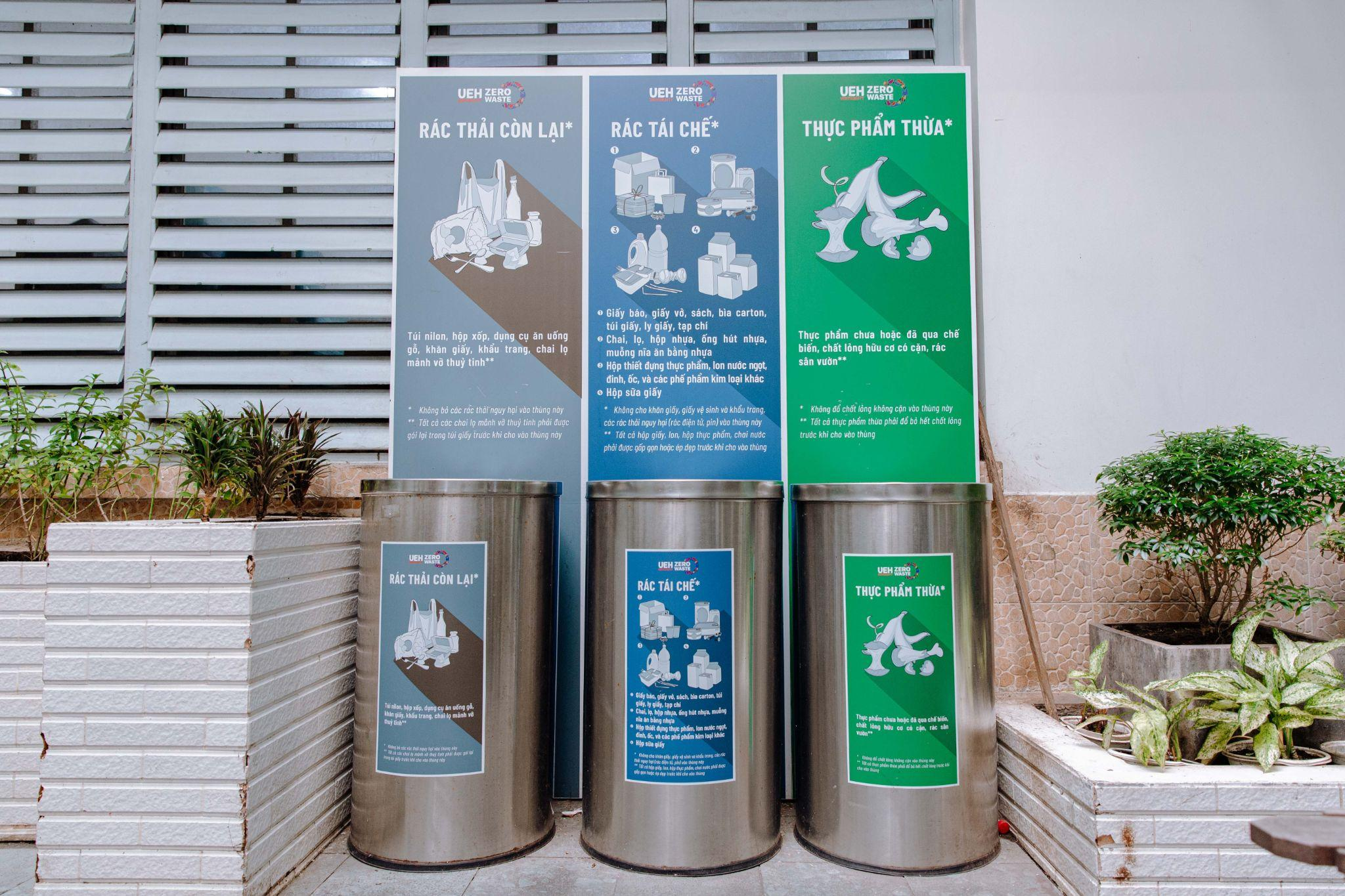
Across its campuses, UEH maintained three-category and seven-category waste segregation models suited to the characteristics of each area. Recyclable materials, including paper, cardboard, plastic bottles, plastic containers and metals, were segregated to facilitate recovery and recycling. Other waste streams were collected and transferred for treatment through appropriate procedures.
Waste treatment was undertaken in coordination with external collection and treatment providers. Recyclable materials were transferred to recovery and recycling partners, while residual waste was delivered to treatment providers using appropriate methods. Partners mentioned in UEH Green Campus activities included Ve Chai Chú Hỏa and Á Châu Environment Company, which participated in material recovery, waste collection or treatment within the scope of their respective partnerships.
Alongside collection and treatment, UEH monitored the quantities of waste generated, recycled and sent to landfill. Compiling data by waste stream and treatment outcome provided a basis for tracking year-on-year changes, evaluating waste segregation practices and identifying appropriate resource management measures.
 |
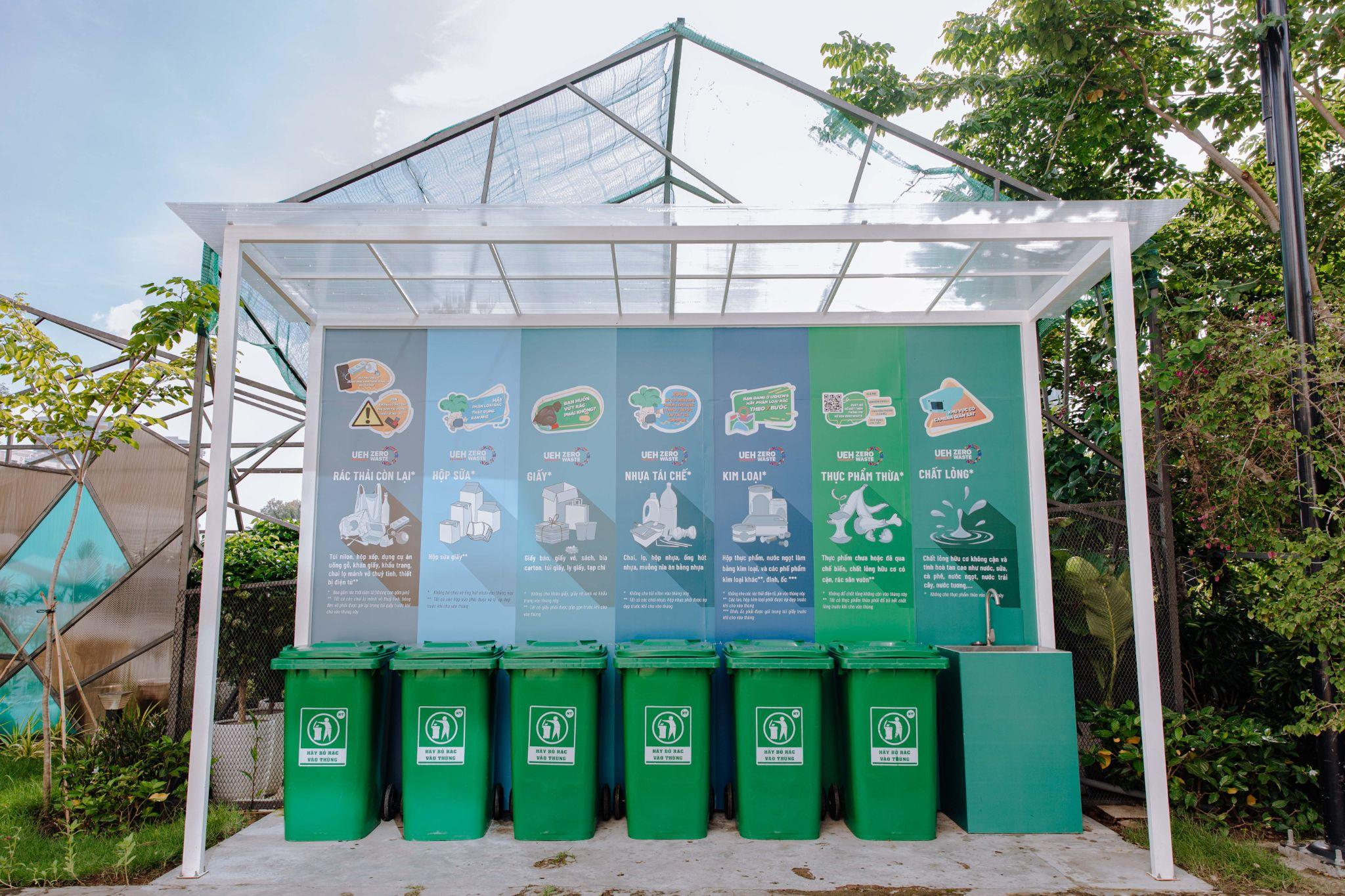 |
Waste segregation bins at UEH Go Green Stations supported waste sorting across the university.
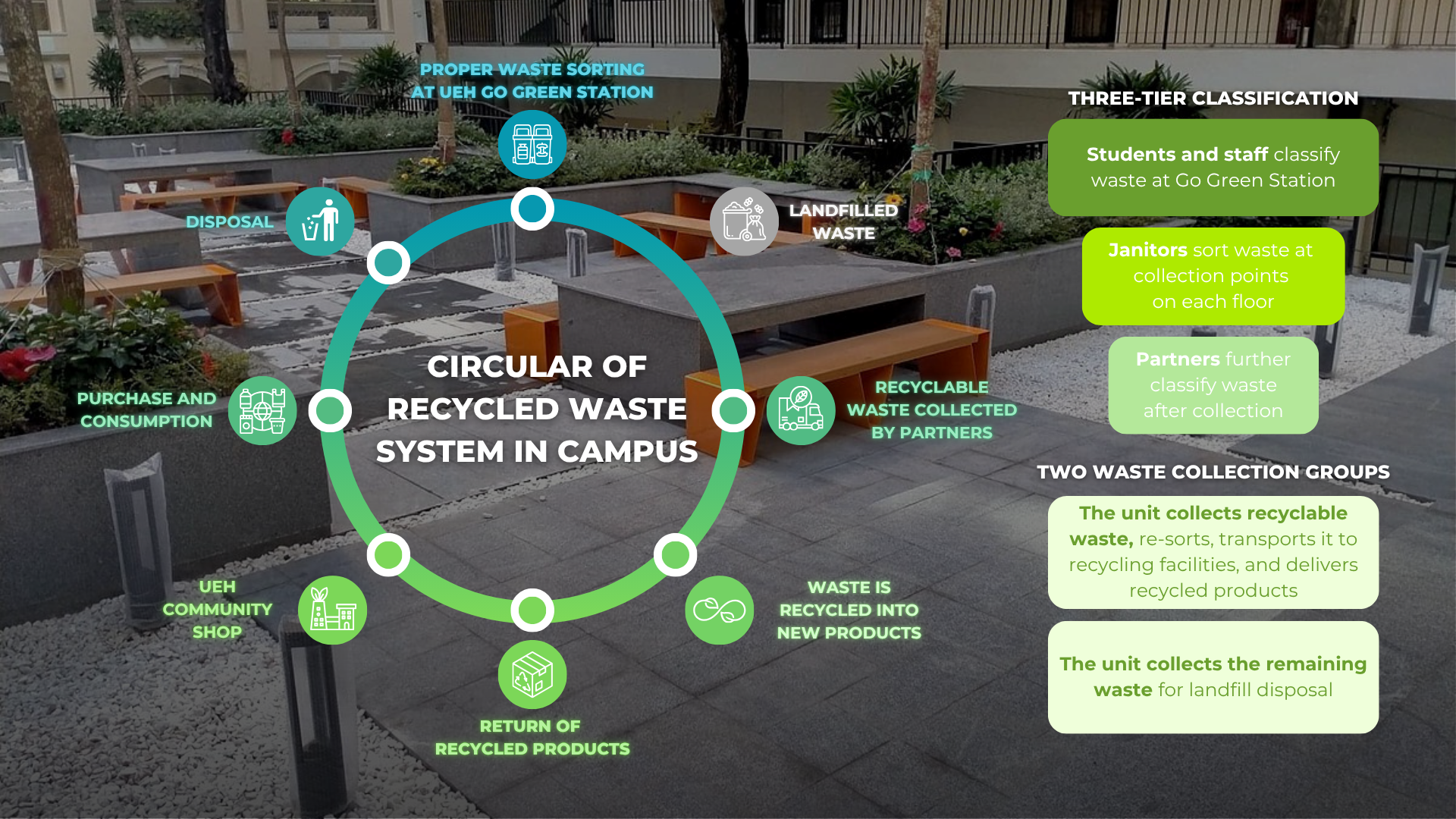
UEH’s campus recycling system supported the collection and segregation of waste.
2. Waste monitoring results for 2024–2025
In 2025, UEH continued to compile data on waste generated and treatment outcomes, including quantities recycled and sent to landfill. The recorded figures were as follows:
| Indicator | 2024 | 2025 |
| Total waste generated (tonnes/year) | 210 | 231 |
| Waste recycled (tonnes/year) | 51 | 56 |
| Waste sent to landfill (tonnes/year) | 159 | 175 |
Source: UEH consolidated waste monitoring data for 2024 and 2025.
According to the compiled records, total waste generated at UEH in 2025 amounted to 231 tonnes. This quantity was allocated to two treatment categories: 56.1 tonnes of waste recycled and 174.9 tonnes sent to landfill, representing 24.29% and 75.71%, respectively.
For recycling, UEH recorded 56.1 tonnes of waste recycled in 2025, an increase of 5.1 tonnes, equivalent to 10%, compared with 2024. This result reflected the continued operation of waste segregation, recovery and transfer of recyclable materials within the University’s waste management system.
For waste sent to landfill, the recorded quantity in 2025 was 174.9 tonnes. Monitoring this stream separately from recycled waste enabled UEH to identify the composition of its waste treatment outcomes and compile the waste streams for the reporting period.
As UEH continued to expand its educational provision, its 2025 admissions target reached 7,980 places, an increase of 80 places compared with 2024. Waste monitoring and treatment activities continued to support the management of waste arising from university operations.
By compiling data from collection through to treatment outcomes, UEH maintained an information base for evaluating waste management, tracking the quantity of materials recycled and planning more efficient resource use.
3. Conclusion
In 2025, UEH continued to monitor, segregate, collect and treat waste across its facilities. A total of 231 tonnes of waste was recorded by treatment outcome, comprising 56.1 tonnes recycled and 174.9 tonnes sent to landfill.
Monitoring both waste generation and treatment outcomes enabled UEH to maintain data for waste governance, strengthen coordination with collection, recycling and treatment providers, and support measures to reduce waste and use resources more efficiently. This provided a foundation for the continued development of UEH’s green and circular university model and contributed to SDG 12 – Responsible Consumption and Production.