

12.2.7. Policy to Reduce Other Disposable Items (Cups, Foam Containers and Packaging)
The University of Economics Ho Chi Minh City (UEH) not only implemented policies to minimise plastic products and disposable items in its internal operations but also sought to extend implementation responsibilities to suppliers of goods, outsourced service providers and partners in the University’s supply chain. Under the Green Campus Regulations introduced in 2022 pursuant to Decision No. 2059/QD-DHKT-CSVC, UEH established requirements for reducing plastic packaging, cups, containers and disposable utensils among service providers. It continued to develop the policy by integrating sustainable consumption criteria into procurement, operations and event organisation. In 2025, collaborative plastic-reduction programmes and initiatives to develop reuse and recycling solutions continued, increasing the involvement of external partners in the Green Campus ecosystem and supporting responsible supply chains and a circular economy.
1. Policy
In 2024, UEH established a policy framework extending responsibility for reducing single-use plastics beyond the university community to suppliers, service providers and partners through Article 8, the Policy on Reducing Single-Use Plastics on UEH Campuses, of the Green Campus Regulations. The policy specified requirements for canteens, dining facilities, shops, mini-supermarkets, goods suppliers and event organisers, emphasising reductions in plastic packaging and the replacement of disposable cups, containers and utensils with environmentally friendly alternatives. It also stipulated commitments by suppliers and partners and mechanisms for monitoring implementation. UEH thereby began embedding plastic-reduction requirements in campus procurement and services rather than relying solely on behavioural changes by students and staff. However, the 2024 policy primarily addressed single-use plastics and specific service categories; it did not yet clearly establish an overarching approach to reducing all disposable products or systematically integrate such criteria across procurement and operations. This provided the basis for further policy development in 2025.
“Article 8. Policy on Reducing Single-Use Plastics on UEH Campuses
Reducing single-use plastics means that UEH proactively limits, replaces and progressively eliminates plastic products and materials that are difficult to biodegrade from teaching, research, everyday activities and events on campus. This policy aims to foster sustainable consumption habits across the UEH community while reducing plastic waste released into the environment. Its objective is to create learning and working environments free from single-use plastics, encouraging students, administrators, lecturers and partner organisations to adopt green consumption and the 3R model (Reduce – Reuse – Recycle) throughout UEH.
- Encourage reusable or refillable items, including personal water bottles, UEH cups, glass containers, cloth bags and recyclable products, in place of single-use plastic cups, straws, spoons, plastic bags and foam containers.
- Minimise non-biodegradable plastic packaging in all shops, supermarkets, canteens and dining facilities on UEH campuses. Retailers must not provide free plastic bags or packaging and should encourage customers to bring cloth bags, woven bags or recycled plastic bags when shopping.
- Suppliers of services and goods, such as canteens, dining facilities, retail chains and mini-supermarkets, are required to reduce and progressively eliminate single-use plastic products. Instead, they must provide or encourage containers, cups, spoons and straws made from environmentally friendly materials such as paper, corn starch, bamboo, stainless steel, glass or ceramics.
- Plastic bottles, plastic packaging and materials that are difficult to biodegrade are not permitted at events, conferences, festivals and other activities organised at UEH. Organising units must use glass bottles, refillable water dispensers, reusable decorations or eco-labelled products. Communication materials such as banners, standees and signs should preferably be made of recycled or reusable materials and retained for subsequent events.
- Suppliers, partners and organisations collaborating with UEH are responsible for signing commitments to reduce and progressively eliminate single-use plastics in their operations, while encouraging customers to bring reusable personal items.
- The Facilities Department and campus management units are responsible for implementing the 3R model (Reduce – Reuse – Recycle) throughout UEH, ensuring that waste-sorting bins are available in public areas, classrooms, offices and service areas. Plastic waste must be separated at source into recyclable and non-recyclable streams.
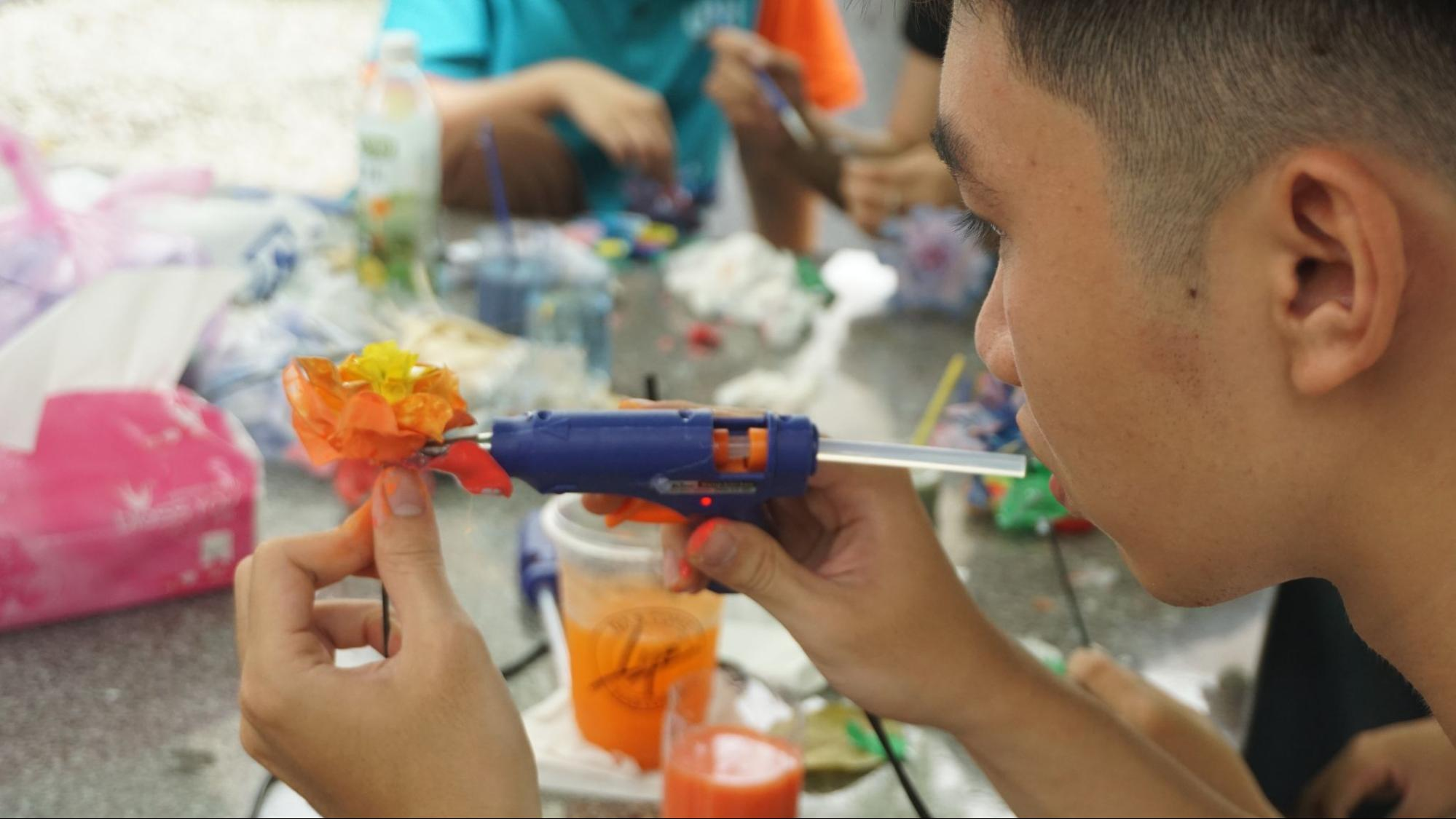
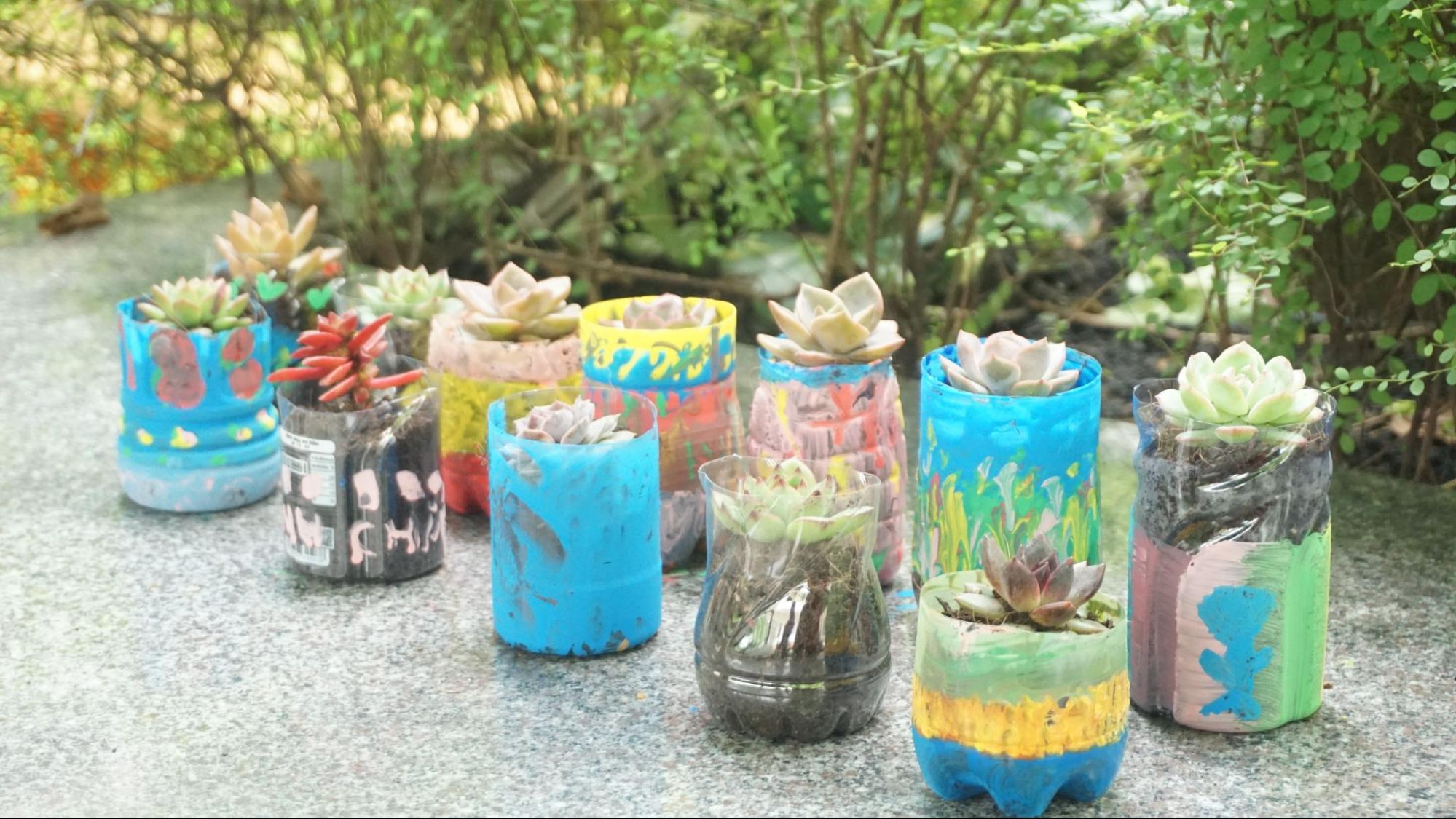
- Encourage recycling and reuse of discarded plastics in innovative projects, student initiatives and community programmes, for example by turning plastic bottles into vases, plant pots or learning materials, or sending them to specialised recycling partners to make road-surfacing materials, paving blocks, clothing or new environmentally friendly materials.
- UEH internal units are responsible for monitoring and inspecting compliance with the single-use plastics reduction policy within their respective areas, periodically reporting implementation and proposing improvements to the UEH Green Campus Coordination Board for inclusion in the annual sustainability report.”
Building on the 2024 framework, UEH continued to update Article 8 as the “Policy on Minimising Plastic Products and Disposable Items on UEH Campuses”, representing a shift from reducing single-use plastics at particular service locations towards reducing disposable products across all university activities. The revised content broadened the range of products to be limited, replaced and progressively eliminated, while strengthening the connection between environmental policy and governance, procurement, operations and service delivery. This provided a basis for further developing sustainable consumption requirements for suppliers, outsourced service providers and partners.
The most significant improvement in the 2025 policy was to identify the minimisation of plastic products and disposable items as a criterion to be integrated into procurement, operations, services and event organisation. Whereas the 2024 provisions focused on particular suppliers such as canteens, dining facilities, shops and event organisers, the updated approach embedded environmental criteria in activities involving the selection, supply and use of goods and services. This enabled UEH to consider disposable-item reduction at the procurement and supply-planning stages, rather than concentrating solely on limiting and managing post-consumption waste.
The 2025 policy also broadened the preference for reusable, recyclable or biodegradable products, materials and packaging, encouraging personal water bottles, cups, food containers, cloth bags and environmentally friendly alternatives. For suppliers of goods and services, this provided a basis for encouraging providers of meals, beverages, consumer goods and university supplies to prioritise reusable products and reduce disposable packaging and utensils, thereby preventing waste at source.
UEH also introduced an orientation towards establishing a roadmap to reduce and ultimately eliminate plastic and disposable products across its operations, alongside support for research, innovation and initiatives on plastic reduction, reuse, recycling and the circular economy. This approach broadened implementation beyond consumption on campus to include external partners, particularly in developing alternatives, collecting and recycling materials, and extending product life cycles.
Alongside management and innovation measures, UEH continued to strengthen communication, education and behaviour-change activities within the university community. Encouraging service users to bring water bottles, food containers and personal bags helped reduce demand for disposable items at service points and enabled providers to gradually introduce appropriate alternatives.
Compared with 2024, the 2025 policy evolved in three respects: it expanded its scope from single-use plastics to disposable products more generally; integrated reduction criteria into procurement, operations, services and events; and promoted research, innovation and partnerships for circular-economy solutions. Together, these measures reinforced the extension of disposable-item reduction expectations to suppliers, outsourced service providers and supply-chain partners, in line with indicator 12.2.7.
“Article 8: Policy on Minimising Plastic Products and Disposable Items on UEH Campuses
Minimising plastic products and disposable items involves UEH proactively limiting, replacing and gradually eliminating plastic products, plastic packaging and materials that are difficult to biodegrade in education, research, work, daily life and events. This policy seeks to reduce plastic waste, promote sustainable consumption, implement a circular-economy model and contribute towards the goal of a Carbon-Neutral University.
UEH implements its Policy on Minimising Plastic Products and Disposable Items in accordance with the following principles:
- Develop and implement a roadmap to reduce and ultimately eliminate plastic and disposable products throughout UEH operations.
- Prioritise reusable, recyclable or biodegradable products, materials and packaging; encourage personal water bottles, cups, food containers, cloth bags and environmentally friendly alternatives.
- Integrate criteria for minimising plastic products and disposable items into UEH procurement, operations, services and event organisation.
- Encourage research, innovation and initiatives in plastic reduction, reuse, recycling and the circular economy to extend material life cycles and reduce environmental impacts.
- Strengthen communication, education, campaigns and community initiatives to raise awareness and change consumption behaviours regarding plastic products and disposable items across UEH.”
2. Activities
On the basis of the Green Campus Regulations, in 2025 UEH continued to implement initiatives to reduce single-use plastics, encourage alternatives and develop reuse and recycling solutions. Notably, programmes went beyond changing consumption behaviour within the university to involve external partners and connect campus management with collection, recycling and circular resource-use solutions.
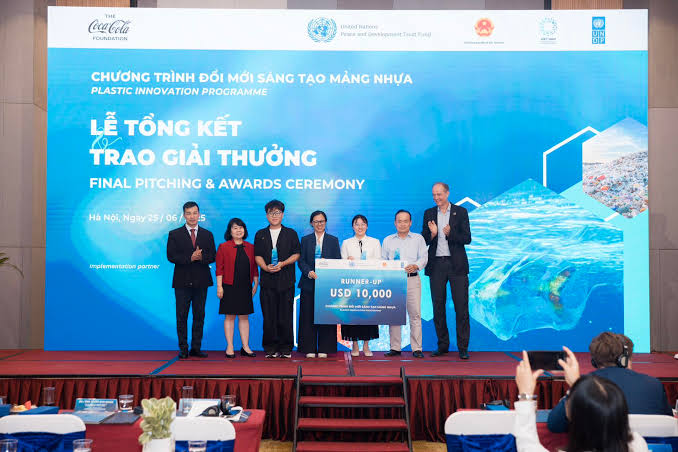
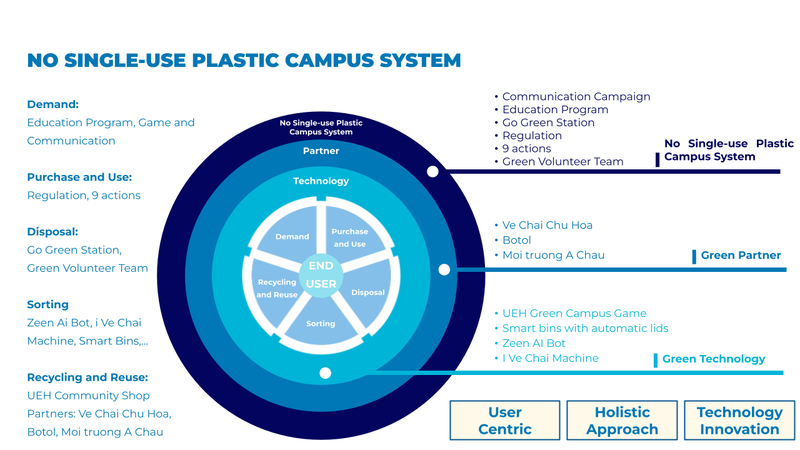
One notable initiative was the No Single-use Plastic Campus System, developed by UEH using Go Green Station, Zeen AI Bot and I Ve Chai Machine alongside activities to reduce single-use plastics, sort and collect waste, and recycle materials after use. The initiative sought to establish a circular approach to plastic management and connect with external collection and recycling partners. In 2025, it ranked among the Top 10 of 116 proposals and received USD 10,000 in funding from the 2025 Plastic Innovation Programme. This outcome demonstrated UEH’s capacity to mobilise resources and advance collaboration on plastic-reduction solutions, laying the groundwork for broader partner involvement in the Green Campus ecosystem.
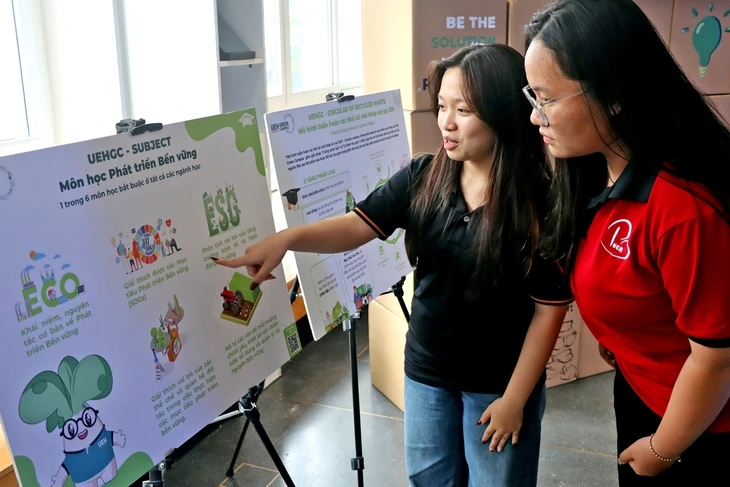
Alongside collaborative solutions, UEH continued to bring disposable-item reduction efforts into spaces where goods and services were supplied on campus. At the Vo Thi Sau Campus, the UEH Green Campus programme introduced signs and visual reminders in learning, communal and canteen areas, encouraging the use of personal bottles, food containers and bags, and discouraging single-use plastics. Placing these messages in the canteen connected the reduction objective with food-service consumption and created opportunities for operators to engage in sustainable alternatives.
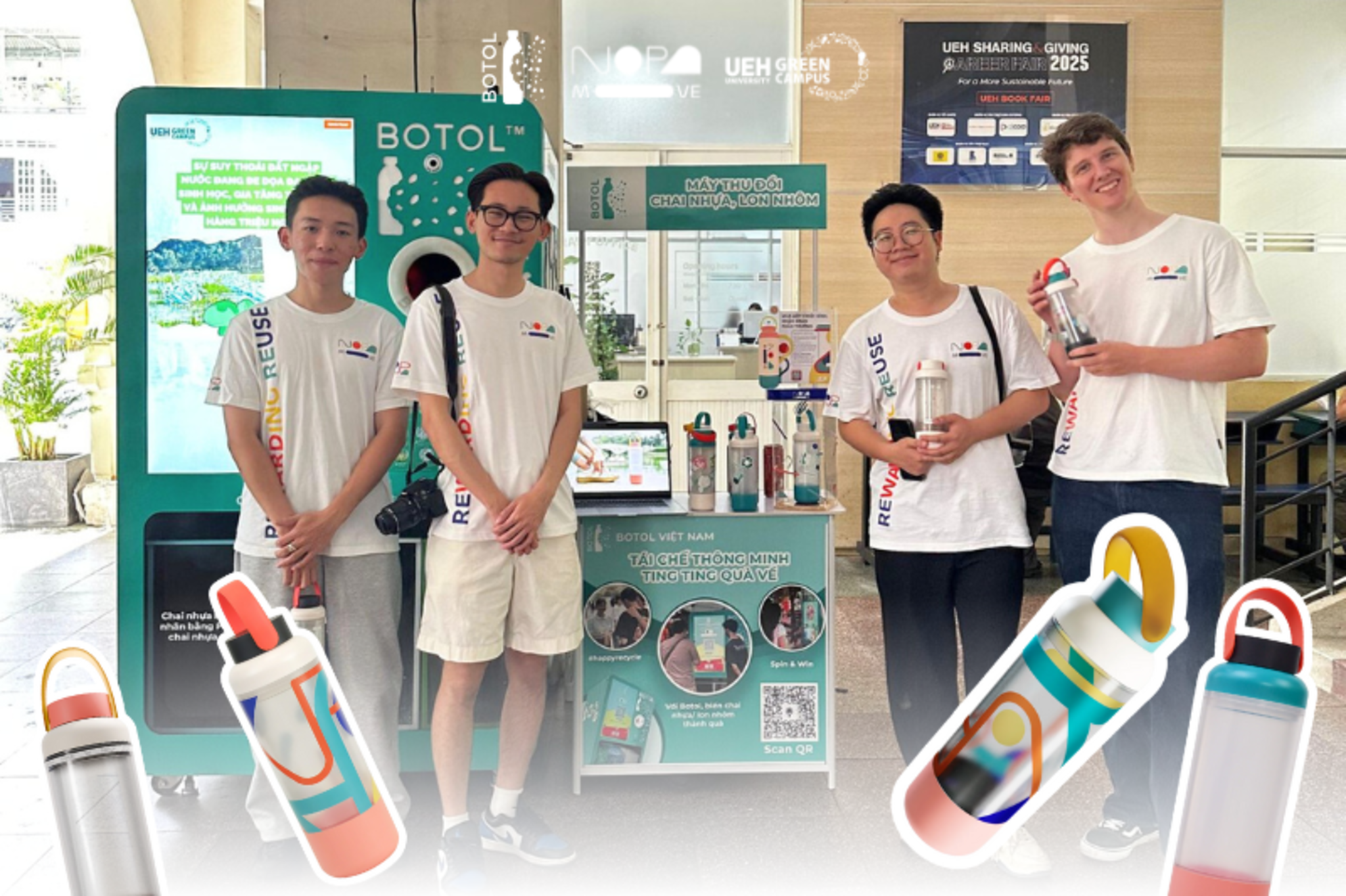
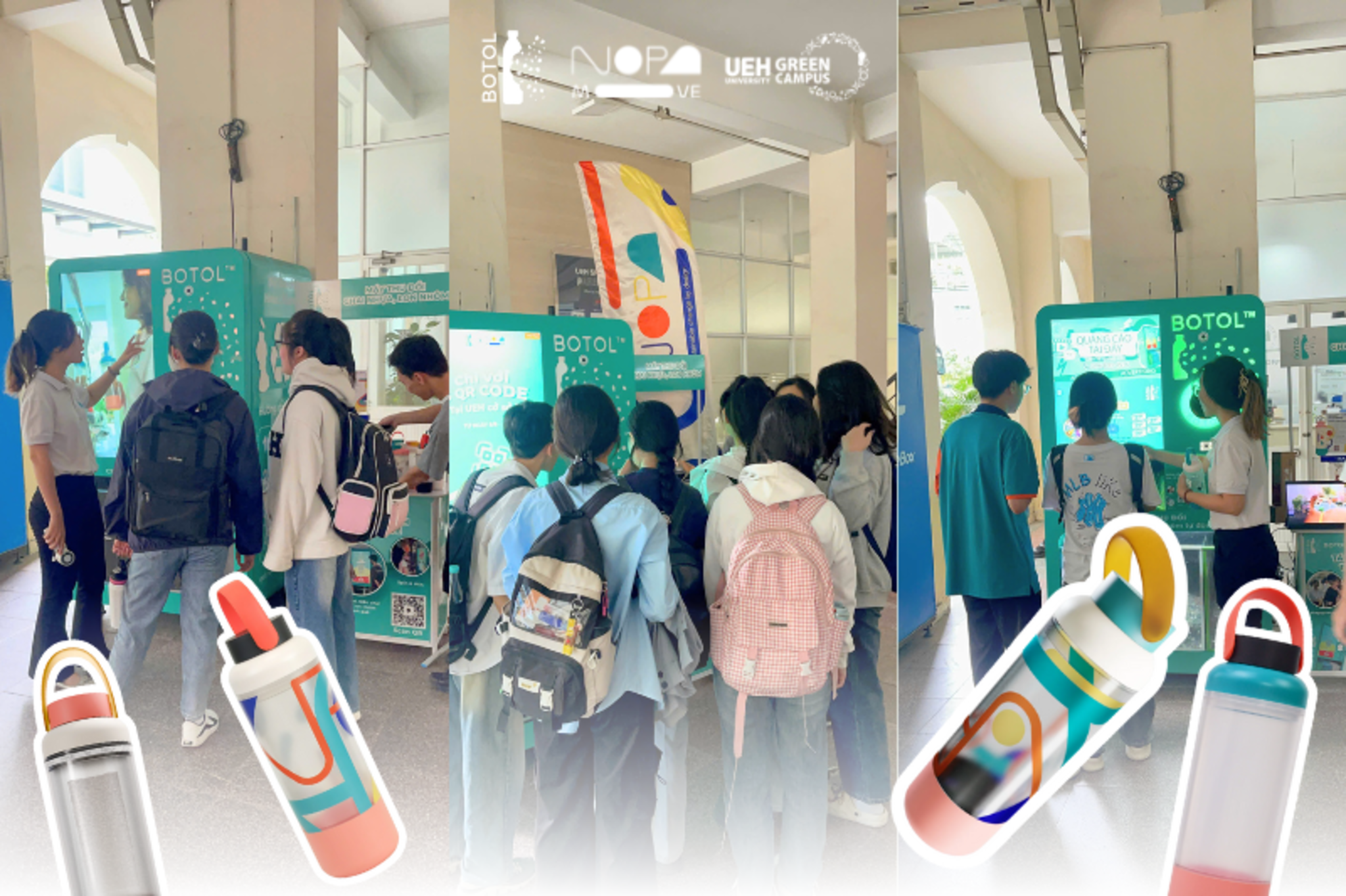
Collaboration with partners on collection and recycling was also promoted through BOTOL x Nopa Move. This programme combined a plastic-bottle collection challenge with encouragement to use personal refillable bottles, linking campus consumption with material recovery and reuse. Its 2025 results included 1,996 plastic bottles collected, more than 200 participations and 30 personal water bottles distributed. These outcomes provided concrete examples of external partners participating in collection, recycling and the promotion of reusable alternatives, supporting UEH’s circular-economy orientation.
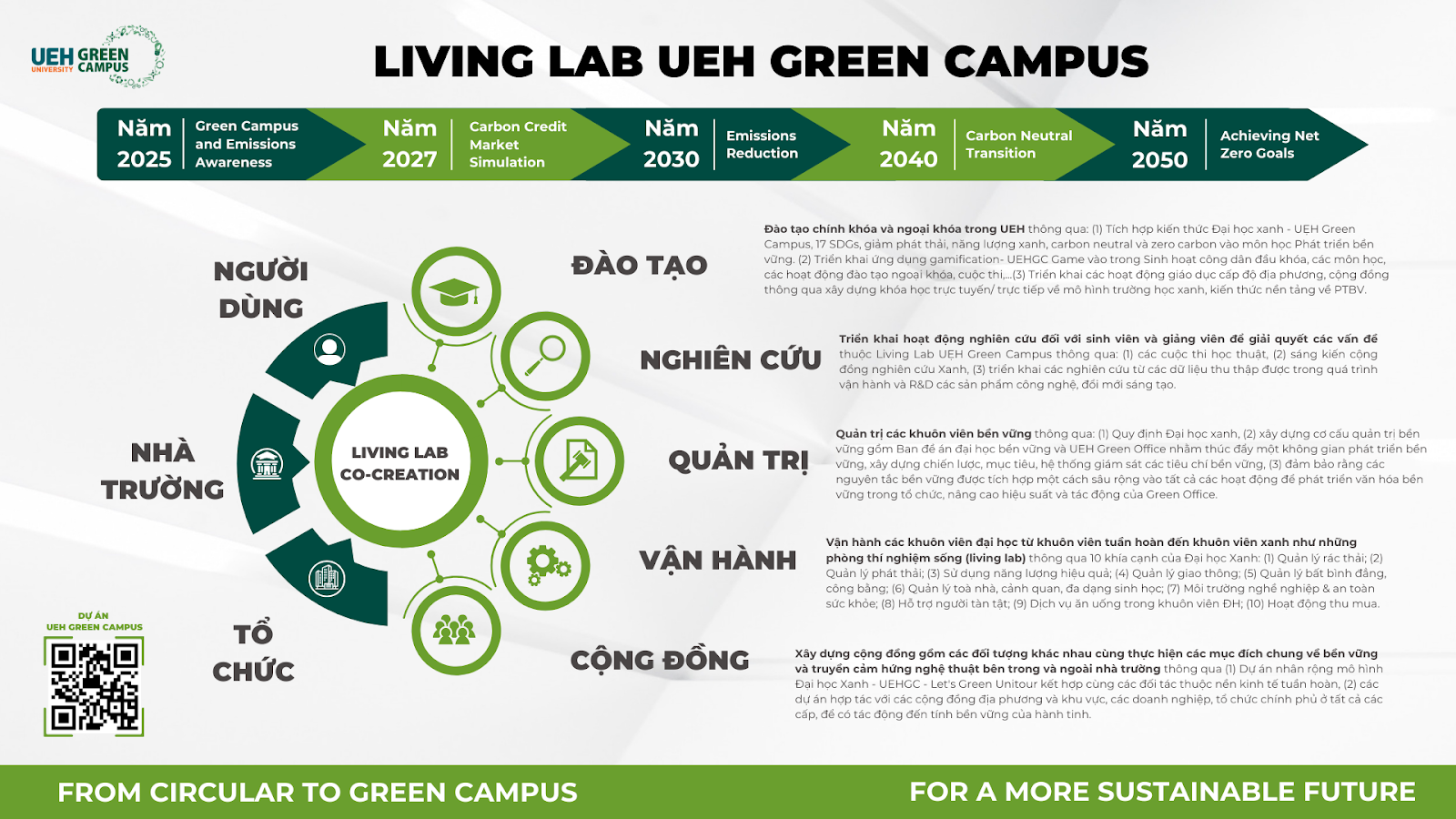
In parallel with these collaborations, UEH continued developing a green and circular campus operating model, integrating resource and waste management and sustainable consumption into university governance. Programmes such as Living Lab UEH Green Campus 2025 created opportunities to research, test and develop sustainability solutions. Large events such as UEH Day 2025, including meal provision and participant services, also involved procurement, supplies and service delivery. These were areas in which the 2025 policy’s direction to integrate disposable-item reduction criteria could be further translated into requirements for external providers.
Evidence sources:
UEH Green and Circular Campus Operations Strategy, 2011–2025; Living Lab UEH Green Campus 2025; UEH Day 2025 – Vegetarian Meal Registration.
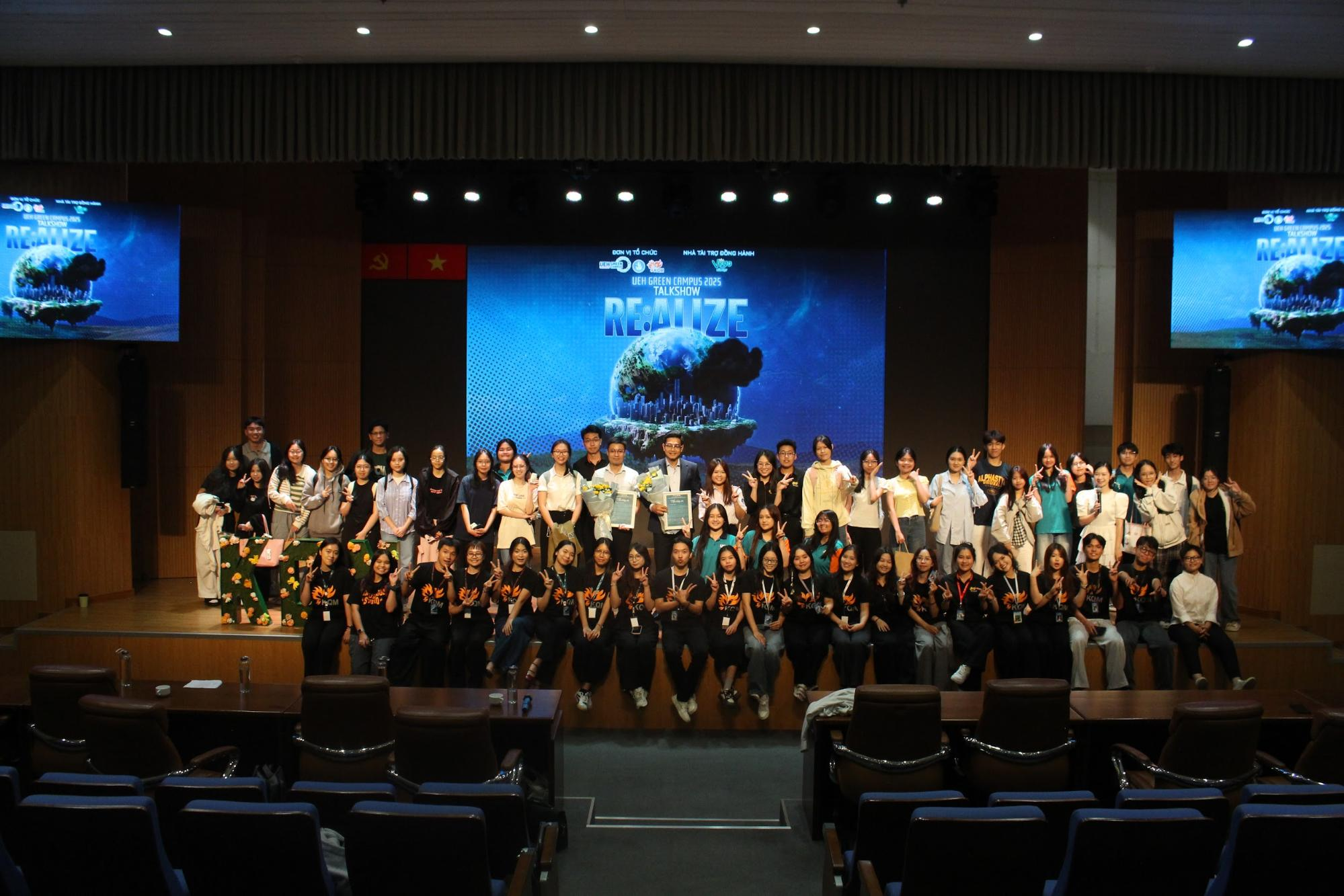
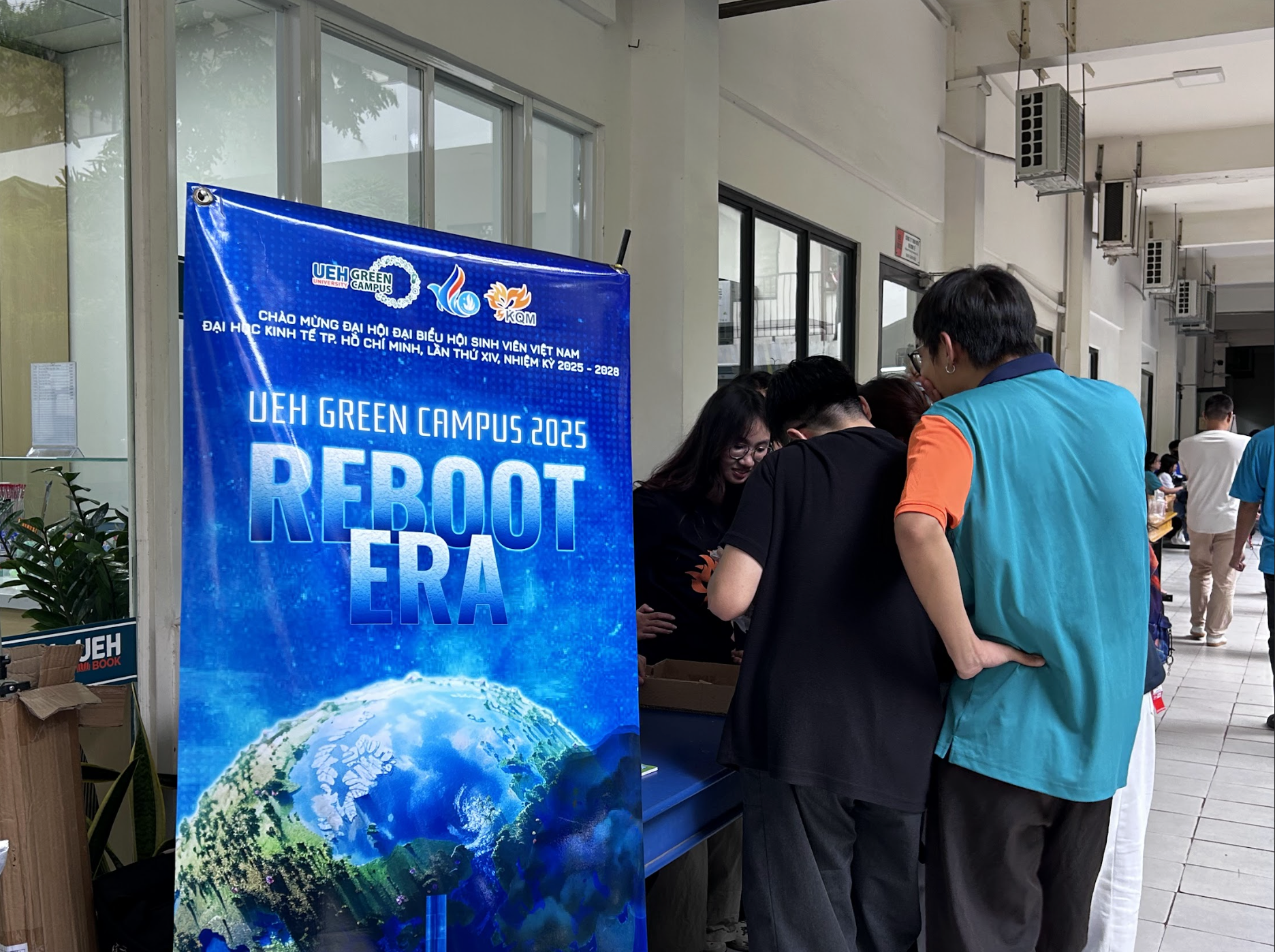
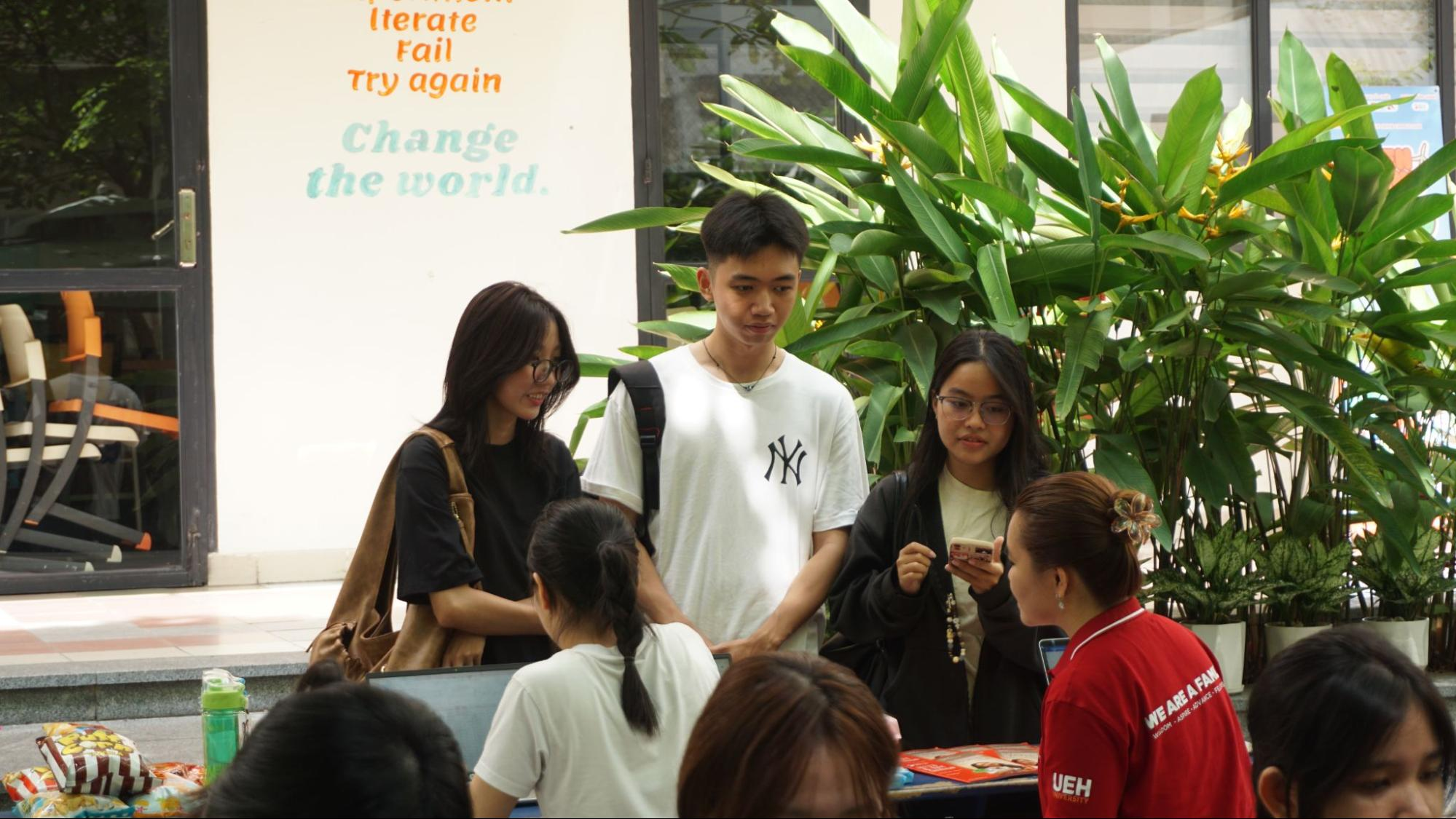
UEH also continued programmes including Eco Spark, REBOOT ERA, Green Mind – Green Life and No Single-Use Plastic Day to encourage reusable items, reduce plastic packaging and lessen demand for disposable products when purchasing goods and services. REBOOT ERA recorded over 2,000 participations in its Re activities and more than 200 students at the RE talk show. These programmes encouraged responsible consumption habits and supported lower demand for disposable packaging, cups, containers and utensils at service points.
Evidence sources:
Eco Spark – UEH Green Campus 2025; REBOOT ERA – UEH Green Campus 2025; Green Mind – Green Life; No Single-Use Plastic Day – July 2025; No Single-Use Plastic Day – August 2025.
Through these activities, UEH continued connecting its disposable-item reduction policy with campus operations, service provision, partnerships and consumer behaviour change. The programmes helped support waste prevention and created a basis for extending sustainable consumption measures across procurement and service delivery.
Summary of Activities Implemented in 2025
Alongside the highlighted initiatives, UEH continued collaborative, communication and practical activities to reduce disposable items on campus. The activities below illustrate the scope of policy implementation, partner participation and contributions towards more sustainable supply chains.
| Activity/Programme | Implementation | Results and Contribution to Indicator 12.2.7 | Evidence Source |
| UEH Green and Circular Campus Operations Strategy, 2011–2025 | UEH continued to develop a green and circular campus operating model, integrating resource and waste management and sustainable consumption into university governance. This approach provided a basis for incorporating environmental criteria into campus operations and service provision. | Reinforced resource management and waste-prevention objectives in campus operations, supporting the continued development of environmental criteria for UEH procurement and services. | https://emagazine.ueh.edu.vn/chien-luoc-van-hanh-khuon-vien-hoc-thuat-the-he-moi-cua-ueh-2011-2025-tu-campus-thong-minh-den-campus-xanh-va-tuan-hoan/?v=1748662631893/ |
| UEH Day 2025 – Meal Provision and Event Services | UEH Day 2025 involved vegetarian meal registration and participant services, including the preparation and distribution of meals and the use of materials and equipment for the event. | Provided a practical context in which requirements to reduce disposable packaging, containers and utensils could be applied to catering and event services. Evidence from catering contractors or event records would be needed to establish actual reductions. | https://ueh.edu.vn/cuoc-song-ueh/tin-tuc/ueh-day-2025-ra-mat-dong-phuc-ueh-day-2025-va-trien-khai-dang-ky-size-suat-an-chay-74181 |
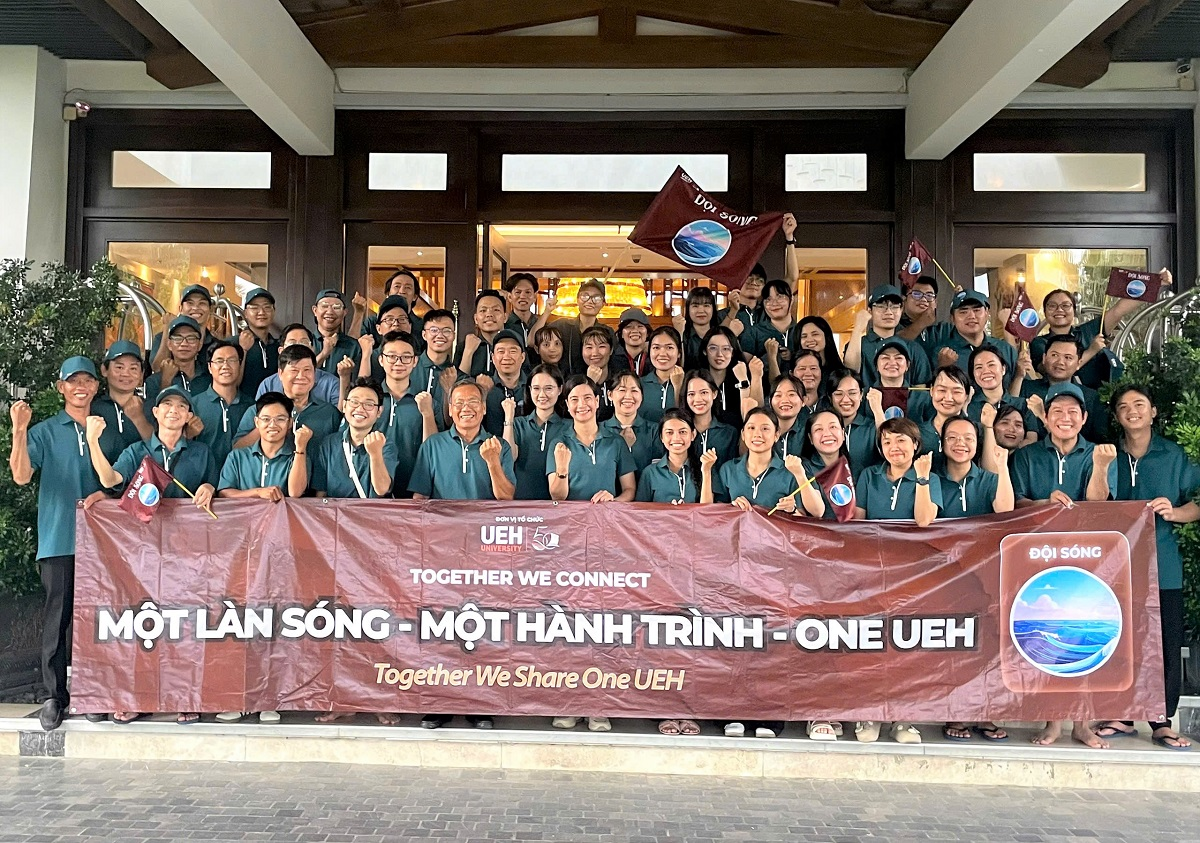
| UEH Day 2025 – Community Events and Activities Supporting Sustainable Development | UEH organised UEH Day 2025 activities at multiple locations, combining cultural, community and environmental programmes with support from organising, logistics and service providers.
|
Illustrated event settings where disposable-item reduction requirements could apply. Confirming implementation by providers would require further evidence from logistics regulations, service contracts or photographs of items used. | https://ueh.edu.vn/cuoc-song-ueh/tin-tuc/ueh-mekong-ruc-chay-tinh-than-one-ueh-together-we-share-tai-su-kien-ueh-day-2025-74522 |
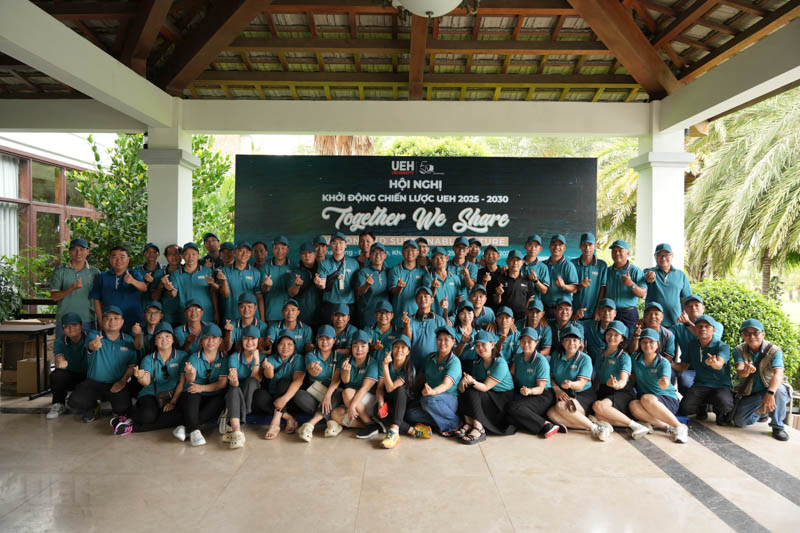
| Living Lab UEH Green Campus 2025 – Research and Practical Sustainability Solutions | UEH implemented Living Lab Green Campus 2025 to promote research, experimentation and practical sustainability solutions on campus, connecting knowledge, initiatives and resources to address environmental challenges in campus operations.
|
Provided a platform for research and testing on efficient resource use, waste prevention and circular consumption, supporting further development of disposable-item reduction in operations and services. | https://gogreen.ueh.edu.vn/tin-moi-noi-bat/khoi-dong-living-lab-ueh-green-campus-2025-lan-toa-tieng-noi-chung-greenculture-living-in-harmony-with-nature |
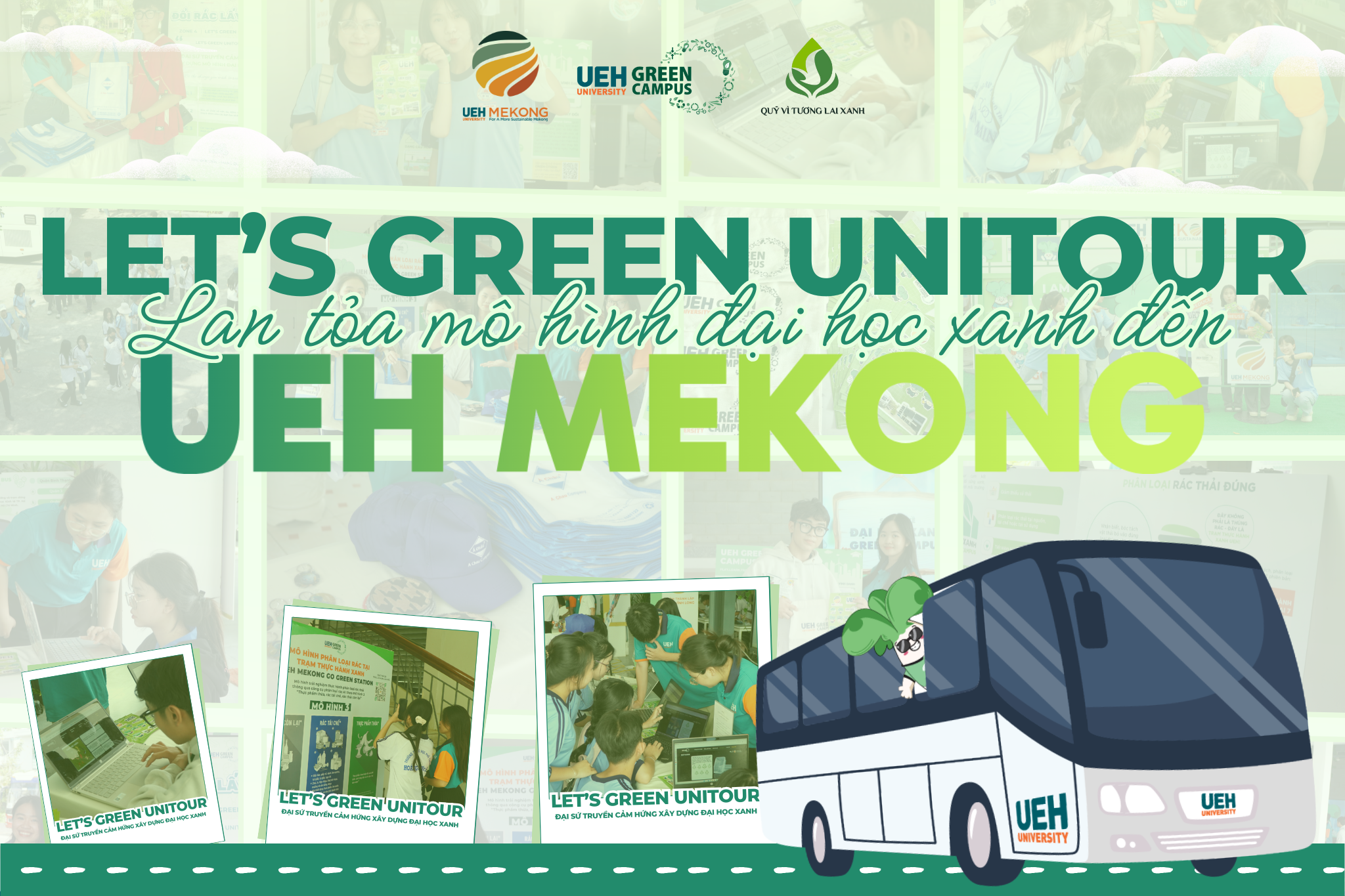
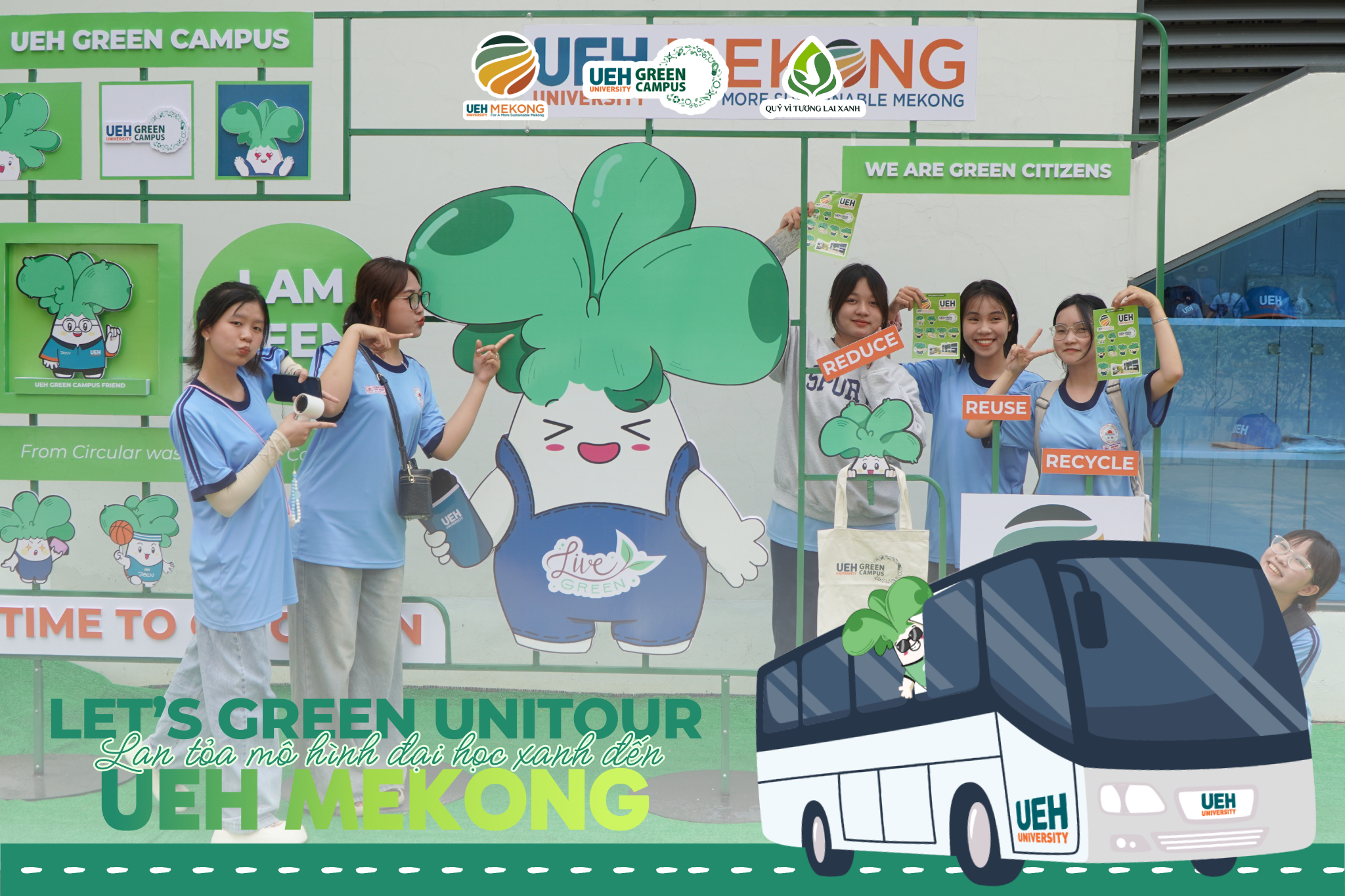
| Let’s Green Unitour – Promoting Green Campus Practices at UEH Mekong | Through Let’s Green Unitour, UEH introduced the Green Campus model at UEH Mekong and encouraged awareness and sustainable consumption practices among learners.
|
Expanded communication and green practices across UEH, providing a basis for extending disposable-item reduction guidance to units operating at different campuses. | https://gogreen.ueh.edu.vn/tin-moi-noi-bat/lets-green-unitour-lan-toa-mo-hinh-dai-hoc-xanh-den-ueh-mekong |
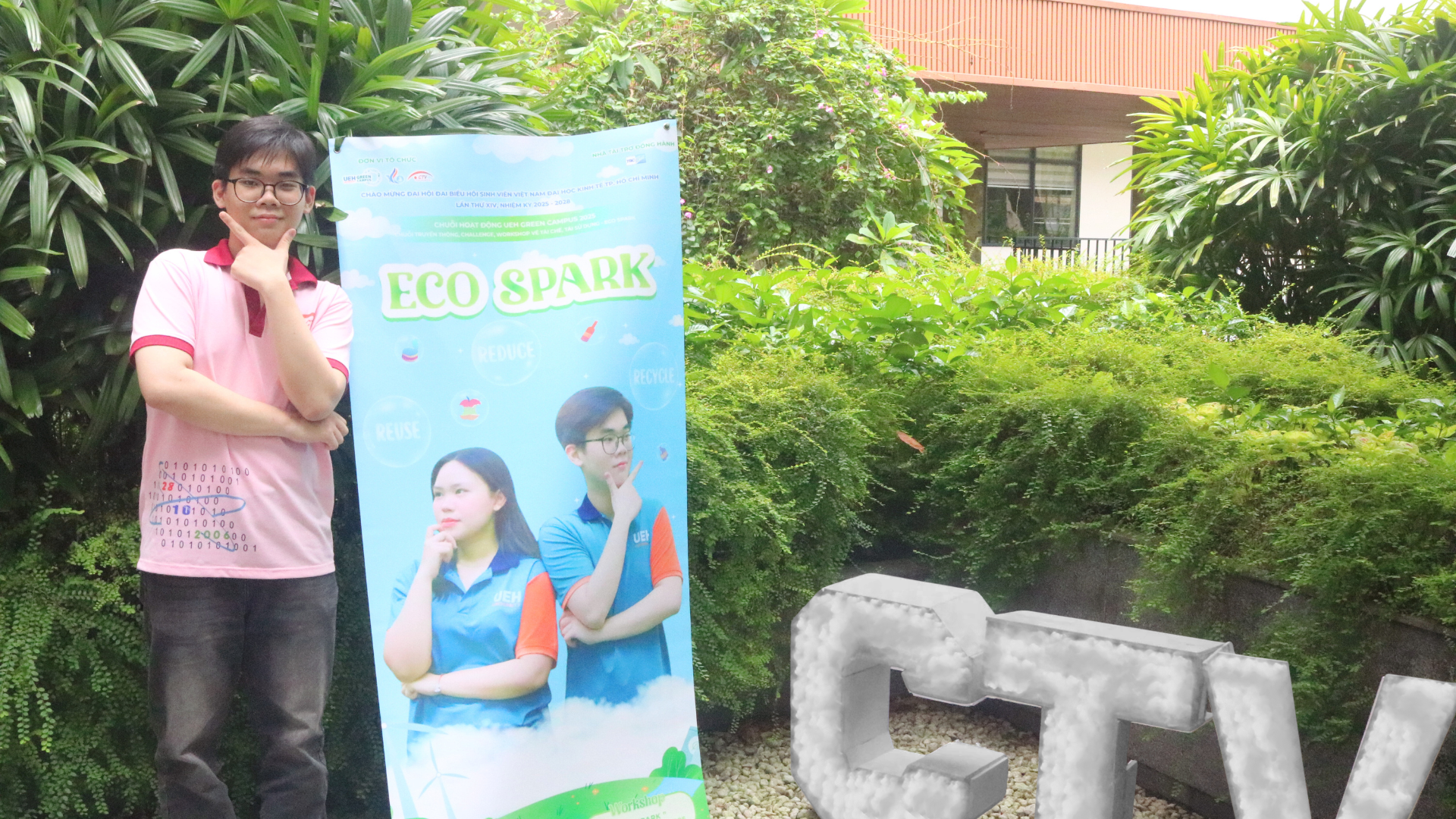
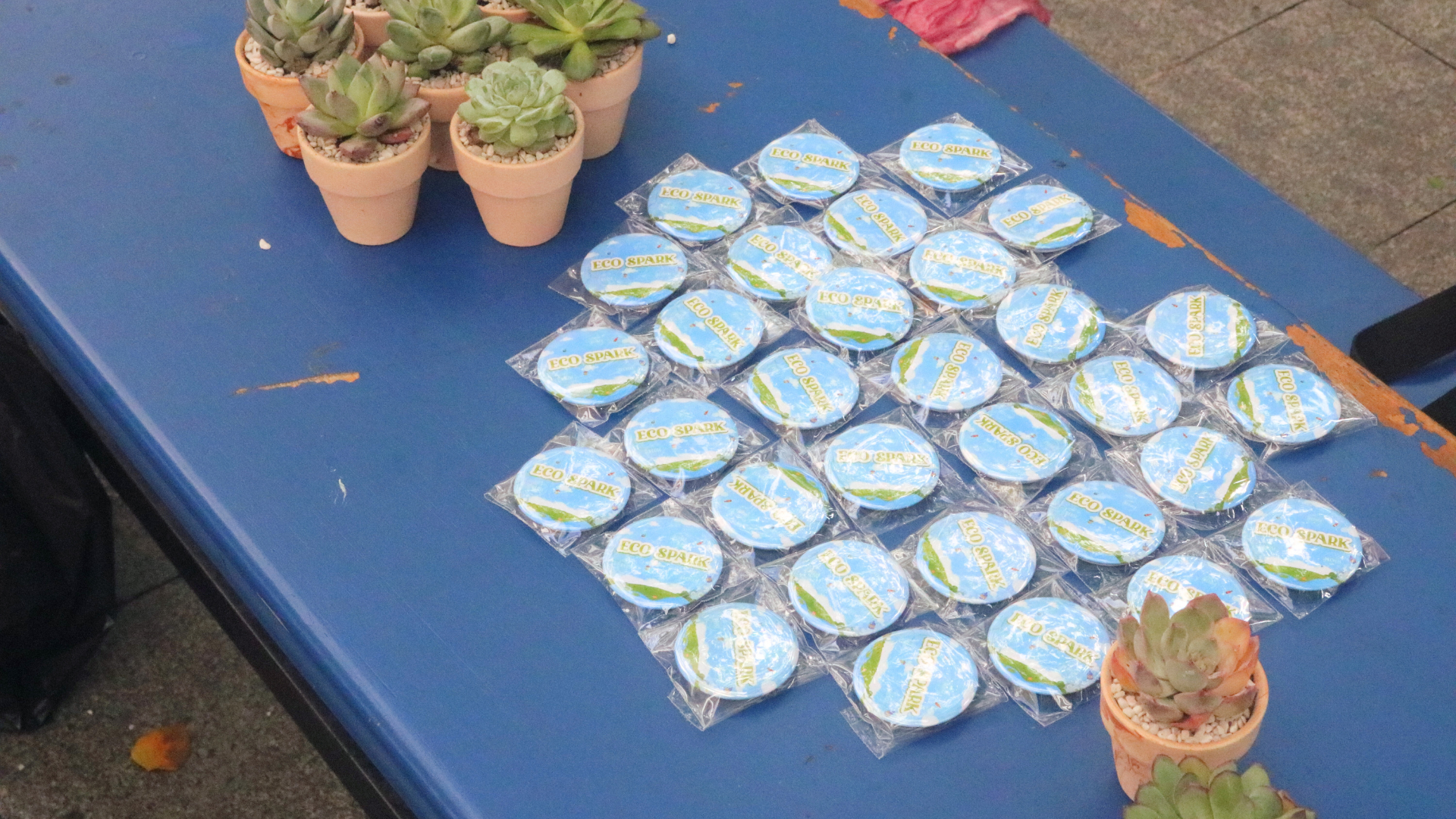
| Eco Spark – Recycling and Reuse Activities under UEH Green Campus 2025 | The programme offered practical 3R activities, encouraging personal water bottles, cloth bags, food containers and the reuse of discarded materials.
|
Encouraged the repeated use of personal items, potentially reducing demand for disposable cups, bags and containers at goods and service outlets. It also fostered consumption habits consistent with UEH policy. | https://gogreen.ueh.edu.vn/su-kien/chuoi-hoat-dong-ve-tai-che-tai-su-dung-eco-spark-thuoc-chuoi-ueh-green-campus-2025 |
| REBOOT ERA – Promoting 3R Practices and Sustainable Consumption | The programme delivered interactive activities, practical experiences and knowledge exchange on reducing disposable products, reusing items and practising sustainable consumption.
|
Re:Think recorded more than 2,000 participations and the RE:ALIZE talk show attracted over 200 students. The activities helped raise awareness and encouraged learners to choose reusable alternatives. | https://gogreen.ueh.edu.vn/su-kien/nhin-lai-chuong-trinh-reboot-era-thuoc-chuoi-hoat-dong-ueh-green-campus-2025 |
| Green Mind, Green Life – Encouraging Sustainable Consumption Habits | UEH held awareness-raising activities and encouraged greener consumption, including carrying personal water bottles and reducing disposable items.
|
Encouraged responsible consumption and less reliance on disposable items when using dining, shopping and other services on campus. | https://gogreen.ueh.edu.vn/su-kien/chuoi-hoat-dong-ueh-green-campus-2025-green-mind-green-life-khoi-nguon-tu-tu-duy-lan-toa-bang-hanh-dong |
| UEH Students Commit to Green Practices and Responsible Consumption | UEH students participated in commitments to green practices, raising awareness of environmental protection and sustainable consumption.
|
Helped develop a culture of responsible consumption among students, supporting efforts to reduce demand for disposable products in daily activities and campus services. | https://gogreen.ueh.edu.vn/tin-moi-noi-bat/bao-tuoi-tre-sinh-vien-cam-ket-thuc-hanh-xanh |
3. Results and Contribution to Indicator 12.2.7
During 2024–2025, UEH continued to develop its disposable-item reduction policy by extending implementation responsibilities from internal units to activities involving suppliers, service providers and partners. Building on the 2024 provisions for canteens, dining facilities, shops and suppliers, the 2025 updates broadened product coverage and established the principle of incorporating reduction criteria into four key areas: procurement, operations, services and event organisation. This policy direction strengthened the basis for bringing sustainable consumption requirements into outsourced services and supply-chain activities.
In practical activities during 2025, UEH recorded several notable outcomes:
- USD 10,000 in funding for the No Single-use Plastic Campus System initiative under the 2025 Plastic Innovation Programme.
- A Top 10 ranking among 116 proposals for the No Single-use Plastic Campus System initiative.
- 1,996 plastic bottles collected through BOTOL x Nopa Move.
- 30 personal water bottles distributed to encourage switching from single-use bottles to reusable alternatives.
- More than 200 participations in BOTOL x Nopa Move.
- More than 2,000 participations in the Re activity under REBOOT ERA.
- More than 200 students attending the RE talk show.
These outcomes demonstrated the continued development of collaborative plastic-reduction, collection, recycling and sustainable-consumption initiatives at UEH. Programmes involving external partners helped connect campus material management with collection, recycling and extended product life cycles.
For indicator 12.2.7, UEH’s most direct contribution was the establishment of supplier and partner responsibilities in its 2024 policy and the further development in 2025 of a principle to integrate disposable-item reduction criteria into procurement, operations, services and events. Figures on funding, collection, bottle distribution and participation supplemented evidence of partnerships and sustainable consumption, but did not constitute measurements of supplier compliance.
Going forward, tracking the number of suppliers signing commitments, service contracts incorporating disposable-item reduction criteria, and inspections at service outlets would allow UEH to assess the policy’s impact on its supply chain more fully.
4. Conclusion
Having established requirements for canteens, dining facilities, shops, suppliers and event organisers to reduce single-use plastics in 2024, UEH further developed its policy in 2025 by broadening product coverage and integrating disposable-item reduction criteria into procurement, operations and service provision. Together with collaborative plastic-reduction, collection, recycling and sustainable-consumption programmes, this approach strengthened the link between UEH’s environmental responsibilities and partner participation in the Green Campus ecosystem.
For indicator 12.2.7 – Disposable Policy: Extensions to Services, the core value of UEH’s policy was the extension of disposable-item reduction requirements beyond internal consumption to activities involving suppliers, outsourced services and supply chains. This provided a foundation for developing more responsible procurement and services, improving resource efficiency and contributing to SDG 12 – Responsible Consumption and Production.