

reusable products, reducing plastic packaging and increasing awareness of sustainable consumption supports waste-reduction efforts in supply activities and helps suppliers and partners engage with the University’s sustainability objectives.
Compared with 2024, the 2025 policy developed in three areas: extending the scope from single-use plastics to disposable products more broadly; integrating minimisation criteria into procurement, operations and supply; and promoting research, innovation and partnerships on circular-economy solutions. For indicator 12.2.8, these provisions strengthen the policy basis for extending waste-minimisation requirements to suppliers of goods, materials and equipment and other partners within UEH’s supply chain.
“Article 8: Policy on Minimising Plastic Products and Disposable Items on UEH Campuses
Minimising plastic products and disposable items means that UEH proactively restricts, replaces and progressively eliminates plastics, plastic packaging and non-biodegradable materials used in teaching, research, work, daily activities and events. The policy aims to reduce plastic waste, promote sustainable consumption, implement circular-economy principles and contribute towards the Carbon-Neutral University objective.
UEH implements the Policy on Minimising Plastic Products and Disposable Items according to the following principles:
- Develop and implement a roadmap to minimise and ultimately eliminate plastic products and disposable items across all UEH activities.
- Prioritise reusable, recyclable or biodegradable products, materials and packaging; encourage personal water bottles, cups, food containers, cloth bags and environmentally friendly alternatives.
- Integrate criteria for reducing plastic products and disposable items into UEH procurement, operations, services and event management.
- Encourage research, innovation and initiatives in plastic reduction, reuse, recycling and the circular economy to extend material lifecycles and reduce environmental impacts.
- Strengthen communication, education, campaigns and community initiatives to raise awareness and change behaviour regarding plastic and disposable-item reduction.”
2. Activities
Building on the Green Campus Regulations, UEH continued in 2025 to develop initiatives that reduce single-use plastics, improve resource efficiency and promote materials reuse and recycling. Programmes were delivered through campus management, research and innovation, and collaboration with businesses, organisations and external partners. They helped connect waste-reduction policies with the supply, use, collection and treatment of materials across the university ecosystem.
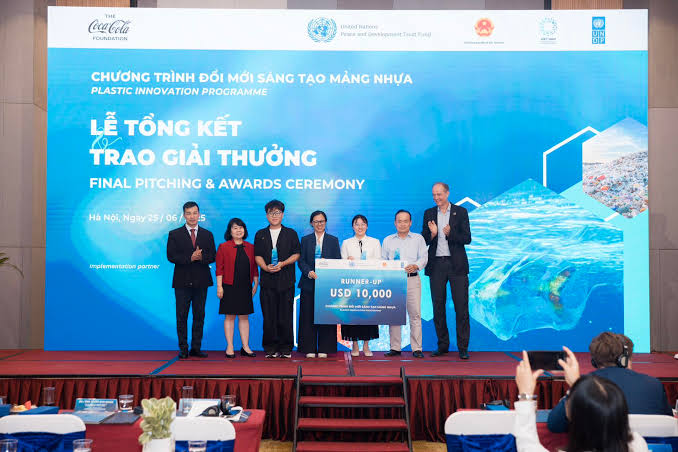
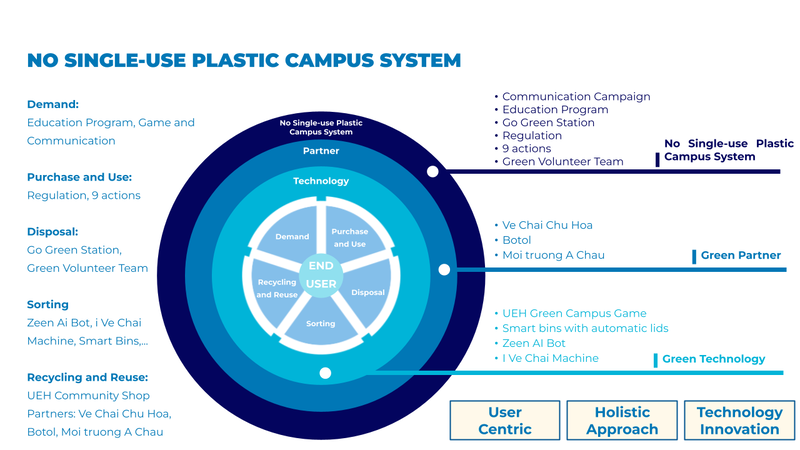
One notable initiative in 2025 was the No Single-use Plastic Campus System, which UEH developed using Go Green Station, Zeen AI Bot and I Ve Chai Machine, together with measures to reduce single-use plastics, sort waste at source, collect used materials and transfer them to recycling partners. The initiative seeks to establish circular plastic-management practices, with external collection and recycling operators linking campus waste management to downstream material processing. In 2025, it was selected among the Top 10 of 116 proposals and received USD 10,000 in funding through the 2025 Plastic Innovation Programme. This achievement demonstrated the ability to mobilise external resources and develop partnerships for researching and applying plastic-reduction solutions, supporting circular materials management.
Alongside these collaborative solutions, UEH continued promoting a green and circular campus operations model, integrating facilities management, resource efficiency and waste prevention into university governance. Through its academic campus operations strategy for 2011–2025, UEH sought to develop facilities and operations sustainably, with attention to efficient materials use, waste management and responsible consumption. This provides a foundation for further consideration of environmental criteria when selecting goods, materials and services for university activities.
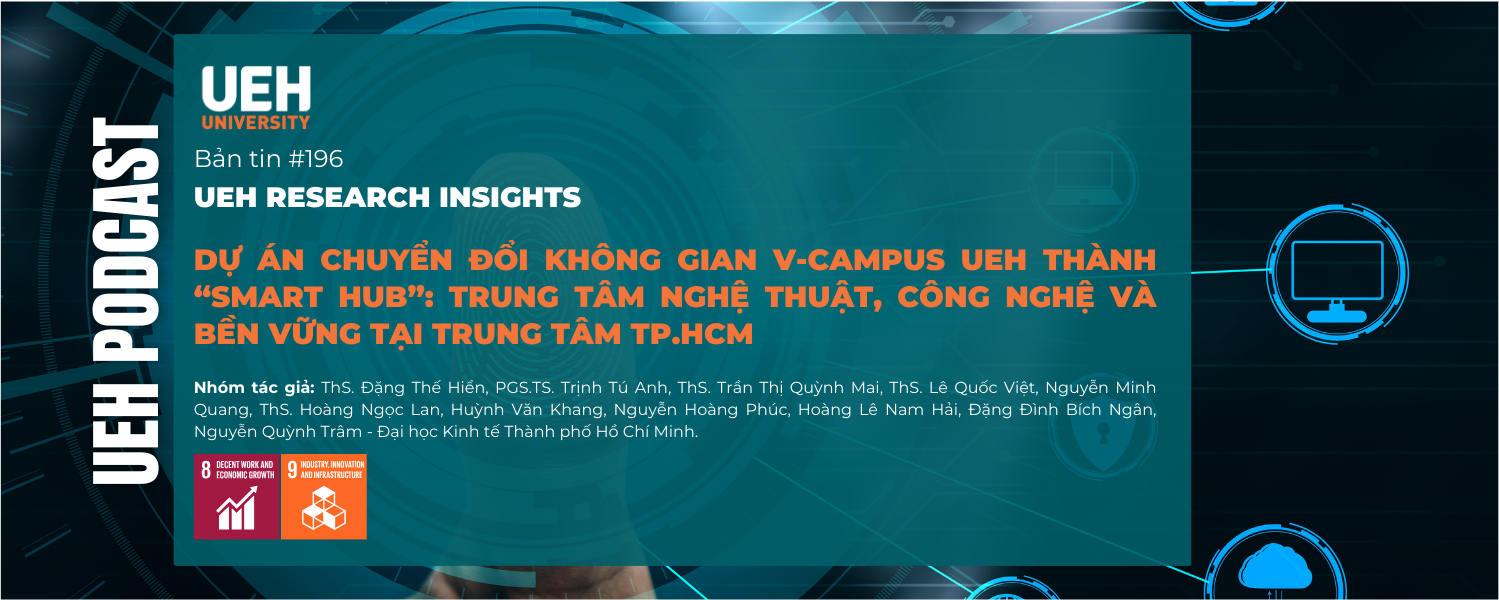
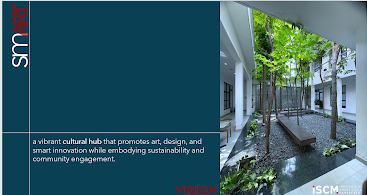
In facilities development, UEH continued presenting its plans to transform V Campus into a Smart Hub, combining art, technology and sustainability in the design and use of university spaces. This relates to renovation, infrastructure development, material selection and construction works. For indicator 12.2.8, such activities offer opportunities to extend waste-reduction requirements to consultants, material suppliers and construction contractors. However, actual implementation would need to be verified against project documentation, material specifications and environmental clauses in contractor agreements.
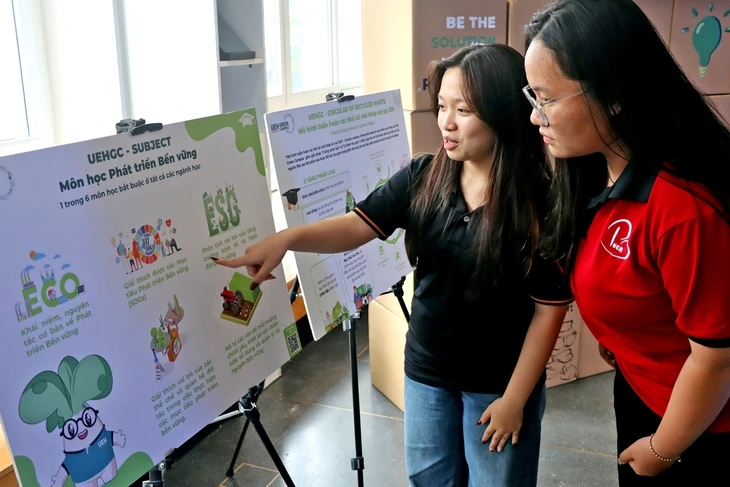
Alongside campus governance and facilities development, Living Lab UEH Green Campus 2025 continued providing a space for research, experimentation and the development of sustainable campus solutions. The programme encourages initiatives that use resources efficiently, reduce environmental impacts and advance circular-economy models. Through research and innovation, UEH has been building a basis for further waste reduction, materials reuse and resource efficiency, supporting responsible selection of products, supplies and procurement approaches.
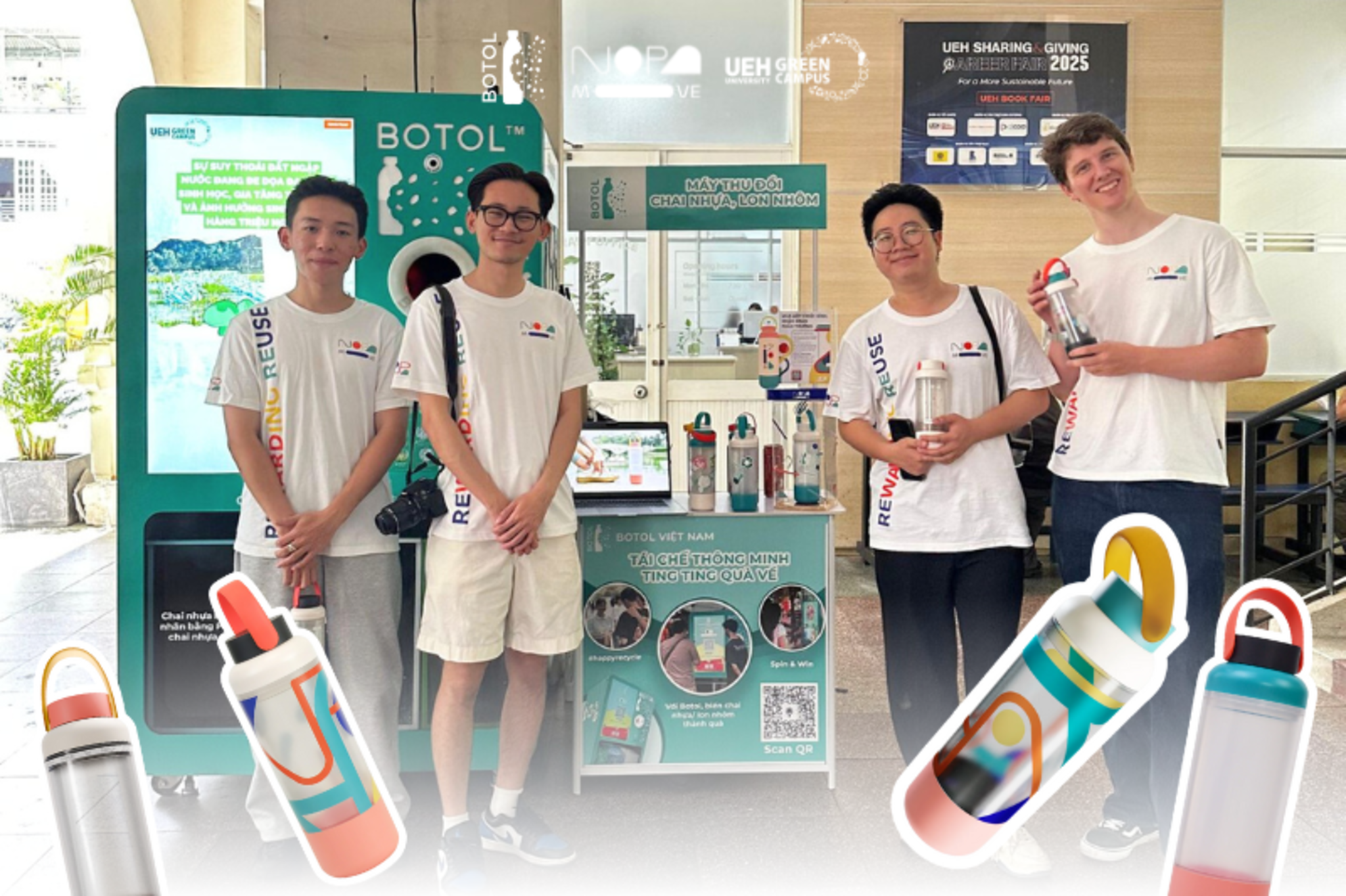
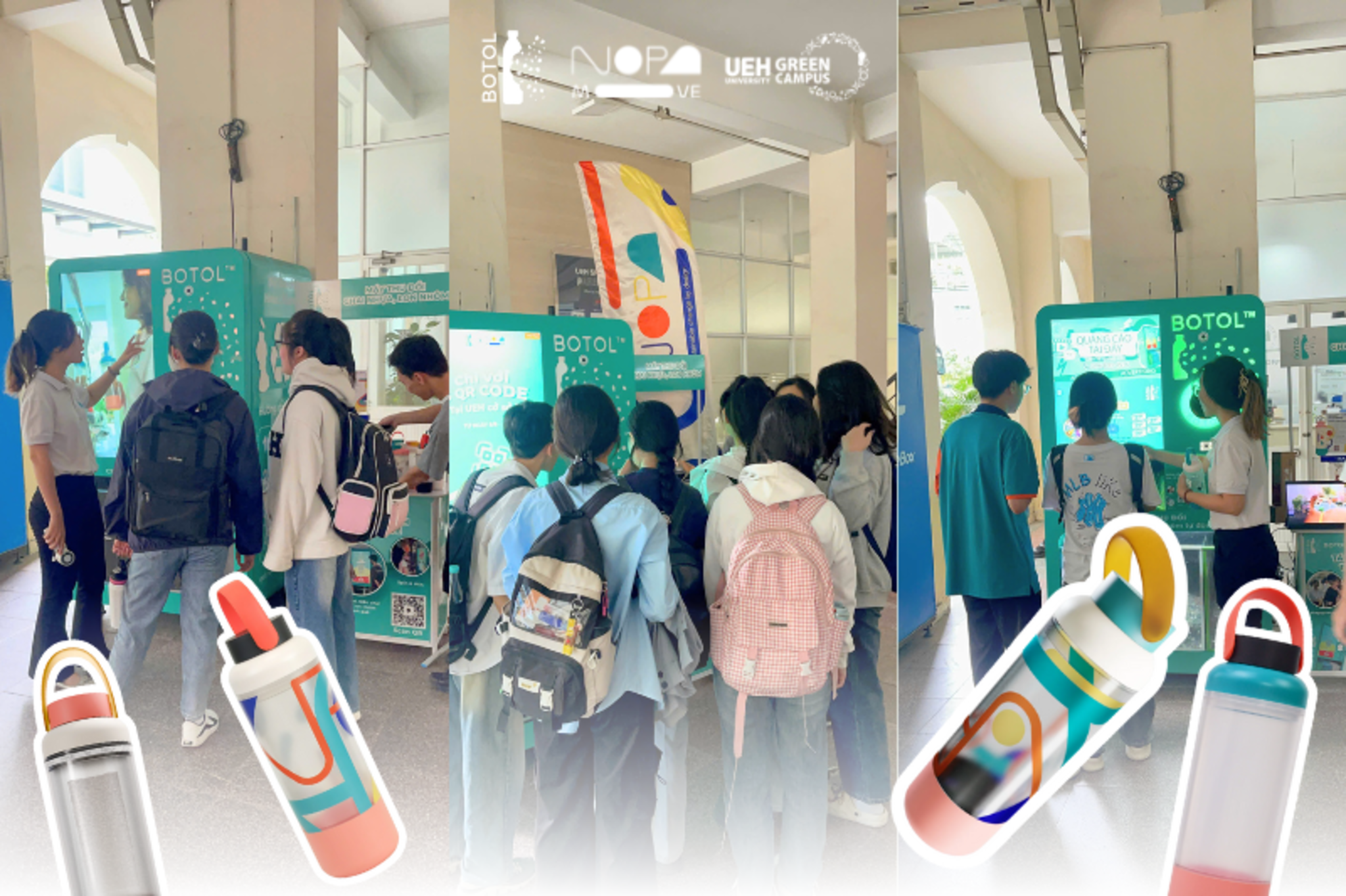
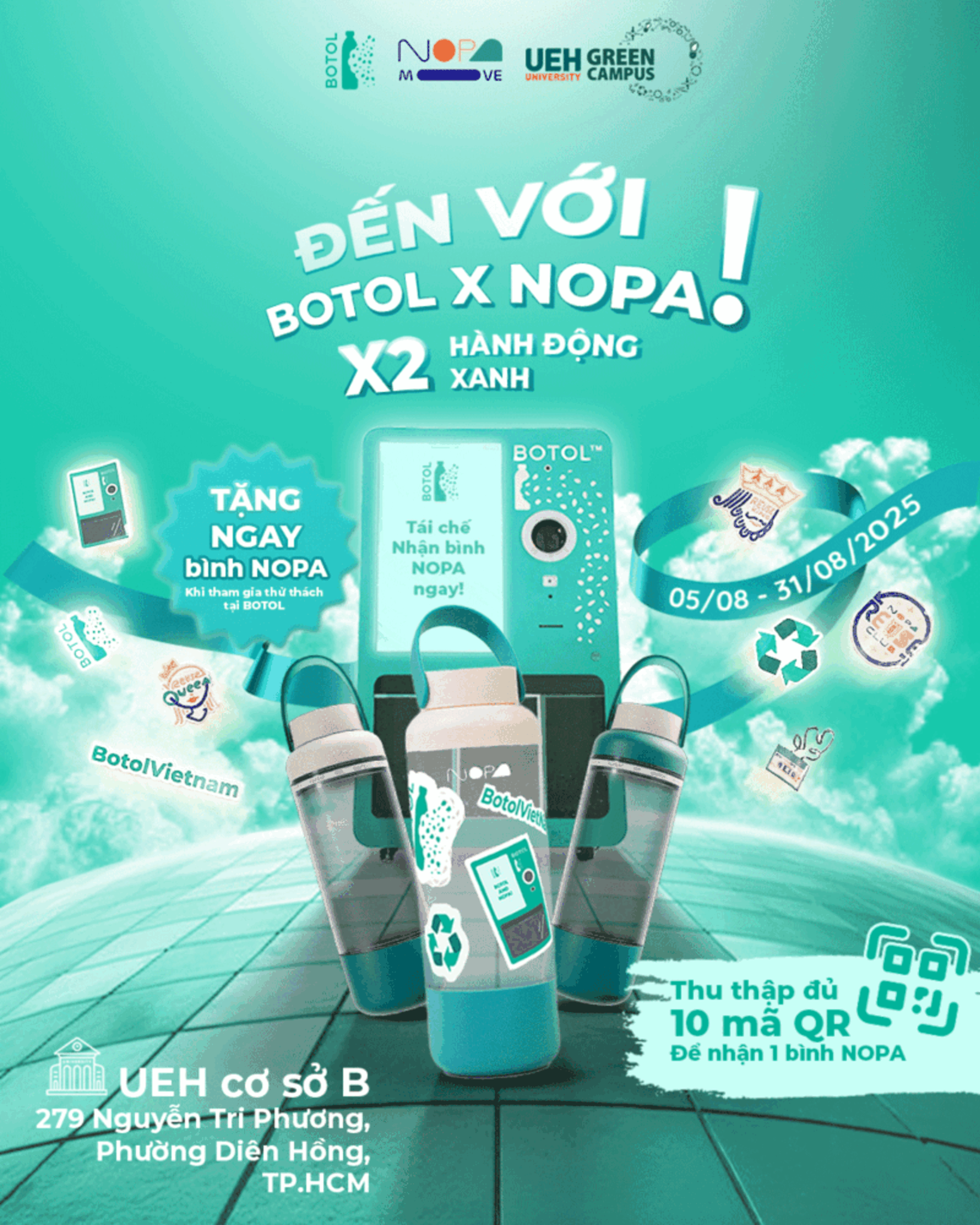
Collaboration with partners in material collection and recycling continued through the BOTOL x Nopa Move programme. The programme combined a plastic-bottle collection challenge with encouragement to use personal water bottles, linking the university community with organisations engaged in recovering and recycling used materials. In 2025, the programme recorded 1,996 plastic bottles collected, more than 200 participations and 30 personal water bottles distributed. These results demonstrate the contribution of collaboration to post-consumption materials management and reuse, supporting waste minimisation and circular-economy development within the UEH ecosystem.
In addition, UEH continued purchasing and supplying goods for large-scale programmes, including UEH Day 2025, which involved uniforms, meal registration and event logistics. These activities directly involve product selection, ordering, packaging and the provision of event materials and services. Under the 2025 policy direction, UEH could further specify criteria to reduce disposable items, prioritise reusable products and minimise supply-related waste. The extent to which individual suppliers meet these requirements must be established through procurement records and relevant contracts.
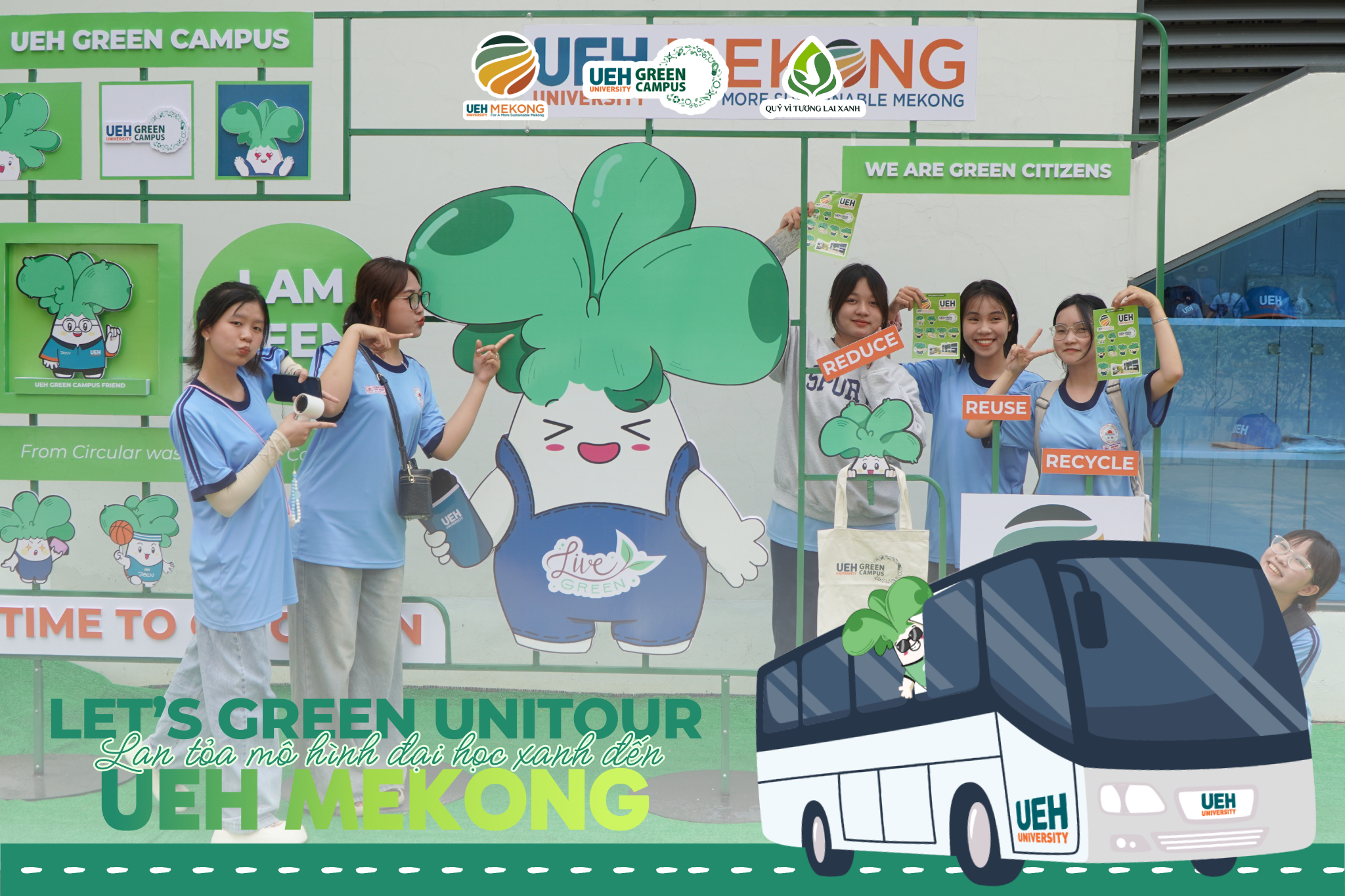
Beyond partnerships and operations, UEH promoted sustainable consumption through activities at Vo Thi Sau Campus, Let’s Green Unitour and communications on reducing single-use plastics. These programmes raised awareness of resource efficiency, reduced plastic packaging and reusable alternatives. Sharing the Green Campus model across UEH also helps units adopt responsible waste-management and consumption practices in their regular activities.
Through these programmes, UEH strengthened the connection between waste-minimisation policy, campus governance, facilities development, research, innovation and partnerships. These efforts provide a foundation for extending responsible resource use and waste-reduction measures to procurement, goods supply and materials management.
Summary of Activities Implemented in 2025
Alongside flagship programmes, UEH continued research, partnerships, communication and practical waste-reduction activities throughout its system. The following summary illustrates policy implementation, partner participation and contributions towards developing a sustainable supply chain.
| Activity/Programme | Implementation | Results and Contribution to Indicator 12.2.8 | Public Evidence |
| No Single-use Plastic Campus System – Developing a Plastic-Reduction System and Engaging Collection and Recycling Partners | UEH developed the No Single-use Plastic Campus System using Go Green Station, Zeen AI Bot, I Ve Chai Machine and nine plastic-reduction actions. The initiative combines reduced use of single-use plastics, source separation and transfer of used materials to collection and recycling partners such as Ve Chai Chu Hoa, A Chau Environment and Botol.
|
In 2025, the initiative was selected among the Top 10 of 116 proposals and received USD 10,000 from the 2025 Plastic Innovation Programme. It helped extend UEH’s cooperation with external organisations in managing and processing used materials and supported the development of circular collection and recycling chains. | https://ueh.edu.vn/cuoc-song-ueh/tin-tuc/ueh-keu-goi-thanh-cong-tai-tro-10-000-usd-tu-chuong-trinh-doi-moi-sang-tao-mang-nhua-2025-74403 |
| 3. UEH Green and Circular Academic Campus Operations Strategy, 2011–2025 | UEH continued developing a green and circular campus operations model linking facilities management, resource efficiency, waste management and sustainable consumption with university governance. This provides a basis for incorporating environmental requirements into operations, procurement and use of goods and supplies. | Strengthened the direction of responsible resource management and waste prevention in university operations, providing support for developing environmental criteria for procurement, use of materials and supplier partnerships. | https://emagazine.ueh.edu.vn/chien-luoc-van-hanh-khuon-vien-hoc-thuat-the-he-moi-cua-ueh-2011-2025-tu-campus-thong-minh-den-campus-xanh-va-tuan-hoan/?v=1748662631893/ |
| V Campus Transformation into a Smart Hub – Developing a Space for Art, Technology and Sustainability | UEH presented plans to transform V Campus into a Smart Hub, combining art, technology and sustainability in the design and use of university spaces. The initiative relates to facilities development, materials selection and renovation and construction activities.
|
Demonstrated an approach to incorporating sustainability into facilities development. It provides a basis for examining requirements for waste minimisation, efficient materials use and reuse of supplies by consultants, suppliers and contractors. Implementation needs to be checked against project documents and contractor agreements. | https://future.ueh.edu.vn/chi-tiet-knowlege/podcast-du-an-chuyen-doi-khong-gian-v-campus-ueh-thanh-smart-hub-trung-tam-nghe-thuat-cong-nghe-va-ben-vung-tai-trung-tam-tp-hcm/ |
| Living Lab UEH Green Campus 2025 – Advancing Research and Application of Sustainable Solutions | UEH launched Living Lab Green Campus 2025 to promote research, experimentation and sustainable practices within the university. The programme encourages initiatives in resource efficiency, environmental impact reduction and the circular economy.
|
Provided a research and innovation platform for further waste prevention, material reuse and resource efficiency. Research and pilot findings may inform environmental criteria in selecting products, materials and supply solutions. | https://gogreen.ueh.edu.vn/tin-moi-noi-bat/khoi-dong-living-lab-ueh-green-campus-2025-lan-toa-tieng-noi-chung-greenculture-living-in-harmony-with-nature |
| BOTOL x Nopa Move – Collaborative Plastic-Bottle Collection and Reuse Promotion | UEH collaborated with partners on a plastic-bottle collection challenge, combining separation and recovery of used materials with encouragement to use personal water bottles. The programme connected the university community with collection and recycling organisations.
|
Recorded 1,996 plastic bottles collected, over 200 participations and 30 personal water bottles distributed. The activity promoted partnerships in collection and recycling and encouraged longer material lifecycles, supporting waste reduction and a circular economy. | https://gogreen.ueh.edu.vn/tin-moi-noi-bat/thu-thach-tai-che-cung-botol-va-nopa-move-1996-chai-nhua-duoc-thu-gom-trao-tay-30-binh-nuoc-ca-nhan |
| UEH Day 2025 – Provision of Uniforms, Meals and Event Services | As part of UEH Day 2025, UEH organised activities involving uniforms, meal registration and event logistics. These involved ordering, materials and packaging use, and the supply of goods and services for the event.
|
Illustrated procurement and supply activities where waste-minimisation policies could be considered. Evidence of reduced packaging, disposable materials or reuse by suppliers would require ordering records, contracts and implementation details. | https://ueh.edu.vn/cuoc-song-ueh/tin-tuc/ueh-day-2025-ra-mat-dong-phuc-ueh-day-2025-va-trien-khai-dang-ky-size-suat-an-chay-74181 |
| Towards a Single-use Plastic-Free Vo Thi Sau Campus | UEH carried out communications and activities to reduce single-use plastics at Vo Thi Sau Campus, including signage in the canteen. These encouraged reusable water bottles, food containers and bags while discouraging disposable plastic packaging in shopping and services. | Brought disposable-item reduction messages into retail and service areas, encouraging reusable choices and helping businesses engage with UEH’s sustainable consumption requirements. | https://gogreen.ueh.edu.vn/tin-moi-noi-bat/nghe-thuat-va-hanh-dong-ben-vung-giao-thoa-tai-co-so-vo-thi-sau-huong-den-khong-nhua-dung-mot-lan |
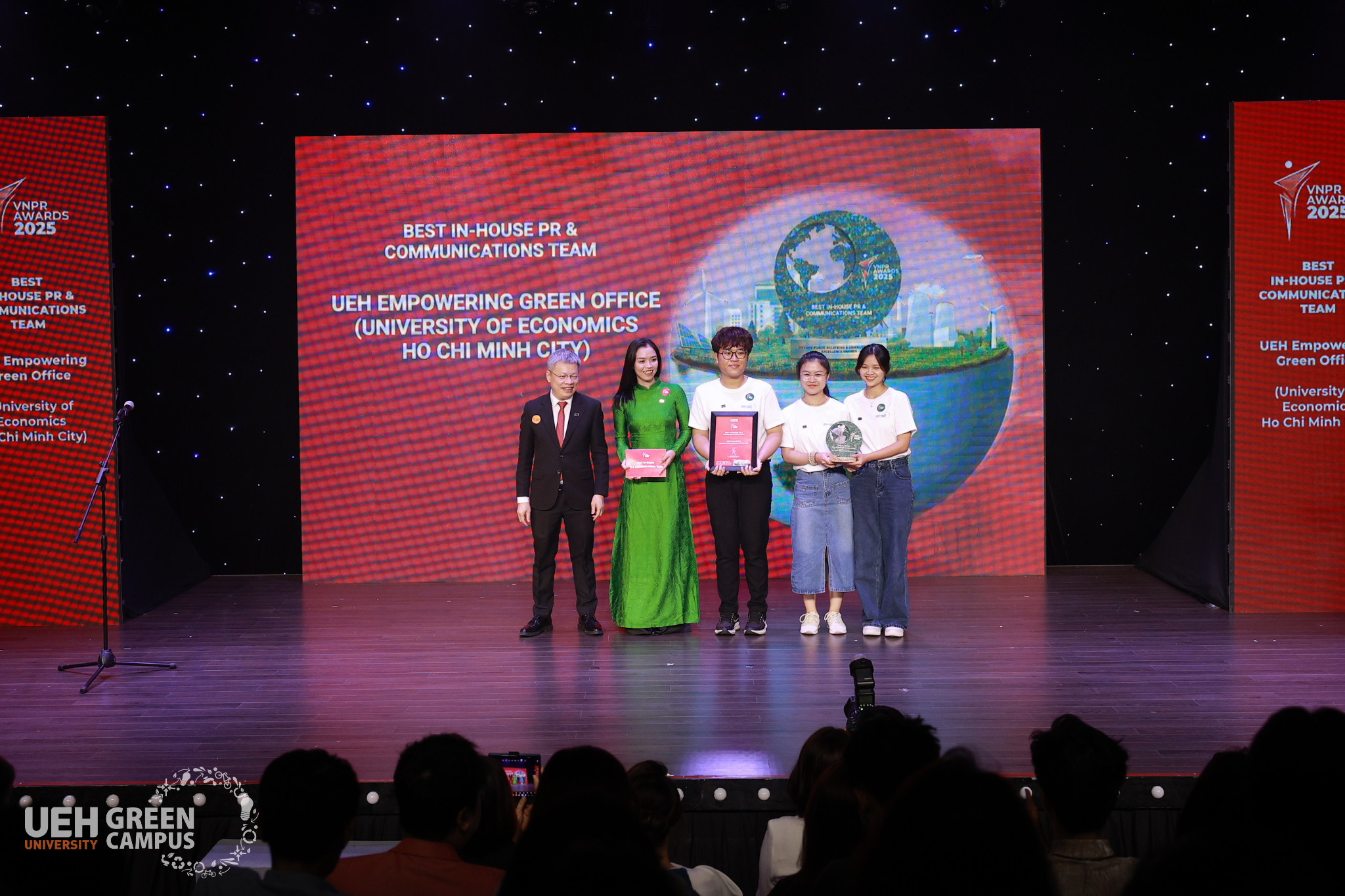
| UEH Green Office – Developing a Green, Digitally Enabled Office Model | UEH developed its Green Office model with technology-enabled changes in working and communications practices, reflecting a more modern and sustainable approach to resource use.
|
Supported resource-efficiency objectives for offices and provided a basis for investigating reductions in paper, materials and disposable products. Separate evidence is required to show that stationery suppliers comply with waste-minimisation requirements. | https://gogreen.ueh.edu.vn/tin-moi-noi-bat/mo-hinh-van-phong-ao-the-he-moi-ueh-green-office-duoc-vinh-danh-best-premier-in-house-team-tai-vnpr-awards-2025-voi-chu-de-for-the-future-of-earthus |
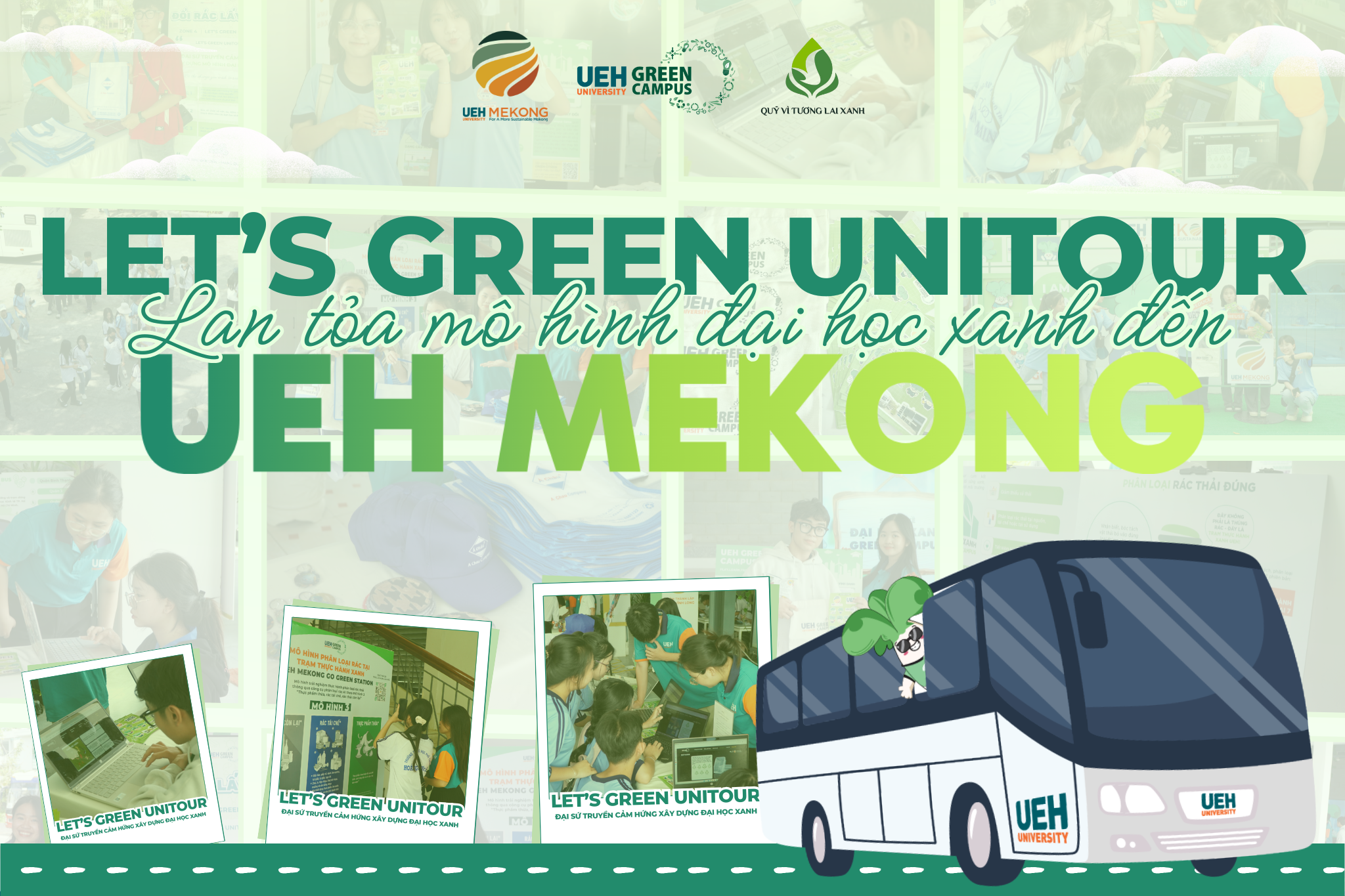
| Let’s Green Unitour – Sharing the Green Campus Model with UEH Mekong | UEH implemented Let’s Green Unitour to introduce and share the Green Campus model with UEH Mekong, encouraging 3R practices, efficient resource use and waste prevention in learning, working and daily life.
|
Broadened awareness and waste-management practices within UEH, supporting the dissemination of disposable-item reduction and responsible resource-use approaches across campuses. | https://gogreen.ueh.edu.vn/tin-moi-noi-bat/lets-green-unitour-lan-toa-mo-hinh-dai-hoc-xanh-den-ueh-mekong |
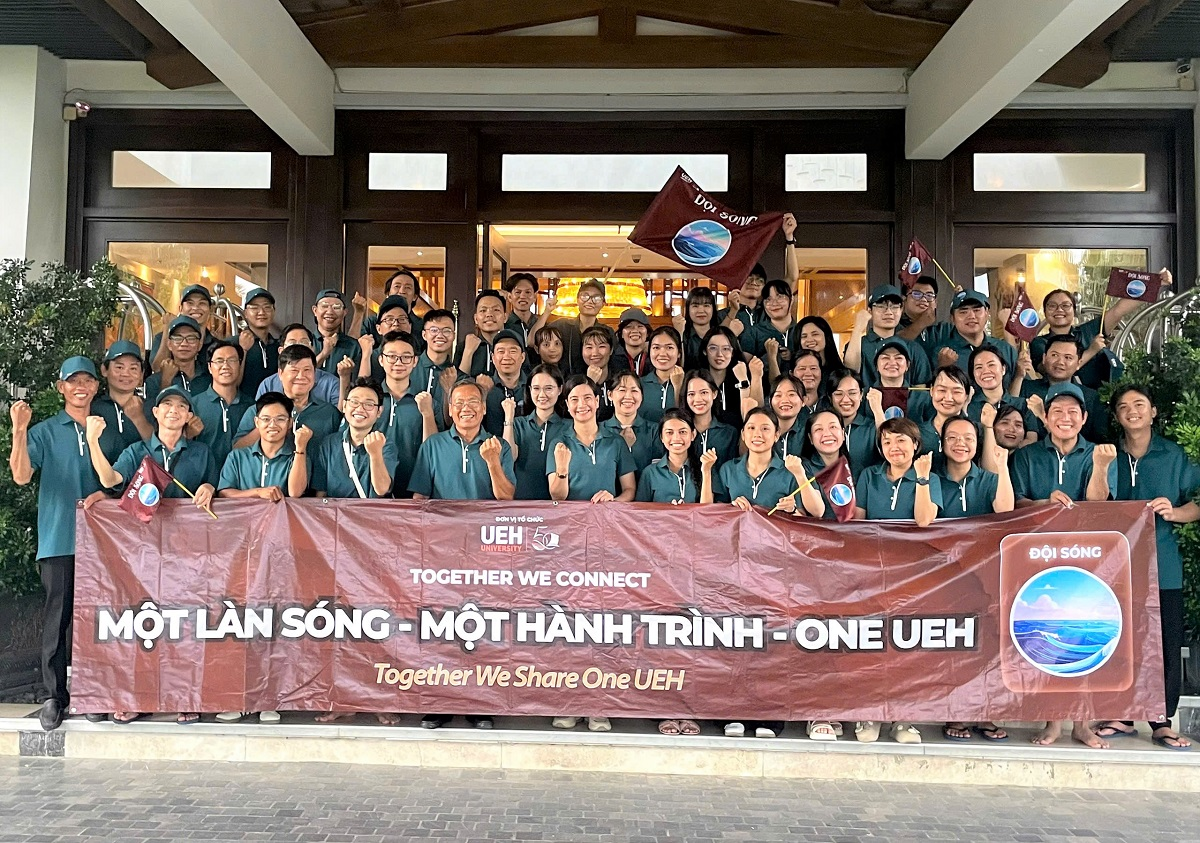
| UEH Day 2025 – Community, Environmental and Sustainable Event Activities | UEH organised cultural, community and environmental programmes at several locations during UEH Day 2025. These activities involved event planning, materials, logistics and supporting services.
|
Illustrated activities to which waste-reduction and responsible materials-use requirements could be extended. Evidence of their application by suppliers would require event logistics rules, procurement documents or service contracts. | https://ueh.edu.vn/cuoc-song-ueh/tin-tuc/ueh-mekong-ruc-chay-tinh-than-one-ueh-together-we-share-tai-su-kien-ueh-day-2025-74522 |
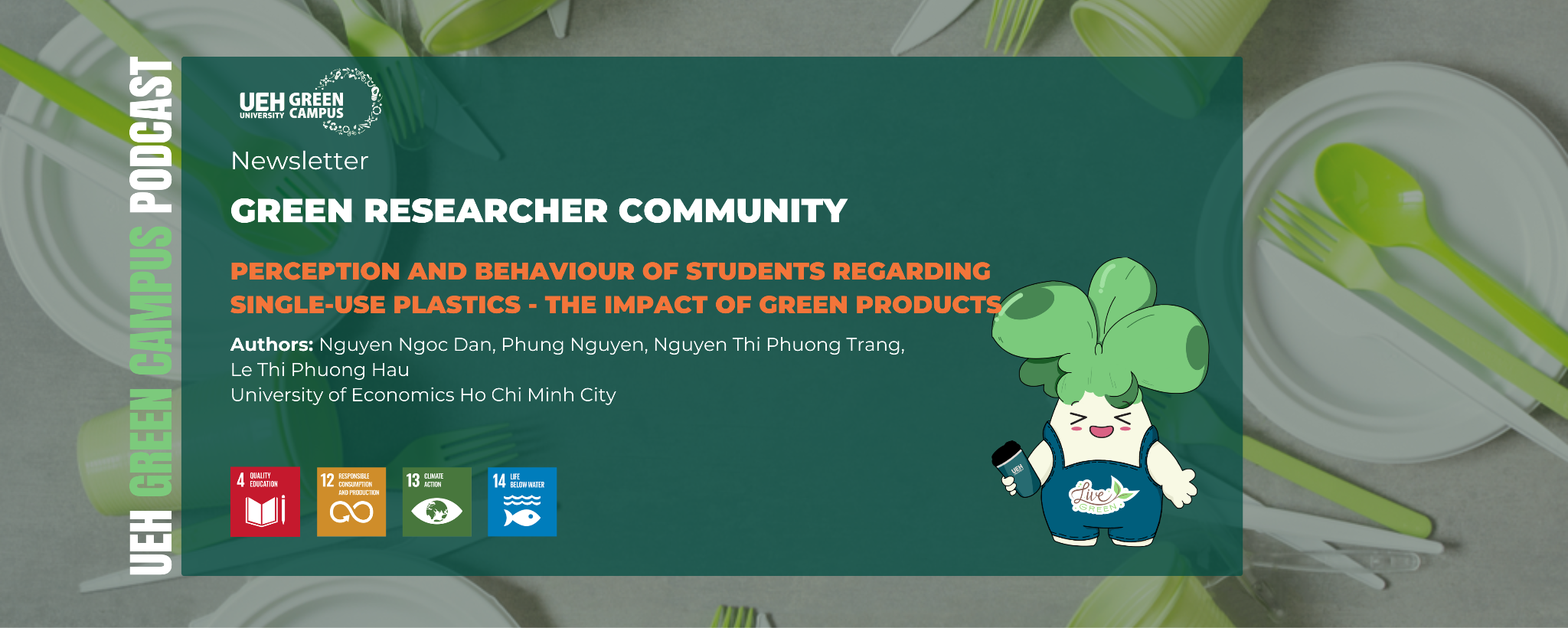
| Research Podcast on Perceptions and Behaviour Regarding Single-use Plastics – The Impact of Green Products | UEH shared research on perceptions and consumption behaviour relating to single-use plastics and the role of green products in changing consumer choices.
|
Provided research insights into demand and choices for green products, supporting communication and the development of alternatives to single-use plastics. | https://gogreen.ueh.edu.vn/podcast/research-contribution-nhan-thuc-va-hanh-vi-su-dung-nhua-dung-mot-lan-cua-sinh-vien-tac-dong-cua-san-pham-xanh |
| UEH Students Commit to Green Practices and Responsible Consumption | UEH students participated in commitments to green practices, increasing awareness of environmental protection and encouraging sustainable product and consumption choices.
|
Promoted a culture of responsible consumption in the university community, supporting reduced demand for disposable products and the selection of environmentally friendly goods. | https://gogreen.ueh.edu.vn/tin-moi-noi-bat/bao-tuoi-tre-sinh-vien-cam-ket-thuc-hanh-xanh |
3. Outcomes and Contributions to Indicator 12.2.8
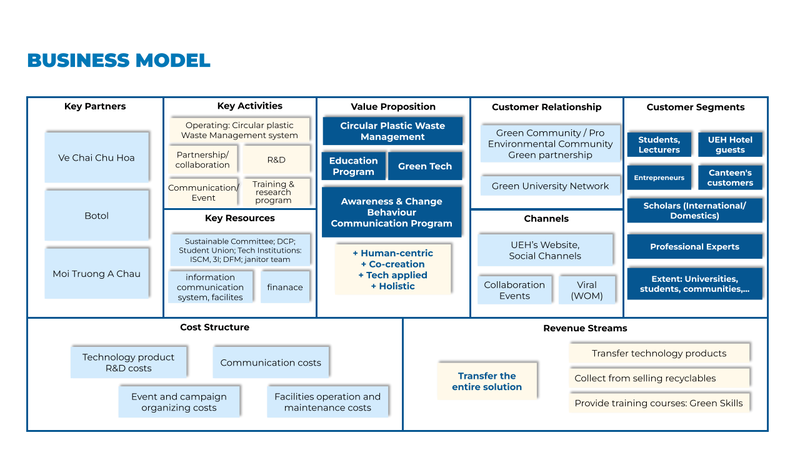
During 2024–2025, UEH continued developing its policy on reducing plastics and disposable products by extending its scope beyond internal consumption to activities involving suppliers of goods, materials and other partners. Building on supplier requirements introduced in 2024, the 2025 update broadened the types of products targeted and established the principle of integrating disposable-item reduction criteria into four areas: procurement, operations, services and events. This policy development provides a basis for extending waste reduction and responsible resource use throughout procurement and supply chains.
Notable results recorded in 2025 included:
– USD 10,000 in funding for the No Single-use Plastic Campus System under the 2025 Plastic Innovation Programme.
– Selection of the No Single-use Plastic Campus System among the Top 10 of 116 proposals.
– Collection of 1,996 plastic bottles through BOTOL x Nopa Move.
– Distribution of 30 personal water bottles to encourage reusable alternatives.
– More than 200 participations in BOTOL x Nopa Move.
These results indicate the involvement of external partners in developing plastic-reduction solutions and collecting and recycling used materials. Funding and collaborative programmes helped broaden UEH’s network of organisations involved in waste management, resource efficiency and the circular economy.
In addition to these quantitative outputs, UEH advanced its green and circular campus operations approach, researched sustainable solutions through Living Lab Green Campus and developed facilities and procurement activities supporting university operations. These activities helped identify where further waste-reduction criteria might apply, including goods procurement, material use, infrastructure development and supplier cooperation.
For indicator 12.2.8, UEH’s most direct contribution was establishing supplier and partner responsibilities in the 2024 policy and further developing the principle of including disposable-item reduction criteria in procurement and operations in the 2025 update. Funding, collection and reuse figures provide supporting evidence of collaboration and waste management, but do not directly demonstrate how many suppliers implemented the policy.
To improve implementation and measure supply-chain impacts, UEH should prioritise monitoring the number of suppliers signing waste-reduction commitments, the number of procurement records and contracts containing environmental criteria, the proportion of products using reusable or recyclable packaging, and reductions in waste associated with supply and construction. These measures would better demonstrate supplier compliance and inform future improvements in sustainable procurement.
4. Conclusion
Having established responsibilities for suppliers and partners to reduce single-use plastics in 2024, UEH further developed its policy in 2025 by broadening the products covered and integrating environmental criteria into procurement, operations and supply activities. Partnerships on plastic reduction, collection and recycling, together with research into resource-efficient solutions, strengthened links between the University’s environmental responsibilities and supply-chain participants.
For indicator 12.2.8 – Minimisation Policies Extended to Suppliers, UEH’s principal contribution lies in developing policies that extend disposable-item reduction beyond internal activities to suppliers of goods, materials, equipment and other supply-chain partners, while providing a basis for integrating waste-reduction requirements into procurement and university governance. This supports the development of responsible supply chains, efficient resource use, lower environmental impacts and SDG 12 – Responsible Consumption and Production.