

12.2.3. Hazardous Waste Disposal Policy (Including Chemical, Biological, Medical and Electronic Waste)
The University of Economics Ho Chi Minh City (UEH) has established and maintained a policy for managing, collecting, segregating, storing and transferring hazardous waste to safeguard students, staff, employees and the environment. Building on the Green Campus Regulations issued under Decision No. 2059/QD-DHKT-CSVC in 2022, UEH identifies waste streams requiring separate control, including used batteries, fluorescent lamps, damaged electronic components and equipment, materials containing heavy metals and other hazardous waste arising from teaching, research and operations. In 2025, UEH continued to uphold these management principles while seeking to strengthen quantity records, verify waste transfers and consolidate waste data towards a transparent, safe and verifiable management system.
1. Policy Framework
UEH implements the Green Campus Regulations under Decision No. 2059/QD-DHKT-CSVC, establishing requirements for waste segregation at source and separate management of hazardous waste streams. The policy is specified in Article 3 – Waste Segregation Practices at UEH, Article 7 – Hazardous Waste Disposal Policy and Article 15 – Responsibilities of Management Units for Waste Collection, Segregation and Transportation.
Regarding the identification and segregation of hazardous waste, Article 7 specifies streams that require separate management, including batteries, electronic components, damaged electronic equipment, fluorescent lamps and materials containing heavy metals. These wastes must be separated from ordinary municipal waste and collected and stored appropriately to minimize the risk of chemical leakage, release of hazardous substances and environmental contamination.
 |
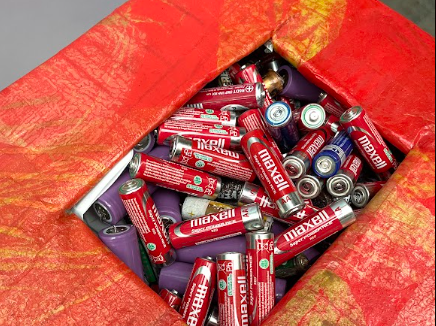 |
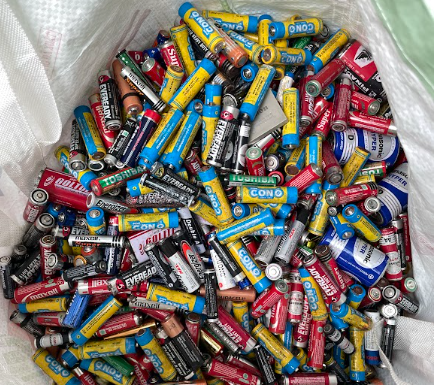
Used batteries are stored safely by the Infrastructure Management Board at UEH campuses before being transferred to an authorized waste treatment provider.
Regarding collection and storage procedures, the policy requires hazardous waste to be segregated, packaged, labelled and consolidated in appropriate locations prior to transfer. Separate collection of used batteries and electronic waste reduces the potential release of hazardous components and facilitates transfer to specialist treatment providers.
Regarding management and transfer responsibilities, Article 15, Clause 4 requires hazardous waste to be collected, consolidated in technical areas and transferred to licensed treatment partners. Clause 7 further emphasizes prioritizing partners with transparent, legally compliant treatment processes that minimize landfilling and favour environmentally responsible and safe treatment methods.
Regarding policy enhancement, Article 18 – Responsibilities of Units Undertaking Waste Collection, Transportation and Treatment was developed by UEH to clarify management responsibilities across campuses. Clause 3 requires each waste type to be segregated, stored, recorded by quantity and periodically handed over; hazardous waste in particular must be collected and stored separately and transferred to licensed treatment operators in accordance with applicable regulations. Clauses 5 and 6 add mechanisms for inspection, monitoring, consolidation of hazardous waste data and reporting to the UEH Green Campus Coordination Board.
Compared with the policy implemented in 2024, the updated provisions represent a shift from segregation, collection and transfer requirements towards a management mechanism involving quantity recording, implementation monitoring and periodic consolidated reporting. This provides a basis for UEH to strengthen hazardous waste controls, particularly for used batteries and electronic equipment, in support of indicator 12.2.3.
“Article 7: Hazardous Waste Disposal Policy
Hazardous waste disposal refers to UEH’s collection, storage and transfer of wastes that may harm human health and the environment, including used batteries, electronic components, damaged electronic equipment, fluorescent lamps and materials containing heavy metals. This policy aims to ensure that all hazardous waste generated through UEH’s learning, research and operational activities is safely managed, properly collected and treated by licensed operators, contributing to a sustainable campus waste circulation system.
- For batteries and electronic waste: these must be collected separately in dedicated containers bearing the warning label ‘Hazardous Waste – Batteries and Electronic Equipment’ and located in designated areas. Once full, containers are transferred to the Technical Department at each campus for temporary storage before handover to licensed waste treatment providers.
- For other hazardous waste (such as fluorescent lamps, electrical components and chemical-containing materials): the generating units must segregate, package safely, label clearly and transfer such waste to the Technical Department for treatment in accordance with prescribed procedures.
- Hazardous waste collection, transportation and treatment must be undertaken only through partners holding valid hazardous waste treatment licences, ensuring full compliance with environmental protection and occupational safety laws.”
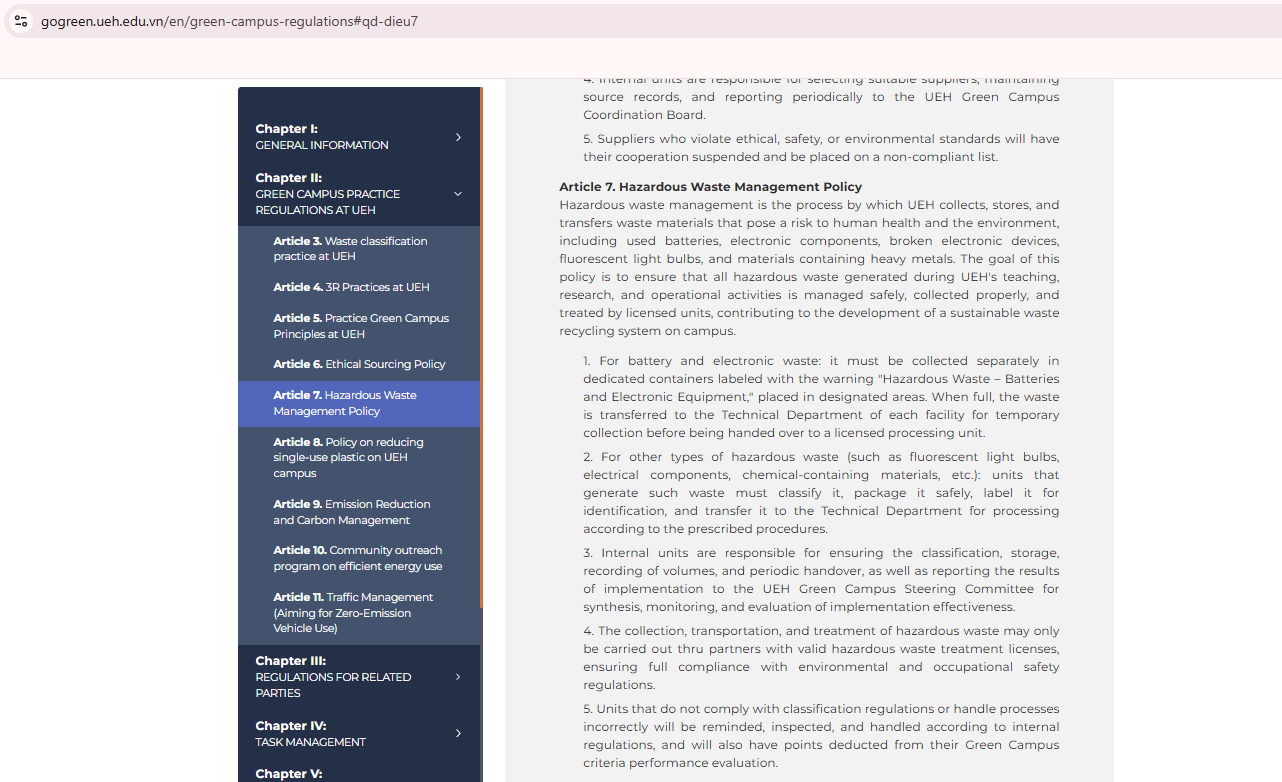
Article 7 of the UEH Green Campus Regulations, issued under Decision No. 2059/QD-DHKT-CSVC, sets out the policy requirements for hazardous waste.
Public source: UEH Green Campus website, ‘Green Campus Regulations’
https://gogreen.ueh.edu.vn/en/green-campus-regulations
2. Battery Collection Procedures at UEH
On this basis, Article 7 – Hazardous Waste Disposal Policy sets out UEH’s requirements for collecting, storing and transferring used batteries, damaged electronic components and equipment, fluorescent lamps, materials containing heavy metals and chemical-containing waste. The policy seeks to control hazardous waste throughout its lifecycle, from generation to handover to appropriately authorized treatment providers. Specifically, it provides for the following:
First, separate segregation at source. Used batteries and damaged electronic equipment must be collected in designated containers labelled ‘Hazardous Waste – Batteries and Electronic Equipment’ at specified locations. Units generating fluorescent lamps, electrical components and chemical-containing materials must segregate, safely package and appropriately label these wastes.
Second, safe collection and storage. After segregation, hazardous waste is transferred to the technical area of each campus for temporary storage, reducing the risks of damaged packaging, leakage or uncontrolled exposure to people and the environment.
Third, recording and monitoring. Internal units are responsible for recording hazardous waste quantities, arranging periodic handovers and reporting results to the UEH Green Campus Project Management Board for consolidation, monitoring and evaluation.
Fourth, transfer to licensed treatment providers. Hazardous waste collection, transportation and treatment must be undertaken by partners holding licences appropriate to the waste types accepted, in compliance with environmental protection and occupational safety requirements.
Fifth, compliance inspection and monitoring. The regulations assign responsibility for inspecting, reminding and addressing cases of improper hazardous waste segregation or management.
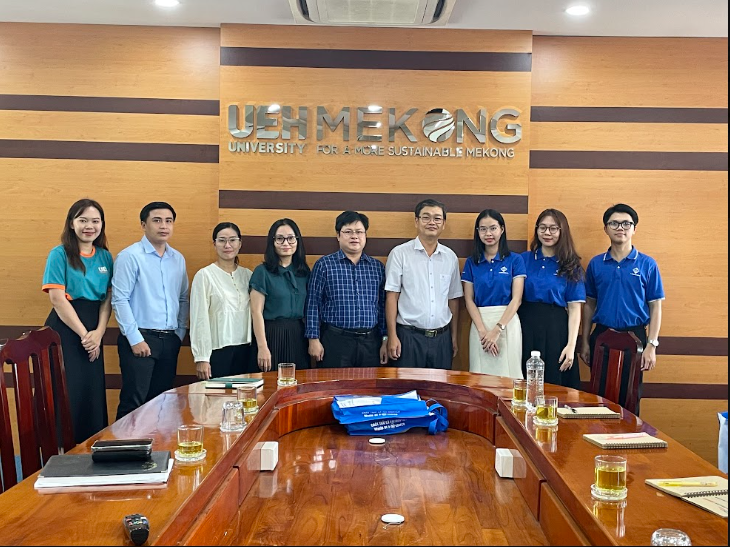
UEH discusses hazardous waste collection and treatment arrangements with its partner Asia Environment at UEH Mekong.
3. Promoting Waste Collection and Segregation through the ‘Waste-for-Gifts’ Programme
In addition to its internal operational procedures, UEH continued to combine waste management with education and community awareness activities. On 16 February 2025, more than 600 high school students and teachers participated in UEH Mekong Green Unitour, featuring green lifestyle activities, an AI-assisted waste segregation experience and a ‘Waste-for-Gifts’ programme organized with Asia Environment Company.
Through this activity, participants learned not only to segregate waste but also to consider ‘waste as a resource’: appropriately segregated and recovered materials can be reused, recycled or directed towards environmentally preferable treatment options.
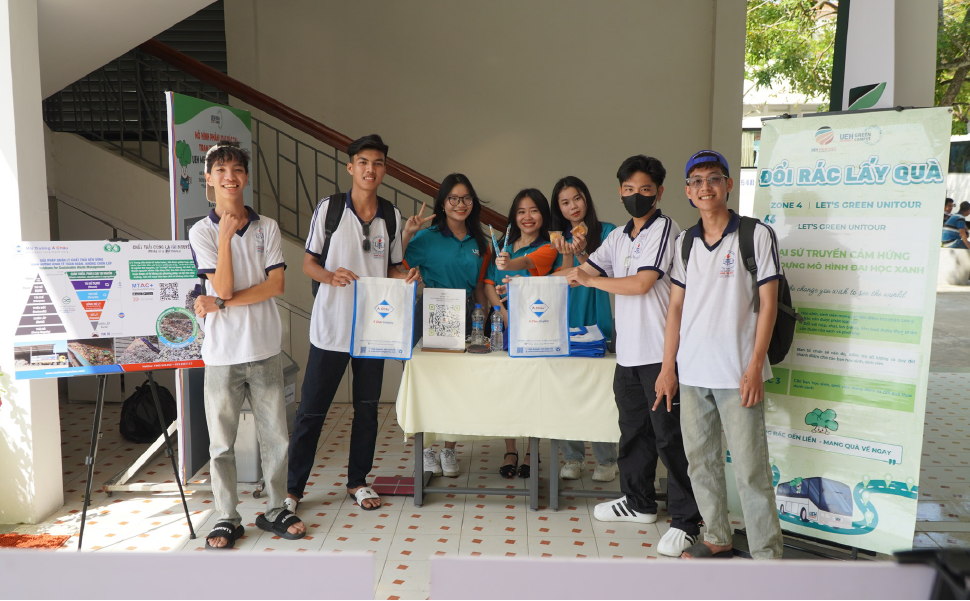
Students participate in a waste segregation event, raising awareness of hazardous waste and its treatment methods.
Public source: Asia Environment website, ‘UEH Mekong Green Unitour: 600 high school students participate in sustainable career guidance, technology experiences and waste-for-gifts activities’, 16 February 2025
Thus, in 2025, UEH did not change the policy framework refined in the previous year but focused on maintaining and strengthening the implementation chain of identification, segregation, storage, recording, handover and treatment, while adding data, supporting documents and communications activities to improve verifiability. The combination of internal procedures, professional treatment partners and community programmes.
According to the 2025 Environmental Protection Report for the Nguyen Van Linh Campus (Campus N), only small quantities of hazardous waste were generated on site, mainly damaged lamps and batteries. These materials were segregated, kept in labelled containers and consolidated in the designated hazardous waste storage area to prevent mixing with municipal waste and the release of harmful substances into the environment.
In addition to collection and storage, the report identifies environmental risks associated with improper hazardous waste segregation, storage without adequate packaging or warning labels, and retention beyond permitted periods. Preventive and response measures include separate segregation and collection, technical-standard temporary storage facilities with labels and warning signs, and transfer of hazardous waste.
The identification of specific waste types, storage methods and incident prevention measures at Campus N demonstrates that UEH has incorporated hazardous waste segregation and management principles into day-to-day operations and uses environmental reporting as a basis for monitoring and improvement.
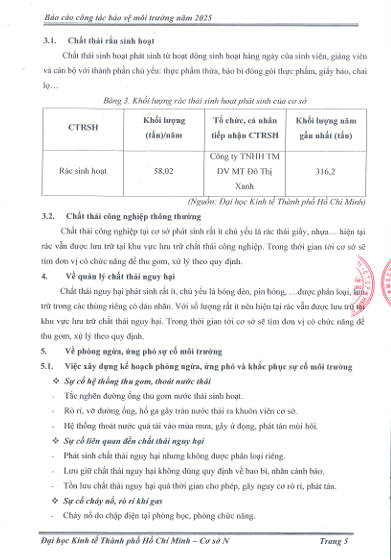
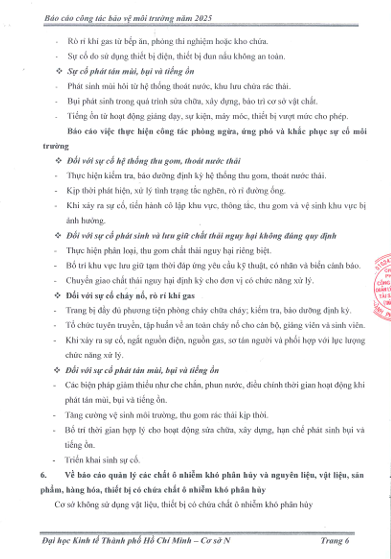
The 2025 Environmental Protection Report describes the hazardous waste situation on campus and the procedures for storage, collection and treatment.
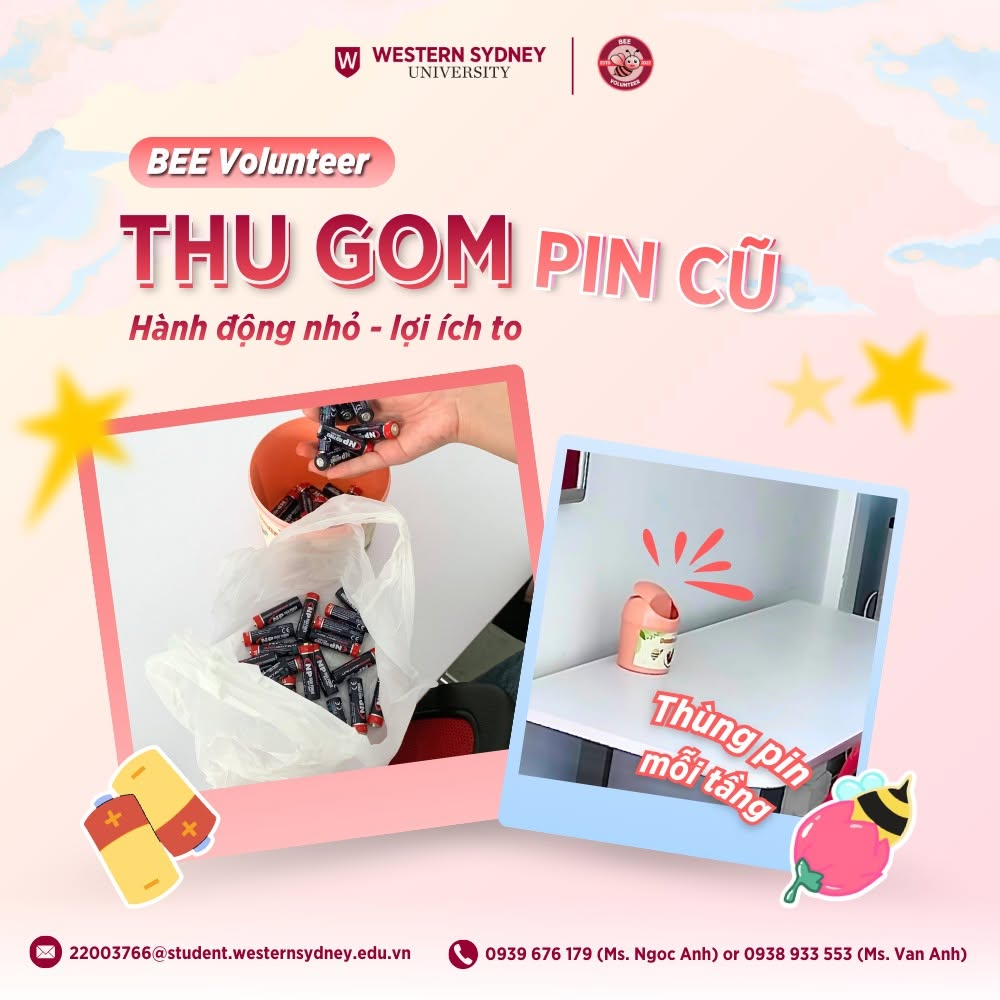
Alongside implementation of campus management policies, UEH organized student activities in 2025 to raise awareness and promote separate collection of potentially hazardous waste. One example was the ‘Used Battery Collection’ campaign organized by BEE Volunteer under the Western Sydney Vietnam Programme (UEH.ISB). This annual campus initiative enabled students to take used batteries to dedicated collection points instead of disposing of them with household waste.
Implemented over 2023–2025, the programme collected more than 300 kg of used batteries, raising awareness of hazardous waste segregation at source and providing practical experience that complements UEH’s waste management policy.
 |
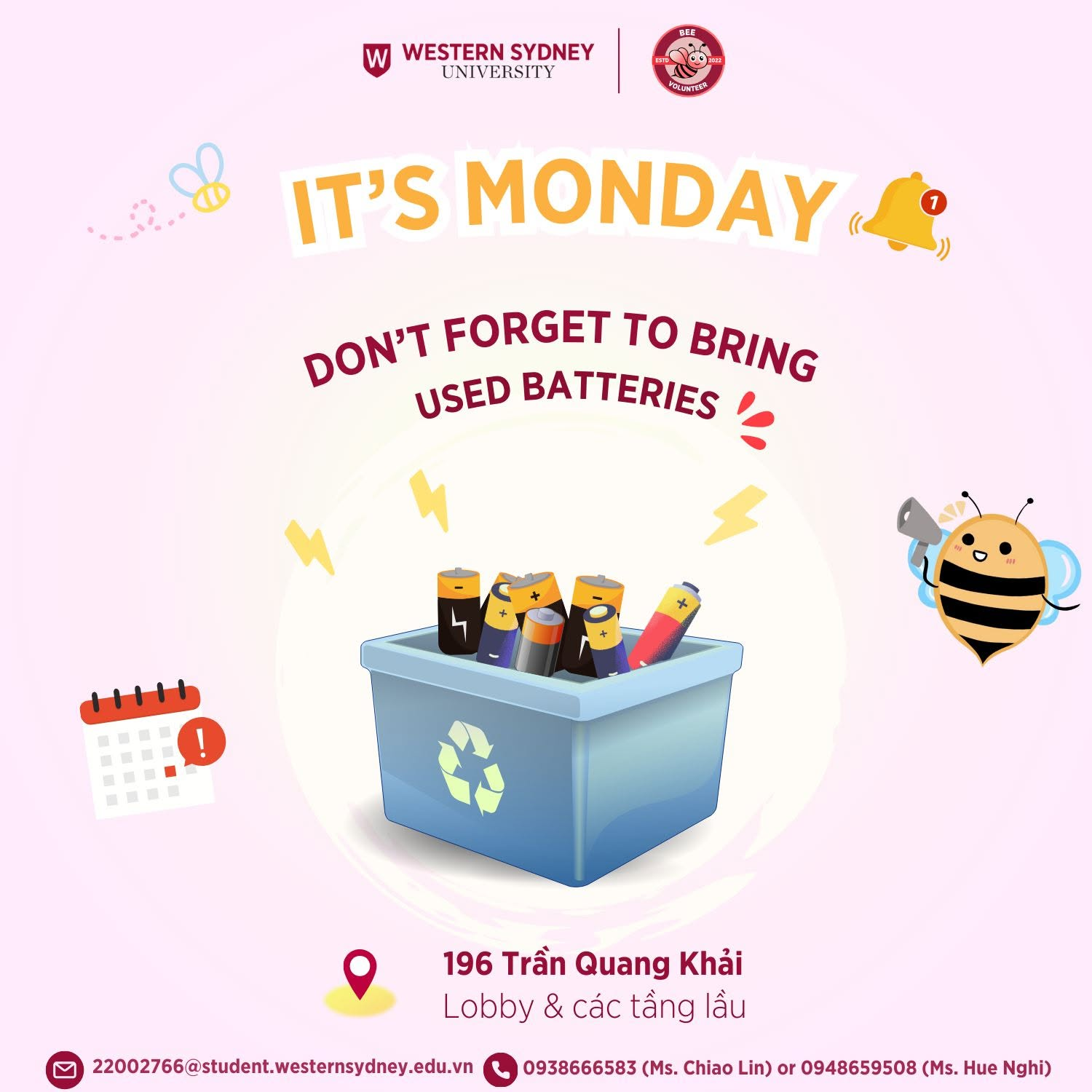 |
The used battery collection programme implemented over 2023–2025 by Western Sydney Vietnam (UEH.ISB).
4. Results and Impact
Building on regulations developed and implemented during 2022–2024, UEH continued to maintain a hazardous waste management system requiring segregation at source, separate collection, safe storage, quantity recording and transfer to licensed treatment operators. The policy covers potentially harmful waste arising from university activities, particularly used batteries, damaged electronic equipment, fluorescent lamps and materials containing heavy metals.
Compared with the previous period, the revisions to Article 18 strengthen requirements for quantity records, inspections, monitoring and periodic reporting, enabling UEH to improve traceability and verification of hazardous waste treatment. Further collection records, handover documents and 2025 hazardous waste reports would provide stronger evidence of policy implementation effectiveness.
Through its policy and dedicated hazardous waste management procedures, UEH demonstrates its commitment to protecting public health, preventing pollution and promoting safe waste management, in line with indicator 12.2.3 – Policy on Hazardous Waste Disposal.