

6.4.1. Water Reuse Policy
The University of Economics Ho Chi Minh City (UEH) has established and publicly disclosed a water reuse policy under its Green University Practices Regulation – UEH Green Campus. The policy promotes water recovery, treatment and reuse, reduces demand for newly sourced water and improves water resource management across the University. It identifies rainwater harvesting, greywater reuse and the reuse of treated wastewater for non-potable purposes, such as landscape irrigation, campus cleaning, equipment cooling and toilet flushing. It also specifies responsibilities for infrastructure investment, water quality monitoring and assessment of water savings.
In 2025, UEH continued to strengthen water resource governance in line with its Green University vision. Activities focused on reviewing the wastewater treatment system at the Nguyen Van Linh Campus, examining operating procedures and water quality assessment results, and taking stock of water-saving fixtures. These activities strengthened the foundations for water management and control, supporting the longer-term expansion of water reuse solutions within a green, circular and sustainable campus model and contributing to SDG 6 – Clean Water and Sanitation.
- Commitments, policies and implementation framework for water reuse
UEH identifies the effective management and use of water resources as part of its Green University strategy, with the aim of reducing resource waste, improving operational efficiency and promoting circular economy practices across its campuses.
The policy framework is set out in the Green University Practices Regulation – UEH Green Campus, published through UEH’s official information channels, including provisions directly addressing water conservation and reuse.
1.1. Water Reuse Policy – Article 21
UEH establishes its water reuse policy under Article 21 – Water Reuse Policy of the Green University Practices Regulation. The policy promotes the recovery, treatment and reuse of water within the University, reduces the need for new water extraction, conserves resources and contributes to sustainable development objectives.
The policy comprises seven clauses covering the development of a circular water management system, investment in treatment infrastructure, quality monitoring, research, standards development and community awareness education.
| Clause | UEH policy provisions |
| Clause 1 – Water resource management and reuse | UEH commits to developing a circular water management system on campus, including rainwater harvesting and the reuse of treated greywater from sinks, cooling systems and laboratories for landscape irrigation, campus cleaning and equipment cooling. |
| Clause 2 – Investment in water treatment infrastructure | UEH aims to invest in and operate on-site wastewater treatment equipment at its campuses, ensuring that reclaimed water meets technical standards and is safe and environmentally sound. |
| Clause 3 – Monitoring and performance assessment | UEH units are responsible for periodically monitoring reclaimed water quality, reporting water consumption data and assessing water-saving performance annually. |
| Clause 4 – Research and community education | UEH encourages research, innovation and green technology applications in water treatment and reuse, while incorporating these topics into educational programmes and community awareness campaigns. |
| Clause 5 – Water quality standards | UEH has a policy direction to pilot the development and issuance of water quality standards and guidelines for discharges in order to maintain water quality and protect ecosystems. |
| Clause 6 – Community education on water resources and aquatic ecosystems | UEH has a policy direction to pilot free educational programmes on the sustainable management of fisheries, aquaculture and tourism for local or national communities. |
| Clause 7 – Raising awareness of aquatic ecosystem protection | UEH has a policy direction to pilot free educational activities to raise community awareness of overfishing, illegal fishing and destructive fishing practices. |
Clauses 1–4 form the core provisions directly addressing water reuse, specifying objectives, water sources, infrastructure, monitoring responsibilities, research and education. Clauses 5–7 add directions for water quality control and aquatic ecosystem protection, complementing UEH’s integrated approach to water resource management and sustainable development.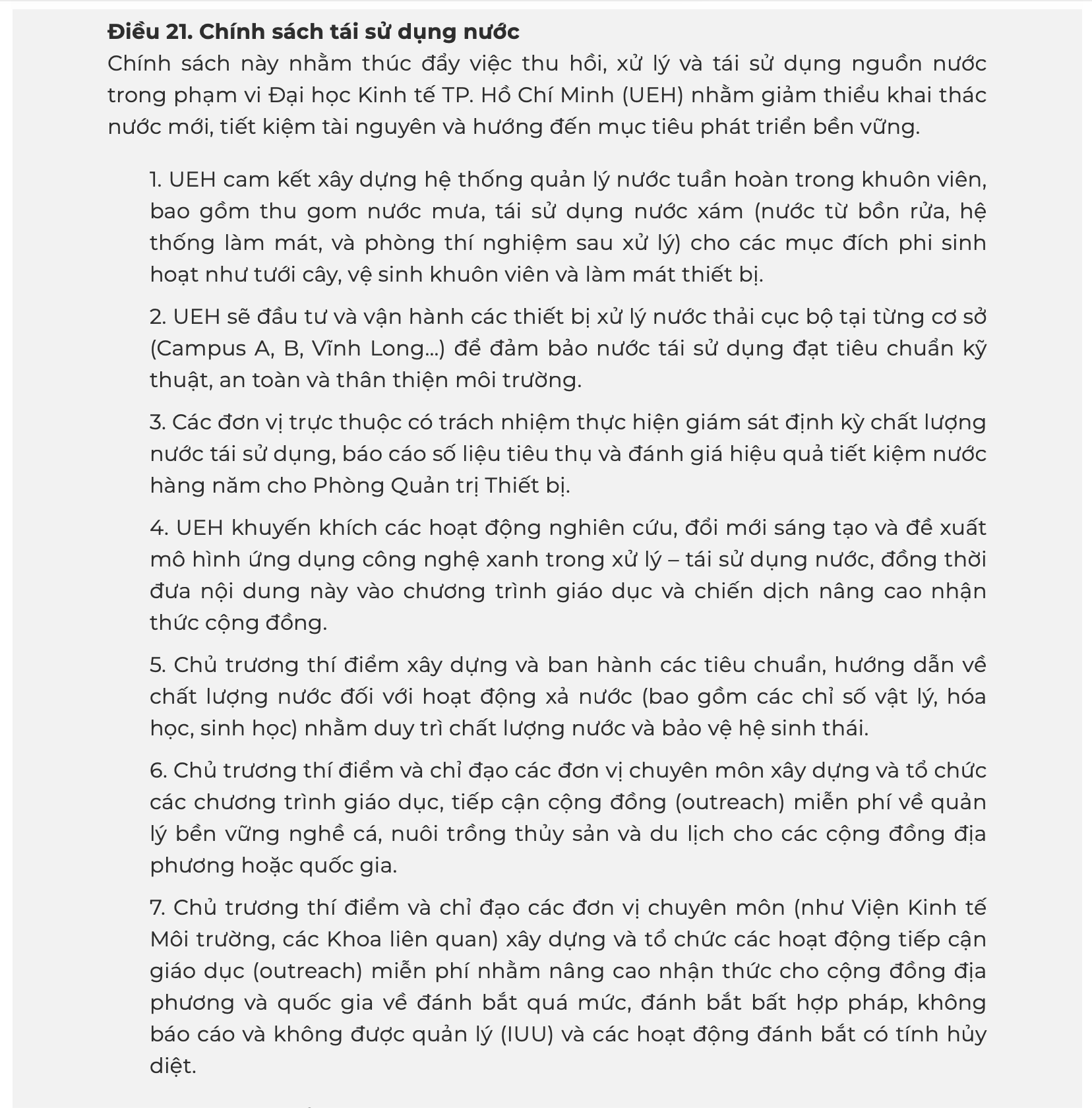
Figure 1. UEH’s water reuse policy sets out requirements for circular water management, investment in treatment infrastructure, quality monitoring, research and community education, alongside broader water resource protection objectives.
Source: UEH Green Campus, Green University Practices Regulation, Article 21 – Water Reuse Policy. https://gogreen.ueh.edu.vn/quy-dinh-thuc-hanh-dai-hoc-xanh
1.2. Building standards related to water reuse – Article 22
In addition to its water reuse policy, UEH publishes Article 22 – Water-Efficient Building Standards.
In addition to its water reuse policy, UEH publishes Article 22 – Water-Efficient Building Standards, aimed at integrating water-efficiency measures into building design, construction, renovation and operation.
In particular, Clause 2 provides for the design and installation of systems to collect and reuse rainwater or treated wastewater for landscape irrigation, floor cleaning and toilet flushing, with a requirement that at least 10% of annual water use be reused within the scope of the regulation.
This is a building-related policy requirement, not a verified figure for the proportion of water actually reused across UEH in 2025.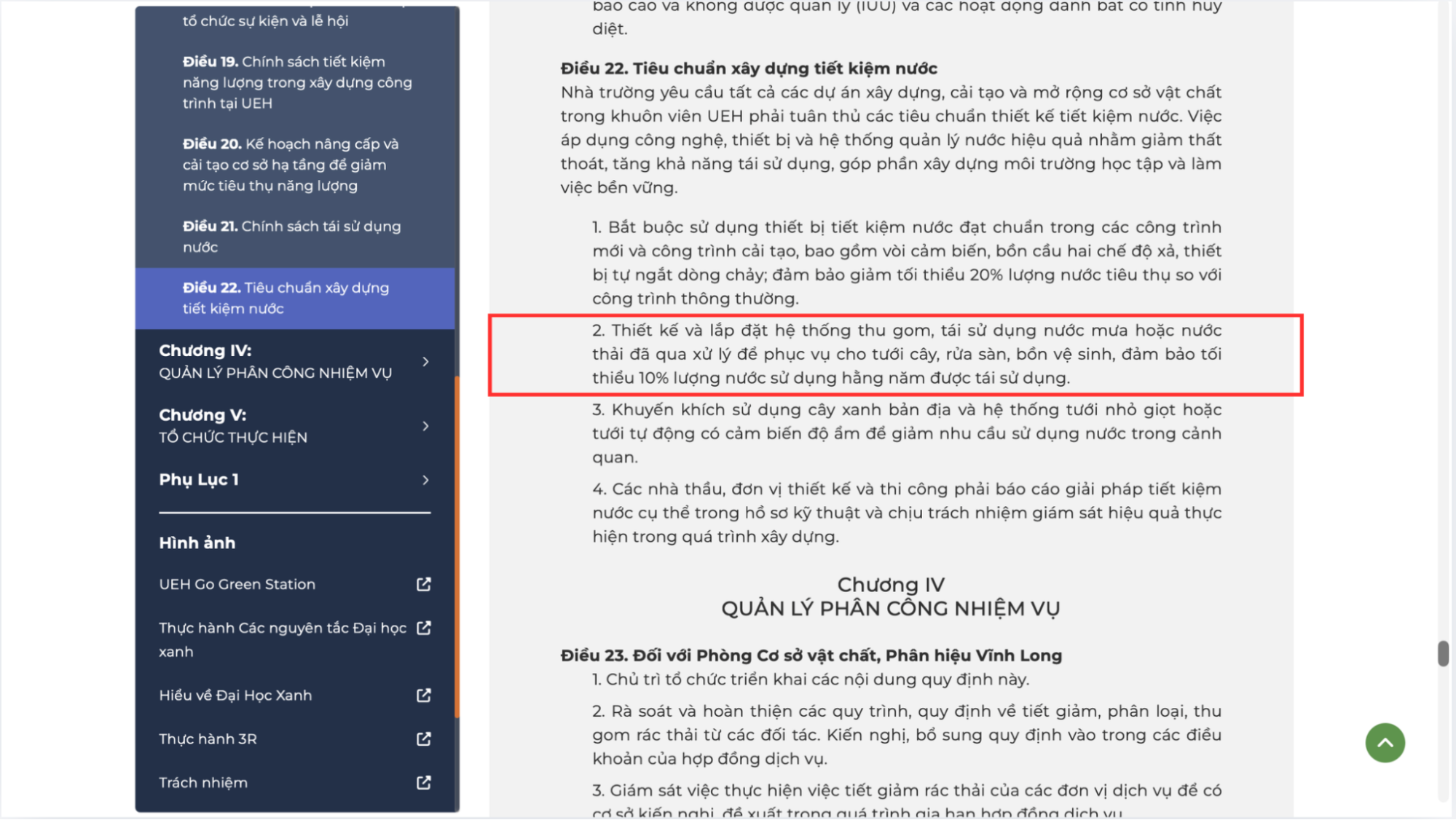
Figure 3. UEH’s standards for integrating rainwater or treated wastewater collection and reuse systems into building design and construction.
Source: UEH Green Campus, Green University Practices Regulation, Article 22, Clause 2. https://gogreen.ueh.edu.vn/quy-dinh-thuc-hanh-dai-hoc-xanh
2. Policy continuity and the development of water management during 2024–2025
Building on its Green University strategy and water resource management activities undertaken in previous years, UEH continued in 2025 to prioritise the standardisation of policies and water system operations to promote conservation and expand reuse potential. Whereas earlier efforts primarily focused on circular water management, rainwater collection, wastewater treatment and identifying reuse applications, the activities documented in 2025 placed greater emphasis on reviewing operating procedures, testing water quality and inventorying water-efficient fixtures.Specifically, UEH reviewed the wastewater treatment system at the Nguyen Van Linh Campus and recorded that more than 80% of water-use fixtures were water-saving devices, according to the 2025 UEH Green Campus Project summary report. This strengthened the University’s governance and infrastructure data, helping identify subsequent priorities for reducing water consumption, promoting reuse and enhancing wastewater quality control.
3. Activities undertaken in 2025 related to the water reuse policy
In 2025, UEH continued activities in water resource management and green infrastructure development. Publicly documented activities included reviewing the wastewater treatment system, inventorying water-saving fixtures and maintaining rainwater drainage landscape infrastructure.
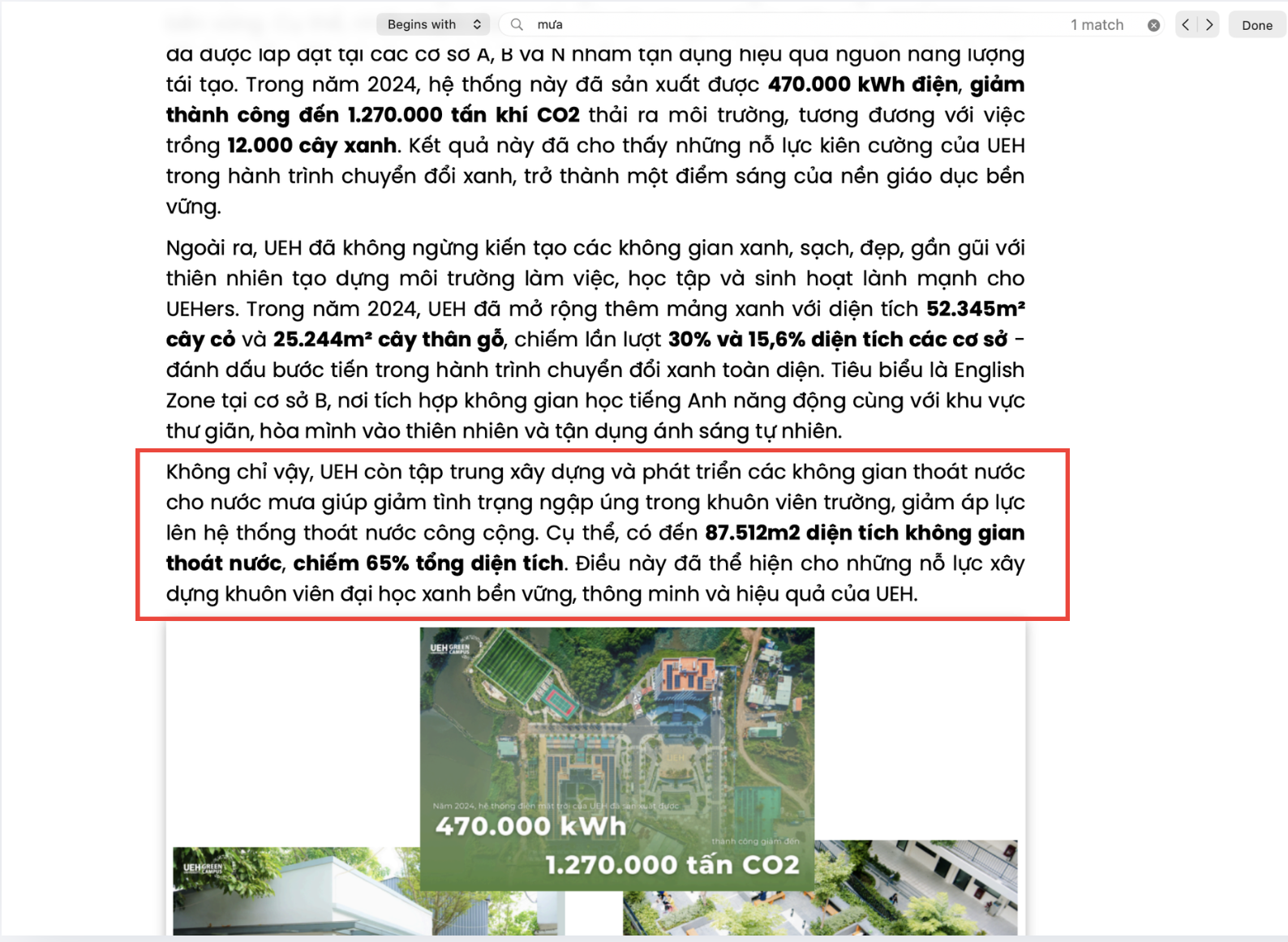
Figure 4. Rainwater drainage landscape infrastructure developed by UEH to reduce flooding and pressure on public drainage systems.
Source: UEH (23 January 2025), “Efforts to build a green and smart university as UEH welcomes the Year of the Snake 2025”, section “From buildings to green, clean, circular and environmentally friendly campuses”. https://ueh.edu.vn/cuoc-song-ueh/tin-tuc/no-luc-xay-dung-dai-hoc-xanh-thong-minh-ueh-rang-ro-chao-xuan-at-ty-2025-73313
4. Results and impacts on water management and reuse
In 2025, UEH further developed its water resource governance framework by reviewing wastewater treatment infrastructure, testing water quality and inventorying water-saving devices. Reported highlights included the review of wastewater system operating procedures at the Nguyen Van Linh Campus, the finding that more than 80% of water-use fixtures were water-saving devices, and the maintenance of rainwater drainage infrastructure reported by UEH as covering 87,512 m².
These activities improved the capacity to monitor infrastructure, control water quality and develop data for resource management. At the same time, UEH’s water reuse policy establishes a direction for recovering and reusing rainwater, greywater and treated wastewater for non-potable needs, alongside responsibilities for monitoring, reporting and assessing water-saving performance.
The currently published results demonstrate progress in governance and technical readiness for water reuse. Quantifying actual water reuse performance will require further verification against the volumes recovered, stored and reused at each campus.
5. Conclusion
The University of Economics Ho Chi Minh City has established a water reuse policy under its Green University Practices Regulation, covering rainwater harvesting, greywater reuse, treatment of wastewater for non-potable uses and the monitoring of water resource management performance. The policy is linked to technical infrastructure requirements, water quality monitoring and implementation responsibilities across UEH units.
In 2025, UEH continued to strengthen water governance by reviewing its wastewater treatment system, examining operating procedures, inventorying water-saving fixtures and developing green infrastructure spaces. These activities supported more efficient water use, reduced pressure on freshwater supplies and the gradual development of a circular water management model.
Through these efforts, UEH demonstrates its commitment to a sustainable water reuse policy, connecting resource management with environmental responsibility and its Green University strategy, and contributing to SDG 6 – Clean Water and Sanitation.