

Preventing water system pollution – Processes to prevent polluted water entering the water system, including pollution caused by accidents and incidents at the university
THE Sustainability Impact Ratings 2027 | SDG 6 – Clean Water and Sanitation | Data Year: 2025
The University of Economics Ho Chi Minh City (UEH) implements measures to manage and prevent water pollution across its campuses, integrating wastewater collection, pollution control at source, wastewater treatment, water quality monitoring, and the prevention of environmental incidents arising from teaching, research, administrative, and daily activities. These measures are implemented in alignment with UEH’s multidisciplinary and sustainable university development strategy, its Green Campus Regulations, and technical infrastructure management practices across its facilities.
In 2025, UEH reviewed the wastewater treatment system at the Nguyen Van Linh Campus, including operational procedures and water quality testing results provided by an independent third-party service provider. This activity strengthened wastewater quality control and helped prevent contaminated water from entering drainage systems and the receiving environment. UEH also continued monitoring water quality parameters and maintaining response procedures for wastewater spills, chemical leaks, and localized flooding.
1. Policy Framework and Responsibilities for Water Pollution Prevention
1.1. UEH Green Campus Regulations
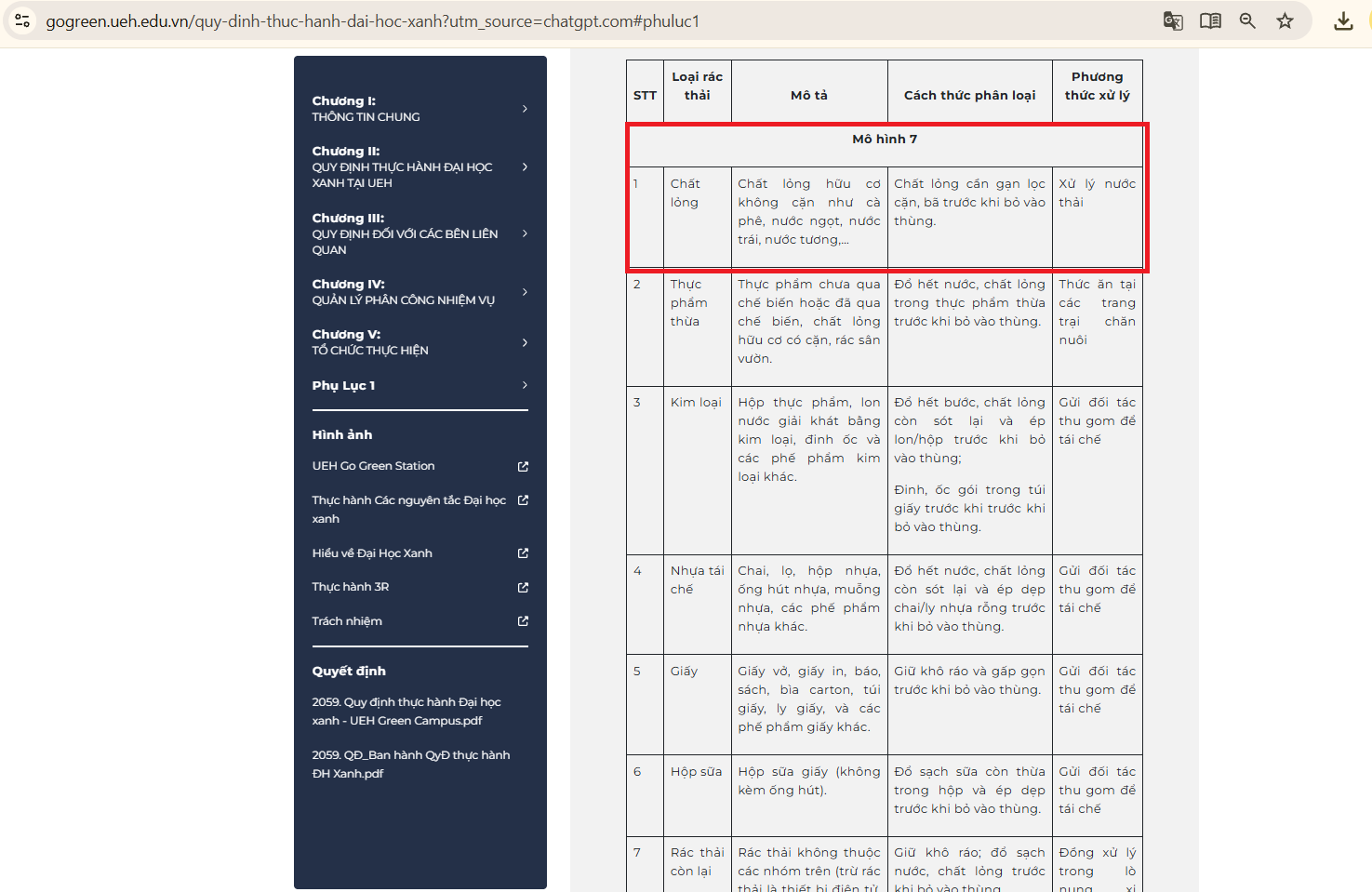
UEH implements the Green Campus Regulations under Decision No. 2059/QD-DHKT-CSVC, integrating campus governance with resource conservation, waste segregation, and environmental protection.
According to the publicly available Regulations, Article 2, Clause 1 identifies resource conservation as a core Green Campus practice; Article 3 establishes requirements for waste segregation at source; and Article 7 addresses hazardous waste management and treatment. These provisions contribute to preventing pollutants generated on campus from entering water systems.
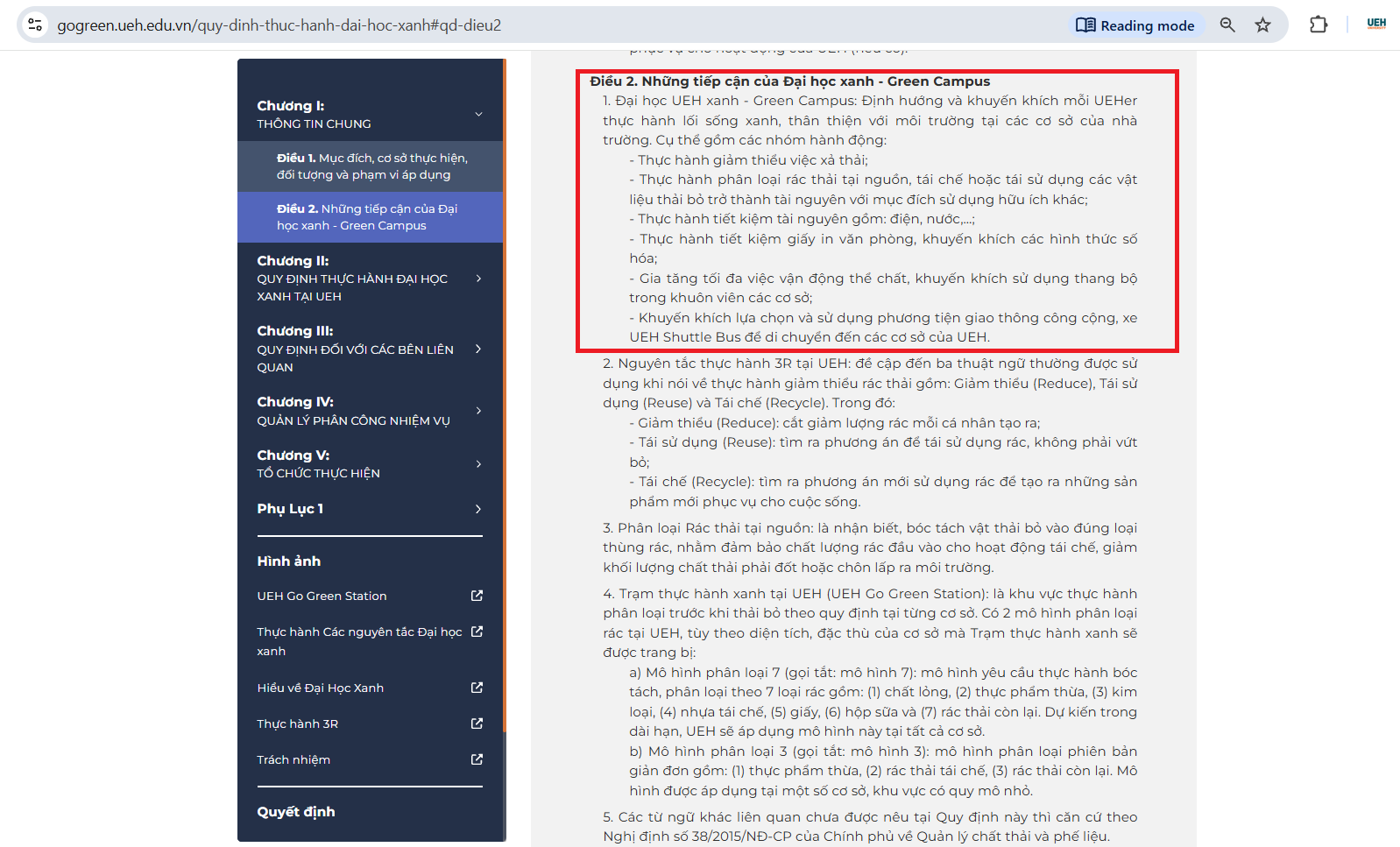
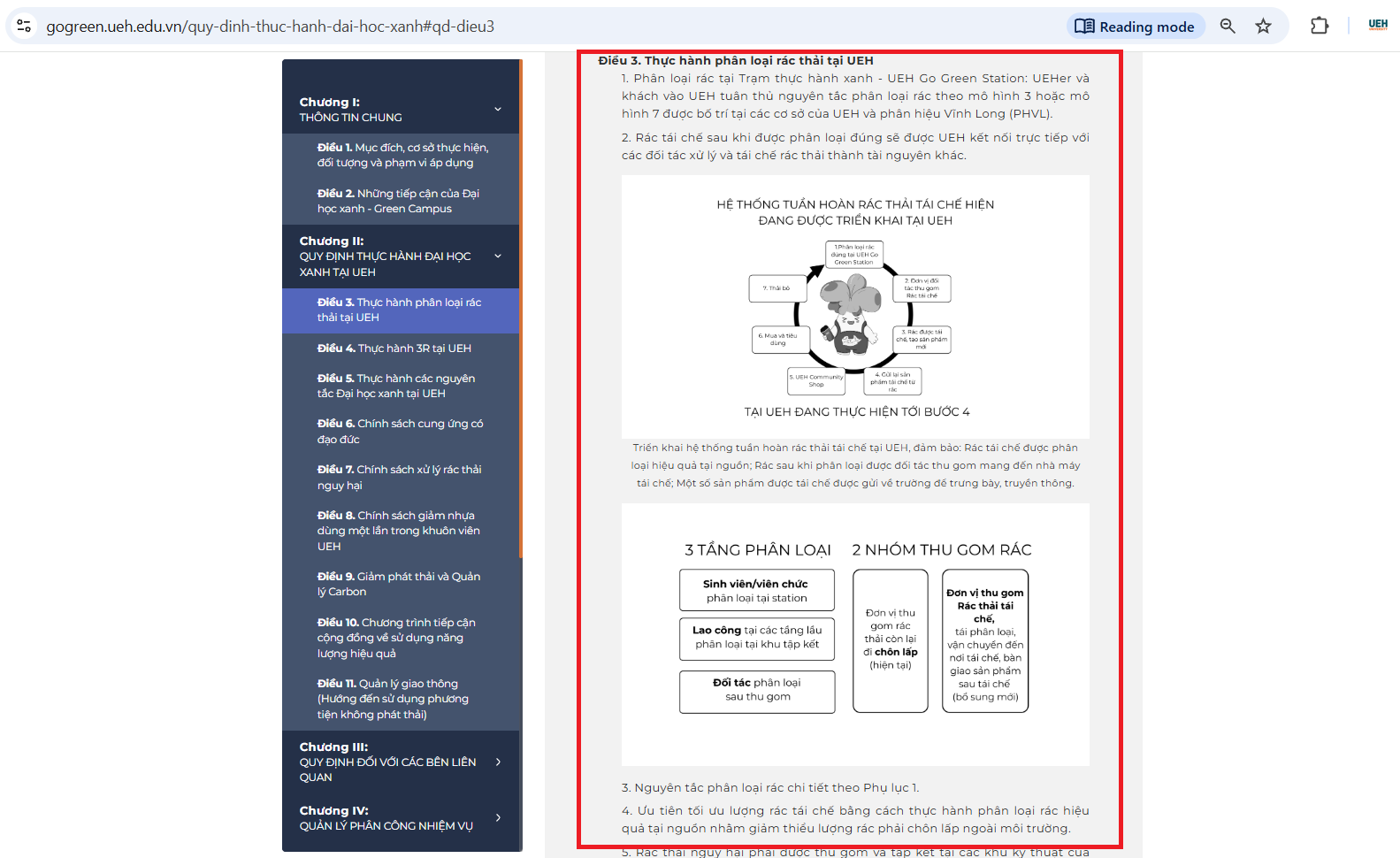
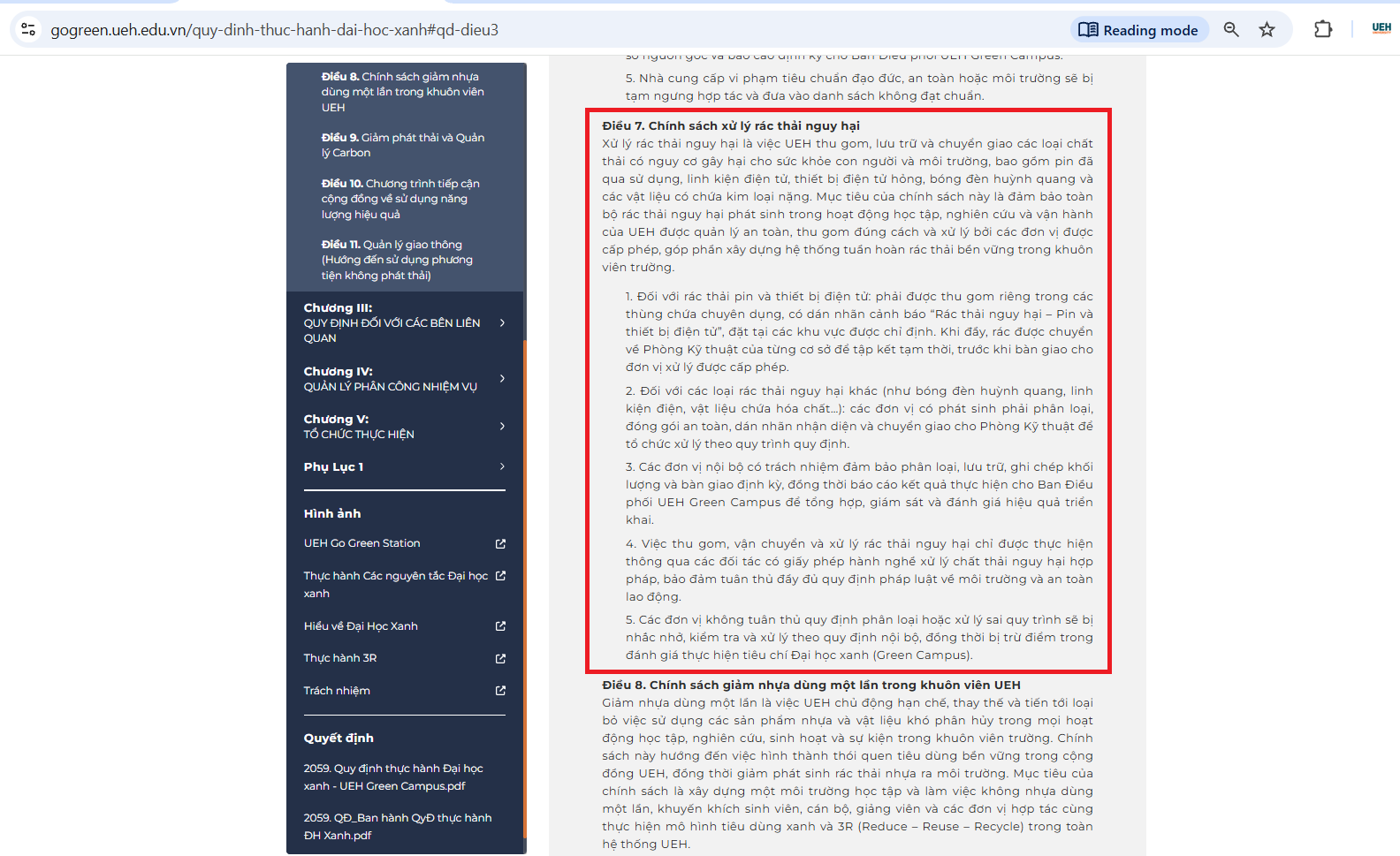
UEH Green Campus Regulations.
Public source: UEH Green Campus – Green Campus Practice Regulations.
https://gogreen.ueh.edu.vn/quy-dinh-thuc-hanh-dai-hoc-xanh
Notably, Appendix 1 – Seven-Category Waste Segregation Model provides guidance on filtering solid residues from certain organic liquids, such as coffee, soft drinks, and soy sauce, before disposal in designated containers. This approach helps prevent solid waste from mixing with liquid waste streams and supports appropriate collection and treatment.
Waste and liquid segregation requirements serve as pollution prevention measures at source but do not replace technical procedures for chemical control and wastewater treatment.
1.2. Infrastructure Management and Monitoring Responsibilities
UEH’s infrastructure management unit and relevant technical departments are responsible for managing wastewater systems, monitoring water quality, and coordinating responses to technical and environmental issues arising on campus.
UEH’s approach emphasizes wastewater management and treatment after generation, particularly preventing polluted water or contaminants from entering inappropriate collection channels, clean water sources, stormwater drainage systems, or the receiving environment.
2. Wastewater Collection and Control Procedures to Prevent Pollution
2.1. Wastewater Control at Source
According to UEH’s published procedures, wastewater generated from daily activities, canteens, student dormitories, offices, and specialized activities is managed according to its characteristics, sources, and treatment requirements.
Three main water streams are identified:
Domestic wastewater: Generated from restrooms, communal areas, workplaces, and on-campus services. This wastewater is collected and directed to an appropriate treatment system.
Potentially chemical-contaminated wastewater: May arise from research activities or chemical use. It requires separate identification and control to prevent unsuitable chemicals from entering domestic wastewater treatment systems directly.
Stormwater runoff: Managed through the corresponding drainage system to minimize the risk of waste and contaminated wastewater entering stormwater drainage channels.
Identifying and separating wastewater streams at source helps minimize cross-contamination risks and supports water quality control within campus infrastructure.
Procedures for distinguishing domestic wastewater, potentially chemical-contaminated wastewater, and stormwater runoff within UEH campuses.
Source: UEH Sustainability – 6.3.2. Procedures for Treating and Preventing Polluted Water from Entering University Water Sources, published November 2, 2025.
2.2. Wastewater Control Through a Centralized Treatment System
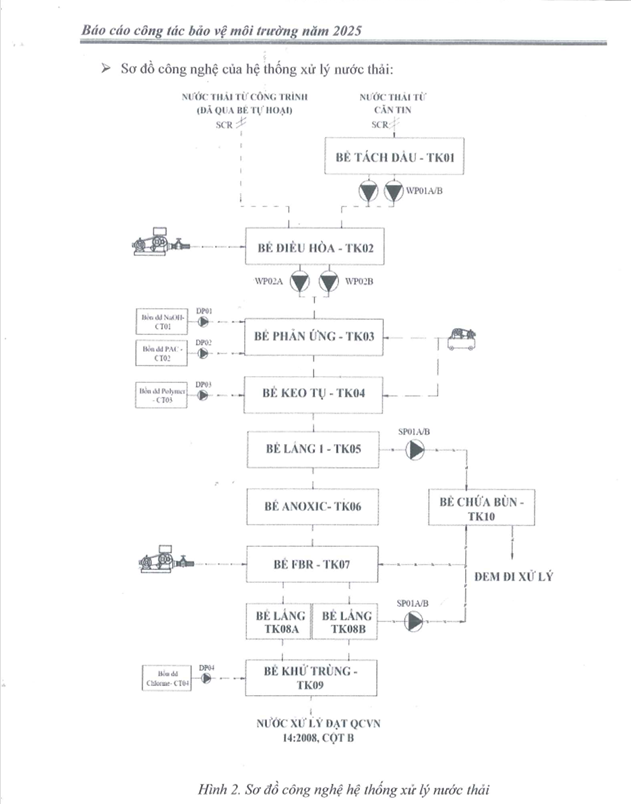
UEH has publicly documented a wastewater treatment system with a design capacity of 550 m³/day, using Anoxic/Oxic (A/O) biological treatment technology combined with sedimentation and disinfection.
According to the published technical description, wastewater passes through several treatment stages to reduce organic pollutants, suspended solids, and other contaminants before being discharged into the receiving system in accordance with applicable requirements.
The treatment process comprises two main stages:
Biological treatment: Wastewater undergoes anoxic and aerobic treatment to reduce organic pollutant loads and nutrients requiring control.
Sedimentation and disinfection: Suspended solids are separated from the wastewater stream, followed by disinfection to reduce the risk of microbial contamination before discharge.
The system is designed to meet QCVN 14:2008/BTNMT, Column B, the Vietnamese technical regulation for domestic wastewater. The reported capacity of 550 m³/day represents the system’s design capacity, not its actual daily treatment volume or the combined treatment capacity of all UEH campuses.
UEH continues monitoring and controlling wastewater quality across its facilities through sampling, laboratory analysis, and environmental parameter monitoring to prevent water pollution risks. The parameters identified in its published procedures include pH, biochemical oxygen demand (BOD), chemical oxygen demand (COD), total suspended solids (TSS), ammonium, oil and grease, and coliform bacteria. These indicators help assess organic pollution, suspended solids, nutrients, and microbial contamination in wastewater.
Building on established periodic monitoring procedures, UEH continues assessing wastewater treatment system performance, identifying potential risks, and implementing appropriate control measures.
In particular, in 2025, UEH reviewed the wastewater treatment system at the Nguyen Van Linh Campus, including its operational procedures and water quality testing results provided by an independent third-party service provider. This review strengthened monitoring practices and supported efforts to prevent pollution and protect campus water systems.
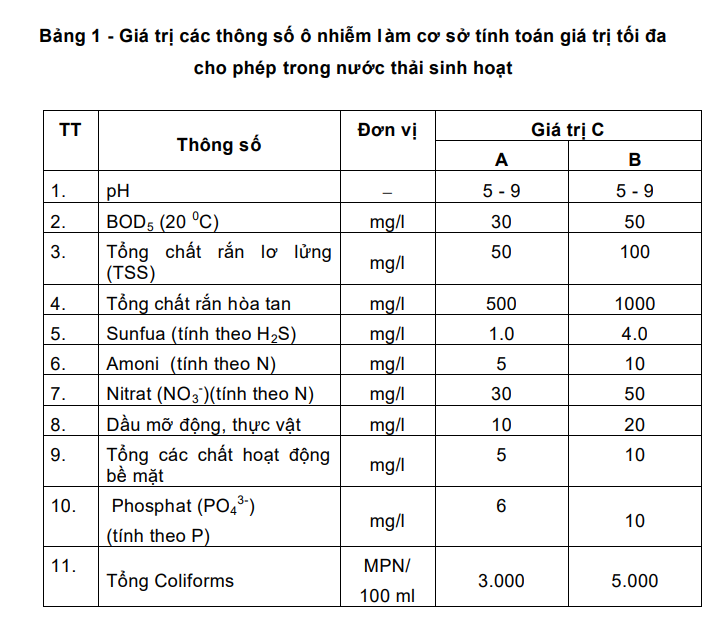
UEH’s publicly documented wastewater treatment system.
Source: National Technical Regulation on Domestic Wastewater – QCVN 14:2008/BTNMT.
The significance of this system extends beyond wastewater treatment capacity. It also serves as a technical safeguard against contaminants generated by campus activities entering water sources or the receiving environment without appropriate treatment.
3. Water Quality Monitoring and Wastewater Treatment System Review in 2025
A key development in 2025 was UEH’s review of the wastewater treatment system at the Nguyen Van Linh Campus.
According to the 2025 UEH Green Campus Annual Review, published on February 4, 2026, UEH assessed the campus wastewater treatment system, including its operational procedures and water quality testing results conducted by an independent third-party service provider.
This review formed part of UEH’s efforts to standardize campus water resource management. Comparing operational procedures with independent water quality testing results strengthened the evidence base for monitoring, identifying areas for improvement, and controlling wastewater pollution risks.
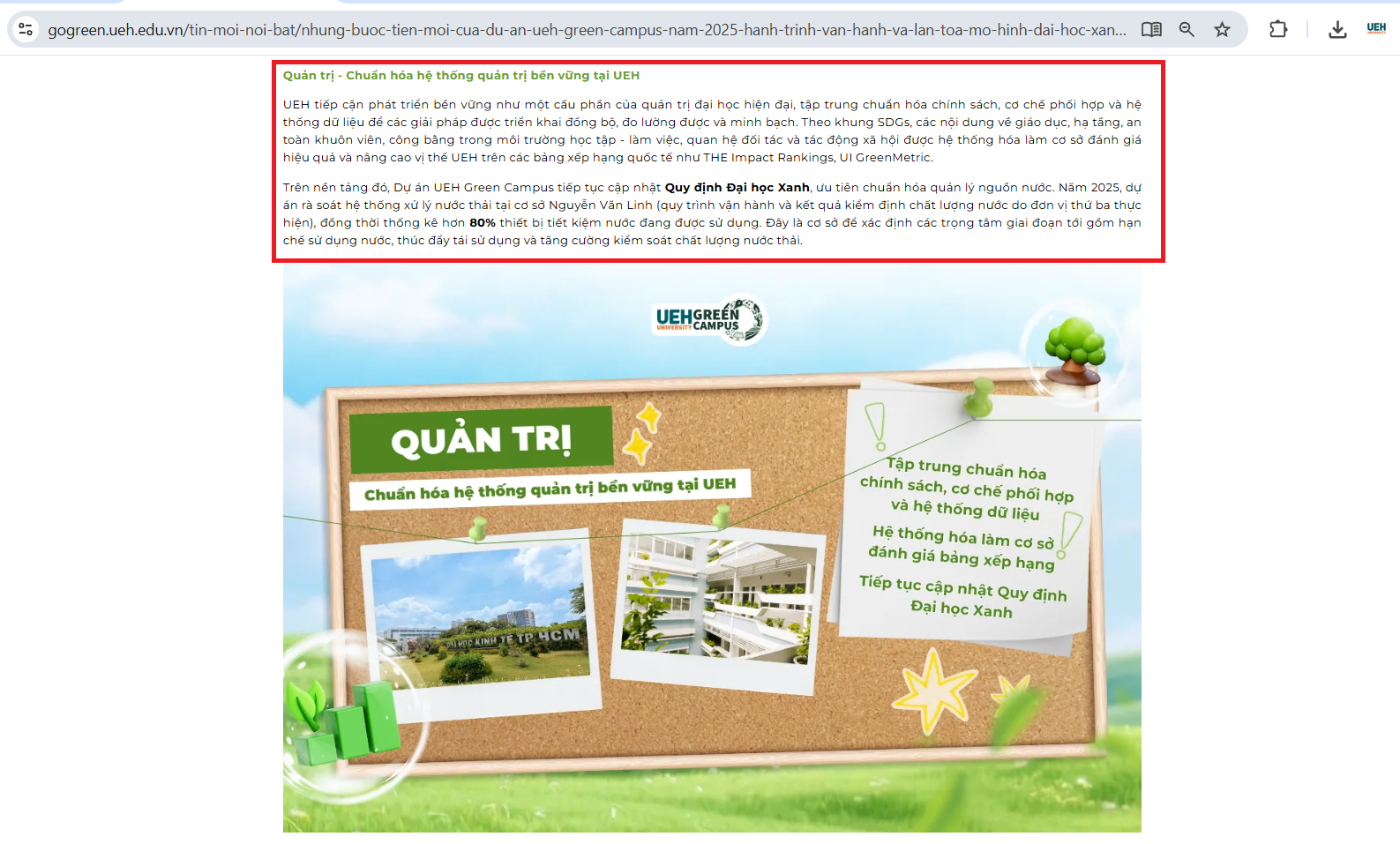
UEH reviewed the wastewater treatment system at the Nguyen Van Linh Campus in 2025, including operational procedures and independent third-party water quality testing results.
Public source: UEH Green Campus – New Progress of the UEH Green Campus Project in 2025: Operating and Promoting UEH’s Green University Model to the Community, February 4, 2026.
4. Prevention and Response to Incidents That May Contaminate Water Systems
Alongside routine wastewater collection, treatment, and monitoring, UEH has established and published measures to prevent and respond to environmental incidents that may affect water systems.
Identified scenarios include chemical leaks, wastewater spills, and localized flooding. The documented procedures describe measures such as isolating pollution sources, using shut-off valves, providing temporary wastewater containment capacity during incidents, notifying responsible departments, and implementing appropriate technical responses.
In principle, the incident response process comprises four stages:
Detection and notification: Identify the location and type of incident and promptly notify the department responsible for infrastructure and environmental management.
Containment and isolation: Prevent pollutants from spreading or entering water supply systems, stormwater drainage networks, and other potentially affected areas.
Collection and treatment: Recover contaminated wastewater or materials and direct them to an appropriate treatment method according to the characteristics of the waste.
Inspection and restoration: Assess environmental conditions following remediation, identify the cause of the incident, and implement measures to prevent recurrence.
5. Activities Strengthening Water Pollution Prevention at UEH in 2025
Alongside wastewater collection, treatment, and monitoring, UEH continued implementing waste control at source, liquid waste segregation, and plastic waste reduction measures in 2025 to minimize the risk of pollutants entering campus drainage systems and aquatic environments.
5.1. Maintaining Liquid and Solid Waste Segregation at UEH Go Green Stations
Under the Green Campus Regulations, UEH implements three-category or seven-category waste segregation systems at UEH Go Green Stations.
In particular, Appendix 1 – Seven-Category Waste Segregation Model requires organic liquids, such as coffee, soft drinks, and fruit juices, to be filtered to remove solid residues before being placed in designated liquid waste containers for appropriate treatment. Food waste and recyclable materials are also collected separately, helping prevent solid waste from entering liquid waste streams.
The UEH Go Green Station system implements waste segregation at source.
Public source: UEH Green Campus – Green Campus Practice Regulations.
https://gogreen.ueh.edu.vn/quy-dinh-thuc-hanh-dai-hoc-xanh
In 2025, UEH continued operating and promoting this waste segregation system. Three-category and seven-category waste bins, together with instructional signage, were maintained across campus areas to support students, lecturers, and staff in properly segregating waste.
These measures contribute to pollution prevention at source by reducing the risk of waste spreading into drainage systems while supporting appropriate collection and treatment.
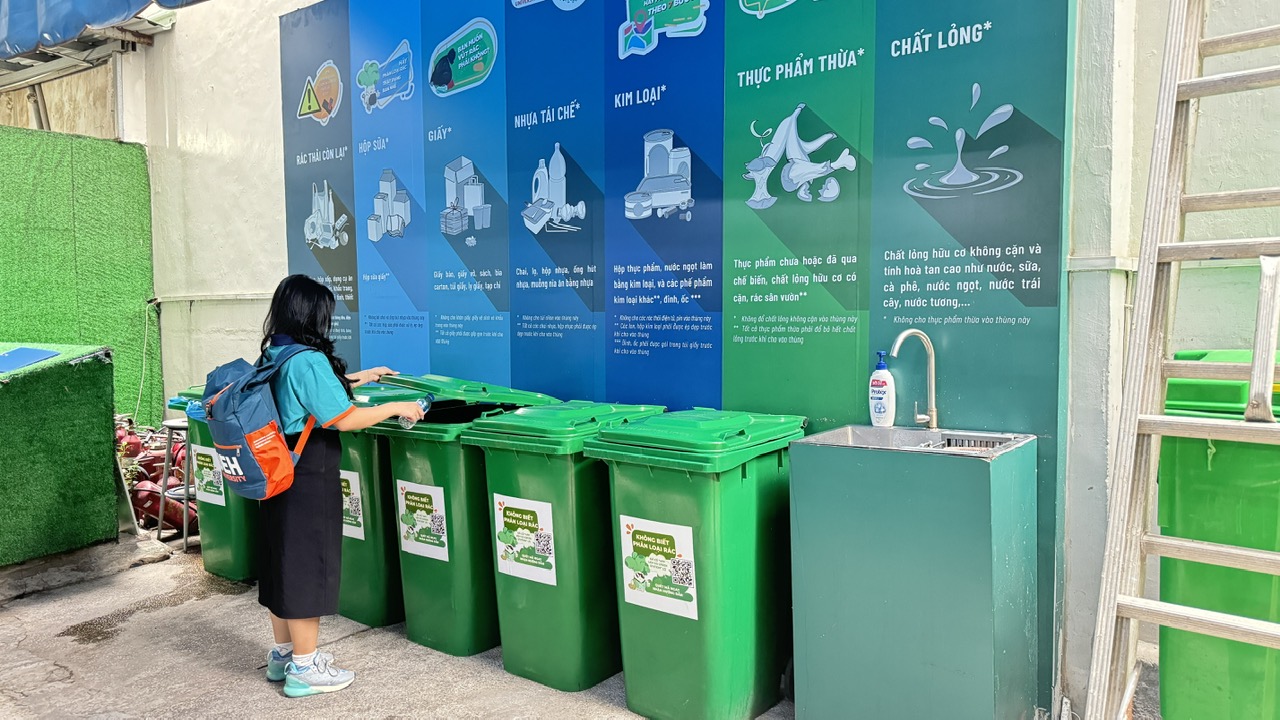
The seven-category waste segregation model requires organic liquids to be separated and solid residues to be filtered out before disposal.
Public source: UEH Green Campus – [UEH101 SERIES] Waste Segregation in 9 Seconds: Small Actions Contributing to the Green University Model at UEH, February 5, 2025.
5.2. GREEN UP 2025 – Promoting Waste Segregation and Preventing Waste Dispersion
In 2025, the UEH Green Campus – GREEN UP programme organized communication and interactive sustainability activities at the B2 Lobby, Campus B.
During the “Grow Green” stage, students participated directly in identifying and segregating organic, inorganic, and recyclable waste while making commitments to adopt environmentally responsible practices.
The programme strengthened waste segregation at source and helped discourage improper disposal and the spread of waste across campus. These activities supported efforts to prevent solid waste from entering stormwater drainage systems and aquatic environments.
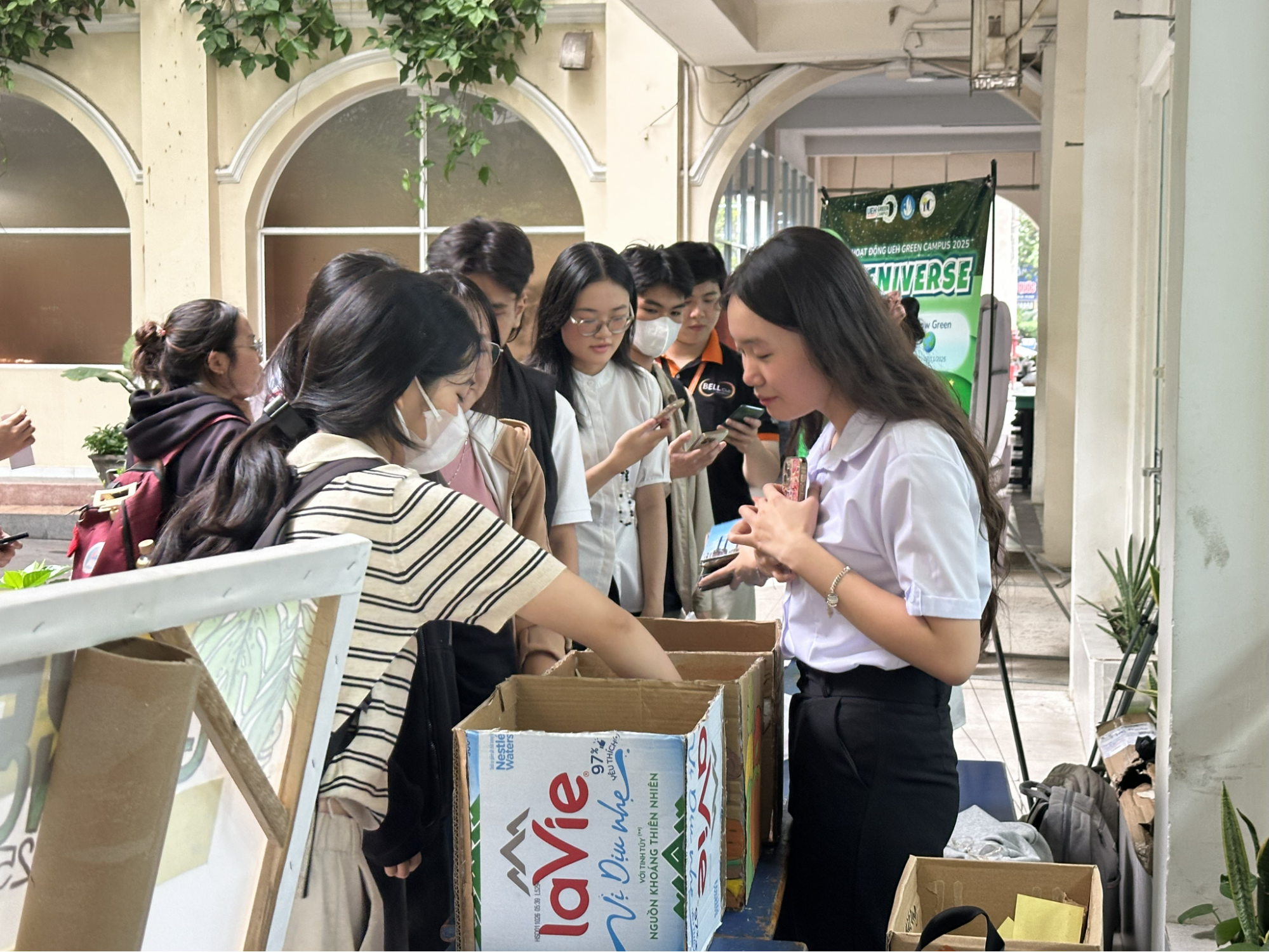
UEH students participating in waste identification and segregation activities during GREEN UP 2025 at Campus B.
Public source: UEH Green Campus – UEH Green Campus 2025 – GREEN UP: Promoting a Green Living Culture and Inspiring Responsibility for the Planet, November 8, 2025.
5.3. “Protect Water Sources – Nurture Life” – Raising Awareness of Water Pollution Prevention
In September 2025, the UEH School of Law Youth Union and Student Association organized the “Protect Water Sources – Nurture Life” programme, combining online communication activities with interactive booths at the B2 Lobby, Campus B, on September 29–30, 2025.
The programme featured three interactive stations: “Green Knowledge Corner,” “Waste Sorting Challenge,” and “Green Quiz.”
Notably, the “Clean the River” activity guided students in identifying, collecting, and segregating waste while exploring the impacts of pollution and methods for protecting water resources.
Through interactive learning, the programme strengthened awareness of the harmful effects of waste on aquatic environments and encouraged students to practice waste segregation and reduce pollutant generation in their daily activities.
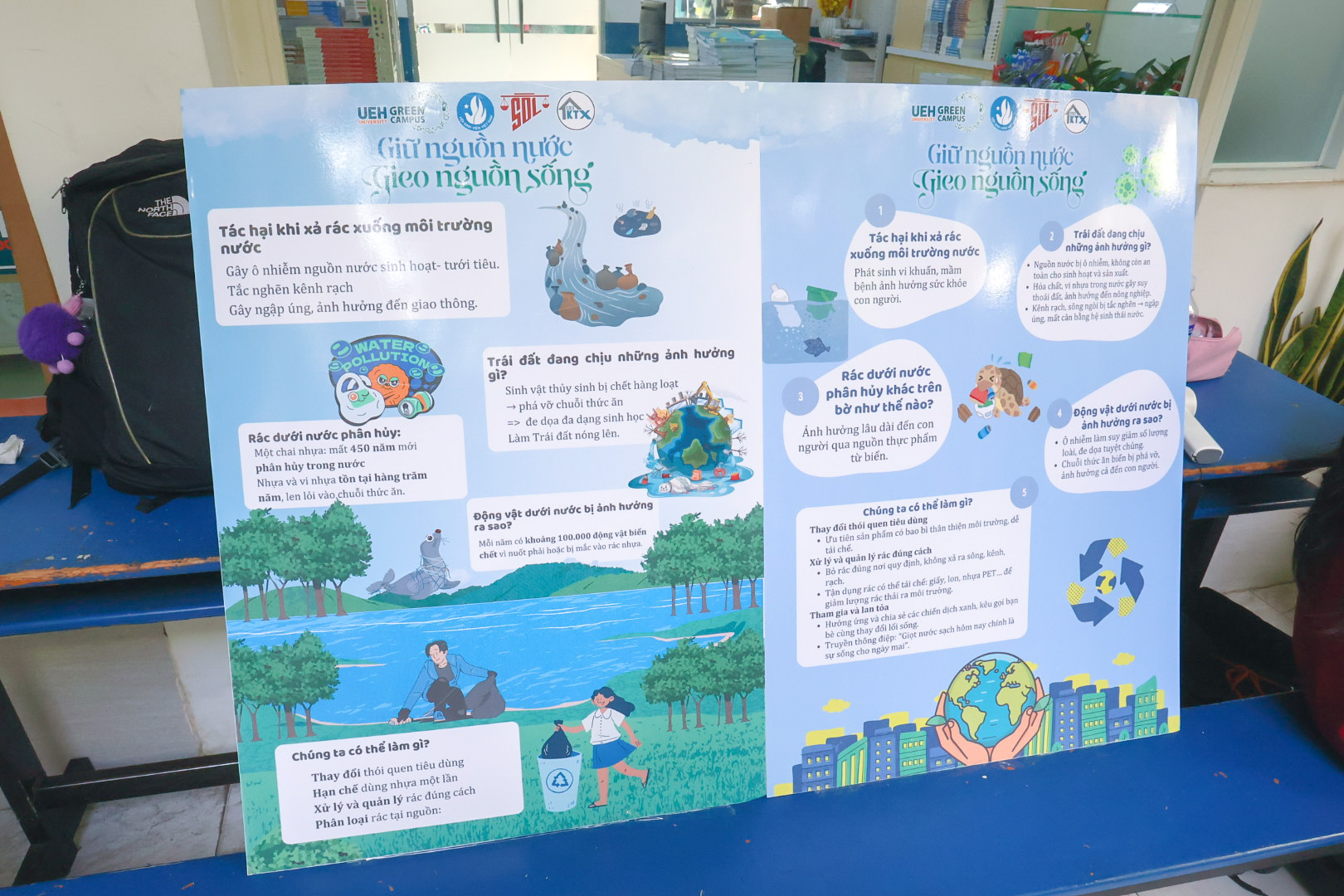
Communication booth for the “Protect Water Sources – Nurture Life” programme.
Public source: UEH Green Campus – UEH Green Campus 2025: Joining the School of Law to Protect Water Sources and Nurture Life, October 1, 2025.
6. Results in 2025 and Commitment to Sustainable Development
In 2025, UEH continued maintaining and improving three key groups of water pollution prevention measures: wastewater collection and segregation at source, water quality monitoring, and environmental incident prevention and response.
A notable activity was the review of wastewater treatment system operations at the Nguyen Van Linh Campus, together with the examination of water quality testing results provided by an independent third-party service provider. These activities strengthened pollution control and helped reduce the risk of water contamination.
Compared with the previous reporting period, UEH continued strengthening technical management procedures while expanding pollution prevention activities at source through waste segregation systems, Green Campus programmes, and environmental awareness initiatives.
These efforts demonstrate continuity from establishing pollution prevention procedures to reviewing and monitoring their implementation in practice.
By integrating source-level controls, wastewater treatment, independent monitoring, and environmental incident prevention, UEH continues strengthening its environmental management responsibilities, working to prevent pollutants from entering water systems and advancing SDG 6 – Clean Water and Sanitation.