

13.3.2 Climate Action Plan, shared
In 2025, the University of Economics Ho Chi Minh City (UEH) continued to implement and publicly share its climate action framework, building on its greenhouse gas inventory, emission-reduction measures across Scopes 1, 2 and 3, and its pathway towards Net Zero 2050. Through the Green Campus Regulations and the UEH Green Campus Living Lab model, the University strengthened emissions measurement and monitoring, renewable energy use, and operational efficiency. In parallel, UEH expanded cooperation with local authorities in the Mekong Delta and shared green practices with the wider community, linking its institutional climate action agenda with local priorities for green development and climate adaptation.
1. Internal policies and regulations supporting the development, implementation and sharing of the Climate Action Plan
UEH established a governance foundation for climate action through its Green Campus Regulations, which guide the measurement, management and reduction of greenhouse gas emissions in pursuit of carbon neutrality and sustainable development. In particular, Article 9, Clause 1 sets out a process for measuring Scope 1, 2 and 3 emissions, calculating CO₂e, evaluating and reporting results, and proposing annual emission-reduction plans.
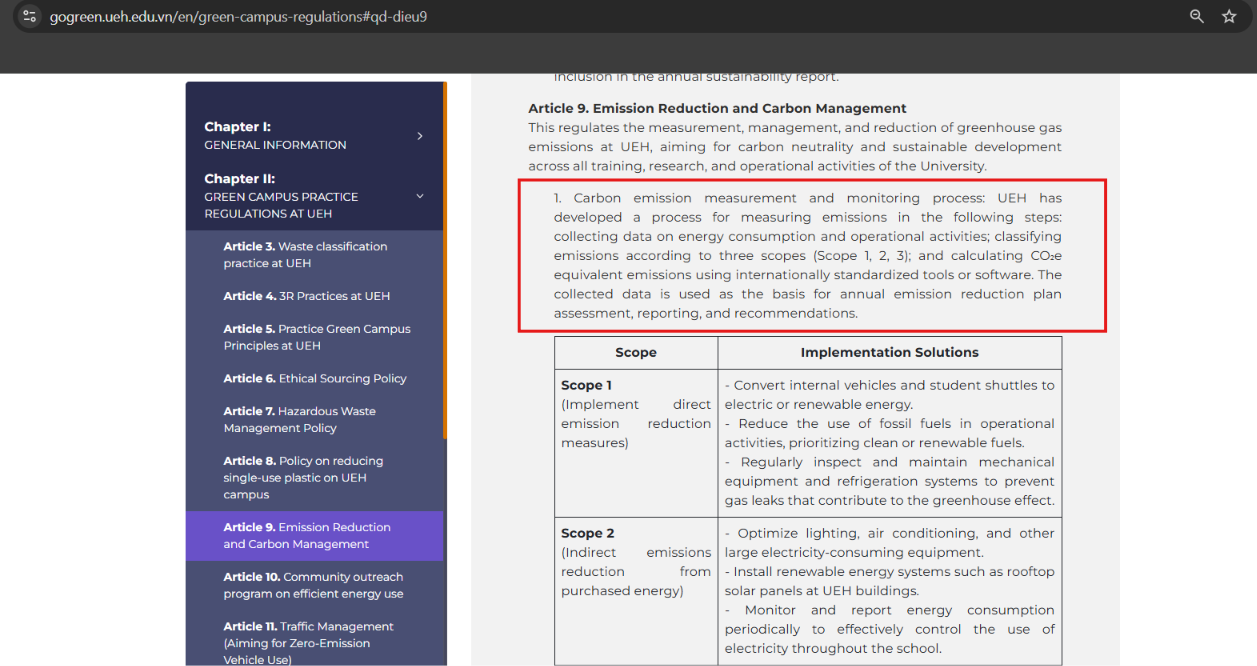
Article 9, Clause 1 of the UEH Green Campus Regulations under Decision No. 2059/QĐ-ĐHKT-CSVC
Article 9, Clause 3 further encourages cooperation with businesses, organizations and non-governmental organizations to implement clean energy and measurable emission-reduction solutions, providing a foundation for UEH to maintain and refine its long-term climate action pathway.
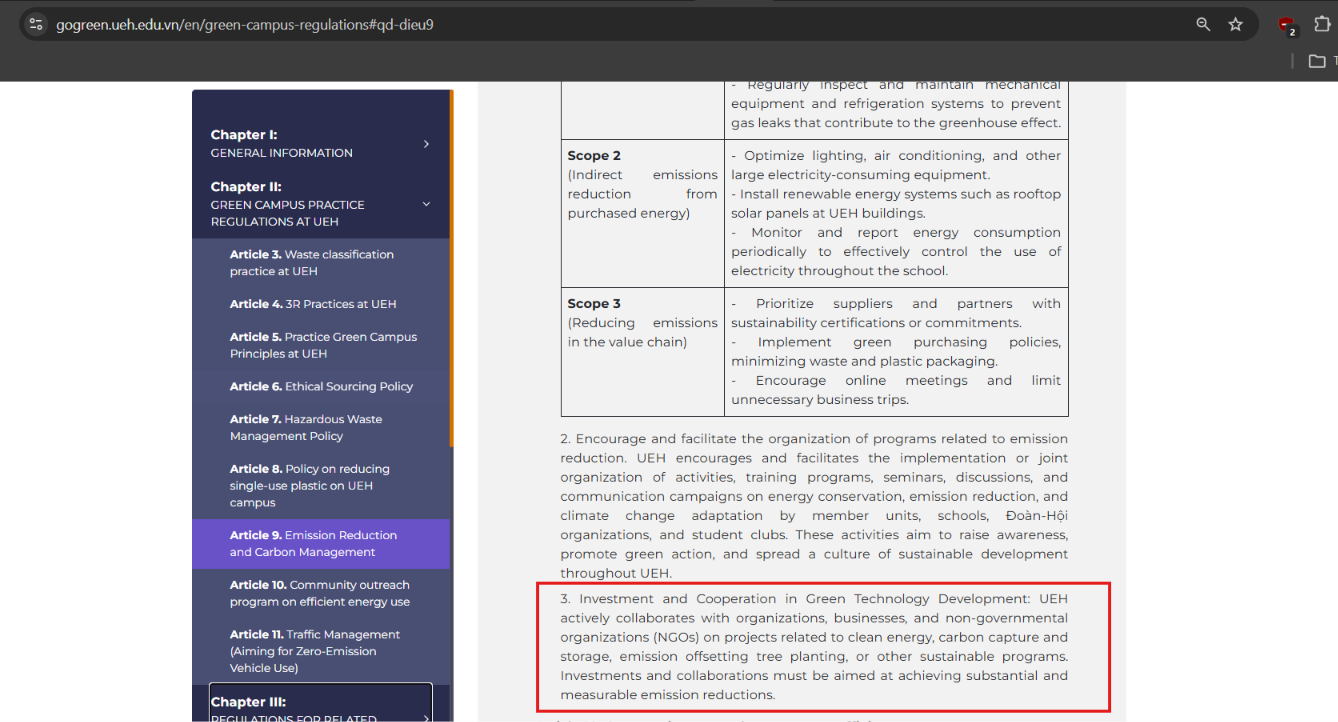
Article 9, Clause 3 of the UEH Green Campus Regulations under Decision No. 2059/QĐ-ĐHKT-CSVC
Regarding mechanisms for sharing and cooperation with local authorities and communities, Article 10provides for public communication of community awareness programmes, support for local businesses and, in particular, advice and assistance to public authorities on clean energy policies, data sharing, technology transfer and the dissemination of sustainable energy-use models.
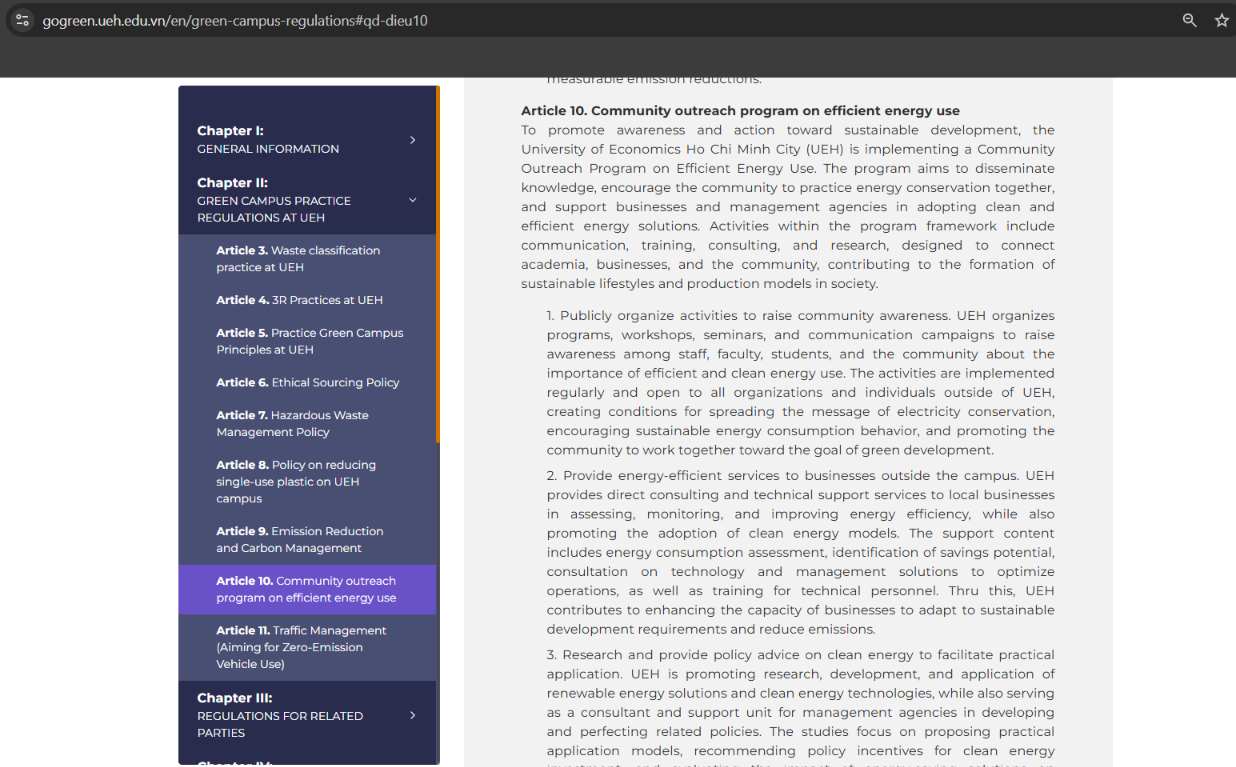
Article 10 of the UEH Green Campus Regulations under Decision No. 2059/QĐ-ĐHKT-CSVC
Furthermore, Article 12, Clauses 1, 8 and 9 specifies responsibilities for implementing and continuously evaluating the Green Campus Project during 2023–2025 as a basis for the 2026–2030 phase, together with ongoing monitoring, feedback collection and periodic improvements to the regulations.
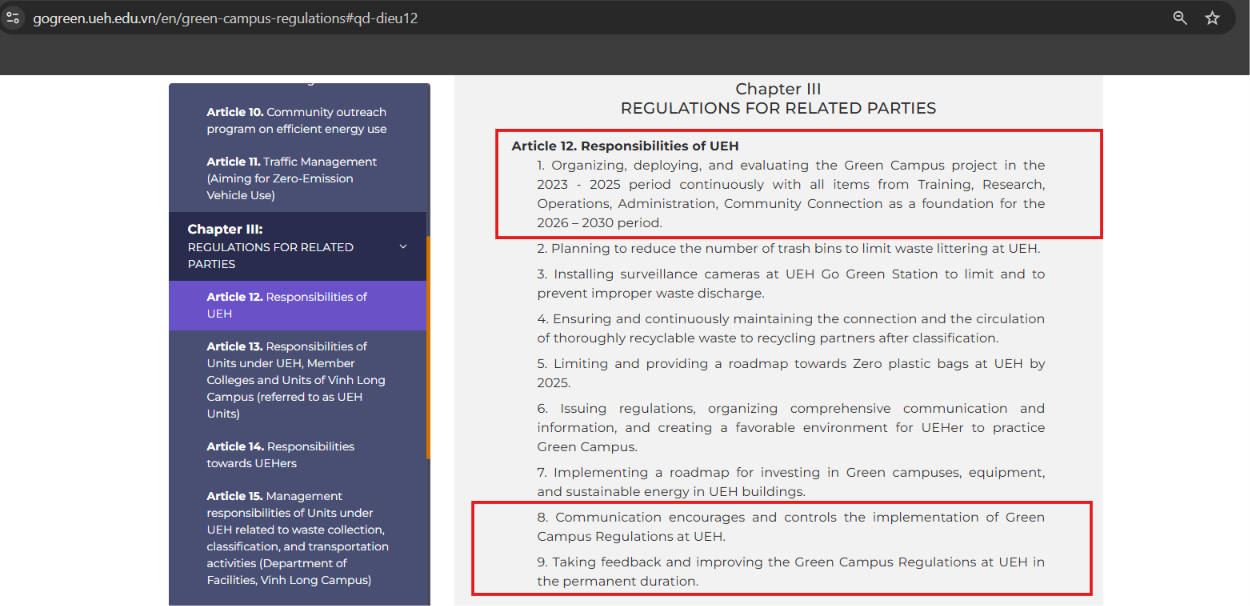
2. Climate action framework and implementation progress in 2025
UEH developed its greenhouse gas governance and reduction approach using a 2023 baseline inventory that recorded total emissions of 5,115.81 tonnes of CO₂e across the University. Building on this baseline, the University identified action areas under three emissions scopes:
- Scope 1 – Direct emissions: Reduce reliance on fossil fuels, work towards converting internal operational vehicles to cleaner energy, and control emissions from equipment.
- Scope 2 – Indirect emissions from purchased energy: Expand solar power, optimize lighting and air-conditioning systems, operate smart buildings, and monitor electricity consumption.
- Scope 3 – Other indirect emissions: Promote green transport, sustainable procurement, waste reduction, and changes in resource-use behaviour.
The action pathway envisaged strengthening emissions measurement, reporting and verification during 2024–2025; expanding emission-reduction measures by 2030; continuing the transition towards carbon neutrality by 2040; and pursuing the Net Zero 2050 objective.
In 2025, UEH continued monitoring emissions across its campuses, operating clean-energy and green-mobility initiatives, and piloting smart management tools. The UEH Green Campus summary reported estimated emissions of approximately 3,561.96 tonnes CO₂e over the latest 12-month period, providing information to evaluate and adjust future mitigation measures. The publicly disclosed framework covered emissions inventories, Scope 1, 2 and 3 mitigation measures, a carbon-transition pathway, and operational results for 2025. These data supported the University in monitoring progress, assessing effectiveness, and further developing and refining its emissions-reduction activities.
Together, these elements demonstrate that UEH had publicly disclosed its climate action governance framework and implementation pathway.
Sources:
- UEH Future, Indicator 13.4.1, Commitment to a Carbon-Neutral University – baseline emissions inventory, Scope 1–3 measures and roadmap:
https://future.ueh.edu.vn/1341-cam-ket-ve-truong-dai-hoc-trung-hoa-carbon/ - UEH Green Campus, Green Campus Regulations, Article 9 – Emissions Reduction and Carbon Management:
https://gogreen.ueh.edu.vn/quy-dinh-thuc-hanh-dai-hoc-xanh#qd-dieu9 - UEH Portal, New Progress in the UEH Green Campus Project in 2025:
https://www.ueh.edu.vn/cuoc-song-ueh/tin-tuc/nhung-buoc-tien-moi-cua-du-an-ueh-green-campus-nam-2025-hanh-trinh-van-hanh-va-lan-toa-mo-hinh-dai-hoc-xanh-ueh-den-cong-dong-75883 - Implementation of the Climate Action Plan at UEH Mekong Campus (Vinh Long)
UEH’s Climate Action Plan and Net Zero 2050 pathway apply across its campuses, including UEH Mekong in Vinh Long Province. In 2025, UEH Mekong monitored resource consumption and transport indicators to support its greenhouse gas inventory:
- Electricity: the campus consumed 328,932 kWh of grid electricity, equivalent to 1,184.16 GJ. Associated emissions were estimated at approximately 216.83 tCO₂e (Scope 2), using the Vietnam grid emission factor of 0.6592 tCO₂/MWh.
- Water: the campus consumed 13,394 m³ of mains water.
- Motorcycles: 92,536 motorcycle entry and exit movements were recorded during the year, averaging approximately 254 per day. This provides a basis for estimating transport-related emissions (Scope 3).
This policy foundation enables UEH to review, update and improve its emissions-reduction plans while strengthening cooperation and the sharing of climate action approaches with local authorities, organizations and communities, in pursuit of net-zero emissions and long-term sustainability.
4. Implementation of climate action measures and expansion of cooperation and sustainable-practice sharing in 2025
In 2025, UEH implemented emissions-management and sustainable-operations measures while increasingly sharing experience, models and climate action approaches with stakeholders outside the University. Cooperation agreements with local governments established mechanisms for working together on green economic development and climate adaptation; the Let’s Green UniTour and Green Visit programmes introduced the Green Campus model to educational communities and partner organizations. These activities demonstrate the breadth of UEH’s cooperation and sharing of climate-related practices in 2025.
| Programme / activity | Scale | Main activities | Results achieved and public evidence |
| Strategy for operating a green and circular academic campus | University-wide; publicly disclosed | UEH published a pathway for developing its climate action plan, managing carbon and operating as a carbon-neutral university during 2025–2050. The strategy incorporates emissions reduction, efficient energy use and circular-economy principles as long-term priorities.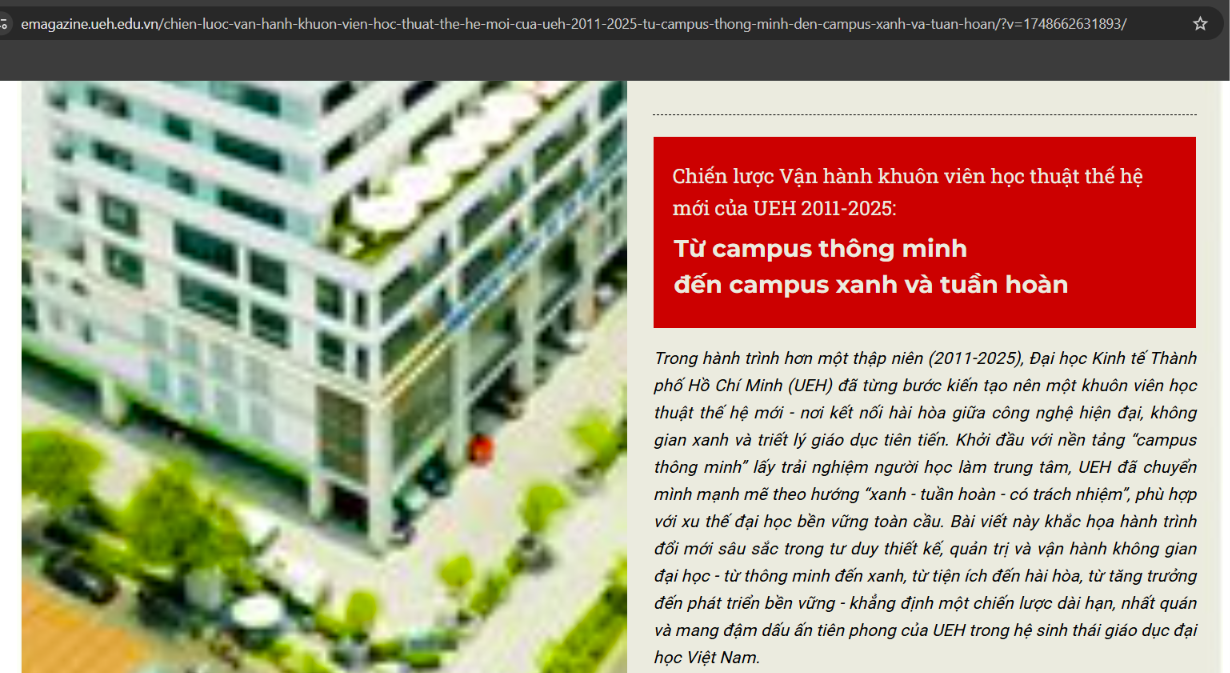 Figure: Magazine article on the transition from smart campuses to green and circular campuses. 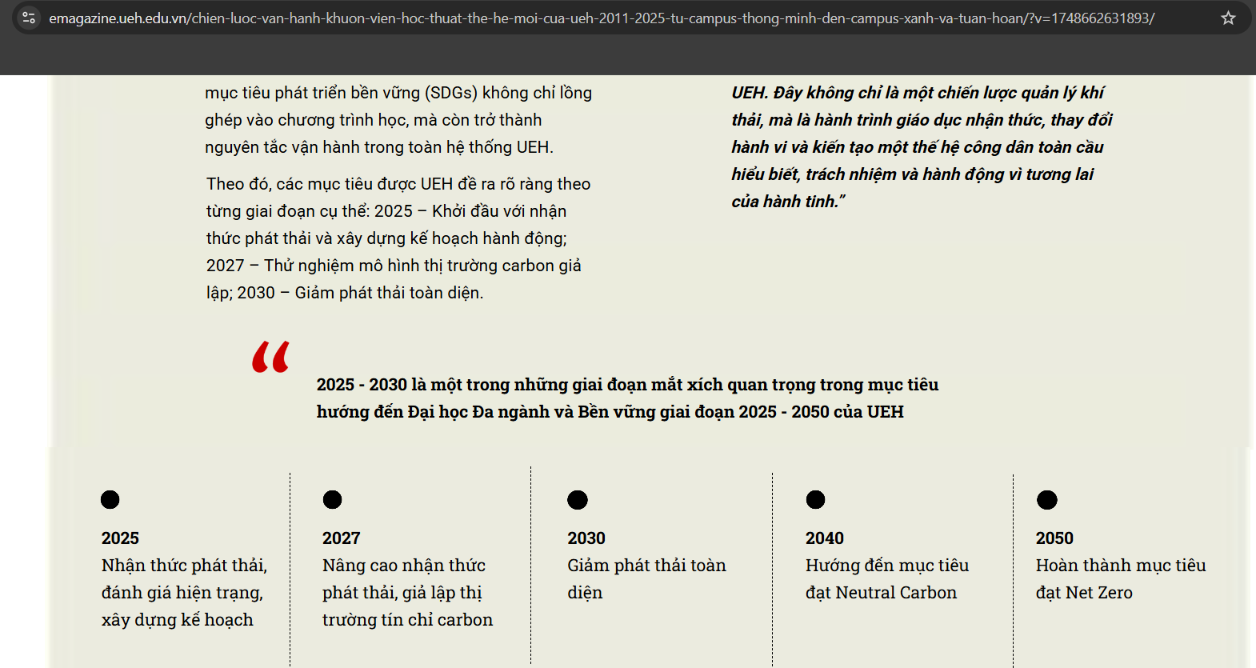 Figure: UEH’s pathway towards becoming a multidisciplinary and sustainable university. |
2025 milestone: development of the plan. 2030: comprehensive emission reductions. 2040: carbon neutrality. 2050: Net Zero. Public source: Operational strategy: UEH’s next-generation academic campus (UEH Magazine) |
| Launch of the UEH Green Campus Living Lab 2025. | University-wide, with community engagement. | UEH identified Emissions Awareness as a priority for 2025, aiming to develop a comprehensive greenhouse gas reduction plan through measurement, carbon auditing and energy management. The Living Lab model engages multiple units and stakeholders in developing climate action solutions.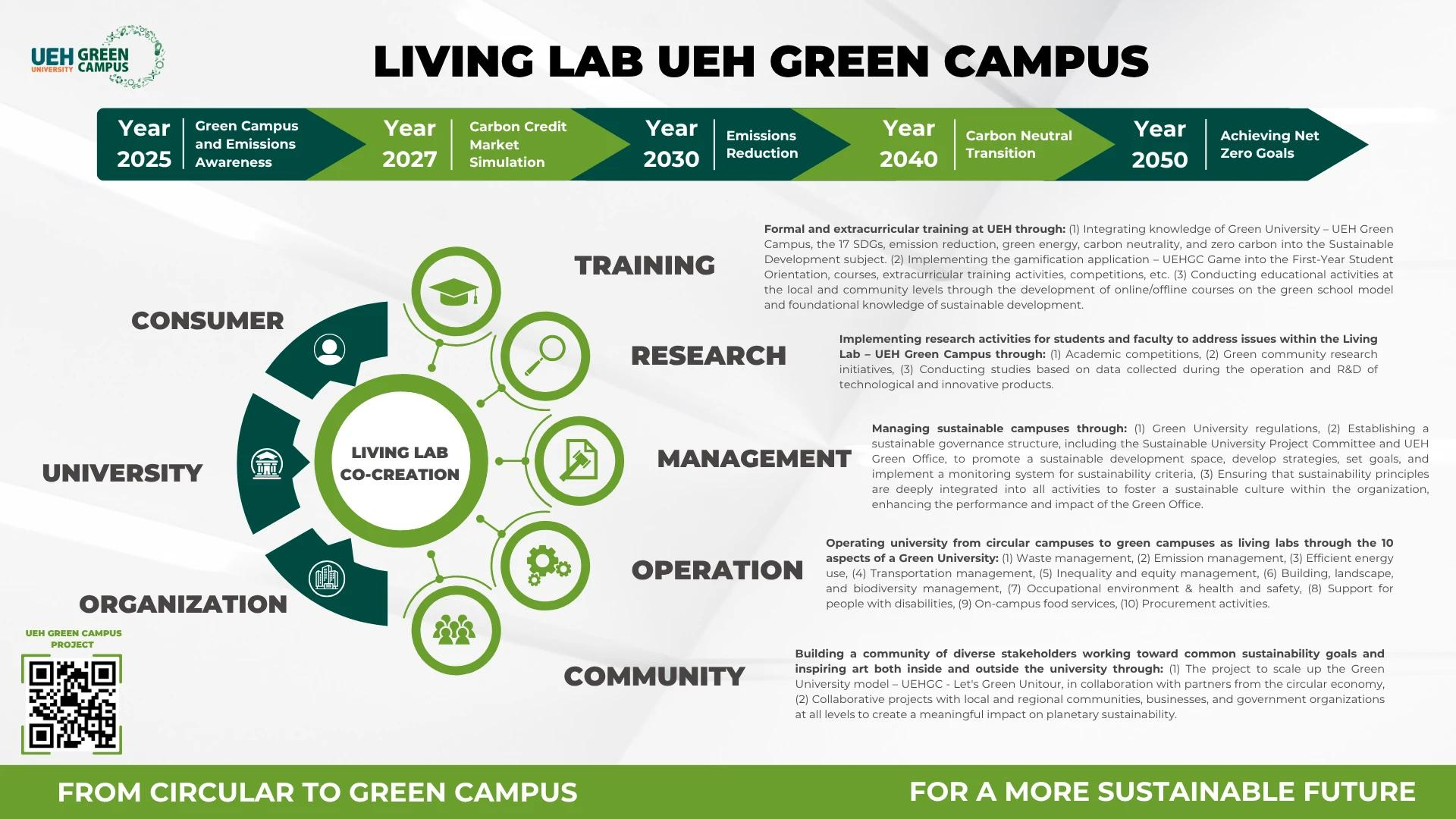 Figure: Key pillars of the UEH Living Lab model. |
A framework covering 10 areas for improving Green Campus practices was announced, including emissions management, energy and green transportation. Public source: Launching the UEH Green Campus Living Lab 2025: Spreading the shared #GreenCulture message “Living in Harmony with Nature” (UEH Green Campus website) |
| UEH Green Campus 2025 operational and monitoring results. | University-wide; publicly disclosed | UEH continued measuring, monitoring and improving its emission-reduction initiatives, renewable-energy use and smart-building management. Publicly disclosed data supported progress assessments and updates to the pathway towards a carbon-neutral university.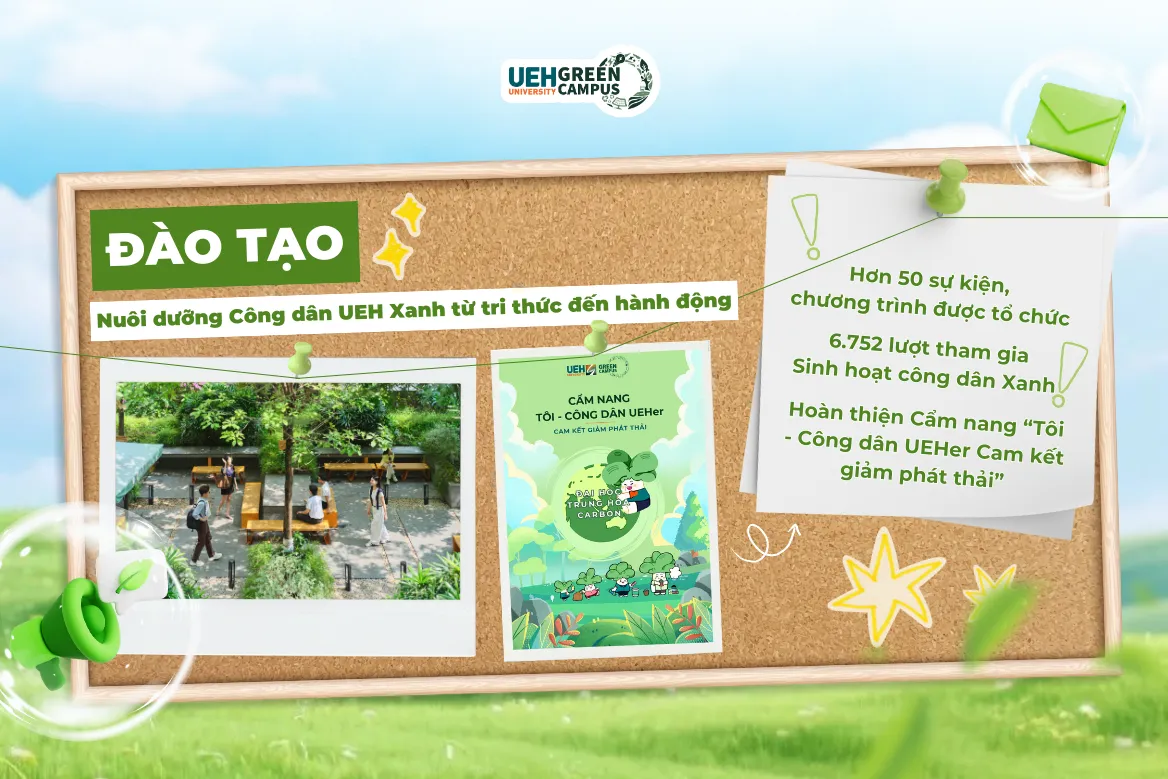 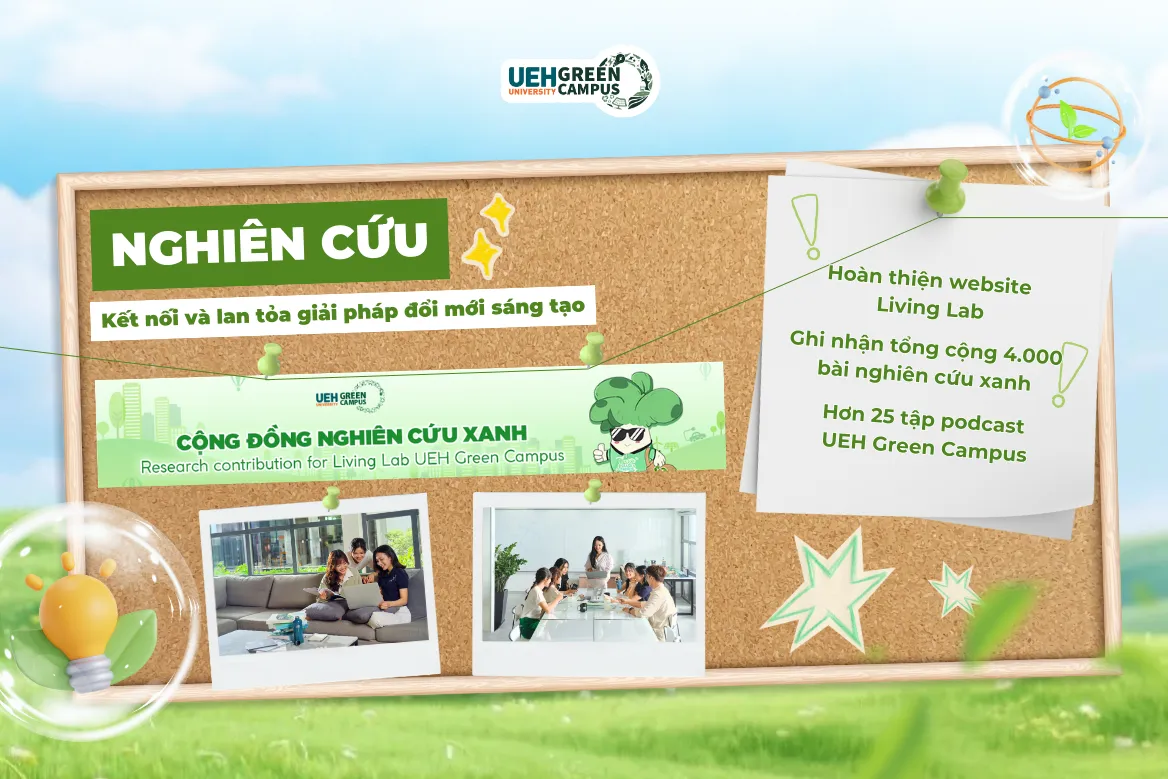 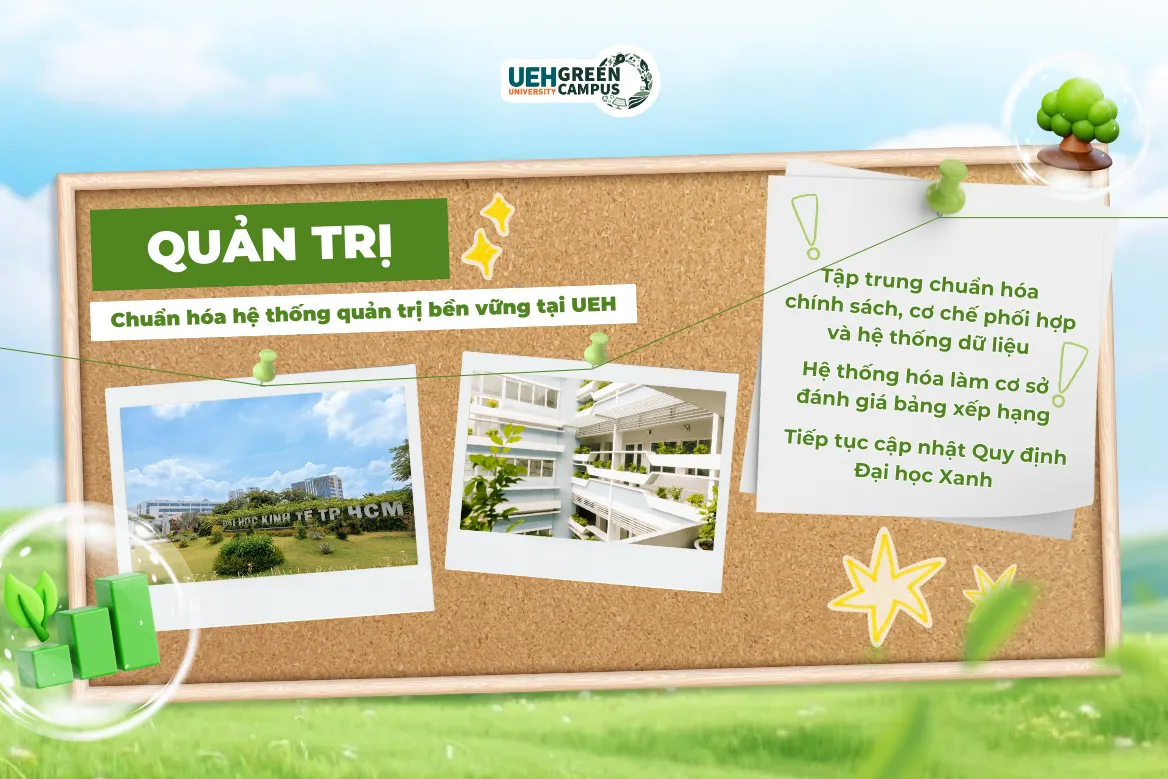 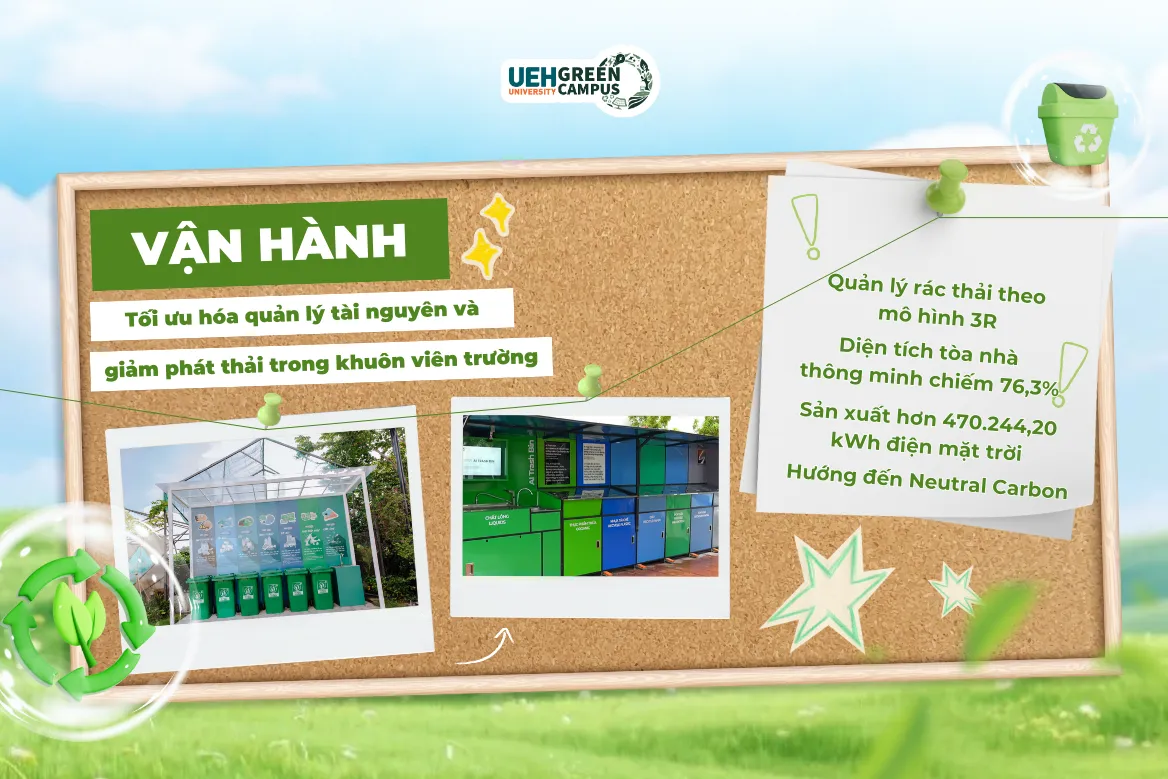 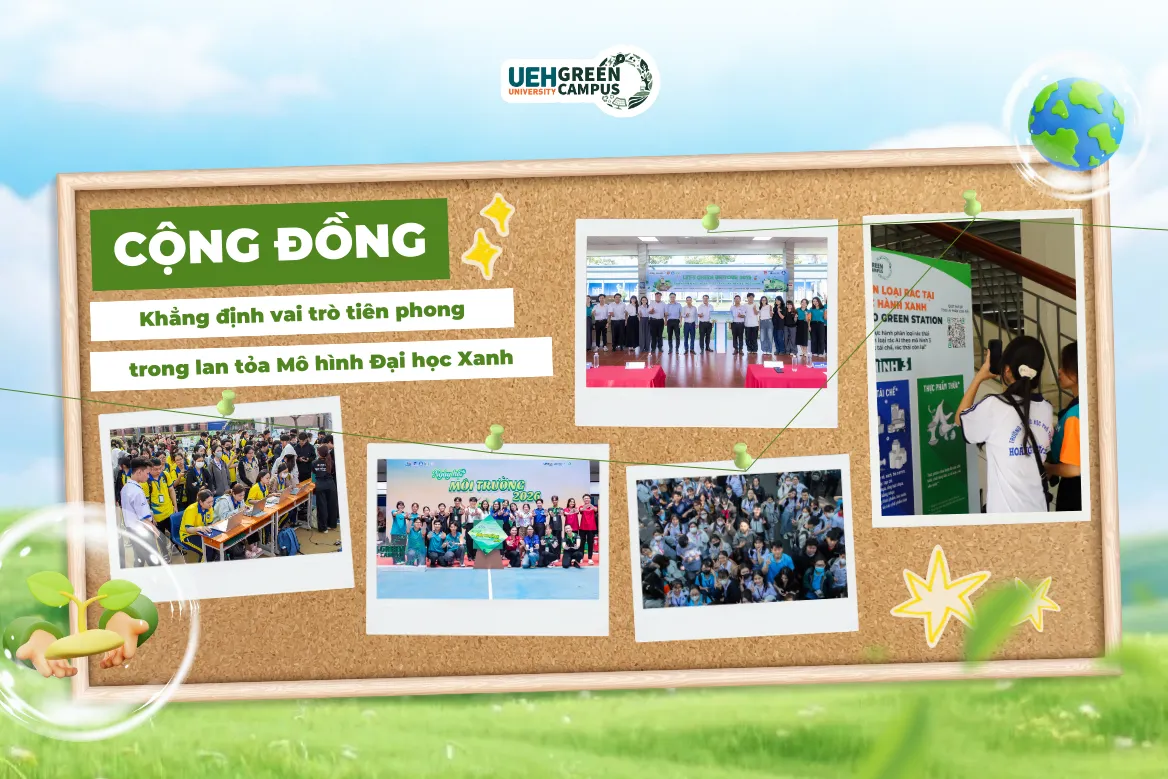 Figure: Key pillars of the UEH Green Campus project. |
More than 508,000 kWh of solar electricity; 79,665.85 m² of smart buildings (59.33%); estimated emissions of 3,561.96 tonnes CO₂eq over the latest 12 months. Public source: New progress in the UEH Green Campus Project in 2025: Advancing Operations and Sharing UEH’s Green Campus Model with the Community (UEH Green Campus website) |
| Launch Conference for the UEH 2025–2030 Strategy. | University-wide | UEH launched its 2025–2030 Development Strategy, linking governance, research, operations and community engagement to its sustainable university vision. The conference helped align coordination among units and stakeholders in implementing sustainability priorities, including climate action.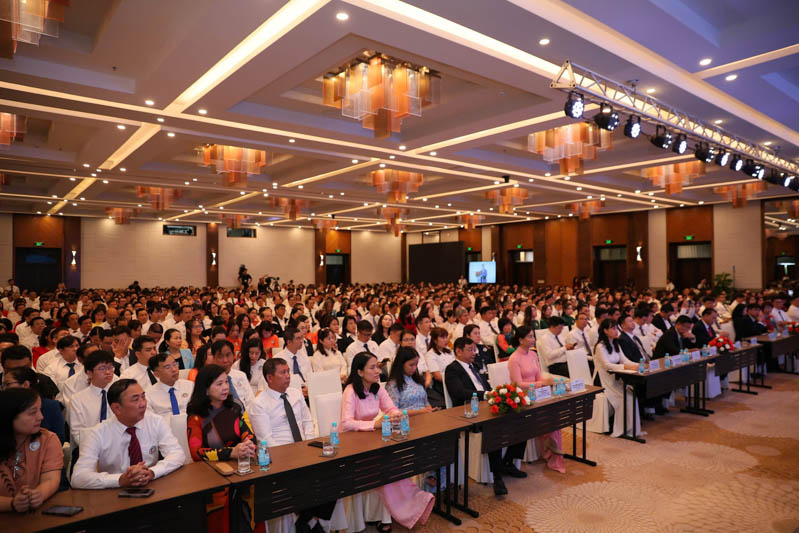 Figure: Overview of the Strategy Launch Conference. |
The strategy for the new period was announced, providing a framework for coordinated sustainability activities across UEH. Public source: Launch Conference for the UEH 2025–2030 Strategy and the 2025 All-Staff Conference: Sharing a Vision and Creating a Sustainable Future (UEH Portal, 25 July 2025) |
| UEH – Can Tho City People’s Committee Cooperation Agreement 2025–2030. | UEH and the Can Tho City People’s Committee established a cooperation mechanism. | On 26 November 2025, UEH and the Can Tho City People’s Committee signed a Cooperation Agreement for 2025–2030, establishing mechanisms for research, policy advice and review, training, innovation, and smart and sustainable urban development. The green economy and climate adaptation were identified as priority areas for mobilizing expertise, conducting research and proposing solutions tailored to Mekong Delta conditions. The agreement demonstrates that UEH established a direct channel for climate-related cooperation with local authorities. 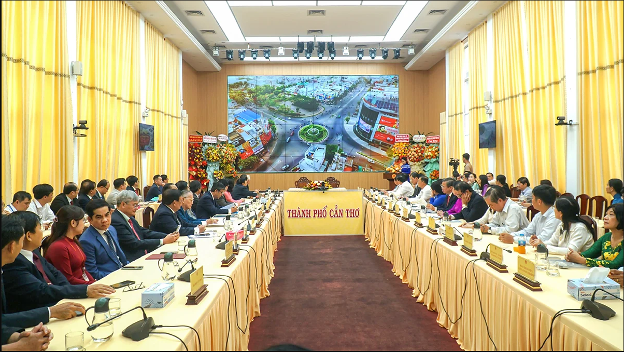 Figure: Signing ceremony for the cooperation agreement between UEH and the Can Tho City People’s Committee. |
A 2025–2030 memorandum of understanding was signed, establishing fields and mechanisms of cooperation. Public source: Signing of the 2025–2030 Cooperation Agreement between UEH and the Can Tho City People’s Committee: Expanding Strategic Cooperation for Sustainable Development in the Mekong Delta (UEH Portal, 26 November 2025) |
| UEH – Vinh Long Provincial People’s Committee Cooperation Agreement 2025–2030. | Local government – Mekong Delta | UEH and the Vinh Long Provincial People’s Committee agreed to cooperate on research, consulting and knowledge transfer concerning the green economy, circular economy and sustainable development. The agreement provides a foundation for developing programmes and solutions aligned with local needs and challenges.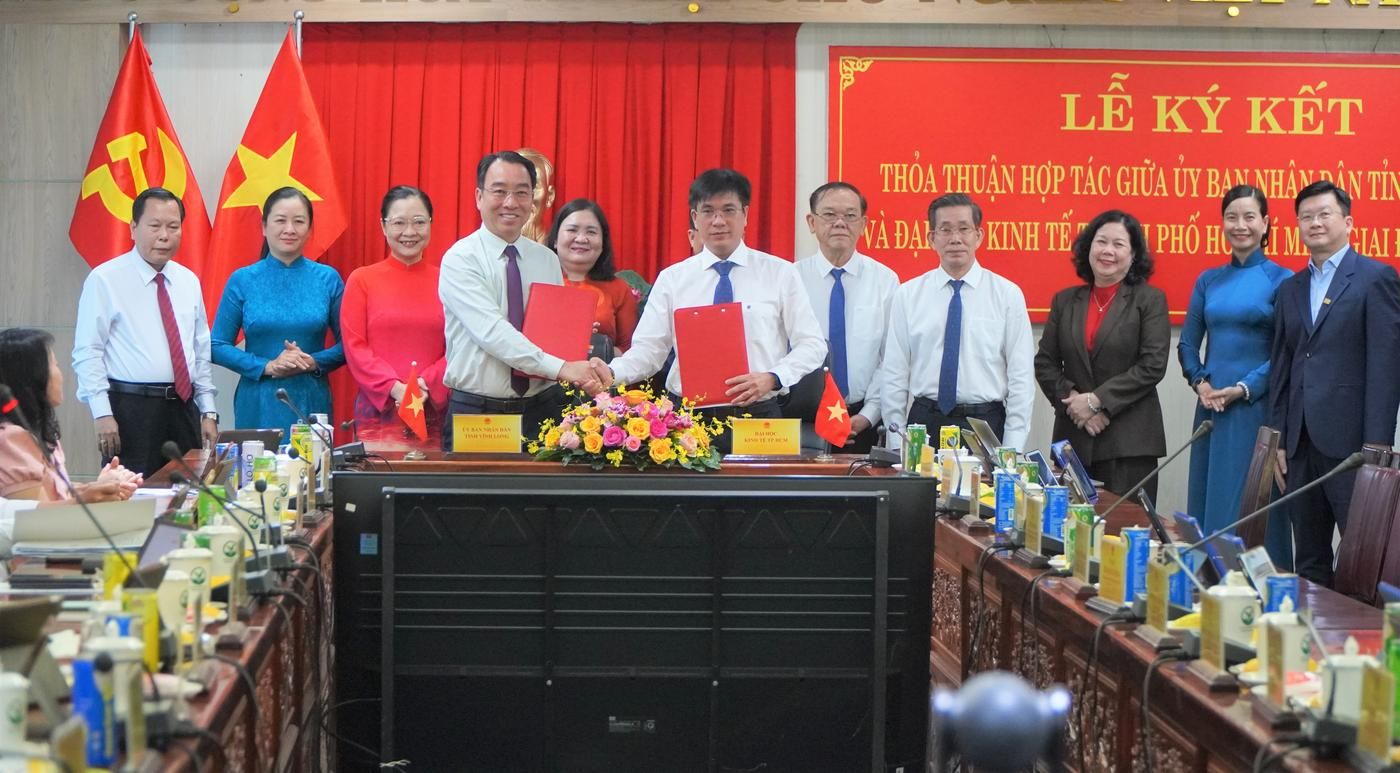 Figure: Signing ceremony for the cooperation agreement. |
The 2025–2030 agreement was signed, expanding channels for university–government collaboration. Public source: UEH and the Vinh Long Provincial People’s Committee Sign a Cooperation Agreement for 2025–2030 (UEH Portal, 3 November 2025) |
| UEH – An Giang Provincial People’s Committee Cooperation Agreement 2025–2030. | Local government – Mekong Delta | UEH and the An Giang Provincial People’s Committee established cooperation in research, training, the green economy, high-tech agriculture and sustainable development. The initiative encouraged multistakeholder participation in researching and proposing locally appropriate development solutions.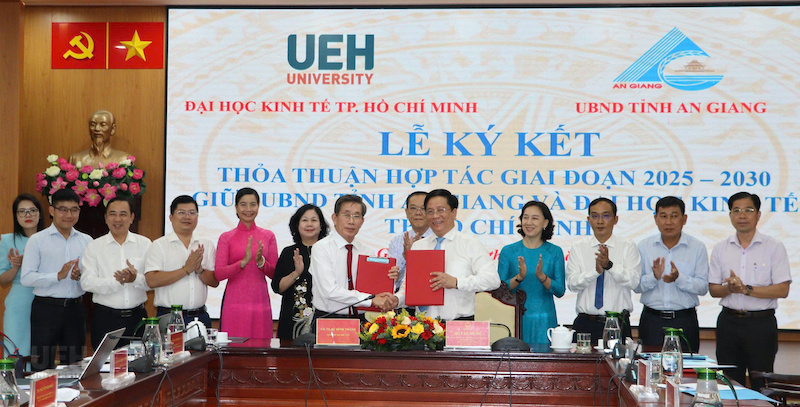 Figure: UEH and the An Giang Provincial People’s Committee sign a comprehensive cooperation agreement. |
The 2025–2030 agreement was signed, establishing a basis for research cooperation and knowledge transfer. Public source: UEH and the An Giang Provincial People’s Committee Sign a Cooperation Agreement for 2025–2030 (UEH Portal, 18 October 2025) |
| UEH – Ca Mau Provincial People’s Committee Cooperation Agreement 2025–2030. | Local government – Mekong Delta | UEH and the Ca Mau Provincial People’s Committee agreed to cooperate on research and policy advice concerning the marine economy, clean energy and climate change adaptation. These agreements enabled UEH to connect its research, emission-reduction and climate adaptation priorities with local needs. They provided a basis for expanding university–government cooperation in support of sustainable development solutions for coastal communities. 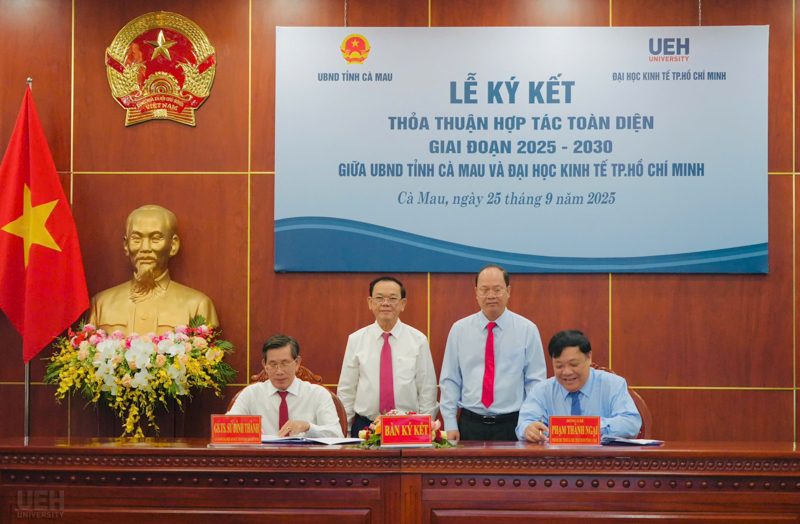 Figure: Representatives signing the memorandum of understanding between UEH and the Ca Mau Provincial People’s Committee. |
The 2025–2030 memorandum of understanding was signed, establishing a strategic cooperation framework between the parties. Public source: Signing Ceremony for the Comprehensive 2025–2030 Cooperation Agreement between UEH and the Ca Mau Provincial People’s Committee, 26 September 2025 (UEH Portal, 25 September 2025) |
| Scientific roundtable on climate-resilient infrastructure in Vinh Long. | Local government – Vinh Long | UEH worked with the Vinh Long Provincial People’s Committee to share research on the impacts of climate change and climate-resilient transport infrastructure solutions with authorities and local businesses. Presentations addressed planning, resource mobilization and climate resilience.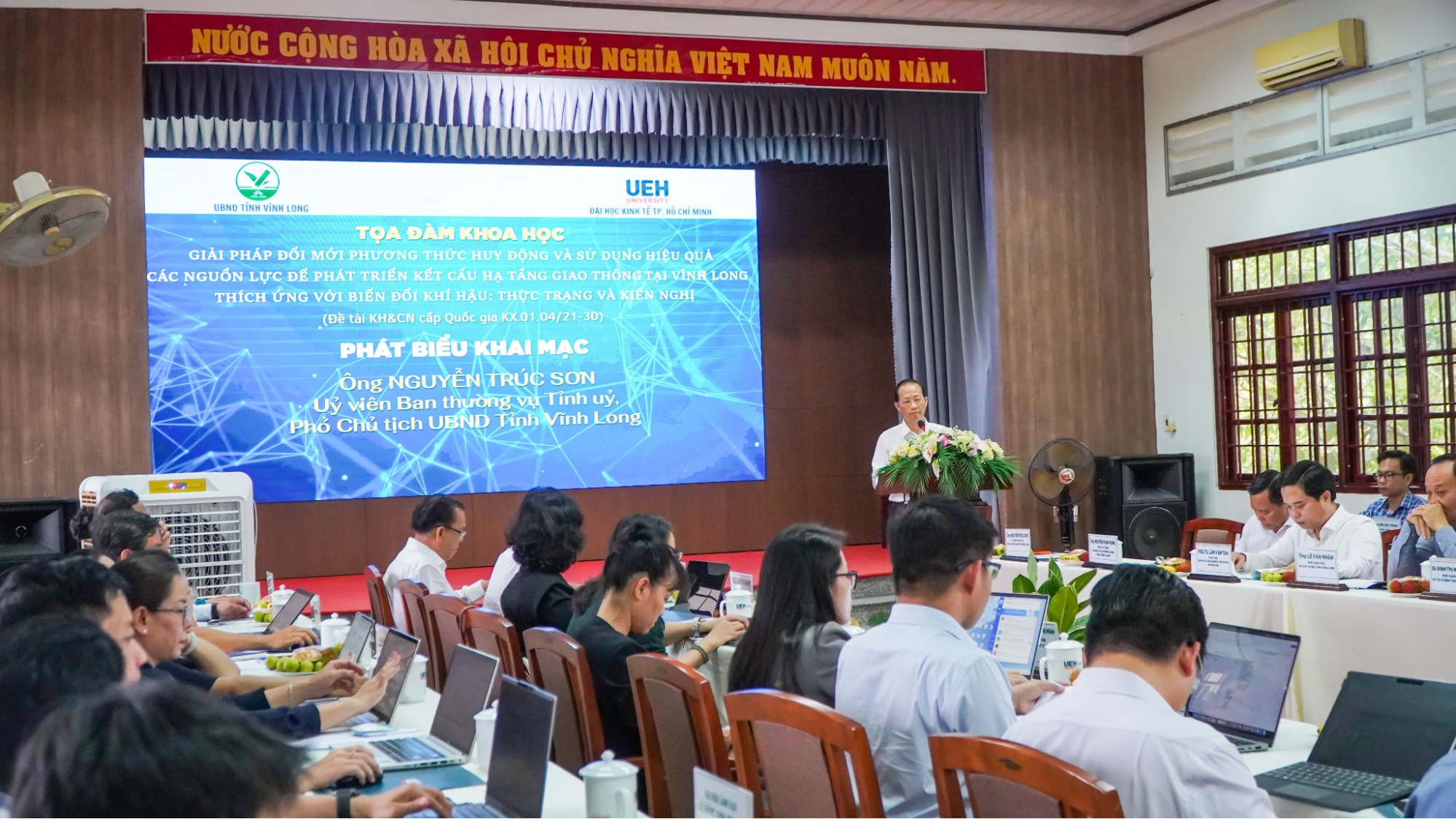 Figure: Discussion session at the roundtable. |
The Department of Agriculture and Environment contributed a presentation on climate impacts, followed by discussion of policy recommendations. Public source: Scientific Roundtable on Mobilizing and Efficiently Using Resources to Develop Climate-Resilient Transport Infrastructure in Vinh Long, at UEH Mekong (UEH Portal, 11 September 2025) |
| Scientific roundtable in Can Tho on innovation and climate adaptation. | Local government – Can Tho | UEH and the Can Tho Department of Science and Technology shared solutions for climate-resilient transport infrastructure and improved resilience. The event brought together public agencies, researchers and businesses to discuss resource mobilization and innovation.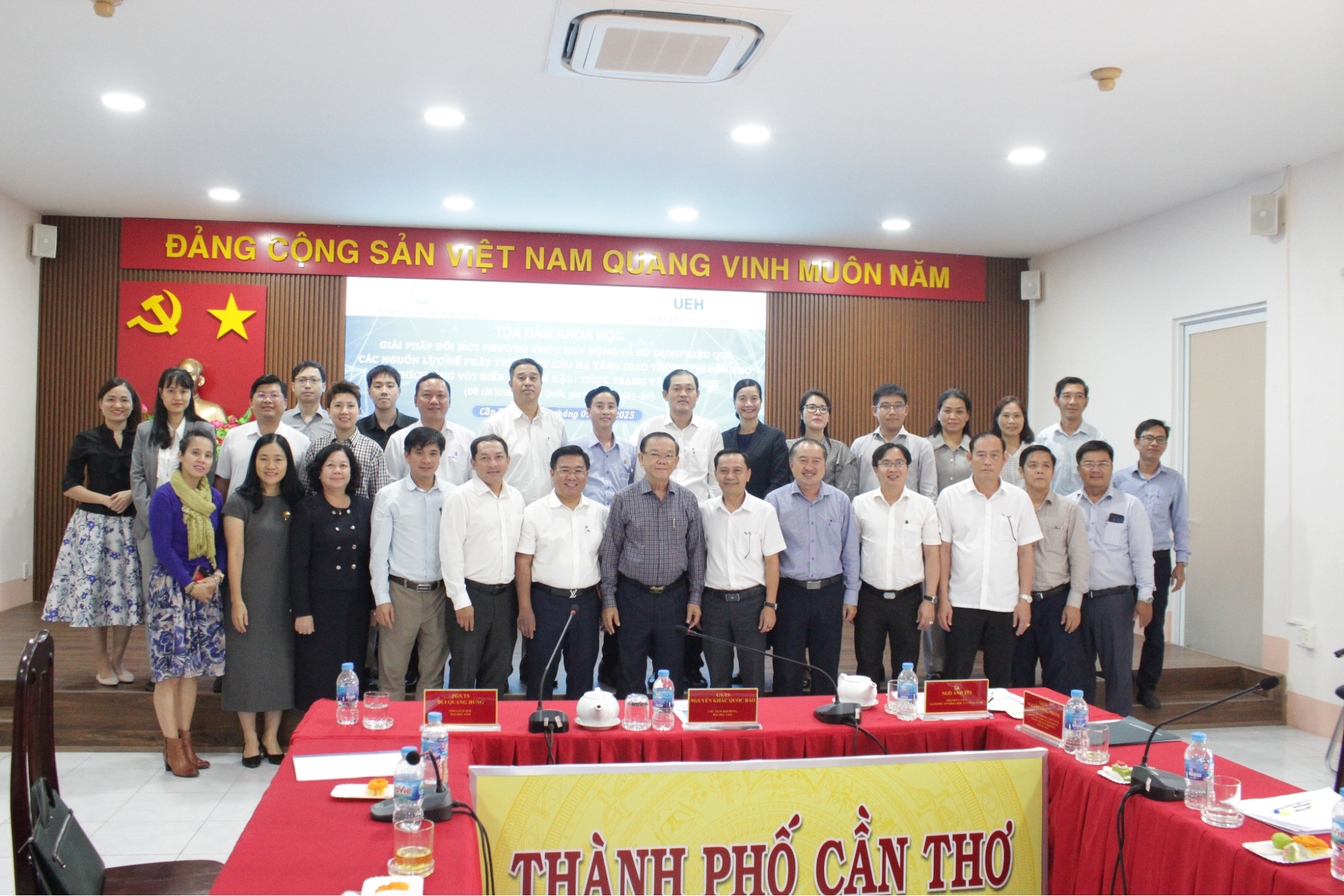 Figure: Delegates attending the roundtable. |
A roundtable involving relevant stakeholders was held to discuss climate-resilient infrastructure approaches and solutions. Public source: Scientific Roundtable in Can Tho: Innovation and the Development of Climate-Resilient Transport Infrastructure (UEH Mekong Portal, 12 September 2025) |
| Scientific roundtable in Dong Thap on climate-resilient transport infrastructure. | Local government – Dong Thap | UEH and the Dong Thap Department of Construction held a policy dialogue on climate risks, planning and the development of climate-resilient infrastructure. The event shared research findings and approaches for mobilizing and using resources suited to local conditions.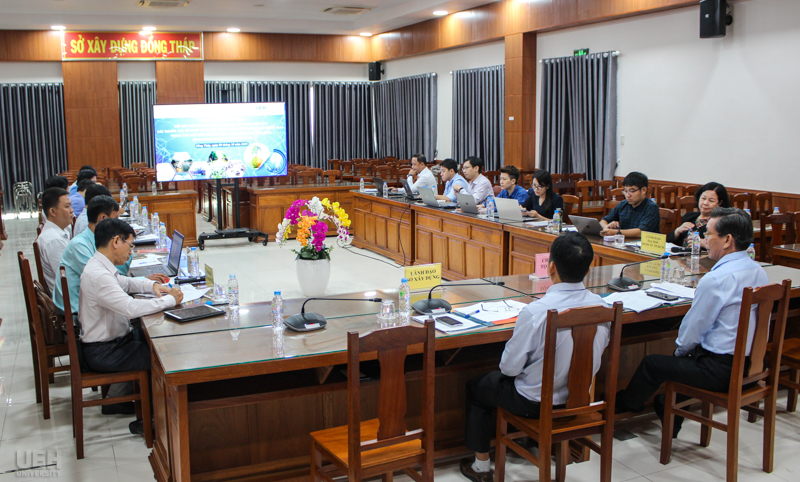 Figure: Roundtable held at the Department of Construction in Dong Thap. |
Representatives of government departments and specialists discussed solutions addressing climate impacts on transport infrastructure. Public source: Scientific Roundtable in Dong Thap: Innovating Resource Mobilization and Efficient Use for Climate-Resilient Transport Infrastructure Development (UEH Portal, 13 October 2025) |
| Scientific roundtable in An Giang on climate-resilient infrastructure development. | Local government – An Giang | UEH and the An Giang Provincial People’s Committee discussed landslide and saltwater intrusion risks and options for developing climate-resilient infrastructure. Participants shared research, scenarios and resource-mobilization solutions to support local climate policy dialogue.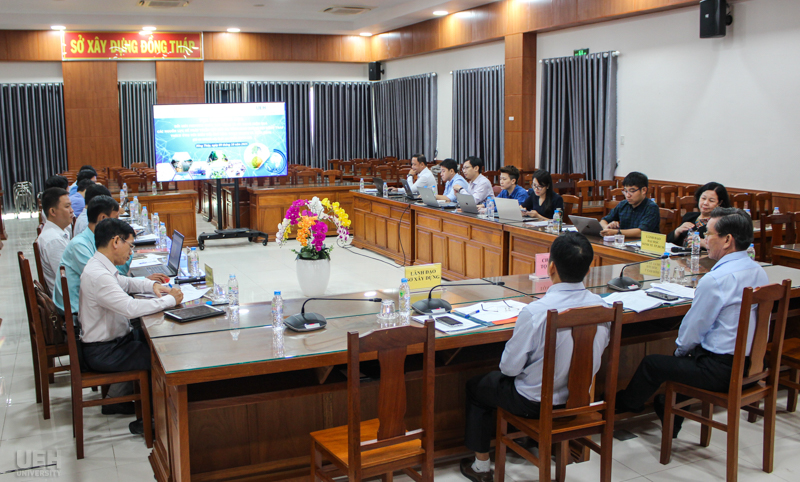 Figure: Delegates exchanging views during the roundtable. |
The event brought government, businesses and experts together to present and discuss climate adaptation solutions. Public source: UEH Works with An Giang Province to Identify Solutions for Sustainable, Climate-Resilient Transport Infrastructure Development (UEH Portal, 22 October 2025) |
| Women4Mangrove – Community-Based Mangrove Conservation in Cu Lao Dung. | Local communities – Mekong Delta | The project consulted local authorities, women and community groups, sharing survey results and proposals for mangrove conservation linked to sustainable livelihoods. It promoted nature-based approaches to climate adaptation with the participation of coastal communities.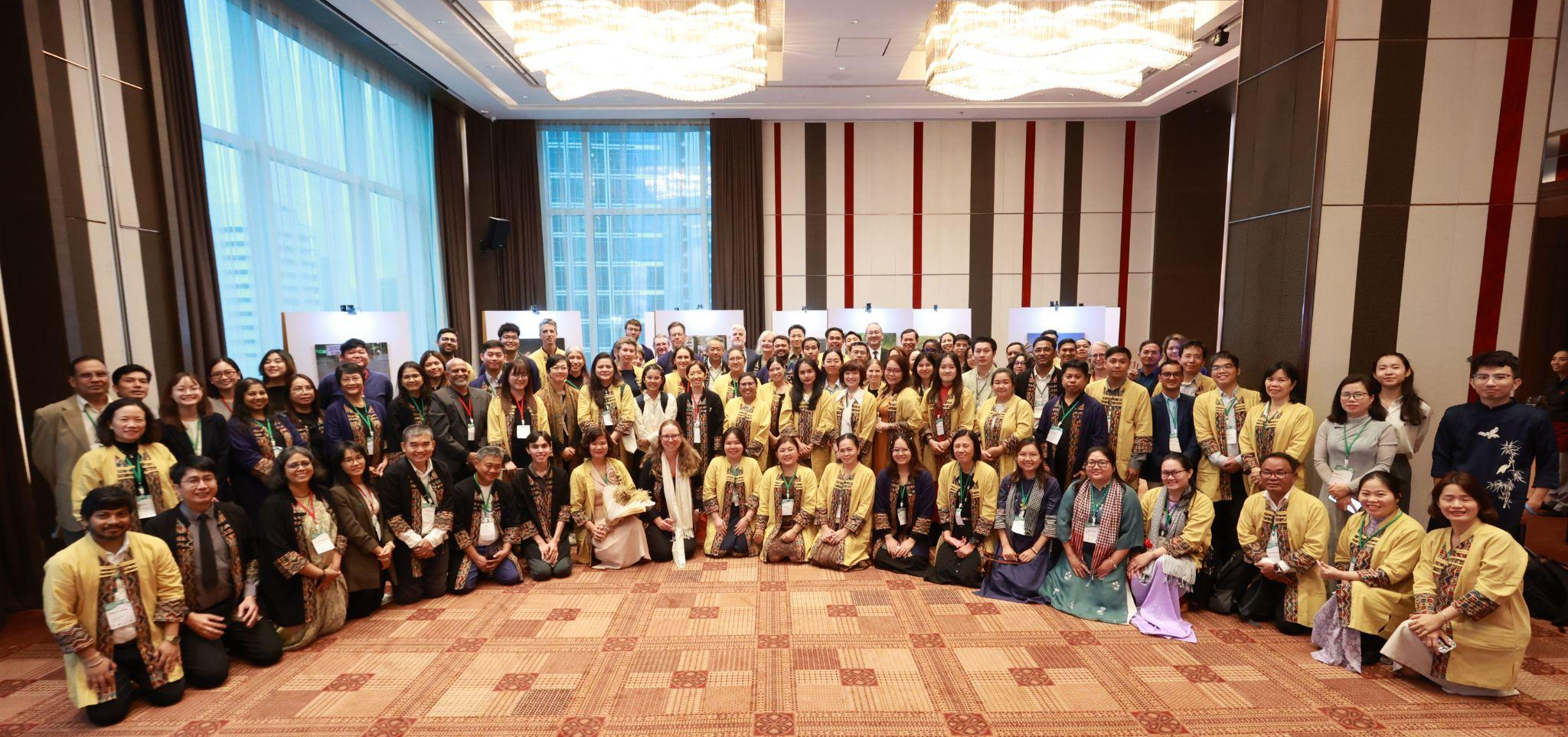 Figure: Delegates, partners and the Women4Mangrove project team. |
Consultations were conducted and the project plan was shared with relevant stakeholders. Public source: Women4Mangrove Project: Strengthening Community-Based Conservation and Educational Agri-Tourism Linked to Mangrove Planting in the Mekong Delta (UEH School of Tourism Portal, December 2025) |
| Ho Chi Minh City Student Forum and launch of Let’s Green UniTour 2025, followed by activities at participating universities. | Education community – Ho Chi Minh City | UEH shared its Green Campus model, green-practice initiatives and approaches to reducing environmental impacts with educational institutions in Ho Chi Minh City. The forum promoted multistakeholder cooperation and the wider adoption of green action among local students. Figure: Signing of the cooperation agreement to jointly organize Let’s Green UniTour with Youth Union and Student Association representatives from 10 universities and colleges in the city. 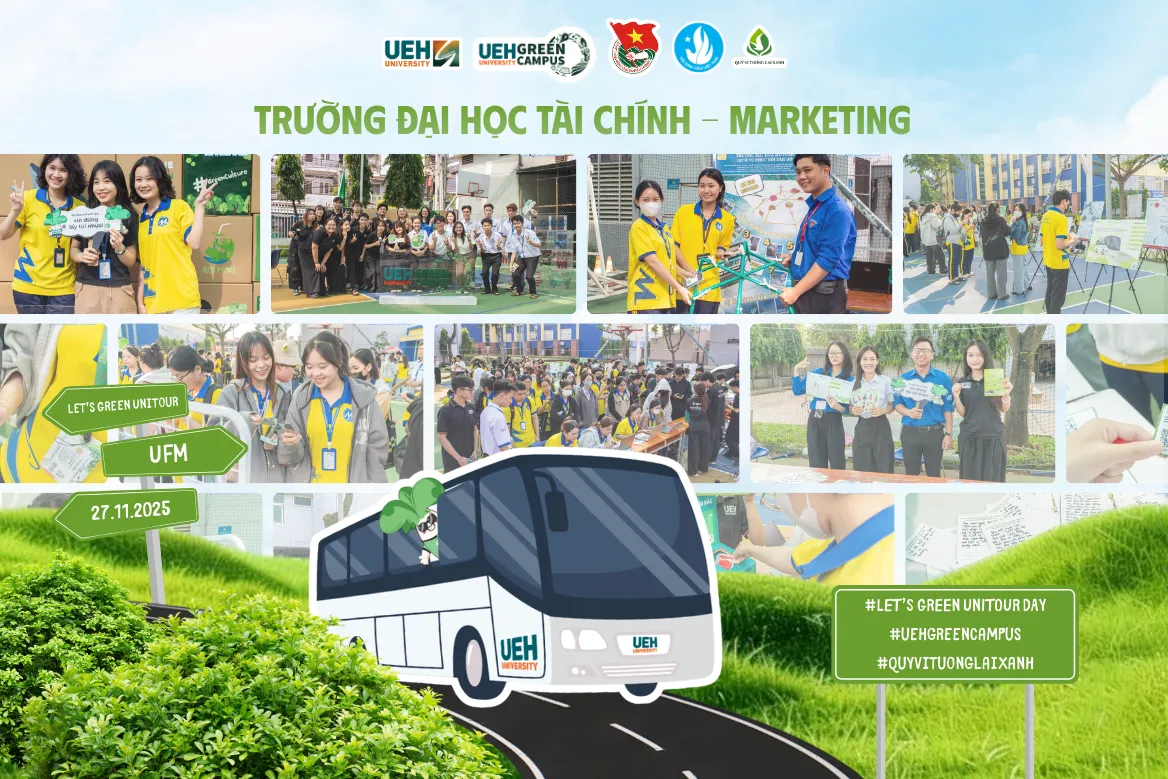 Figure: Let’s Green UniTour at the University of Finance and Marketing. 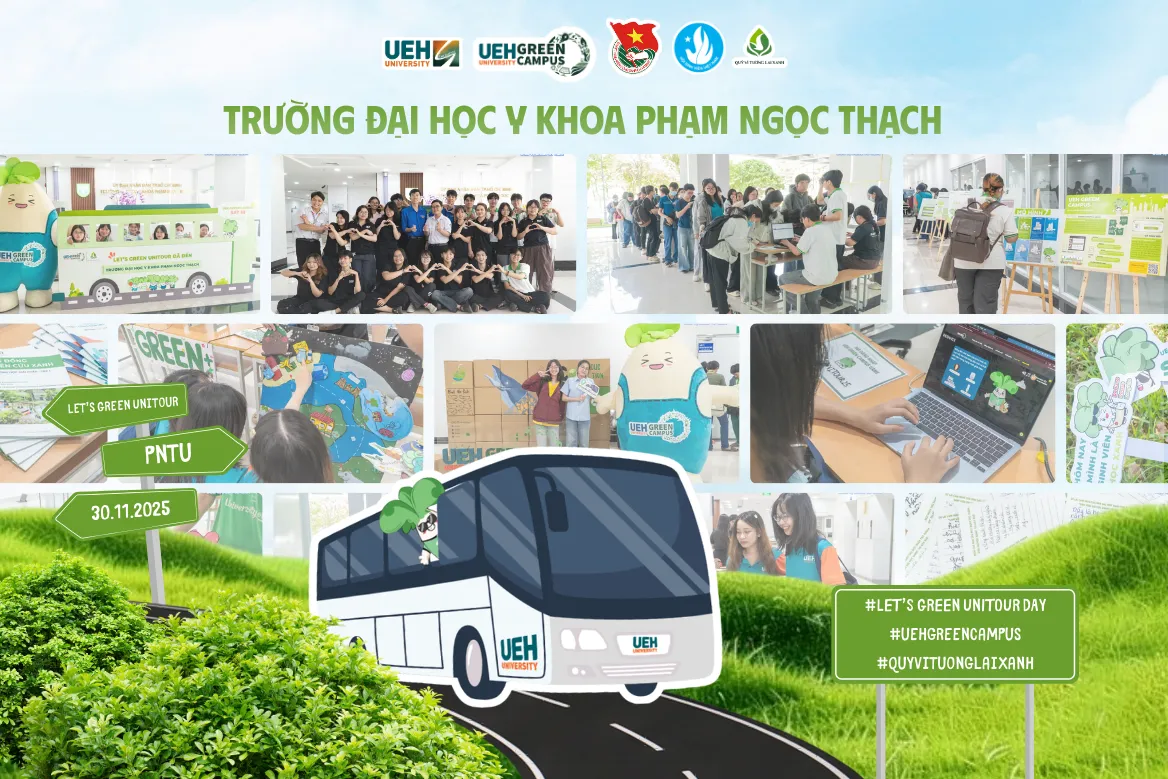 Figure: Let’s Green UniTour at Pham Ngoc Thach University of Medicine.  Figure: Let’s Green UniTour at Ho Chi Minh City National College of Education. 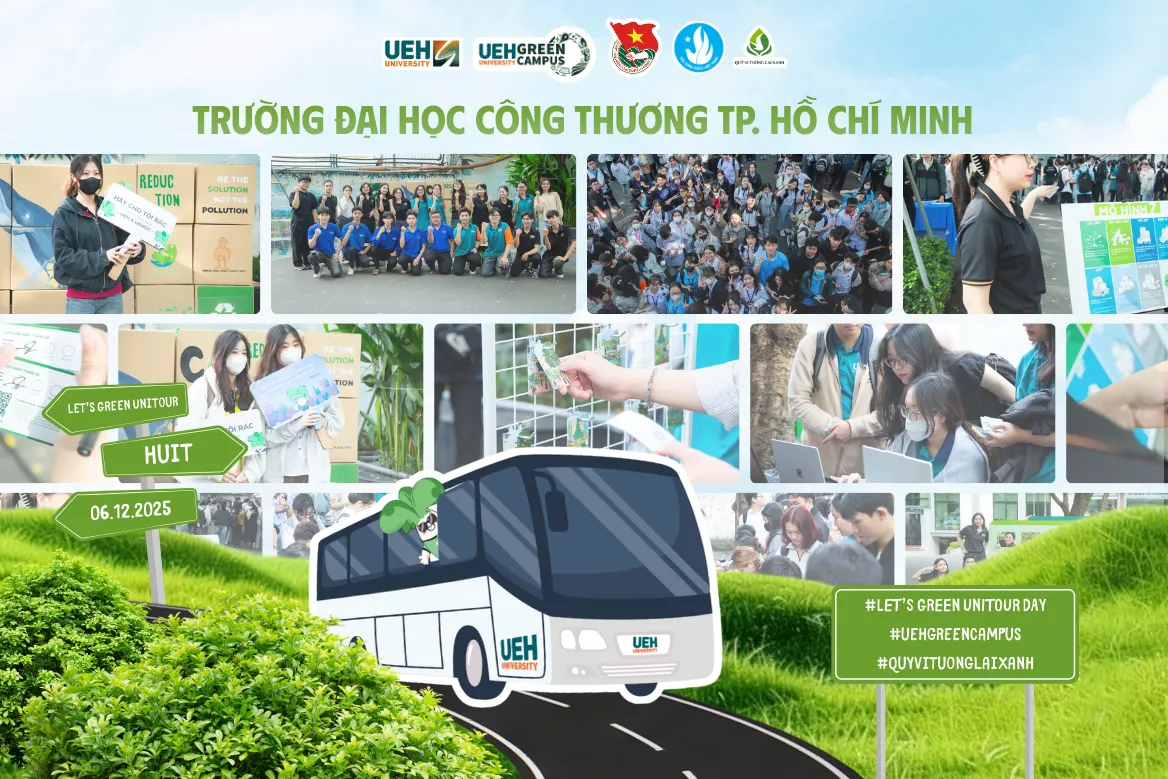 Figure: Let’s Green UniTour at Ho Chi Minh City University of Industry and Trade. 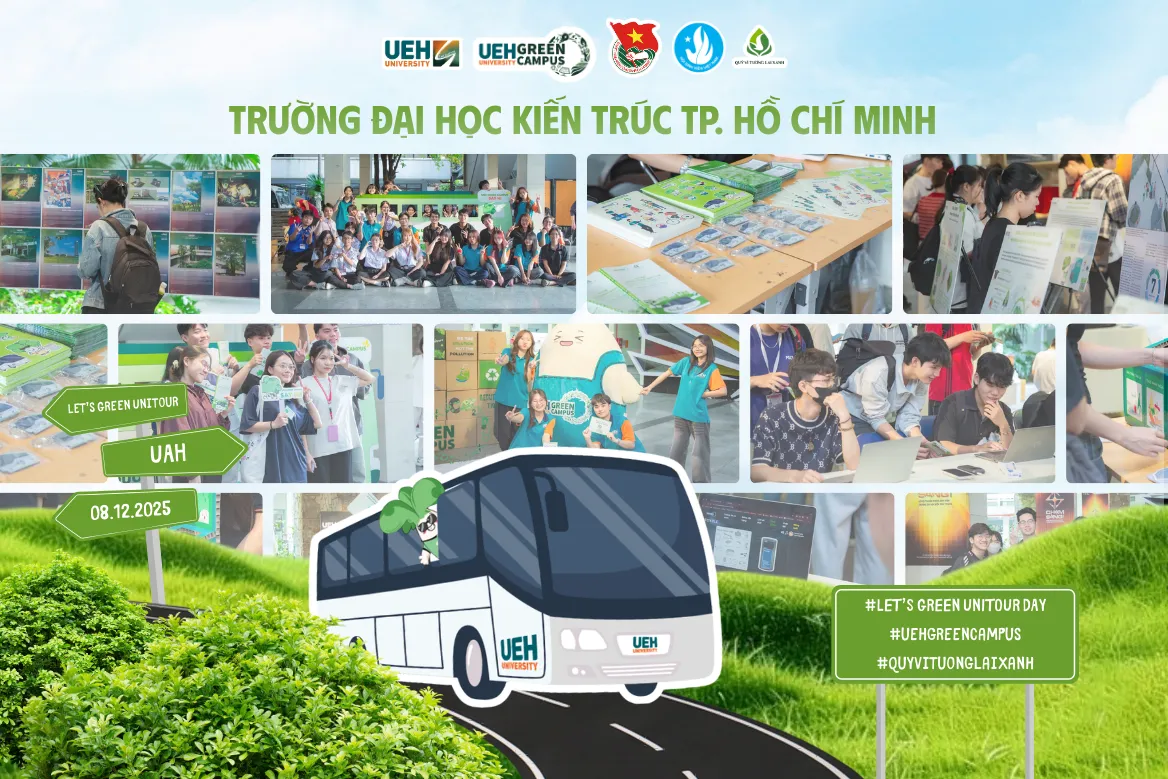 Figure: Let’s Green UniTour at Ho Chi Minh City University of Architecture. 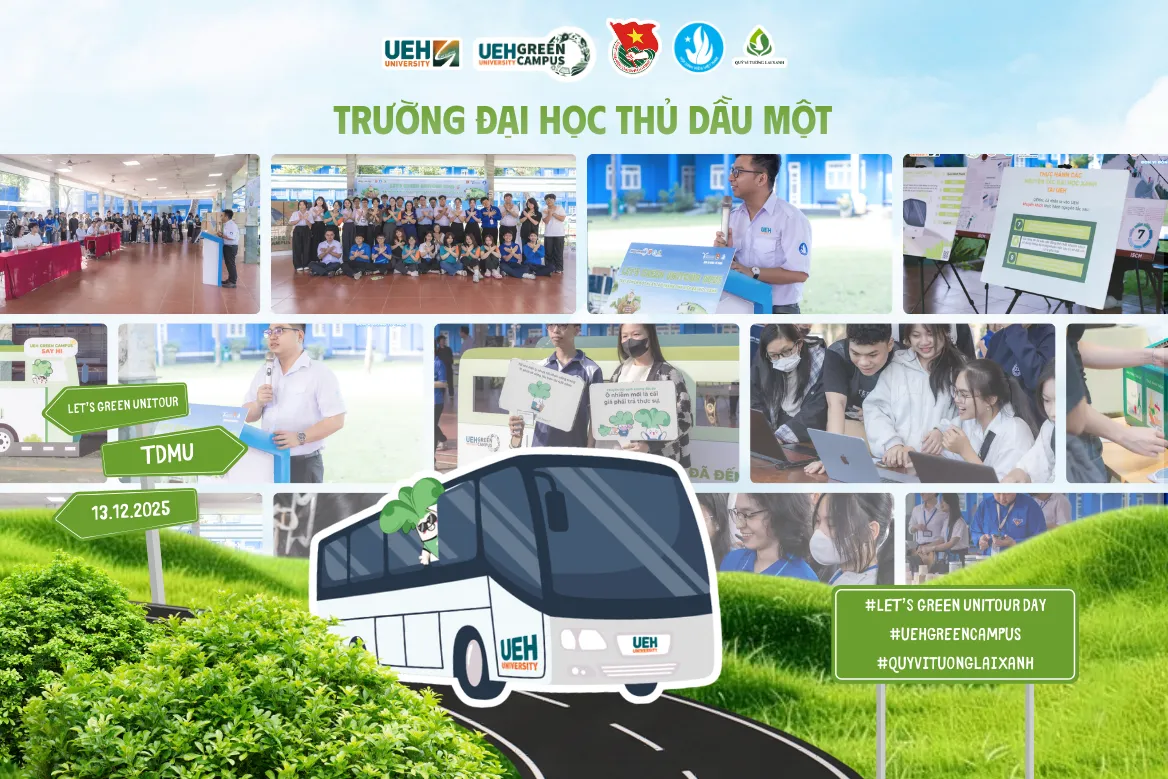 Figure: Let’s Green UniTour at Thu Dau Mot University. 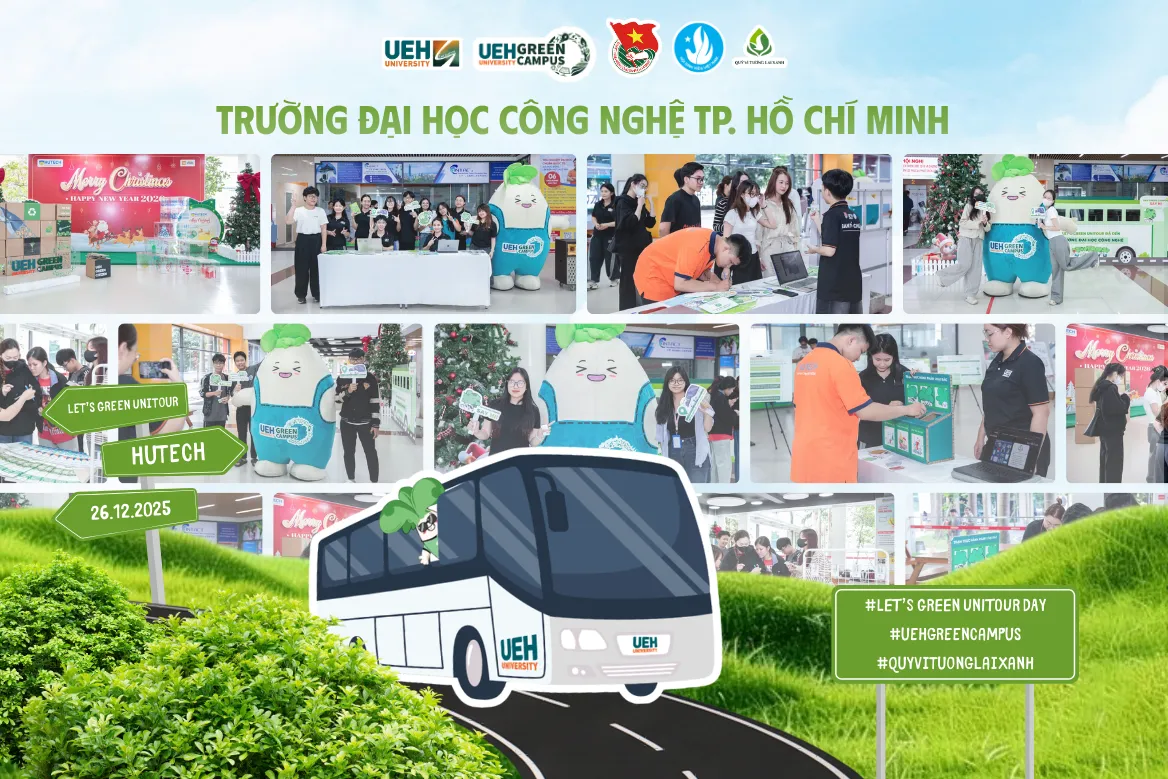 Figure: Let’s Green UniTour at Ho Chi Minh City University of Technology (HUTECH). 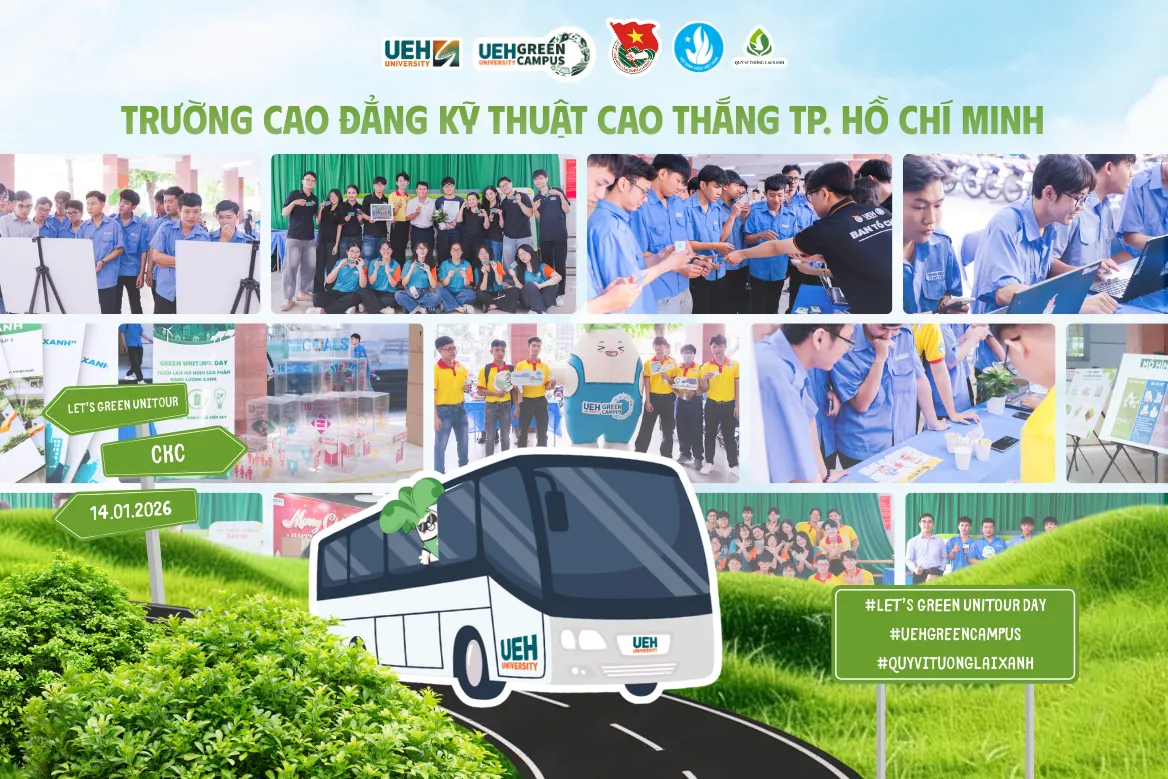 Figure: Let’s Green UniTour at Cao Thang Technical College. 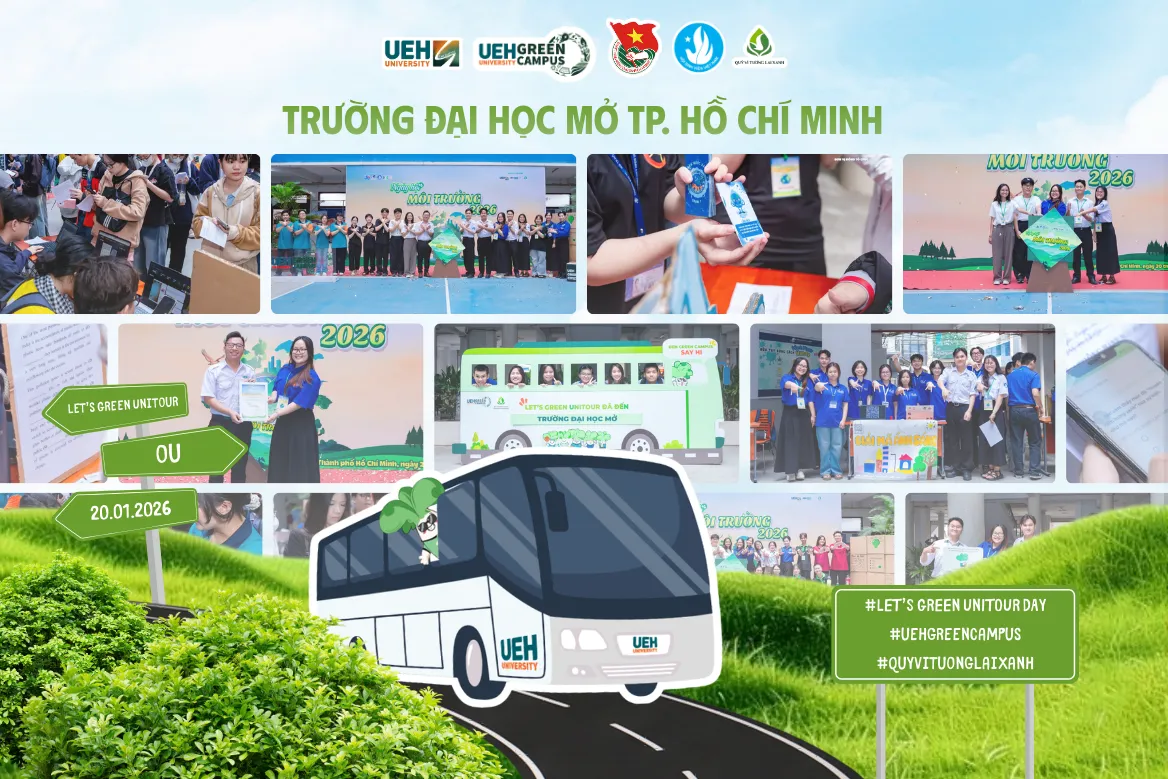 Figure: Let’s Green UniTour at Ho Chi Minh City Open University. |
Let’s Green UniTour 2025 generated 2,333 interactions across 60 media posts, reflecting interest in the UEH Green Campus model. Of 1,615 survey responses, 62.8% reported satisfaction, 68.7% felt inspired to adopt greener lifestyles, 79.5% correctly understood the Green University concept, and 68% understood their institution’s direction. Following the event, students expressed intentions to change behaviour: 75% to sort waste, 67.2% wanted a Green University model at their institution, 65.3% to reduce single-use plastics, 48% to switch to buses, and 47.7% to participate more actively in environmental programmes. UEH planned to continue and expand these community-oriented activities. Public source: Ho Chi Minh City Student Forum on Green Practices and Sustainable Action and the Launch of Let’s Green UniTour 2025: Beginning the Journey to Share the UEH Green Campus Model with the City’s Student Community (UEH Green Campus website, 3 November 2025) Public source: Looking Back on Let’s Green UniTour 2025: Spreading the UEH Green Campus Model to the Wider Community (UEH Green Campus website) |
| Let’s Green UniTour at UEH Mekong – Sharing the Green Campus Model with Local Authorities and Educational Communities in the Mekong Delta (February–April 2025) | Local community – Vinh Long and the Mekong Delta | UEH Mekong shared the UEH Green Campus model and waste- and emissions-reduction practices with lower- and upper-secondary students and teachers across the Mekong Delta. On 20–21 February 2025, the programme was incorporated into a career-guidance and admissions event organized by the Vinh Long Department of Education and Training at UEH Mekong. The programme formed part of the “Green Semester – Building Green Communities” campaign of the For a Green Future Foundation. 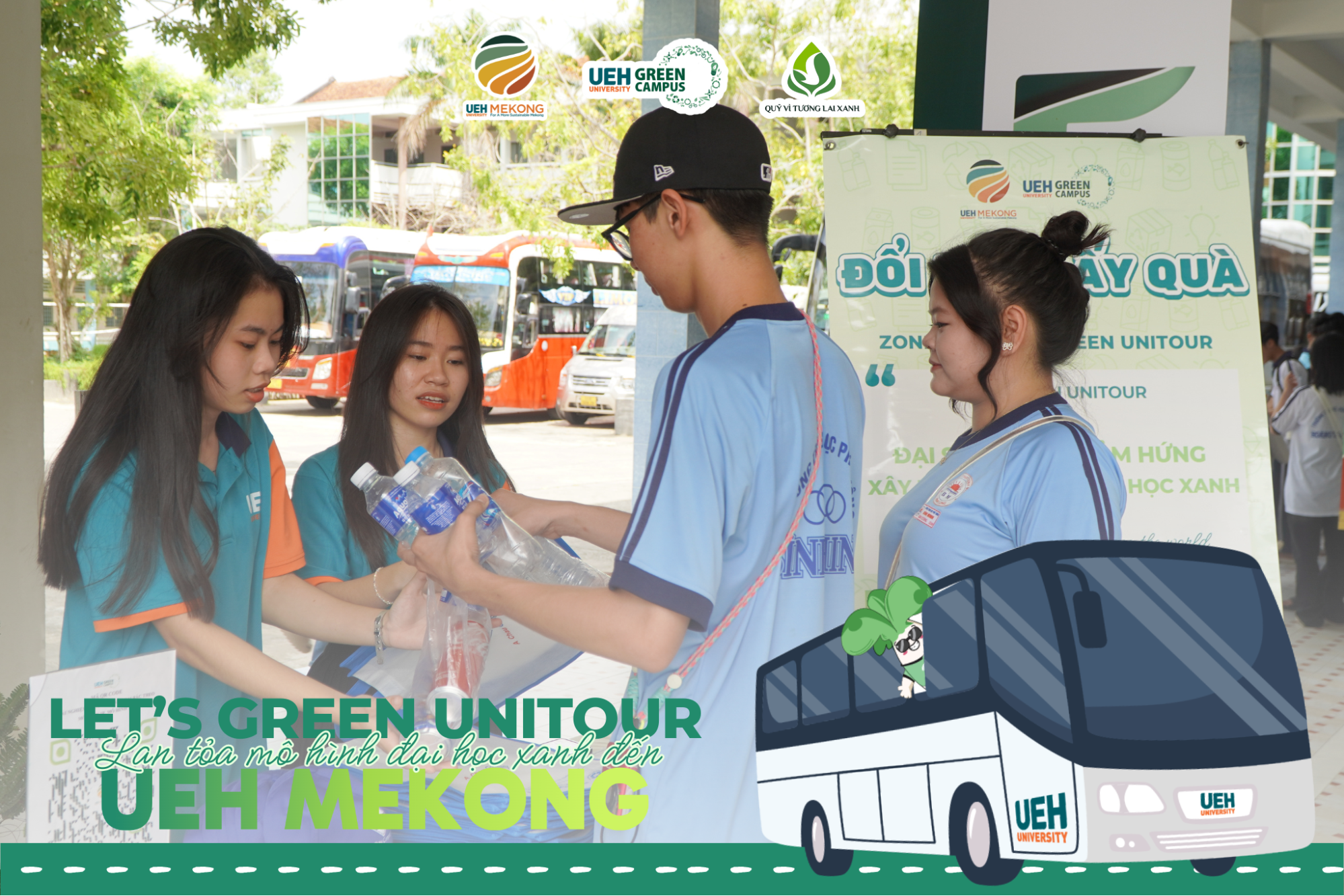 Students exchange recyclable waste for gifts during Let’s Green UniTour at UEH Mekong. |
The programme reached 28 lower- and upper-secondary schools and more than 6,500 students (February–April 2025). Approximately 600 students and teachers attended on 16 February 2025, with more than 1,000 students attending on 20–21 February 2025. Public source: Let’s Green UniTour: Bringing the Green University Model to UEH Mekong (UEH Green Campus, 18 February 2025); Continuing the Green Journey: Let’s Green UniTour at the Vinh Long Department of Education and Training Conference, UEH Mekong (UEH Green Campus, 4 March 2025) |
| Green Visit 2025 – Sharing the UEH Green Campus Living Lab Model. | Inter-university – Ho Chi Minh City | UEH introduced its Green Campus Living Lab model and shared implementation experience with other universities and the Vietnam National University Ho Chi Minh City dormitory management units. The visit enabled organizations outside UEH to learn about resource management, reducing environmental impacts and green campus operations.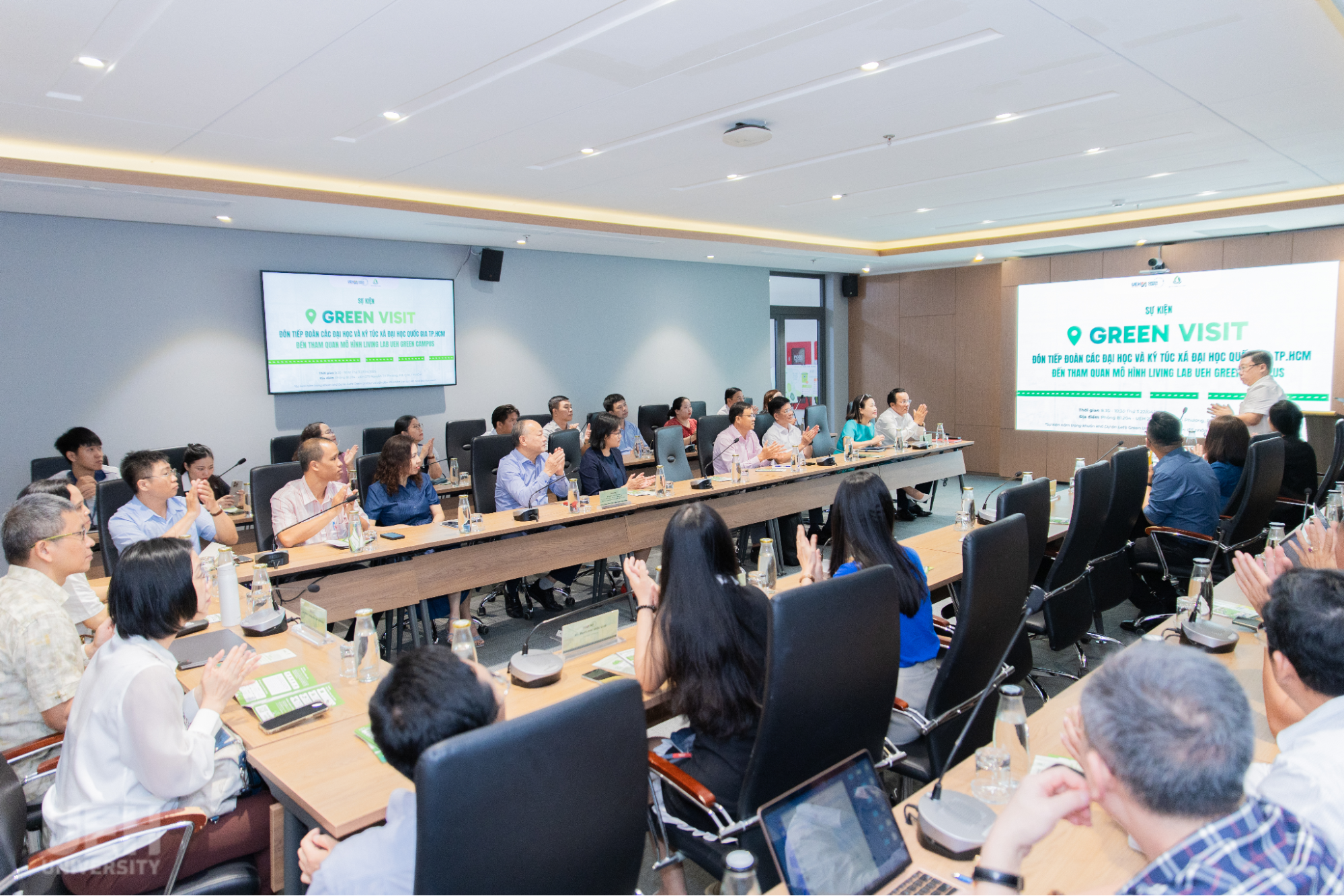 Figure: Overview of the Green Visit event. 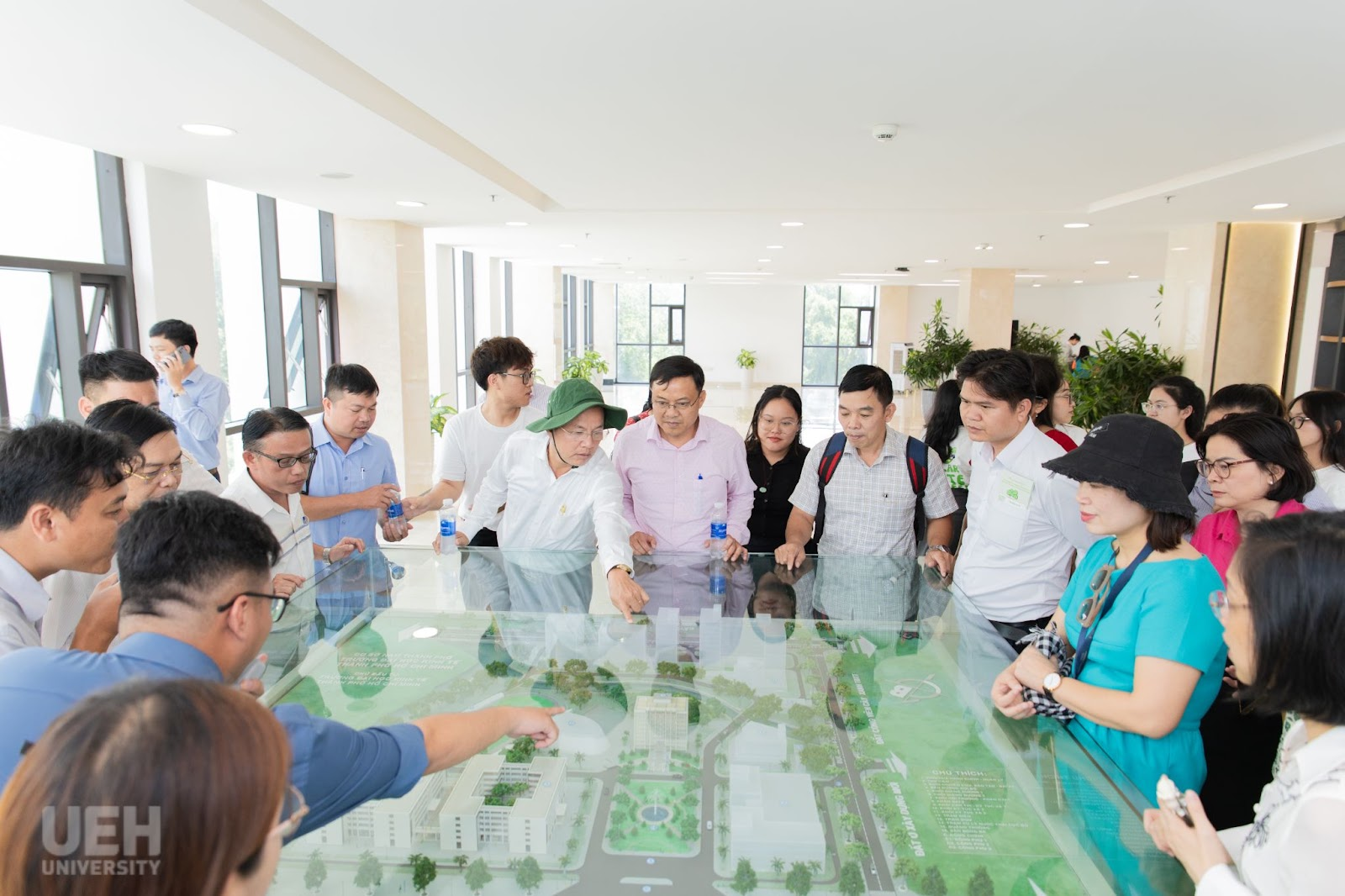 Figure: Delegates visiting Campus N and learning about the Green Campus model. |
A study visit was hosted to present the model and exchange experience in green practices. Public source: Green Visit: Hosting Representatives of Universities and the Vietnam National University Ho Chi Minh City Dormitory Management Centre to Explore the Living Lab Model and UEH Green Campus Project (UEH Green Campus website, 26 April 2025) |
| Newsletter – Sustainability communication channel. | University-wide; publicly accessible | UEH developed a public communication channel to share knowledge, green practices and initiatives to reduce environmental impacts. The newsletter supported ongoing sustainability outreach and broadened public access to relevant information.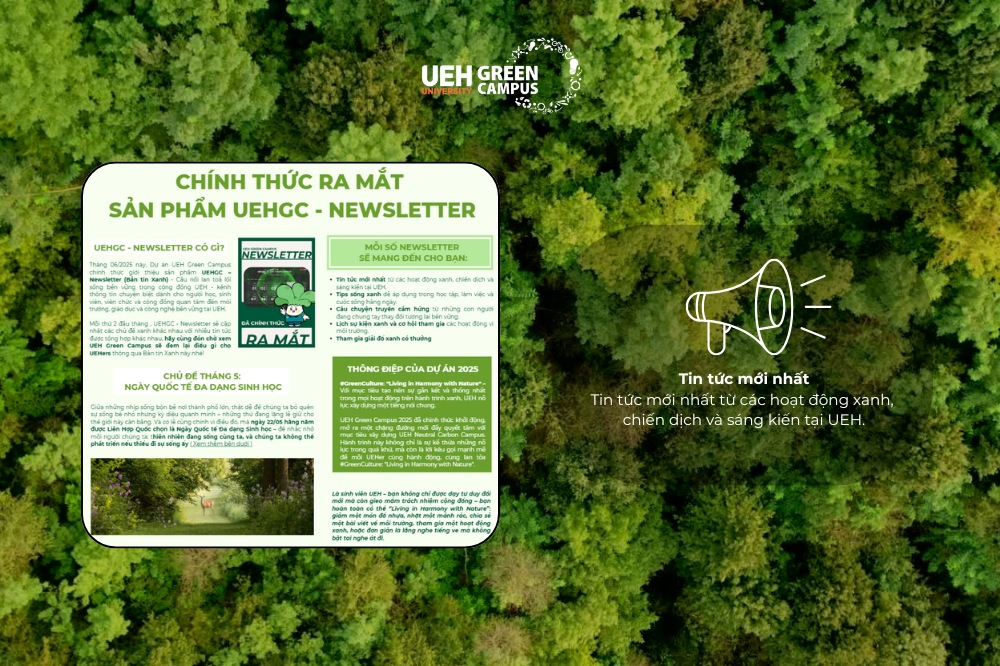 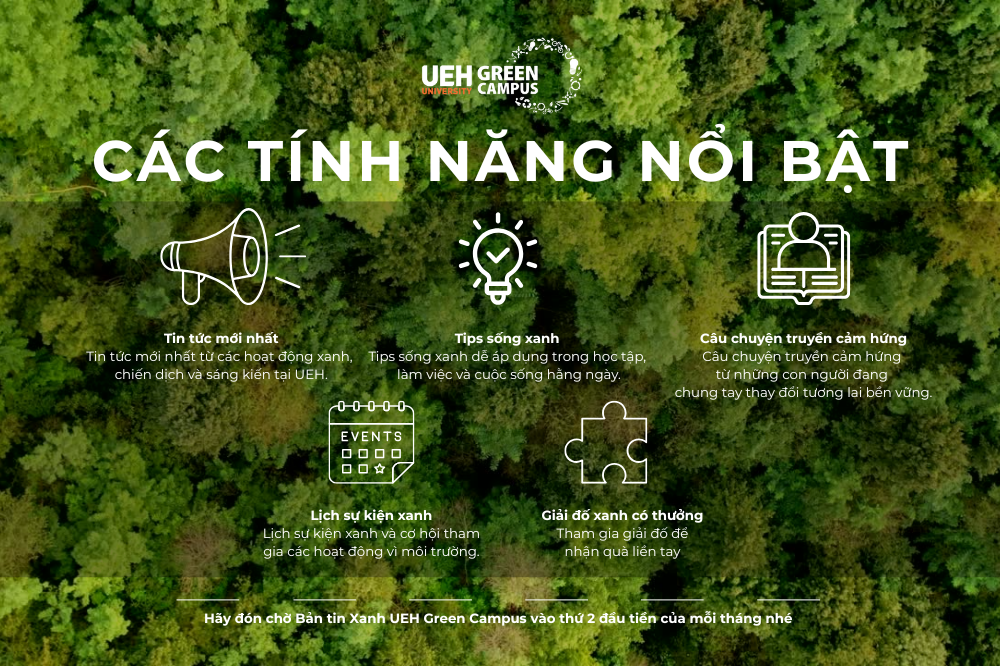 Figure: Interface and features of the newsletter communication channel. |
The UEH Green Campus Newsletter was launched. Public source: Official Launch of the UEH Green Campus Newsletter: Connecting and Promoting Sustainable Lifestyles Across the UEH Community (UEH Portal, 25 February 2025) |
| UEH Scope 1–3 emissions reduction plan and carbon neutrality commitment. | University-wide; publicly disclosed | UEH disclosed a climate action framework based on its emissions inventory and greenhouse gas reduction measures for Scopes 1, 2 and 3 during 2024–2030. Its pathway towards Net Zero 2050 was made public to share climate action priorities with stakeholders.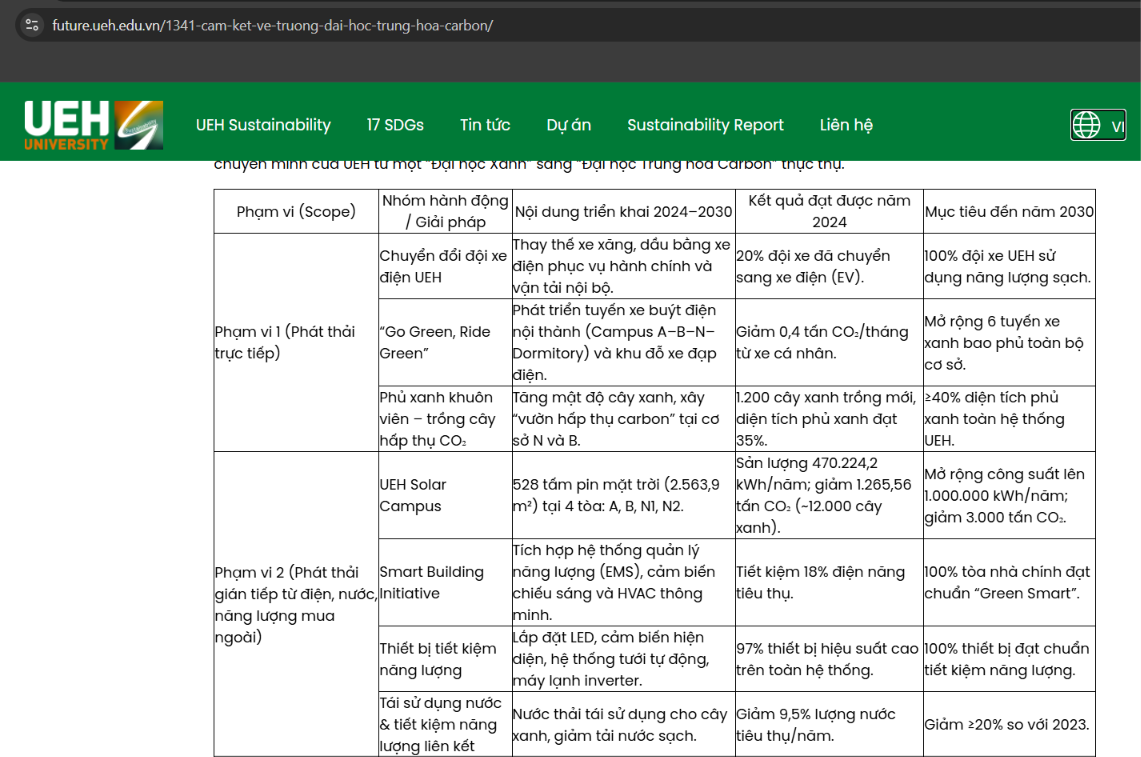 Figure: Baseline statistics and targets through 2030. 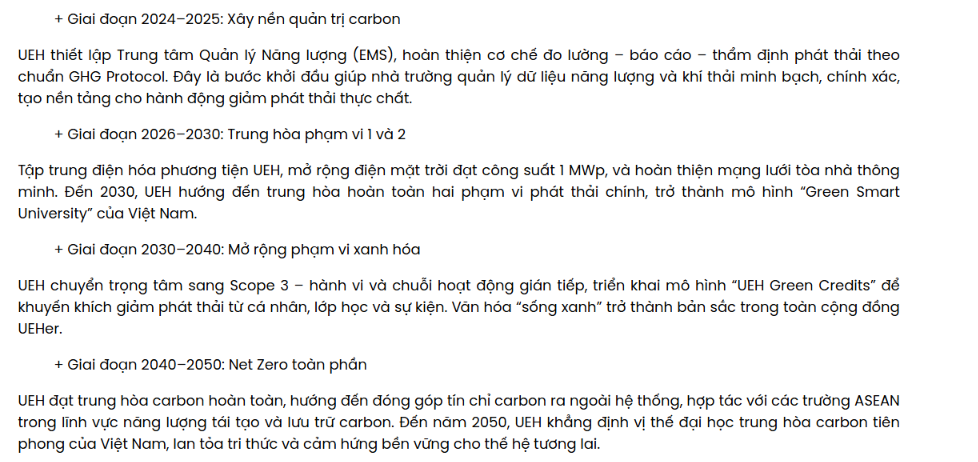 Figure: Information on the specific implementation phases. |
The 2023 baseline inventory recorded 5,115.81 tonnes CO₂e; priority mitigation measures and targets through 2030 were identified. Public source: Commitment to a Carbon-Neutral University (UEH Future website) |
3. Implementation results and sharing of climate action priorities in 2025
In 2025, UEH continued to strengthen carbon governance and implement Scope 1, 2 and 3 emission-reduction measures in line with its Net Zero 2050 pathway. Through the UEH Green Campus Living Lab, the University expanded emissions monitoring, clean-energy use and operational improvements, while publishing results for stakeholders to access.
At the same time, UEH expanded cooperation with authorities in Can Tho, Vinh Long, An Giang and Ca Mau on green development and climate adaptation, and shared sustainable-practice models with the education community through Let’s Green UniTour and Green Visit. These initiatives linked UEH’s climate action agenda with external stakeholders and established a foundation for further sharing and coordinated implementation of emissions-reduction and adaptation solutions in local communities.