

11.4.6. Prioritising Pedestrians on Campus
As part of its sustainable university development strategy, the University of Economics Ho Chi Minh City (UEH) continues to prioritise spaces and pathways for pedestrians on campus, encouraging physical activity, stair use and reduced dependence on motorised transport. This approach aims to enable students, lecturers, staff and visitors to access learning, research and communal spaces safely and in an environmentally friendly manner.
In 2025, UEH continued to implement its Green Campus Regulations and previously introduced walking initiatives across its campuses. The University also continued to showcase green learning spaces and facilities supporting campus life at Nguyen Van Linh Campus and UEH Mekong. In addition, UEH promoted sustainable transport and research and educational activities related to walkability and road safety. These policies and activities demonstrate that encouraging active mobility forms part of UEH’s green campus management approach.
Green Campus Regulations | UEH Green Campus
UEH implements its Green Campus Regulations to foster sustainability awareness and practices among officials, employees, students and relevant service providers. The Regulations were issued under Decision No. 2059/QD-DHKT-CSVC in 2022 by the Rector of the University of Economics Ho Chi Minh City and continued to be communicated by the University in 2023 and in subsequent sustainability initiatives.
Article 1 – Purpose, basis for implementation, applicable persons and scope – establishes the aim of promoting green university awareness and practices and a campus code of conduct, applicable to officials, employees, learners and relevant service providers.
In particular, Article 2, Clause 1 – Green Campus Approaches – identifies the following encouraged behaviours:
- Increase physical activity and use stairs on UEH campuses.
- Use public transport and the UEH Shuttle Bus to travel to University campuses.
- Conserve resources, adopt a green lifestyle and limit adverse environmental impacts.
In addition, Article 5, encouraged practice No. 8, emphasises increasing physical activity and prioritising stair use on campus for suitable travel distances.
These provisions provide a basis for UEH to encourage walking within academic buildings, reduce reliance on lifts for appropriate journeys and promote an active lifestyle. Beyond its internal policy, UEH has announced an approach that prioritises pedestrian pathways and spaces while seeking to limit motorised vehicles on campus, with the aim of reducing air and noise pollution and improving safety for the university community.
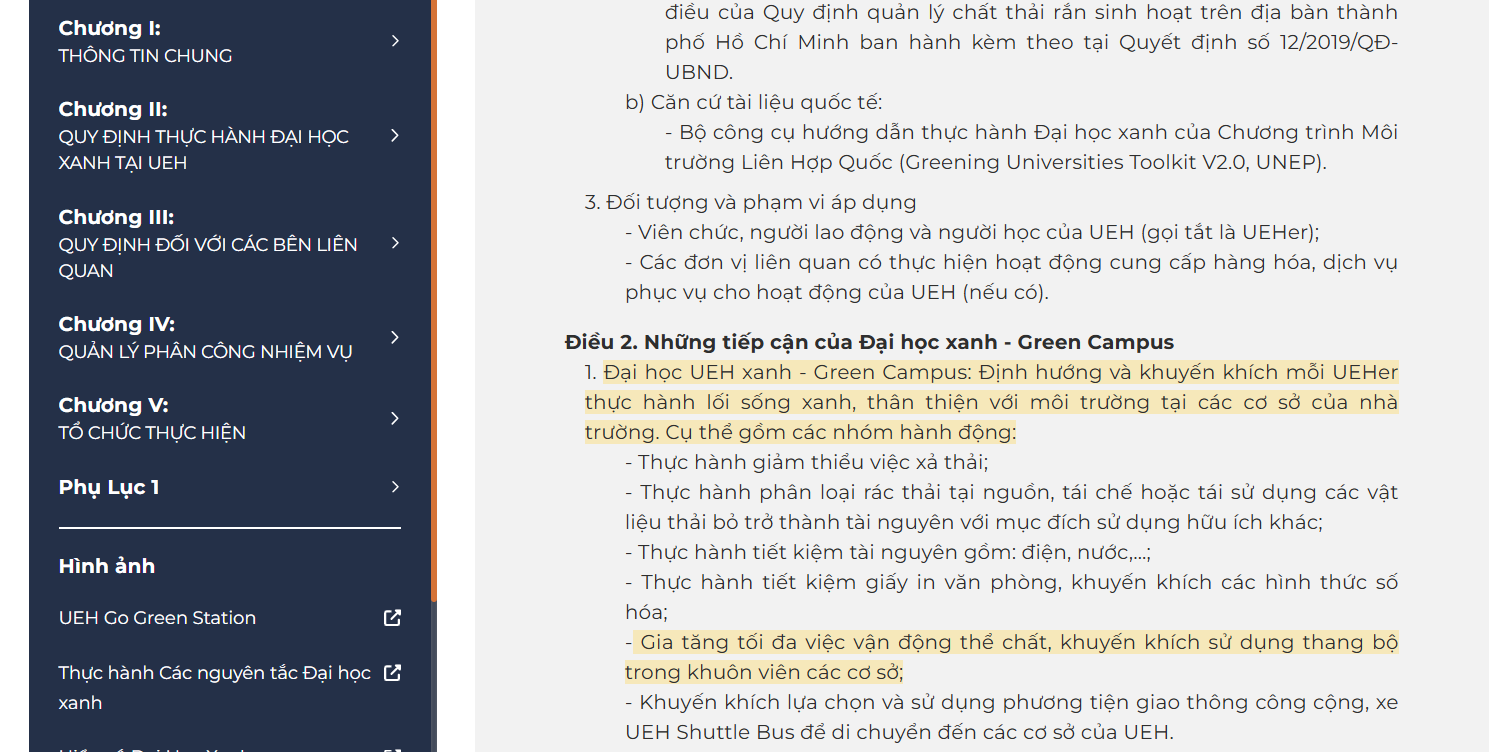
Article 2, Clause 1 of the Green Campus Regulations: increasing physical activity and encouraging stair use
Prioritising Pedestrian Spaces at UEH Campuses – Towards Green and Safe Campuses
Alongside its Green Campus practices, UEH develops learning spaces integrated with landscaped areas, trees, parks and shared spaces, allowing the university community to walk, exercise and enjoy outdoor learning environments. Nguyen Van Linh Campus covers more than 11.1 hectares and is planned with teaching buildings, administrative areas, green landscapes, lakes, gardens and student activity and sports areas. UEH has outlined plans for parks, squares, walking routes and outdoor activity spaces connecting academic facilities with the natural landscape.
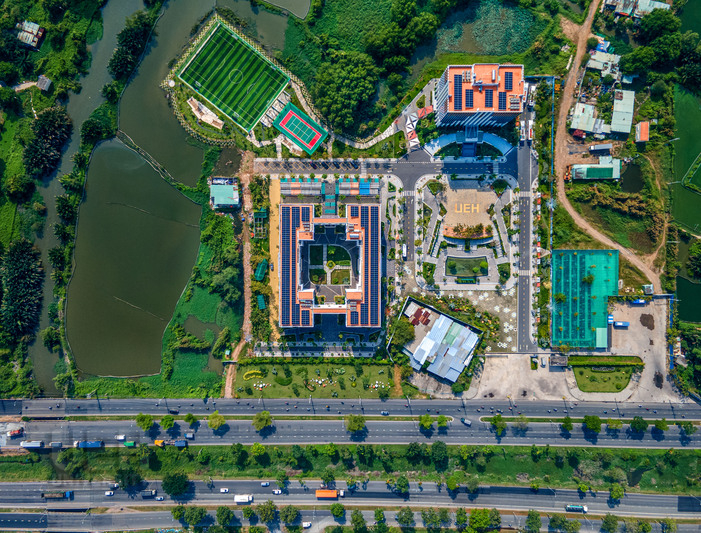
Nguyen Van Linh Campus – UEH’s green, smart and internationally oriented learning environment

Nguyen Van Linh Campus, showing landscaped areas and pedestrian paths connecting learning and communal spaces
Infrastructure Supporting Pedestrian Access at UEH Campuses. In its public information dated 2 November 2025 on access to green spaces, UEH described green campuses, squares, pedestrian paths and open learning areas serving the community. The information also identifies accessibility features such as ramps, benches, signage and lighting to facilitate use by diverse groups, including people with disabilities. The locations described include the square at Nguyen Van Linh Campus, the English Zone and communal areas at UEH Mekong. This provides public evidence from 2025 of infrastructure supporting pedestrian access to learning spaces; however, it does not identify precisely which areas are reserved for pedestrians or restrict motorised vehicles.
At UEH Mekong – Vinh Long:
In 2025, UEH Mekong continued to develop infrastructure for education, research and student life, integrating modern learning spaces and landscaping into its sustainable education approach.
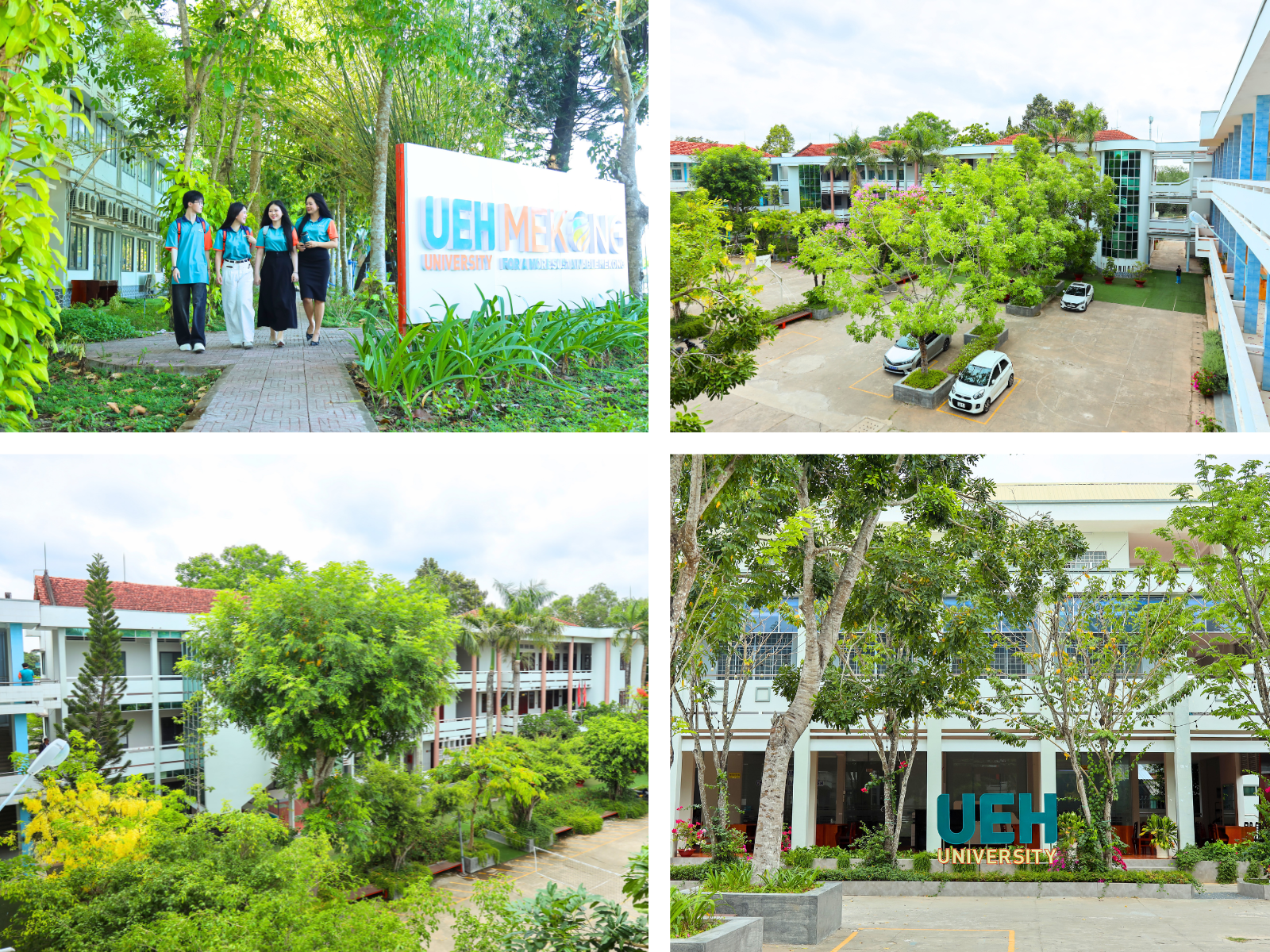
A campus with abundant greenery in the new year reflects UEH’s sustained efforts to promote sustainability, beginning with the image of a green, environmentally friendly university.
Practical Evidence of Pedestrian Prioritisation on Campus in 2025
In 2025, UEH continued to maintain pedestrian-accessible spaces at its teaching and communal campuses. To assess pedestrian prioritisation directly, the University reviews infrastructure and internal traffic arrangements at each campus, focusing on the presence and continuity of footpaths; connectivity between entrances, teaching buildings and communal areas; safety measures at intersections with motorised traffic; and accessibility for people requiring mobility assistance.
For areas where rules restrict motorised vehicles, separate pedestrian paths or give priority to pedestrians, UEH specifies the campus, location, scope of application, management measures and operational status in 2025, based on actual management records. Such information is necessary to assess the extent of pedestrian priority rather than relying solely on landscaped area or awareness campaigns.
Encouraging Stair Use – UEH Green Campus Calories Stair “Power-Up Steps”
One of UEH’s visible initiatives promoting walking is UEH Green Campus Calories Stair – Power-Up Steps, officially introduced on 15 November 2024. The initiative encourages students, lecturers and employees to choose stairs rather than lifts for suitable journeys, combining physical activity with energy-saving practices.
According to UEH Green Campus publications, the initiative was introduced at Campuses B and N, featuring decorative visuals, motivational messages and illustrations of energy expenditure when using the stairs. These visuals make stairwells more engaging and recognisable, encouraging the UEH community to remain active during study and work.
The UEH Green Campus Calories Stair – “Power-Up Steps” initiative was announced in November 2024 as a practical measure to encourage stair use in UEH buildings. Visible messaging in stairwells helps students and employees recognise an active mobility option. For the 2025 assessment period, it serves as evidence of infrastructure and an approach established earlier; confirmation that the initiative remained in operation in 2025 requires contemporaneous photographs, maintenance records or operational documentation. The initiative supports the pedestrian-priority policy but does not replace evidence of traffic organisation and the allocation of outdoor pedestrian spaces.
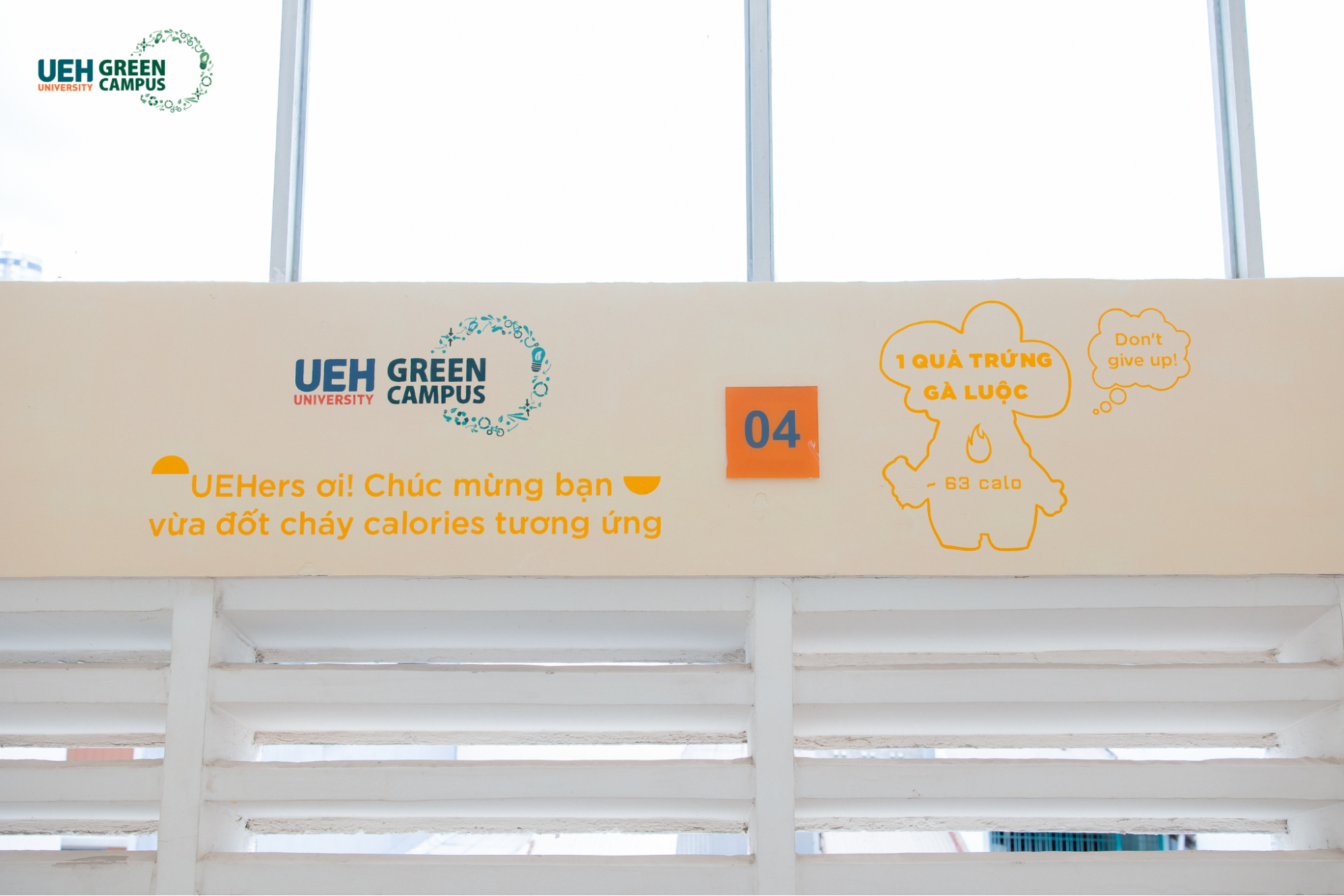
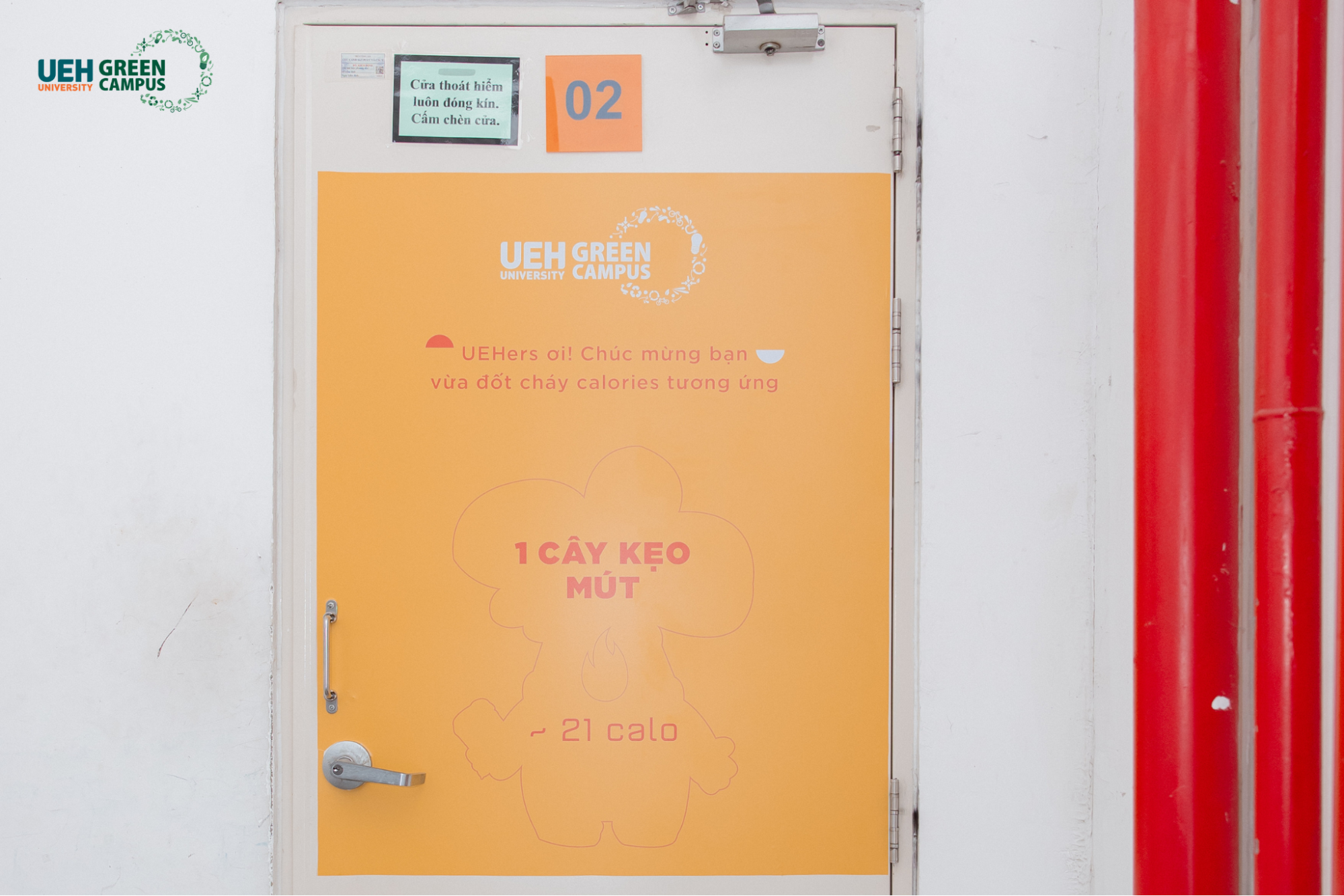
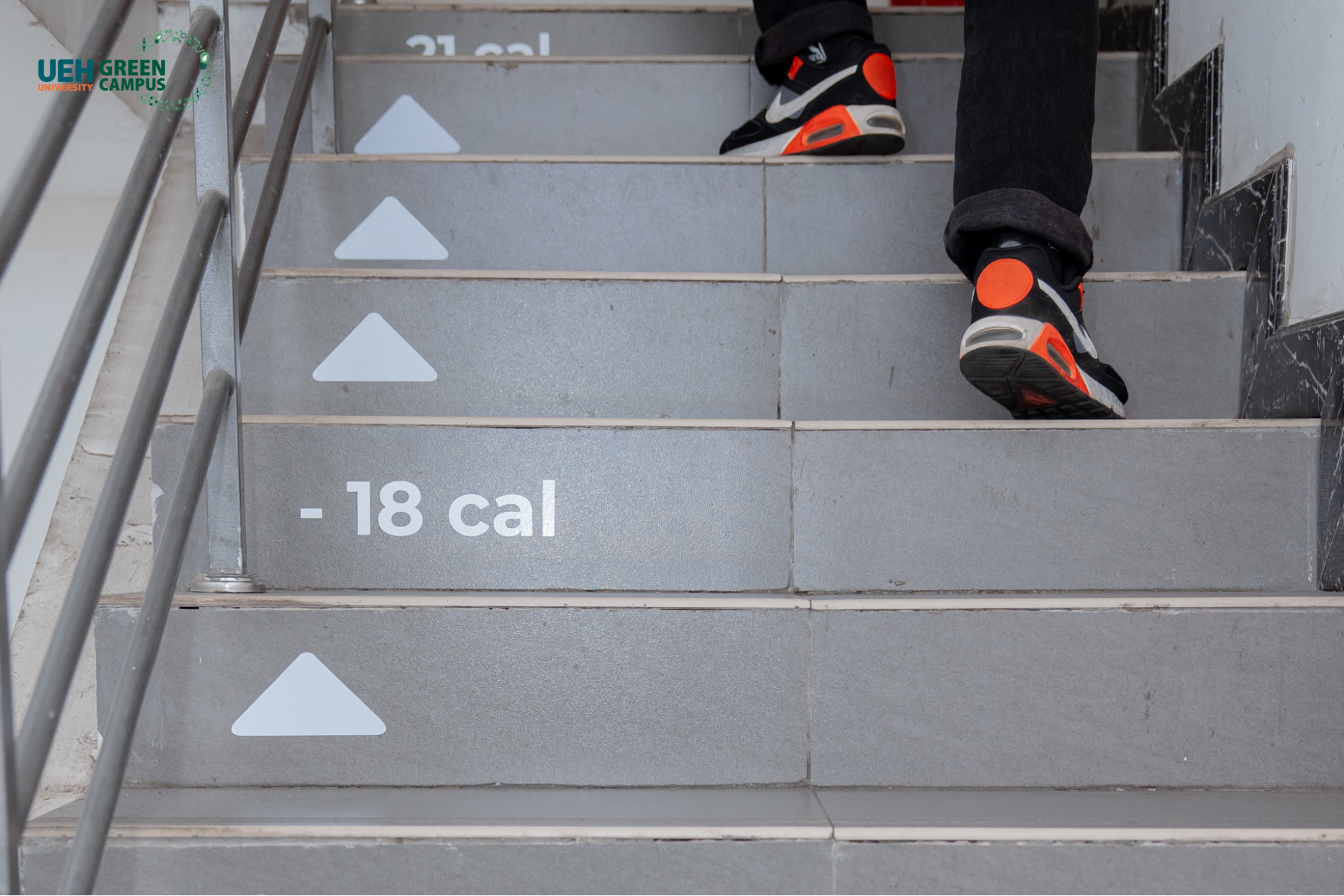
UEH Green Campus Calories Stair, with motivational messages for UEHers using the stairs
UEH Promotes Walking and Green Transport Towards Sustainable Campuses
Beyond campus spaces and initiatives, UEH also develops research, educational and communication activities that promote walking habits, safe mobility and sustainable transport.
First, research on walkability and equitable access to space. UEH introduced the project “Developing an Intersectional Equity Framework to Promote Walkability”, which examines walking needs, particularly among vulnerable groups, and seeks solutions concerning infrastructure, accessibility and safety in urban spaces. The research reflects UEH’s commitment to developing pedestrian-friendly environments.
Second, education on road safety and sustainable mobility. UEH’s Route2school Education project uses gamification and virtual reality technology to help school pupils improve their road safety awareness and ability to respond to traffic situations.
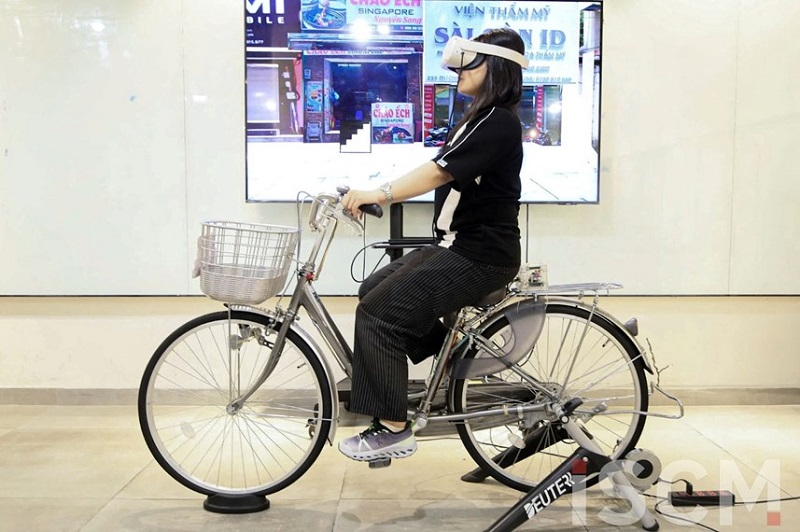
Route2school Education is a research and development project for a smart online road safety education system
Third, promoting public transport use.
In 2025, UEH continued to develop its UEH Shuttle Bus service, linking teaching campuses with selected public transport stops and offering students and employees an alternative to private vehicles. According to its new academic year announcement, the Shuttle Bus routes provide connections to Metro Line 1 and the urban transport network. Using shared transport may reduce the need to travel to UEH campuses by private motorcycle, thereby supporting sustainable mobility.
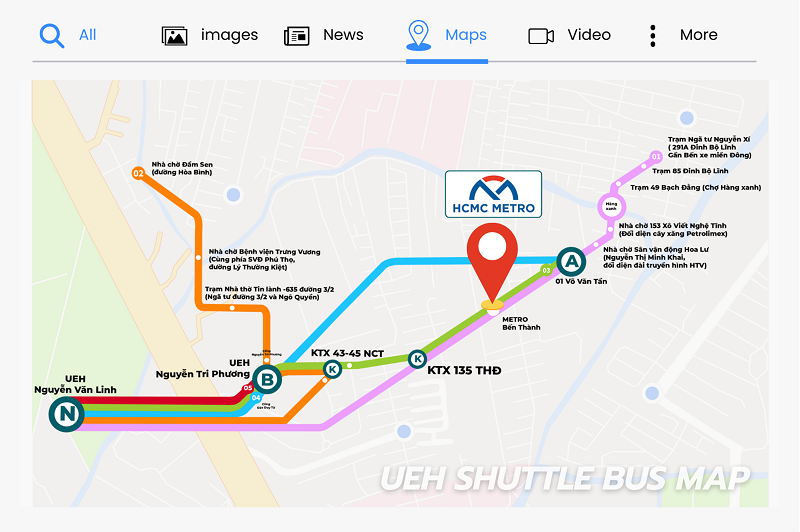
The UEH Shuttle Bus adds a stop directly connecting to Metro Line 1
Fourth, communications to encourage changes in travel habits.
The 2025 article “A Month Without Petrol: How Did I Live Green?” documents a learner’s experience of shifting from motorbike travel to walking, buses and the Metro where appropriate. Such stories help raise awareness of green transport and the role of walking in daily life. This is communication evidence, not proof of a specific pedestrian route or motor-vehicle-restricted area at UEH.
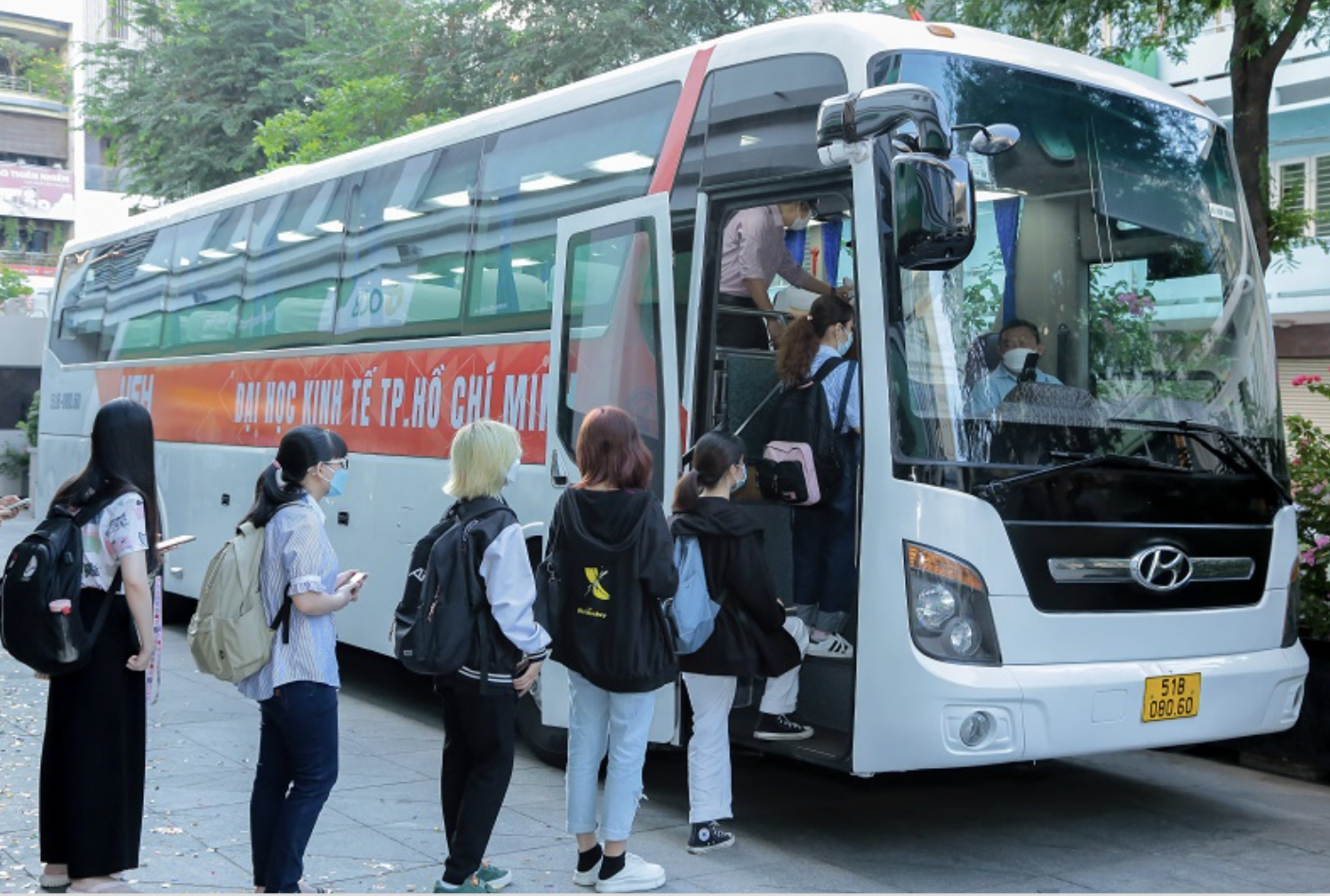
A Month Without Petrol: How Did I Live “Green”? – University of Economics Ho Chi Minh City (UEH)
In 2025, UEH continued to publicise and maintain its pedestrian-friendly campus approach through the Green Campus Regulations, green spaces with walking paths and initiatives encouraging physical activity. The University’s 2025 publications on green spaces highlighted accessibility features such as ramps, seating, signage and lighting, helping students, employees and visitors move around campus more conveniently.
Compared with initiatives introduced in 2024, the public evidence for 2025 provides further descriptions of access to green spaces and pedestrian-supporting infrastructure. However, the available sources are insufficient to quantify restrictions on motorised vehicles, the proportion of pedestrian-priority routes or changes in on-campus road safety. Research, communications and public transport initiatives are therefore presented as supporting contributions; the core of criterion 11.4.6 remains UEH’s policy and actual practice of prioritising pedestrian access on campus.