

12.2.5. Policy to Minimise Single-Use Plastics on Campus
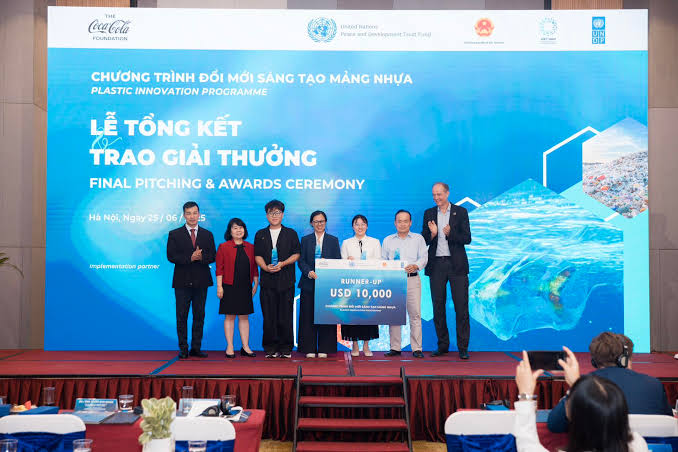
The University of Economics Ho Chi Minh City (UEH) developed and implemented a policy to minimise plastics and single-use products across teaching, research, work, daily activities, service provision and events at all university campuses. Building on the Green Campus Regulations introduced in 2022 under Decision No. 2059/QD-DHKT-CSVC, UEH continued to refine the policy by broadening plastic-reduction measures, promoting the 3R principles (Reduce–Reuse–Recycle), incorporating sustainable consumption criteria into procurement, operations and services, and encouraging research, innovation and changes in consumer behaviour. In 2025, notable initiatives included the No Single-use Plastic Campus System, selected among the top 10 of 116 proposals and awarded USD 10,000 in funding; initiatives towards a single-use-plastic-free environment at Vo Thi Sau Campus; the No Single-Use Plastic Day series; and research and communications on alternatives to plastic. These activities helped translate the policy into practice and advance a green, circular university campus aligned with the ambition of carbon neutrality.
1. Policy on Minimising Plastics and Single-Use Products at UEH
1.1. Policy Foundation for Plastic Reduction and 3R Practices
As part of its Green University strategy, UEH identified the reduction of plastics and single-use products as an important means of preventing waste at source, using resources efficiently and fostering responsible consumption across the university community. The Green Campus Regulations set out requirements and guidance for students, academic and administrative staff, employees, visitors, goods and service providers, and campus event organisers.
UEH promoted the 3R principles—Reduce, Reuse and Recycle—encouraging its community to consider needs before purchasing, avoid unnecessary items and extend the useful lives of products. Recommended practices included bringing personal water bottles, cups, reusable bags and food containers; reusing packaging, bottles, boxes and office supplies; sorting waste at source; and participating in collection and recycling activities. These measures aimed to reduce demand for disposable plastics in everyday study, work and campus life.
Beyond the 3R approach, UEH established a dedicated single-use-plastic reduction policy aimed at progressively limiting, replacing and ultimately eliminating plastic products and hard-to-degrade materials on campus. The policy addressed not only individual behaviour but also procurement, services and event organisation. Shops, canteens, dining facilities and suppliers were required to progressively reduce disposable plastics, restrict free distribution of plastic bags and prioritise reusable or environmentally friendly alternatives. Conferences, seminars, festivals and other events were expected to avoid plastic bottles, plastic packaging and hard-to-degrade materials, and favour refillable water containers, glass bottles, reusable decorations and promotional materials.
The policy also assigned campus management units responsibility for organising plastic-waste sorting at source, providing suitable collection facilities, monitoring compliance and consolidating implementation reports. Reducing single-use plastics therefore formed part of UEH’s operational management, rather than relying exclusively on voluntary awareness campaigns.
“Article 4. Practising the 3Rs at UEH
UEH encourages all UEH community members and visitors to practise the 3Rs on and off campus: Reduce (Reduce), Reuse (Reuse) and Recycle (Recycle).
a) Reduce: consider purchases and product use carefully through the following actions:
– Avoid printing paper documents and materials unless necessary;
– Purchase and consume only as much food as needed to reduce organic waste;
– Bring home-prepared meals to school or work to reduce waste;
– Consider carefully before purchasing new items, particularly during promotional sales;
– Opt for digital instead of paper invoices for electricity, water, cable and internet payments, etc.
b) Reuse: UEH community members are encouraged to reuse products and packaging to extend their service life while protecting health and safety, including:
– Bring reusable shopping bags (cloth bags, paper bags or durable plastic bags, etc.);
– Reuse paper already printed on one side;
– Choose reusable and refillable items, such as UEH water bottles and cups, to reduce disposable cups, napkins, plastic bags and other single-use waste;
– Reuse boxes, bottles and bags as much as possible.
c) Recycle:
– Sort waste at source to provide high-quality recyclable material to recycling facilities;
– Participate in UEH events exchanging recyclable waste for gifts;
– Creatively turn discarded materials into useful products, while ensuring health and environmental safety.
Article 8. Policy on Reducing Single-Use Plastics on UEH Campuses
Reducing single-use plastics means that UEH proactively limits, replaces and progressively eliminates plastic products and hard-to-degrade materials from all teaching, research, daily activities and campus events. The policy seeks to encourage sustainable consumption and reduce plastic waste discharged into the environment. Its objective is a learning and working environment free of single-use plastics, with students, staff, lecturers and partners participating in green consumption and the 3R model throughout UEH.
- Encourage reusable or refillable items, such as personal water bottles, UEH cups, glass containers, cloth bags and recyclable products, instead of disposable plastic cups, straws, spoons, bags and foam containers.
- Minimise non-biodegradable plastic packaging in all shops, supermarkets, canteens and dining facilities on UEH campuses. Retailers must not provide free plastic bags or plastic packaging and should encourage customers to bring cloth, woven or recycled-plastic bags.
- Require goods and service providers—including canteens, dining facilities, chain stores and mini-supermarkets—to progressively reduce and eliminate disposable plastic items. Providers must offer or encourage containers, cups, spoons and straws made from environmentally friendly materials such as paper, cornstarch, bamboo, stainless steel, glass or ceramics.
- Prohibit plastic bottles, plastic packaging and hard-to-degrade materials at events, conferences, festivals and other activities organised at UEH. Organising units must use glass bottles, refillable containers, reusable decorations or eco-labelled products. Communication materials (banners, stands and signs) should be made from recyclable or reusable materials and retained for subsequent events.
- Require suppliers, partners and collaborating organisations to sign commitments to progressively minimise and eliminate single-use plastics in service delivery and encourage customers to bring reusable personal items.
- Assign the Facilities Department and campus management units responsibility for implementing the 3R model across UEH, with waste-sorting bins provided in public areas, classrooms, offices and service zones. Plastic waste must be sorted at source, separating recyclable from non-recyclable plastics.
- Encourage the recycling and reuse of discarded plastics in innovation projects, student initiatives and community programmes—for example, turning bottles into vases, planters or learning materials, or supplying them to specialised recycling partners to produce road-surfacing materials, paving blocks, clothing or other environmentally friendly materials.
- Require UEH units to monitor and inspect compliance with the single-use-plastic reduction policy within their remit, periodically report implementation and propose improvements to the UEH Green Campus Coordination Board for inclusion in the annual sustainability report.”
See also the plastic-reduction policy in UEH’s Green Campus Regulations at
https://gogreen.ueh.edu.vn/quy-dinh-thuc-hanh-dai-hoc-xanh
1.2. Refining the Policy in 2025: From Reducing Single-Use Plastics to Minimising Plastics Throughout University Activities
Building on the existing policy, in 2025 UEH drafted broader revisions that shifted the focus from single-use plastics alone to minimising plastic products and disposable goods, while linking implementation to sustainable consumption, the circular economy and the Carbon-Neutral University ambition.
First, the 3R guidance was expanded from general recommendations on reducing, reusing and recycling to specific consumption choices in study, work and daily life. UEH encouraged digital documents, electronic signatures and online platforms to reduce paper, ink and office supplies; appropriate food purchasing and consumption to prevent food and packaging waste; and home-prepared meals with personal bottles, cups and containers to reduce disposables. Consumers were encouraged to choose durable products with minimal packaging that could be reused or recycled, rather than short-lived items.
For reuse, the policy continued to promote cloth and reusable bags, water bottles, UEH cups and refillable items, and extended these practices to meetings, events and office operations. Extending product life remained conditional on quality, hygiene and safety. For recycling, UEH emphasised correct sorting at source, better-quality recyclable waste streams, participation in collection and circular-economy programmes, and innovations that turn discarded materials into useful products.
A key development in the 2025 draft policy was making the reduction of plastics and disposables a consideration in procurement, operations, services and event management. Plastic reduction was thus intended to inform decisions about products, materials, packaging and routine campus services—not merely voluntary behaviour. UEH prioritised suitable reusable, recyclable or biodegradable alternatives and encouraged substitutes for disposable plastics in campus services and daily activities.
Alongside operational measures, the updated policy emphasised research, innovation and educational communication. UEH encouraged plastic-reduction, material-reuse, recycling and circular-economy initiatives to extend material life and reduce environmental impacts. Awareness campaigns, education and community activities were recognised as means to change attitudes, establish sustainable consumption habits and increase participation by students, lecturers and employees.
Compared with the 2024 policy, which primarily identified behaviours to discourage, products to replace and unit-level responsibilities, the 2025 draft adopted a more comprehensive management approach, combining waste prevention at source, sustainable product choices, plastic-reduction criteria in operations, and research-, technology- and innovation-based solutions. This direction provided a foundation for further developing a single-use-plastic-free, green and circular campus.
“Article 4. Practising the 3Rs at UEH
UEH encourages all UEH community members and visitors to practise the 3Rs on and off campus: Reduce (Reduce), Reuse (Reuse) and Recycle (Recycle).
a) Reduce: consider purchases and product use carefully through the following actions:
– Avoid unnecessary printing; prioritise electronic documents, digital signatures and online platforms to reduce paper, ink and office supplies.
– Purchase, use and finish only the food needed to reduce organic waste, food waste and associated packaging.
– Bring home-prepared meals and personal water bottles, cups or containers to school or work to reduce waste and the use of plastics and disposable products.
– Consider carefully before buying new items, particularly during discount promotions; prioritise durable, environmentally friendly products with minimal packaging that can be reused or recycled.
– Choose digital instead of paper invoices for electricity, water, cable, internet and other payments wherever possible.
b) Reuse: UEH community members are encouraged to reuse products and packaging to extend their service life while protecting health and safety, including:
– Bring reusable shopping bags (cloth bags, paper bags or durable plastic bags) instead of single-use plastic bags.
– Reuse one-sided paper and serviceable office supplies to extend their useful life.
– Choose reusable and refillable items, including UEH water bottles and cups, to reduce disposable cups, napkins and plastic bags, particularly during classes, work, meetings and events.
– Reuse boxes, bottles, bags and other items wherever quality, hygiene and safety allow.
c) Recycle:
– Sort waste at source to ensure high-quality recyclable material reaches recycling facilities, helping reduce waste sent to landfill or other disposal.
– Participate in UEH recycling-for-gifts events and collection, recycling and circular-economy programmes organised by UEH or its partners.
– Creatively transform discarded materials into useful products while ensuring health and environmental safety; prioritise products made from recycled materials when quality and functional requirements are met.
Article 8. Policy on Minimising Plastic and Single-Use Products on UEH Campuses
Minimising plastics and single-use products means that UEH actively limits, replaces and gradually eliminates plastic products, plastic packaging and hard-to-degrade materials from teaching, research, work, daily activities and events. The policy aims to reduce plastic waste, promote sustainable consumption, advance circular-economy practices and contribute to UEH’s Carbon-Neutral University goal.
UEH implements the policy on minimising plastics and single-use products according to the following principles:
- Develop and implement a roadmap to minimise and ultimately eliminate plastics and single-use products throughout UEH’s activities.
- Prioritise products, materials and packaging that are reusable, recyclable or biodegradable; encourage personal water bottles, cups, food containers, cloth bags and environmentally friendly alternatives.
- Integrate plastic and single-use-product reduction criteria into UEH procurement, operations, services and event organisation.
- Encourage research, innovation and initiatives on plastic reduction, reuse, recycling and the circular economy to extend material life and reduce environmental impacts.
Strengthen communication, education, campaigns and community initiatives to improve awareness and change behaviour concerning plastics and single-use products.”
2. Implementation of the Plastic and Single-Use-Product Reduction Policy in 2025
Based on its established regulations and continuing policy improvements, UEH promoted initiatives in 2025 to translate plastic-reduction objectives into campus practice. These combined technological solutions, improvements to campus spaces, scientific research, educational communication and changes in consumption behaviour.
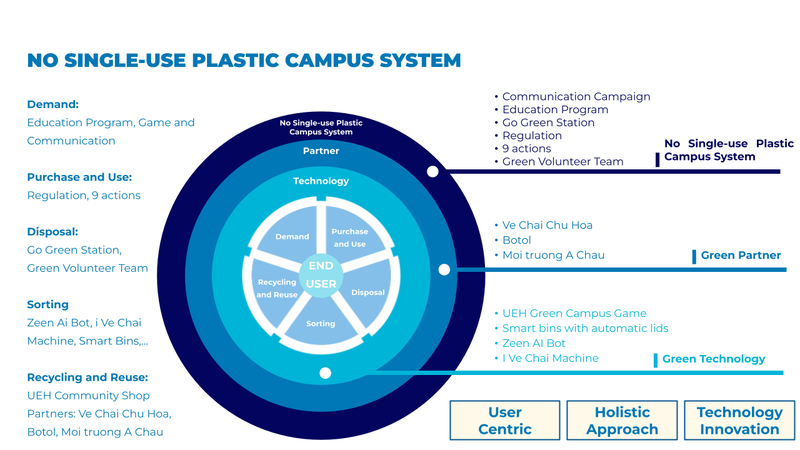
A highlight was the No Single-use Plastic Campus System, designed to support the reduction of disposable plastics in higher education. The initiative combined the Green Campus policy with nine plastic-reduction actions, Go Green Station facilities, Zeen AI Bot, I Ve Chai Machine and collection and recycling partners. In 2025, it was selected among the top 10 of 116 proposals submitted to the Plastic Innovation Programme and received USD 10,000 in funding. This provided additional resources to refine the solution and work towards extending the model to 13 UEH facilities, demonstrating a systematic approach integrating technology and multi-stakeholder collaboration.
At the campus level, UEH advanced initiatives towards a single-use-plastic-free environment at Vo Thi Sau Campus, combining art, spatial design and visual communication to bring plastic-reduction messages into learning, living and service areas. Integrating sustainability messaging into everyday spaces encouraged students and the UEH community to choose reusable items, limit disposables and become more aware of environmental responsibility.
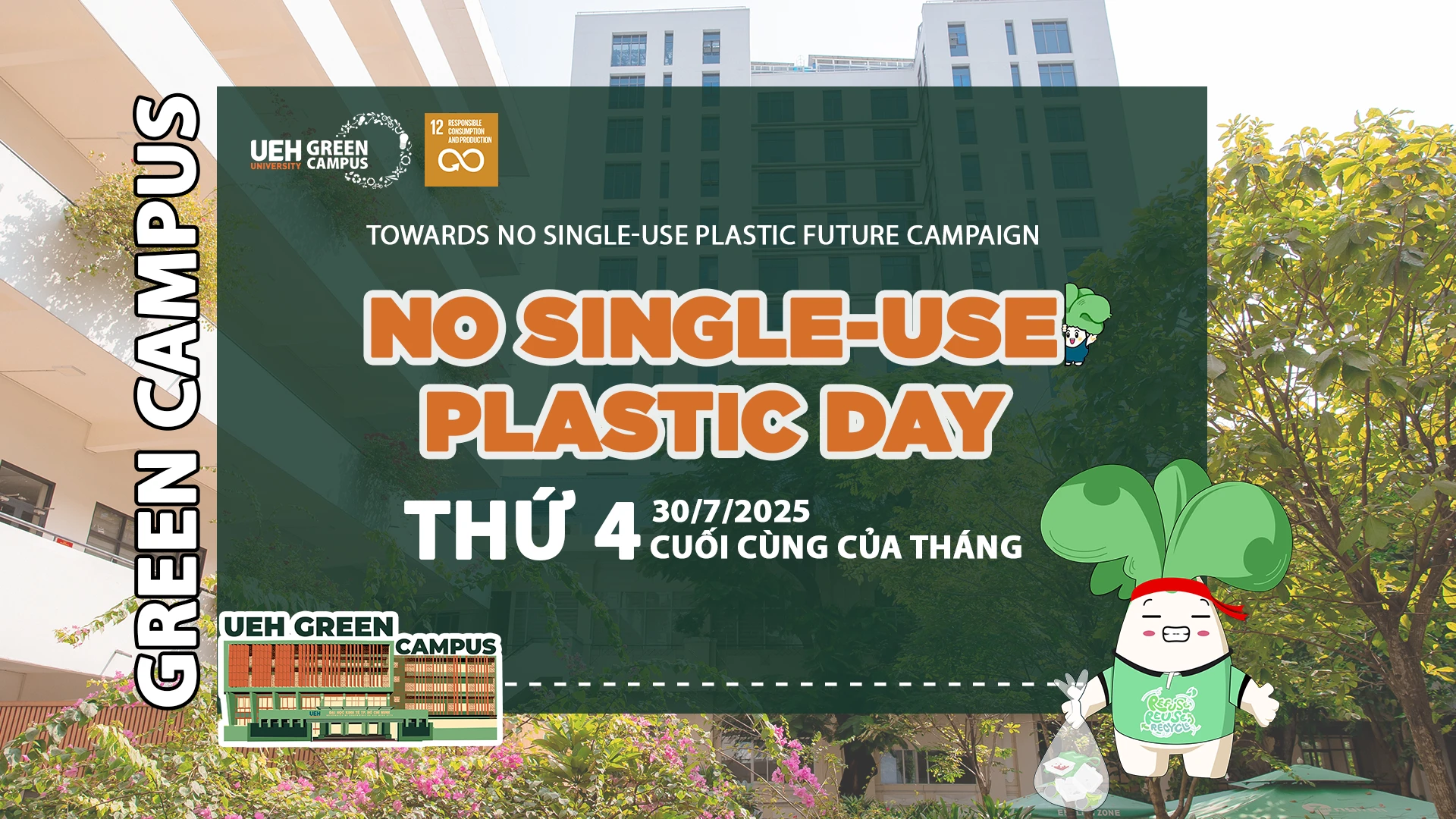
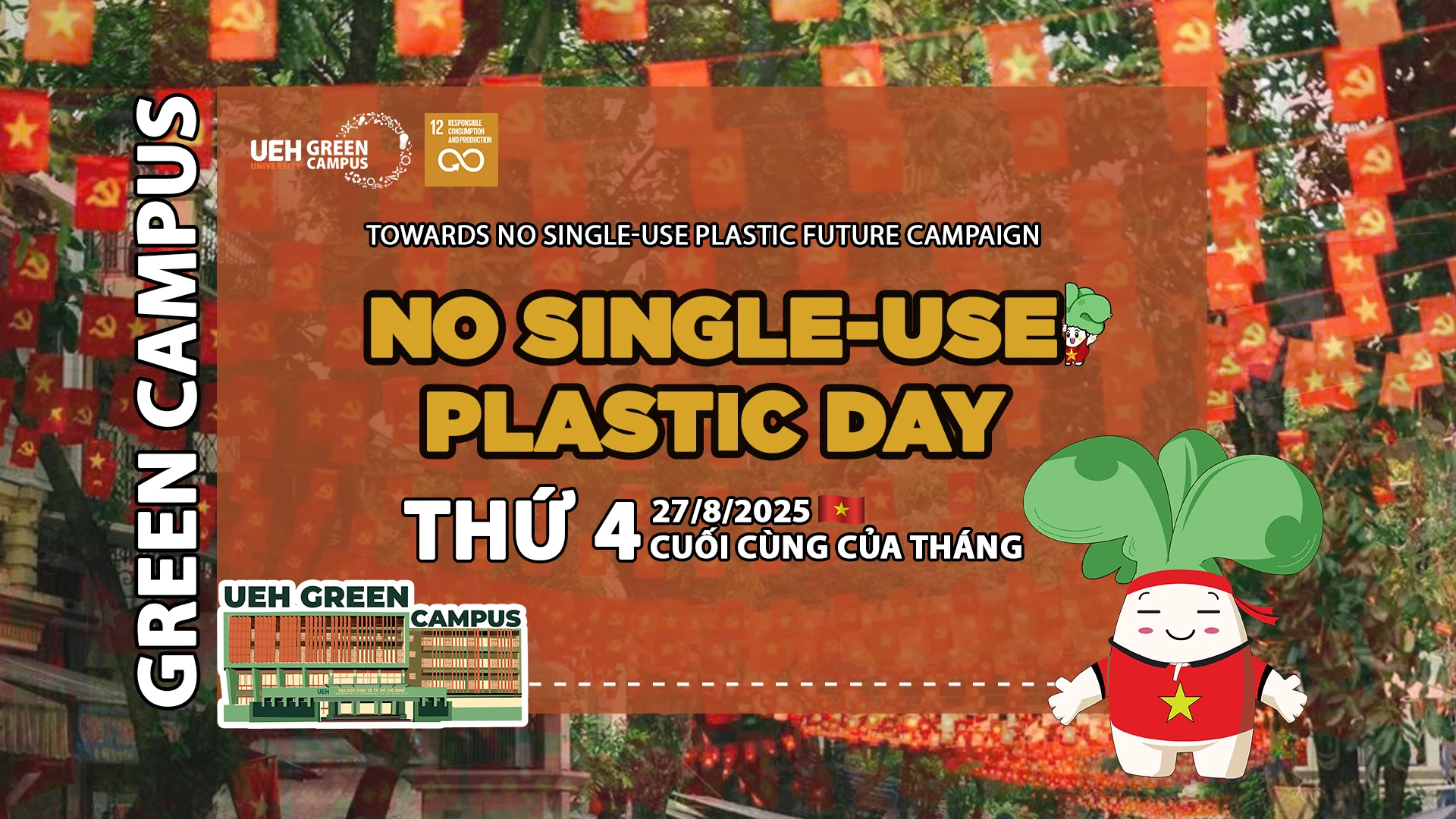
Alongside campus-based measures, UEH continued its No Single-Use Plastic Day communication series in 2025. Messages encouraged people to use personal water bottles, cloth bags, food containers and reusable utensils instead of disposable plastic bottles, bags and tableware. Repeating these messages across the year helped integrate 3R practices into daily study, work and campus life.
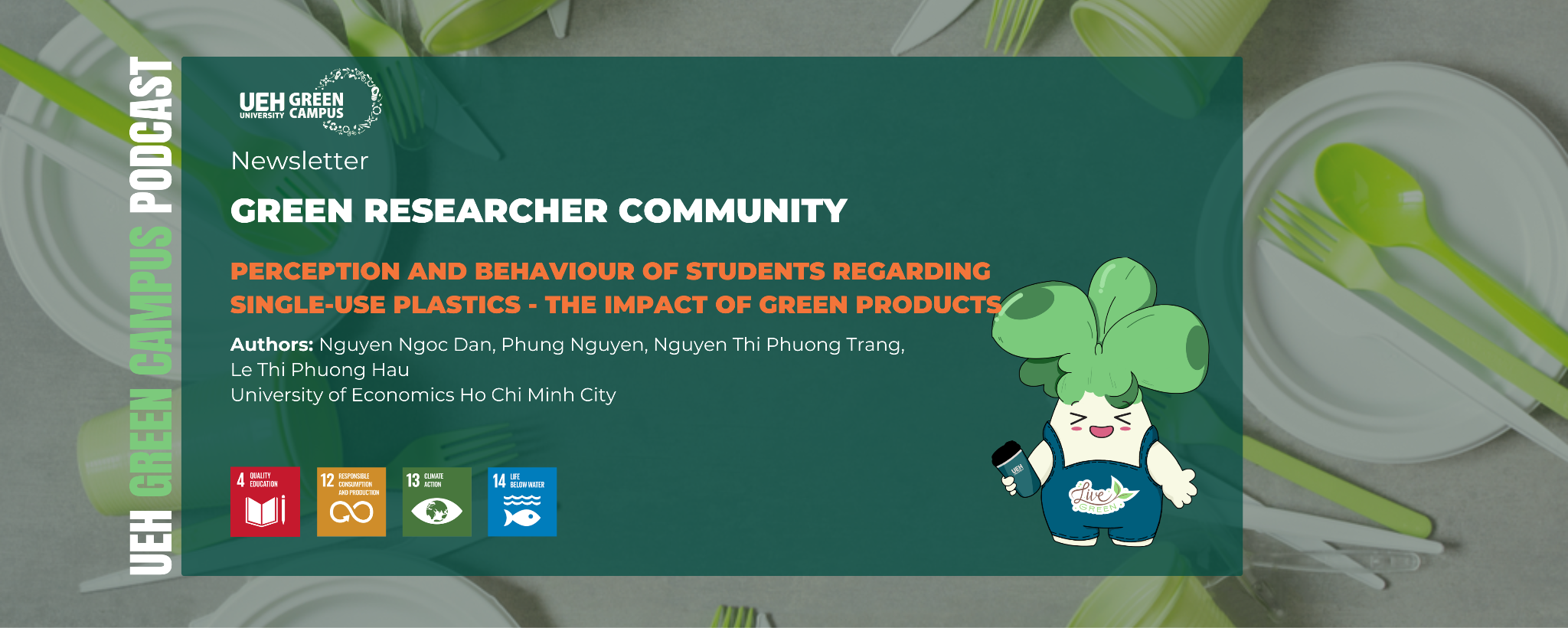
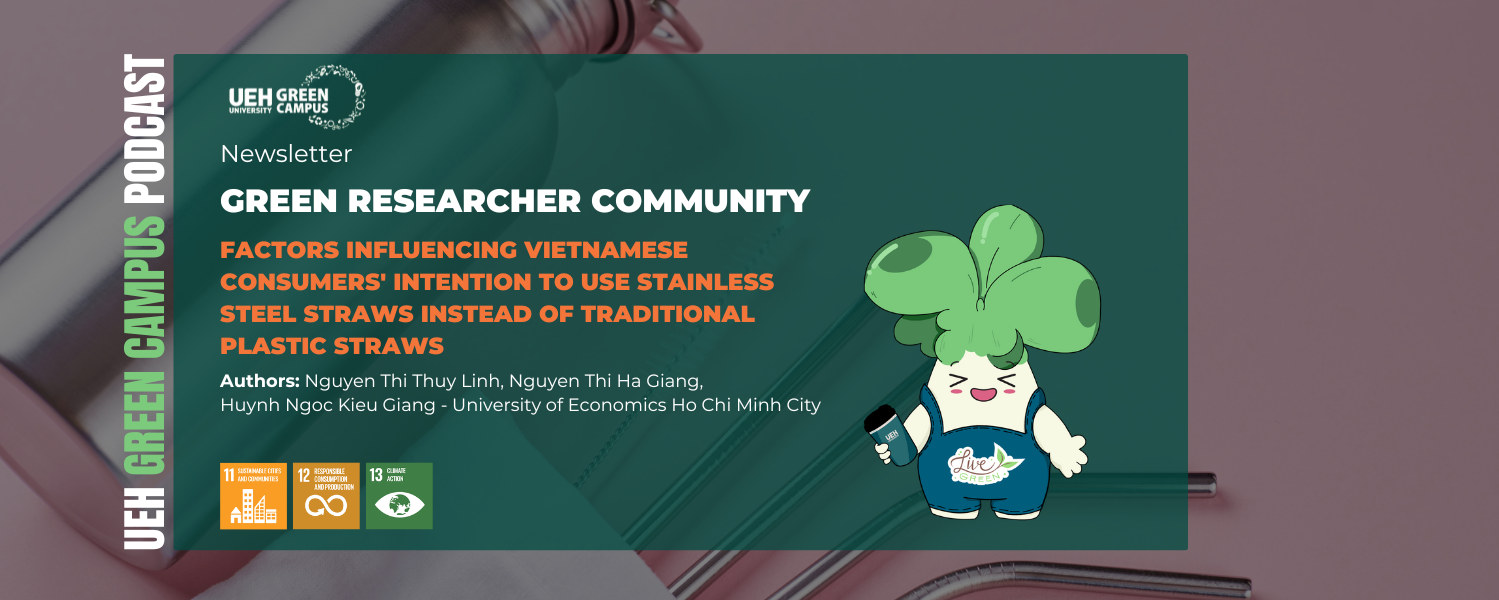
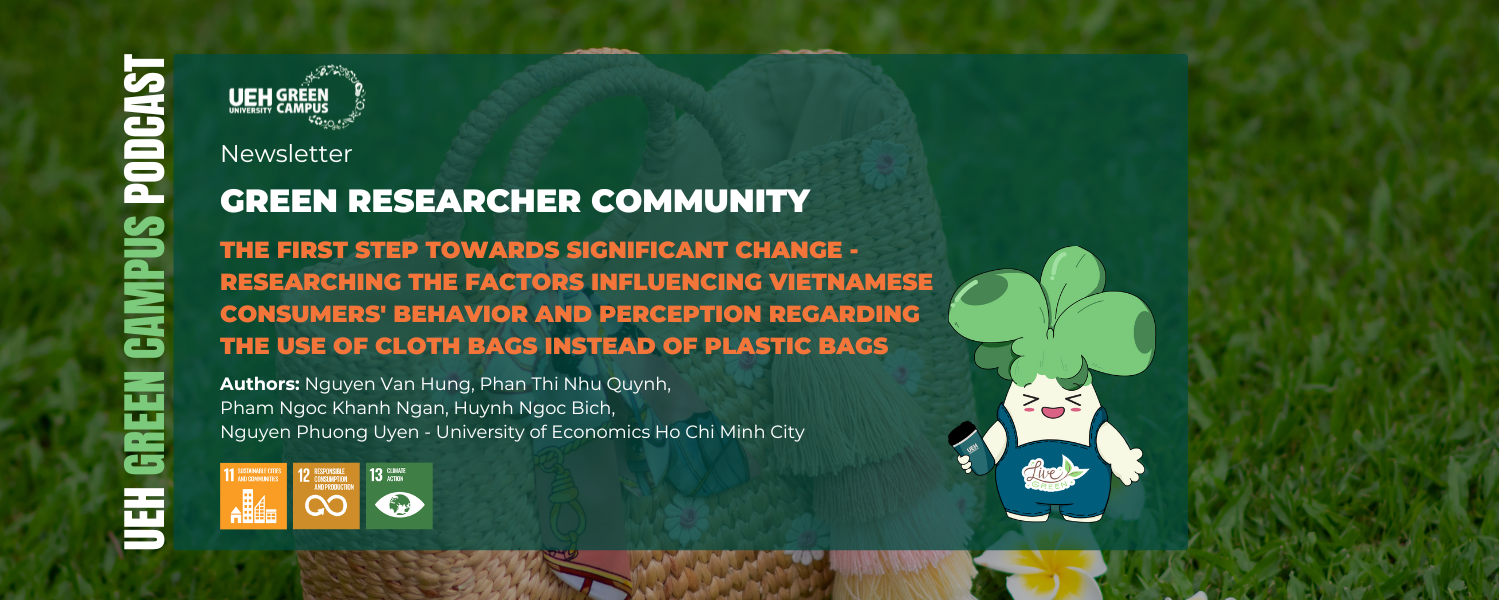
UEH also disseminated research through the UEH Green Campus – Research Contribution podcast series, presenting studies directly related to consumer behaviour and alternatives to disposable plastics. Three key themes addressed factors influencing the intention to use stainless-steel rather than conventional plastic straws; Vietnamese consumers’ perceptions and use of cloth bags instead of plastic bags; and students’ perceptions and use of single-use plastics under the influence of green products. The podcasts shared evidence on drivers of behavioural change and encouraged reusable alternatives, supporting the university’s plastic-reduction communications and policy.
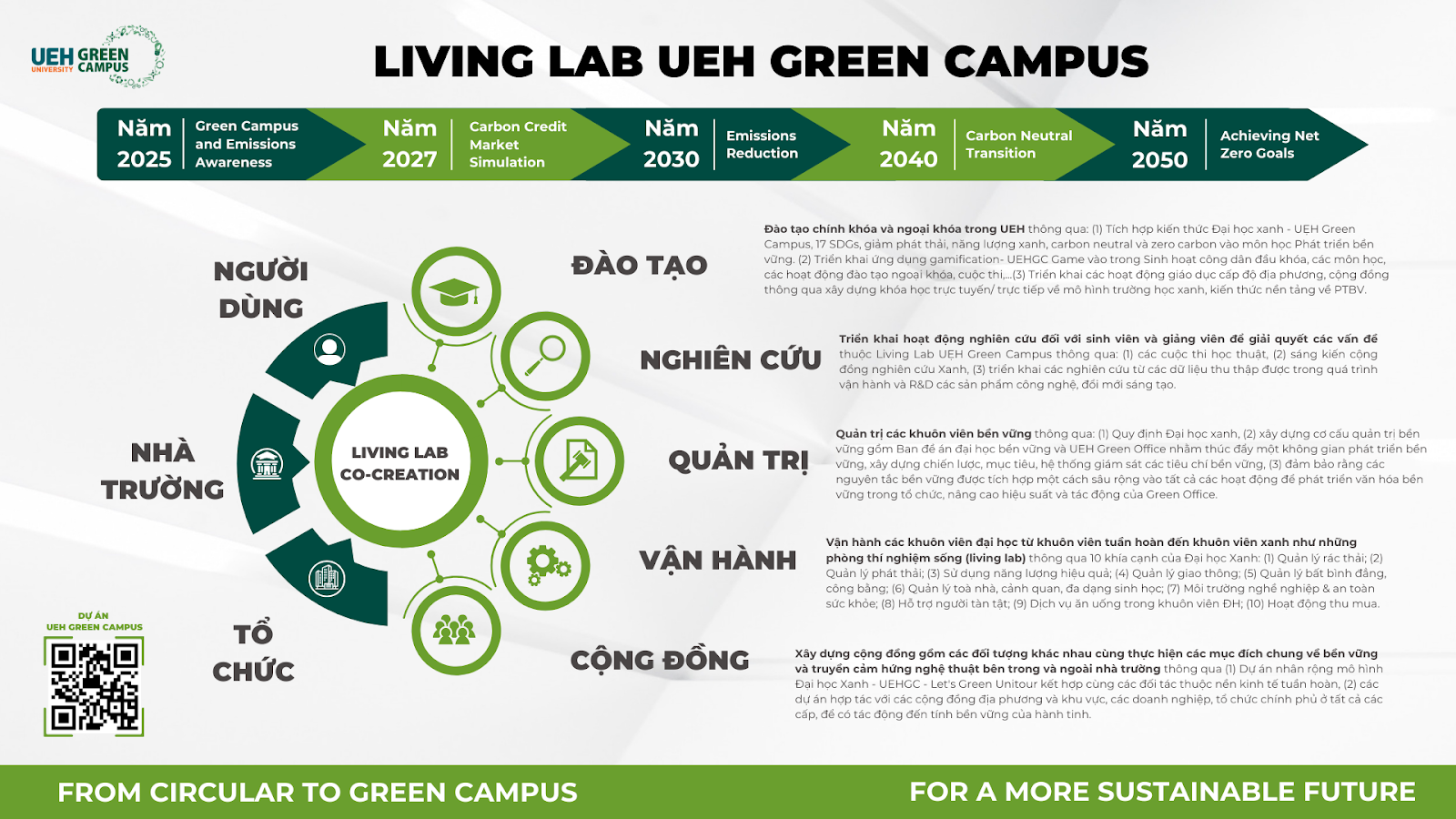
The Living Lab UEH Green Campus 2025 – GreenCulture: Living in Harmony with Nature programme also connected learning, research and sustainability practice. Through the Living Lab model, UEH encouraged students and units to develop, test and disseminate initiatives on responsible consumption, waste reduction and resource efficiency. Activities extending the Green Campus model to UEH Mekong further broadened access to green practices across the university system.
Overall, the 2025 activities went beyond continuing plastic-reduction communications by strengthening links among university governance, innovation, scientific research and community behavioural change. These elements supported implementation of the policy to minimise plastics and single-use products on campus.
| No. | Activity/Programme | Implementation | Results and Contribution to Indicator 12.2.5 | Evidence Source |
| 2 | No Single-use Plastic Campus System – Awarded USD 10,000 under the 2025 Plastic Innovation Programme | UEH developed a campus-wide system to reduce single-use plastics, combining the Green Campus policy, nine plastic-reduction actions, Go Green Station, Zeen AI Bot, I Ve Chai Machine and collection and recycling partners. The initiative was selected from 116 proposals submitted to the Plastic Innovation Programme.
|
UEH was among the top 10 selected initiatives and received USD 10,000 to further develop its solution. The programme strengthened the resources, technology and implementation mechanisms for plastic reduction, with an ambition to expand the model to 13 UEH facilities. | https://ueh.edu.vn/cuoc-song-ueh/tin-tuc/ueh-keu-goi-thanh-cong-tai-tro-10-000-usd-tu-chuong-trinh-doi-moi-sang-tao-mang-nhua-2025-74403 |
| 3 | Art and Sustainable Action at Vo Thi Sau Campus – Towards a Single-Use-Plastic-Free Environment | UEH combined art, spatial design and behavioural communication at Vo Thi Sau Campus, including its canteen and shared spaces. Visual messages encouraged learners and the UEH community to limit disposable plastics and choose reusable alternatives. | Brought plastic-reduction messages directly into everyday learning and living spaces, encouraging changes in consumption behaviour and demonstrating practical campus-level policy implementation. | https://gogreen.ueh.edu.vn/tin-moi-noi-bat/nghe-thuat-va-hanh-dong-ben-vung-giao-thoa-tai-co-so-vo-thi-sau-huong-den-khong-nhua-dung-mot-lan |
| 4 | No Single-Use Plastic Day – Maintaining Monthly Plastic-Reduction Practices (July–August 2025) | Under the Towards No Single-Use Plastic Future campaign within the UEH Green Campus project, UEH maintained monthly No Single-Use Plastic Day communications at Vo Thi Sau Campus (Campus V). Through the Zeen character and everyday messages, the programme encouraged reusable shopping bags, personal drink bottles, food containers and reusable utensils. Communications continued in August, linking green living practices with activities around Viet Nam’s National Day on 2 September.
|
Maintained behavioural-change communications over several months, embedding plastic-reduction messages in shopping, food services and daily routines. The programme encouraged less reliance on disposable plastic bags, bottles, containers and utensils and supported UEH’s single-use-plastic-free campus direction. | https://iscm.ueh.edu.vn/en/iscm_life/lets-keep-the-green-vibe-going-with-no-single-use-plastic-day-this-july
https://iscm.ueh.edu.vn/en/iscm_life/no-single-use-plastic-day-a-journey-of-green-living-with-zeen-in-independence-day |
| 5 | UEH Green Campus Podcast Series – Disseminating Research and Alternatives to Single-Use Plastics | Through the Research Contribution podcast series on UEH Green Campus, UEH shared studies of sustainable consumption behaviour, focusing on: (1) factors influencing intentions to replace conventional plastic straws with stainless-steel straws; (2) factors affecting Vietnamese consumers’ perceptions and use of cloth bags instead of plastic bags; and (3) students’ perceptions and use of single-use plastics and the effects of green products on their choices.
|
The podcasts presented research on factors encouraging or discouraging alternatives to disposable plastics and highlighted environmentally preferable choices such as stainless-steel straws, cloth bags and green products. They raised awareness and encouraged behavioural change among students and the wider community, supporting the university’s plastic-reduction policy. | Article 1:
Article 3: https://gogreen.ueh.edu.vn/en/podcast/podcast-the-first-step-towards-significant-change-researching-the-factors-influencing-vietnamese-consumers-behavior-and-perception-regarding-the-use-of-cloth-bags-instead-of-plastic-bags |
| 6 | UEH Green and Circular Campus Operations Strategy, 2011–2025 | UEH reviewed its development from a smart campus towards a green and circular campus, integrating resource and waste management, changes in consumption behaviour and Green Campus activities into university operations. | Demonstrated that reducing plastics and managing waste formed part of sustainable campus governance, providing a foundation for continued system-wide measures to limit disposable plastics. | https://emagazine.ueh.edu.vn/chien-luoc-van-hanh-khuon-vien-hoc-thuat-the-he-moi-cua-ueh-2011-2025-tu-campus-thong-minh-den-campus-xanh-va-tuan-hoan/?v=1748662631893/ |
| 8 | Living Lab UEH Green Campus 2025 – GreenCulture: Living in Harmony with Nature | UEH launched Green Campus Living Lab 2025 as a model connecting learning, research and green practices, encouraging the community to change consumption behaviour and reduce environmental impacts.
|
Created a setting for testing and developing sustainability initiatives, supporting campus activities to limit single-use plastics. | https://gogreen.ueh.edu.vn/tin-moi-noi-bat/khoi-dong-living-lab-ueh-green-campus-2025-lan-toa-tieng-noi-chung-greenculture-living-in-harmony-with-nature
|
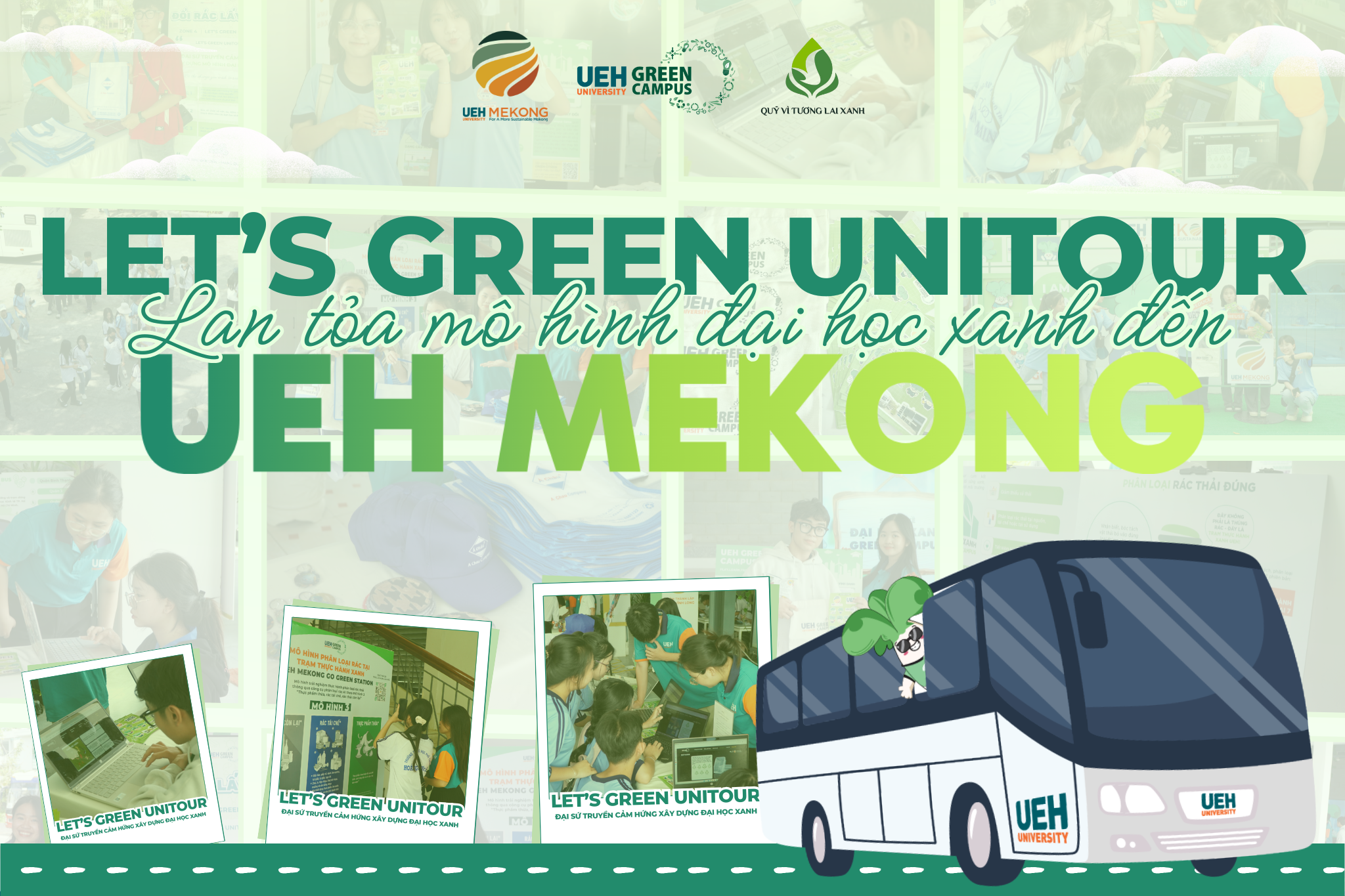
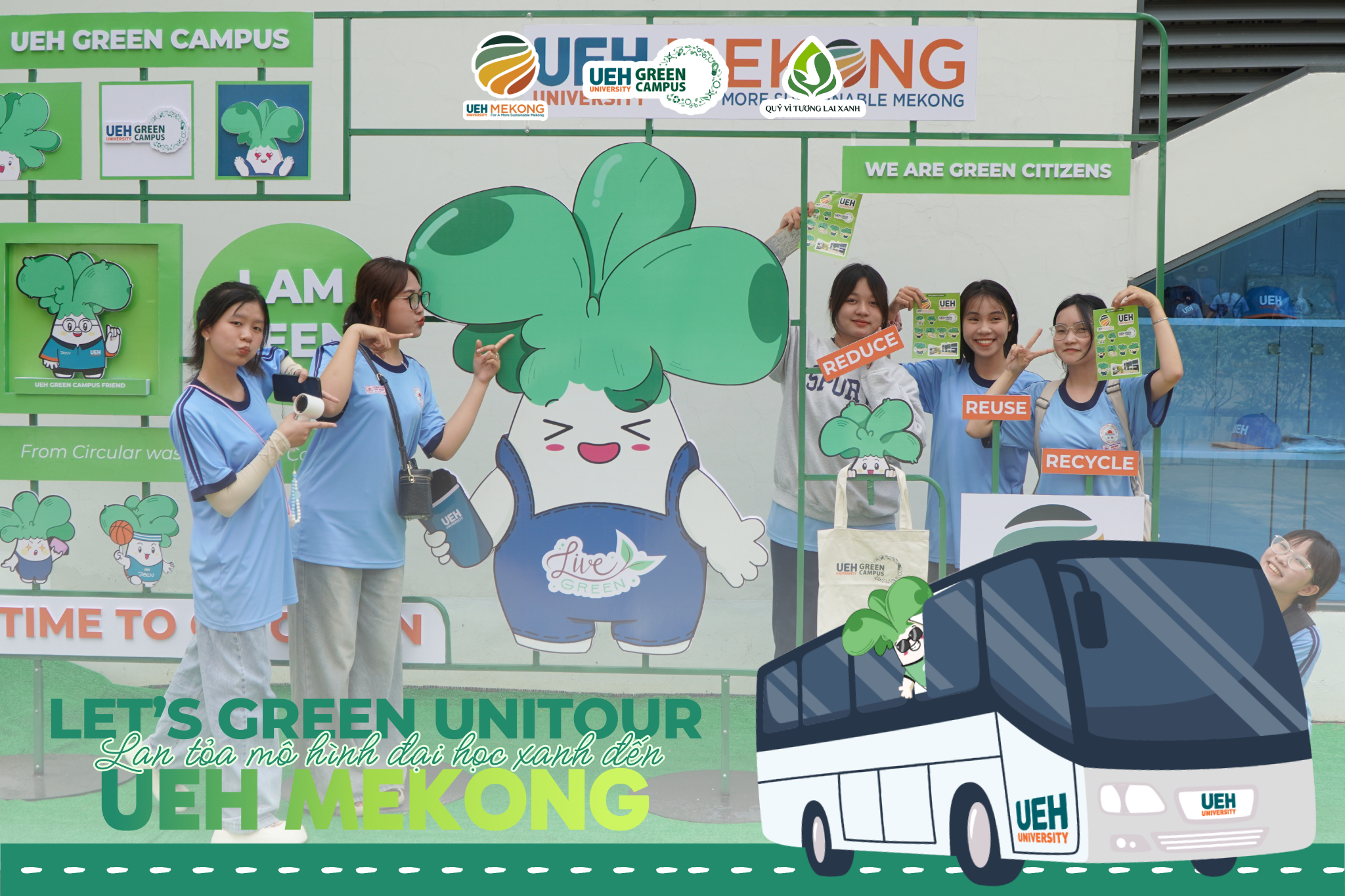
| 9 | Let’s Green Unitour – Extending the Green Campus Model to UEH Mekong | UEH introduced and promoted the Green Campus model at UEH Mekong, encouraging awareness and practice in waste sorting, consumption reduction and sustainable living.
|
Expanded communications and waste-reduction practices within the UEH Mekong community, providing a basis for further action on disposable plastics outside Ho Chi Minh City. | https://gogreen.ueh.edu.vn/tin-moi-noi-bat/lets-green-unitour-lan-toa-mo-hinh-dai-hoc-xanh-den-ueh-mekong |
| 10 | UEH Students Commit to Green Practices | As reported by Tuoi Tre newspaper, UEH students made commitments to green practices and raised awareness of sustainable consumption and reducing the environmental impacts of university life. | Promoted individual responsibility and student participation in Green Campus objectives. The specific commitments need to be checked to determine their direct relevance to reducing single-use plastics. | https://gogreen.ueh.edu.vn/tin-moi-noi-bat/bao-tuoi-tre-sinh-vien-cam-ket-thuc-hanh-xanh |
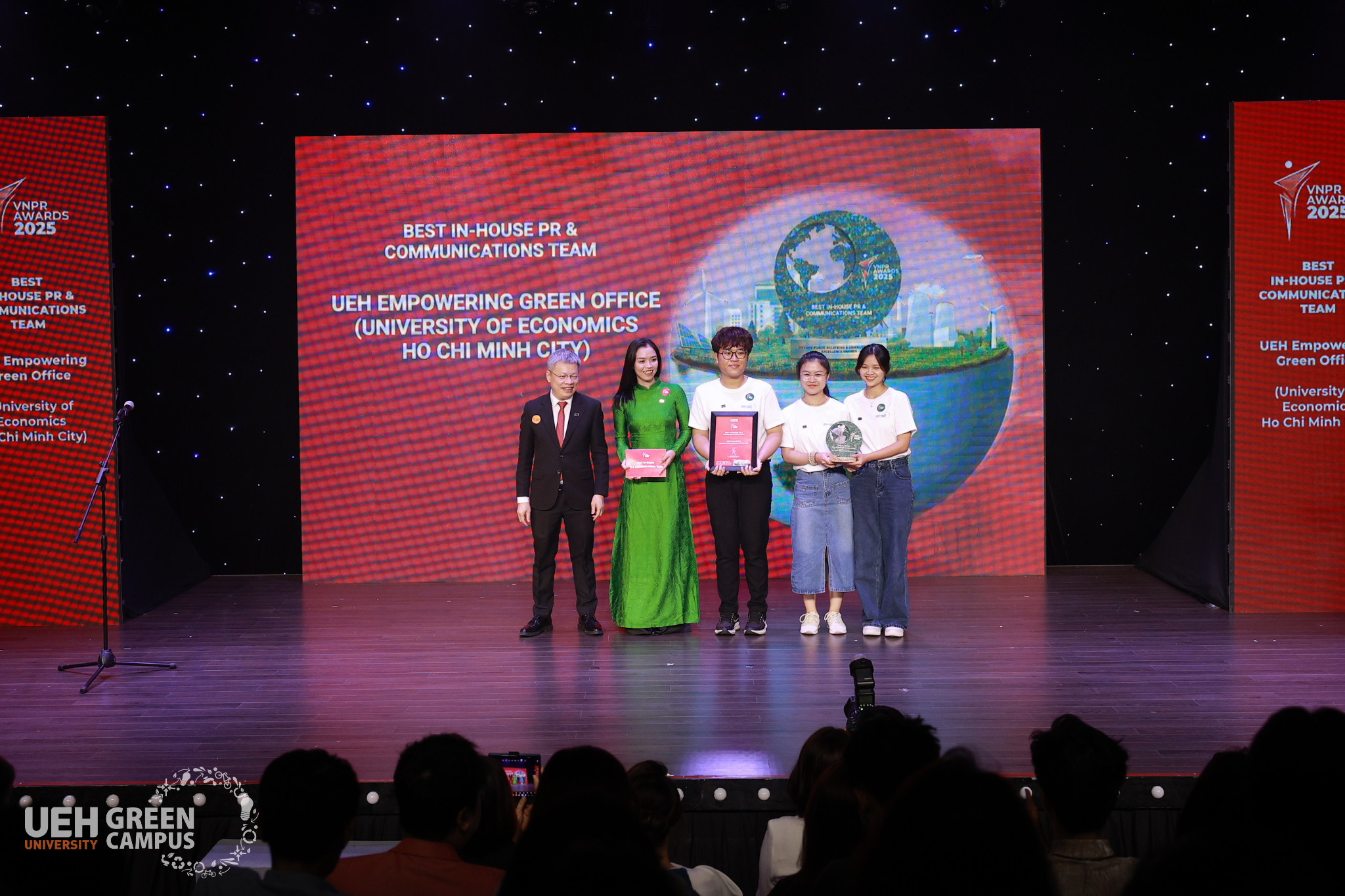
| 11 | UEH Green Office – Next-Generation Virtual Office Model | UEH implemented a virtual-office model and further digitised administration and communication to conserve resources, limit office supplies and reduce office waste.
|
Supported greener operations and resource efficiency. The specific reduction in single-use plastics was not quantified in the public source. | https://gogreen.ueh.edu.vn/tin-moi-noi-bat/mo-hinh-van-phong-ao-the-he-moi-ueh-green-office-duoc-vinh-danh-best-premier-in-house-team-tai-vnpr-awards-2025-voi-chu-de-for-the-future-of-earthus |
| 12 | V-Campus smART Hub – A Space for Art, Technology and Sustainability | UEH developed plans to transform V-Campus into a centre combining art, technology and sustainability, encouraging green practices and innovation on campus.
|
Provided a foundation for sustainable campus development where single-use-plastic reduction measures could be integrated. This source did not confirm a specific plastic-reduction result. | https://future.ueh.edu.vn/chi-tiet-knowlege/podcast-du-an-chuyen-doi-khong-gian-v-campus-ueh-thanh-smart-hub-trung-tam-nghe-thuat-cong-nghe-va-ben-vung-tai-trung-tam-tp-hcm/ |
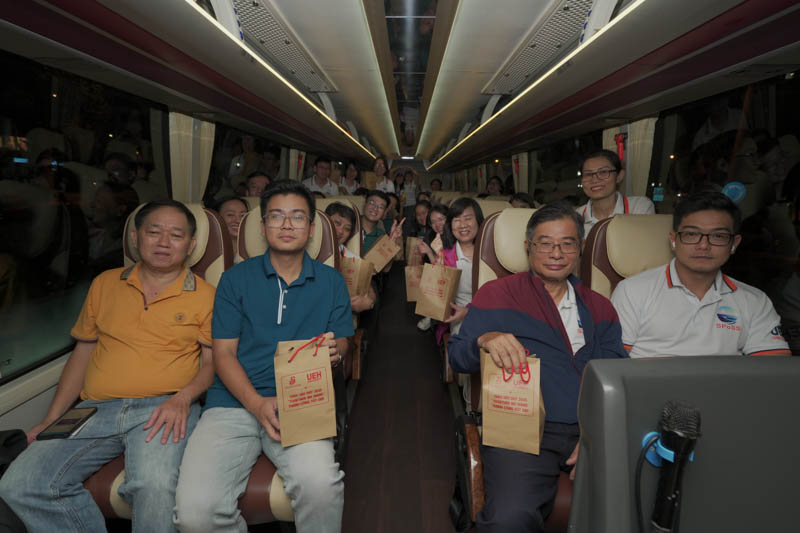
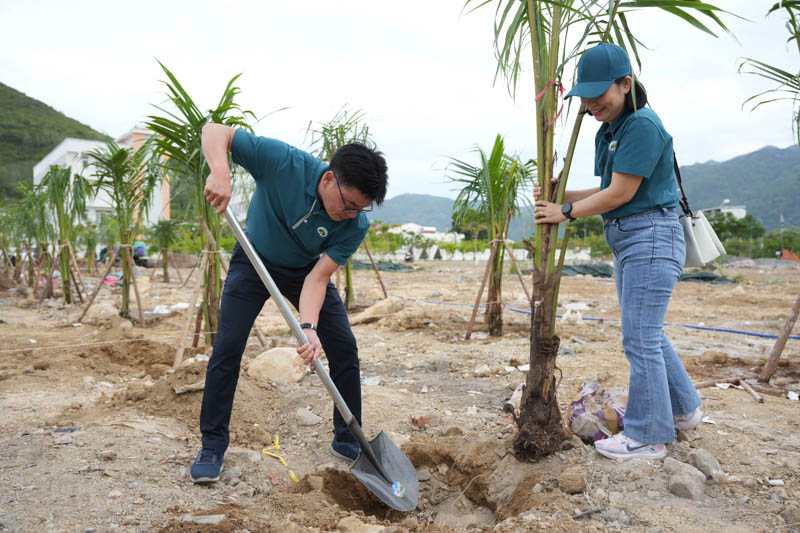
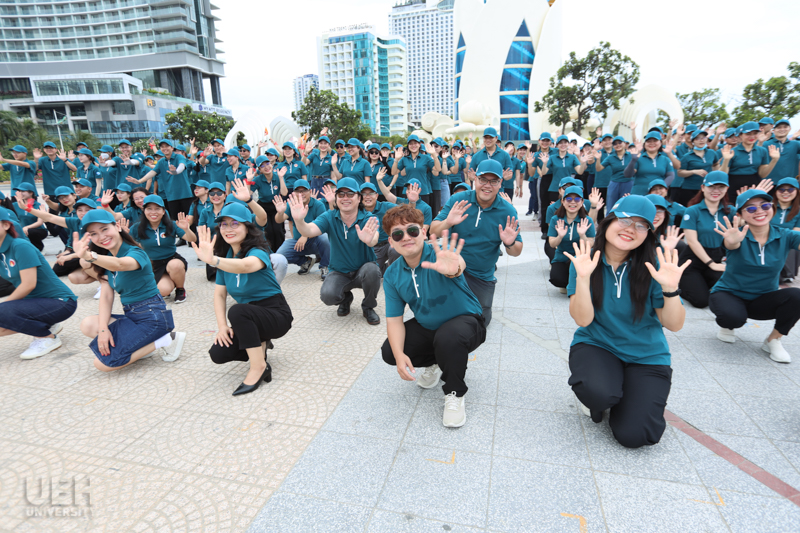
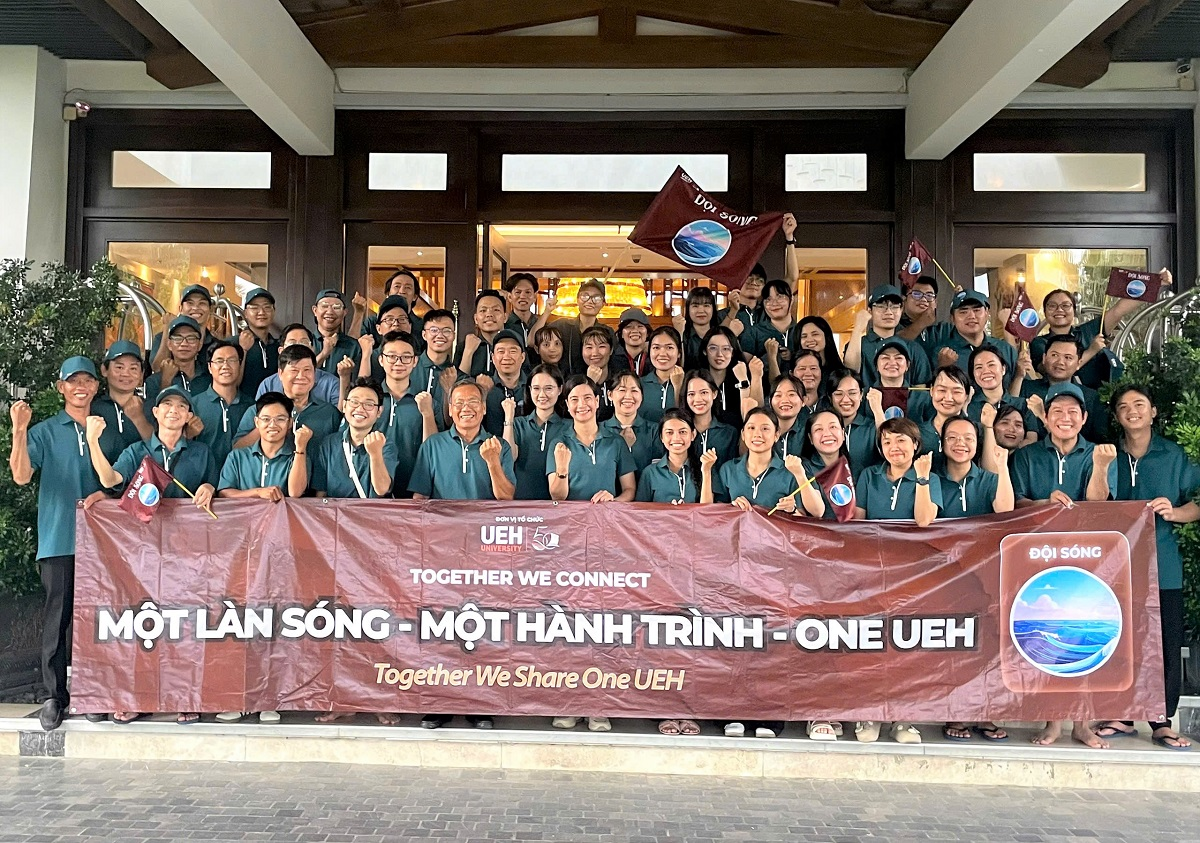
| 13 | UEH Day 2025 – A Journey for Community, Environment and Society | Nearly 900 UEH community members participated in community and environmental activities in Khanh Hoa, promoting green living, social responsibility and sustainable development.
|
Raised environmental awareness within the UEH community. Direct evidence of the replacement or avoidance of single-use plastics at the event is still needed. | https://ueh.edu.vn/cuoc-song-ueh/tin-tuc/ueh-day-2025-ngay-1-hanh-trinh-truyen-cam-hung-vi-cong-dong-moi-truong-va-xa-hoi-cua-900-uehers-tai-khanh-hoa-74506 |
| 14 | UEH Day 2025 – United for a Greener Planet | UEH organised community-building activities with environmental protection and sustainable development messages as part of UEH Day 2025.
|
Strengthened communication and encouraged environmentally responsible lifestyles. Specific evidence of plastic reduction is needed to establish direct relevance to indicator 12.2.5. | https://ueh.edu.vn/cuoc-song-ueh/tin-tuc/ueh-day-2025-hanh-trinh-ke-thua-nhung-gia-tri-van-hoa-one-ueh-74547 |
| 16 | UEH Mekong – Spreading the One UEH Spirit at UEH Day 2025 | The UEH Mekong community participated in connection, knowledge-sharing and sustainability activities during UEH Day 2025.
|
Promoted a culture of green practices across UEH campuses. Evidence of plastic reduction at the relevant activities or venues is needed for direct use under indicator 12.2.5. | https://ueh.edu.vn/cuoc-song-ueh/tin-tuc/ueh-mekong-ruc-chay-tinh-than-one-ueh-together-we-share-tai-su-kien-ueh-day-2025-74522 |
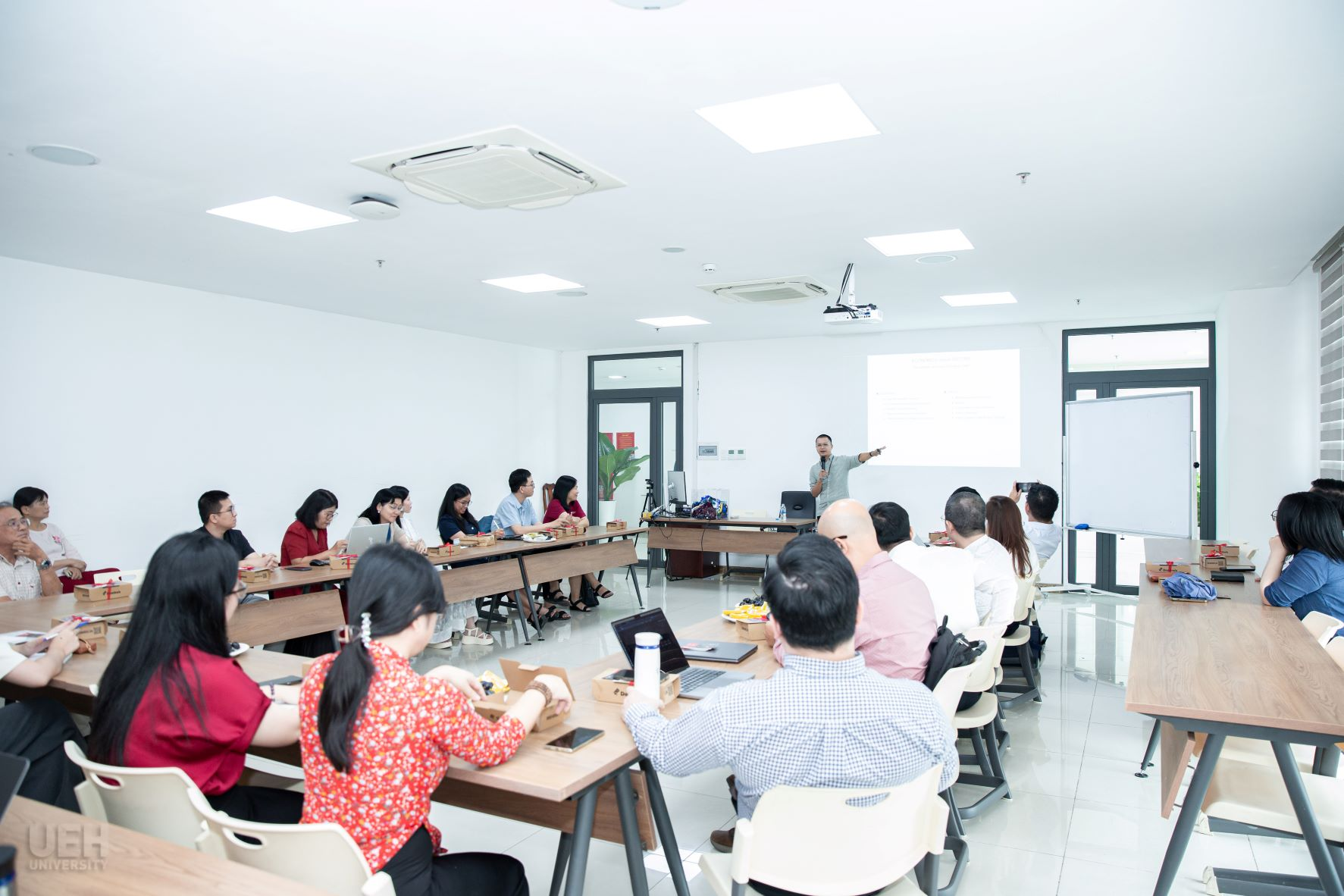
| 17 | CELG Academic Seminar No. 4/2025 – Promoting Green Living | UEH organised an academic seminar combining scholarly discussion with green-living communications, encouraging the community to consider responsible consumption choices.
|
Raised awareness of sustainable development; no specific single-use-plastic reduction content was confirmed. | https://ueh.edu.vn/khoa-hoc/sinh-hoat-chuyen-mon-celg-lan-4-2025-goc-nhin-thu-vi-ve-moi-quan-he-giua-kinh-te-hoc-va-lich-su-lan-toa-thong-diep-song-xanh-75680 |
| 18 | No Single-Use Plastic Journey Initiative within the smART Hub Living Lab Model | UEH presented its plans for the smART Hub Living Lab, including a No Single-Use Plastic Journey package intended to integrate plastic-reduction measures into the design and operation of university spaces. | Extended the plastic-reduction approach beyond communications into spatial management and operations. The timing, scope and results of implementation in 2025 require confirmation. | https://ueh.edu.vn/ueh-mekong/cuoc-song-ueh-mekong/sang-kien-ueh-nam-2025-phan-2-nhung-sang-kien-nang-cao-hieu-qua-quan-tri-van-hanh-va-lan-toa-gia-tri-cong-dong-75701 |
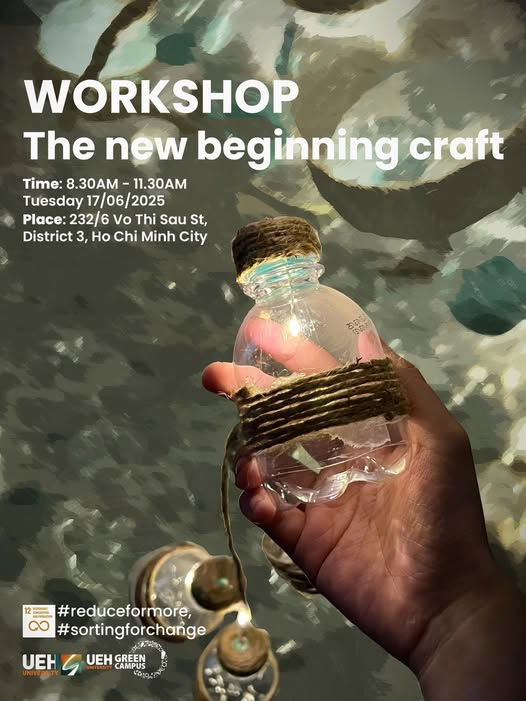
| 19 | Workshop The New Beginning Craft – ISCM UEH | ISCM introduced a creative craft workshop as part of Green Campus activities. Confirmation is needed as to whether it involved recycled materials, reused plastics or alternatives to disposable plastic products.
|
Could support education and behavioural change, but available information was insufficient to establish a direct contribution to campus plastic reduction. | https://www.facebook.com/share/p/1BSC33e8vA/ |
| 20 | UEH Green Campus Living Lab – A Platform for Green Research and Practice | UEH maintained the Living Lab platform to connect research, experimentation and initiatives in resource management, waste management and sustainable campus consumption. | Supported research, improvement and expansion of single-use-plastic reduction solutions. Individual projects should be checked to establish actual implementation results in 2025. | https://gogreen.ueh.edu.vn/living-lab-uehgc |
3. Results, Impacts and Directions for Continued Implementation
Building on the policy foundation established in 2022, UEH continued in 2025 to reduce plastics and single-use products by refining policy content, expanding practical measures and developing research-, technology- and innovation-based initiatives.
Whereas the 2024 regulations focused on 3R practices, limiting disposable plastics in canteens, shops and events, and assigning responsibilities, the 2025 update broadened the scope to disposable products more generally and emphasised integrating plastic-reduction criteria into procurement, operations and service provision. Linking plastic reduction with resource efficiency, longer material life cycles and the circular economy also aligned the policy with UEH’s Carbon-Neutral University direction.
In practice, the USD 10,000 awarded to the No Single-use Plastic Campus System was a notable result in mobilising resources and developing a systematic plastic-reduction solution. Activities at Vo Thi Sau Campus and the No Single-Use Plastic Day series encouraged alternatives to disposable products in campus life, while the UEH Green Campus podcast series and Green Campus Living Lab 2025 strengthened the research, educational and innovation basis for changing consumption behaviour.
These results reflected a transition from encouraging plastic reduction through policy towards creating practical conditions for policy implementation in university operations. UEH also sought to strengthen monitoring and evaluation of practices, expand alternatives and progressively reduce demand for single-use plastics across its campuses.
Through the plastic-reduction policy maintained and refined in 2025, together with practical activities, research and innovation, UEH reaffirmed its commitment to responsible consumption, preventing waste at source and building sustainable learning and working environments. This provided a basis for alignment with indicator 12.2.5 – Policy for Minimisation of Plastic Use, while contributing to SDG 12 – Responsible Consumption and Production and UEH’s Green and Circular University development strategy.