

14.5.3 – Programs towards Good Aquatic Stewardship Practices
The University of Economics Ho Chi Minh City (UEH) continued to develop and maintain programmes promoting sustainable water stewardship, linking the Green Campus Regulations issued under Decision No. 2059/QĐ-ĐHKT-CSVC with facilities management, research and community partnerships. In 2025, UEH strengthened water-use efficiency by reviewing wastewater treatment systems, monitoring water quality, tracking consumption and using water-saving fixtures. UEH Green Campus initiatives also encouraged students and staff to adopt responsible water-use practices, prevent pollution and protect water resources. In addition, research and cooperation on irrigation infrastructure management and climate-change adaptation in the Mekong Delta helped improve community awareness, capacity and participation in water-resource management, fostering responsible stewardship of aquatic ecosystems.
- Internal Commitments and Supporting Policies
In 2025, UEH maintained programmes for responsible water management and use based on the UEH Green Campus Regulations, issued under Decision No. 2059/QĐ-ĐHKT-CSVC in 2022. These regulations establish the responsibilities of academic and administrative staff, employees, students and relevant units for resource conservation, pollution prevention and participation in environmental protection. They provide the policy foundation for programmes promoting good water stewardship practices through regular operational requirements, technical support, water-quality monitoring and community awareness-raising.
Article 2, Clause 1 – identifies water conservation as one of the principles of the UEH Green Campus model. Article 5, Clause 4 further specifies the requirement to conserve water used for daily activities, cleaning and drinking at UEH facilities. These provisions apply to UEH students, lecturers, administrators and employees, supporting responsible water-use habits in daily learning, work and living activities.
Article 15, Clause 5 – assigns facilities management units responsibility for replacing cleaning materials and products with safe, environmentally friendly organic alternatives. Article 16, Clause 5 also addresses piloting and progressively requiring cleaning service providers to use bio-based detergents to reduce the negative effects of wastewater on aquatic environments. These provisions support pollution control in campus operations and environmentally responsible service procurement.
Article 21 – the Water Reuse Policy sets out approaches for collecting, treating and reusing rainwater and greywater for non-potable purposes such as irrigation, cleaning and cooling. Clause 3 of this article also specifies responsibilities for monitoring the quality of reused water, reporting water consumption and assessing annual water-saving performance. Furthermore, Clause 4 encourages research and innovation in water treatment and reuse technologies and their integration into education and community outreach. Article 22 – UEH Water-Efficient Building Standards includes requirements for integrating water-efficient fixtures and solutions into the construction, renovation and expansion of facilities. These provisions demonstrate a long-term approach to water governance, connecting conservation practices with technological innovation and monitoring responsibilities.
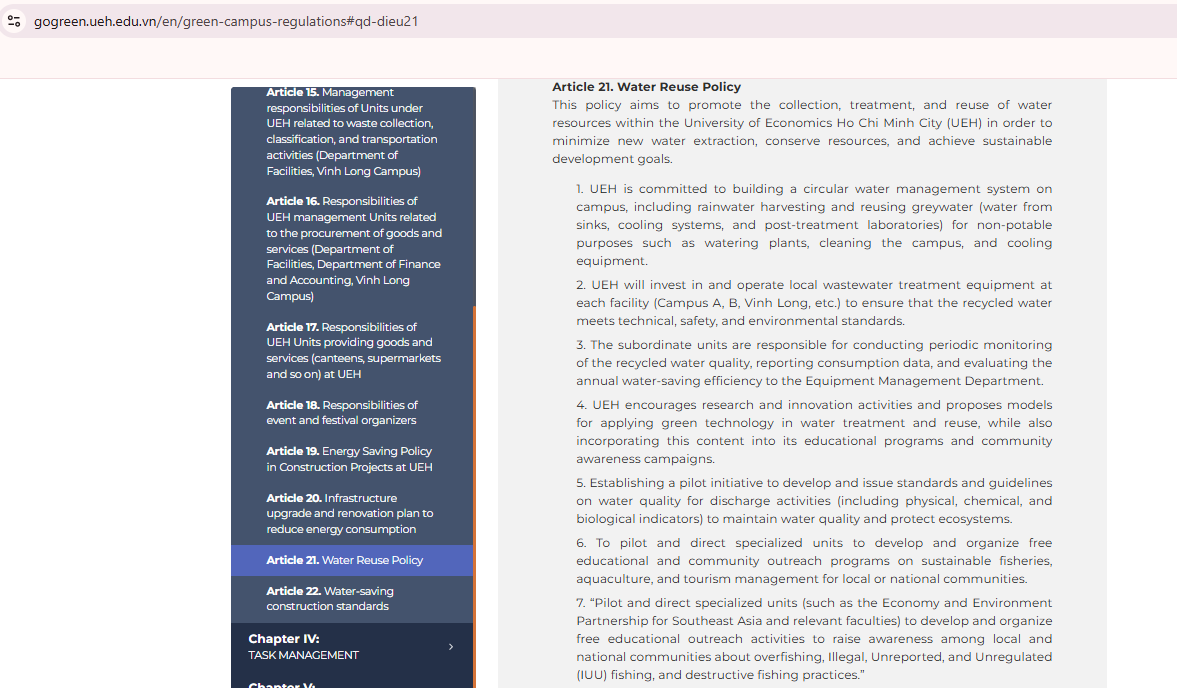
Article 21 of the Green Campus Regulations, issued under Decision No. 2059/QĐ-ĐHKT-CSVC, establishes UEH’s water reuse policy.
Public source: UEH Green Campus website, “Green Campus Regulations”
https://gogreen.ueh.edu.vn/en/green-campus-regulations
Article 14, Clauses 3–5, encourages students, lecturers, administrative staff and employees to organise communication and community mobilisation activities promoting Green Campus principles, participate in research and provide feedback. This provides a basis for education, experiential learning and behaviour-change activities in 2025 to foster water conservation and water-resource protection in the community.
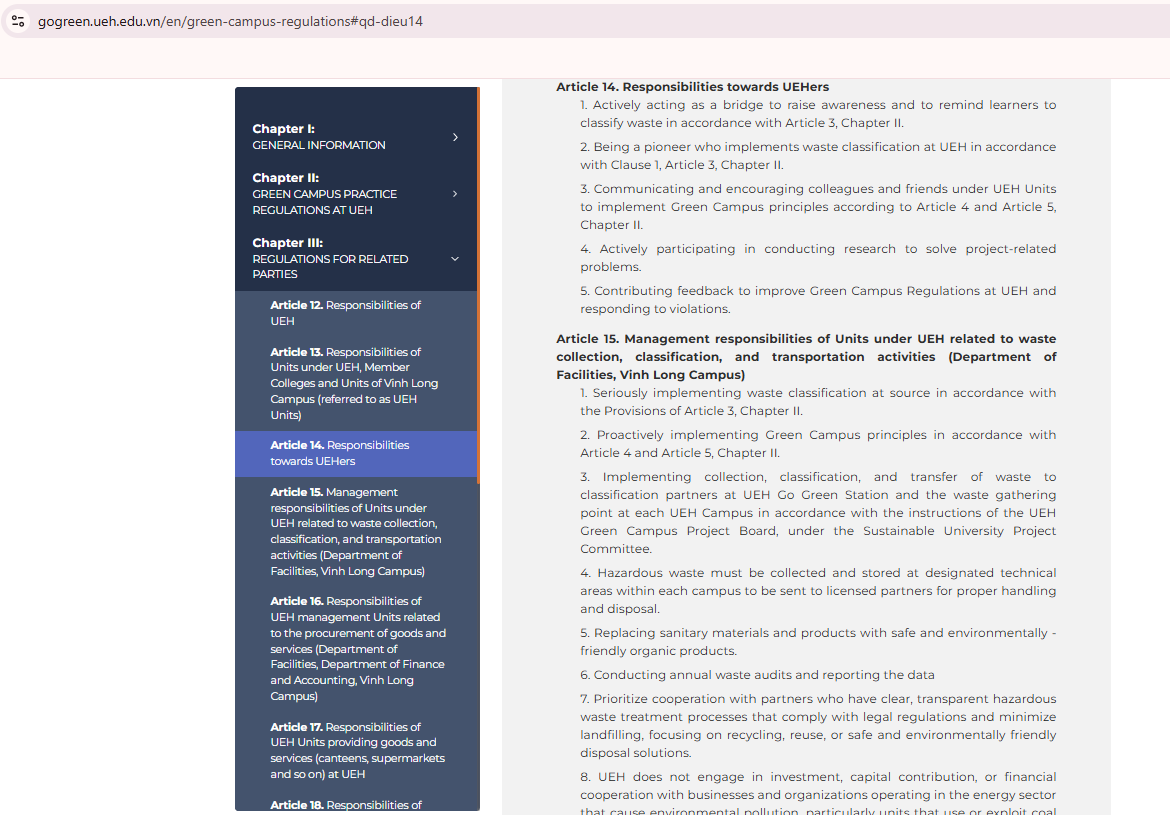
Articles 14 and 15, Clause 5, of the Green Campus Regulations issued under Decision No. 2059/QĐ-ĐHKT-CSVC specify the responsibility of facilities management units to use safe organic alternatives and encourage community water-conservation practices.
Public source: UEH Green Campus website, “Green Campus Regulations”
https://gogreen.ueh.edu.vn/en/green-campus-regulations
Alongside these regulations, UEH reviewed water-resource management, wastewater treatment systems and the status of water-saving fixtures in 2025. The findings provide a basis for refining management measures, reducing water wastage and controlling water quality in subsequent periods.
- Water Conservation, Water Quality Protection and Pollution Prevention Practices
In 2025, UEH continued reviewing water-resource management and recorded that more than 80% of water-use fixtures were water-saving devices. This demonstrates that water conservation was not confined to policy statements but was incorporated into facilities management. Assessing equipment and operating conditions enabled UEH to develop further measures to reduce consumption, improve efficiency and control water quality.
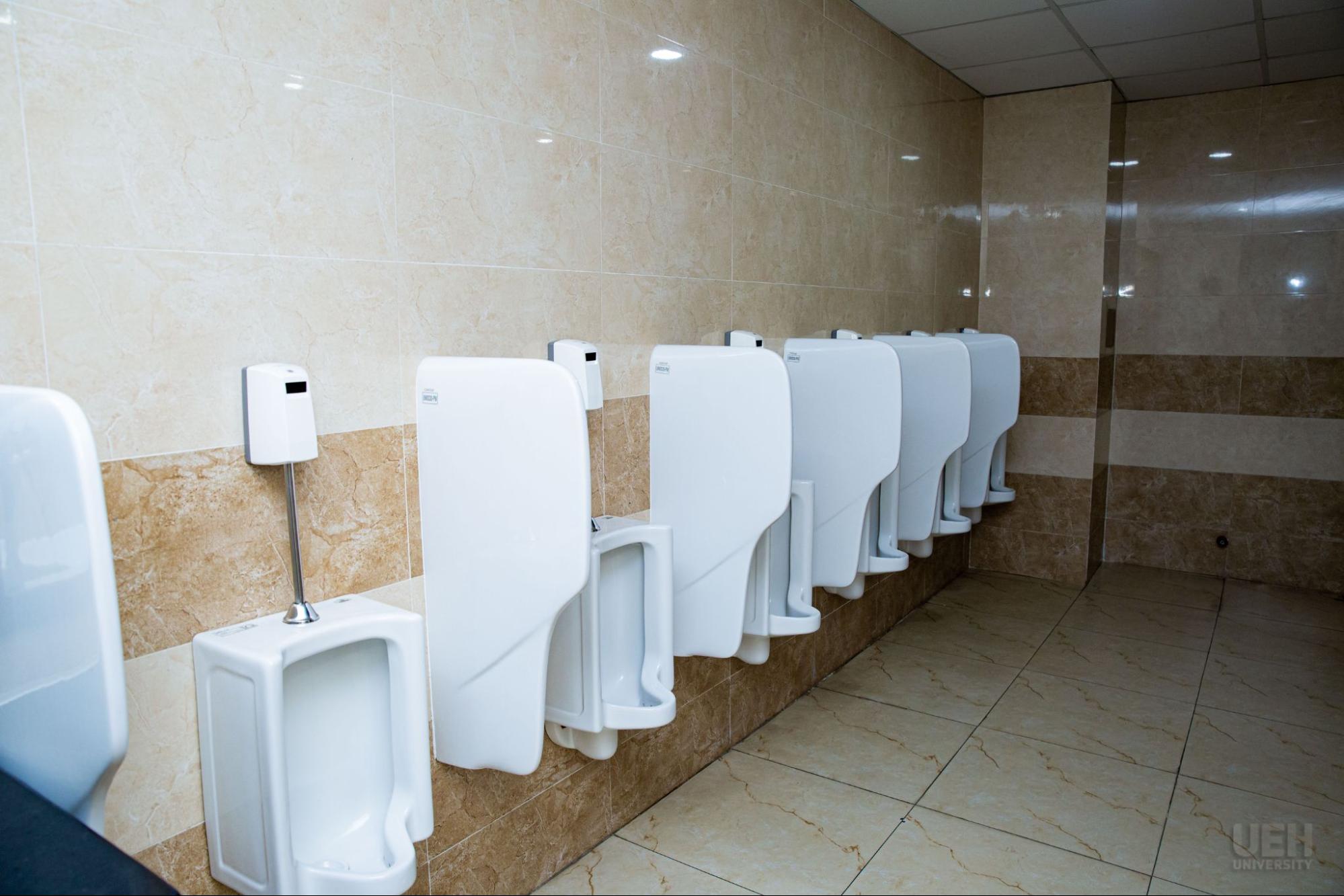
Sanitary fixtures at UEH incorporate automatic flushing mechanisms, supporting water management and conservation.
At Nguyen Van Linh Campus (Campus N), UEH also reviewed the wastewater treatment system, its operating procedures and the results of water-quality testing by a third party. These activities strengthened monitoring, helped identify areas for improvement and reduced the risk of water pollution from campus operations. According to the 2025 Environmental Protection Report, Campus N maintained a wastewater treatment system with a design capacity of 550 m³/day, including collection, equalisation, biological treatment, settling and disinfection before discharge to the receiving drainage system. The report recorded the following water-management figures for 2025:
| Monitoring Item | Recorded Result in 2025 |
| Water consumption | 49,300 m³, a reduction of approximately 11.5% from 55,732 m³ in 2024 |
| Domestic wastewater generated | 29,072 m³ |
| Design capacity of wastewater treatment system | 550 m³/day |
These figures show that water management at Campus N involved both technical systems and water-quality monitoring and inspection. Water consumption in 2025 was lower than in 2024, a noteworthy outcome that also provides a basis for further evaluating water-use efficiency under actual operating conditions.
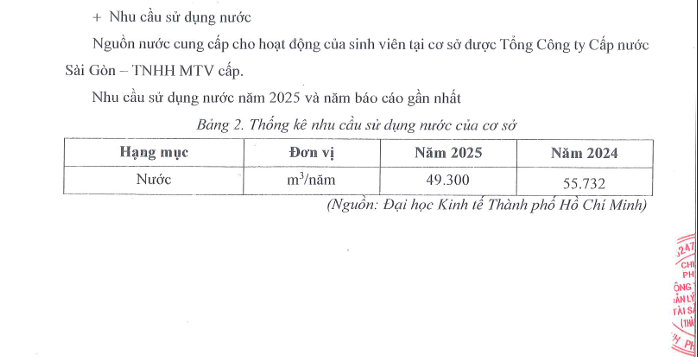
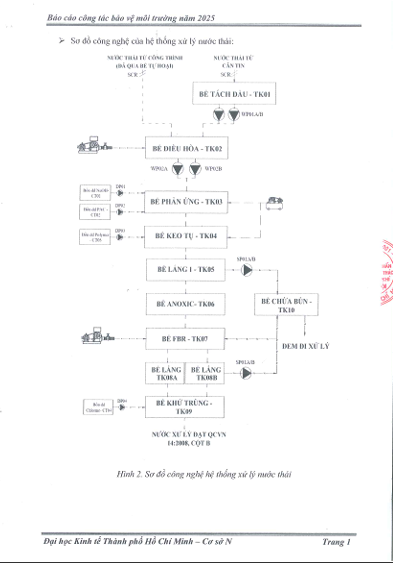
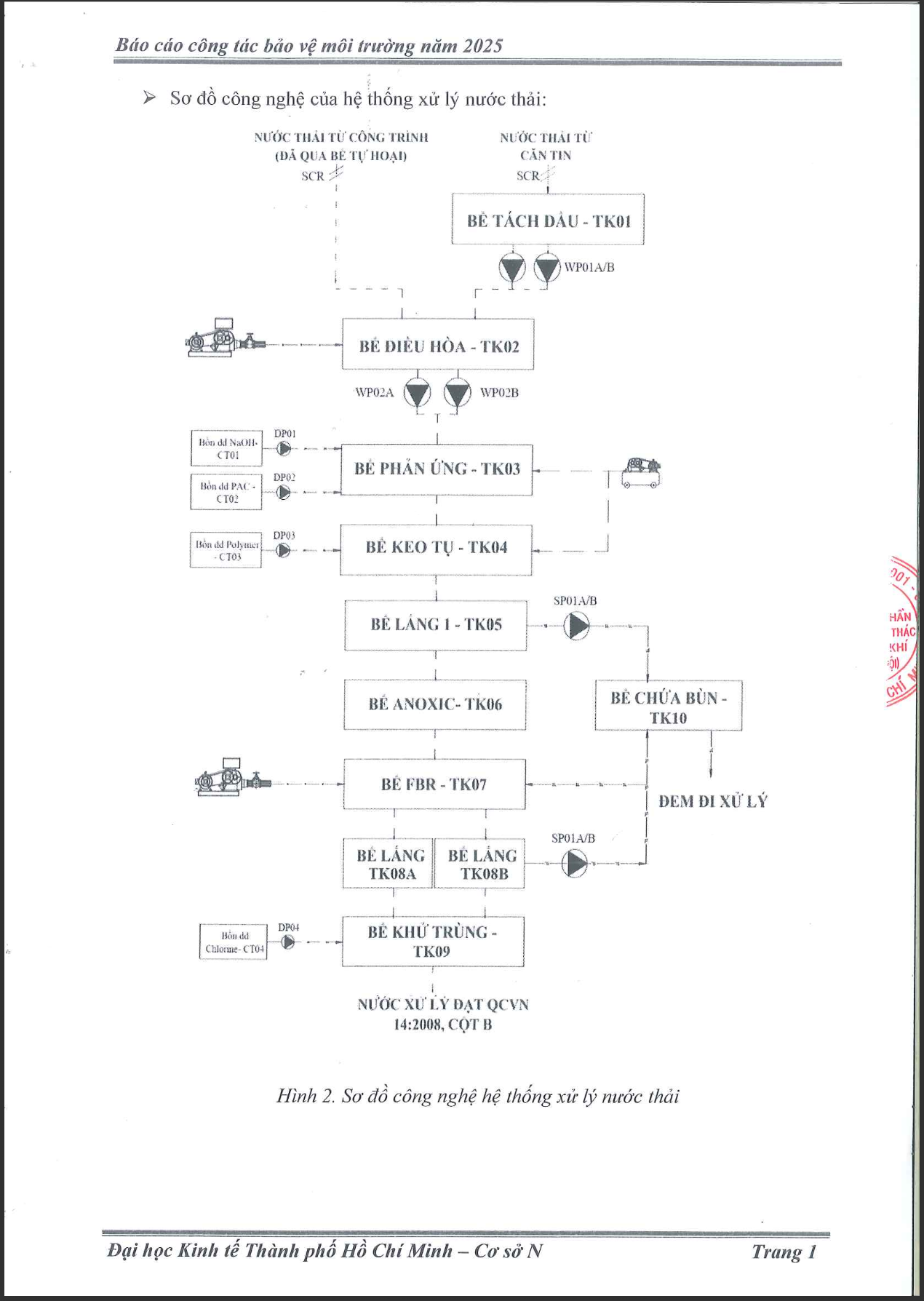
These results reflect water-quality management and monitoring in actual operations at Campus N. Recorded water consumption in 2025 was approximately 11.5% lower than in 2024. Consumption monitoring, wastewater treatment operations and water-quality testing are essential management activities for sustaining responsible water use and limiting the risk of pollution in receiving waters.
- Evidence of Programmes and Events Implemented in 2025
| No. | Programme/ Project |
Format/ Category |
Description | Public Source |
| 1 | GS4Infra Project – Building Community Capacity for Irrigation Infrastructure Management and Disaster Risk Reduction in Cu Lao Dung, Soc Trang | Applied research; Cooperation with local government; Capacity-building training; Encouraging community participation in water-resource and irrigation infrastructure management | On 2 January 2025, as part of the interdisciplinary GS4Infra project, the research team led by Ms Nguyen Thi Thu Thuy (UEH), MSc, cooperated with the Agriculture and Rural Development Office of Cu Lao Dung District to hold a capacity-building workshop for representatives of local authorities, social organisations and residents. The programme promoted equitable community participation in the planning, management and decision-making processes for irrigation infrastructure, particularly flood-control dikes, irrigation canals and salinity-control sluices. The training examined salinity intrusion, flooding, drought and livelihood impacts, and included three participatory exercises: (1) jointly identifying and mapping key infrastructure in Cu Lao Dung, along with management challenges and opportunities; (2) role-playing vulnerable groups, including women, children, older people, low-income residents and ethnic minorities, to examine access barriers and propose equitable solutions; and (3) allocating a hypothetical budget across infrastructure priorities, such as sluices, canal dredging and related works, to practise investment prioritisation, planning and resource allocation. UEH thereby directly supported local capacity for context-appropriate water-resource management and promoted the participation of disadvantaged groups in decisions concerning irrigation infrastructure and climate-change adaptation.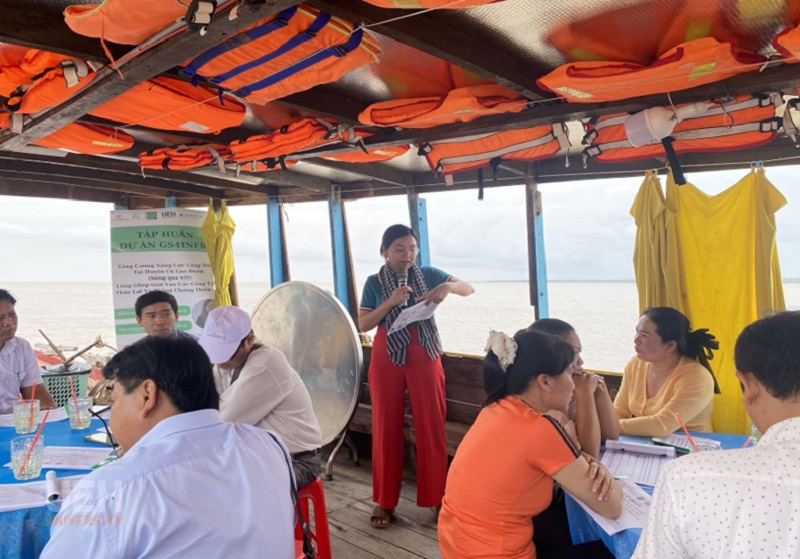 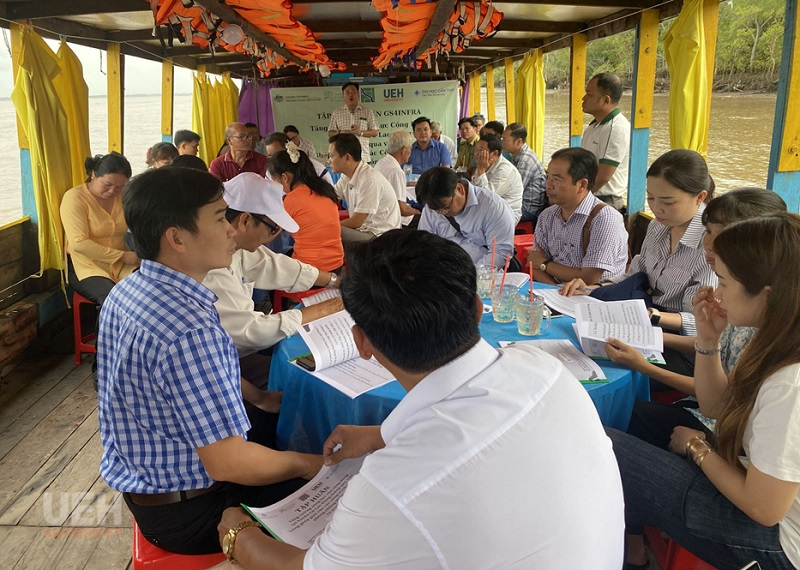
Training session held aboard a boat, attended by local representatives. |
UEH Portal, “[GS4Infra Research Project] Community Capacity-Building Workshop in Cu Lao Dung District, Soc Trang”, 2 January 2025 https://ueh.edu.vn/cuoc-song-ueh/tin-tuc/du-an-nghien-cuu-gs4-infra-buoi-tap-huan-nang-cao-nang-luc-cong-dong-tai-huyen-cu-lao-dung-73128 |
| 2 | HAPRI – Research on Adaptive Water Resource Management in the Mekong Delta | Applied research; Scientific input for water-management policy; Recommendations for sustainable water-management practices | On 14 January 2025, UEH published a summary of research findings from the Health and Agricultural Policy Research Institute (HAPRI), highlighting studies by Dr Tran Anh Thong, Dr Tran Duc Dung and Mr Vo Van Oc, MSc, on water security and adaptive management in the Mekong Delta. These studies analysed freshwater and brackish-water management challenges, particularly the imbalance between policies prioritising freshwater for rice production and demand for brackish water in aquaculture, with implications for ecosystems and farmers’ livelihoods. The researchers proposed good water-management practices, including: (1) flexible water governance balancing freshwater and brackish-water needs according to local ecological conditions; (2) stronger water-quality management, interprovincial coordination and production models adapted to salinity intrusion; (3) multistakeholder governance allowing farmers and local communities to contribute to policymaking and irrigation infrastructure management; and (4) water reuse, more efficient irrigation and nature-based solutions such as mangrove conservation and protection of land and water resources.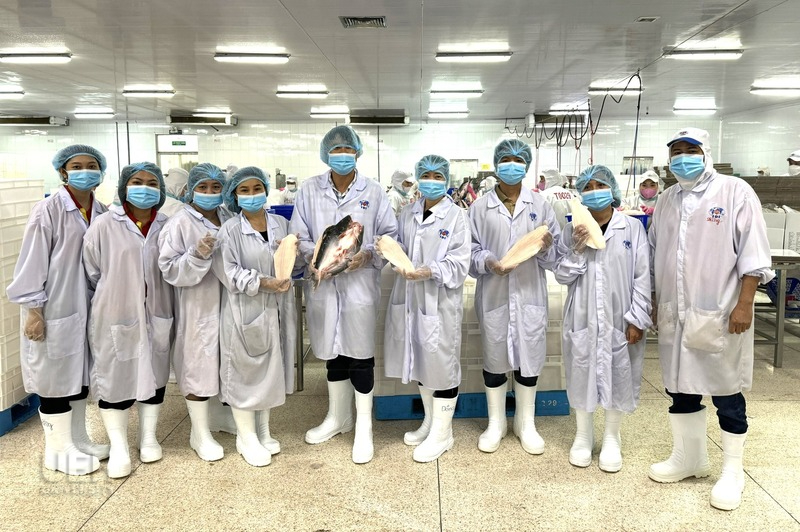 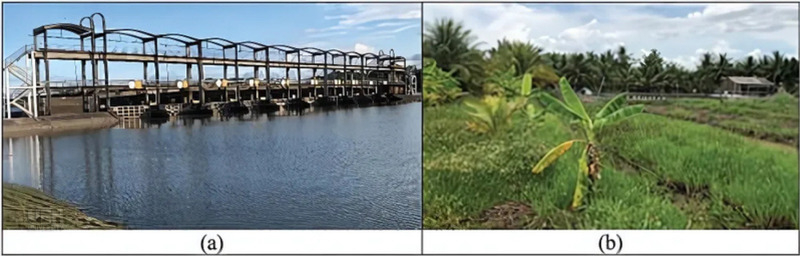
Research projects providing scientific evidence for water-resource protection. |
UEH Portal, “Food Security and Sustainable Agriculture: From Policy to Practice in the Context of Climate Change”, 14 January 2025 https://ueh.edu.vn/khoa-hoc/an-ninh-luong-thuc-va-nong-nghiep-ben-vung-tu-chinh-sach-den-thuc-tien-trong-boi-canh-bien-doi-khi-hau-73279 |
| 3 | HORIZON 2025 – Education on Marine and Island Conservation through Responsible Tourism | Academic competition, exhibition, infographics and environmental protection communications | Held from 23 September to 14 November 2025, HORIZON 2025 attracted more than 1,000 UEH students to two competition categories focusing on marine resource exploitation and sustainable marine and island tourism models. On 1 October 2025, participating teams exhibited and presented community tourism models, eco-homestay concepts and ocean-protection campaigns to a judging panel. The competition also involved designing infographics, awareness videos and ocean-protection stickers. These activities encouraged students to explore ecosystems and biodiversity and raised awareness of the sustainable use of natural resources.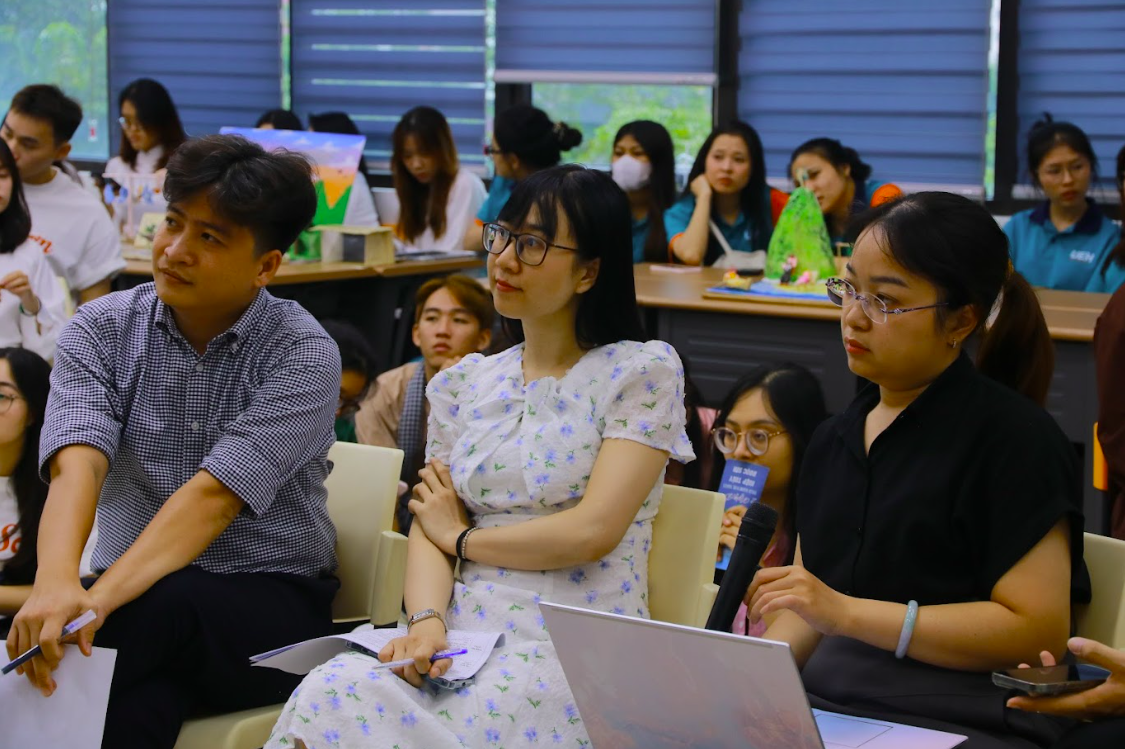 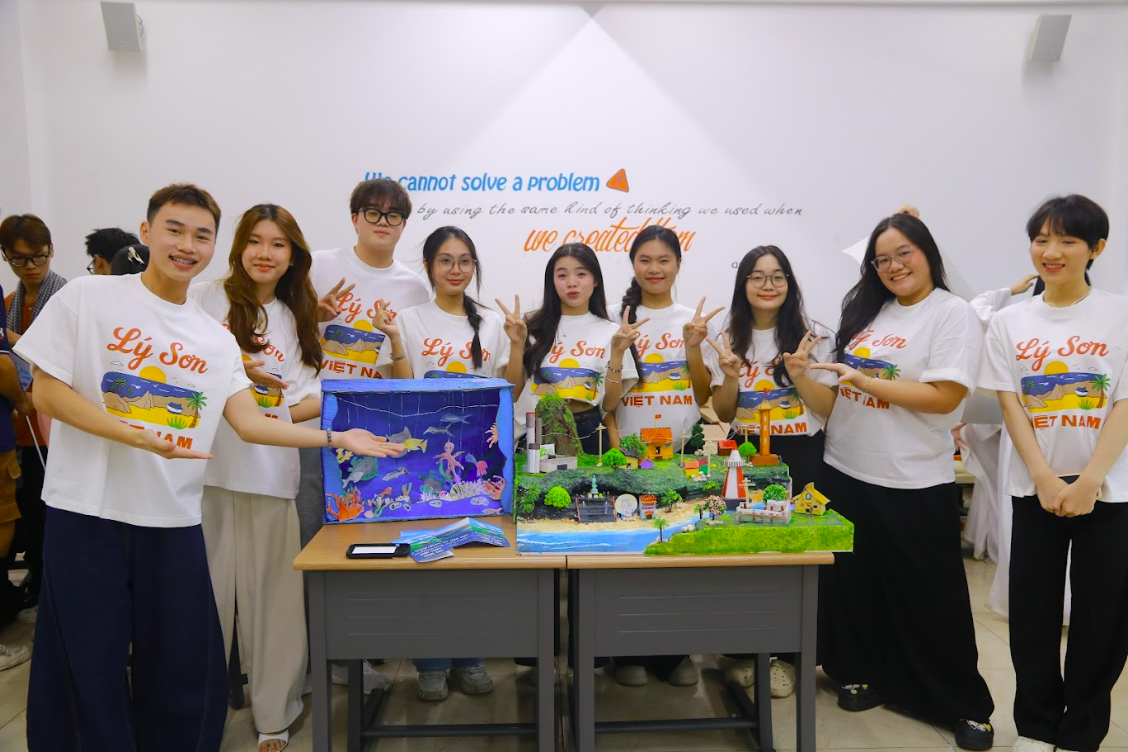 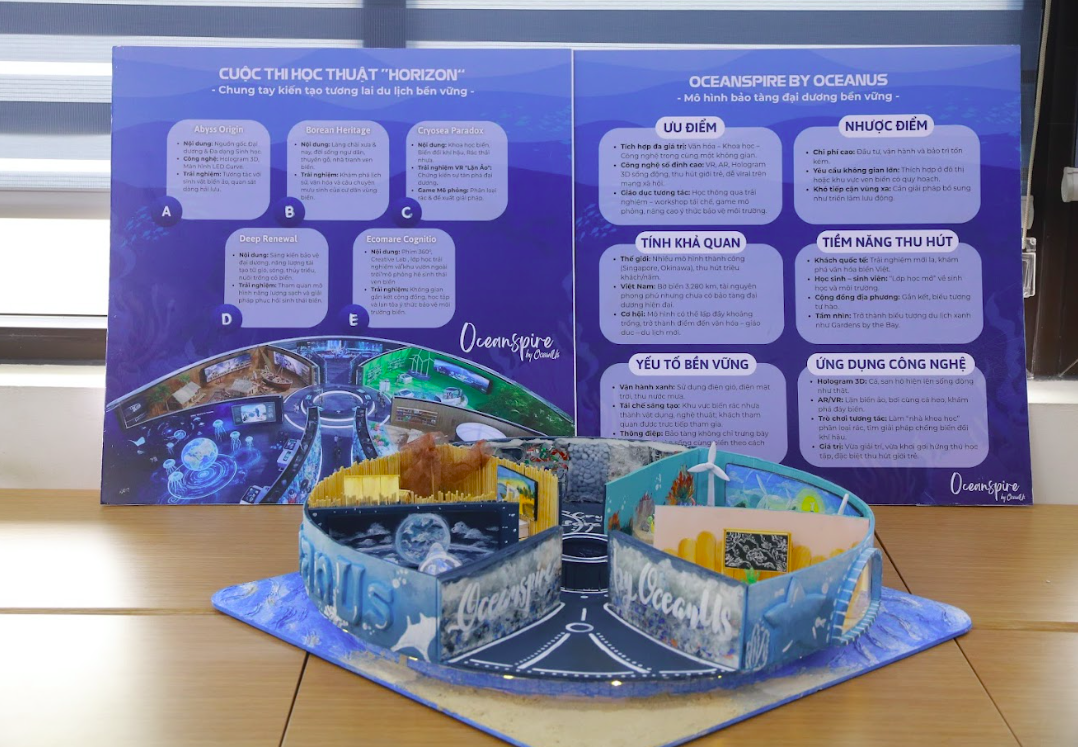
Students present their research on sustainable marine and island tourism models to the judging panel. 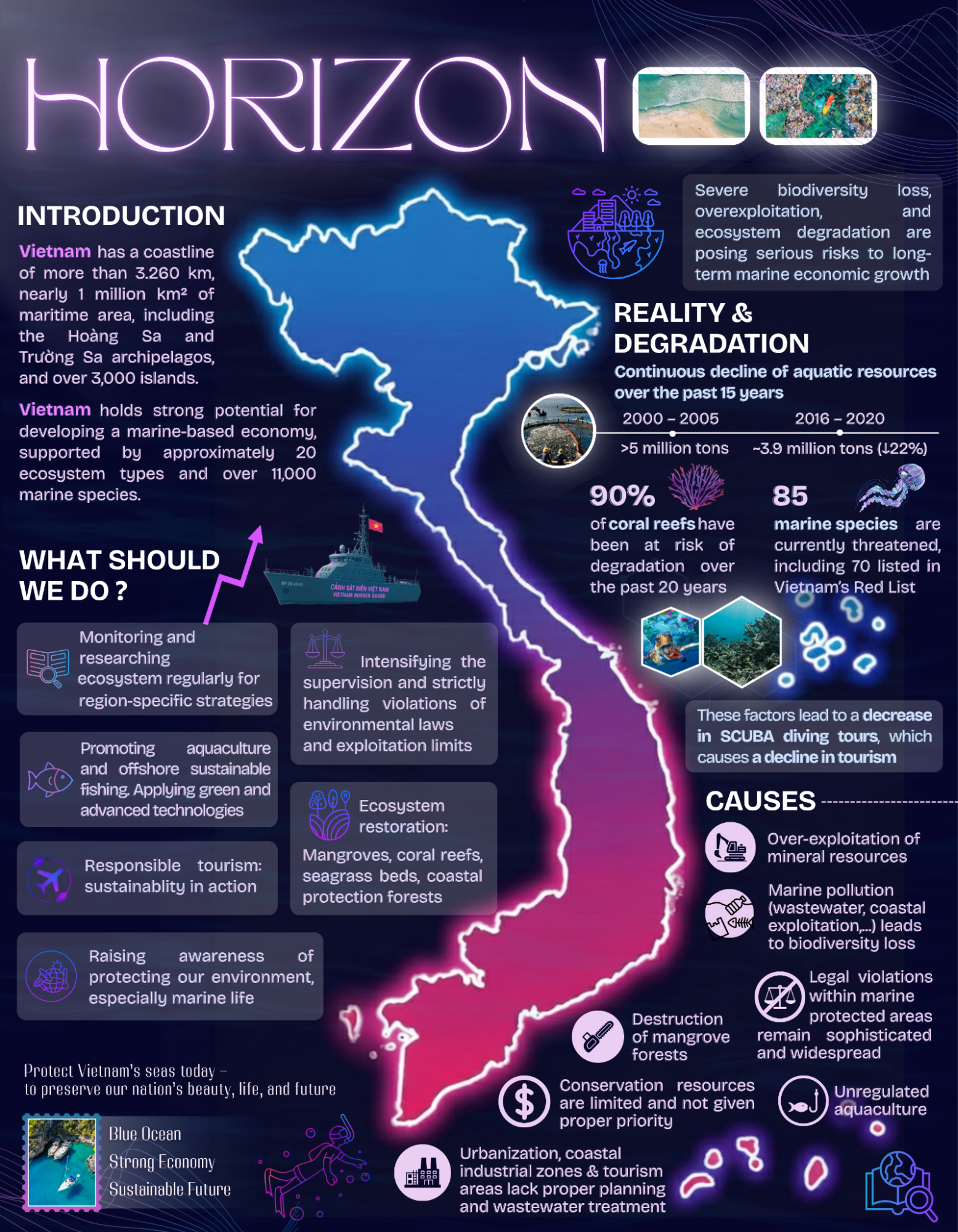 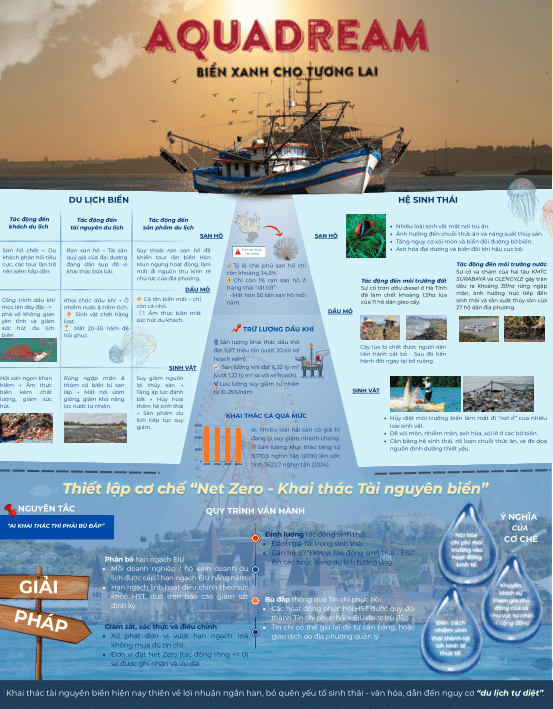
Infographics on resource exploitation and biodiversity conservation, encouraging independent learning. |
UEH Green Campus website, “HORIZON Tourism Innovation Competition within the UEH Green Campus 2025 Activity Series”, 15 November 2025 https://gogreen.ueh.edu.vn/su-kien/cuoc-thi-tim-kiem-sang-kien-du-lich-horizon-thuoc-chuoi-hoat-dong-ueh-green-campus-2025 |
| 4 | UEH Green Campus 2025 – “Protect Water Sources, Nurture Life” | Programme promoting water conservation and protection; Behaviour-change communications; Interactive and experiential activities | In September 2025, the Youth Union and Student Association of the School of Law, together with UEH Dormitory at 43–45 Nguyen Chi Thanh, organised “Protect Water Sources, Nurture Life” to encourage students to save water, avoid polluting practices and actively protect water resources. The programme had two stages. Stage 1 – Online Challenge (22–28 September 2025): students were encouraged to post images of their own environmental protection actions, resulting in 912 story posts and more than 1,500 interactions. Stage 2 – Outreach Booth (29–30 September 2025): three experiential stations in the B2 lobby of Campus B shared information on clean water, causes of pollution and water-saving measures, and guided participants through a simulated river-cleaning game. More than 450 student visits were recorded. These interactive formats combined real-life action sharing, simulation and incentives to encourage responsible water-use habits.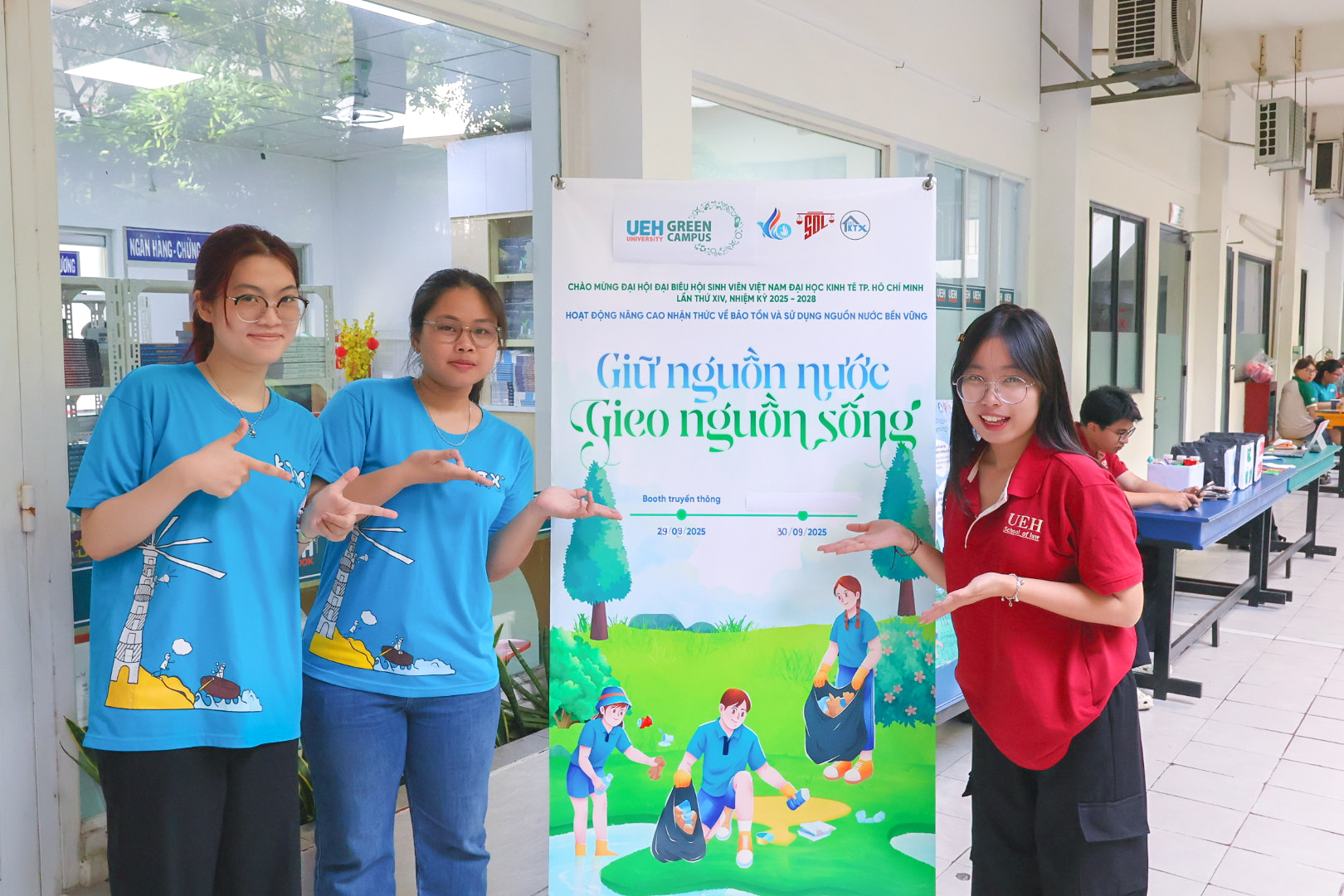 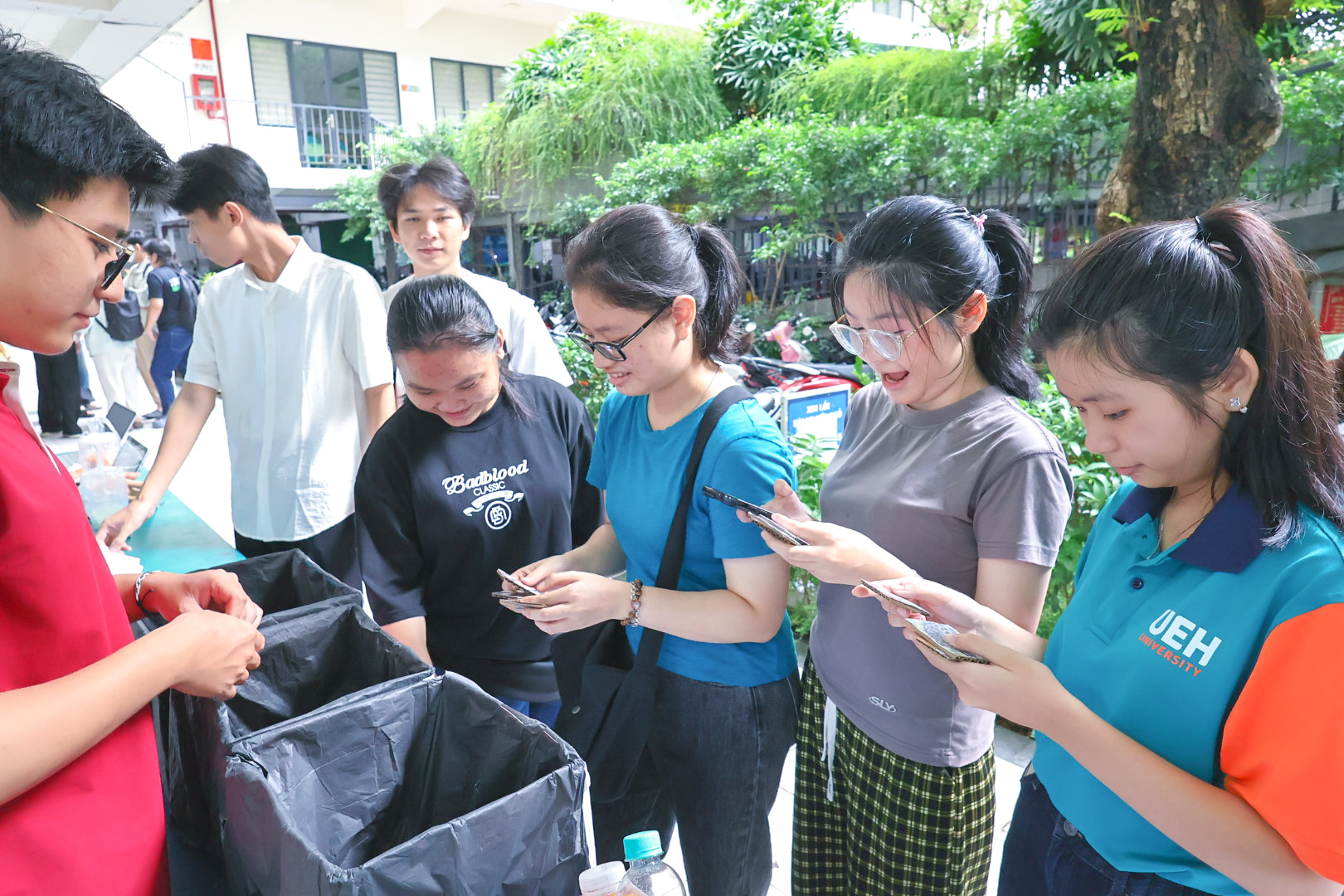
Students learn about water-resource protection and practise waste removal in a simulated river-cleaning activity. |
UEH Green Campus website, “UEH Green Campus 2025 – Protect Water Sources, Nurture Life with the School of Law”, 1 October 2025 https://gogreen.ueh.edu.vn/su-kien/ueh-green-campus-2025-cung-khoa-luat-giu-nguon-nuoc-gieo-nguon-song |
| 5 | The Blue’s Call – A Call to Protect Water Resources | Educational awareness campaign; Workshop; Encouraging behaviour change to conserve and protect water resources | In 2025, the UEH Student Support Group (SSG) organised The Blue’s Call to increase awareness and encourage students to conserve water and protect water quality. The programme combined two activities: (1) Tide of Awareness, an online communications series sharing information and real-world figures on water wastage, pollution and clean-water scarcity in Vietnam and globally, while encouraging practical actions such as turning off taps when not in use, fixing leaks, reusing water where appropriate and reducing polluting discharges; and (2) Answer the Call, a workshop on clean water, the environmental impacts of the textile industry and water-saving practices in daily life. Students also learned to repurpose fabric scraps into handicrafts, connecting water protection with material waste reduction and responsible consumption.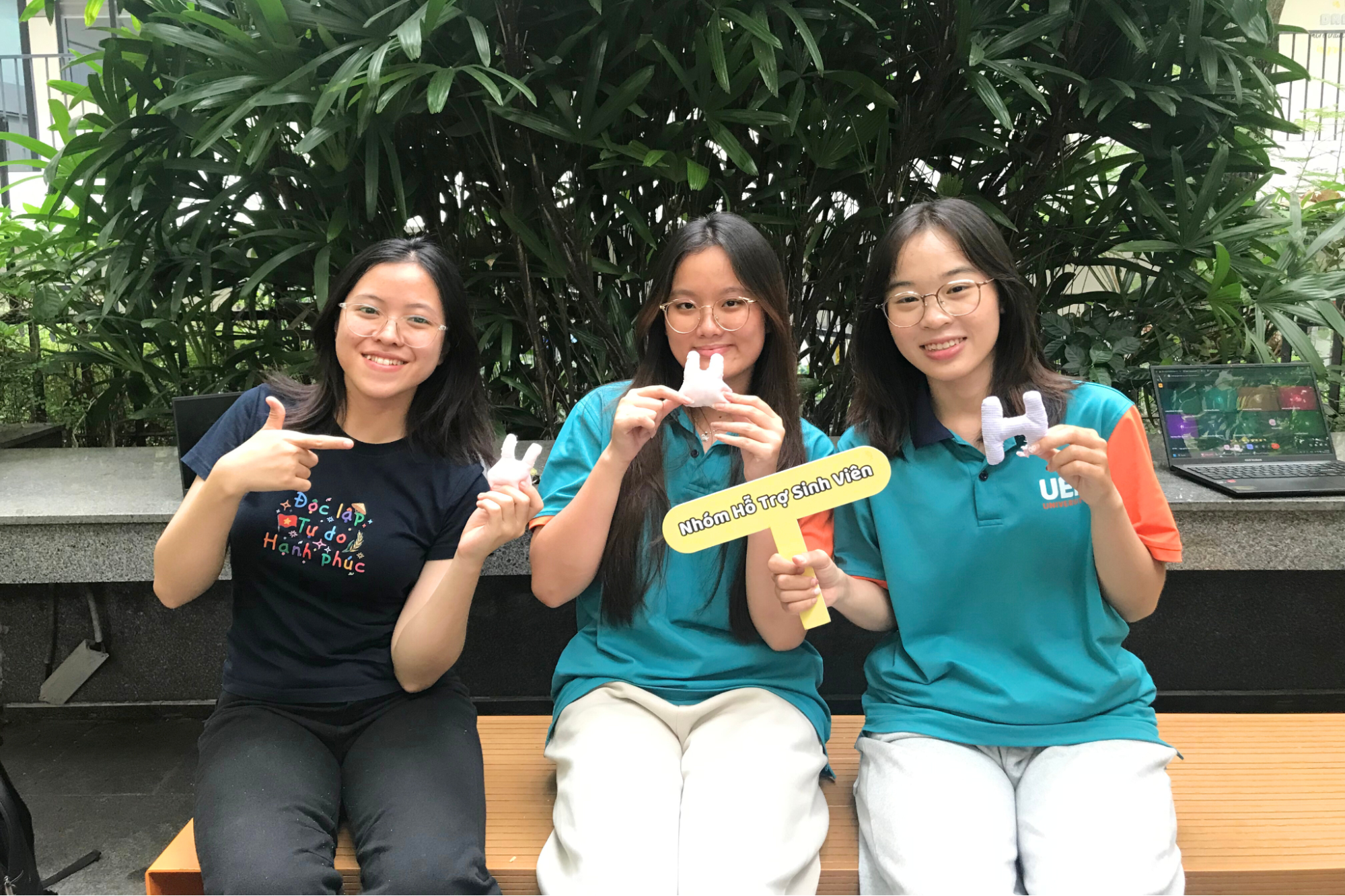
Students participate in a workshop and learn about the impacts of the textile industry on water environments. |
UEH Green Campus website, “Looking Back at THE BLUE’S CALL – UEH Green Campus 2025 Activity Series”, 5 December 2025 https://gogreen.ueh.edu.vn/su-kien/cung-nhin-lai-chuong-trinh-the-blues-call-chuoi-hoat-dong-ueh-green-campus-2025 |
| 6 | Save Water, Save Future – UEH Green Campus 2025 | Awareness-raising communications; Water conservation and protection practices; Community action pledges | From 30 October to 6 November 2025, the UEH Social Work Team conducted a communications series to improve public understanding of water conservation and protection. On 5–6 November 2025, experiential booths in the B1 lobby at UEH’s Nguyen Tri Phuong Campus allowed students to explore the issues, propose solutions and write pledges to protect water resources. | UEH Green Campus website, “Save Water, Save Future – UEH Green Campus 2025 Activity Series”, 7 November 2026 https://gogreen.ueh.edu.vn/su-kien/save-water-save-future-chuoi-hoat-dong-ueh-green-campus-2025 |
- Conclusion
In 2025, UEH continued maintaining and developing programmes encouraging responsible water stewardship under its Green Campus Regulations and UEH Green Campus Project. These programmes combined water management in regular campus operations, student behaviour-change initiatives and community capacity-building for water-resource management.
At the operational level, UEH tracked consumption, reviewed wastewater treatment and monitored water quality at Nguyen Van Linh Campus. The 2025 Environmental Protection Report recorded water consumption of 49,300 m³, approximately 11.5% below the 2024 figure, along with continued operation of a wastewater treatment system with a design capacity of 550 m³/day and water-quality monitoring. These activities provided practical evidence to support continued oversight of water use, pollution prevention and improvements in water-resource management.
At the educational level, Save Water, Save Future; Protect Water Sources, Nurture Life; and The Blue’s Call were implemented in 2025 through communications campaigns, practical challenges, experiential activities, workshops and action pledges. These approaches helped students gain knowledge, practise water conservation, avoid polluting behaviours and develop awareness of water-resource protection in daily life.
At the research and community partnership level, GS4Infra built capacity and promoted participation among local residents and government in irrigation infrastructure management and climate-change adaptation in Cu Lao Dung. HAPRI research also provided scientific evidence and recommendations on the adaptive management of freshwater and brackish-water resources in relation to ecological conditions and livelihoods in the Mekong Delta.
By combining ongoing management policies, monitored operations, practice-oriented engagement and community capacity-building partnerships, UEH continued supporting programmes for sustainable water management. Recorded activities in 2025 illustrate how the principles of efficient water use and pollution prevention were put into practice within the university and disseminated through education and stakeholder cooperation. They provide a foundation for UEH to encourage and maintain responsible water stewardship practices, contributing to water-quality protection and aquatic ecosystem health over the longer term.