

7.2.4 – Plan to reduce energy consumption
The University of Economics Ho Chi Minh City (UEH) identified energy conservation and efficiency as a key priority in its development as a Green, Smart and Sustainable University. Building on the Green Campus Regulations and the UEH Green Campus Living Lab model, the University established directions and measures to reduce overall energy consumption by improving building performance, optimizing equipment operations, strengthening electricity monitoring and promoting responsible energy-use behaviour. In 2025, UEH continued implementing these measures through smart building management systems, energy-efficient equipment, Digital Twin technology trials and the operation of solar power systems across its campuses, establishing a foundation for monitoring energy consumption and reducing emissions throughout the University.
1. Strategic Directions
UEH implemented its energy management and conservation approach in line with its strategy to become a Multidisciplinary and Sustainable University, gradually moving from encouraging electricity savings to technology- and operational-data-driven energy management.
The plan was developed around four strategic directions:
Improve energy efficiency in existing buildings. UEH prioritized improvements to lighting, air-conditioning and ventilation systems, the replacement of inefficient equipment, and automated controls to limit unnecessary electricity consumption.
Strengthen energy measurement, monitoring and consumption control. The University used smart building management systems, real-time electricity monitoring and pilot infrastructure digitalization technologies to provide a basis for evaluating energy performance in individual buildings.
Integrate renewable energy solutions and develop green buildings. UEH maintained solar power systems, prioritized energy-efficient materials and equipment, and incorporated climate-responsive design to reduce grid electricity demand and improve operational performance.
Promote energy-saving practices across the UEH community. Through internal regulations, communications and Green Campus initiatives, the University encouraged students, lecturers and staff to use electricity, air-conditioning, lighting and elevators responsibly.
2. Objectives and Target Groups
Objectives: Reduce overall energy consumption by managing electricity demand, improving the efficiency of equipment and buildings, and preventing energy waste, while strengthening monitoring capacity to establish measurable energy-saving targets.
Target groups: The Infrastructure Management Board, campus operations and facilities management units, the UEH Green Campus Project, investment and procurement units, member schools, faculties/institutes and other relevant departments, lecturers, administrative staff, employees, students, service providers and all users of UEH facilities.
3. Internal Commitments and Supporting Policies
UEH issued its Green Campus Regulations pursuant to Decision No. 2059/QD-DHKT-CSVC of 2022, providing the basis for resource conservation and sustainable campus development.
To reduce total energy consumption and enhance the operational efficiency of its facilities, the University of Economics Ho Chi Minh City (UEH) continued implementing the Green Campus Regulations, promulgated under Decision No. 2059/QD-DHKT-CSVC of 2022. Specifically, Article 5, Clause 4 required electricity conservation and responsible use of air-conditioning and other energy-consuming equipment; Article 5, Clauses 11–12 provided for tracking energy consumption data, conducting carbon emissions inventories and applying smart energy management systems to identify inefficient energy-use areas. Article 9, Clause 1 further established procedures for collecting operational data, classifying emissions by Scopes 1, 2 and 3, monitoring electricity consumption periodically and proposing measures to reduce energy-related emissions. Additionally, Articles 19 and 20 set out measures to reduce energy demand through building renovation, upgrades to LED lighting and high-efficiency air-conditioning, natural ventilation, automated controls and energy monitoring. Under Article 20, Clause 6, the Facilities Department and infrastructure management units were responsible for coordinating renovation roadmaps, monitoring energy use and periodically reporting results to the UEH Green Campus Coordinating Committee.
In 2025, UEH continued to apply its established principles of energy conservation, monitoring and management while developing proposed updates to the Green Campus Regulations, as follows:
Article 9. Emissions Reduction and Carbon Management
This article governs the measurement, management and reduction of greenhouse gas emissions at UEH, with the aim of achieving carbon neutrality and sustainable development across the University’s teaching, research and operational activities.
- Carbon emissions measurement and monitoring procedure: UEH established a process comprising the collection of energy consumption and operational data; classification of emissions into three scopes (Scopes 1, 2 and 3); and calculation of carbon dioxide equivalent (CO₂e) using internationally standardized tools or software. The collected data provide a basis for evaluation, reporting and annual emission reduction planning.
| Scope | Implementation Measures |
| Scope 1
(Measures to reduce direct emissions) |
– Transition internal vehicles and student shuttle buses to electricity or renewable energy.
– Reduce fossil fuel use in operations and prioritize cleaner or renewable fuels. – Periodically inspect and maintain mechanical equipment and refrigeration systems to prevent greenhouse gas leakage. |
| Scope 2
(Reducing indirect emissions from purchased energy) |
– Optimize lighting, air-conditioning and other major electricity-consuming equipment.
– Install renewable energy systems, such as rooftop solar power, on UEH buildings. – Regularly monitor and report energy consumption to manage university-wide electricity efficiency. |
| Scope 3
(Reducing emissions across the value chain) |
– Prioritize suppliers and partners with sustainability certifications or commitments.
– Apply green procurement policies and reduce waste and plastic packaging. – Encourage online meetings and limit unnecessary business travel. |
- Encouraging and facilitating emission reduction programmes. UEH encouraged and supported its departments, member schools, Youth Union–Student Association organizations and student clubs in organizing or jointly delivering training, workshops, seminars and communications campaigns on energy conservation, emission reductions and climate change adaptation. These initiatives aimed to raise awareness, encourage green action and spread a culture of sustainability throughout UEH.
- Investment in and partnerships for green technology development: UEH actively collaborated with organizations, businesses and non-governmental organizations (NGOs) on clean energy, carbon capture and storage, tree planting for carbon offsetting and other sustainability projects. Investments and partnerships were expected to pursue tangible, measurable emission reductions.
Article 10. Community Outreach Programme on Energy Efficiency
To promote awareness and action for sustainable development, the University of Economics Ho Chi Minh City (UEH) implemented a Community Outreach Programme on Energy Efficiency. The programme aimed to disseminate knowledge, encourage energy-saving practices in the community and support businesses and public authorities in adopting clean and efficient energy solutions. Activities included communications, training, consulting and research designed to connect academia, industry and communities and contribute to sustainable lifestyles and production models.
- Public community awareness activities. UEH organized programmes, workshops, seminars and communications campaigns to raise awareness among staff, lecturers, students and the wider community of the importance of energy efficiency and clean energy. These activities were conducted regularly and made accessible to organizations and individuals outside UEH, helping disseminate electricity-saving messages, encourage sustainable energy consumption and mobilize communities towards green development.
- Energy efficiency services for external businesses. UEH provided direct consulting and technical support to local businesses in assessing, monitoring and improving energy performance and adopting clean energy models. Support covered energy consumption assessments, identification of savings opportunities, technical and management recommendations for optimizing operations, and training for technical personnel. Through these services, UEH helped businesses strengthen their capacity to meet sustainability and emission reduction requirements.
- Research and policy advice on the practical adoption of clean energy. UEH promoted research, development and application of renewable energy solutions and clean energy technologies while advising and supporting public authorities in developing and refining relevant policies. Research focused on practical implementation models, policy recommendations to encourage clean energy investment, and assessments of the economic and social effects of energy-saving measures. UEH also expanded cooperation with research institutes, international organizations and businesses to facilitate technology transfer, data sharing and dissemination of sustainable energy models.
These measures provided a foundation for UEH to develop and implement a university-wide energy consumption reduction plan.
4. Evidence of Programmes and Activities Implemented in 2025
| No. | Programme/Project | Type/Classification | Activities and Results | Public Evidence Source |
| 1 | Energy Consumption Management and Monitoring in UEH Smart Buildings | Energy management; optimization of building operations | In 2025, the total floor area of UEH buildings meeting smart-building criteria reached 79,665.85 m², accounting for 53.99% of the total university-wide floor area. These buildings were equipped with centralized management and monitoring systems, real-time energy consumption tracking and automated lighting and air-conditioning controls. This activity directly supported UEH’s plan to control energy consumption and optimize building operations. | UEH Green Campus – New Progress of the UEH Green Campus Project in 2025, published on 4 February 2026. |
| 2 | Deployment of Energy-Efficient Electrical Equipment at UEH | Improving equipment efficiency; reducing electricity consumption in operations | According to the 2025 annual summary, UEH recorded nearly 570 energy-efficient devices, representing 89.87% of devices within the reported scope. This result demonstrated the prioritization of energy-efficient equipment in facilities management. | UEH Portal – From Sustained Efforts to a New Appearance: UEH Towards a Green, Smart University, published on 14 February 2026. |
| 3 | Pilot of the UEH Green Campus Digital Twin System at Vo Thi Sau Campus | Digital technology applications in energy and resource management | In 2025, UEH piloted a Digital Twin model at Vo Thi Sau Campus, using visualized data to support resource management, operations and energy conservation. The initiative established a basis for monitoring, identifying and optimizing energy use. | UEH Green Campus – 2025 Results Report, published on 4 February 2026. |
| 4 | Investment in Upgrades to Existing UEH Buildings | Infrastructure renovation investment; support for energy-saving plan implementation | In 2025, UEH publicly reported VND 14,415 million in expenditure on building upgrades. This investment demonstrated implementation of facilities improvements and enabled the incorporation of energy-saving solutions into existing buildings. | UEH Portal – 2026 Public Disclosure, published on 11 August 2026.
https://ueh.edu.vn/quy-che-cong-khai/thong-tin-cong-khai-nam-2026-77828 |
| 5 | Continued Operation of Solar Power Systems at Campuses A, B and N | Renewable energy; reduced dependence on grid electricity | The solar power systems at Campuses A, B and N continued operating during the 2025, producing more than 508,000 kWh per year to directly meet on-campus electricity demand. This reduced the amount of electricity purchased from the grid and increased the share of renewable energy used in university facilities.
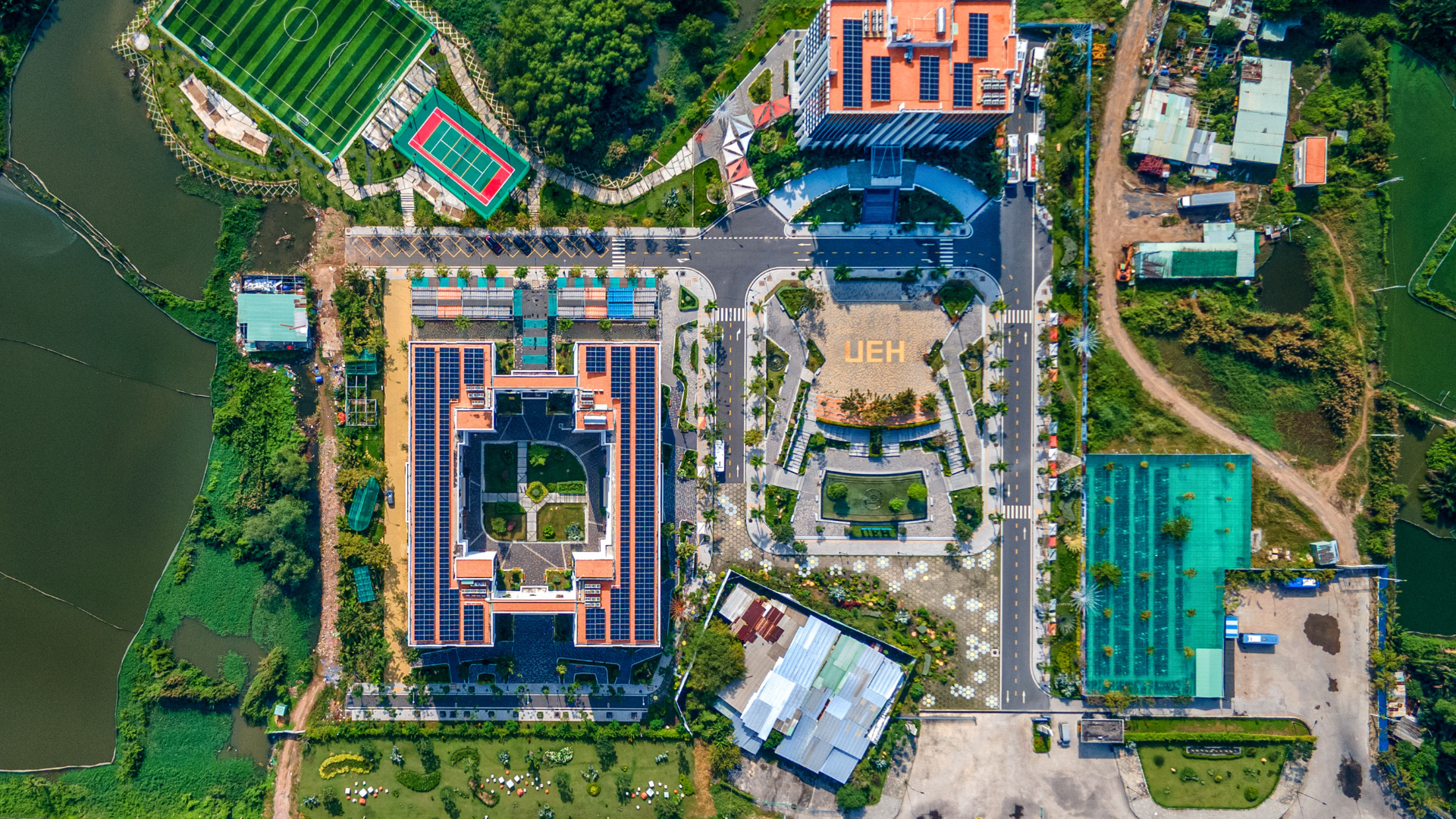
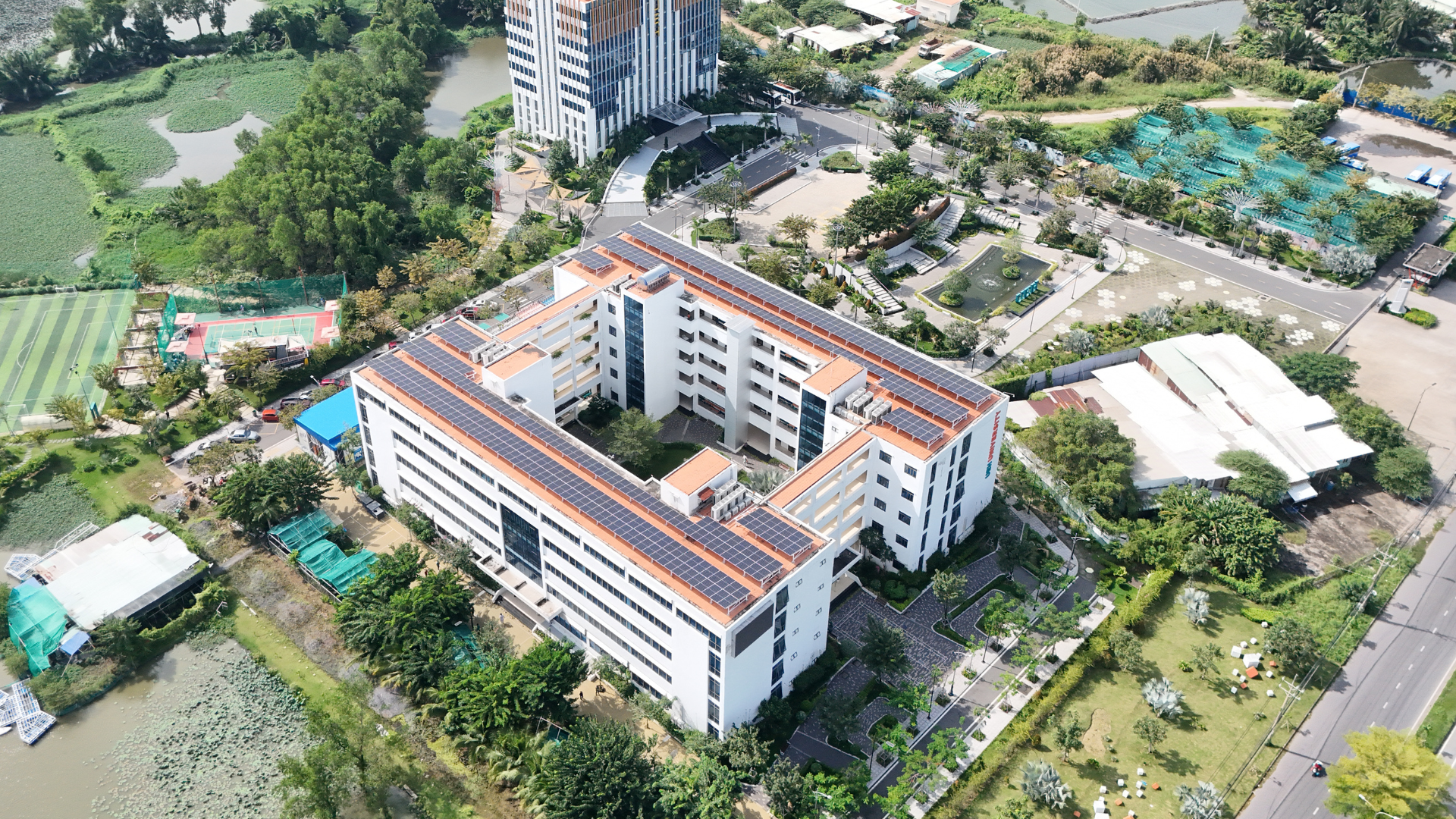
UEH installed solar photovoltaic systems at its campuses. |
UEH Green Campus – 2025 Results Report, published on 4 February 2026. |
| 6 | Renovation and Modernization of Learning and Working Spaces at Campus A | Upgrading existing buildings; infrastructure modernization | UEH continued renovating Campus A to create modern, smart facilities integrating technology into learning and working spaces. These activities supported the development of infrastructure with improved resource efficiency.
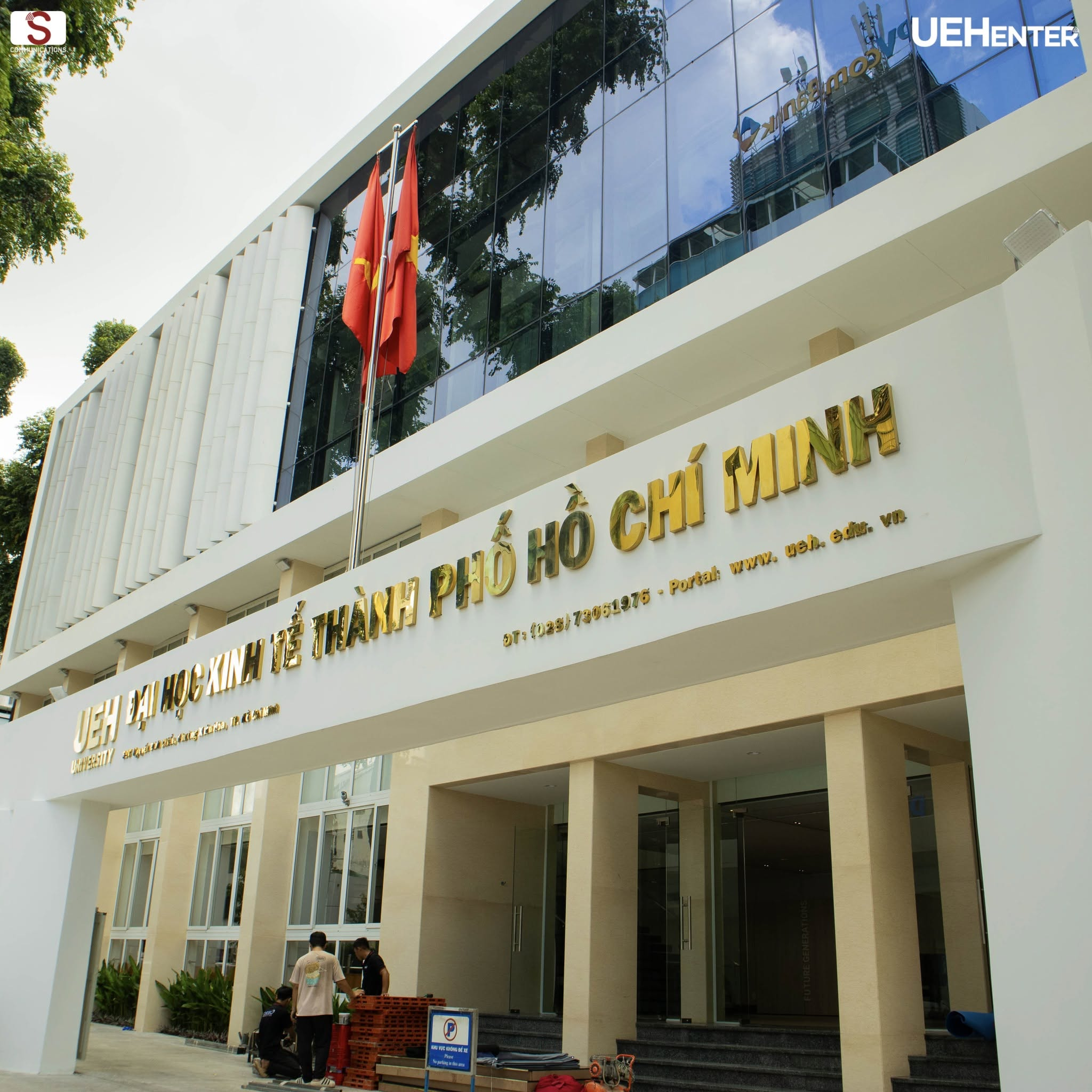
The renovated appearance of UEH Campus A |
UEH Portal – From Sustained Efforts to a New Appearance, published on 14 February 2026. |
| 7 | Continued Operation of UEH Green Campus Calories Stairs “Power-Up Steps” | Energy-saving practices; changes in elevator-use behaviour | The Calories Stairs initiative was implemented in buildings B1, B2 and N1, encouraging students and staff to choose stairs instead of elevators where appropriate. The initiative helped sustain responsible energy-use practices in university buildings.
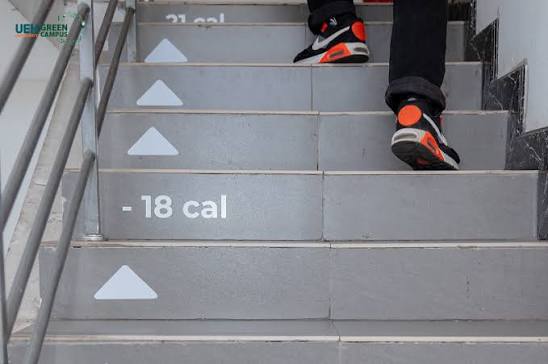
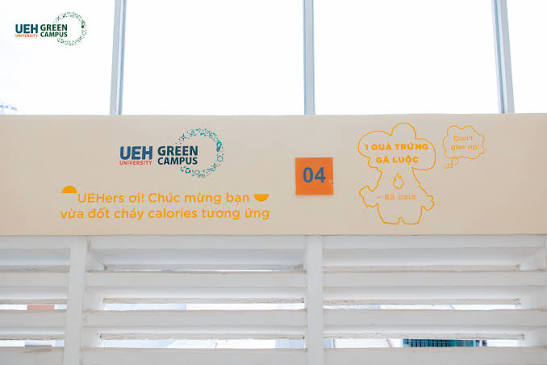
UEH Green Campus Calories Stairs encouraged the use of stairs to reduce emissions and electricity consumption. |
UEH Green Campus – 15 Products in the UEH Green Campus Ecosystem, 22 July 2025.
https://gogreen.ueh.edu.vn/tin-moi-noi-bat/15-san-pham-trong-he-sinh-thai-ueh-green-campus |
| 8 | Green Zernity – Green Energy Communications Campaign | Communications and education on responsible energy use | From 16 to 29 August 2025, the Economics Technology Club and the Student Entrepreneurship Club organized Green Zernity, combining online communications with an experiential workshop. The programme recorded 387,646 people reached, 12,847 interactions, and 236 students attending the workshop in person. The initiative supported greater awareness of green energy and sustainable behaviour.
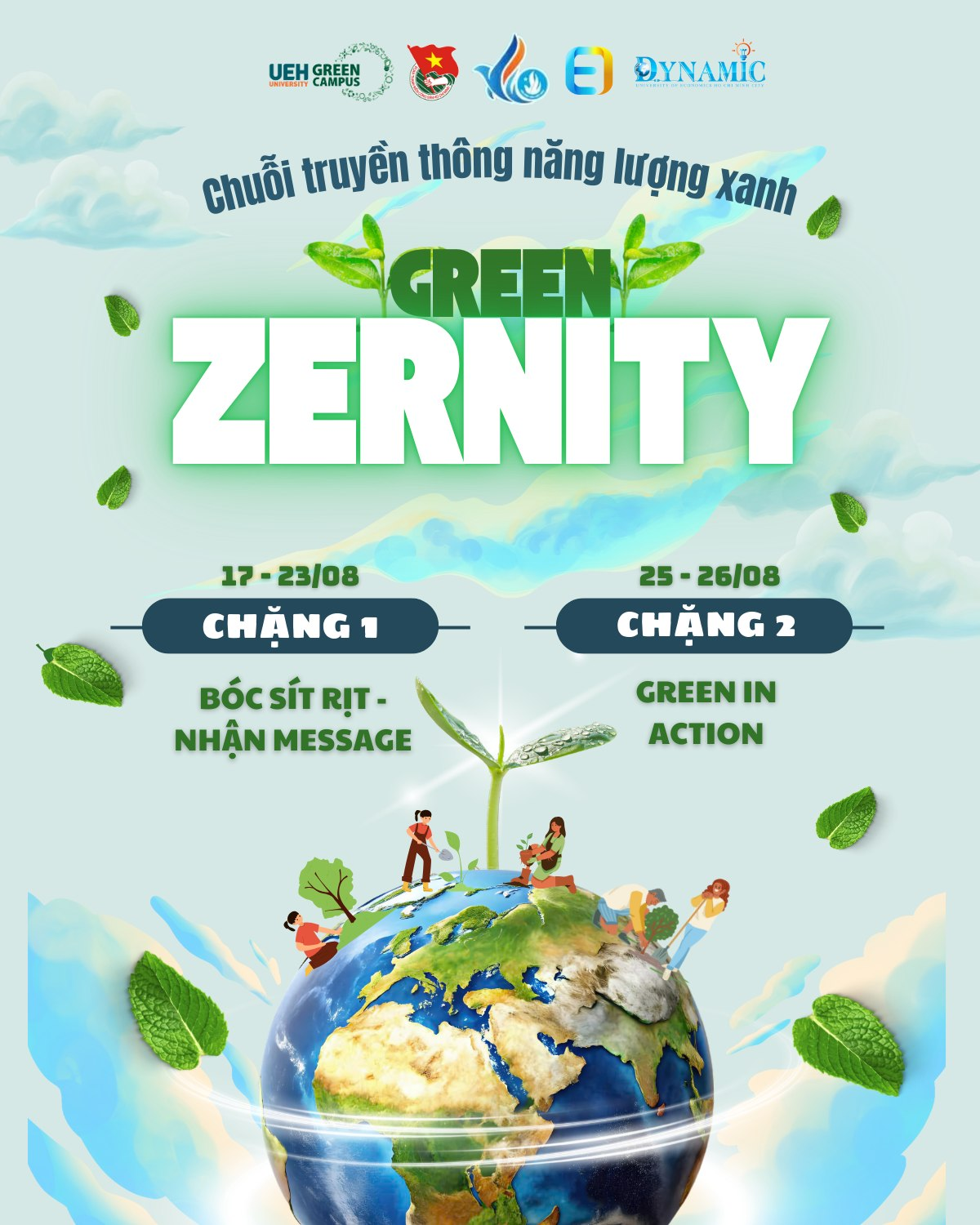
Poster for the Green Zernity green energy communications campaign |
UEH Green Campus – Green Energy Communications Campaign: Green Zernity, published on 30 August 2025.
https://gogreen.ueh.edu.vn/su-kien/chuoi-hoat-dong-truyen-thong-nang-luong-xanh-green-zernity |
5. Conclusion
In 2025, UEH continued to put its overall energy consumption reduction strategy into practice by combining resource conservation regulations, building efficiency improvement plans, investment in facilities upgrades, energy management technologies and the promotion of responsible electricity use. The provisions of Articles 5, 9 and 20 of the publicly available Green Campus Regulations showed UEH’s commitment to electricity conservation, energy consumption monitoring, optimized lighting and air-conditioning, improved building efficiency, renovation roadmaps and periodic reporting.
In practice, in 2025 UEH recorded 79,665.85 m² of smart-building floor area, deployed nearly 570 energy-efficient devices, invested VND 14,415 million in building upgrades and maintained solar power systems producing more than 508,000 kWh per year. At the same time, the Digital Twin pilot and green energy programmes supported operations, management and community awareness. Compared with 2024, when UEH focused on developing solar power systems, introducing Calories Stairs and beginning to establish energy-use assessment mechanisms, 2025 showed broader smart-building management coverage, greater use of operational data and further improvements to equipment efficiency.
These initiatives helped establish a systematic energy management framework linking policy, planning and implementation, with the aim of reducing energy demand, controlling operating costs and limiting UEH’s environmental impact. The University thereby contributed to SDG 7 – Affordable and Clean Energy, particularly indicator 7.2.4 – Plan to reduce energy consumptionin THE Sustainability Impact Ratings 2027.