Program / Course
|
Target audience / Unit
|
Sustainability & SDG content
|
Format / Level
|
SDG linkage
|
2025 implementation evidence / Results
|
01. Master’s in Corporate and Environmental Sustainability Management (CSEM)
|
Master’s students; UEH / Training Office; applied-oriented training
|
Full interdisciplinary degree combining management, finance and the environment; courses include Sustainable Corporate Management, Environmental and Social Impact Assessment, Principles of Sustainable Finance, Sustainability Reporting and Pollution Control.
|
FULL DEGREE
Master’s; includes 3-credit courses
|
SDG 4: professional training; SDG 8: business management; SDG 12: production and reporting; SDG 13: environmental/climate impact.
|
Official Timetable No. 419/ĐHKT-ĐT dated 26/08/2025, page 18/25, lists 5 specialized courses scheduled to start in 2025, with 46–50 registrations per course. Three courses are scheduled entirely within 2025, and two courses have schedules extending into 2026.
CSEM program structure
|
02. Bachelor’s in Corporate and Environmental Sustainability Management
|
2025 full-time undergraduate applicants; UEH
|
A specialized degree program designed with a focus on corporate management, sustainable development and the environment.
|
FULL DEGREE
Bachelor’s; admissions opened in 2025
|
SDG 4: learning opportunities; SDG 8: corporate management; SDG 12: sustainable production; SDG 13: environment.
|
In 2025, UEH opened admissions for program code 7340101_04, with a scale of 125 credits. The public admissions table lists 40 quota places and 42 students enrolled in Intake 51.
UEH 2025 admissions announcement
|
03. Bachelor’s in Agribusiness, UEH Mekong
|
Undergraduate students at UEH Mekong; agribusinesses/agricultural value chains
|
A program on agricultural economics, agri-food value chains and logistics. The SDG matrix includes required courses: Sustainable Food Supply Chains, and Business and Sustainability.
|
DEDICATED COURSE
Part of the Bachelor’s program in Agribusiness
|
SDG 2: food systems; SDG 8: livelihoods; SDG 9: supply chains; SDG 12: sustainable production/consumption.
|
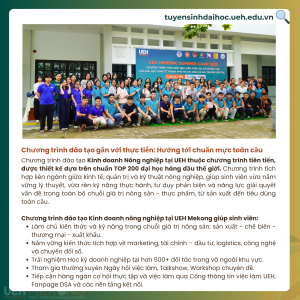
UEH Mekong’s article dated 08/09/2025 introduces training content on agricultural value chains and practical learning. The publicly available UEH matrix adds the names and required status of the dedicated courses.

|
04. Master’s in Smart and Creative Urban Management
|
Graduate students, urban professionals; ISCM–UEH
|
Full degree in sustainable urban management. Courses cover urban sustainability measurement, ecological planning, ecological architecture, sustainable mobility and StudioLab.
|
FULL DEGREE
Master’s; electives within the structure
|
SDG 9: urban technology; SDG 11: sustainable cities; SDG 13: mobility and adaptation.
|
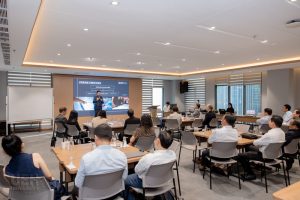
ISCM announced that an orientation session for SCIM Intake 4 students was held in October 2025. The publicly available training structure of the executive track (EMSCIM) illustrates in-depth courses on sustainable cities.
2025 admissions
|
05. Jean Monnet – EU4Sustainability: 7 interdisciplinary courses
|
Undergraduate students, Master’s students; UEH lecturers and international scholars
|
Seven dedicated courses ranging from Sustainable Development as a Global Trend to the EU Green Deal; covering EU law, green finance, SDG policy, diplomacy and sustainable society.
|
DEDICATED COURSES
7 courses; Jean Monnet module
|
SDG 4: learning content; SDG 12/13: green finance/climate; SDG 16: institutions; SDG 17: international cooperation.
|
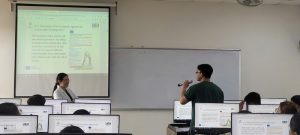
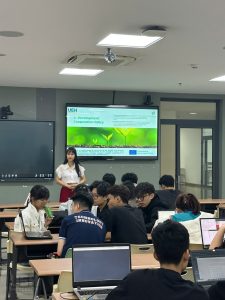
From January to July 2025, the project taught seven courses. UEH’s summary dated 07/08/2025 states that each course was organized into four independent classes and reports a class size of 18–25 learners per course.
|
06. Dedicated electives within the urban and CSEM programs
|
Graduate students in CSEM and Smart Urban Management
|
CSEM has the elective course Sustainable Production and Consumption (3 credits). The EMSCIM structure lists elective courses on urban sustainability measurement, ecological architecture and ecological planning, each worth 3 credits.
|
ELECTIVES
As per the program syllabus
|
SDG 11: cities; SDG 12: production/consumption; SDG 13: ecology and climate.
|
Two public program-structure pages confirm the names, credit numbers and elective status of these courses. This is evidence of the training catalog.
|
07. ESG Reporting and Organizational Value Creation – Accounting
|
Master’s students in Accounting; UEH Faculty of Accounting
|
A 3-credit elective, code ACC607008, in the applied-oriented Master’s in Accounting program. Learners analyze the impact of business decisions through environmental, social and governance factors, and practice integrated thinking and reporting to assess an organization’s long-term value.
|
DEDICATED COURSE
Postgraduate; elective course
|
SDG 4: professional competence; SDG 8: governance; SDG 12: ESG disclosure; SDG 13: environmental impact assessment.
|
The applied-oriented Master’s in Accounting structure places the course in the elective group in semester 2. The description page linked from the structure confirms code ACC607008, Master’s level and 3 credits.
Reference sources include the Master’s in Accounting structure and Course description ACC607008.
|
08. Required/Elective matrix of SDG courses; Environmental Economics and Sustainable Business
|
Students by major/program; UEH Quality Assurance and Internal Control Office
|
A table of SDGs 1–17 mapping each training program to its courses; for example, Economics has the elective: Environmental Economics; Agribusiness has the required course: Sustainable Food Supply Chains; CSEM has the elective: Sustainable Production and Consumption per the structure page.
|
ELECTIVES / CORE
Program matrix evidence
|
SDG 4: training programs; SDG 8: economics; SDG 12: consumption; SDG 13: environment.
|
The public matrix maps program and course names to the 17 SDGs, while distinguishing required courses from electives. The illustrative rows supplement the information on training content for the catalog in Section 2.
|

