Activity, Date and Source
|
Partners / Scope
|
UEH’s Form of Participation
|
Data Collected / Measured
|
Results / SDG Contributions
|
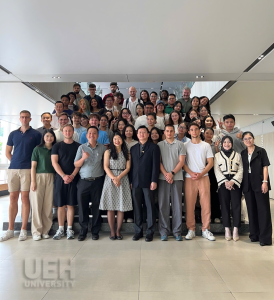
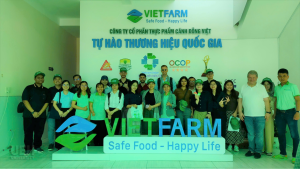
01. SEED 2025 – Field Surveys and Joint Analysis of Sustainable Livelihood Models in Khanh Hoa
Period: July 2025
Source: UEH Portal, published on 5 August 2025, “SEED 2025 Field Journey: UEH and International Students Co-create Solutions for Sustainable Local Development”
|
FHNW (Switzerland); partner universities from Indonesia, Malaysia, the Philippines and Singapore; UEH students and lecturers.
|
UEH, FHNW (Switzerland) and partner universities guided international student teams in conducting field surveys in Khanh Hoa in July 2025, interviewing businesses, observing livelihoods and comparing business models. UEH students and lecturers helped collect and analyze primary data, critically review findings and propose evidence-based solutions.
|
Primary data from observations, surveys and business interviews, including livelihoods, local product value chains, agricultural and food business models, business practices and market needs.
|
The 2025 outputs included field-survey findings, group presentations, analyses of local businesses and products, and proposals for marketing and sustainable development solutions, which were reviewed by UEH lecturers and international partners.
SDG contributions: SDGs 4, 8, 9, 12 and 17.
|
02. Women4Mangrove – Surveying Community Needs and Willingness to Participate in Mangrove Conservation
Period: 09–12/2025
Source: UEH Portal, published on 20 December 2025, “Women4Mangrove Project: Strengthening Community-based Conservation and Educational Agro-tourism Linked to Reforestation in the Mekong Delta”;
|
UEH as the lead institution; UNOPS/SEA Grants under the GEF–UNEP programme; local authorities and communities in Cu Lao Dung and An Thanh.
|
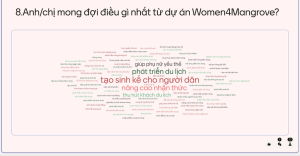
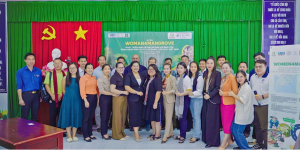
During the project launch phase in 2025, the UEH-led Women4Mangrove team worked with international programme partners, local authorities and communities to conduct field surveys in Cu Lao Dung/An Thanh. The surveys documented training needs, livelihood expectations, prospects for educational agro-tourism and the willingness of women and other residents to participate in conservation.
|
Information on training needs, livelihood expectations, economic opportunities, environmental education and residents’ willingness to participate, along with local conditions documented during field surveys.
|
The project team presented its community-survey findings at a stakeholder meeting in December 2025; the information was used to refine planned interventions, training and mangrove conservation activities.
SDG contributions: SDGs 5, 8, 13, 14, 15 and 17.
|
03. UEH–UNDP/Youth Co:Lab – National Study of the Youth Entrepreneurship Ecosystem, Published in 2025
Period: Published in August 2025
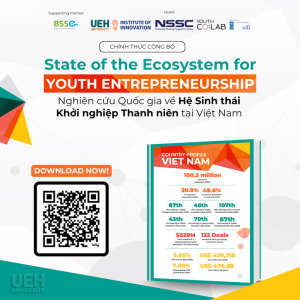
Source: UEH Portal, published on 22 August 2025, “Research Project on the Youth Entrepreneurship Ecosystem in Viet Nam, in Collaboration with UNDP Viet Nam, Officially Released in August 2025”
|
UNDP Viet Nam; Youth Co:Lab (UNDP–Citi Foundation); UEH Institute of Innovation (UII).
|
UEH, through its Institute of Innovation (UII), served as a research partner of UNDP/Youth Co:Lab, jointly collecting, systematizing and analyzing national data on youth entrepreneurship. The study drew on nationwide data, stakeholder consultations, interviews and focus-group discussions to assess components of the ecosystem. The research began in 2024, and UNDP officially published the findings on 11 August 2025.
|
Qualitative and quantitative data from surveys, interviews, stakeholder consultations and secondary sources were synthesized into six areas: policy and regulation, access to finance, human resources, entrepreneurial culture, infrastructure and markets. The report compared findings with regional trends and identified barriers relating to capital, mentoring support and regional disparities.
|
PUBLICLY AVAILABLE INTERNATIONAL OUTPUT IN 2025: UNDP published “State of the Ecosystem for Youth Entrepreneurship in Viet Nam” on 11 August 2025, presenting measurement findings and evidence-based recommendations for governments, businesses and entrepreneurship support organizations.
SDG contributions: SDGs 8, 9, 10 and 17.
|
04. EEPSEA – Quantitative Impact Evaluation of the Newton Fund in Viet Nam and Thailand
Period: Activities in 2025;
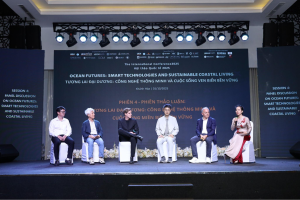
Source: UEH Portal, published on 30 January 2026, “The Economy and Environment Partnership for Southeast Asia: Connecting Science, Policy and Sustainable Action”
|
Economy and Environment Partnership for Southeast Asia (EEPSEA), UEH; evaluation of research programmes in Viet Nam and Thailand; the network’s international partners.
|
EEPSEA, an institute affiliated with UEH, conducted an independent impact evaluation of the Newton Fund programme in the two countries and developed quantitative analyses to derive policy lessons from programme implementation.
|
Data used to evaluate the impacts of science and technology programmes in Viet Nam and Thailand.
|
The EEPSEA annual review published in January 2026 recorded its Newton Fund impact evaluation activities in Viet Nam and Thailand during 2025, aimed at providing analyses for science and technology policy assessment.
SDG contributions: SDGs 9 and 17.
|
05. GS4Infra – Research on Gender, Water, Energy and Climate Data in Cu Lao Dung
Period: 2024–May 2025
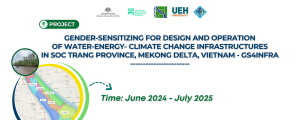
Source: UEH GS4Infra project page, “RESEARCH PROJECT: ‘Gender-sensitizing for Design and Operation of Water-Energy-Climate Change Infrastructures in Soc Trang Province, Mekong Delta, Vietnam – GS4INFRA’, June 2024 – May 2025”
|
UEH and Can Tho University; Mekong Think Tank Programme/DFAT Australia; local partners.
|
The interdisciplinary research team surveyed community groups about their participation in, and benefits from, irrigation infrastructure, dikes, irrigation canals and salinity-control sluices, and developed recommendations for gender mainstreaming.
|
Surveys in An Thanh Dong and An Thanh Nam documented differentiated infrastructure impacts on women and vulnerable groups.
|
Public sources confirmed that GS4Infra was implemented from June 2024 to May 2025, aiming to study gender issues and access to water, energy and climate infrastructure. The consultation milestone in January 2025 and the recommendations report in March 2025 were included in the project plan.
SDG contributions: SDGs 5, 6, 13 and 17.
|
06. APN – Evaluation of Nature-based Solutions for Urban Water Security in Southeast Asia
Period: 2024-2027
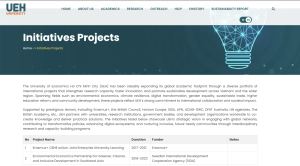
Source: UEH International Projects (project list)
|
Asia-Pacific Network for Global Change Research (APN); partners in Viet Nam, Thailand and Cambodia.
|
UEH participated in the APN Nature-based Solutions project for 2024–2027 with regional partners in Viet Nam, Thailand and Cambodia, with the aim of developing methods to assess urban water security and nature-based solutions. The publicly available project page currently confirmed participation and research objectives.
|
The project framework addressed water supply and demand assessments, climate impacts and modeling of nature-based solution (NBS) scenarios in three cities.
|
UEH listed this as an ongoing international research project. Assessments of water supply and demand, climate scenarios and NBS impacts were planned activities.
SDG contributions: SDGs 6, 11, 13 and 17.
|
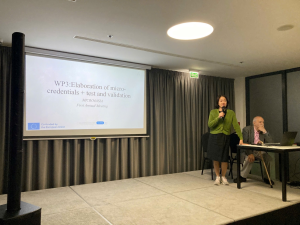
07. MICRO4ASIA – Developing and Standardizing Micro-credential Assessment Criteria with Erasmus+ Partners
Period: 27–28/11/2025
Source: UEH Portal, published on 4 December 2025, “MICRO4ASIA Project: First Annual Meeting at the University of Dubrovnik, Croatia – Advancing Higher Education Modernization in Viet Nam and Laos”
|
Ten universities from Viet Nam, Laos and Europe; Erasmus+; UEH as coordinator of WP3.
|
UEH coordinated Work Package 3 of MICRO4ASIA with Erasmus+ partners in Viet Nam, Laos and Europe. During 2025, UEH reported progress in developing micro-credentials, learning outcomes, quality assurance reviews and pilot plans. This was an international collaboration on educational assessment design.
|
Activities in 2025 primarily involved developing standards frameworks, training content and assessment procedures; a pilot involving 500 students was planned for completion before September 2026.
|
The annual meeting in Croatia on 27–28 November 2025 documented discussions and a progress report on WP3.
SDG contributions: SDGs 4, 8 and 17.
|
08. UEH–University of Gothenburg International Collaboration on Measuring Shrimp Farming Sustainability Using Aquaculture Performance Indicators (API).
Period: Published on 7 January 2025.
Source: Aquaculture Economics & Management, article “Shrimp farming industry in Vietnam: An aquaculture performance indicators approach”; UEH Digital Repository (2025).
|
University of Gothenburg (Sweden); EEPSEA and the UEH College of Economics. The research team comprised Thong Quoc Ho, Huu-Luat Do and Håkan Eggert.
|
Authors Thong Q. Ho and Huu-Luat Do (UEH/EEPSEA), together with Håkan Eggert (University of Gothenburg, Sweden), published a quantitative study applying the Aquaculture Performance Indicators (API) framework and the Triple Bottom Line approach to measure the economic, social and environmental performance of shrimp farming in Viet Nam. The peer-reviewed article was published online on 7 January 2025.
|
The study collected and analyzed data on four shrimp farming systems: extensive, semi-intensive, intensive and super-intensive. The API framework measured profitability, labor benefits, water use, wastewater and environmental performance, enabling comparisons across production models and with international benchmarks.
|
PEER-REVIEWED INTERNATIONAL MEASUREMENT OUTPUT: The article “Shrimp farming industry in Vietnam: An aquaculture performance indicators approach” was published online on 7 January 2025 in Aquaculture Economics & Management (Vol. 29, Issue 2, pp. 207–230). The findings showed that intensive farming systems performed better economically but faced water and waste management challenges, providing comparative evidence for developing more sustainable aquaculture practices.
SDG contributions: SDGs 8, 12, 13, 14 and 17.
|
09. Contribution to the OECD Expert Survey Dataset on the Paris Agreement’s Impacts; the Survey Began in 2024 and the Report Was Published on 17 November 2025. Source: OECD (2025), “The Paris Agreement at Ten Years: Expert Views on Progress and Challenges for Climate Change Mitigation”.
|
Organisation for Economic Co-operation and Development (OECD); government experts and international research organizations, including scholars who listed UEH and EEPSEA/EfD-Vietnam as their institutional affiliations.
|
The OECD recorded responses to its international expert survey from researchers who reported institutional affiliations with UEH and EEPSEA/EfD-Vietnam. These constituted expert data contributions to a study assessing the impact of the Paris Agreement.
|
The international survey used a structured questionnaire and Likert scales to assess the Paris Agreement’s effects on climate ambition, policy and international cooperation. The OECD reported 178 non-government responses from 116 organizations; Appendix Table 2.A.2 listed four responses affiliated with the University of Economics Ho Chi Minh City and one affiliated with EfD-Vietnam/EEPSEA/UEH.
|
The OECD published quantitative analyses and impact-assessment scenarios for the Paris Agreement in its report on 17 November 2025; the survey project had started in 2024.
SDG contributions: SDGs 13 and 17.
|
10. Blue Resources for Development (BlueRforD) – The EfD Network Supporting International Collaboration on Fisheries and Aquaculture Measurement.
Period: Activities in 2025.
Source: Environment for Development (EfD) network, “BlueRforD: Advancing research for sustainable fisheries and aquaculture”.
|
EfD network coordinated by the University of Gothenburg; EfD-Vietnam/EEPSEA at UEH and research groups in Asia, Africa and Latin America; international development partners.
|
EfD-Vietnam participated in the BlueRforD research network, connecting research in environmental economics and marine resources. In 2025, the EfD-Vietnam team participated in scientific activities concerning fisheries and aquaculture; the network promoted the use of the API framework to assess the performance of production systems.
|
The network used Aquaculture Performance Indicators (API) to measure the economic, social and environmental conditions of aquaculture systems in multiple countries, and also investigated nutrient pollution, disease, antibiotic use and marine resource management.
|
In 2025, the EfD/BlueRforD network disseminated API-based studies and policy briefs for fisheries and aquaculture sectors across several countries.
SDG contributions: SDGs 2, 12, 14 and 17.
|
11. TVSEP 2025 – International Collaboration to Access, Compare and Analyze Viet Nam–Thailand Household Survey Data.
Period: 5–7 March 2025.
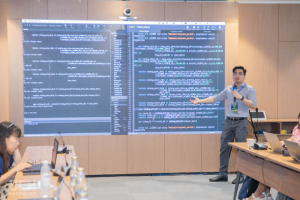
Source: UEH Portal, published on 10 March 2025, “TVSEP 2025 Workshop at UEH: Discussing Poverty and Sustainable Development in Thailand and Viet Nam”.
|
Thailand Vietnam Socio Economic Panel (TVSEP); research partners from Germany and Thailand; UEH-CELG and international researchers.
|
UEH-CELG worked with the TVSEP network and researchers from Leibniz University Hannover (Germany) and Thailand to organize the Data User Workshop on 5 March 2025 and an international conference on 6–7 March 2025. UEH representatives discussed methods for measuring multidimensional poverty, inequality, migration and the effects of weather shocks, and guided researchers in using existing TVSEP datasets.
|
The training and analyses in 2025 used cross-national TVSEP household survey data to study monetary and multidimensional poverty, assets, return migration, financial inclusion, weather shocks and adaptive capacity. This provided evidence of collaboration in SDG-related data measurement and analysis, distinct from primary data collection conducted during earlier survey waves.
|
On 5 March 2025, more than 60 participants learned to use TVSEP data; the conference on 6–7 March 2025 brought together over 100 researchers from multiple countries to discuss quantitative analyses and policy directions. Leibniz University Hannover independently published confirmation that the workshop was jointly organized with UEH-CELG.
SDG contributions: SDGs 1, 4, 8, 10, 13 and 17.
|

