

The University of Economics Ho Chi Minh City (UEH) develops mechanisms enabling local stakeholders to contribute to its governance and decision making. In 2025, these mechanisms were demonstrated through external members’ participation in the University Council, discussions and voting on governance matters, and the establishment of the Strategic Development Council to receive external advice.
- Organisational Basis and External Representation
The Regulations on the Organisation and Operation of UEH, issued with Resolution No. 30/NQ-ĐHKT-HĐĐH dated 10 November 2023, were cited in UEH’s previous evidence article as the basis for external members’ participation in its governing body.
In 2025, the UEH University Council for the 2025–2030 term was recognised under Decision No. 2318/QĐ-BGDĐT dated 15 August 2025, comprising 27 members. The publicly available list identifies nine external members, representing 33.3% of the total, providing a formal channel for agencies, organisations and individuals outside UEH to participate in Council activities.
Article 21 establishes specific working arrangements: decisions are made by majority vote; meeting notices and documents are circulated in advance; and each member has one vote. A valid meeting must include external members. The Regulations also provide for written consultation.
External members’ participation is therefore linked to access to information and the right to participate in decision making.
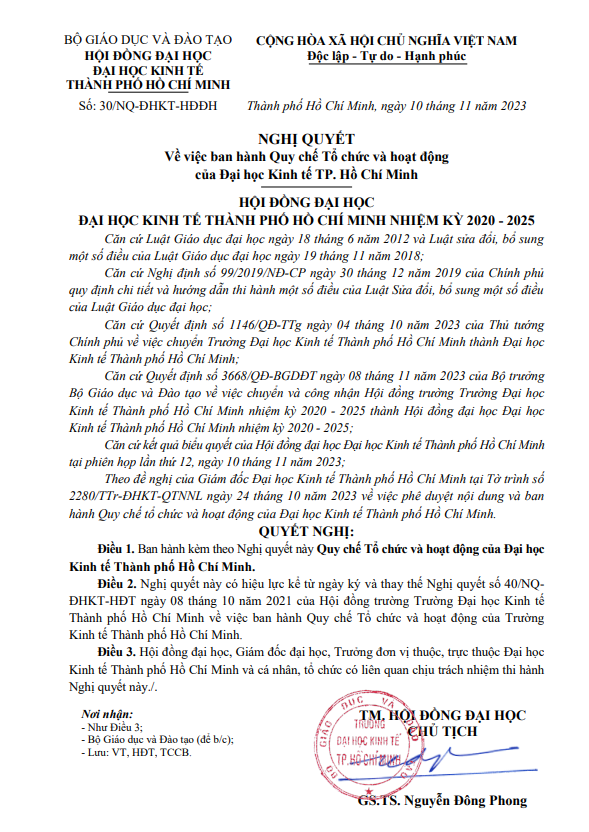
Figure 1. Provisions on external UEH members and their right to participate in University Council decision making.
- Public Disclosure of Representation in the University Council in 2025
On 15 August 2025, the Minister of Education and Training issued Decision No. 2318/QĐ-BGDĐT recognising the UEH University Council for the 2025–2030 term, comprising 27 members. According to the publicly available list, nine are external members, equivalent to 33.3% of the total.
They include Mr Nguyễn Anh Đức, Deputy Director of the Ho Chi Minh City Department of Industry and Trade; Mr Nguyễn Ngọc Hòa, Chairman of the Ho Chi Minh City Union of Business Associations and a leader of HFIC; Mr Lâm Nguyễn Hải Long, Chairman of the Ho Chi Minh City Computer Association; and business representatives.
This composition confirms the presence of local government, associations and businesses in UEH’s governing body.
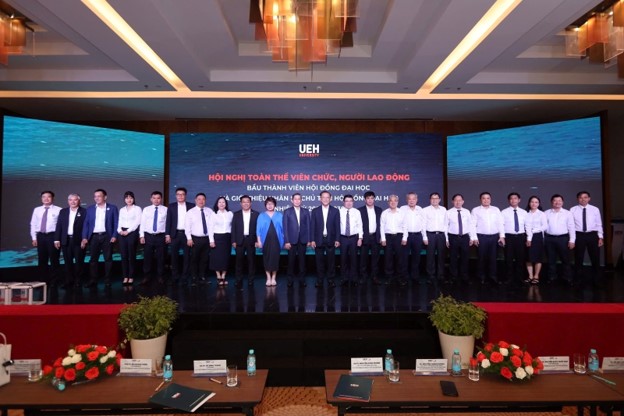
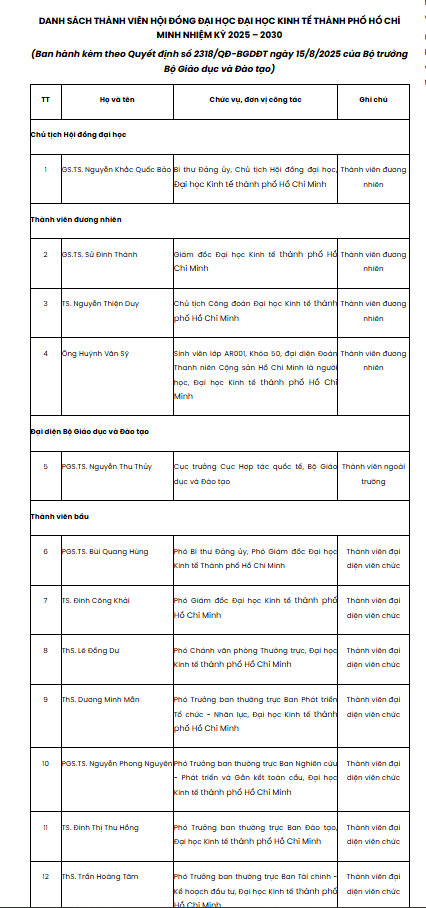
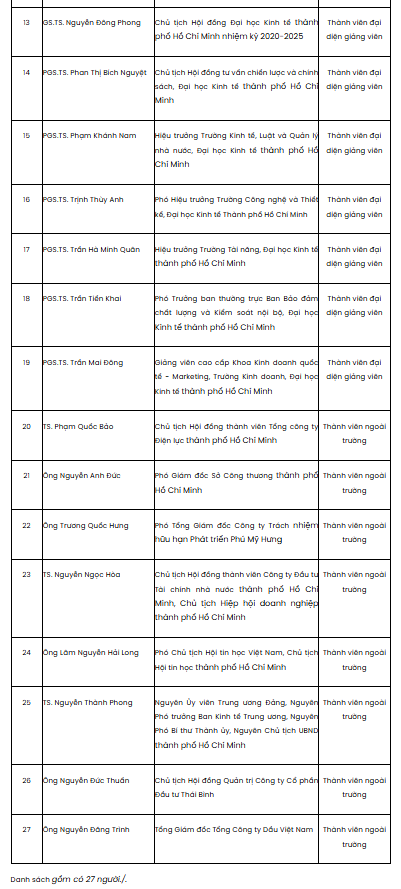
Membership list of the University Council of the University of Economics Ho Chi Minh City (UEH) for the 2025–2030 term.
[Source: UEH University Council and Council Chairperson for the 2025–2030 term, 19 August 2025]
- Implementation through Council Activities in 2025
| Activity | Participants | Activity content | Results and impact and evidence sources |
| Election of an additional external member, 7 January 2025 | Staff and employee delegates; candidate for external Council membership | Election of one additional external member to the University Council for the 2020–2025 term under Resolution No. 47/NQ-ĐHKT-HĐĐH.
|
Demonstrates implementation of the procedure for selecting external members. The article states that the election result would be submitted to the competent authority for recognition. |
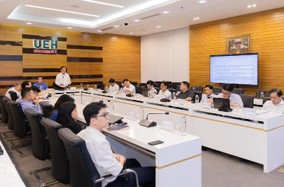
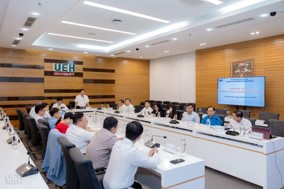
| 18th meeting, 20 June 2025 | University Council for the 2020–2025 term | Consideration of proposed investment in an innovation centre in Nha Trang, tuition policies, renovation of Campus A and the utilisation of public assets.
|
Documents discussion and agreement on specific UEH governance matters.
[Source: 18th meeting of the UEH University Council for the 2020–2025 term, 20 June 2025] |
| Second meeting, 20 August 2025 | University Council for the 2025–2030 term | Consolidation of personnel arrangements, consideration of leadership appointment plans, and agreement to continue applying existing regulations until replaced.
|
Demonstrates the operation of the governing body for the new term and continuity of the regulatory framework. |
| Fourth meeting, 25 December 2025 | University Council for the 2025–2030 term | Discussion of proposals to introduce new programmes, admissions, finance, procurement regulations and project progress; voting on agenda items.
|
The Council participated in considering and deciding matters concerning UEH’s operations, resources and development. |
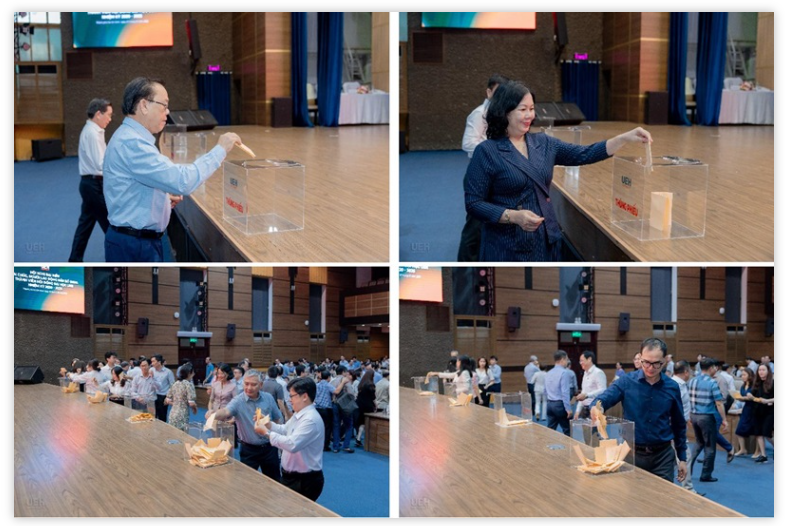

- Continuing Participation through the UEH Strategic Development Council
UEH issued the Regulations on the Organisation and Operation of the Strategic Development Council under Document No. 3274/QC-ĐHKT-PTTCNL dated 24 October 2025, establishing a mechanism for internal and external members to advise on the University’s governance and development directions.
Under Article 5(1), the Council has a five-year term and no more than 15 members, comprising members within UEH and external members working in relevant fields. This provision establishes an organisational basis for incorporating external experience and perspectives into UEH’s development directions.
Participation is specified through rights to access information, contribute views and convey advisory proposals to UEH’s leadership:
| Basis in Regulation No. 3274 | Regulatory provisions | Participation mechanism in UEH governance |
| Article 2(1–6) | The Council advises on strategy, organisation, human resources, education, science and technology, partner engagement, and the use of finance and assets. | Advice addresses specific matters concerning university governance and development. |
| Article 3(1–2) | Members may express views, discuss and agree on advisory content, and receive the necessary documents and information. | Members have the conditions needed to study issues and contribute, rather than merely attend. |
| Article 3(3) | The Chairperson presents the Council’s advice at UEH meetings. | Provides a channel for conveying the Council’s collective views to University meetings. |
| Article 4 | The Council works collectively and makes decisions by majority vote. | Advisory positions are developed through Council discussion and voting. |
| Article 5(4) | Members must prepare contributions and attend meetings; absent members submit written views to the Secretary. | Maintains opportunities for contributions even when members cannot attend in person. |
| Article 5(5) | The Secretary prepares agendas and documents, finalises and archives records, and serves as the liaison among members. | Identifies the focal point for organising and documenting consultation. |
| Article 6(1–3) | The Council conducts research, makes recommendations and undertakes workshops, conferences and surveys; meets at least once per semester; and consolidates agreed findings and views in writing for submission to the President. | Specifies participation formats, minimum meeting frequency and written advisory outputs for the decision maker. |
[Source: Signed PDF]
The UEH Strategic Development Council for the 2025–2030 term was established under Decision No. 4018/QĐ-ĐHKT-PTTCNL dated 19 December 2025 and publicly announced on 25 December 2025. Publication of its membership and operating regulations establishes an organised advisory channel, with access to information and a procedure for submitting written views to the UEH President.
[Source: Decision establishing the UEH Strategic Development Council, 19 December 2025]
[Source: UEH Portal – Official launch of the UEH Strategic Development Council, 25 December 2025]
The Strategic Development Council performs an advisory function, while the UEH President exercises decision-making authority under the applicable regulations. Article 8(1) also specifies that these Regulations replace the mechanism of the “UEH Strategic and Policy Advisory Council”; this provision should not be described as replacing the University Council.
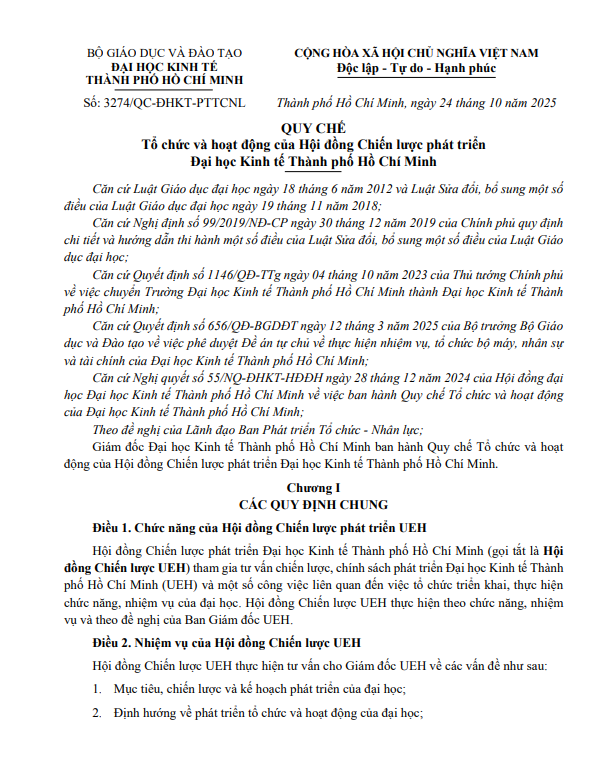
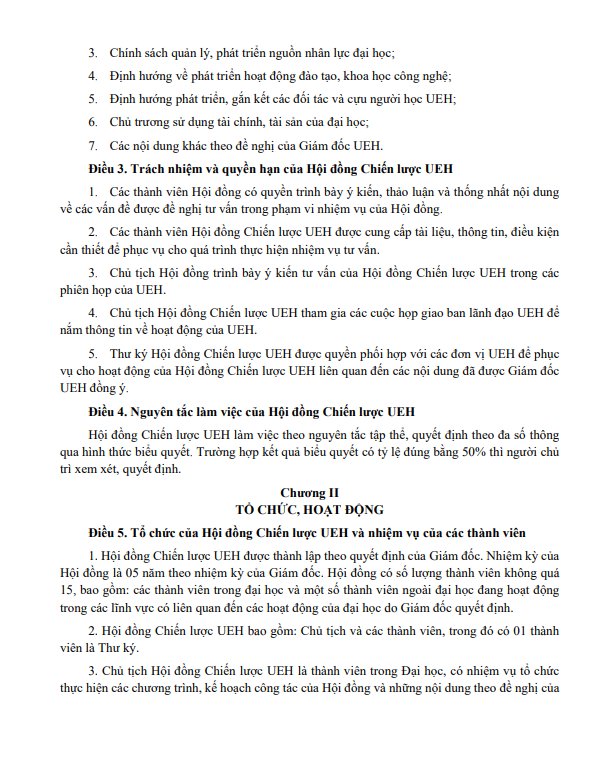
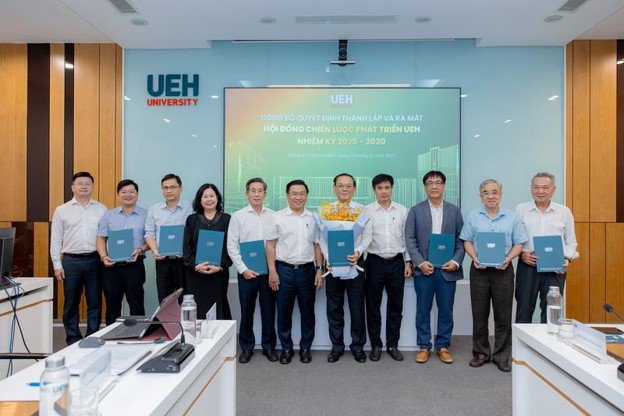
Figure. The Regulations establish rights to access information and contribute views, and a mechanism for conveying advisory input to UEH’s leadership.
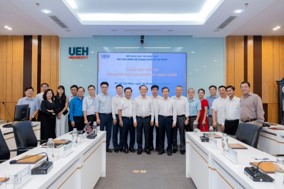
UEH officially announces the decision establishing the UEH Strategic Development Council.
[Source: Official launch of the UEH Strategic Development Council, 25 December 2025]
- Conclusion
UEH continues to develop stakeholder participation in governance by specifying external members’ rights, publicly disclosing representation and holding Council meetings that address practical University matters. In 2025, the presence of local government, business and association representatives in the University Council provided a basis for connecting societal perspectives with UEH’s governance.
The announcement of the Strategic Development Council at the end of the year added an advisory channel for long-term development directions. These mechanisms contribute to transparency, receptiveness to external views and alignment between university development and local realities.