

13.3.1 Local Education Programmes on Climate
The University of Economics Ho Chi Minh City (UEH) implements local education programmes and awareness-raising campaigns addressing the risks and impacts of climate change, emissions mitigation, adaptation, loss and damage reduction, and disaster response.
In 2025, these activities were delivered through the UEH Model United Nations climate education programme for young people, an intensive climate-change analysis training course in collaboration with the World Bank, the Youth Digital Citizen Challenge – AI for Climate, and knowledge-sharing seminars on climate issues in the Mekong Delta. Bringing together school pupils, university students, young people, experts, and representatives of local agencies, these programmes connected scientific knowledge with practical climate challenges, helping to raise awareness and strengthen adaptation capacity among communities beyond the UEH campus.
1. Policies and orientations for local climate-change adaptation education programmes
In 2025, UEH maintained its commitment to environmental education and awareness-raising through the Green University Practice Regulations, promulgated under Decision No. 2059/QD-DHKT-CSVC in 2022. During 2025, UEH continued to review, update, and refine the Green University Regulations to strengthen greenhouse gas emissions reduction, energy efficiency, and adaptation to climate change.
According to the Regulations published on the UEH Green Campus website, Article 5, Clause 17 addresses strengthening communication and awareness training on carbon emissions; Article 9, Clause 2 encourages training programmes, seminars, and communication campaigns on emissions reduction and climate-change adaptation; and Article 10 provides for community outreach programmes on energy efficiency. These provisions support UEH in delivering education programmes, sharing knowledge, and encouraging climate action in 2025.
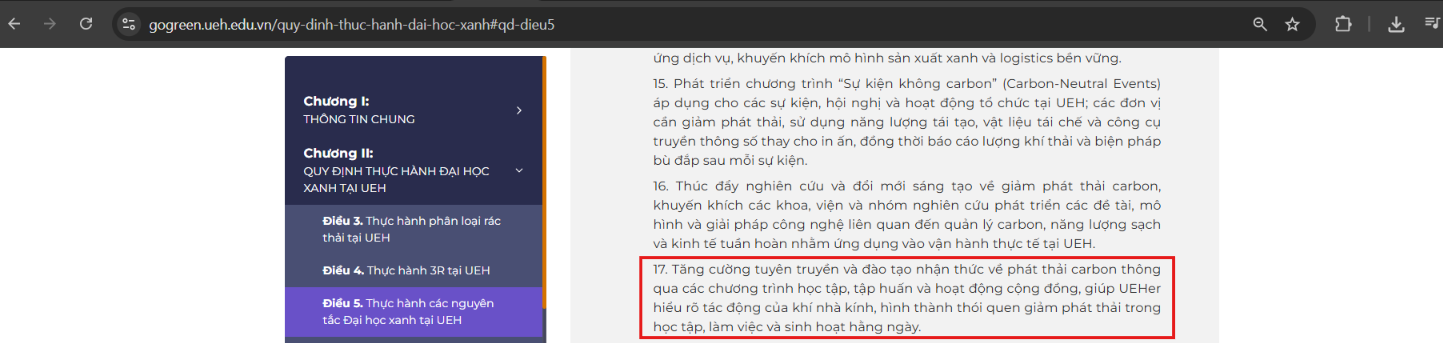
Article 5, Clause 17 of the UEH Green University Regulations under Decision No. 2059/QD-DHKT-CSVC
Public source: UEH Green Campus website, “Green University Regulations”
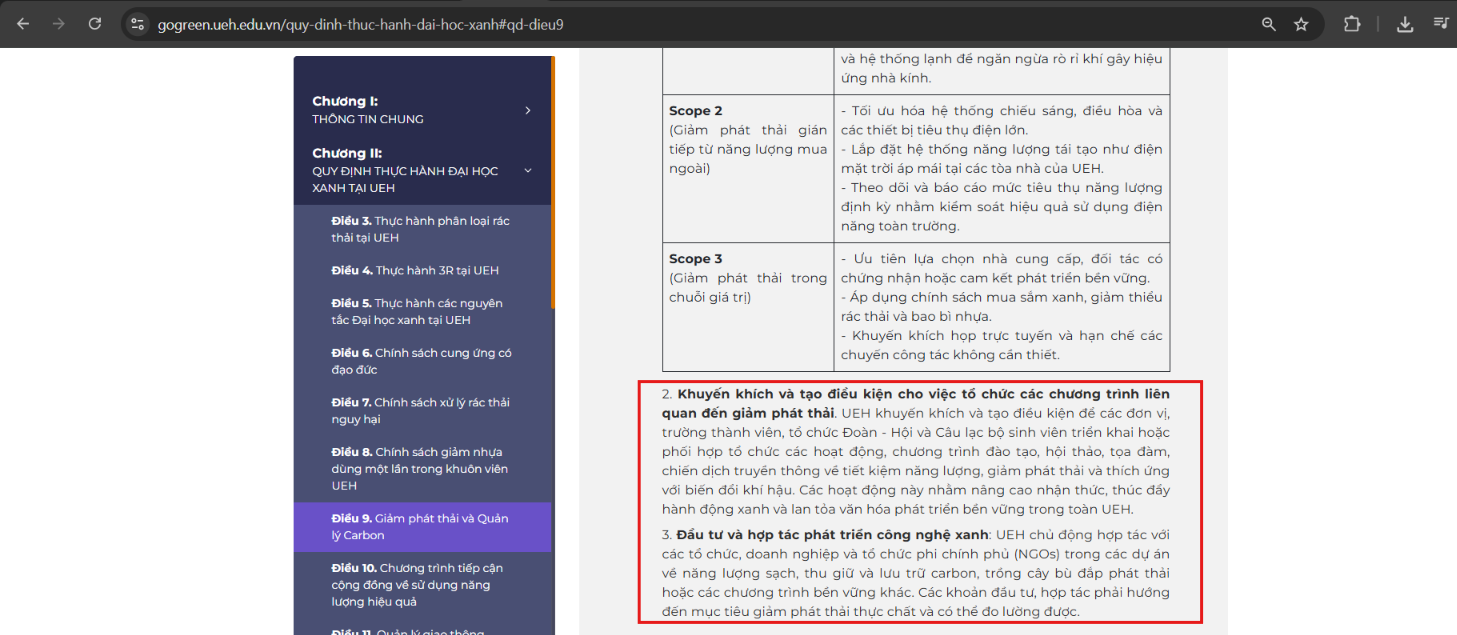
Article 9 of the UEH Green University Regulations under Decision No. 2059/QD-DHKT-CSVC
Public source: UEH Green Campus website, “Green University Regulations”
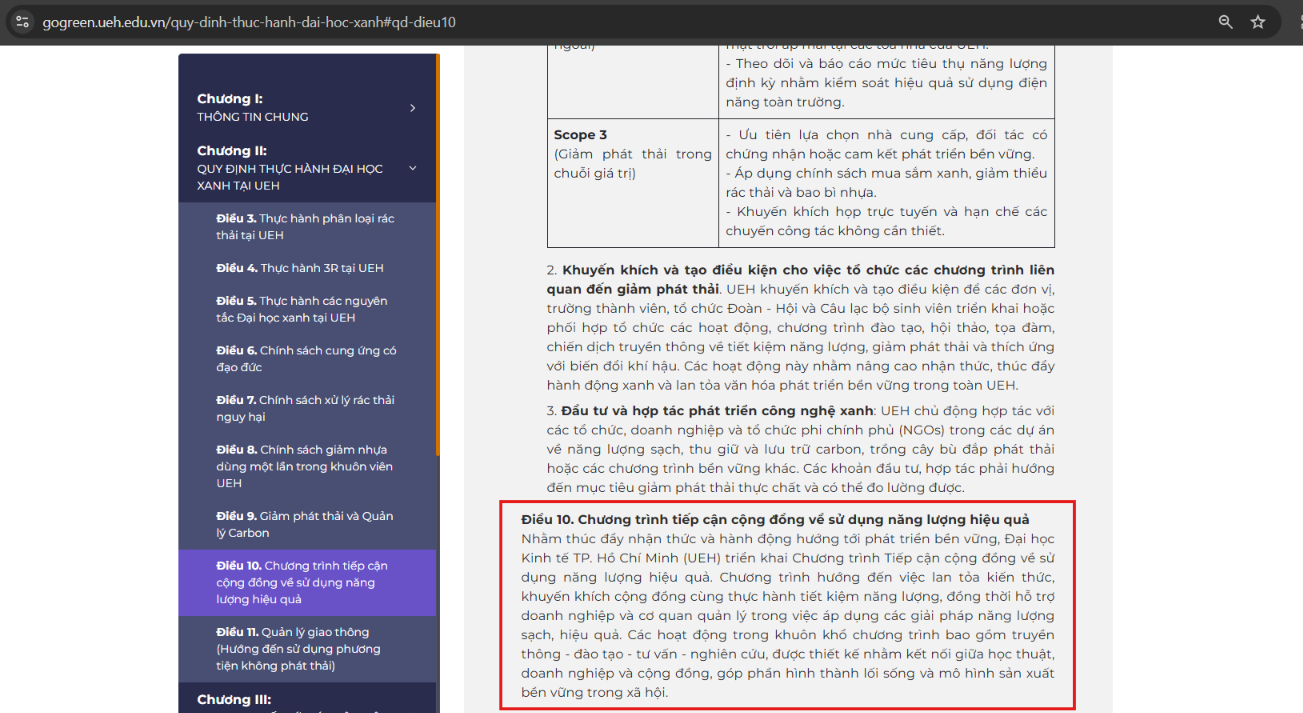
Article 10 of the UEH Green University Regulations under Decision No. 2059/QD-DHKT-CSVC
Public source: UEH Green Campus website, “Green University Regulations”
2. Selected activities integrating local climate-change adaptation education programmes
Intensive training in the application of Computable General Equilibrium (CGE) modelling to climate-change analysis
UEH’s intensive training course in Computable General Equilibrium (CGE) modelling used the World Bank’s MANAGE model (The Mitigation, Adaptation and New Technologies Applied General Equilibrium), focusing on developing skills in data simulation, impact analysis, and the assessment of policy scenarios for emissions mitigation and adaptation to climate risks.
The programme comprised online sessions in December 2024 and March 2025, followed by in-person training at UEH from 31 March to 4 April 2025. Guided by World Bank experts, 17 participants from various educational institutions and specialist organisations across the country gained knowledge and practical skills in applying CGE models, analysing climate-change impacts, simulating scenarios, and assessing adaptation strategies. Participants used software, datasets, and practical exercises to apply this knowledge in research and climate-policy analysis, helping strengthen the professional capacity of organisations outside UEH.
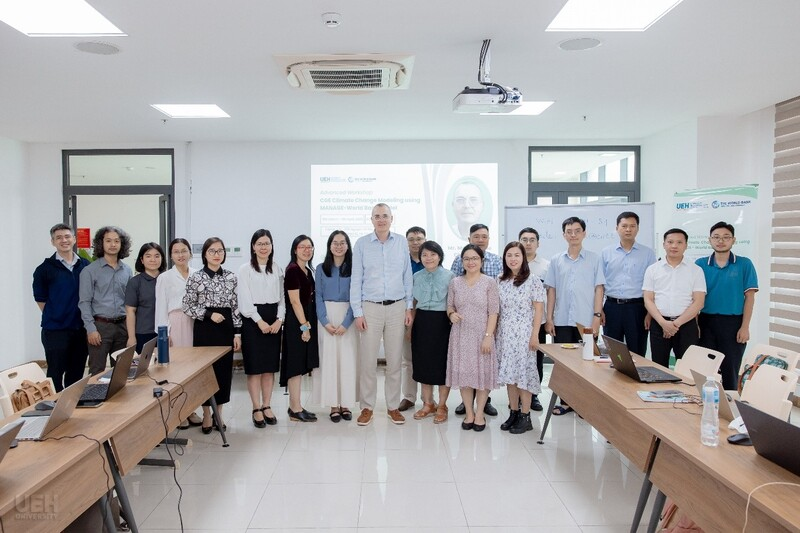
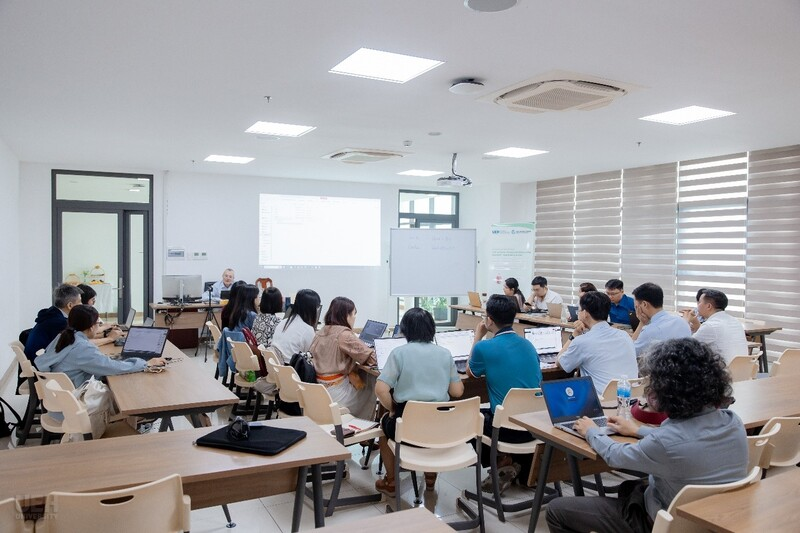
Images of the training course for participants from research and educational institutions with World Bank experts at UEH’s Campus B.
UEH Model United Nations 2025 – A journey for young people to explore and devise solutions to global challenges
In 2025, UEH organised the UEH Model United Nations 2025 conference, attracting interest from more than 600 school and university students in Ho Chi Minh City, of whom 60 delegates and 60 observers were selected for official participation. The programme featured two simulated councils, UNDRR and UNEP, focusing on disaster response in the age of technology, risk forecasting, loss reduction, strengthening resilience, and advancing climate action through green higher education. Through discussions, case analyses, and the proposal of solutions, participants learned about environmental hazards, the role of forecasting technologies, and measures to minimise disaster-related losses. Concluding on 11 May 2025, the programme extended climate education to local young people while encouraging their active involvement in climate-change responses.
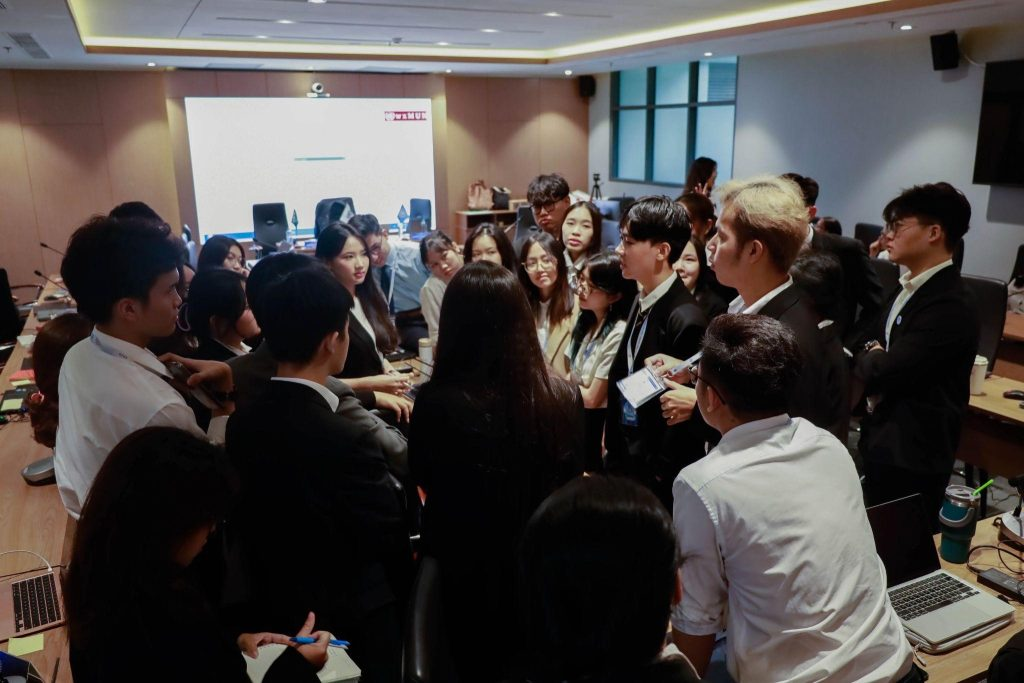
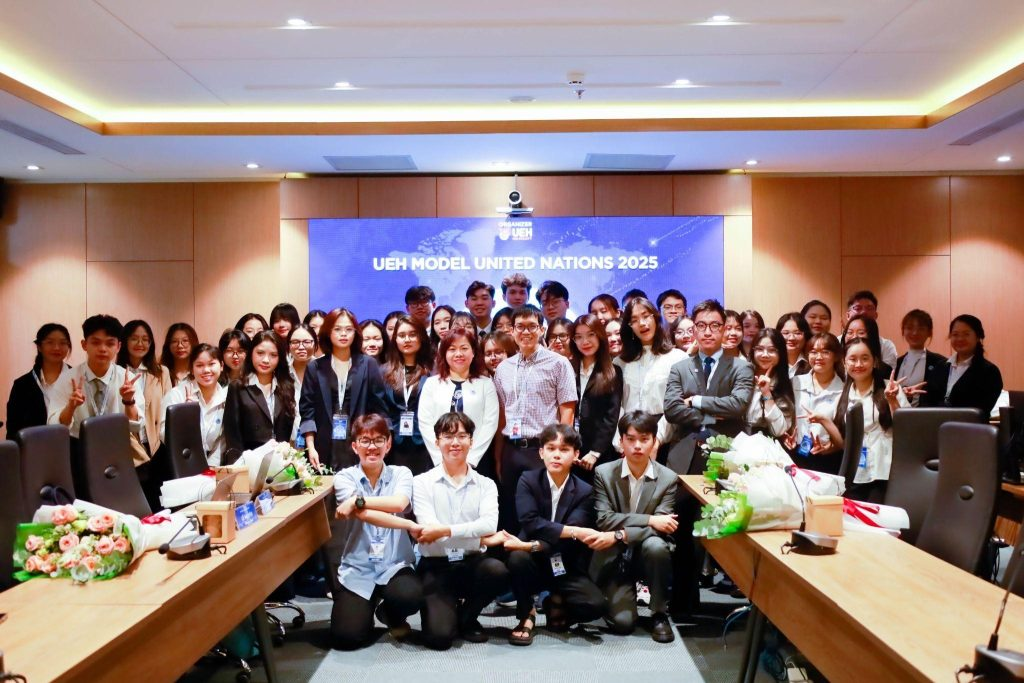
Images of UEH Model United Nations 2025, providing an educational environment for school and university students on disaster-risk management, loss-reduction solutions, the application of technology, and action to respond to climate change.
UEH organises an international student exchange between the Institute of International Education (ISB) and UEH Mekong students
UEH’s climate-education talkshow focused on key challenges in the Mekong Delta, including climate-change risks, water security, and green economic development, while sharing solutions for smart agriculture, adaptation, and resource conservation. The event attracted active participation from students of UEH’s Vinh Long Campus (UEH Mekong) and the ISB exchange delegation, including international students. The event fostered intercultural knowledge exchange on local climate risks, raising learners’ awareness and capacity to propose adaptation and sustainable development solutions appropriate to the Mekong Basin.
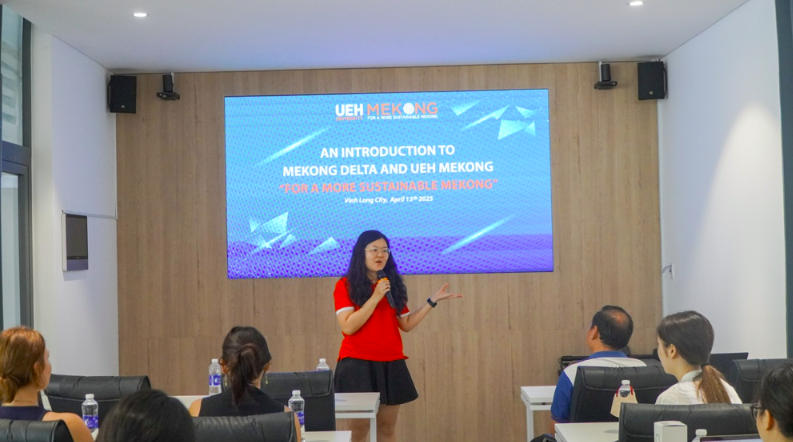
Images from the “For a Sustainable Mekong” exchange and knowledge-sharing programme addressing climate-change challenges, water-resource protection, sustainable agriculture, and adaptation solutions suited to conditions in the Mekong Delta.
Scientific seminar in Can Tho: Innovation and the development of climate-resilient transport infrastructure
The thematic discussion programme focused on identifying climate-related challenges and impacts on infrastructure systems, then proposing solutions to improve climate resilience through innovation and resource mobilisation for climate-adaptive transport development. Co-organised by UEH and the Can Tho Department of Science and Technology, the event brought together government agencies, businesses, researchers, and local experts. It expanded the network for sharing climate knowledge and sustainable infrastructure solutions, strengthening the capacity of public managers and businesses in Can Tho to respond to climate-related hazards.
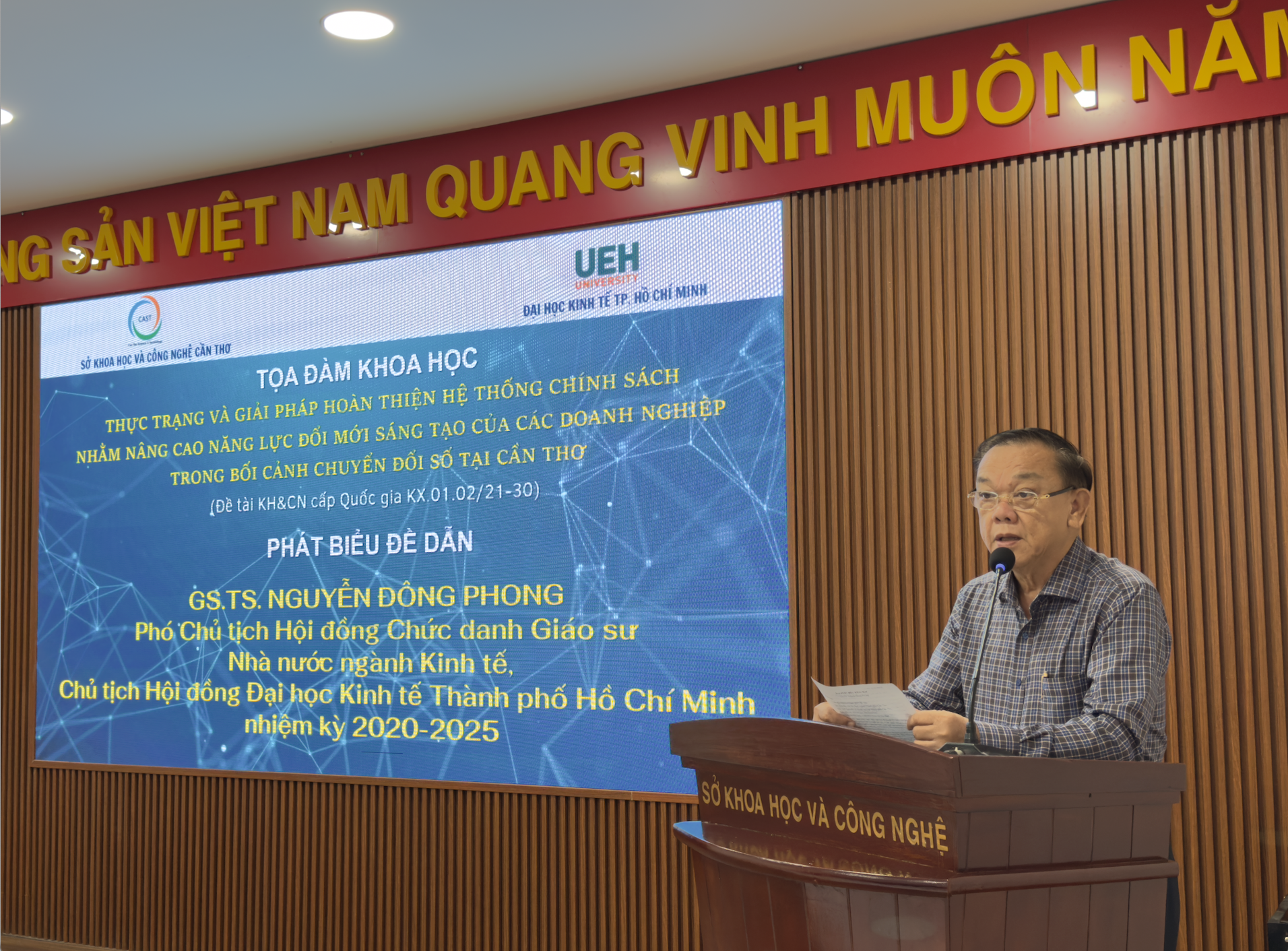
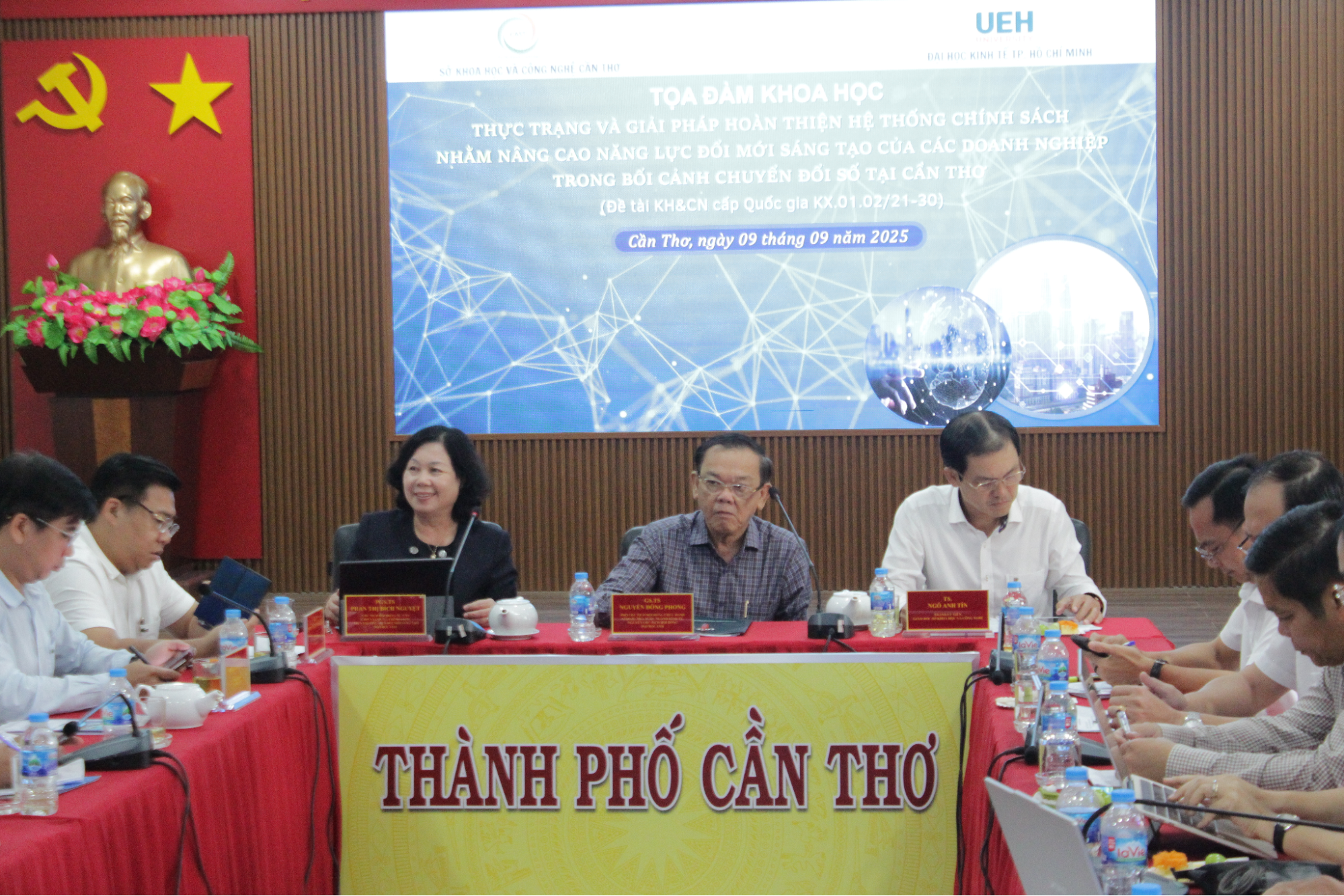
Images of the scientific seminar in Can Tho attended by UEH, government agencies, and experts, discussing innovative solutions to strengthen resilience and develop transport infrastructure adapted to climate change in the Mekong Delta.
Scientific seminar: Innovative approaches to mobilising and effectively using resources for climate-resilient transport infrastructure development in Vinh Long
The thematic seminar analysed prevailing conditions, climate risks, and climate impacts in the Mekong Delta, before proposing solutions for mobilising and effectively deploying resources for transport infrastructure development to strengthen climate adaptation and regional resilience. Co-organised by UEH and the Vinh Long Provincial People’s Committee, the event brought together numerous representatives of state management agencies, scientists, economists, and local stakeholders. It provided a forum for direct education and policy dialogue, offering a robust technical basis for climate-policy discussions and supporting Vinh Long Province and the wider Mekong Delta in proactively responding to climate-related hazards.
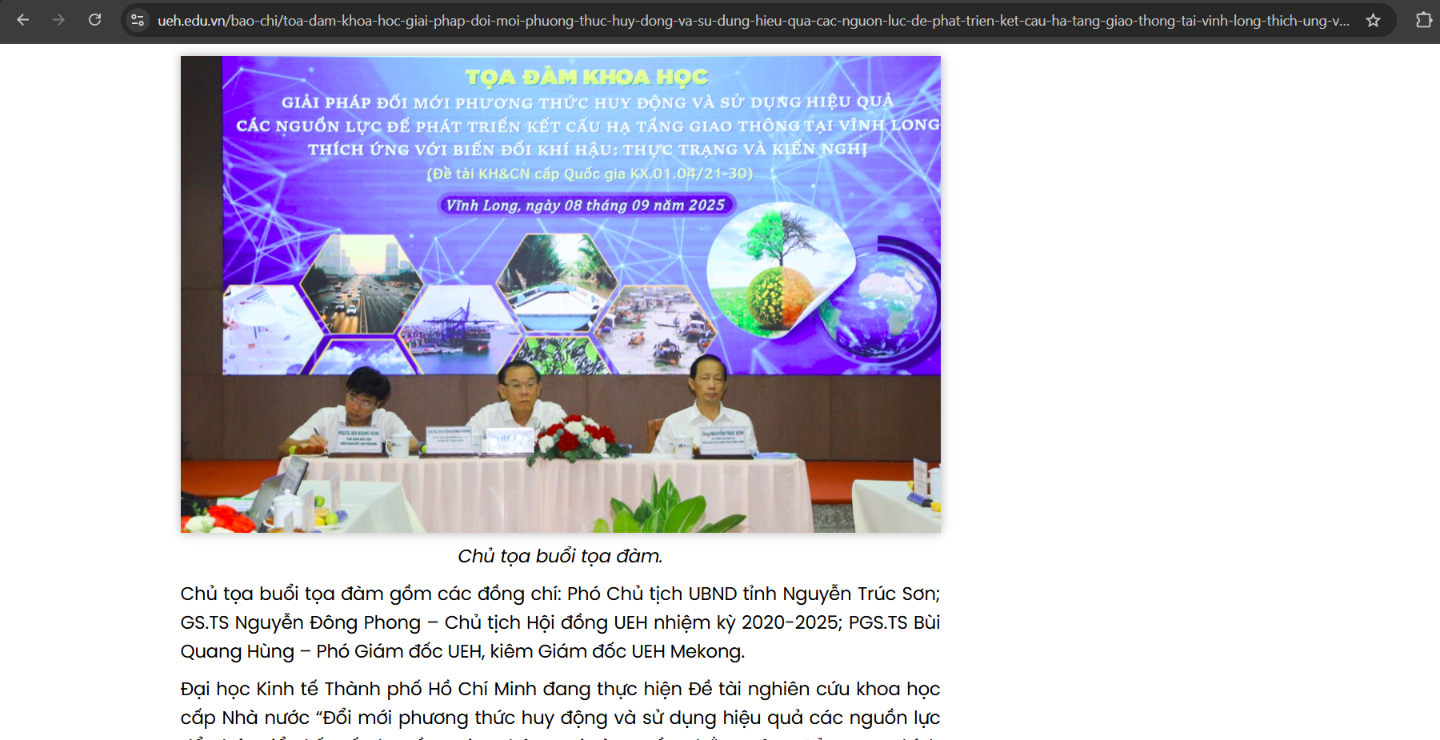
Images of the scientific seminar between UEH and representatives of Vinh Long Province on the effects of climate change on transport infrastructure, sharing planning orientations and solutions for locally adapted infrastructure development.
Scientific seminar programme in Dong Thap: “Innovative Approaches to Mobilising and Effectively Using Resources for Climate-Resilient Transport Infrastructure Development in Dong Thap”
The thematic seminar assessed climate-change impacts on transport infrastructure, identified regional development risks, and integrated climate considerations into planning while proposing solutions to strengthen climate adaptation in response to local needs. Co-organised by UEH and the Dong Thap Department of Construction, the forum attracted representatives from provincial departments and agencies, specialists, and researchers. The event provided meaningful professional education and knowledge exchange for stakeholders in Dong Thap, directly generating policy recommendations for sustainable transport infrastructure development and helping local authorities anticipate climate-related hazards and build long-term resilience.
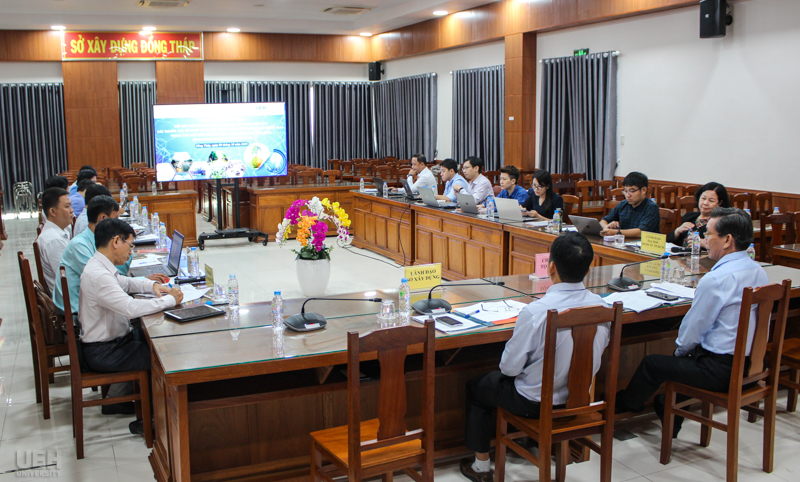
Images of the Dong Thap scientific seminar on the impacts of climate change on transport infrastructure, helping disseminate knowledge and discuss planning solutions, resource mobilisation, and climate-resilient infrastructure development with local government agencies.
UEH joins An Giang Province in seeking solutions for sustainable transport infrastructure development adapted to climate change
The thematic seminar examined climate-related challenges and impacts on Mekong Delta infrastructure, particularly hazards such as erosion and saltwater intrusion, and identified approaches to resource mobilisation and improving infrastructure resilience. Co-organised by UEH and the An Giang Provincial People’s Committee, it brought together representatives of local management agencies, experts, researchers, and relevant stakeholders. The programme extended the reach of climate-adaptation knowledge transfer to An Giang, promoting research–policy dialogue between UEH and local government to enhance community disaster-response capacity.
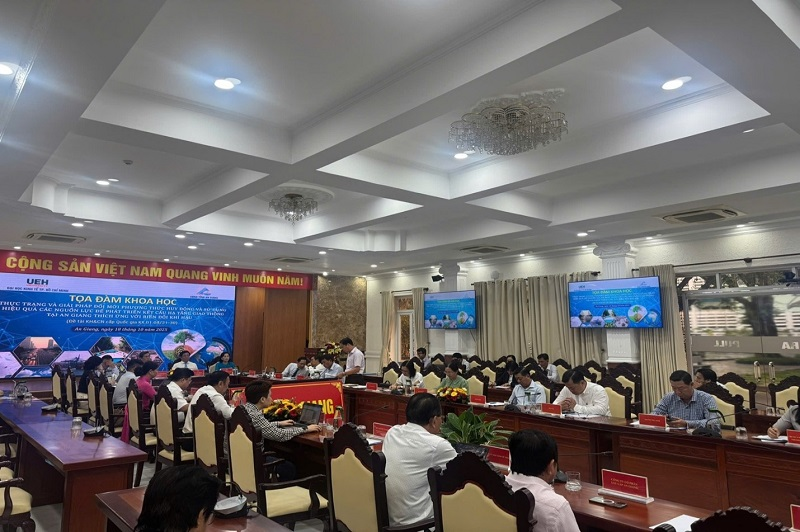
Images of the scientific seminar at the An Giang Provincial People’s Committee, sharing knowledge and responses to climate risks such as erosion and saltwater intrusion, and raising awareness of climate-resilient planning and transport infrastructure development at the local level.
UEH–NEU National Scientific Conference Series: Transport infrastructure development in the Mekong Delta and the digital economy in a new context
The joint academic conferences shared theoretical foundations, international experience, and financial and resource-mobilisation mechanisms for sustainable transport infrastructure development, strengthening large-scale climate resilience and adaptation capacity. Co-organised by UEH and the National Economics University (NEU), the events brought together networks of economists, scientists, and representatives of multiple management agencies and educational institutions. They established a bridge for specialist education and inter-institutional knowledge transfer, providing rigorous scientific evidence for climate-policy advice and helping localities plan infrastructure that can withstand extreme weather events.
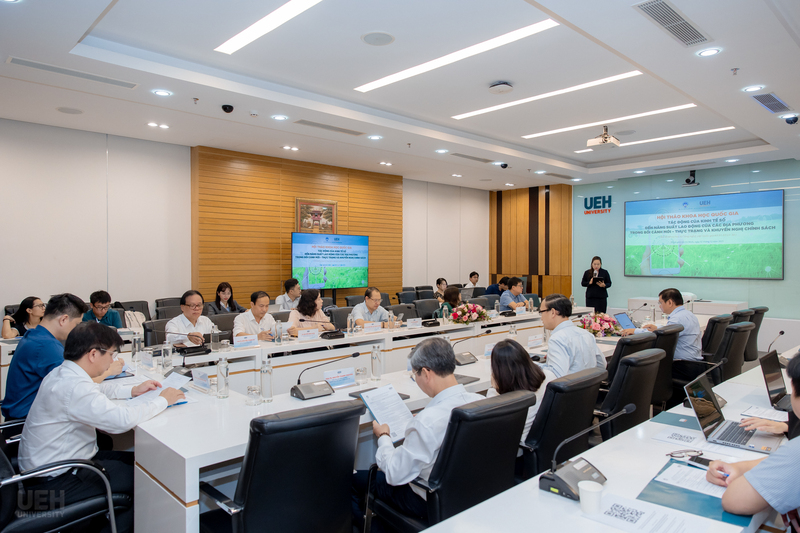
Images of the national scientific conference jointly organised by UEH and the National Economics University (NEU), sharing research experience and solutions for climate-resilient transport infrastructure development to strengthen adaptation capacity and sustainable development.
ELG 2025 International Conference
The international scientific conference focused on strengthening data and local governance capacities to build resilience to environmental shocks in developing countries. A highlight was Professor Pamela Jagger’s plenary presentation, “Building Data and Capacity for Local Resilience to Climate Shocks in Developing Countries,” alongside in-depth discussions of climate-change adaptation solutions. The conference received 190 submissions and selected 96 papers for presentation across 32 parallel sessions, bringing together researchers, lecturers, experts, and policymakers from Vietnam and abroad. UEH thereby created a substantive forum for specialist knowledge exchange and direct dialogue between academia and public authorities, supporting improvements in climate policy, climate-risk management capacity, and local communities’ preparedness for climate hazards.
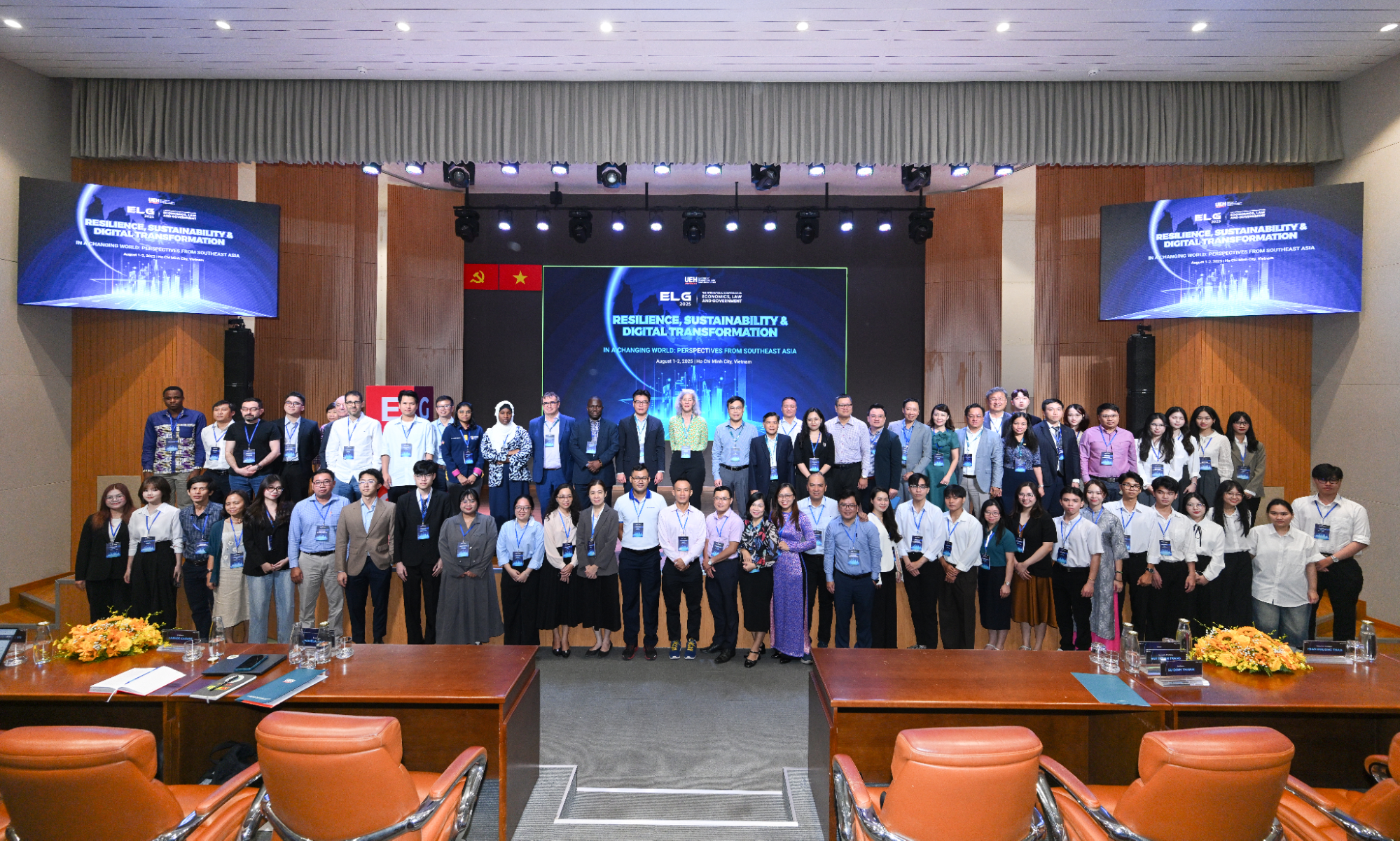
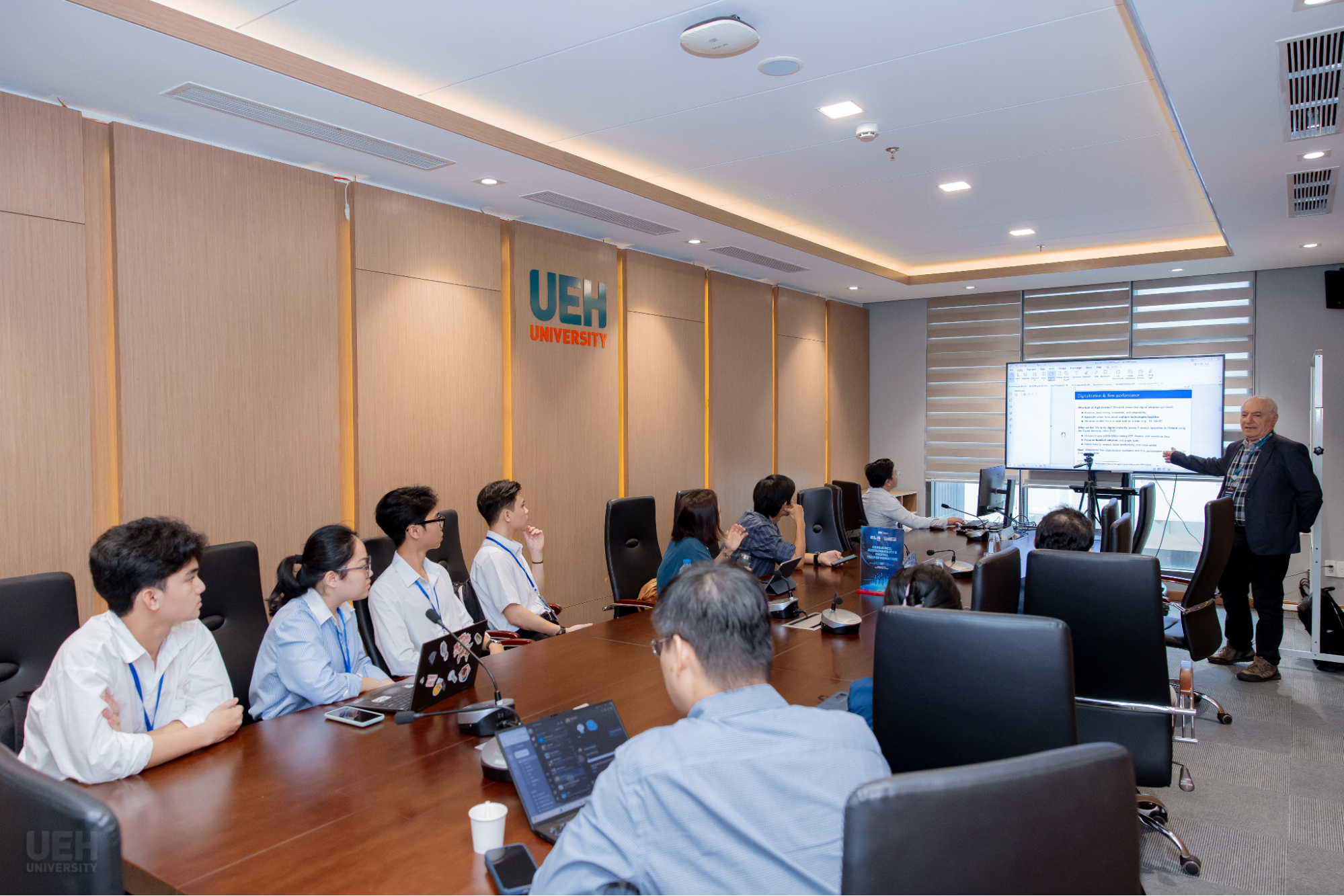
Images of a presentation session and a group photograph at the ELG 2025 International Conference on strengthening data and local-community resilience to climate shocks, contributing to knowledge sharing and climate-change adaptation solutions.
2025 National Conference on Technology and Design (NCTD 2025) – Special session continued at UEH Mekong: “Digital Transformation – Challenges and Opportunities in the Mekong Delta”
The training and thematic seminar programme presented high-tech solutions for smart agriculture, examined climate impacts such as saltwater intrusion in the Mekong Delta, and featured Session A discussions of precision-farming techniques to enhance climate resilience and adaptation appropriate to local ecological conditions. The event attracted more than 200 delegates from government departments, universities, associations, and the business community in Vinh Long and other Mekong Delta provinces. It received more than 58 specialist papers, including 13 practice-based reports from regional government departments. The forum shared practical knowledge of climate-adaptive agriculture with stakeholders, supporting close links among science, government agencies, and producers to help anticipate climate hazards and advance sustainable agricultural development throughout the Mekong region.

A panoramic image of the “Digital Transformation – Challenges and Opportunities in the Mekong Delta” conference held at UEH Mekong.
“Thinkathon Greenovation 2025” Start-up Idea Competition at UEH Mekong: For a Greener and More Sustainable Mekong Delta
The climate education and innovation-incubation programme, held within “UEH Mekong Summer Camp 2025,” guided participants in analysing real challenges in the Mekong Delta, including the need to respond to climate-change impacts and develop a green economy. It combined training in Design Thinking 101 and Value Proposition with specialist mentoring sessions and innovative solution presentations. The camp attracted nearly 60 students from UEH and partner universities, who formed 13 teams, nine of which advanced to the final round. The programme created an experiential learning environment grounded in practical Mekong Basin challenges, equipping participants with problem-solving and green innovation skills to advance climate-adaptation solutions, enhance climate resilience, and spread a commitment to climate action among local young people.
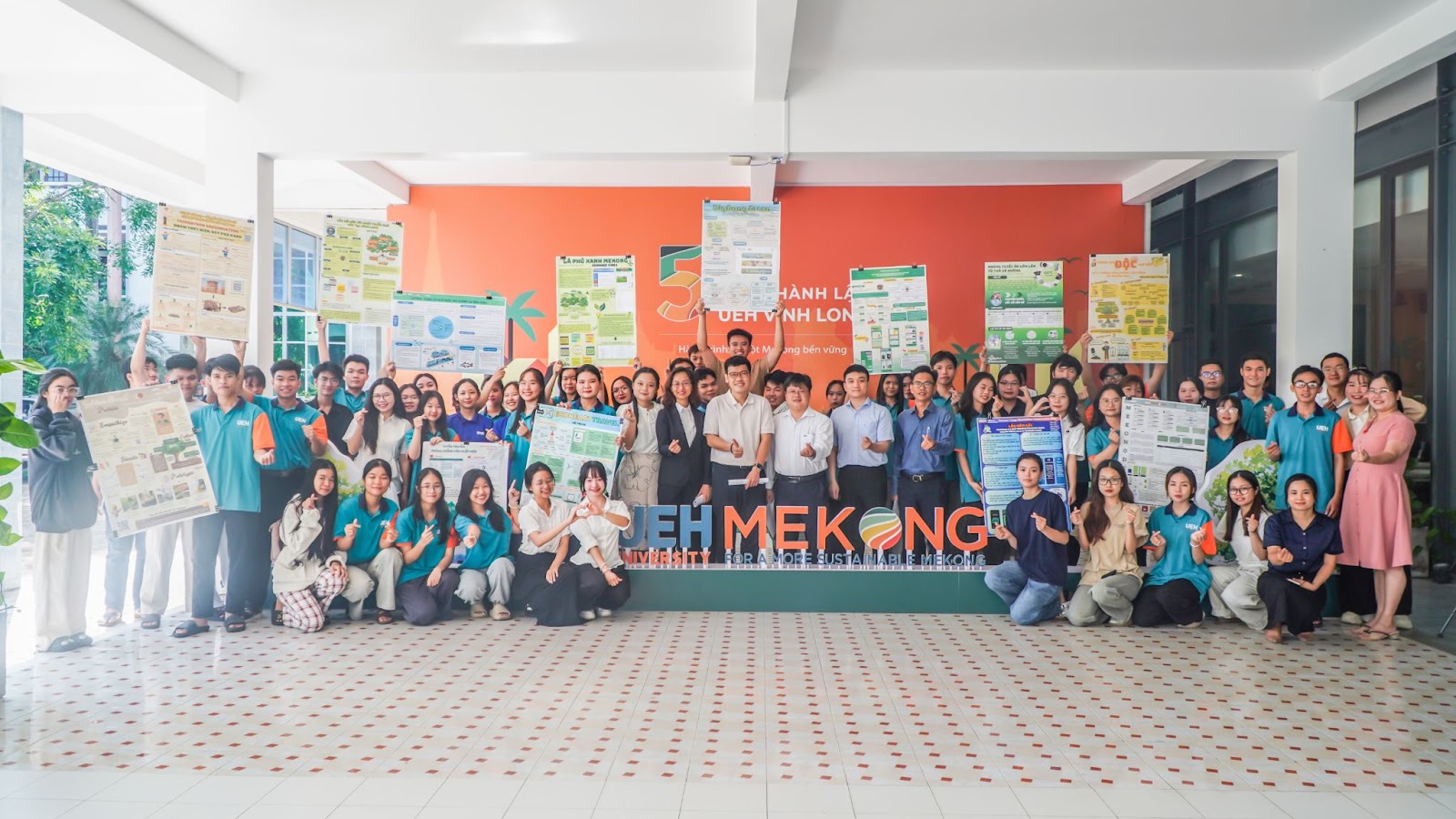
Images of “Thinkathon Greenovation 2025,” providing a space for Vietnamese and international students to propose innovative solutions to challenges facing the Mekong Delta, with a view to climate-change adaptation and sustainable development.
YOUTH DIGITAL CITIZEN CHALLENGE 2025 – Ready for an exciting technology competition
The launch event for the climate education and solution-development programme, themed “AI for Climate: Twin Transitions in Action” (YDCC), introduced the challenges and impacts of climate change in the Mekong Delta while guiding the development of technology solutions using artificial intelligence (AI) to promote climate action, strengthen adaptation and resilience, and protect sustainable livelihoods. Co-organised by UEH, the United Nations Development Programme (UNDP), MUFG Bank, and the Youth Working Group on Climate Policy, the event engaged Vietnamese young people aged 18–30, alongside organisations, experts, and youth communities interested in climate issues. It provided a practical learning space that raised awareness of local climate hazards and offered young people opportunities to explore and directly contribute to developing technological initiatives in response to climate change, making practical contributions to sustainable development goals for local communities.
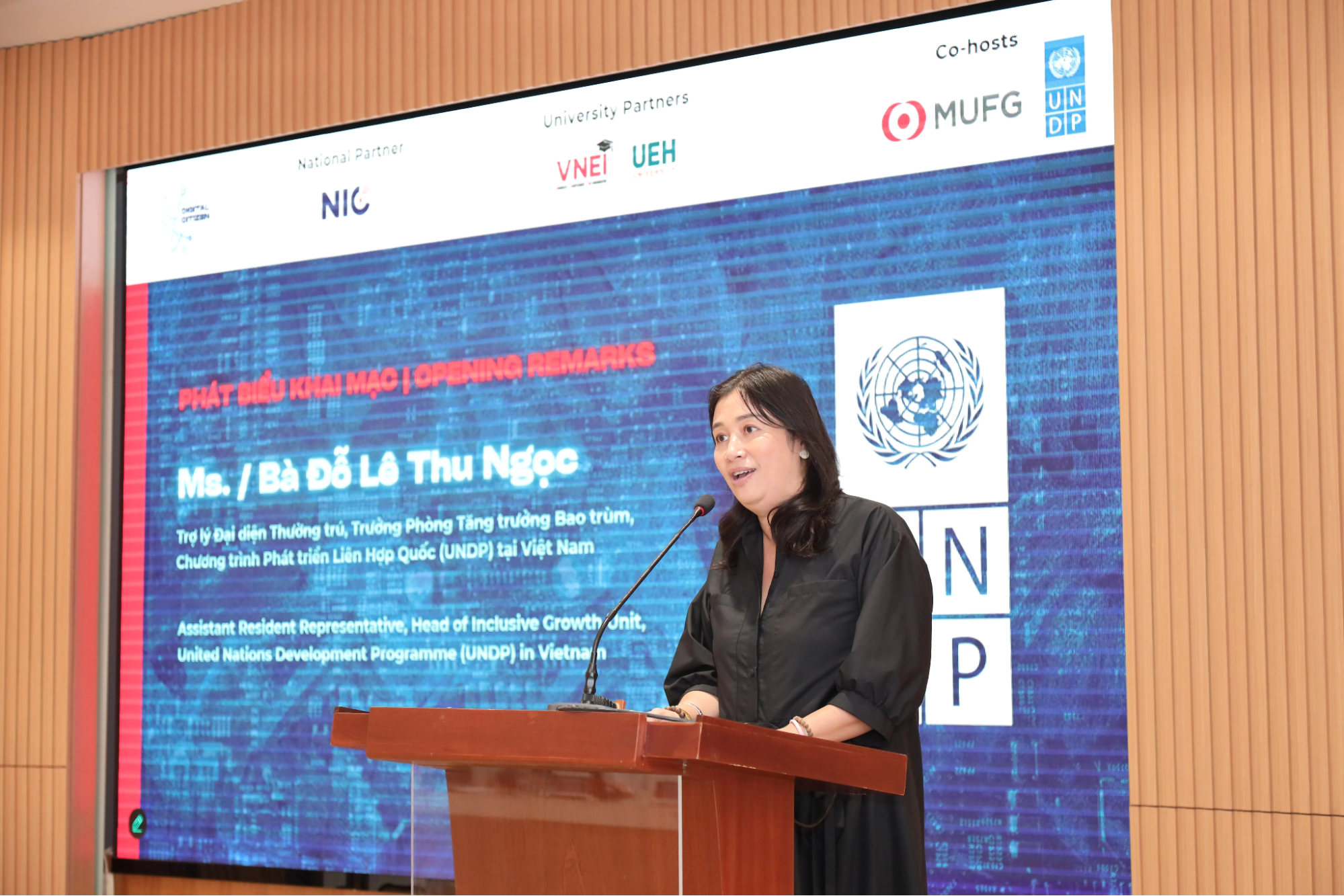
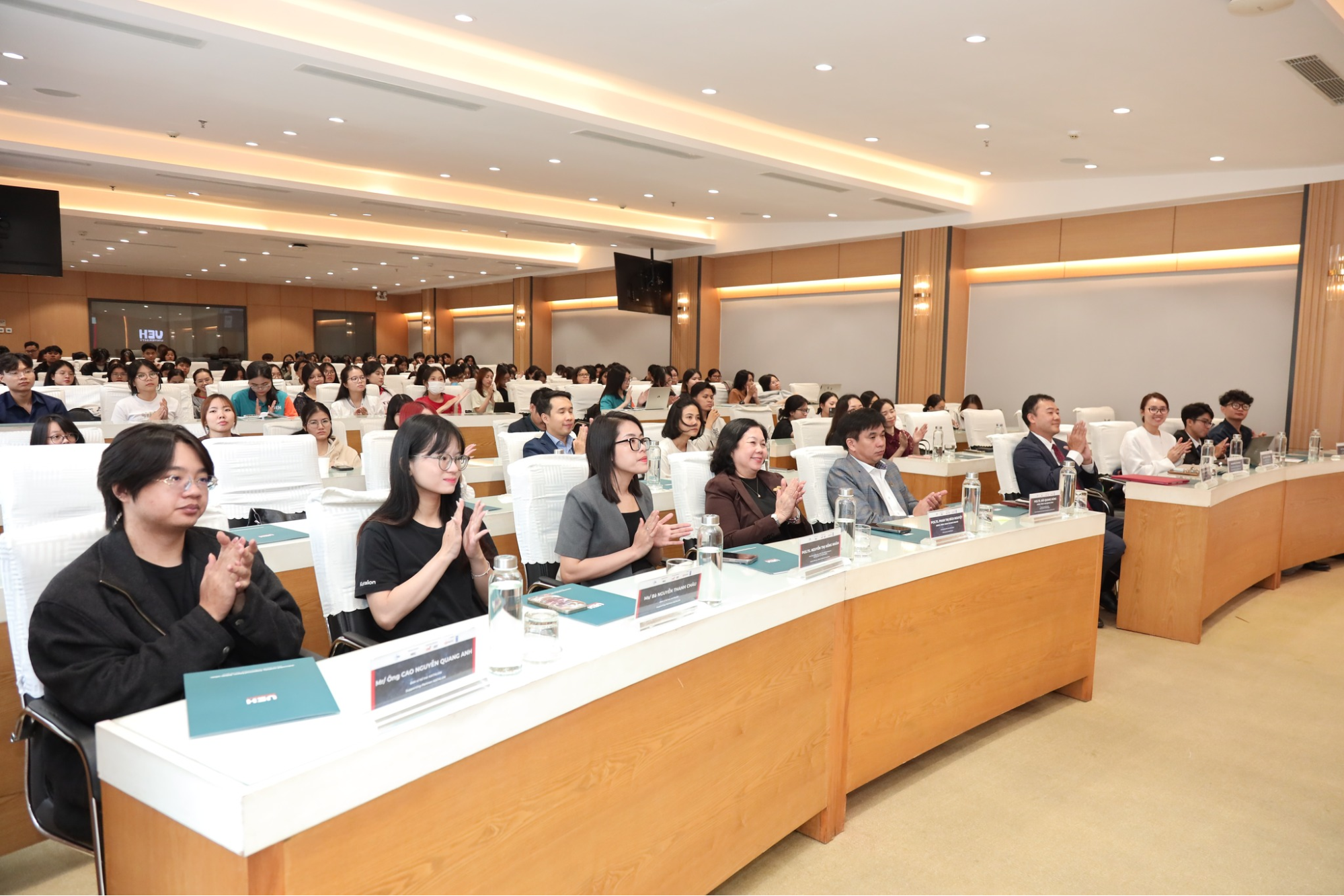
Images from the Youth Digital Citizen Challenge 2025 – AI for Climate launch event, raising young people’s awareness of climate-change challenges in the Mekong Delta and presenting the potential of artificial intelligence to develop adaptation solutions and protect sustainable livelihoods.
UEH Green Campus partners with ACIYLS 2025: Building green skills for the younger generation through the “Green Skills to 17 SDGs Impact” workshop
The climate education workshop focused on equipping participants with green knowledge and skills, raising awareness of sustainable development, systems thinking, and problem-solving approaches, while encouraging learners to discuss and propose practical initiatives contributing to SDG 11 and SDG 13, with an emphasis on climate action. Organised in collaboration with the UEH Green Campus project as part of the ACI Youth Leadership Summit 2025, the workshop attracted numerous student participants. It created a valuable environment for collaborative learning and co-creation, helping young people develop their capacity to address local environmental challenges, promoting climate-adaptation solutions, and spreading the spirit of proactive climate-impact mitigation within the community.
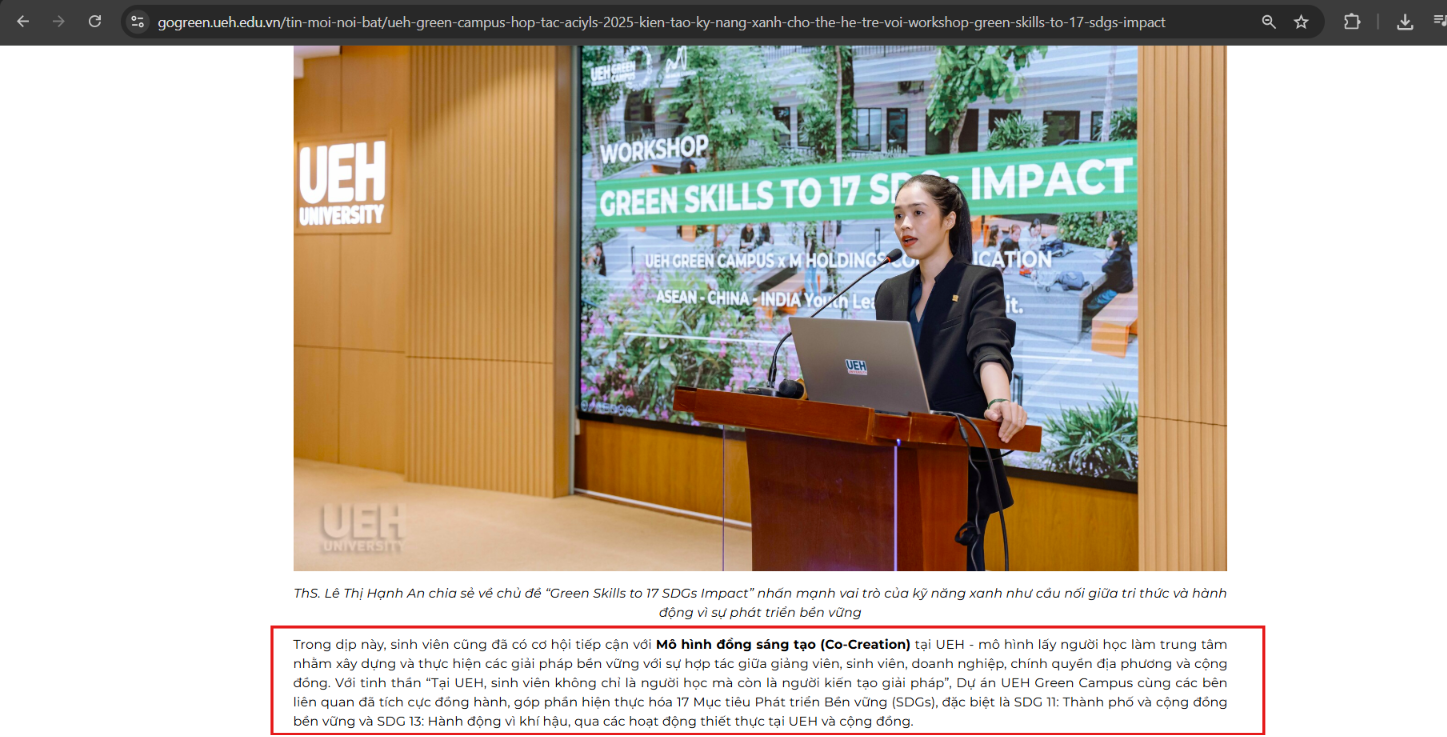
Images of the “Green Skills to 17 SDGs Impact” workshop, providing a learning and co-creation environment that strengthens green skills and awareness of environmental risks and encourages SDG 13 climate-action initiatives.
UEH Sustainable Finance Institute in 2025: Continuing its mission to advance sustainable economic and financial development for communities and localities
The education programme and thematic workshop series delivered by UEH’s Sustainable Finance Institute in 2025 disseminated knowledge on climate-change governance, climate-related financial risk management, urban water security, and methods of resource mobilisation to strengthen climate resilience and adaptation. Activities were flexibly organised as free short training courses for the community and on-demand training, attracting lecturers from universities (through a Training of Trainers project funded by the Government of Luxembourg), business representatives, social organisations, local stakeholders, and international experts. Through these activities, UEH expanded its social impact and practical knowledge-sharing network, directly strengthening policymakers’ and local communities’ capacity to identify climate impacts, proactively prevent risks, and advance sustainable climate-action solutions.
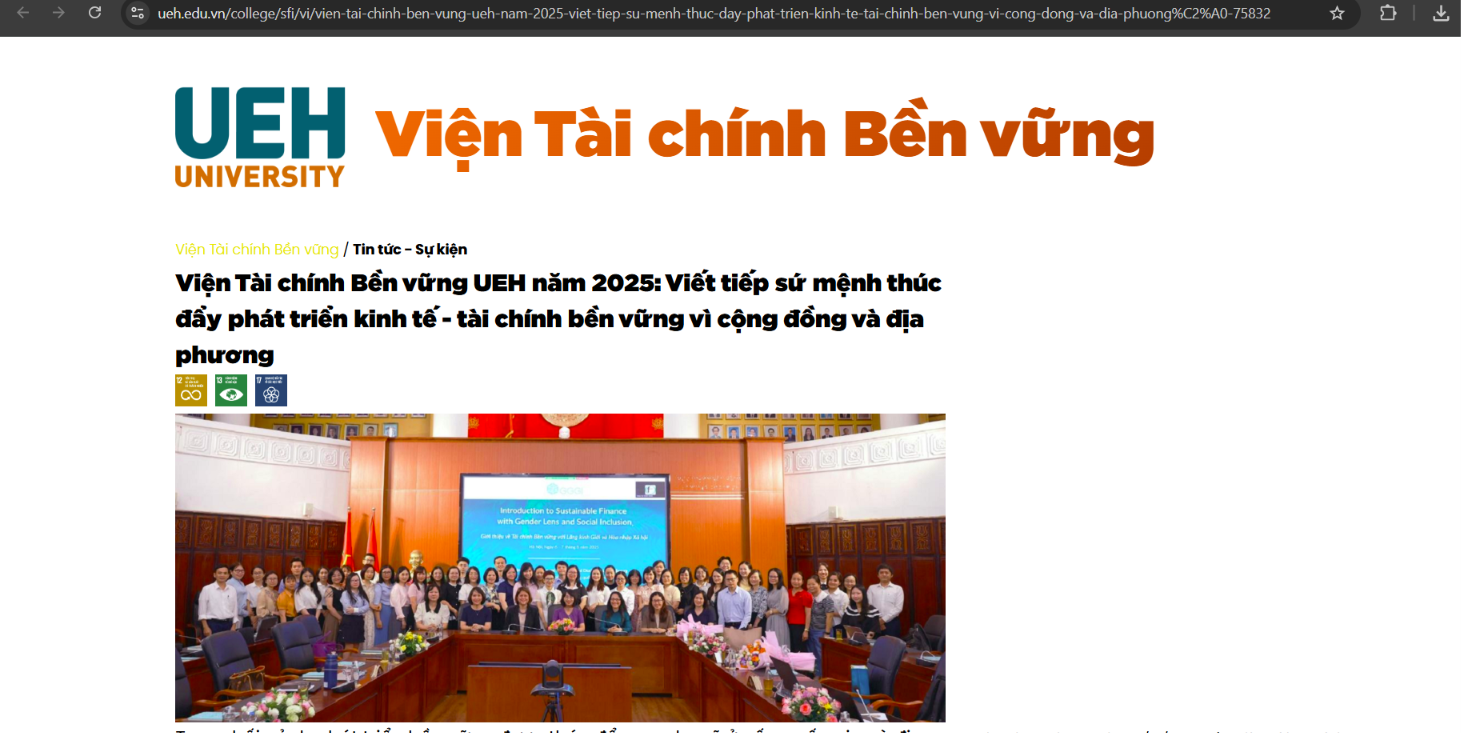
Image: The Sustainable Finance Institute delivering training to lecturers from the Faculty of Finance at the Banking Academy.
Forum “Ho Chi Minh City Students and Green Practices for Sustainable Action”: Commitment to rolling out the Green University model to 10 higher education institutions in Ho Chi Minh City
The 2025 climate education forum “Ho Chi Minh City Students and Green Practices for Sustainable Action” examined climate-change impacts, provided guidance on assessing urban environmental risks, and transferred 18 climate-adaptation solutions from the Let’s Green Unitour project. Co-organised by UEH and the For a Green Future Foundation in Ho Chi Minh City, the event brought together numerous local students and leaders from 10 universities and colleges across the city. The programme directly strengthened local students’ awareness of climate hazards, equipped them with adaptation skills, and formally established an inter-institutional network through a signed commitment to promote climate action in Ho Chi Minh City.
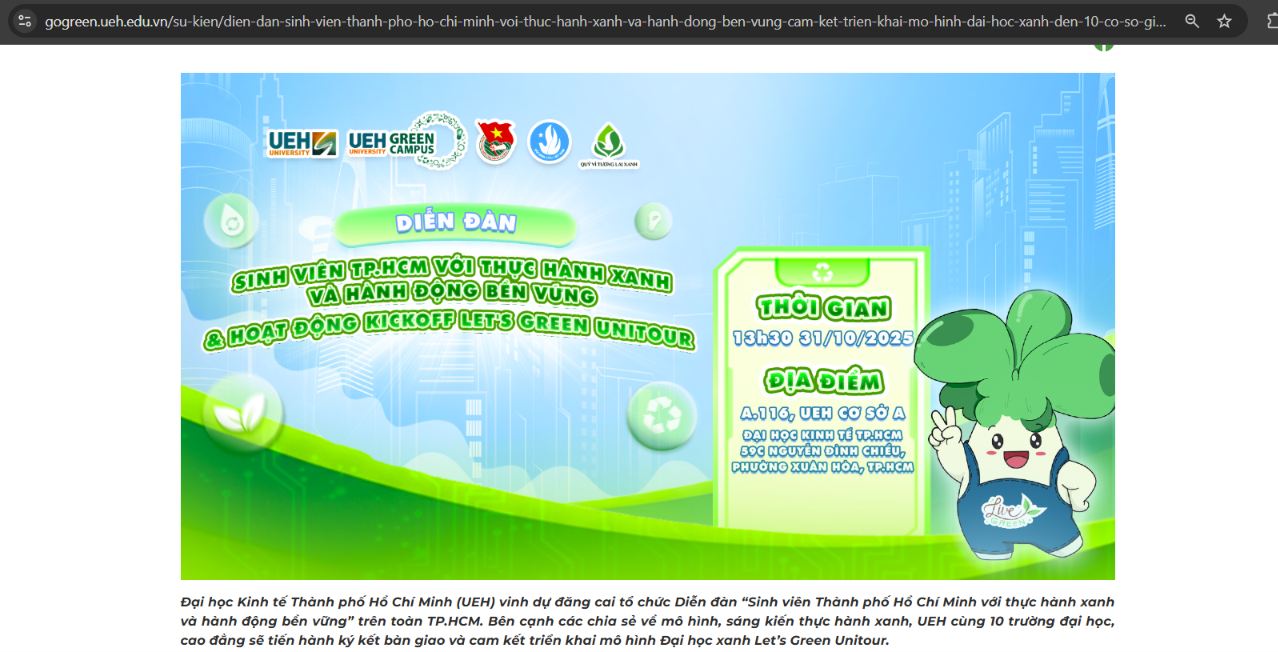
Promotional images for the forum “Ho Chi Minh City Students and Green Practices for Sustainable Action” and the launch of Let’s Green Unitour 2025, promoting knowledge exchange, green-practice initiatives, and connections among 10 universities and colleges to spread the Green University model and sustainable action within the student community.
Expanding environmental education and green practices to school pupils and communities outside UEH in 2025
Continuing its commitment to extending sustainability education beyond the university campus, the UEH Green Campus project carried out community communication, experiential, and green-practice activities in 2025. According to the project’s annual report, UEH organised more than 50 environmental knowledge-sharing and practice activities or programmes. At UEH Mekong, the programme engaged pupils from 28 lower and upper secondary schools during February–April 2025, attracting more than 6,500 participations. These activities demonstrate outreach beyond UEH and provide a foundation for communication on sustainable development. In climate education, they play a supporting role alongside the 2025 courses, seminars, and campaigns specifically addressing climate risks, impacts, emissions mitigation, and adaptation.
Source:
Green Sunday activities in 2025 in Nha Be District, Ho Chi Minh City
The 2025 Green Sunday volunteer programme, themed “Adding Colour to a Green Day,” focused on local environmental education and climate action. It guided pupils in waste sorting, water conservation, reduction of plastic waste, and recycling to lessen environmental and climate impacts, while combining clean-up activities and improvements to school landscapes to strengthen the resilience of local ecosystems. UEH students implemented the programme in Hiep Phuoc Commune (Nha Be District, Ho Chi Minh City), with 80 student volunteers and numerous pupils from Nguyen Van Tao Primary School taking part in hands-on activity stations. Through this community education campaign, the programme raised local children’s awareness of environmental protection and climate-change adaptation, equipped them with practical green-living knowledge, and spread a sense of responsibility for climate action among communities on the outskirts of Ho Chi Minh City.
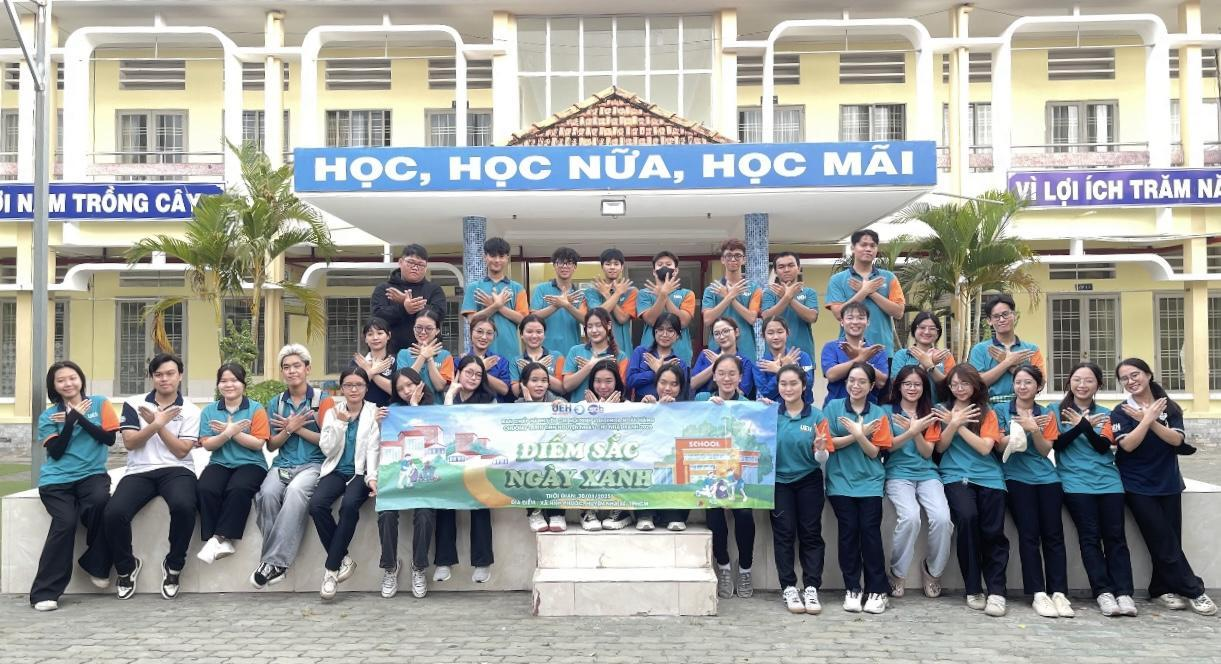
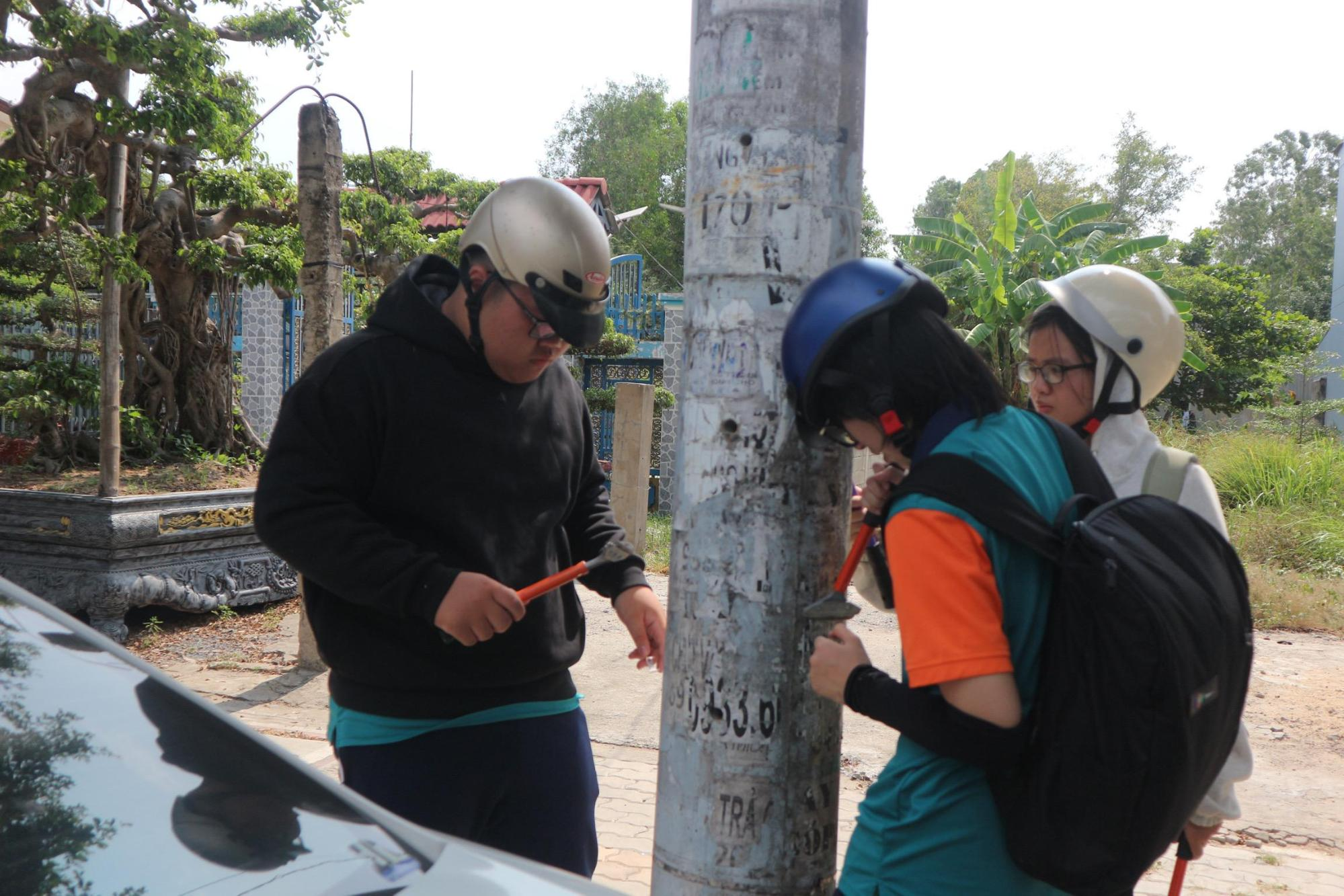
Images of Green Sunday activities, with UEH students learning about the locality and collecting litter.
[GREEN MONDAY SERIES] March activities at UEH: Raising environmental awareness through education on forests, water, climate, and green technology
The interactive climate education and communication campaign “Green Monday” (part of the UEH Green Campus project series in 2025) shared scientific knowledge on the links between forest ecosystems, water security, and climate; examined extreme weather events and pressures from resource degradation in the lower reaches of local rivers; and developed critical awareness of greenhouse gas emissions and the carbon footprint of digital technologies to guide solutions for reducing climate impacts and improving resilience. Delivered through multichannel communication and interactive mini-games, the activities reached and engaged numerous students, staff, lecturers, and local youth communities at UEH’s campuses. The series offered an accessible extended educational space that helped learners in Ho Chi Minh City identify climate hazards, adopt greener lifestyles, and gain practical skills to adapt to climate change both on campus and in their daily environments.

Promotional images from the March 2025 Green Monday Series at UEH, themed “Action for Forests, Climate and Water,” raising community awareness of the connections among forest ecosystems, climate change, and water resources, while encouraging environmental protection and climate-adaptation actions.
3. Implementation results and continuation in 2025
Building on environmental education and climate-awareness activities of previous years, UEH expanded its outreach approaches in 2025 through youth education programmes, specialist training, communication campaigns, and knowledge-sharing with local stakeholders. Highlights included UEH Model United Nations 2025 on disaster response and climate action; CGE training in collaboration with the World Bank on impact assessment and climate-change adaptation; the Youth Digital Citizen Challenge – AI for Climate; and a series of Mekong Delta seminars on climate risks and solutions for climate-resilient infrastructure development.
These activities demonstrate UEH’s direct delivery of education and awareness-raising programmes on climate risks, impact mitigation, adaptation, and disaster response for young people, experts, and external stakeholders. In this way, UEH contributes to strengthening local capacity to identify and address climate-change challenges, in line with indicator 13.3.1 – Local Education Programmes on Climate of THE Sustainability Impact Ratings 2027.