


2.2.1- Campus food waste tracking
The University of Economics Ho Chi Minh City (UEH) implements the segregation, measurement and monitoring of food waste generated at dining areas, canteens and collection points across its campuses. In 2025, building on the Green Campus Regulations issued under Decision No. 2059/QD-DHKT-CSVC, source-separated waste systems, and coordination mechanisms among management units, collection staff and service providers, UEH continued to segregate food waste and manage waste across its campuses. This helped identify sources of waste generation, assess the efficiency of food use and develop measures to prevent food waste and reduce waste generation at UEH.
1. Objectives and scope of implementation
UEH’s food waste monitoring activities pursued three objectives:
– Determine the amount of food discarded through food provision and consumption activities on university premises;
– Distinguish food waste from recyclables and other waste streams to facilitate data compilation, management and treatment;
– Use the data to assess food waste generation and propose waste-reduction measures.
According to UEH Future’s published evidence for criterion 2.2.1, Campus Food Waste Tracking, UEH reviewed food waste generation points and monitored food waste across its campuses. The identified locations included campuses A, B, N and V, as well as Dormitories 135 and 43–45. In 2025, food waste was monitored within the following scope:
|
No. |
Location | Source of waste | Monitoring scope |
| 1 | Campus B | Canteen | Food waste from meal services |
| 2 | Campus N | Dining hall and outsourced catering services | Food waste from dining and food service areas |
| 3 | Campus V | Canteen and outsourced catering services | Food waste from food preparation, serving and consumption |
| 4 | Dormitory 135 | Student living areas | Food waste generated in student living areas |
| 5 | Dormitory 43–45 | Student living areas | Food waste generated in student living areas |
In 2025, the canteen at UEH’s Campus A temporarily ceased operations for facility renovation and upgrading. As a result, no meals were provided at this canteen during its closure, reducing this particular source of food waste relative to the preceding operating period. This operational change should be considered when assessing year-on-year changes in food waste volume, alongside the source-separation measures and responsible food consumption practices that UEH continued to promote in 2025.
2. Internal commitments and supporting policies
In 2022, UEH issued the Green Campus Regulations under Decision No. 2059/QD-DHKT-CSVC as a framework for Green Campus governance and on-campus waste management. On this basis, UEH continued to strengthen food waste segregation, collection and monitoring in 2025 to manage waste from learning, work, daily activities and on-campus dining services. The regulations establish source-separation systems, define responsibilities for management units and service providers, and require waste audits and periodic reporting of waste data.
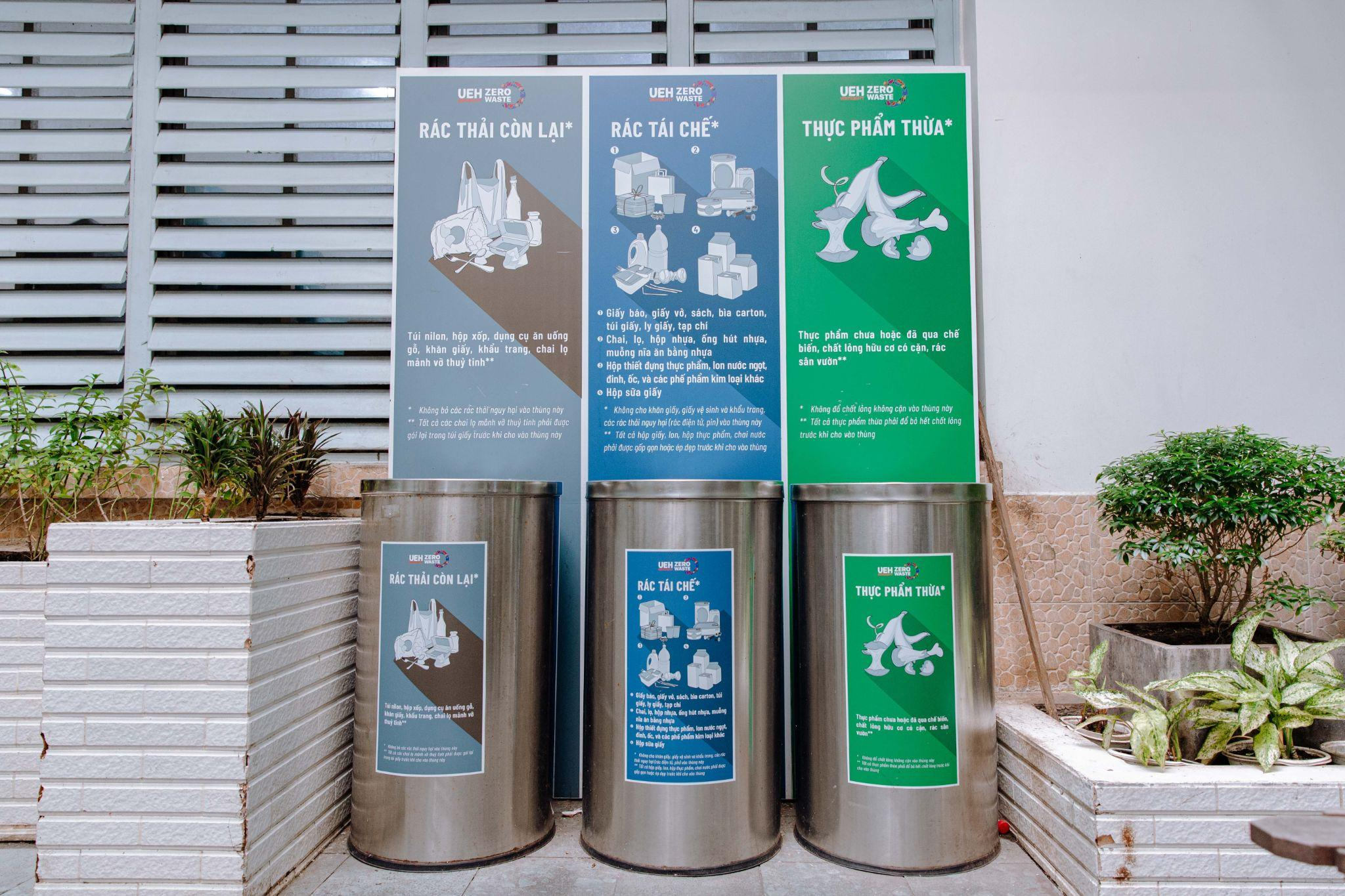
Article 2, Clause 4 – UEH applies two source-separation models tailored to the operating conditions of individual campuses. Under the seven-category model, food waste is a distinct waste stream alongside liquids, metals, recyclable plastics, paper, beverage cartons and residual waste. Smaller areas apply a three-category model comprising food waste, recyclables and residual waste. Identifying food waste as a separate stream in both models facilitates its collection, weighing and measurement without mixing it with other waste types.
Article 3, Clause 1 requires the UEH community to segregate waste at UEH Go Green Stations according to the model installed at each campus. In addition, Appendix 1 – Seven-category waste segregation model instructs users to separate liquids before depositing food waste in the designated bin. This procedure supports the identification and separate collection of food waste and improves the consistency of weight data recorded at collection points.
 |
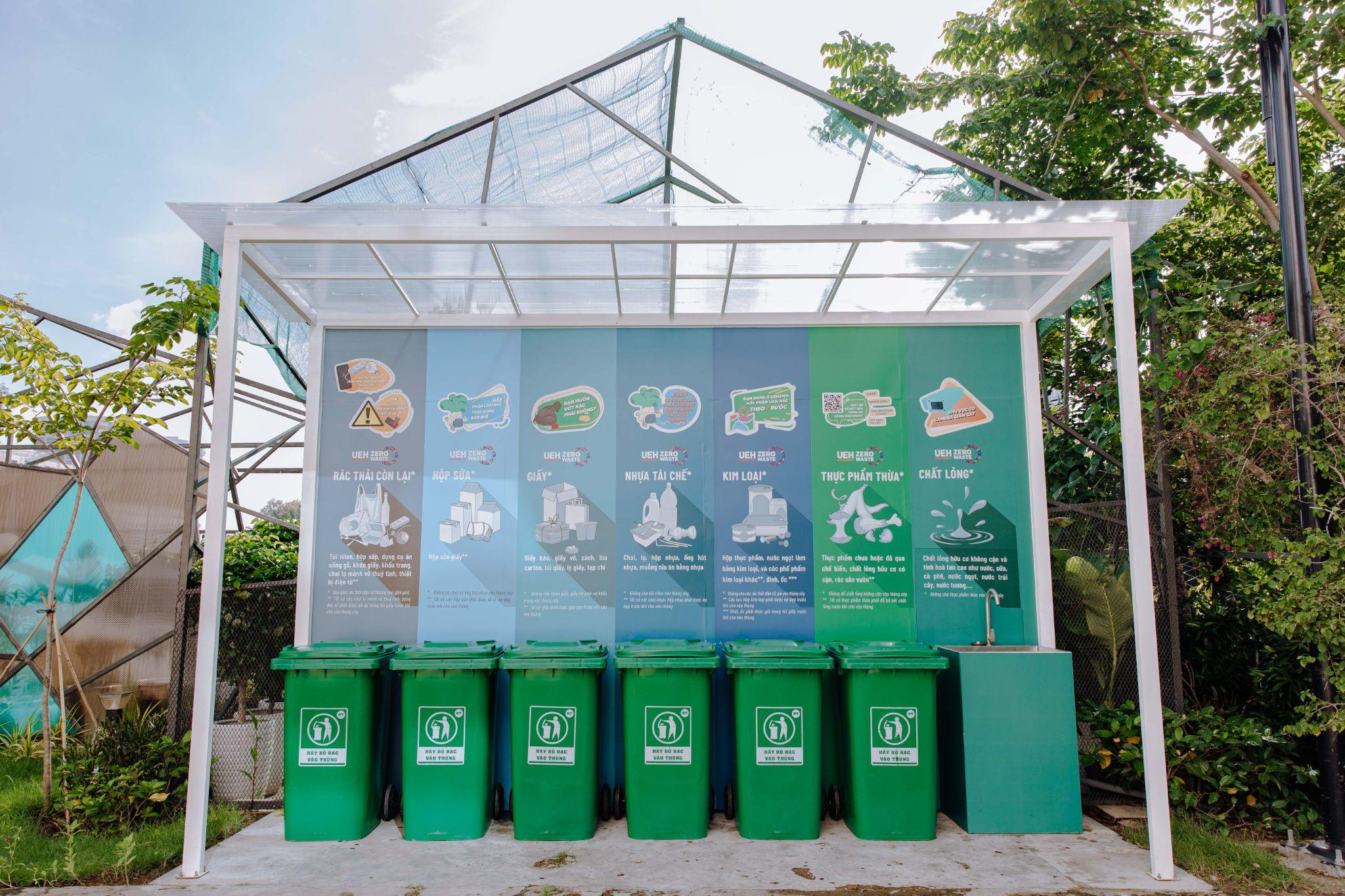 |
UEH Go Green Station sorting bins facilitate the separate collection, weighing and recording of food waste as a distinct waste category
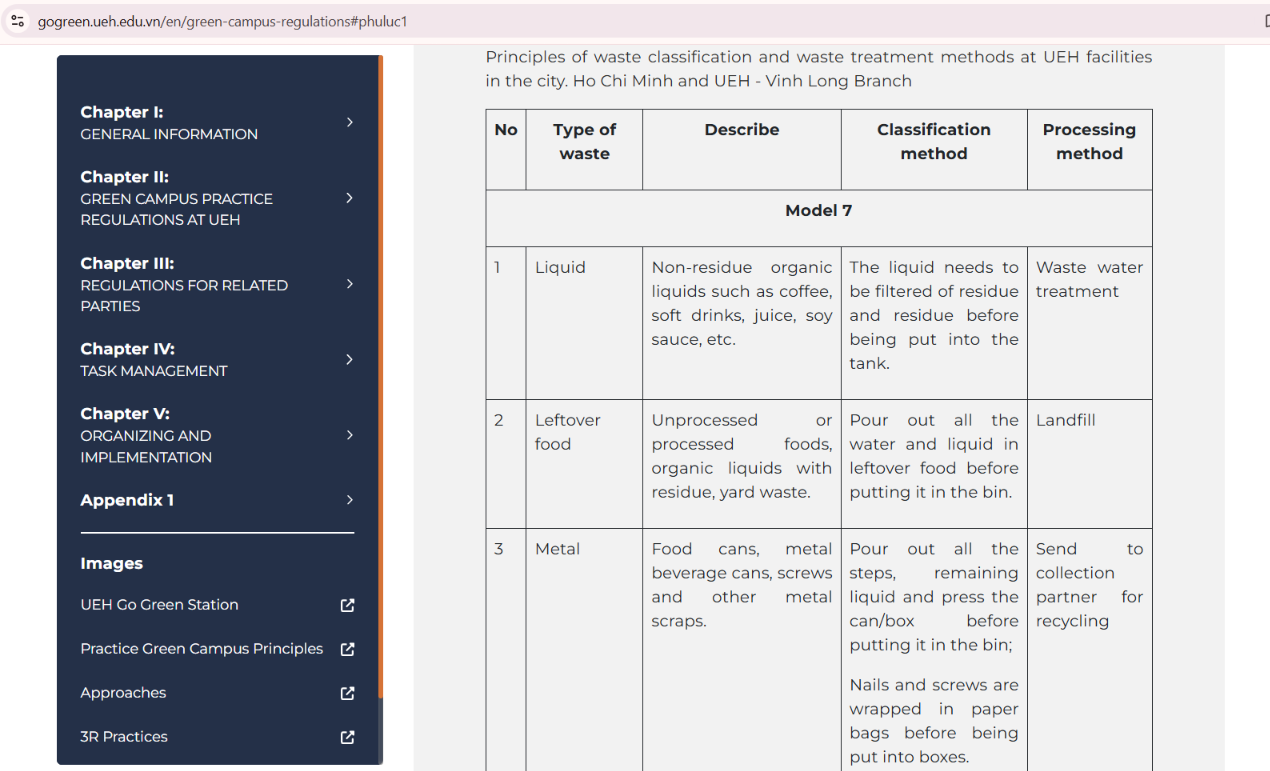
Appendix 1 – The seven-category segregation model instructs users to separate liquids before placing food waste in the corresponding bin
Public source: UEH Green Campus website, ‘Green Campus Regulations’
https://gogreen.ueh.edu.vn/en/green-campus-regulations
Regarding implementation responsibilities, Article 15, Clause 3 stipulates that the responsible management unit must collect, segregate and transfer waste to collection partners in accordance with applicable requirements. In particular, Article 15, Clause 6 requires annual waste audits and reporting, providing a basis for monitoring, aggregating and evaluating waste generated across UEH. This provision directly supports waste measurement and monitoring, including the food waste stream separated at source.
For on-campus food services, Article 17, Clause 2 sets out suppliers’ responsibilities, including canteen operators, for source separation of waste. This helps integrate food waste segregation into food service operations and enables management units to coordinate with providers in the collection and monitoring of generated waste.
3. Summary of food waste quantities in 2025
In 2025, UEH continued monitoring and managing food waste generated across its campuses, building on source-separation arrangements and measurement methods developed in previous years. According to the consolidated data, total reported food waste in 2025 was 28.75 metric tonnes (28,750 kg), compared with 26.14 metric tonnes (26,140 kg) in 2024.
| Indicator | 2024 | 2025 |
| Total food waste (metric tonnes) | 26.14 | 28.75 |
| Campus population (persons) | 31,149 | 31,780 |
| Food waste per capita (kg/person/year) | 0.839 | 0.905 |
The consolidated results show that food waste increased by 2.61 metric tonnes, or 9.98%, in 2025 compared with the previous year. Over the same period, the campus population increased from 31,149 to 31,780 people, or 2.03%. Accordingly, food waste per capita rose from approximately 0.839 to 0.905 kg/person/year.
The increase in food waste volume reflects the change in total reported waste between the two reporting periods. UEH used these findings to further assess sources of food waste, the efficiency of food use and opportunities to improve on-campus waste management.
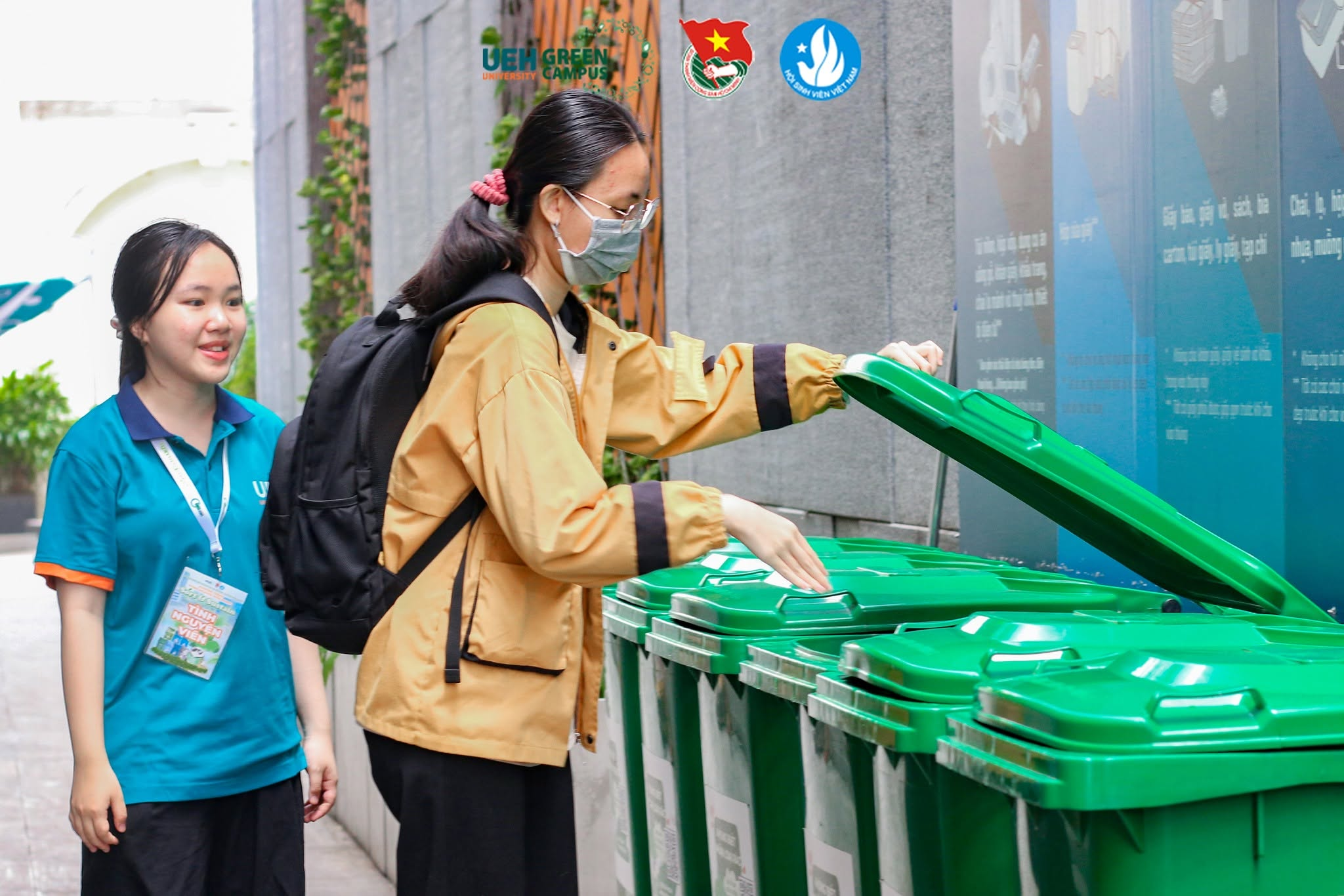
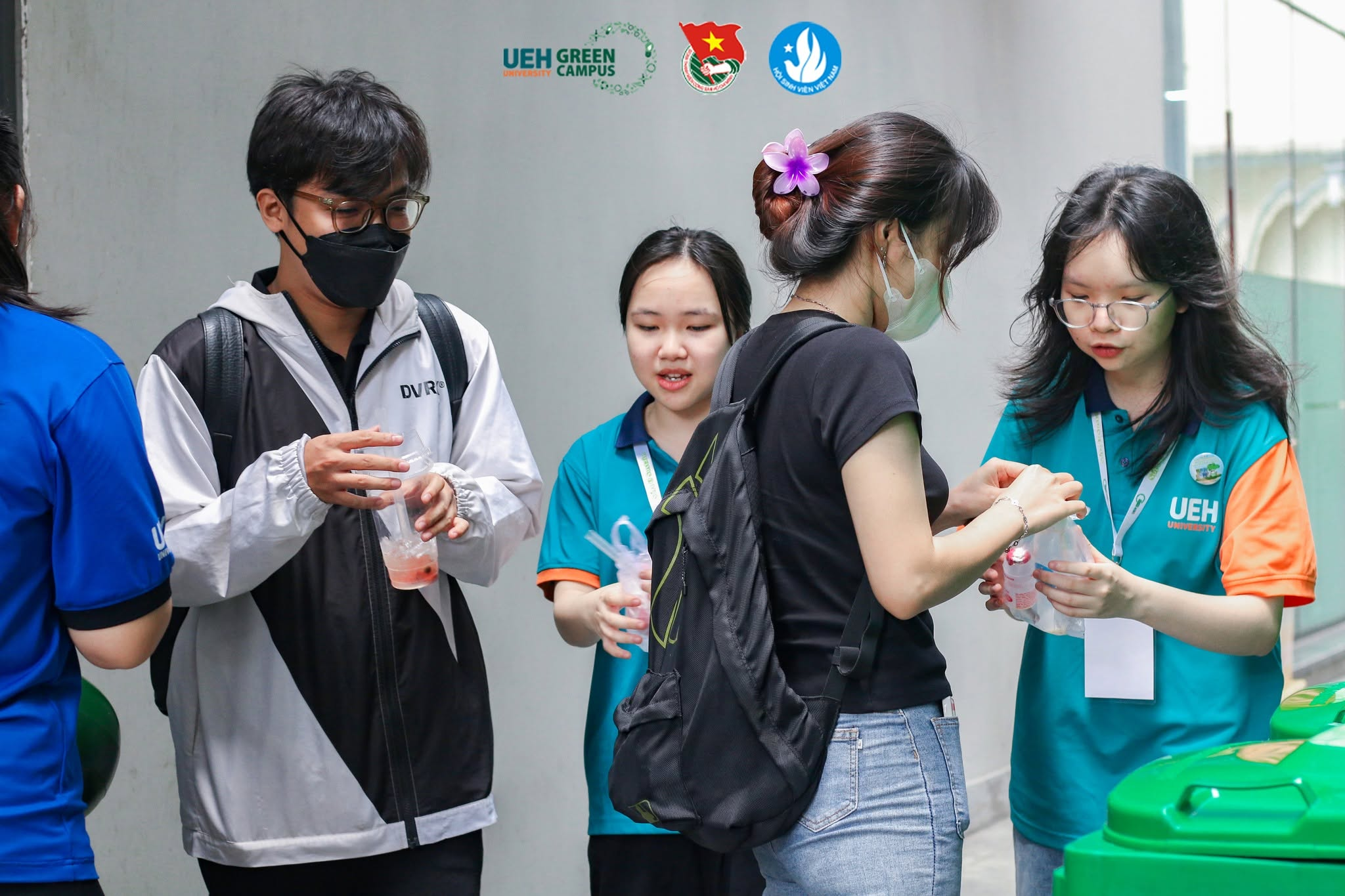
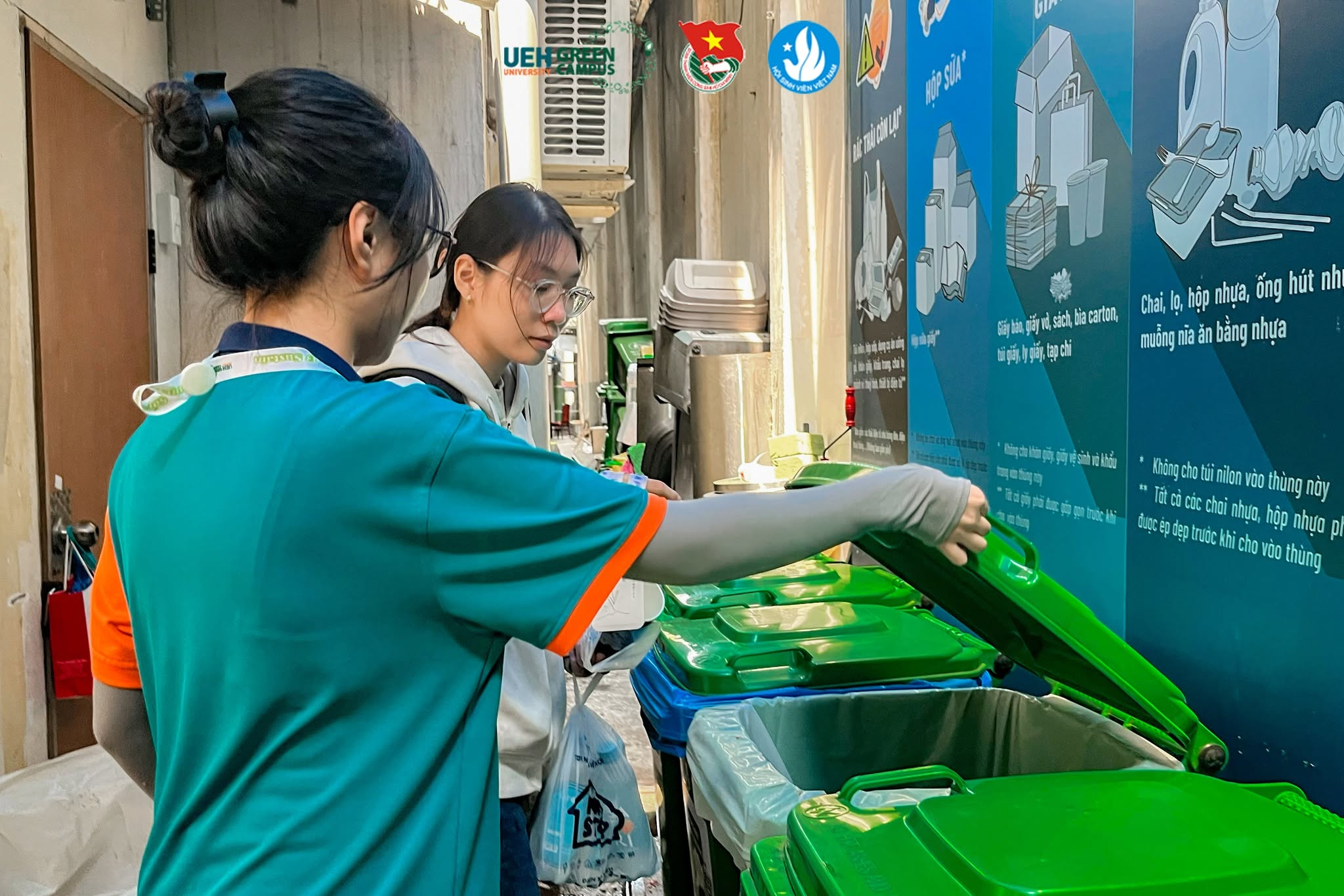
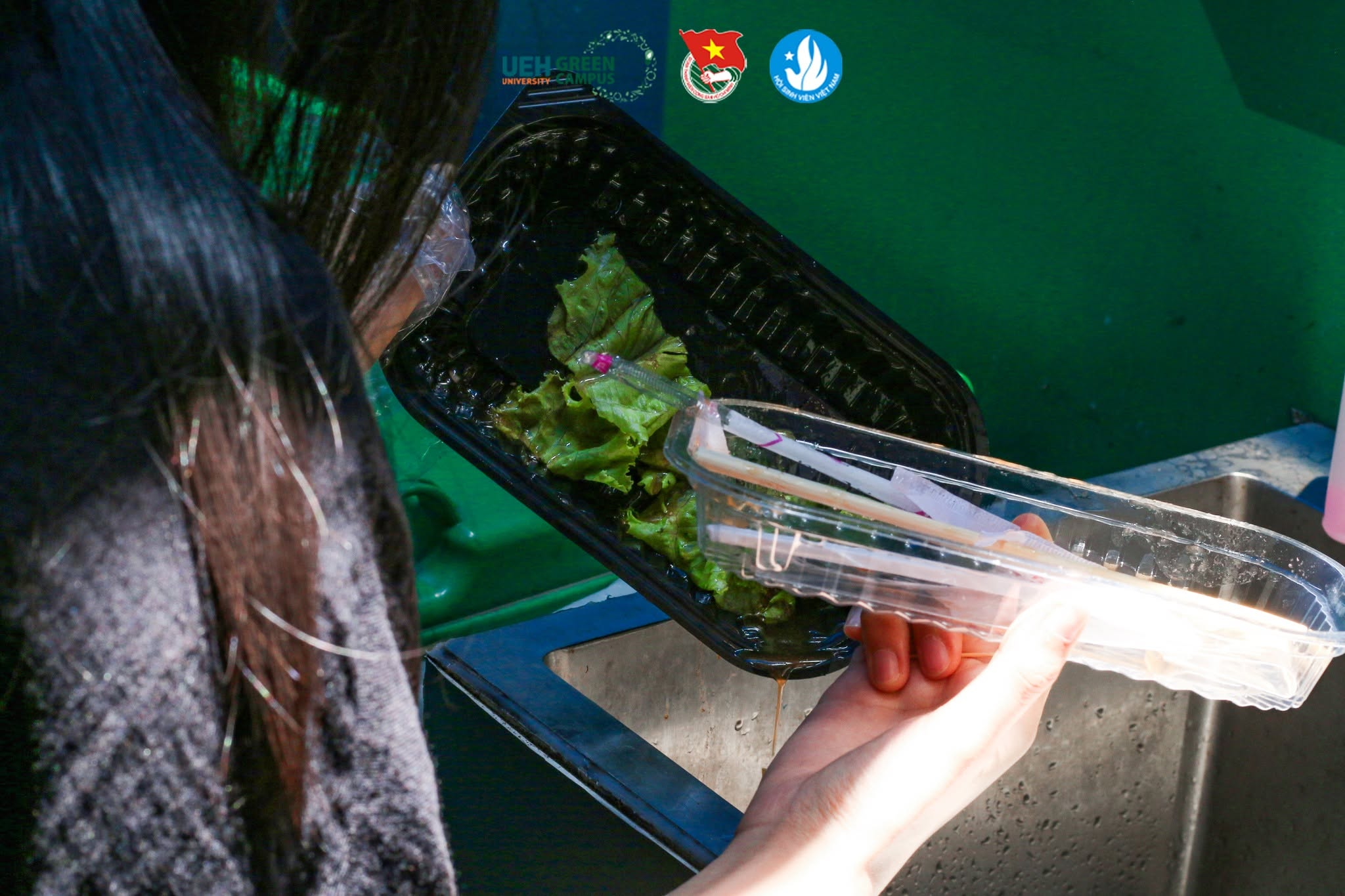
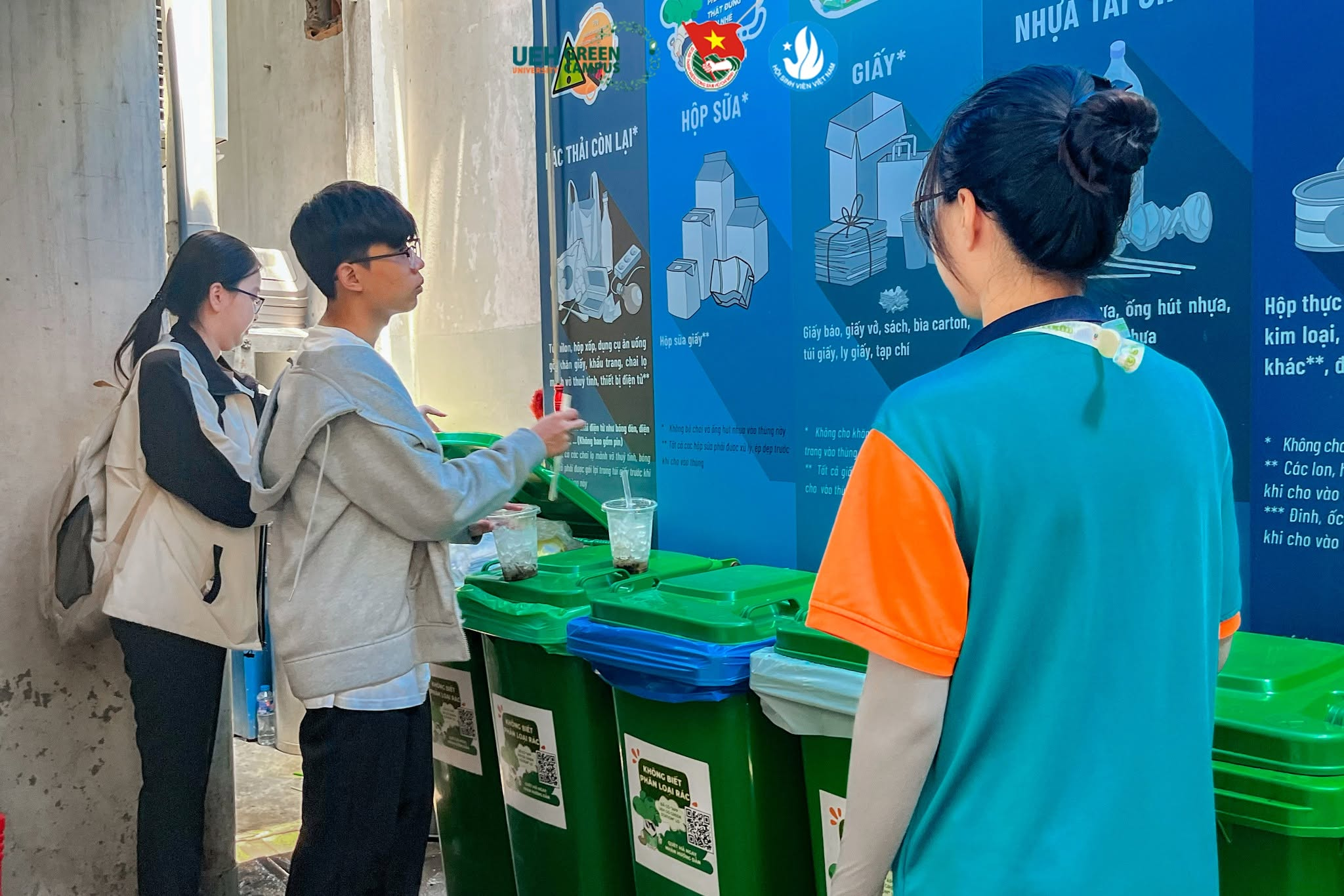
Photographic evidence of source-separated waste collection and waste weighing systems
4. Conclusion
In 2025, UEH reported a total of 28.75 metric tonnes of food waste, a 9.98% increase compared with 2024. The data were consolidated through the waste management and source-separation framework established under the UEH Green Campus Project and facilities management activities.
Monitoring food waste quantities, alongside identifying changes in canteen and food service operations, helped UEH assess food waste generation and identify waste management improvements. This formed part of UEH’s implementation of SDG 2 – Zero Hunger and responsible consumption practices.