

15.2.6 – Sustainable management of land for tourism (educational outreach)
In 2025, the University of Economics Ho Chi Minh City (UEH) continued to promote knowledge sharing, applied research, and community outreach on the sustainable management of land resources, natural landscapes, and spaces used for tourism development. Through interdisciplinary projects, UEH engaged local authorities, residents, and relevant stakeholders to exchange initiatives linking tourism with ecosystem conservation, landscape management, ecotourism, and sustainable livelihoods. These efforts helped lay the foundation for tourism models that use land resources and landscapes responsibly.
1. Strategic orientation
In 2025, UEH organized programmes on land management for tourism, prioritizing conservation, appropriate development, and responsible use while integrating natural ecosystem protection with ecotourism and community-based tourism. UEH implemented these activities through educational programmes, field research, consultation, and engagement with local authorities and communities to raise awareness of managing land and spaces used for tourism. Its programmes focused on the following areas:
Management of land resources and tourism landscapes: UEH shared knowledge on protecting land used for tourism, with particular attention to coastal areas, mangrove landscapes, ecological sites, and public spaces, while incorporating environmental protection measures into destination development strategies.
Integrating conservation objectives into ecotourism and community-based tourism: Collaborative exchanges on developing tourism experiences and services suited to local natural conditions, using resources responsibly and minimizing damage to landscapes, ecosystems, and local resources.
Responsible behaviour in tourism environments: Communicating principles of visitor conduct, environmental protection standards, business responsibilities, and the community’s role in resource conservation.
These activities were implemented through cooperation between UEH and local government agencies, research partners, businesses, and residents. Community consultations and knowledge exchanges with local residents and authorities were particularly important in making issues of planning, landscape conservation, and responsible tourism development more accessible to local communities.
2. Internal commitments and supporting policies
In 2025, UEH continued implementing its Green Campus Regulations under Decision No. 2059/QD-DHKT-CSVC, issued in 2022, as a framework for governance and awareness of efficient resource use, environmental protection, and sustainable development. UEH particularly emphasized expanding education, research, and knowledge-transfer activities to help communities use land resources sustainably, protect natural landscapes, and develop environmentally responsible tourism.
Article 12, Clauses 1 and 4 – UEH encouraged the free sharing of learning materials, courses, seminars, and knowledge resources with local communities, while promoting education, research, and knowledge transfer on responsible land use, ecosystem conservation, and sustainable tourism.
Article 15, Clauses 5 and 7 defined UEH’s responsibility to organize or co-organize educational programmes, training courses, seminars, knowledge-transfer activities, and the free provision of learning materials on sustainable land use for tourism. UEH also assigned specialized units to research, develop, and implement community outreach programmes on sustainable tourism and ecosystem conservation and restoration.
These policies and strategic orientations formed the basis for UEH to develop knowledge-sharing activities and partnerships with local authorities, organizations, and residents concerning land resource protection, landscape conservation, ecotourism, and community-based tourism.
3. Field research and knowledge sharing on land management and tourism resources
a) Research on orchard ecotourism development in Dong Thap, informing the sustainable use of agricultural landscapes for community-based tourism
In 2025, Dr. Ha Van Son (UEH) and MA Huynh Tan Kiet (Dong Thap Provincial Statistics Office) conducted research into factors attracting domestic visitors to orchard ecotourism in Lai Vung District. The study examined the tourism potential of fruit orchards, rural landscapes, and the area’s distinctive cultural heritage.
Based on a survey of 213 domestic tourists at orchard ecotourism destinations in Lai Vung District, Dong Thap Province, the researchers proposed measures to enhance the value of orchard landscapes, connect ecotourism spaces with waterways, and develop visitor experiences linked to local agricultural life. The study also emphasized the need to train local communities in organizing tourism activities, managing landscape resources responsibly, and improving sustainable destination management capacity.
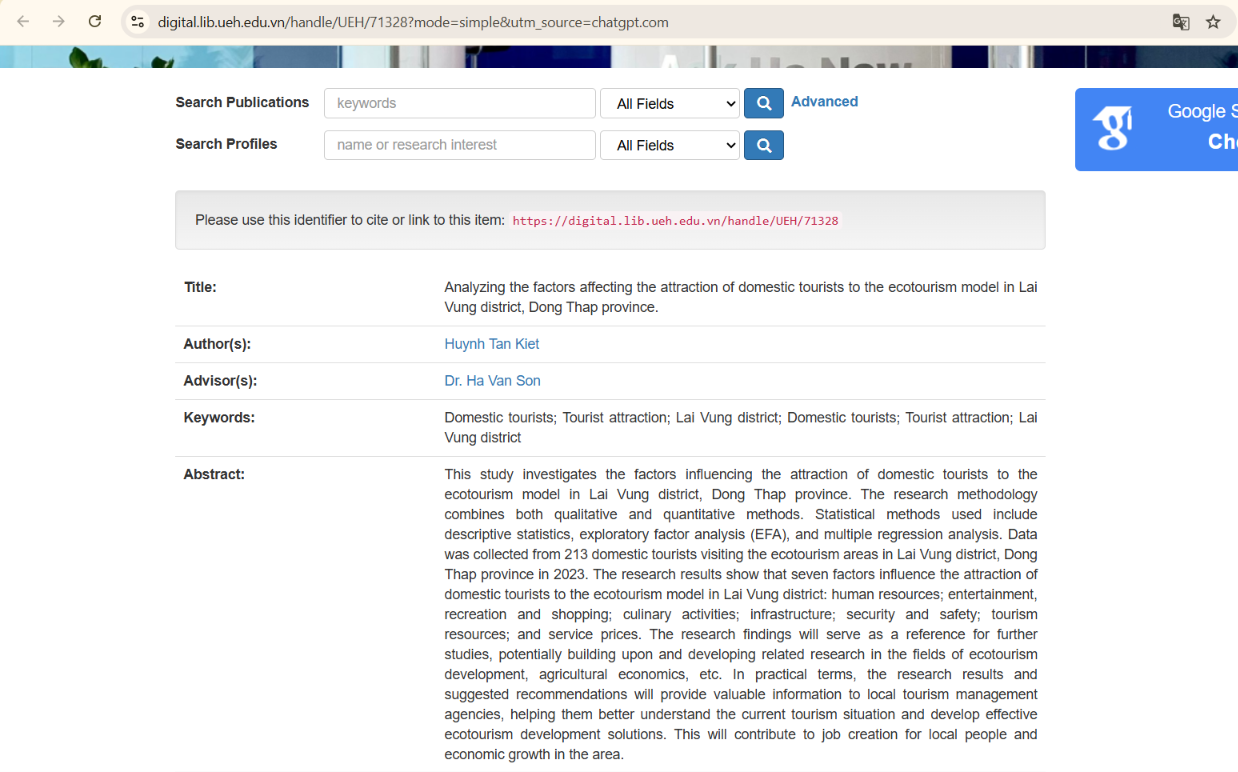
Research study: “Analyzing the factors affecting the attraction of domestic tourists to the ecotourism model in Lai Vung district, Dong Thap province”
Public source: UEH Digital Repository, “Analyzing the factors affecting the attraction of domestic tourists to the ecotourism model in Lai Vung district, Dong Thap province”, 2025
https://digital.lib.ueh.edu.vn/handle/UEH/71328
b) Research on the role of community empowerment and well-being in sustainable tourism development in Da Nang City
In 2025, MA Tran Thi Kim Phuong (UEH) joined an inter-university research team that published a study examining the relationship between perceived empowerment, residents’ well-being, and support for local sustainable tourism development.
Drawing on 393 in-person and online responses from residents working in or operating tourism businesses in Da Nang City, the study emphasized the importance of meaningful public participation in destination management and development. Its findings provided an evidence base for community consultation, knowledge-sharing initiatives, and awareness-raising programmes on landscape conservation and the responsible use of tourism resources and spaces.
These findings offered a reference for local authorities, tourism businesses, orchard operators, and community organizations considering ways to develop ecotourism grounded in the value of agricultural landscapes. They also identified topics suitable for educational and community outreach programmes on responsible use of orchard landscapes, tourism resource conservation, and sustainable destination management.
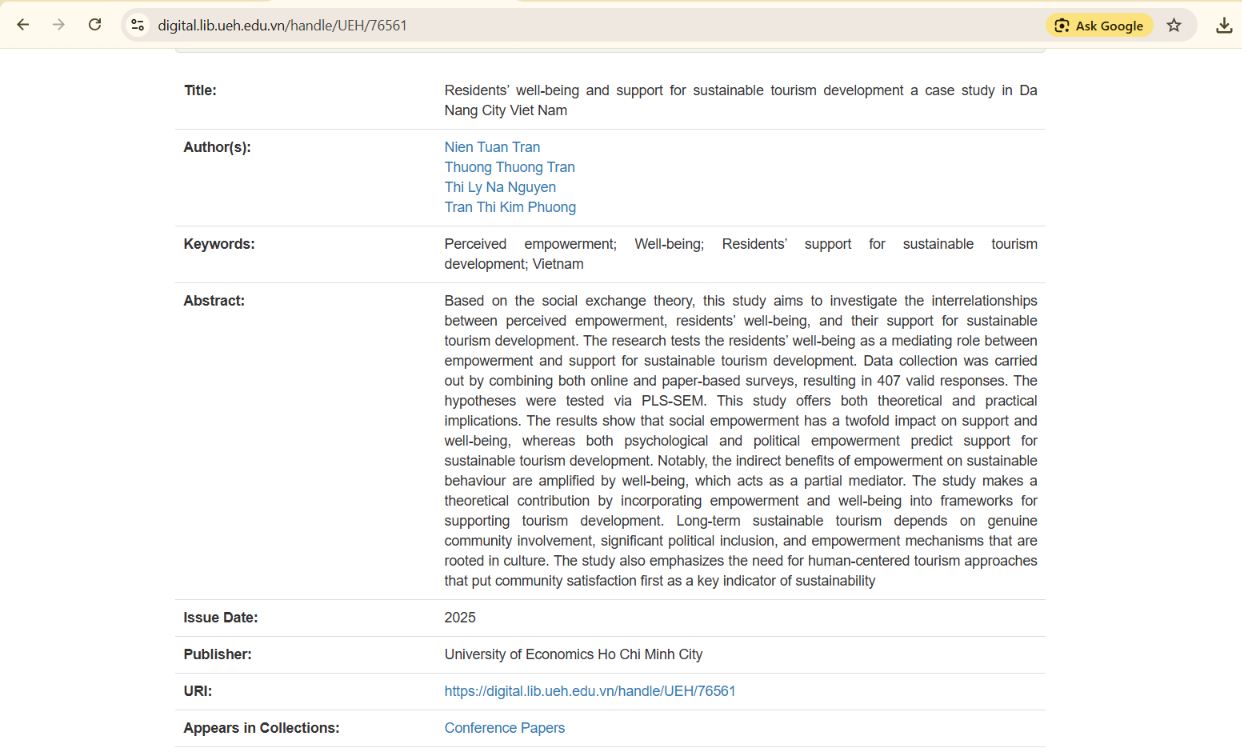
Research study: “Residents’ well-being and support for sustainable tourism development a case study in Da Nang City Viet Nam”
Public source: UEH Digital Repository, “Residents’ well-being and support for sustainable tourism development a case study in Da Nang City Viet Nam”, 2025
https://digital.lib.ueh.edu.vn/handle/UEH/76561
For research on sustainable land resource management and use, UEH emphasized disseminating findings and transferring knowledge to the community through scientific publications, library systems, university information platforms, and communication channels. In this way, research insights and recommendations could reach residents, organizations, and local authorities, raising awareness of responsible land use, natural landscape protection, prevention of land degradation, and sustainable land management. This dissemination helped connect academic research with community education in support of SDG 15 – Life on Land.
4. Evidence of programmes and events implemented in 2025
| No. | Programme/
Project |
Format/
Category |
Description | Public source |
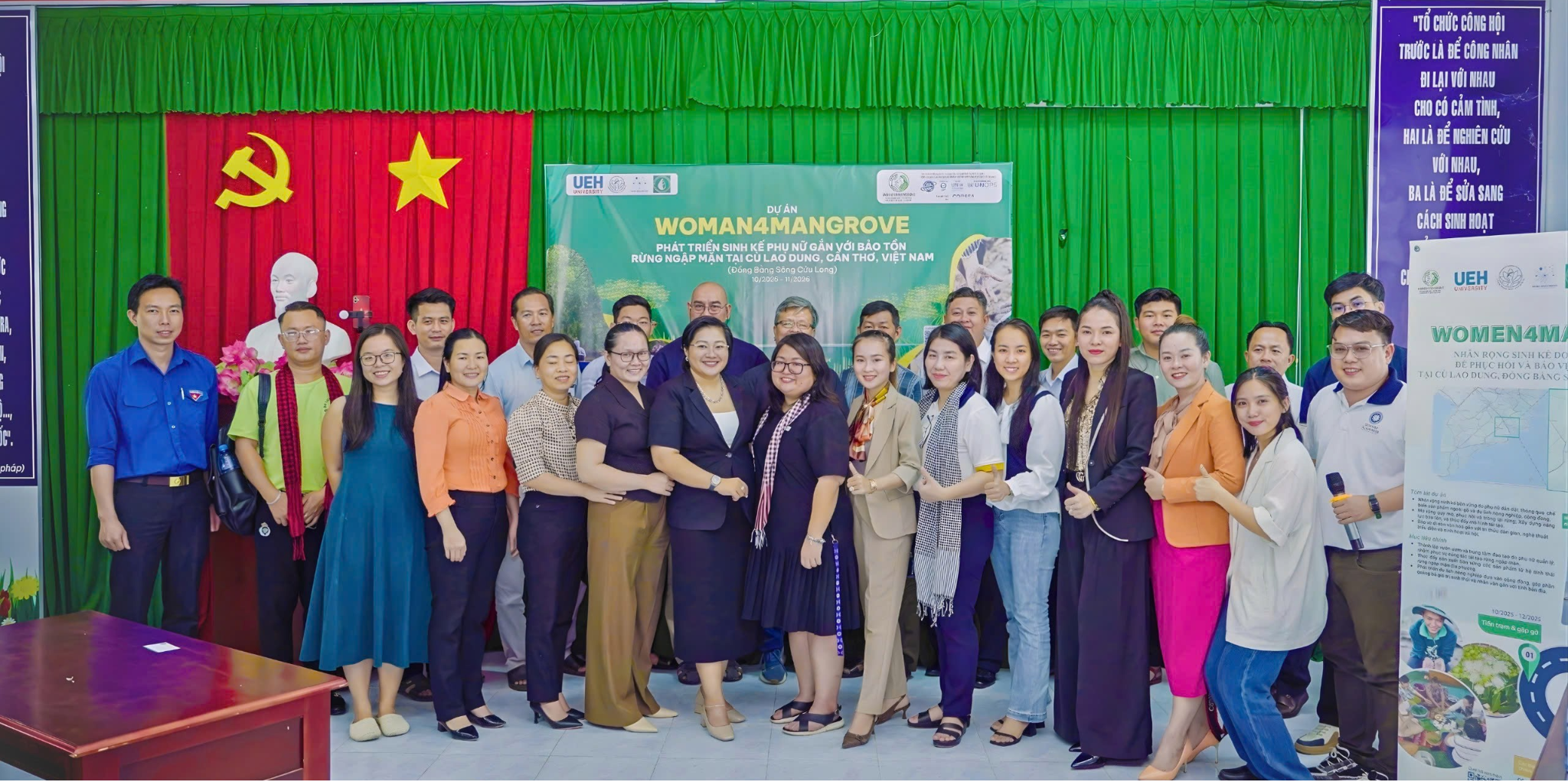
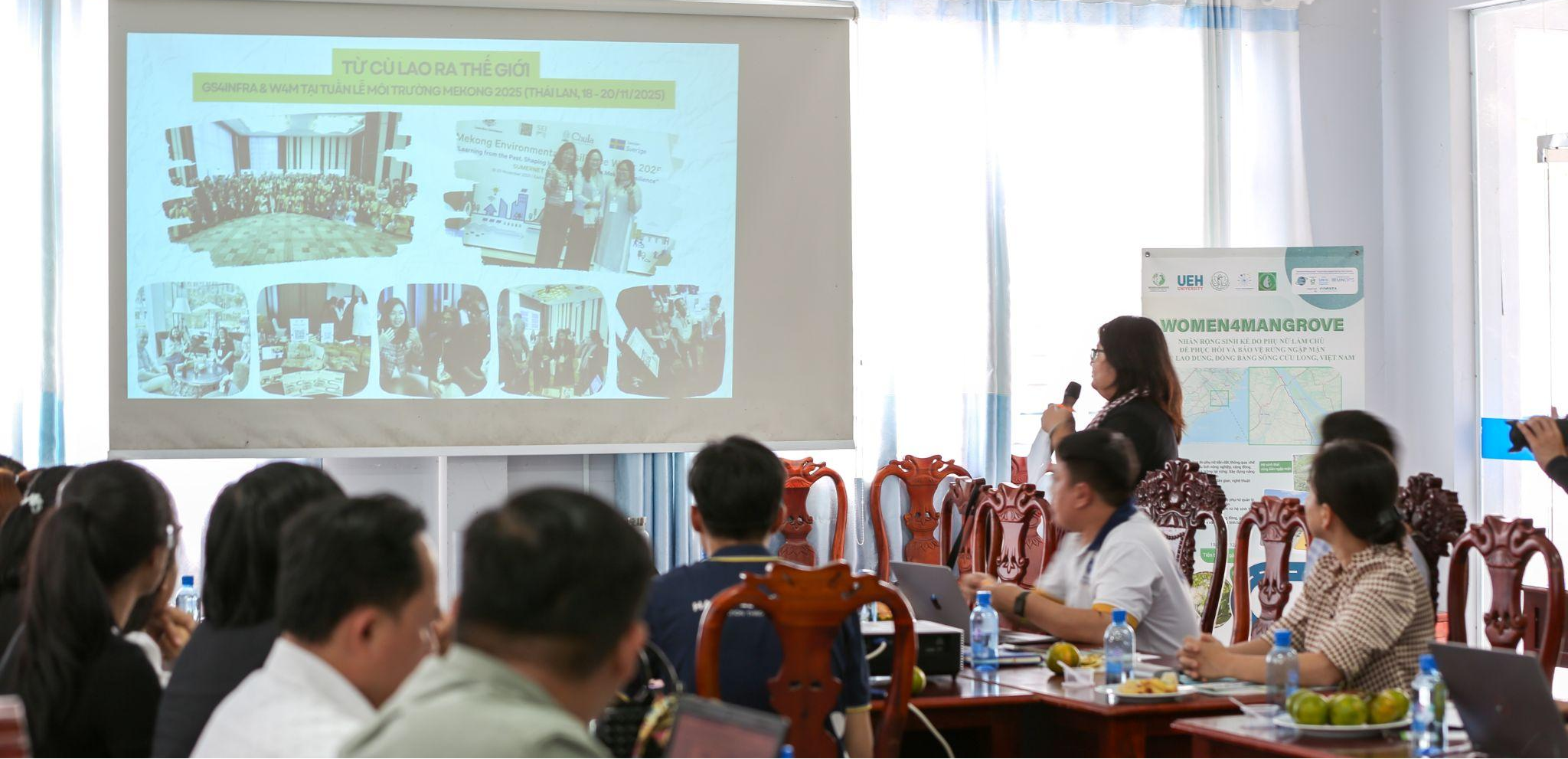
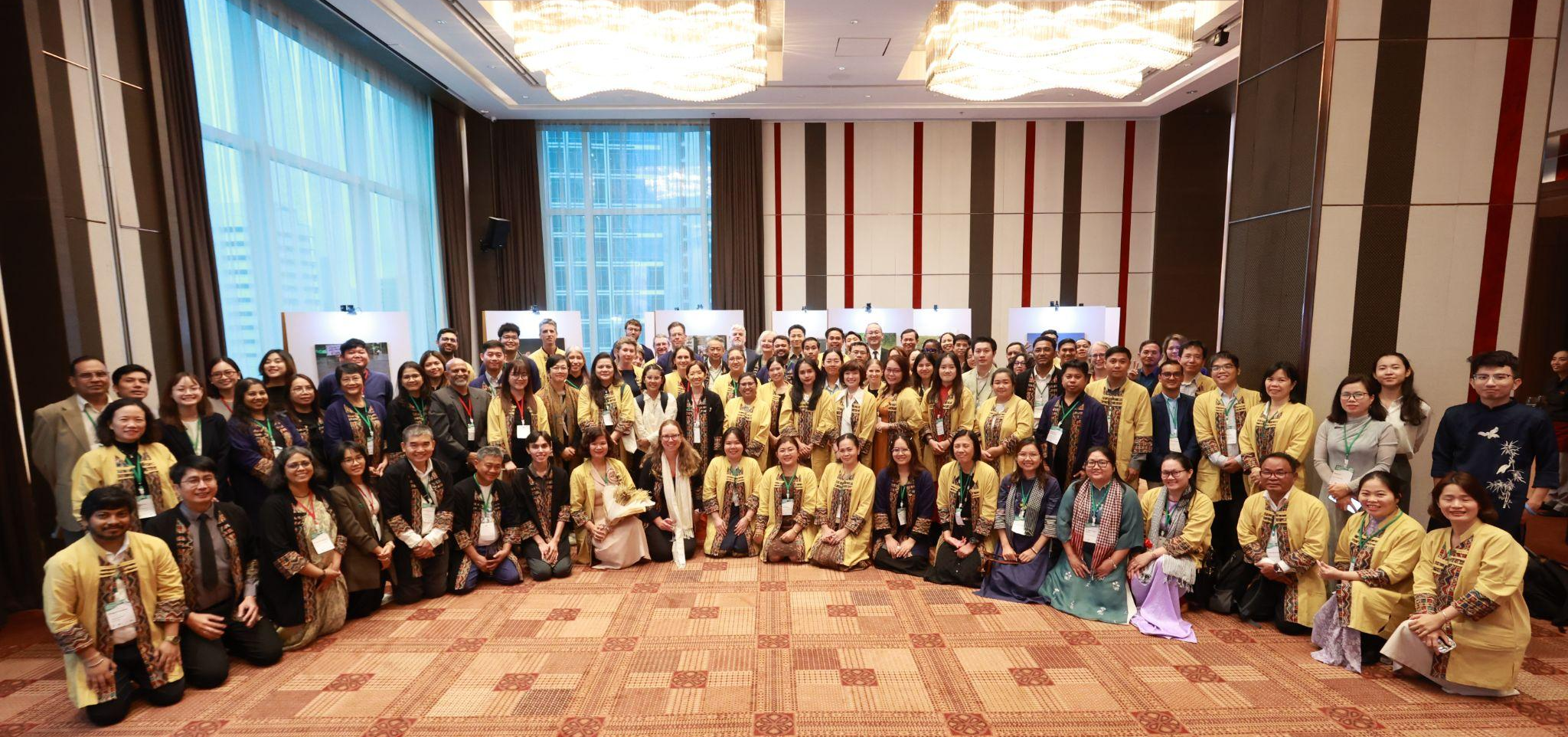
| 1 | Women4Mangrove – Mangrove conservation linked to community livelihoods | Free activity; Community engagement; Local consultation; Knowledge sharing on conservation and sustainable tourism development | On 10 December 2025, UEH collaborated with the People’s Committees of An Thanh and Cu Lao Dung communes in Can Tho City to launch the Women4Mangrove project, accompanied by a thematic discussion on mangrove conservation and sustainable livelihood solutions. The event brought together local authorities, experts, and community representatives to discuss forest conservation and mangrove ecosystem protection, emphasizing women’s empowerment and the development of sustainable educational agritourism in the Mekong Delta. The project aimed to establish a women-managed nursery and reforestation training centre, with a target of restoring 5 hectares of mangrove forest over its implementation period.
In 2025, the project also expanded its international connections and learning exchanges in Thailand (November 2025) and the Netherlands (December 2025), helping refine the model’s design and inform future expansion.
Participants attended and contributed to the thematic discussion
Delegates, partners, and the Women4Mangrove project team at an international professional exchange forum |
UEH Portal and Can Tho Newspaper, December 2025 |
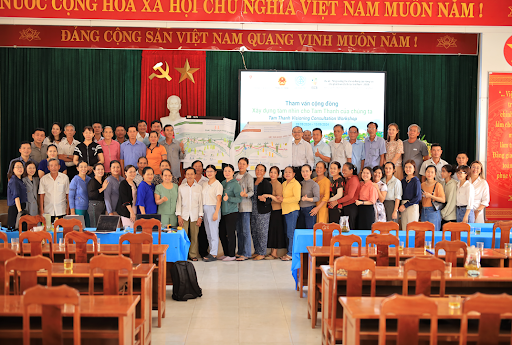
| 2 | Project: “Development of Community Economy, Tourism and Art in Tam Thanh, Tam Ky” | Free activity; Applied research; Participatory landscape planning; Sharing design solutions | Through collaboration among UEH’s Institute of Smart City and Management (ISCM), UN-Habitat, local authorities, businesses, and Tam Thanh residents, the project examined spatial planning solutions, landscape improvement, protection of coastal greenery, erosion reduction, and ecotourism development. It applied nature-based solutions (NBS) and community co-creation to revitalise public spaces in Tam Thanh, pursuing three main objectives:
The UEH (ISCM) and UN-Habitat (ISCB) project team with local residents following a community consultation meeting |
UEH Future, “[Research Contribution] Project on Community Economy, Tourism and Art Development in Tam Thanh”, 11 February 2025 |
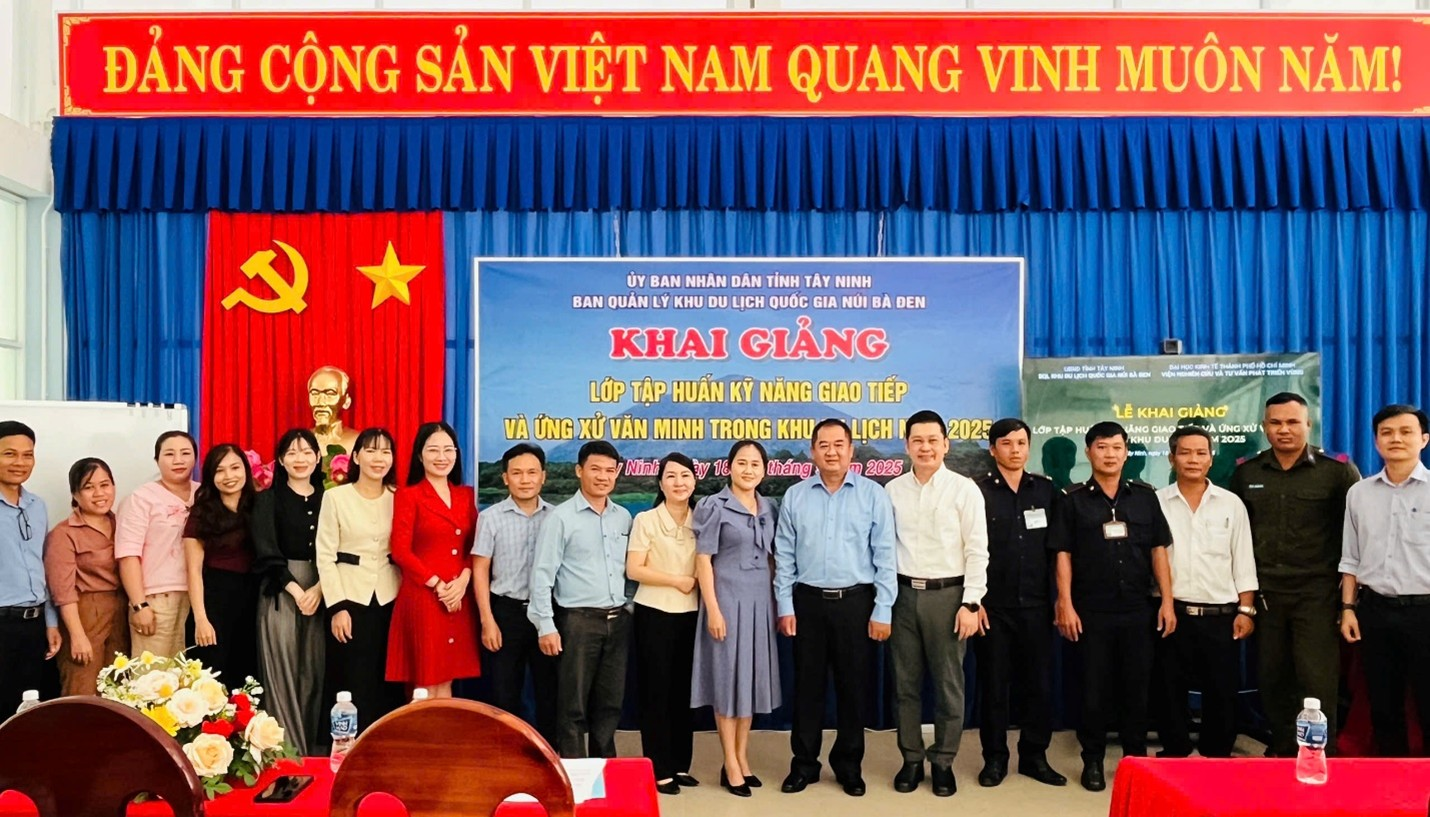
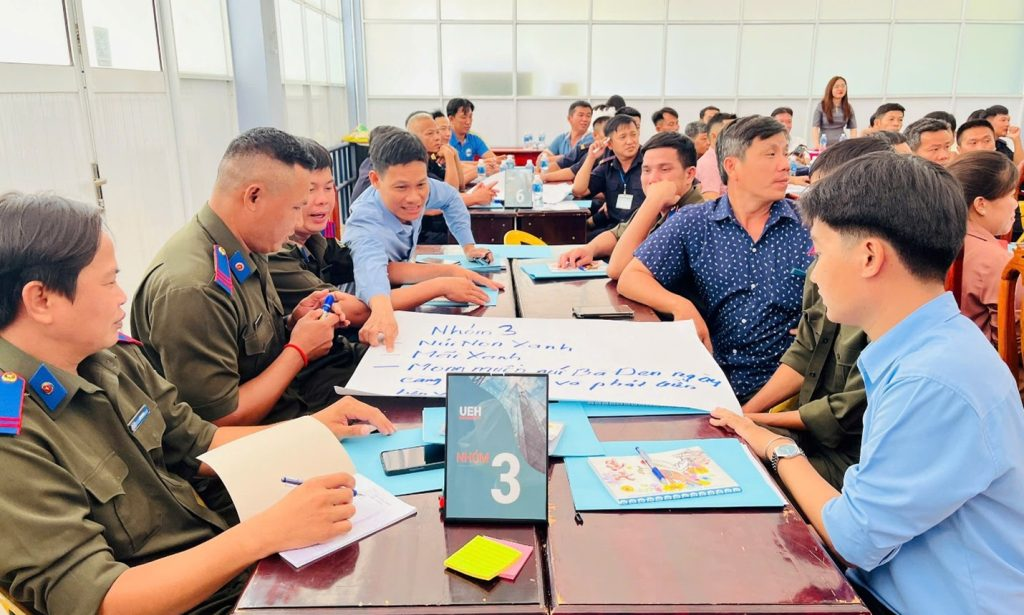
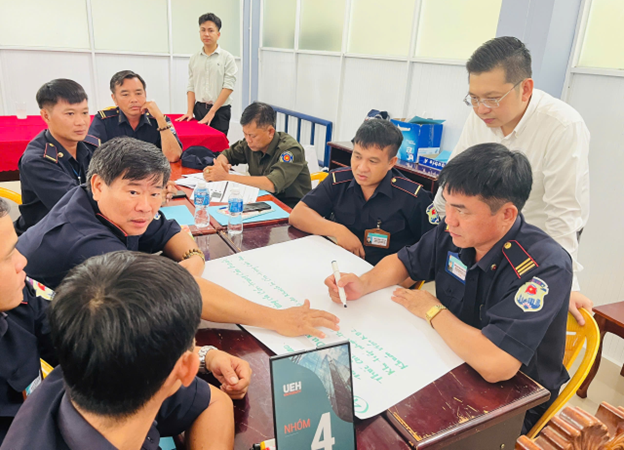
| 3 | Training course “Communication Skills and Civilised Conduct in Tourist Areas” at Ba Den Mountain National Tourist Area, 2025 | Free activity; In-person training; Capacity building for local tourism management and service personnel | On 18 September 2025, UEH’s Institute for Regional Development Research and Consulting (IRDRC), in cooperation with the Management Board of Ba Den Mountain National Tourist Area, organized a training course on “Communication Skills and Civilised Conduct in Tourist Areas” for more than 60 local officials and employees of the Management Board. The course focused on improving communication skills, appropriate conduct, and tourism service quality, contributing to a respectful tourism environment aligned with local community needs.
By delivering in-person training off campus, UEH transferred destination management knowledge and skills to local personnel, strengthening their capacity to organize, coordinate, and guide responsible tourism activities at Ba Den Mountain National Tourist Area.
Officials and local personnel from the Management Board of Ba Den Mountain National Tourist Area attended the training course |
UEH Institute for Regional Development Research and Consulting, “Opening Ceremony of the Training Course on Communication Skills and Civilised Conduct in Tourist Areas at Ba Den Mountain National Tourist Area in 2025”, 19 September 2025 |
5. Conclusion
In 2025, UEH continued to serve as a link between knowledge, research, and communities in advancing sustainable management of land resources and tourism landscapes. Through knowledge exchanges, consultations, and applied research in places with distinctive characteristics, including Cu Lao Dung and Tam Thanh, UEH helped clarify the relationship between ecosystem conservation, responsible use of tourism spaces, and local livelihood development.
Through research, advisory programmes, and local partnerships, UEH contributed to enhancing the awareness and capabilities of communities, residents, and management bodies in sustainably managing, using, and protecting land resources. Activities focused on sharing knowledge and guidance on responsible land use associated with natural landscape conservation, limiting land degradation, and reducing the environmental impacts of tourism. UEH thereby encouraged the integration of land-protection principles into destination management and community-based tourism development, promoting efficient use of natural resources and local ecosystem conservation.
Building on seminars, field surveys, and cultural landscape conservation activities undertaken in 2024, UEH’s 2025 programmes further expanded cooperation with authorities, research organizations, development partners, and residents, progressively increasing community participation in shaping sustainable tourism development. This provided a foundation for UEH to continue delivering education, knowledge transfer, and community support for the long-term management and protection of land resources and tourism landscapes.