

Amidst escalating challenges posed by climate change and increasing water scarcity, the sustainable exploitation and integrated water resources management have become a critical imperative for higher education institutions. Guided by its commitment to becoming a “Sustainable University,” the University of Economics Ho Chi Minh City (UEH) prioritizes the deployment of efficient water-use efficiency solutions to ensure the achievement of its sustainable development goals.
The rainwater collection and utilization system at UEH’s Campus N has been implemented with the objective of maximizing naturally available water sources, significantly reducing reliance on municipal supply, and advancing a green – sustainable operational model. Across the entire roof area of the campus buildings, a synchronized network of collection gutters and downpipes is installed to efficiently harvest rainfall landing on the structures. The collected rainwater first passes through a screen filter and a coarse filtration unit to effectively remove debris, dust and impurities before undergoing specialized treatment and being directed for utility use.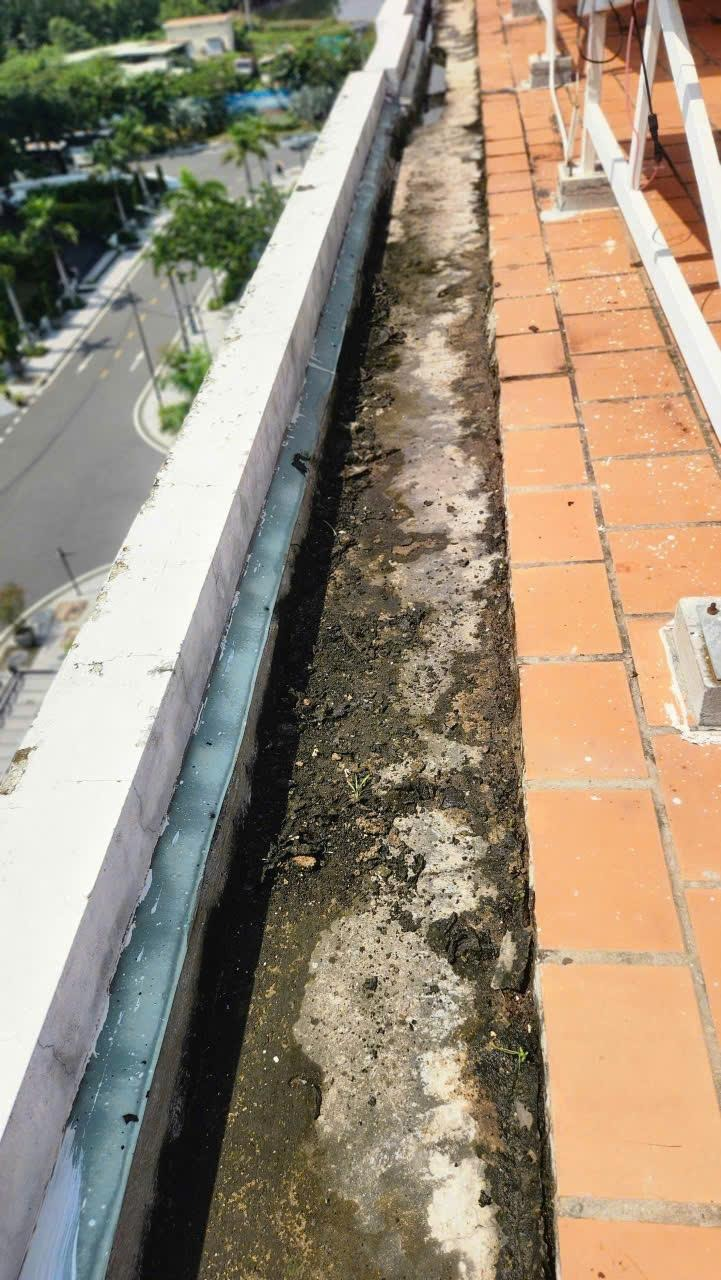
The Rainwater Harvesting System on the rooftops of buildings at UEH’s Campus N
Furthermore, UEH has developed natural ponds surrounding Campus N. This natural pond functions as an “ecological water reservoir,” capable of naturally regulating and retaining stormwater through its thriving aquatic vegetation and surrounding ecosystem. The creation of these reservoirs adds a substantial volume of water to the campus ecosystem, helps maintain stable water levels, and enhances natural purification via biological sedimentation and filtration mechanisms. The water in the pond is utilized not only for microclimate regulation and aesthetic landscaping but is also harvested for essential non-potable purposes such as irrigating green areas, cleaning outdoor spaces, and supporting teaching and research activities related to environment, urban ecology and sustainable water management.

The Natural Water Retention Pond at UEH’s Campus N
Beyond its practical utility, the system is integrated as an experiential learning model within the UEH Living Lab framework. This integration provides students and lecturers from disciplines such as Environment, Urban Ecology, Landscape Architecture and Sustainable Management with a unique opportunity to engage in research, water quality monitoring, analysis of the hydrological cycle, and ecological impact assessment. Through this proactive approach, the natural pond system operates not just as a landmark but as a “green laboratory” for interdisciplinary education.
The utilization of the natural pond as a site for storage – regulation – reuse of rainwater has enabled Campus N to establish a model of sustainable natural water exploitation. This contributes to reducing the burden on the municipal drainage system, mitigating the risk of internal flooding during heavy rainfall, while simultaneously increasing the harmonious integration of green and blue spaces within the overall architecture. This model clearly demonstrates UEH’s environmentally friendly approach, aligning with the sustainable development goals and the UEH Green Campus strategy for responsible, efficient water resources management that holds educational value for the community.
![[UEH 50] UEH Organizes the UEH Visiting Lecturer Conference 2026: Connecting Knowledge, Co-creating a Sustainable Academic Ecosystem](https://future.ueh.edu.vn/wp-content/uploads/2026/08/ueh-thumbnail-639231613726052180-1.png)
![[UEH 50] UEH Visiting Lecturers Conference 2026: Connecting Knowledge, Co-Creating Values for the UEH Academic Ecosystem](https://future.ueh.edu.vn/wp-content/uploads/2026/08/ueh-thumbnail-639225793752780476.png)