

7.2.1 – Energy-efficient renovation and building
In 2025, the University of Economics Ho Chi Minh City (UEH) continued to modernise its buildings, operate energy-control systems and implement the new UEH Nexus Campus Nha Trang construction project. These activities were underpinned by the University’s internal Green Campus regulations and Vietnamese legal requirements for energy conservation and efficiency in construction.
1. Strategic Directions
In 2025, UEH continued to develop its infrastructure along three strategic directions:
Integrating energy-efficiency requirements into construction and renovation: Capital investment projects were guided to consider energy performance from the design stage through material and equipment selection, while making use of natural conditions to reduce demand for artificial lighting and cooling.
Applying green building technologies and solutions: UEH prioritised LED lighting, automatic lighting controls, high-efficiency air-conditioning, natural ventilation, solar heat-gain protection and solar power at suitable facilities. The University also sought to reference green building certification systems such as LEED, LOTUS and EDGE for appropriate projects.
Strengthening monitoring and improving operational energy performance: UEH implemented energy consumption management and monitoring, automated equipment controls and integrated infrastructure data for management purposes, aiming to reduce operating costs and emissions over the long term.
2. Objectives and Target Groups
Objectives: To promote energy-efficiency requirements in new construction, renovation and upgrades of existing infrastructure; encourage high-performance materials and technologies; strengthen energy consumption monitoring; and develop green, smart and sustainable learning, research and working environments.
Target groups: Facilities management units, project planning and management teams, designers, contractors, consultants, equipment suppliers, lecturers, administrative staff, employees, students and other users of UEH facilities.
3. Internal Commitments and Supporting Policies
In 2024, to ensure that renovation and new construction projects complied with energy-efficiency standards, the University of Economics Ho Chi Minh City (UEH) continued to implement the Green Campus Practice Regulations, issued under Decision No. 2059/QD-DHKT-CSVC of 2022 by the Rector of the University of Economics Ho Chi Minh City and reviewed and updated in 2024. In particular, Article 12, Clause 7 established responsibility for phased investment in green infrastructure, equipment and sustainable energy in UEH buildings; Article 19 required energy-saving measures to be incorporated into the design, construction, renovation and operation of buildings; and Article 20 set out plans to upgrade and renovate infrastructure to reduce energy consumption. These provisions formed the basis for UEH to implement thermal insulation, LED lighting, high-efficiency air-conditioning, natural ventilation and daylighting, solar energy, and the adoption of green building standards such as LOTUS, EDGE and LEED.
In 2025, UEH continued to build on energy-efficiency requirements for building construction and renovation while developing a proposed update to the Green Campus Practice Regulations that would consolidate Articles 19 and 20 of the previous version into Article 13 – Policy on Green Building Development and Energy Efficiency in Construction, as follows:
Energy efficiency in construction means that UEH proactively integrates efficient energy-use measures into building design, construction, renovation and operation. This policy aims to develop environmentally friendly facilities, reduce greenhouse gas emissions and optimise energy consumption across the University.
Use energy-efficient materials and equipment in designing and renovating existing buildings and constructing new ones. UEH buildings should prioritise insulation materials, heat-resistant and low-emissivity (low-E) glazing, reflective roof and wall coatings, and environmentally friendly materials that can be recycled or reused. Lighting should incorporate LEDs, motion sensors and real-time automatic lighting controls. Cooling systems should use high-efficiency air-conditioners, energy-efficient ceiling fans, heat pumps or optimised natural ventilation. Solar photovoltaic systems are encouraged at campuses with suitable roof space, such as UEH Nha Trang, Vinh Long, or administrative and library buildings. Environmentally responsive features, including rooftop gardens, open green spaces and certified green building materials, should be prioritised in infrastructure investment.
UEH encourages its departments, faculties, institutes and centres to prioritise renewable energy, energy-saving lighting, highly rated energy-labelled electrical equipment and smart energy management systems when investing in, operating and maintaining buildings.
Construction and renovation projects should consider energy efficiency from the design stage, optimising ventilation, natural lighting, prevailing winds and solar exposure while minimising high-emission materials. Solar energy, condensate recovery and waste-energy recovery solutions are encouraged for study and implementation where conditions permit.
Classify and standardise design according to climate zones and the specific characteristics of each UEH campus. Ho Chi Minh City facilities should apply moisture-control solutions, enhance natural ventilation and use materials suited to the humid tropical climate. Vinh Long facilities in the Mekong Delta should prioritise heat-resistant, waterproof materials capable of withstanding rainy-season conditions. Coastal facilities in Nha Trang should use salt-corrosion-resistant materials, design ventilation to capture sea breezes and maximise solar energy. Dormitories should apply simple, energy-saving designs that ensure ventilation and safety. Each building type, including classrooms, dormitories, learning resource centres and offices, should have detailed energy consumption standards appropriate to its function and local conditions.
Integrate ecological considerations and biodiversity conservation into planning and construction. During renovation or new construction, projects should minimise impacts on the surrounding natural environment, including mature trees and native vegetation. Green infrastructure, such as rooftop gardens, green façades, rainwater harvesting systems and ecological ponds, should be prioritised. Native plants requiring little water or frequent maintenance are also encouraged to reduce operating and maintenance costs.
Work towards green building standards under domestic and international certification systems. UEH buildings, particularly major renovations and new construction projects such as dormitories, libraries, smart classrooms and the Nha Trang campus, should aim for certifications such as LOTUS (VGBC, Vietnam), EDGE (IFC, World Bank Group), LEED (United States) or equivalent standards. The University may pilot selected buildings as replicable models and raise awareness and train its technical staff in green building standards.”
The proposed revision aimed to harmonise requirements for green buildings, energy efficiency and environmental protection throughout UEH infrastructure development, while clarifying their application to both new construction and renovation in line with the indicator. Compared with the 2024 version, the principal change proposed in 2025 was the consolidation and systematisation of regulations for new construction and building renovation, rather than merely adding individual energy-saving solutions. This reflected UEH’s intention to apply energy-efficiency requirements consistently from design, material selection and equipment investment through renovation and infrastructure operation.
4. Evidence of Programmes, Projects and Activities Implemented in 2025
| No. | Programme/Project | Type/Classification | Activities and Outcomes | Public Source |
| 1 | UEH Nexus Campus Nha Trang – New Construction Project Commenced in 2025 with Green and Smart Building Standards | New construction project; green planning and design | On 19 August 2025, UEH officially broke ground on UEH Nexus Campus Nha Trang. The campus was planned with modern, green architecture suited to local conditions. The building blocks are linked by a system of planted terraces along the façades, helping improve the microclimate and create a welcoming learning environment. The published scale includes a 9,613 m² administration and research building, a 5,426 m² teaching building, a 2,177 m² functional building and a 5,150 m² dormitory, as well as a multipurpose building.
On 1 November 2021, UEH issued the Design Brief for the Architectural Design Competition under Decision No. 596/QD-DHKT-TCKT, establishing sustainable design and energy-efficiency requirements for the Nha Trang education and research campus. Section 2.3 on page 15 required attention to solar and wind energy, local and environmentally friendly materials, and water reuse; it also called for rooftop photovoltaic panels and building massing that maximised natural ventilation and daylight. UEH launched the architectural design competition in November 2021 and announced its results in January 2022, continuing investment preparations and project documentation during 2023–2024. On 19 August 2025, UEH officially commenced construction of UEH Nexus Campus Nha Trang. This sequence demonstrated that UEH had established energy-related design standards during planning and design preparation, before construction began. 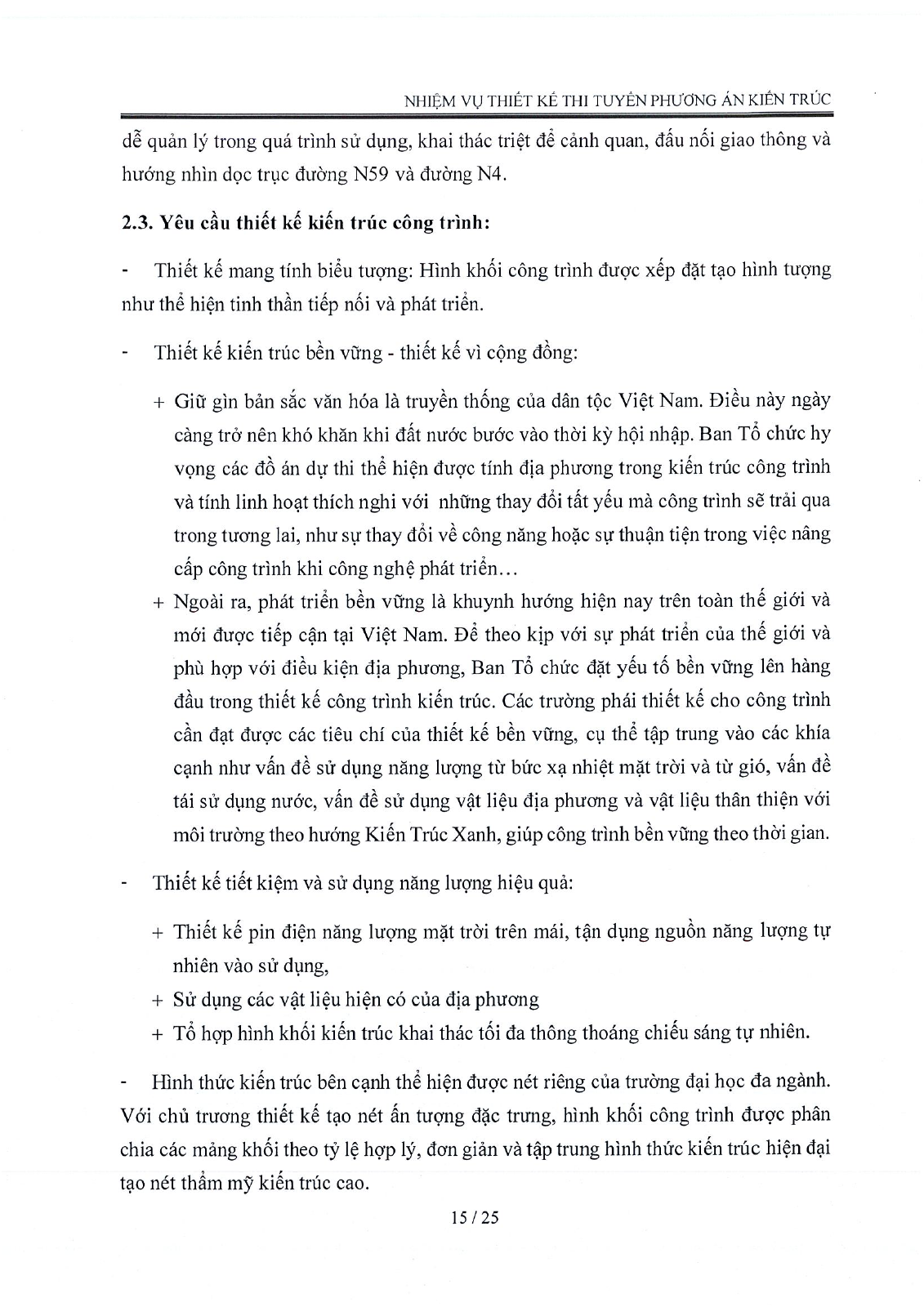
Design standards 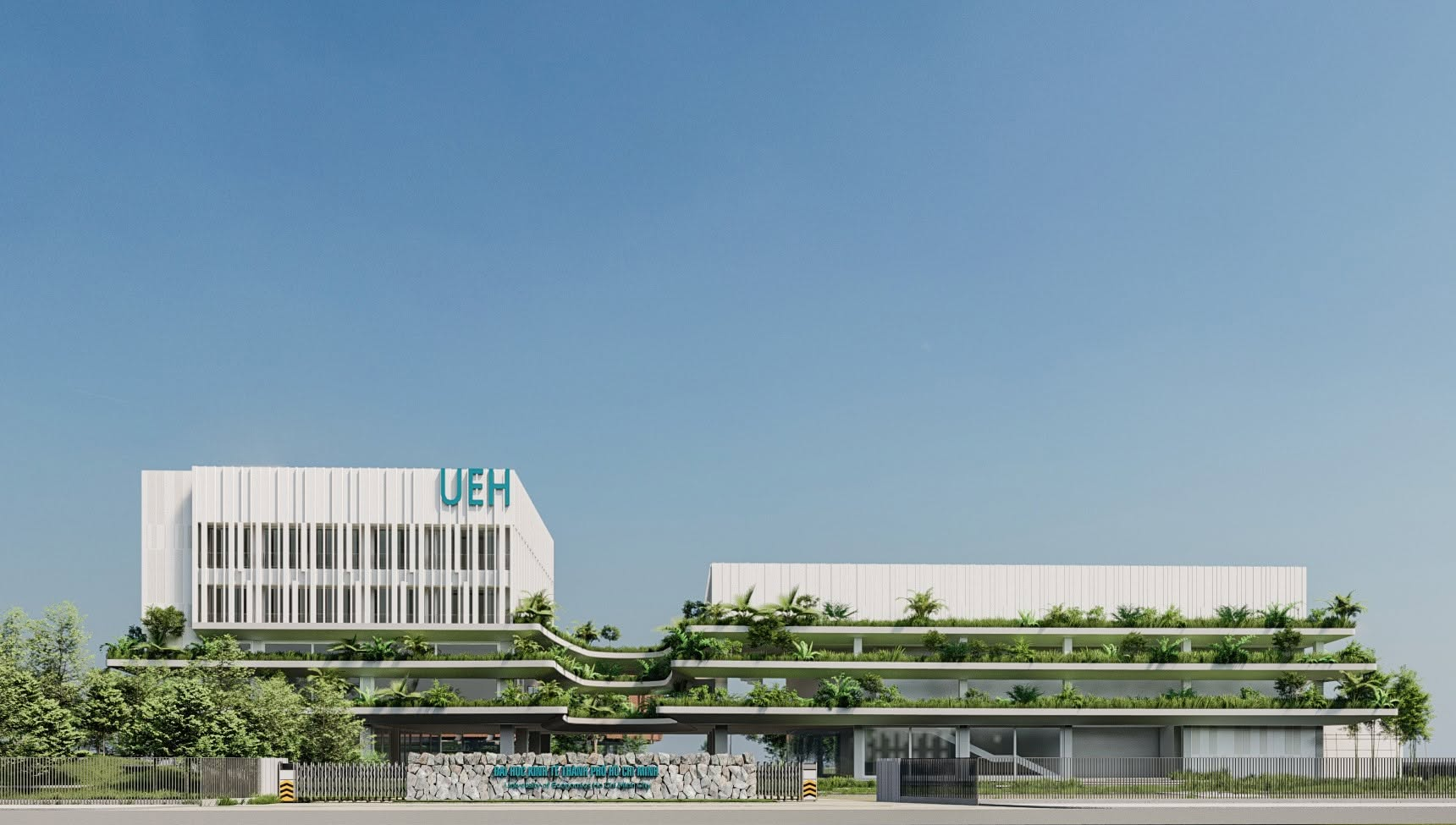
Architectural rendering of the UEH Nexus Campus Nha Trang project |
UEH Portal, “Official Groundbreaking of UEH Nexus Campus Nha Trang”, August 2025; UEH Portal project introduction, 12 August 2025. |
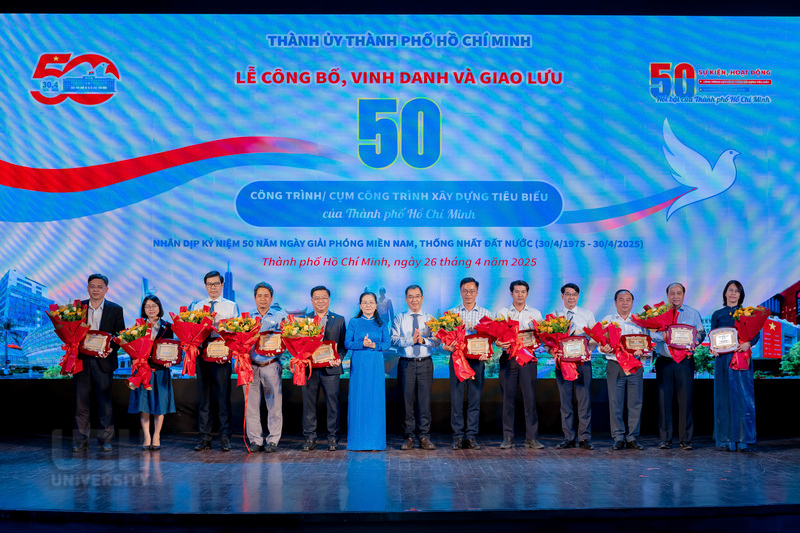
| 2 | Nguyen Van Linh Campus – A Representative Green and Smart Building of Ho Chi Minh City on Its 50th Anniversary | Existing building; green design and infrastructure management | On 24 April 2025, UEH’s Nguyen Van Linh Campus (Campus N) was recognised by the Ho Chi Minh City People’s Committee as a representative construction project under Decision No. 1590/QD-UBND. The campus incorporates green architectural principles, a solar power system, environmentally friendly materials and measures to optimise electricity use.
Ho Chi Minh City People’s Committee leaders present the recognition emblem for Nguyen Van Linh Campus to Prof. Dr. Nguyen Khac Quoc Bao, Vice President of UEH 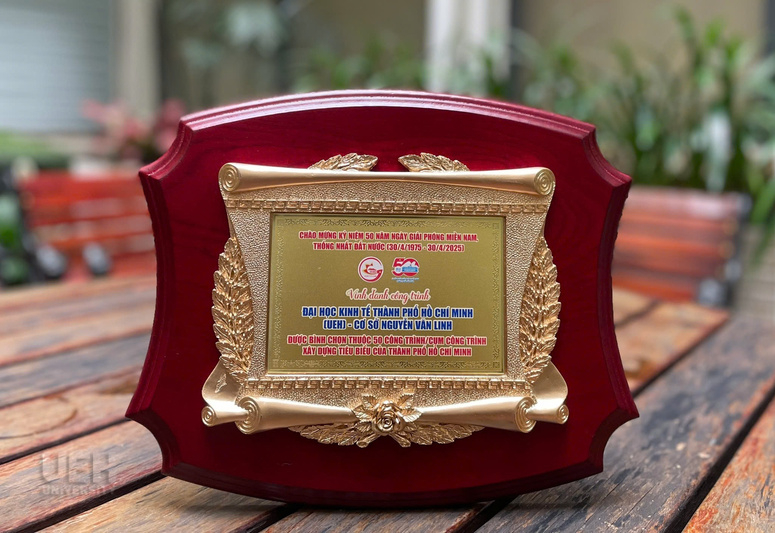
Recognition emblem for UEH Nguyen Van Linh Campus, selected among Ho Chi Minh City’s 50 representative construction projects and project complexes |
UEH Portal, “UEH Nguyen Van Linh Campus Recognised as a Representative Green, Smart and International Building in Ho Chi Minh City”, 28 April 2025. |
| 3 | Operating Nguyen Van Linh Campus with Lighting, Ventilation and Renewable Energy Solutions | Building operation; energy-saving solutions | In 2025, UEH continued operating Campus N with solar panels, environmentally friendly building materials, and natural lighting and ventilation solutions. Covering more than 11.1 hectares, the campus includes a five-storey teaching building and a ten-storey administration building. These design measures support reduced electricity demand and optimised operating costs, demonstrating the continued application of green building principles during operation.
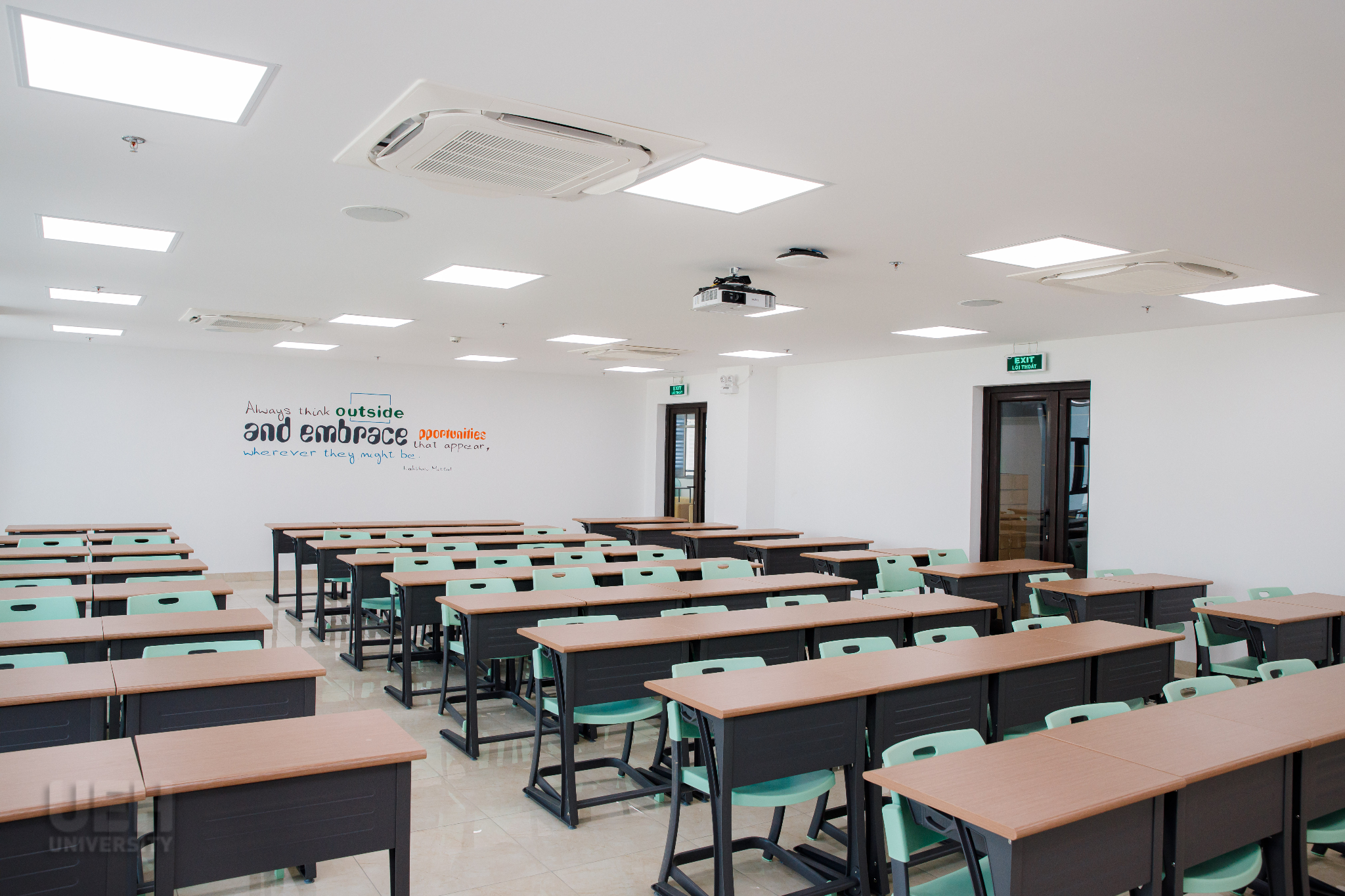
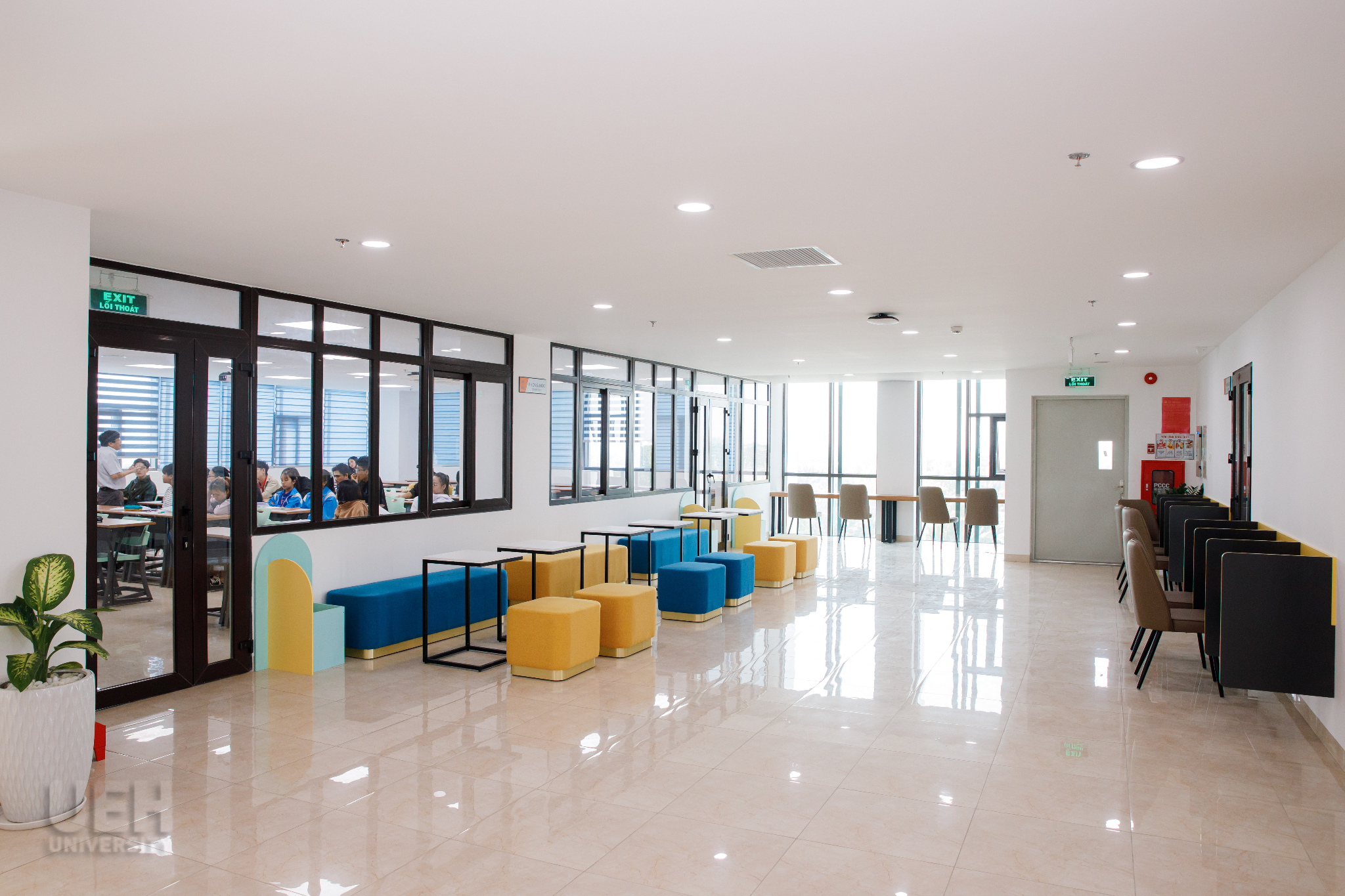
Modern teaching facilities |
UEH Portal, “Nguyen Van Linh Campus – UEH’s Green, Smart and International Learning Environment”, 13 September 2025. |
| 4 | Modernisation of Smart Building Systems and Energy Management at UEH in 2025 | Building management; improved operational efficiency | According to the UEH Green Campus report for 2025, the total floor area meeting smart building criteria across the University was 79,665.85 m², equivalent to 53.99% of UEH’s total floor area. These buildings were equipped with centralised monitoring systems, real-time energy consumption tracking, and automated lighting and air-conditioning controls. | UEH Green Campus, “New Progress of the UEH Green Campus Project in 2025”, published on 4 February 2026, reporting 2025 results. |
| 5 | Integrating Renewable Energy Technologies into UEH Facility Operations | Energy technology; green building operation | Solar power systems at Campuses A, B and N continued to meet part of UEH’s electricity needs. The Green Campus report for 2025 disclosed more than 508.000 kWh/year of solar electricity directly used at these campuses. This result illustrated the integration of renewable energy solutions into university infrastructure.
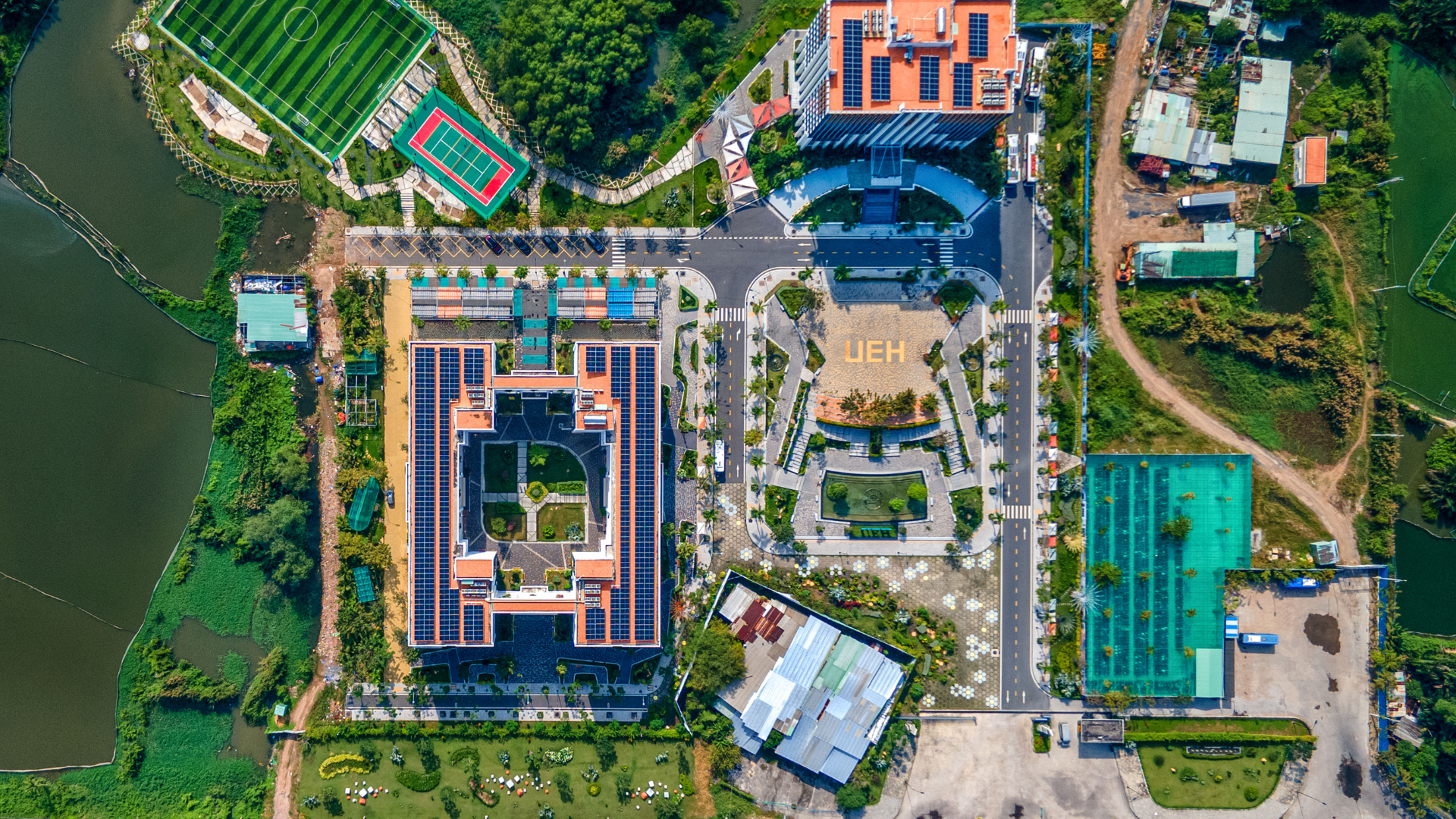

UEH solar power installations across its campuses |
UEH Green Campus, 2025 results report published on 4 February 2026; UEH Green Campus Project Report 2025 |
| 6 | Renovation and Modernisation of UEH Campus A | Facility renovation and upgrades; smart learning space development | UEH undertook renovation and modernisation of Campus A, aiming to develop green and smart infrastructure and integrate technology into learning and working environments. These works helped improve facility quality and support more efficient building management and operation. | UEH Portal – “From Sustained Efforts to a New Appearance: UEH Towards a Green, Smart University” |
| 7 | Development of Smart Learning Spaces and Technological Infrastructure at UEH Mekong | Facility modernisation; development of smart and sustainable learning spaces | In 2025, UEH Mekong continued to use its Hybrid Class teaching and practical training rooms, studios, smart library and modern learning and working spaces. The spaces featured open layouts, made use of natural lighting and integrated technologies supporting education.
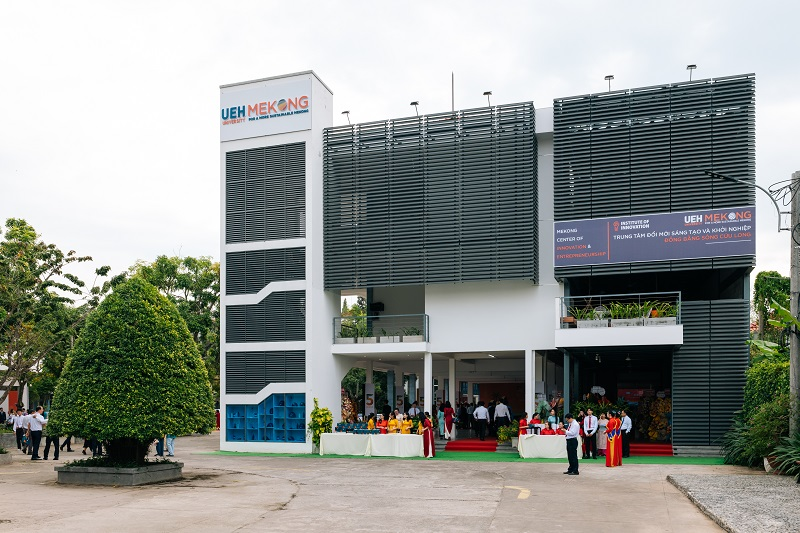
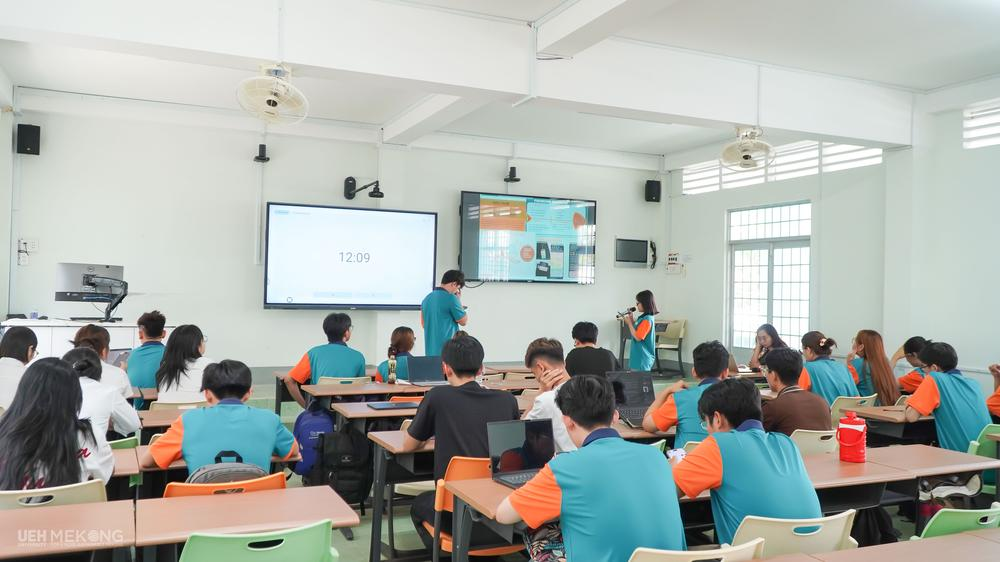
UEH Vinh Long Campus |
UEH Portal – “UEH Mekong: From Brand Positioning to Modern Infrastructure for Sustainable Education”, 3 July 2025 |
| 8 | Development and Operation of Next-Generation Academic Campuses: From Smart Campuses to Green and Circular Campuses | Sustainable infrastructure development; integration of resource and energy management solutions | Between 2011 and 2025, UEH progressively modernised its facilities towards smart, green and circular campuses. Green architecture, infrastructure management technologies and resource efficiency principles were integrated into the development of its academic campuses.
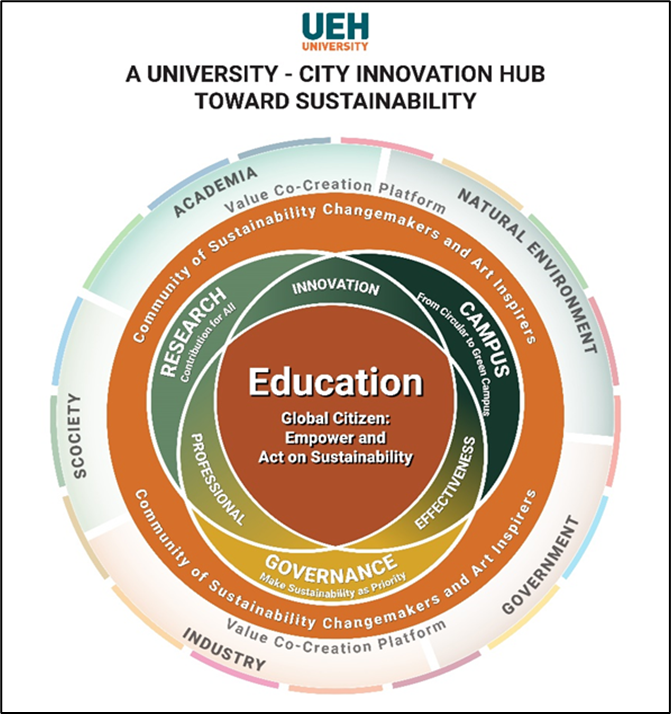
UEH Multidisciplinary and Sustainable Strategy Model 2026–2045, aiming to become a hub of the urban-regional innovation ecosystem |
UEH Portal – “UEH’s Next-Generation Academic Campus Operations Strategy (2011–2025): From Smart Campuses to Green and Circular Campuses”, 31 May 2025 |
5. Conclusion
In 2025, UEH continued developing facilities in line with green building and energy-efficiency principles, combining internal regulations, legal requirements for energy efficiency in construction, and practical investment and operation activities. The energy-saving policy was explicitly expressed in Article 19 of the publicly available Green Campus Practice Regulations, covering design, construction, renovation and operation; Article 20 added building upgrade measures and management responsibilities.
In implementation, UEH commenced the new UEH Nexus Campus Nha Trang project in 2025, maintained green architecture, natural lighting and ventilation at Nguyen Van Linh Campus, and expanded smart energy management to 79,665.85 m² of building floor area, equivalent to 53.99% of UEH’s total floor area.
Compared with the 2024 basis of classroom renovations and equipment upgrades, the 2025 evidence continued to demonstrate how policy, building design and operational monitoring were combined to improve energy performance. These activities contributed to SDG 7 – Affordable and Clean Energy, particularly THE Sustainability Impact Ratings indicator 7.2.1.