

15.4.3 – Policy on hazardous waste disposal
The University of Economics Ho Chi Minh City (UEH) implements its hazardous waste management and disposal policy under the Green Campus Regulations issued pursuant to Decision No. 2059/QD-DHKT-CSVC in 2022. The policy requires the separate segregation, collection, safe storage, and transfer of potentially harmful waste to licensed treatment providers. The policy was established and further specified, with its hazardous waste management requirements remaining in force in 2025, when UEH also documented hazardous waste segregation, storage, and incident prevention measures. Combining internal regulations, assigned management responsibilities, and on-campus practices has strengthened a safe and controlled waste management system in the operation of UEH’s Green Campus.
1. Internal commitments and supporting policies
UEH’s hazardous waste disposal policy is based on the UEH Green Campus Regulations, issued under Decision No. 2059/QD-DHKT-CSVC in 2022 and applicable across UEH campuses and its Vinh Long Branch. The regulations establish responsibilities for managing waste generated by learning, research, work, and operational activities, while distinguishing hazardous waste from ordinary domestic and recyclable waste.
Article 3, Clause 5 – Waste segregation practices at UEH, requires hazardous waste to be collected and gathered in the technical area of each campus before being transferred to a licensed treatment partner. This core principle makes each campus responsible for managing hazardous waste through a separate process, preventing its disposal with domestic waste or its entry into ordinary recycling streams without appropriate segregation.
 |
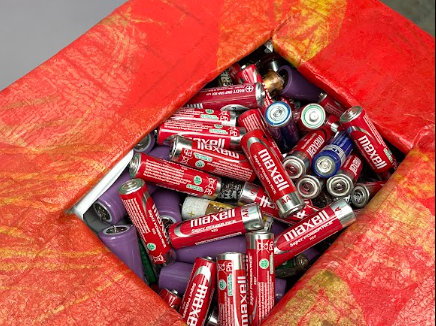 |
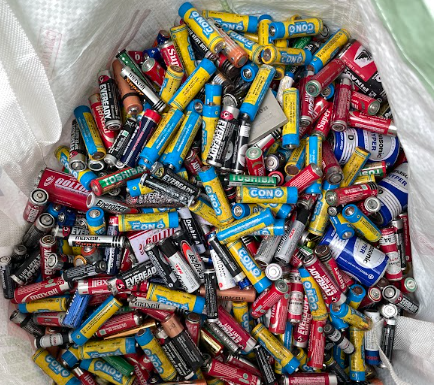
Used batteries are stored safely by the Infrastructure Management Board at UEH campuses before being transferred to an authorized treatment provider
On this basis, Article 7 – Hazardous waste disposal policy, specifies UEH’s requirements for collecting, storing, and transferring used batteries, damaged electronic components and equipment, fluorescent lamps, materials containing heavy metals, and chemical-containing waste. The policy seeks to control hazardous waste throughout its lifecycle, from generation to handover to an appropriately authorized treatment provider. Specifically, it provides for the following:
- First, separate segregation at source. Used batteries and damaged electronic equipment must be collected in dedicated containers marked with the warning label “Hazardous Waste – Batteries and Electronic Equipment” and placed in designated locations. For fluorescent lamps, electrical components, and chemical-containing materials, the generating units must segregate, safely package, and appropriately label the waste.
- Second, safe collection and storage. After segregation, hazardous waste is moved to each campus’s technical area for temporary storage, minimizing risks of packaging damage, leakage, or uncontrolled exposure to people and the environment.
- Third, recording and monitoring. Internal units are responsible for recording hazardous waste quantities, arranging periodic handovers, and reporting results to the UEH Green Campus Project Management Board for consolidation, oversight, and evaluation.
- Fourth, transfer to licensed treatment providers. Hazardous waste collection, transport, and treatment must be undertaken by partners holding permits appropriate to the waste categories accepted, in compliance with environmental protection and occupational safety regulations.
- Fifth, compliance inspection and monitoring. The regulations assign responsibility for inspections, reminders, and corrective action in cases of improper hazardous waste segregation or management.
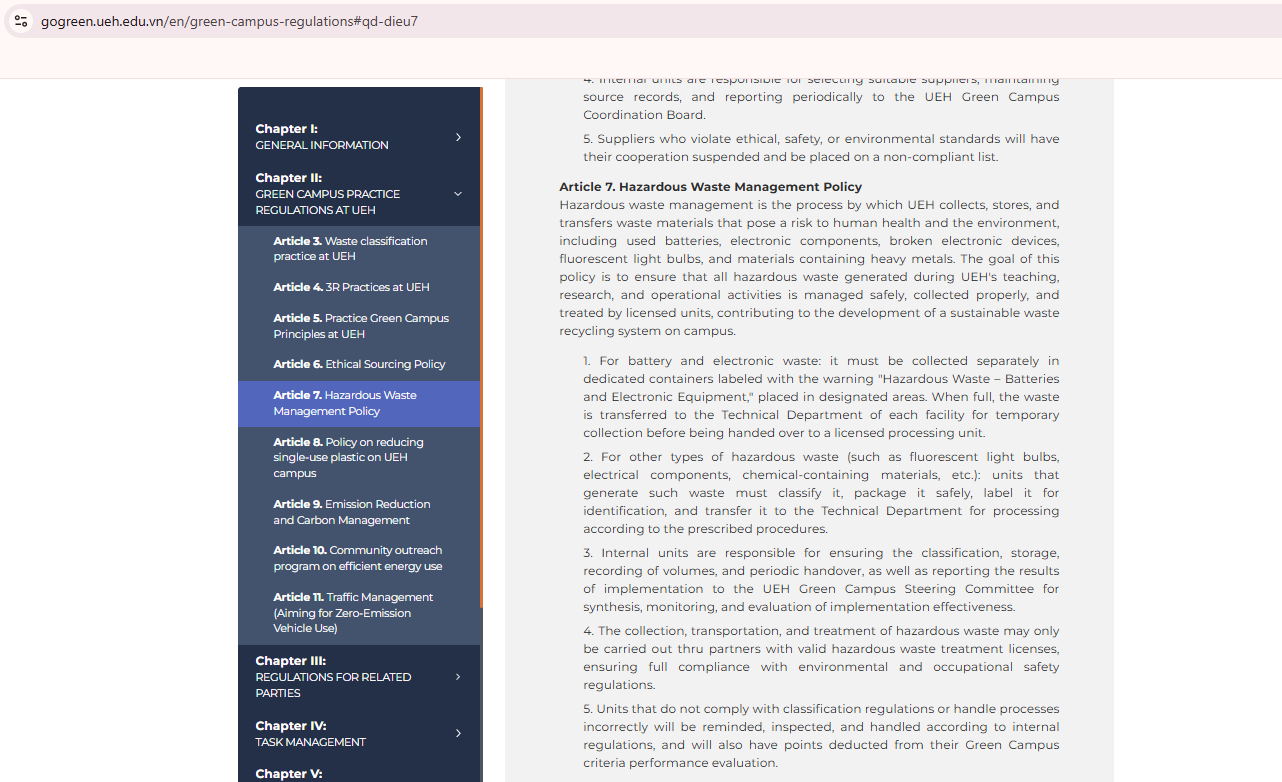
Article 7 of the UEH Green Campus Regulations, issued under Decision No. 2059/QD-DHKT-CSVC, sets out the policy requirements for hazardous waste
Public source: UEH Green Campus website, “Green Campus Regulations”
https://gogreen.ueh.edu.vn/en/green-campus-regulations
In addition, Article 15, Clauses 4, 6 and 7 clarify the responsibilities of the facilities management unit for collecting and gathering hazardous waste, monitoring and reporting data, and prioritizing partners with transparent treatment procedures that comply with legal requirements.
Accordingly, UEH’s hazardous waste disposal policy establishes a management process encompassing identification, separate segregation, collection, safe storage, monitoring, transfer to licensed providers, and compliance oversight. It also clearly assigns responsibilities to relevant units to minimize environmental pollution risks and protect public health. Building on regulations issued in 2022, UEH maintained the policy in 2025. Concrete evidence from the 2025 Environmental Protection Report for the Nguyen Van Linh Campus records the separate segregation and storage of used batteries and lamps, alongside incident prevention measures. This demonstrates the policy’s continued application in day-to-day operations and strengthened hazardous waste control across UEH campuses.
2. Implementation of the hazardous waste disposal policy in 2025
a) Collaboration with specialist organizations in hazardous waste management and collection
As UEH developed its Green Campus model, it gradually improved its hazardous waste management practices and expanded cooperation with specialist organizations. Evidence previously published by UEH documents consultations and collaboration with Asia Environment Company (Moi Truong A Chau) to develop collection and treatment arrangements for specific waste categories such as batteries, electronic equipment, and materials containing hazardous substances.
Under UEH’s management approach, hazardous waste is segregated and gathered on campus before transfer to appropriately authorized treatment providers. These collaborations and technical exchanges have helped the university refine its procedures and raise awareness of the need to safely handle waste that cannot be collected or recycled in the same manner as ordinary domestic waste.
In 2025, the principle of transferring hazardous waste to licensed providers continued to be reflected in the Green Campus Practice Regulations. Each actual handover should be verified against campus-specific waste generation records, quantities, and transfer documentation.
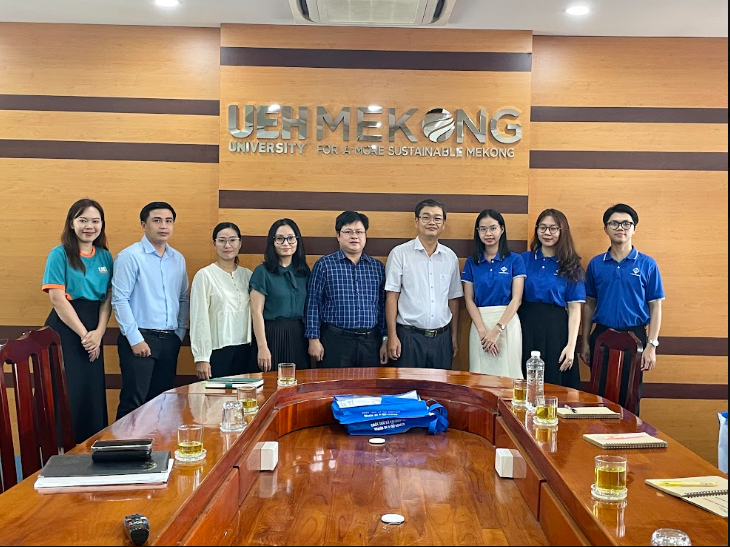
UEH discusses hazardous waste collection and treatment arrangements with Asia Environment Company at UEH Mekong
b) Hazardous waste segregation, storage, and management on campus
The 2025 Environmental Protection Report for the Nguyen Van Linh Campus (Campus N) records that only a very small quantity of hazardous waste was generated, primarily spent lamps and batteries. These waste types were segregated, stored in labeled containers, and placed in the designated hazardous waste storage area to prevent mixing with domestic waste and the release of harmful substances into the environment.
In addition to collection and storage, the report identifies environmental risks arising from improper hazardous waste segregation, storage without appropriate packaging or warning labels, and retention beyond permitted storage periods. Preventive and response measures include separate segregation and collection, temporary storage areas meeting technical requirements with labels and warning signs, and the transfer of hazardous waste for treatment.
The documentation of specific waste types, storage methods, and incident prevention measures at Campus N demonstrates that UEH has integrated the principles of hazardous waste segregation and management into its actual operations while using environmental reporting as a basis for monitoring and improvement.
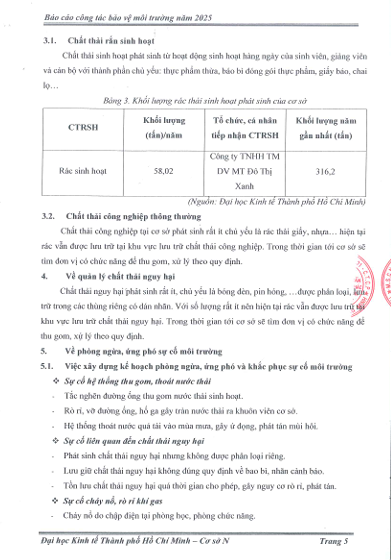
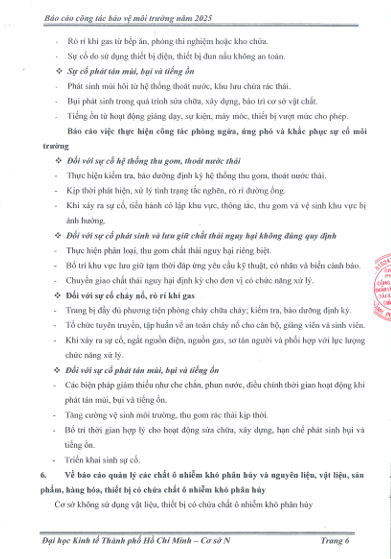
The 2025 Environmental Protection Report describes hazardous waste conditions at the campus and the procedures for storage, collection, and treatment
c) Raising student awareness of used-battery segregation
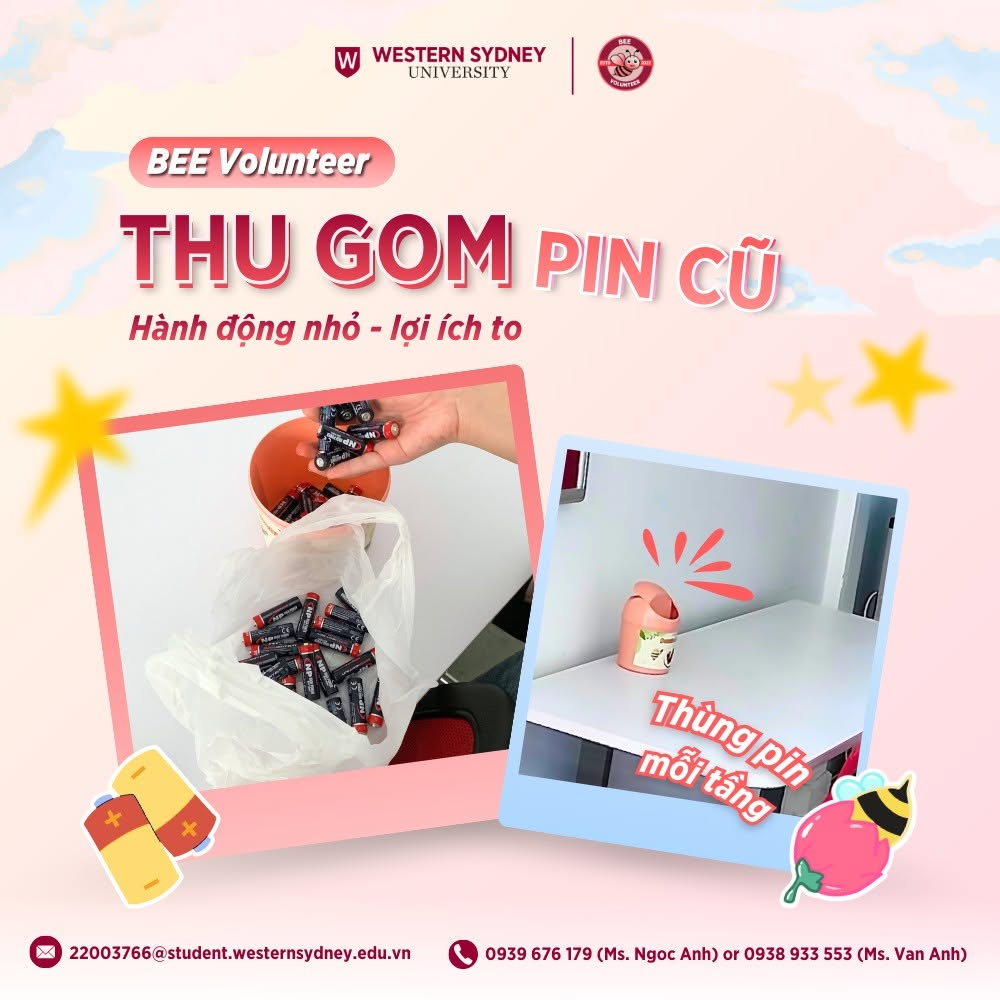
Alongside its campus management policy, UEH carried out student-led activities in 2025 to raise awareness and encourage the separate collection of potentially hazardous waste. A notable example is the “Used Battery Collection” campaign organized by BEE Volunteer under the Western Sydney Vietnam Program (UEH.ISB). Held annually on campus, the initiative provides designated collection points where students can deposit used batteries instead of discarding them with household waste.
Implemented from 2023 to 2025, the initiative collected more than 300 kg of used batteries, helping improve awareness of hazardous waste segregation at source and providing a practical complement to UEH’s waste management policy.
 |
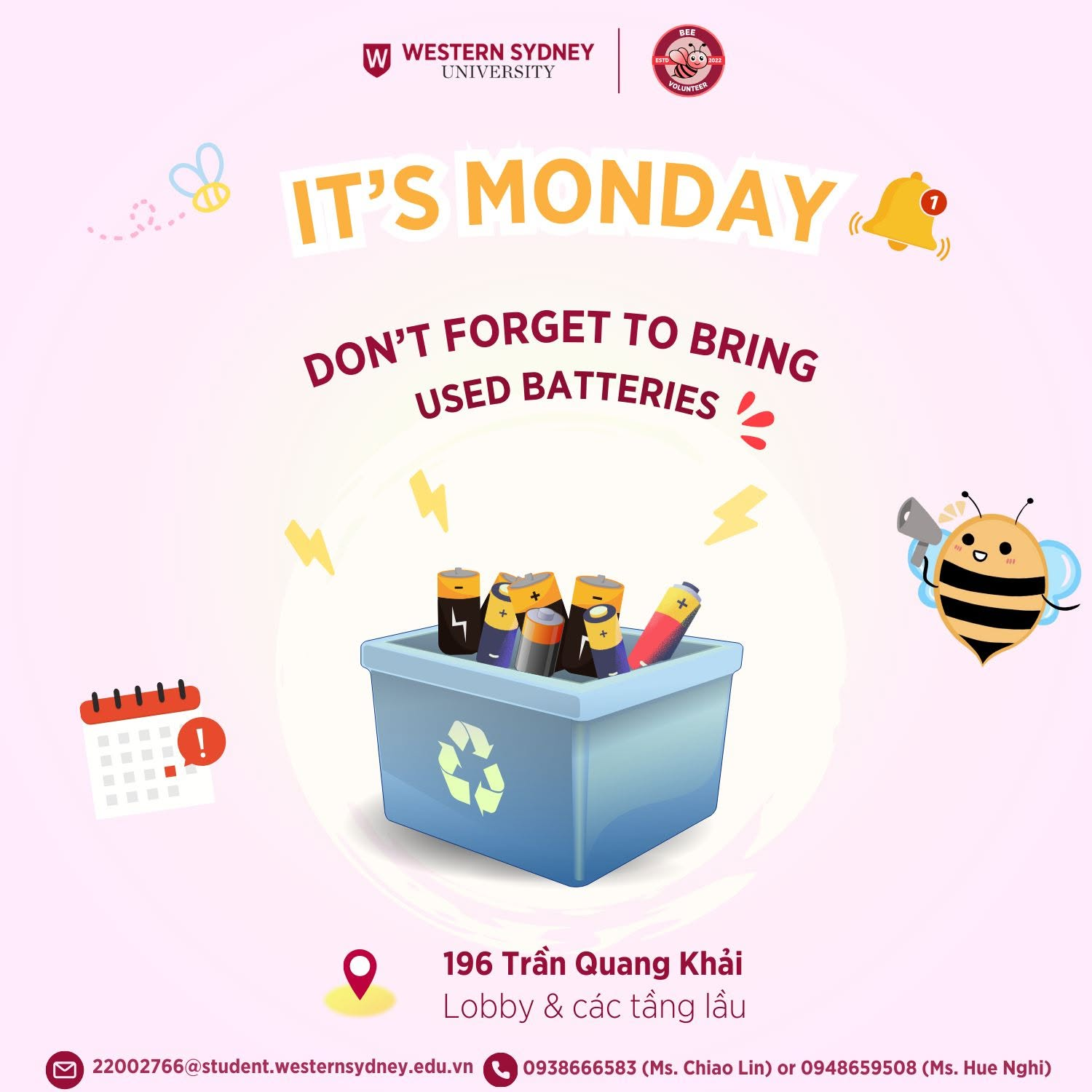 |
Used-battery collection initiative implemented from 2023 to 2025 by Western Sydney Vietnam (UEH.ISB)
4. Conclusion
Under the Green Campus Regulations introduced in 2022 and maintained in 2025, UEH continued to implement its hazardous waste management and disposal policy across its campuses. The policy specifies procedures from identification, segregation, collection, and safe storage to monitoring and transfer to licensed treatment providers. It also clearly defines the responsibilities of relevant units, ensuring that hazardous waste is managed separately and minimizing the risk of harmful substances entering the environment.
In 2025, implementation was evidenced by the Environmental Protection Report for the Nguyen Van Linh Campus, which documented separate segregation and storage of spent batteries and lamps, as well as incident prevention measures. Together with battery collection and awareness-raising initiatives within the student community, this evidence demonstrates continuity between UEH’s policy commitments and management practices. The university thus continued to strengthen its hazardous waste management system in a safe, responsible, and environmentally compliant manner, contributing to criterion 15.4.3 and related Sustainable Development Goals.