

15.3.5 – Collaboration for shared land ecosystems
In 2025, the University of Economics Ho Chi Minh City (UEH) promoted collaboration with local authorities, residents, and communities to protect, restore, and maintain terrestrial ecosystems, contributing to sustainable land resource use and biodiversity conservation. Activities took various forms, including research projects, community consultations and field surveys, local volunteer activities, and rural landscape development programmes. Through these efforts, UEH helped establish a foundation for university–community collaboration in maintaining landscapes and protecting soil, vegetation, and ecological assets that support local livelihoods.
1. Strategic Direction
UEH pursued collaboration for shared land ecosystems based on stakeholder participation. UEH contributed research expertise, professional resources, and student volunteers, while local partners helped identify needs, select sites, coordinate implementation, and discuss possible solutions. The scope included ecosystems and land areas of ecological or environmental value to communities, such as mangrove forests, coastal soils, and shoreline vegetation, alongside activities in public spaces and rural landscapes.
In 2025, depending on local authorities’ characteristics and needs, activities focused on conservation research, baseline surveys, community consultation, vegetation restoration, or the maintenance and protection of green spaces. UEH’s representative programmes took place in the Mekong Delta, rural landscapes, and volunteer host communities, with the participation of local authorities, Youth Union and Student Association organisations, and local residents.
2. Internal Commitments and Supporting Policies
In 2022, UEH issued its Green Campus Regulations under Decision No. 2059/QĐ-ĐHKT-CSVC to establish a basis for cooperation and give greater attention to the conservation and development of terrestrial ecosystems.
Article 12, Clause 1 – UEH organised, implemented, and periodically evaluated the UEH Green Campus Project through the pillars of Education, Research, Operations, Governance, and Community Engagement. The Community Engagement pillar demonstrated UEH’s role in coordinating with partners and mobilising knowledge and resources to achieve sustainable development goals. This provided the basis for continued collaboration with local communities to maintain shared land ecosystems.
Article 12, Clause 1 of the UEH Green Campus Regulations under Decision No. 2059/QĐ-ĐHKT-CSVC stipulated the organisation, implementation, and periodic evaluation of the UEH Green Campus Project across the pillars of Education, Research, Operations, Governance, and Community Engagement.
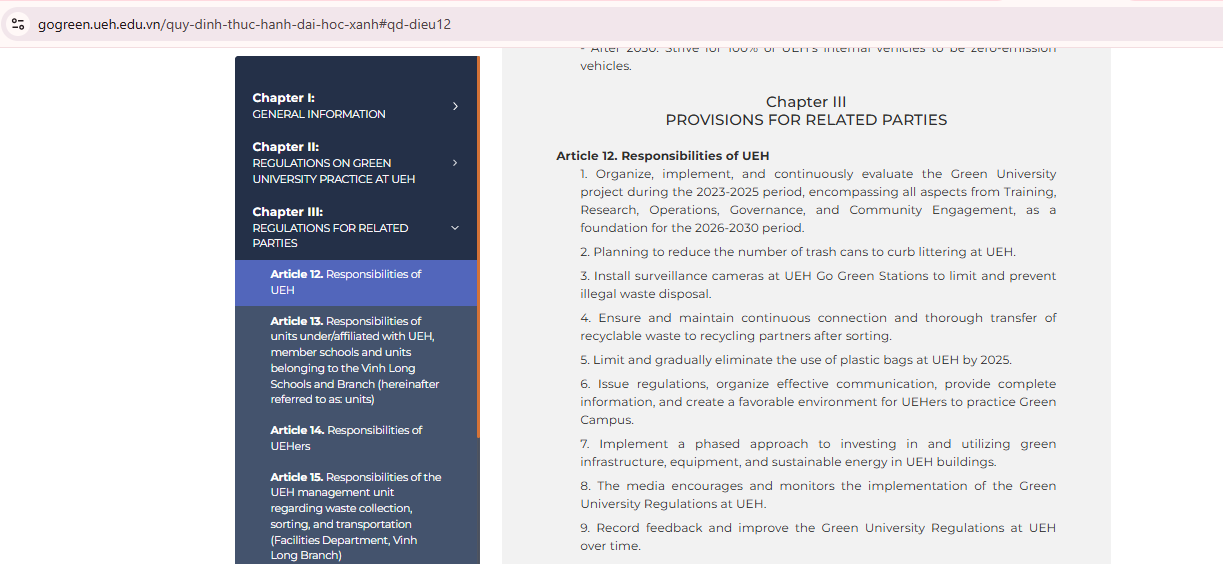
Public source: UEH Green Campus website, ‘Green Campus Regulations’
https://gogreen.ueh.edu.vn/en/green-campus-regulations
In 2025, UEH continued to maintain, update, expand, and develop this policy with an orientation towards broader collaboration for ecosystem conservation, restoration, and sustainable development.
Article 12, Clause 4 – UEH conducted or jointly conducted education, research, knowledge transfer, and community service activities to conserve, restore, and sustainably develop natural ecosystems and promote sustainable land resource use.
Article 12, Clause 5 also emphasised collaboration between UEH and government agencies, social organisations, non-governmental organisations, research institutions, and domestic and international partners on programmes to protect the environment, natural resources, and biodiversity.
Article 15, Clauses 6 and 7 – UEH sought to strengthen community collaboration and develop programmes for ecosystem conservation and restoration, agricultural land management, and biodiversity monitoring.
These provisions in the reviewed and supplemented Regulations reflected UEH’s commitment to maintaining and expanding Green Campus governance, with an emphasis on collaboration with local communities to sustain shared land ecosystems. They also established a basis for treating terrestrial resources as an important part of conservation efforts, as illustrated by the following activities in 2025.
3. Evidence of Programmes and Events Implemented in 2025
| No. | Programme/
Project |
Format/
Category |
Description | Public Source |
| 1 | Women4Mangrove – Mangrove Conservation Linked to Community Livelihoods | Project launch; Mangrove conservation seminar; Community consultation | On 10 December 2025, UEH collaborated with the People’s Committees of An Thạnh and Cù Lao Dung communes, Cần Thơ City, to launch the Women4Mangrove project, alongside a thematic discussion on mangrove conservation and sustainable livelihood solutions. The event brought together local authorities, specialists, and community representatives to discuss forest conservation, mangrove ecosystem protection, women’s empowerment, and the development of sustainable educational agritourism in the Mekong Delta. The project aimed to establish a women-managed nursery and reforestation training centre, with a target of restoring five hectares of mangroves over the project implementation period.
In 2025, the project also expanded its international networks and exchanged experience in Thailand (November 2025) and the Netherlands (December 2025), helping refine its model and inform future scaling. 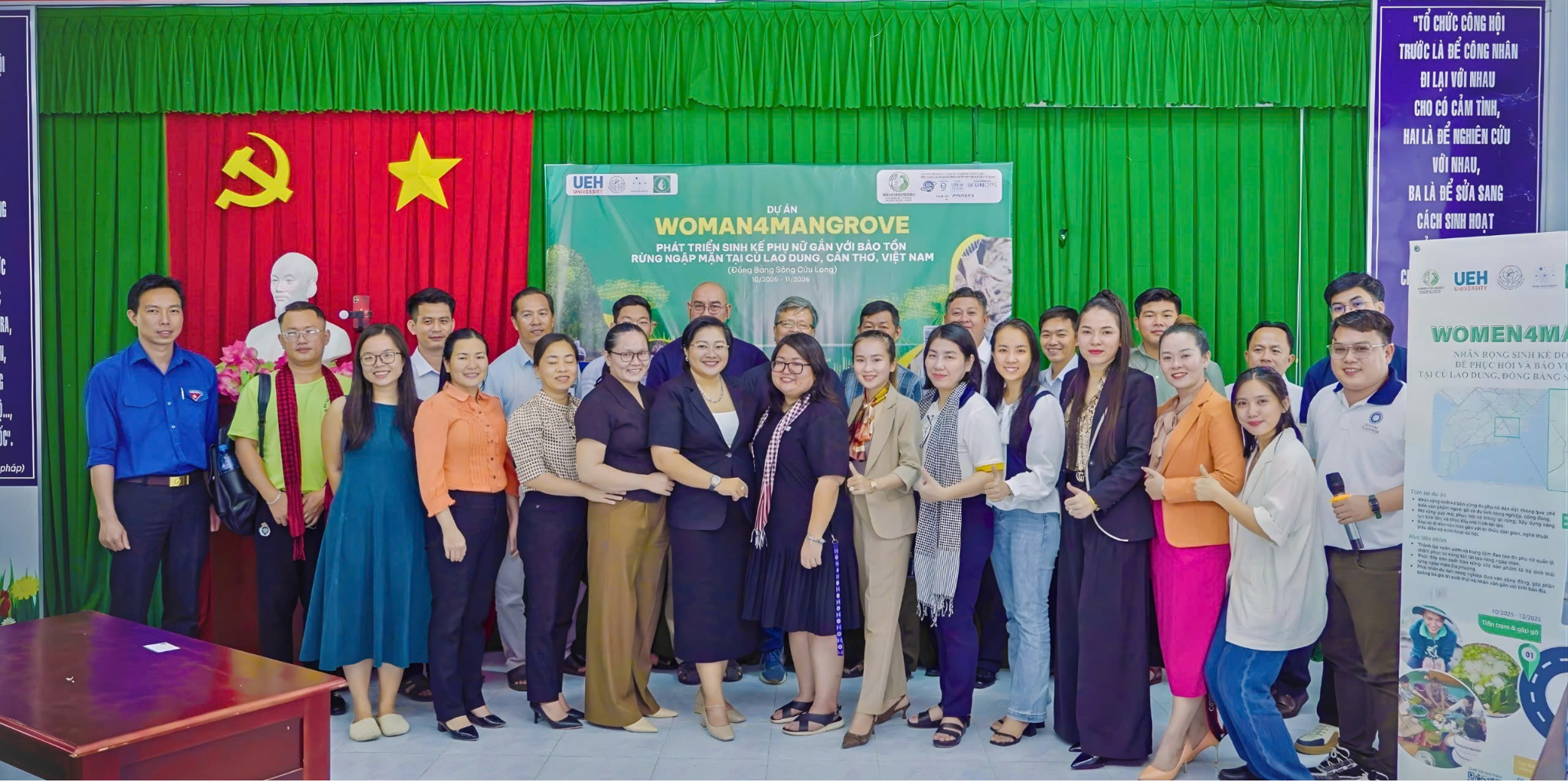
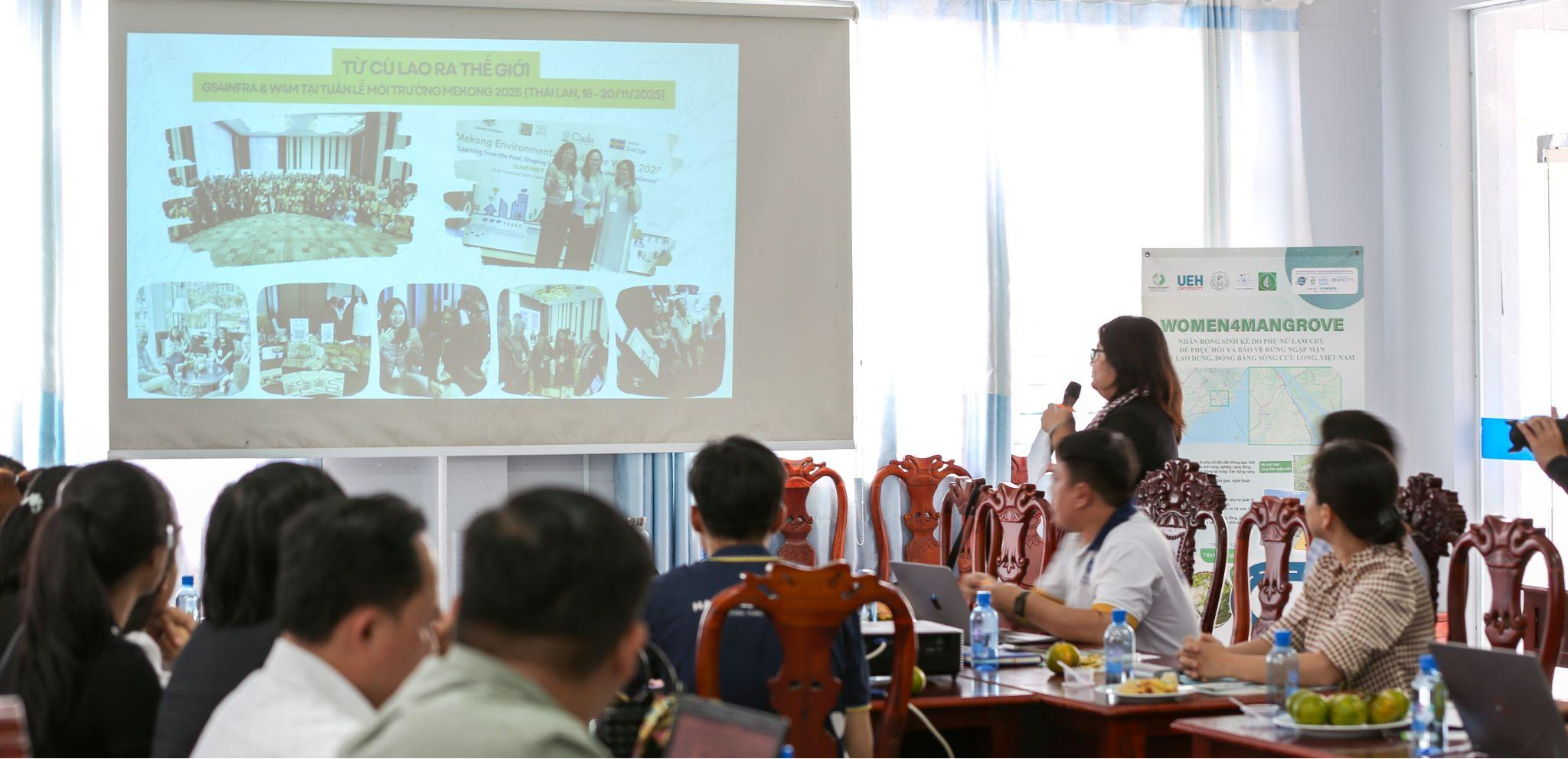
Delegates attended and contributed views at the discussion session 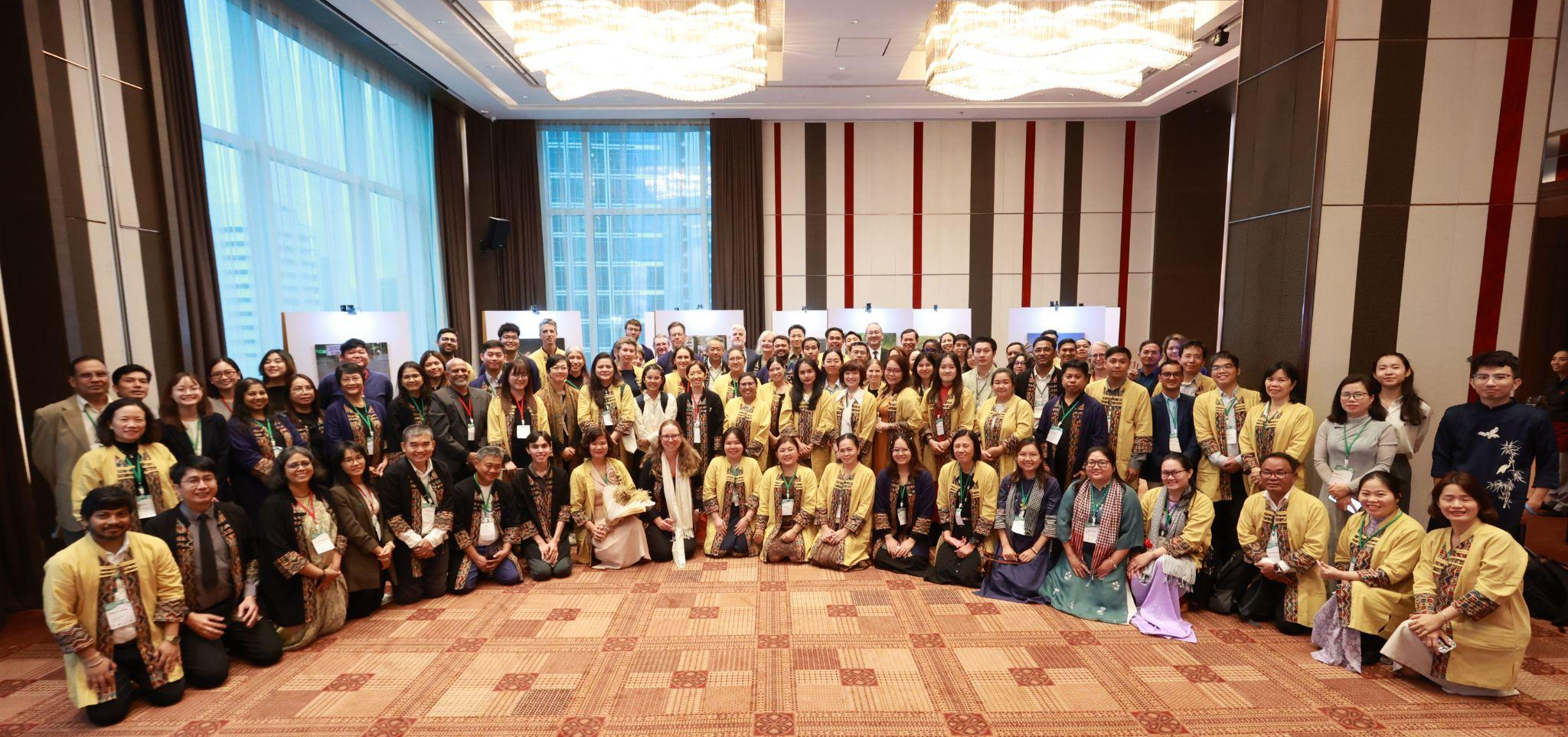
Delegates, partners, and the Women4Mangrove project team at an international professional exchange forum |
UEH Portal and Cần Thơ Newspaper, December 2025 |
| 2 | UEH Mekong – Five-Kilometre Rural Flower Road in Nhơn Phú Commune | Collaboration with local authorities; Development of vegetation in public spaces; Rural landscape improvement | On 2 July 2025, as part of the 2025 Economics Students’ Volunteer Campaign, the UEH Mekong Youth Union and Student Association worked with local organisations and student volunteers on a range of community youth projects in Nhơn Phú Commune, Vĩnh Long Province. A prominent initiative was a 5,000-metre flower-lined road, developed through planting flowers, expanding vegetation, and improving landscapes along rural roads. The project helped enhance public spaces, protect the landscape, and raise residents’ awareness of their living environment. The flower road was one of 25 youth projects and activities implemented during the campaign, alongside improvements to rural roads, lighting, and environmental sanitation. Through collaboration between UEH Mekong and local organisations, the initiative contributed to maintaining and expanding vegetation in public areas, while encouraging community participation and responsibility for landscape protection and the sustainable use of shared land spaces.
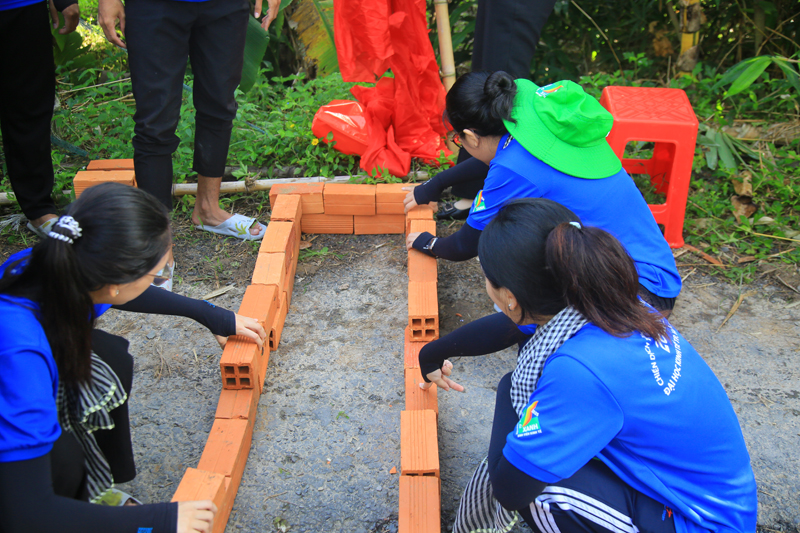
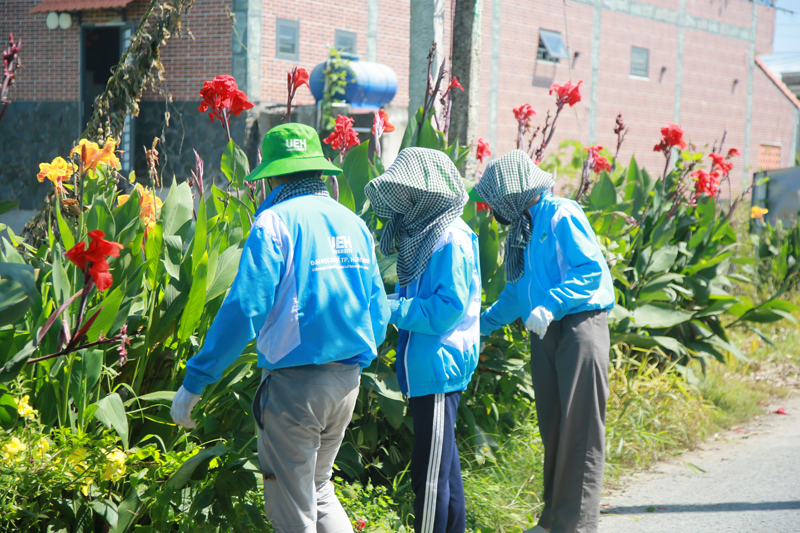
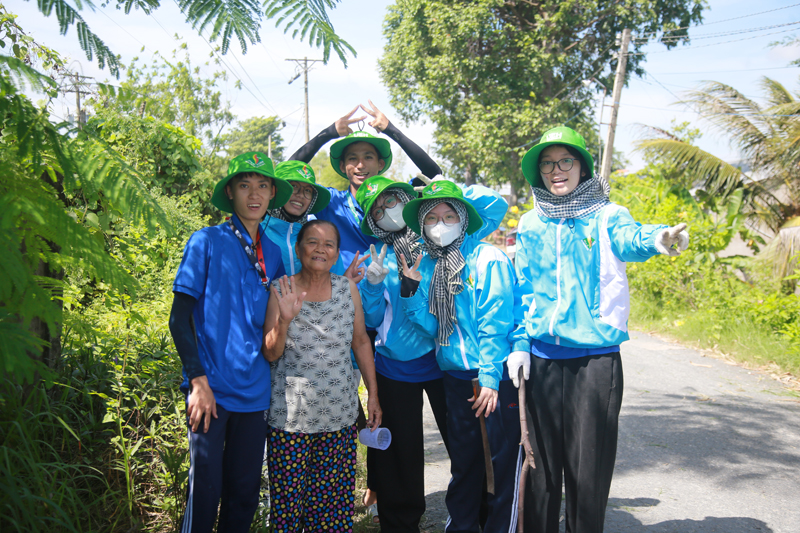
UEH Mekong students collaborated with local authorities to enhance public spaces, protect landscapes, and raise awareness of environmental stewardship |
UEH Mekong website, ‘UEH Mekong Youth Union and Student Association: Ten Highlights of 2025 and Key Activities for 2026’, 15 February 2026 |
| 3 | Green Sunday – ‘Sharing Love, Planting Hope’ | Tree planting; Community landscape protection volunteering | On 30 March 2025, the Youth Union and Student Association of the School of Business Information Technology organised the Green Sunday programme, ‘Sharing Love, Planting Hope’, in Qui Đức Commune, Bình Chánh District, Ho Chi Minh City. The programme involved 11 teams of student volunteers who planted trees in areas designated by local authorities and collected litter from public spaces.
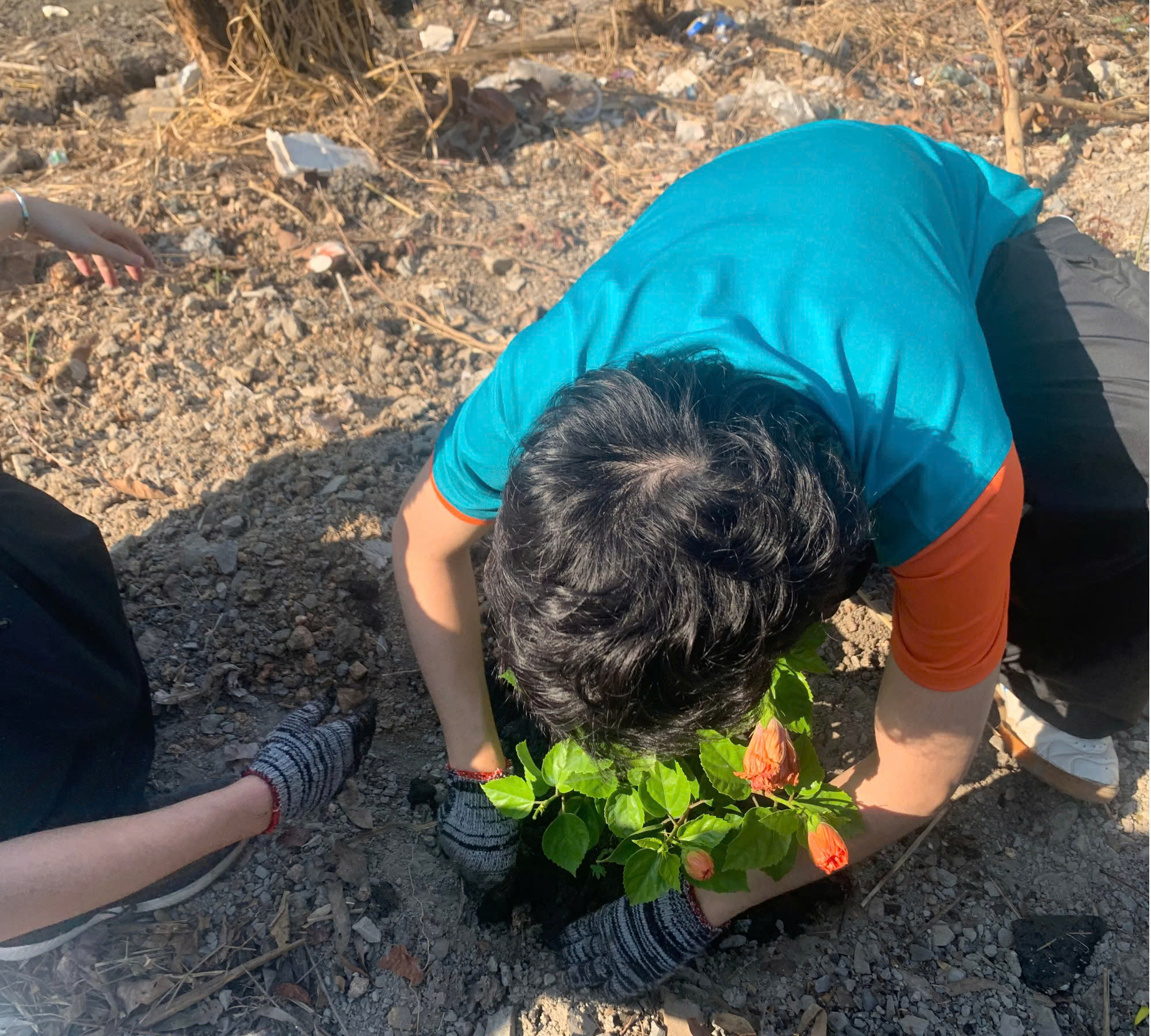
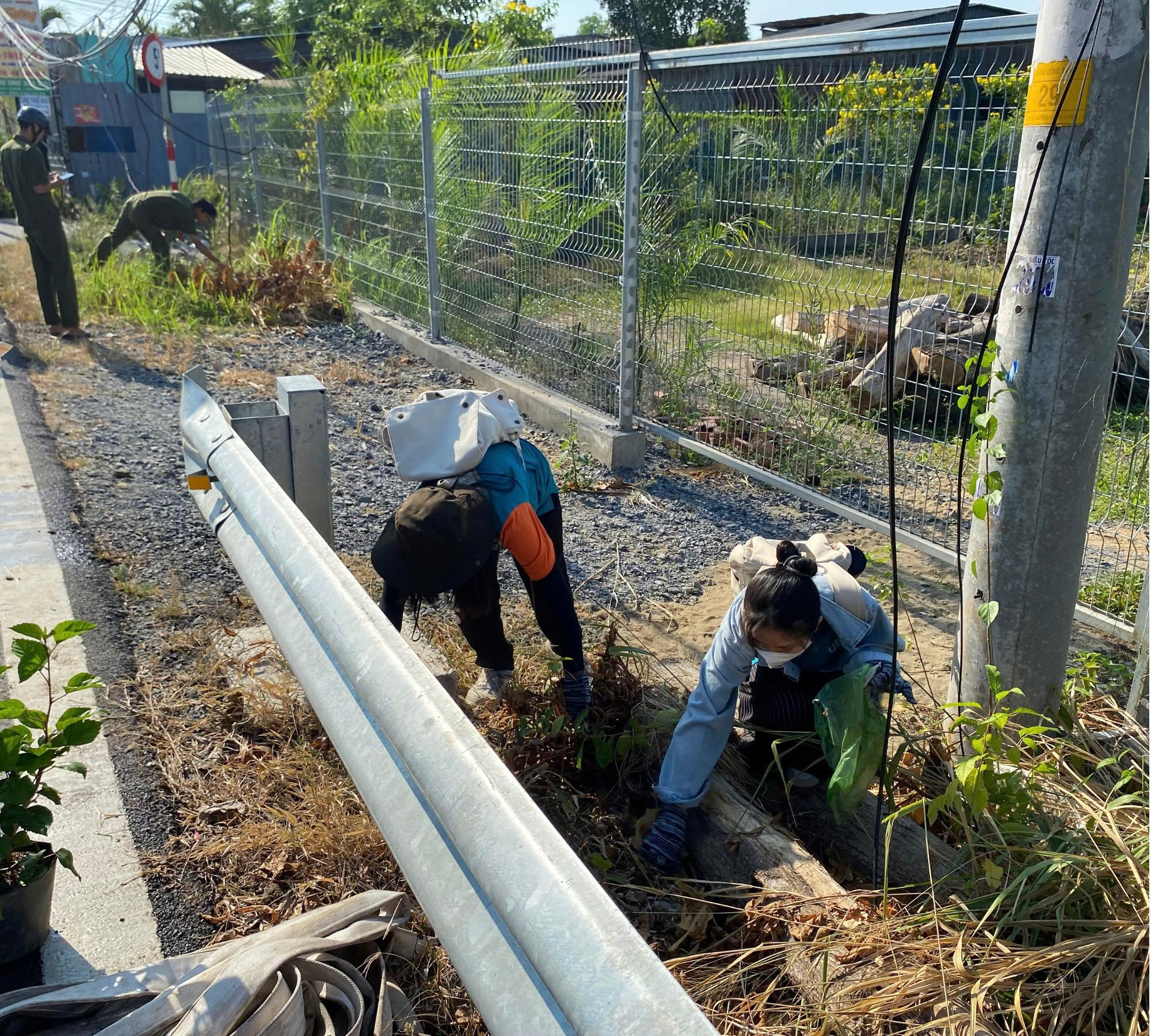
Students planted trees and removed weeds in the local area 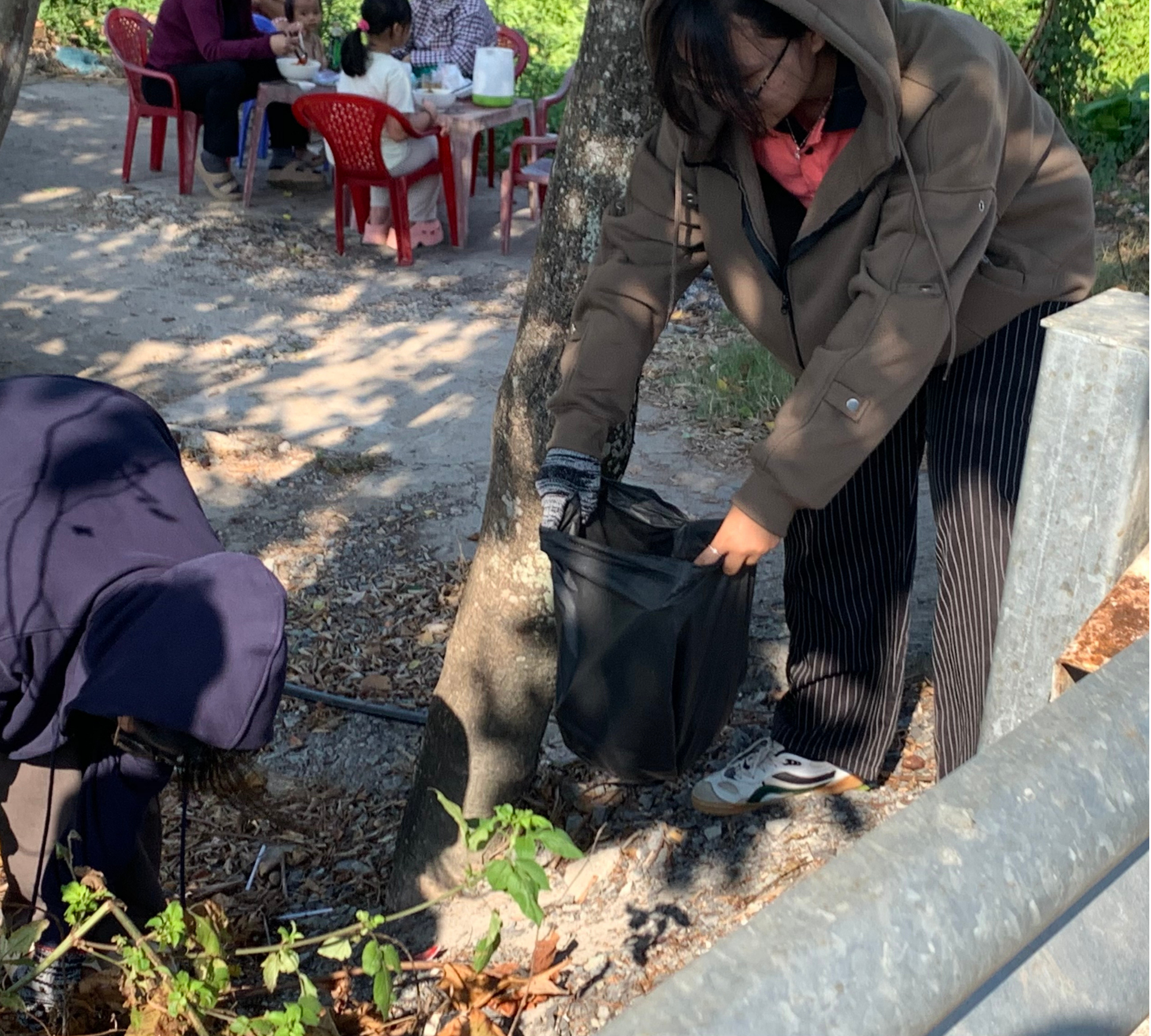
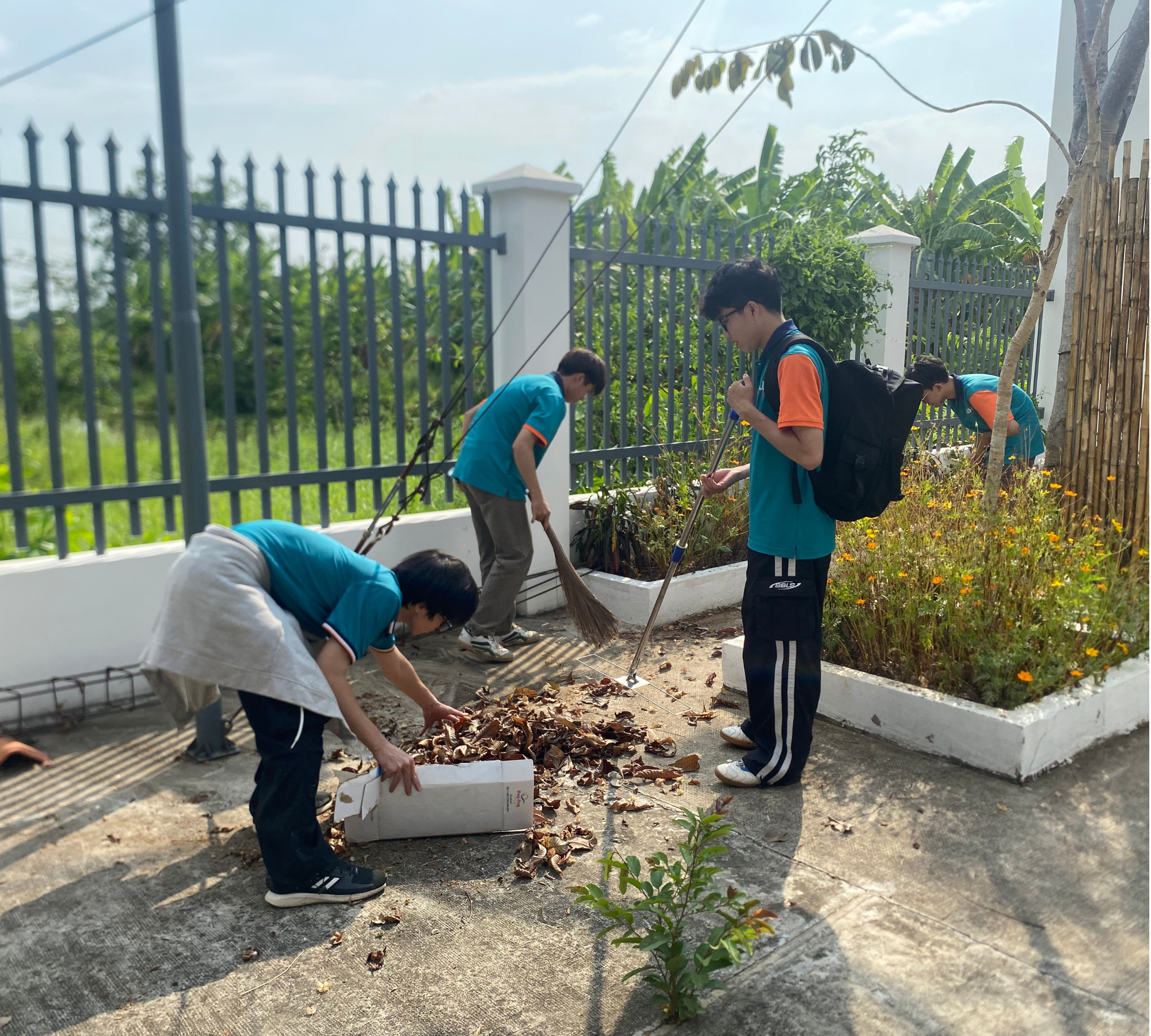
Students cleaned streets and the Hóc Hưu historical base memorial site |
UEH Green Campus website, ‘Recap of Green Sunday 2025: Sharing Love, Planting Hope’, 31 March 2025 |
| 4 | Spring Volunteer Campaign 2025 – Tree Planting and Greening Rural Roads in Lộc Hòa | Community volunteering; Collaboration with local partners to improve roadside vegetation | In January 2025, as part of the Spring Volunteer Campaign, students from the School of Economics worked with local teams in Lộc Hòa Commune, Lộc Ninh District, Bình Phước Province, to plant trees and green a newly developed rural road. The activity improved the landscape and expanded vegetation in public spaces and residential areas. UEH students also engaged with local youth union members and residents, strengthening cooperation and spreading awareness of environmental protection. The initiative demonstrated UEH’s direct participation alongside local partners in developing green spaces and preserving rural landscapes, while creating a foundation for the subsequent care and maintenance of vegetation in public areas.
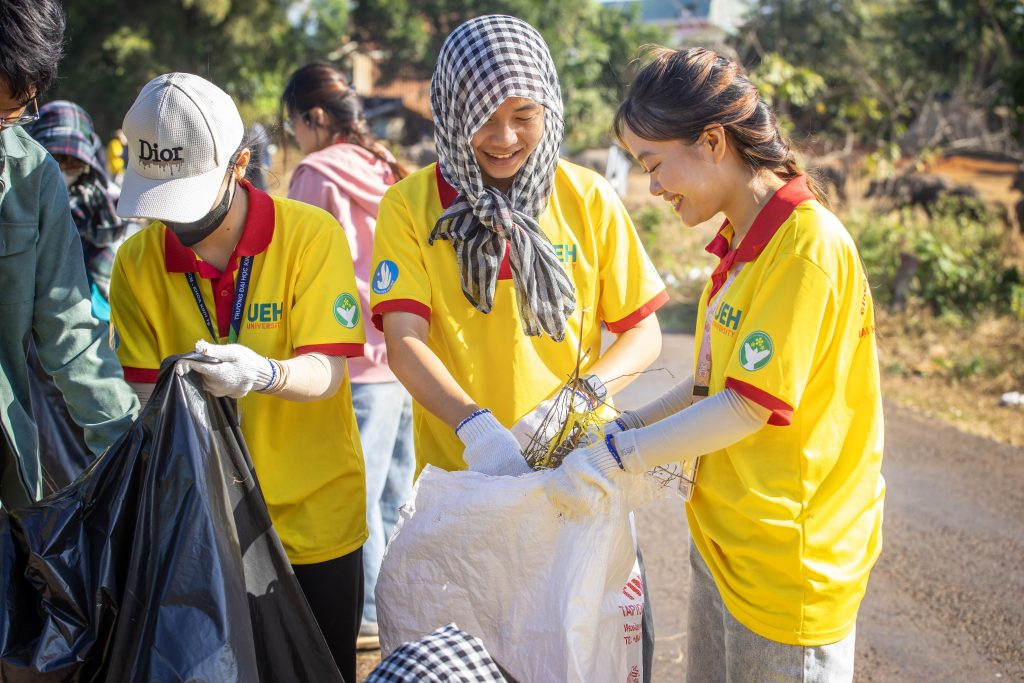
School of Economics students cleaned roads and planted trees in local public spaces |
Youth UEH website, ‘School of Economics Spring Volunteer Campaign 2025: Chạm Xuân’, 27 February 2025
https://youth.ueh.edu.vn/tin-tuc/chien-dich-xuan-tinh-nguyen-khoa-kinh-te-2025-cham-xuan/ |
| 5 | Hạ Thương 2025 – Developing Green Spaces at Hùng Vương Primary School, Lâm Đồng | Community collaboration; Tree planting and improvement of school landscapes | From 21 May to 15 June 2025, UEH’s Human Resources and Entrepreneurship Club organised the ‘Hạ Thương’ volunteer programme in collaboration with local authorities and community teams to plant trees and improve the grounds of Hùng Vương Primary School in Đạ Lây Commune, Đạ Huoai District, Lâm Đồng Province. The programme contributed to vegetation development, improvements to the learning environment, and the creation of greener spaces for pupils, teachers, and the local community. It demonstrated direct cooperation between UEH and local communities in protecting shared living environments, while laying the groundwork for caring for and protecting the newly planted trees and promoting community responsibility for green-space maintenance and sustainable land use.
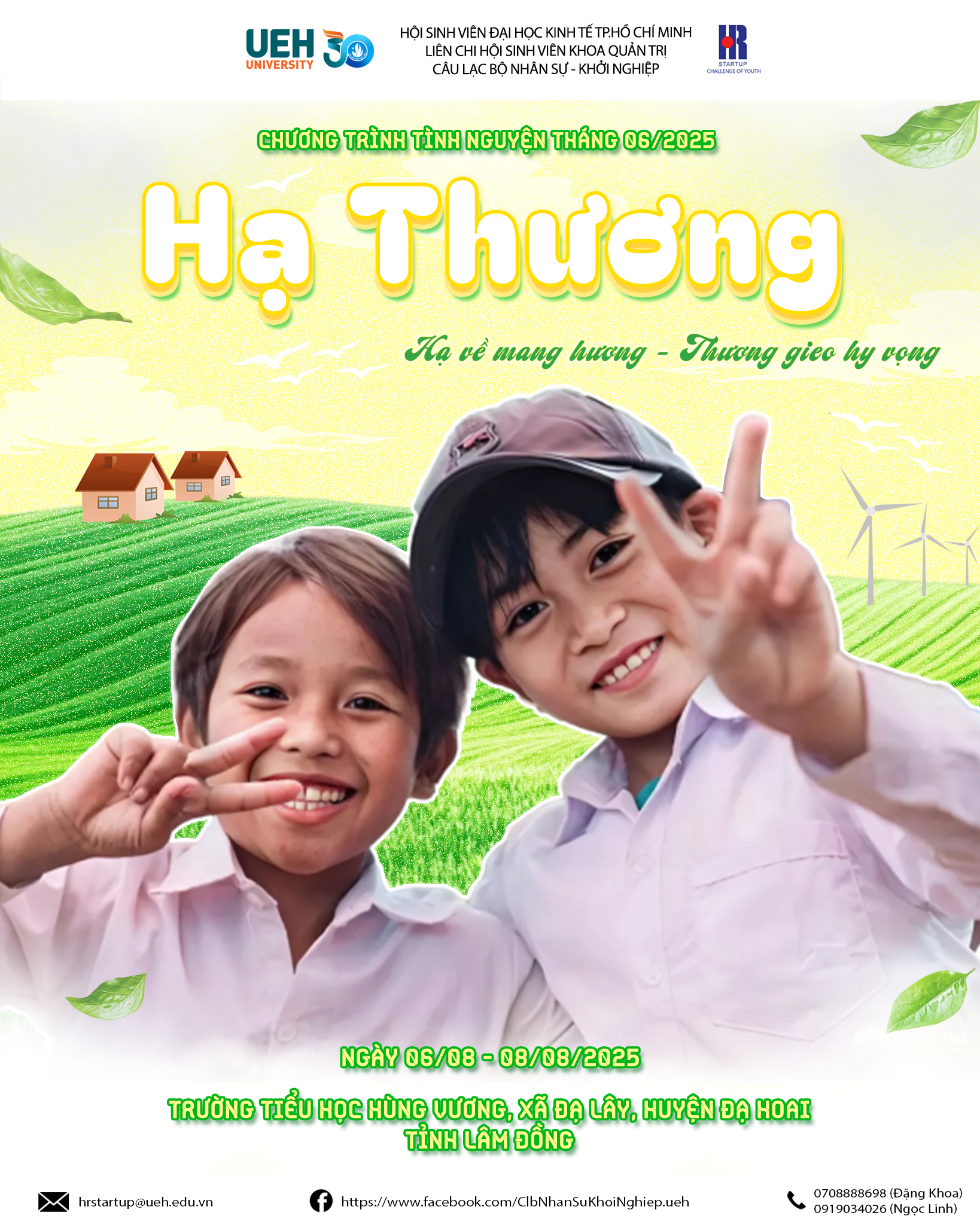
The ‘Hạ Thương’ programme was organised through collaboration between UEH and local partners in Lâm Đồng Province |
Youth UEH website, ‘June 2025 Volunteer Programme: Hạ Thương by the Human Resources and Entrepreneurship Club’, 25 May 2025 |
4. Conclusion
In 2025, UEH continued to put its commitment to local community collaboration into practice to protect, restore, and maintain terrestrial ecosystems through direct partnerships with local authorities, residents, and organisations. Activities went beyond environmental awareness raising to include field research, community consultation, vegetation development, and improvements to shared ecological spaces. They fostered stakeholder responsibility for protecting land resources and maintaining green landscapes.
A notable example was the Women4Mangrove project in Cù Lao Dung, where UEH worked with local authorities and women to conduct field surveys, assess community needs, and jointly shape an approach to mangrove ecosystem conservation linked to sustainable livelihoods. This established a foundation for community-based conservation, enabling local people to participate in identifying needs and developing ecosystem protection solutions. Other student volunteer activities also produced tangible results, such as the 5,000-metre flower road in Nhơn Phú Commune, which expanded vegetation and improved the appearance of public roads. Tree-planting and landscape maintenance programmes in Qui Đức Commune (Ho Chi Minh City), Lộc Hòa Commune (Bình Phước), and Đạ Lây Commune (Lâm Đồng) further illustrated direct collaboration between UEH students and local partners in preserving and developing community green spaces.
These outcomes contributed to the Community Engagement pillar of UEH’s Green Campus Regulations and demonstrated an approach combining university knowledge, volunteer resources, and local participation in environmental protection. Through these partnerships, UEH helped develop green landscapes, support ecosystem protection, and create a basis for continued joint care, management, and long-term maintenance of shared ecological spaces.