

15.3.3 – Local biodiversity included in planning and development
The University of Economics Ho Chi Minh City (UEH) aims to develop its facilities in harmony with natural conditions, protect existing vegetation, and minimize impacts on local ecosystems. Building on the UEH Green Campus Regulations, UEH has gradually incorporated landscape and biodiversity considerations into campus research, design, renovation, and new construction. In 2025, this approach was reflected in the conversion of the Vo Thi Sau campus into smART Hub Living Labs, the development of green spaces at its Ho Chi Minh City campuses, the proposed UEH Nexus Campus in Nha Trang, the development of UEH Mekong Campus 2, and ecological planning proposals for the Cai River area in Khanh Hoa.
1. Internal commitments and supporting policies
Under the UEH Green Campus Regulations issued pursuant to Decision No. 2059/QD-DHKT-CSVC in 2022, UEH identified the conservation of local biodiversity as an important consideration in campus planning, investment, construction, and operations. In 2025, UEH continued to develop these principles to protect natural ecosystems, preserve existing trees, expand green spaces, and reduce environmental impacts, specifically:
Article 13, Clause 14 – Pilot policy on incorporating local biodiversity considerations into planning and new construction procedures. Relevant units were required to consider ecosystem impacts, prioritize the conservation of existing trees and native species, and document these matters in planning and design records.
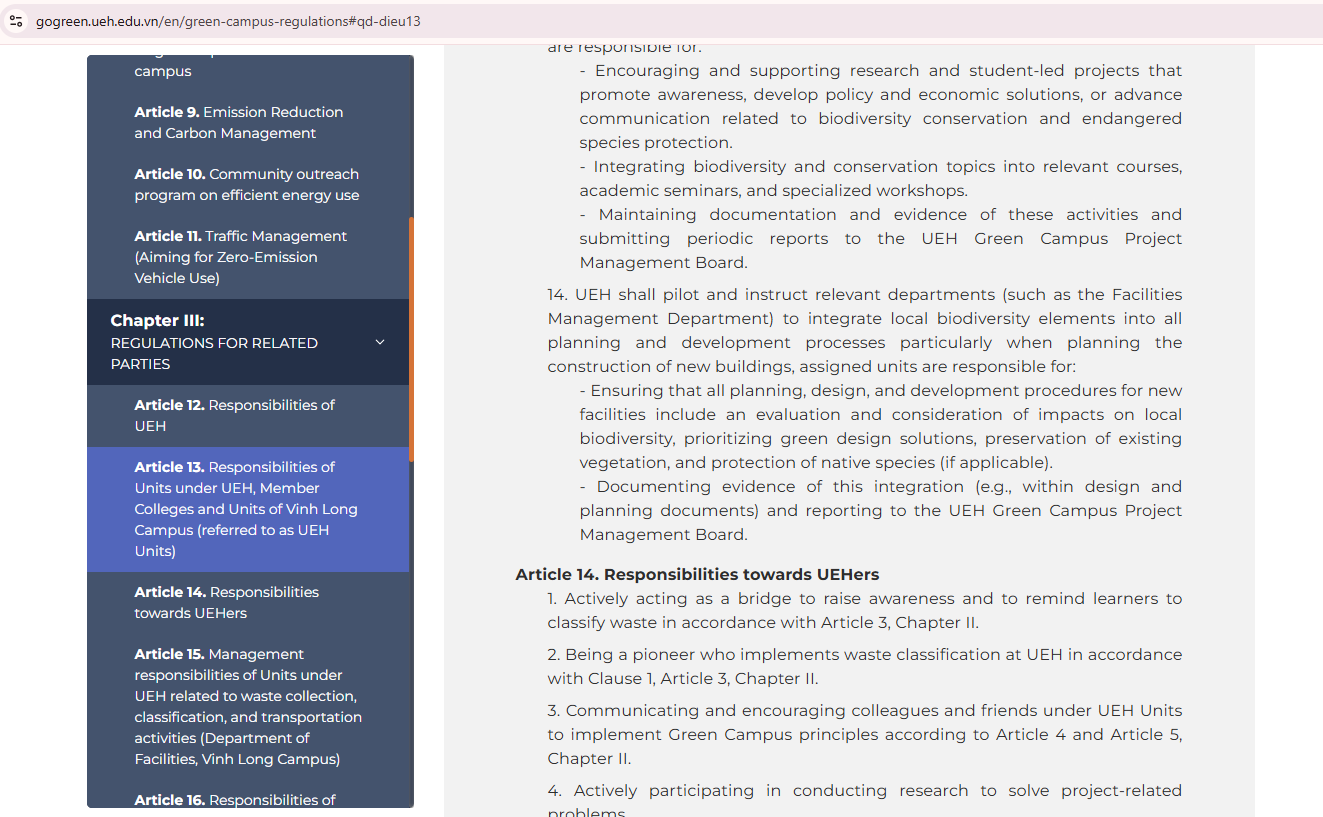
Article 13, Clause 14 of the UEH Green Campus Regulations under Decision No. 2059/QD-DHKT-CSVC requires biodiversity considerations to be incorporated into planning and new construction processes at UEH campuses.
Public source: UEH Green Campus Website, ‘Green Campus Regulations’
https://gogreen.ueh.edu.vn/en/green-campus-regulations
Article 19, Clause 6 – Regulations on integrating ecological considerations and biodiversity conservation into planning and construction. These emphasize green infrastructure solutions, including green roofs, living walls, rainwater harvesting systems, ecological ponds, and the prioritization of native plants suited to local ecological conditions.
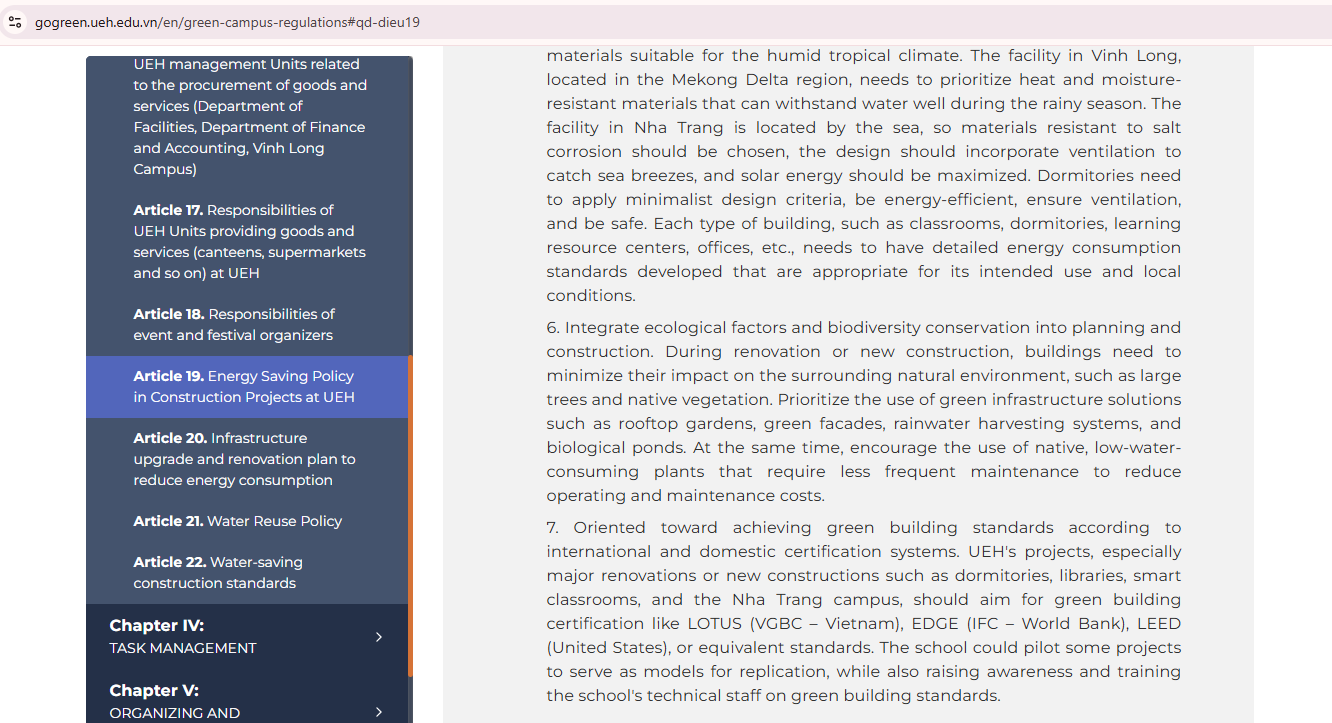
Article 19, Clause 6 of the UEH Green Campus Regulations under Decision No. 2059/QD-DHKT-CSVC requires the integration of ecological considerations and biodiversity conservation into planning and construction.
Public source: UEH Green Campus Website, ‘Green Campus Regulations’
https://gogreen.ueh.edu.vn/en/green-campus-regulations
These reviewed and supplemented provisions reflect UEH’s commitment to maintaining and expanding its Green Campus governance, moving beyond green-space protection to consider biodiversity in facilities development. They provide a basis for UEH to treat biodiversity as an important factor in infrastructure development, integrating construction with local biodiversity conservation.
2. Evidence of programmes and activities implemented in 2025
| No. | Programme/
Project |
Type/
Category |
Description | Public source |
| 1 | Conversion of the Vo Thi Sau campus into smART Hub Living Labs | Applied research; Environmentally friendly campus renovation; Integration of landscape and green infrastructure solutions | In 2025, UEH implemented the smART Hub Living Labs project at its Vo Thi Sau campus, aiming to transform a conventional campus into a space for researching and testing solutions for urban landscape preservation and sustainable development. The project focused on developing vegetation, improving habitat conditions, and strengthening connections between people and nature, thereby helping establish a foundation for maintaining and expanding campus biodiversity.
Within the project, the Glocal Design component combined indigenous knowledge with landscape design solutions adapted to tropical climatic conditions. Through a Research-by-Design approach, UEH studied, tested, and progressively refined solutions for conserving local plants, increasing vegetation layers, improving soil and water environments, and creating habitats for organisms within the urban ecosystem. 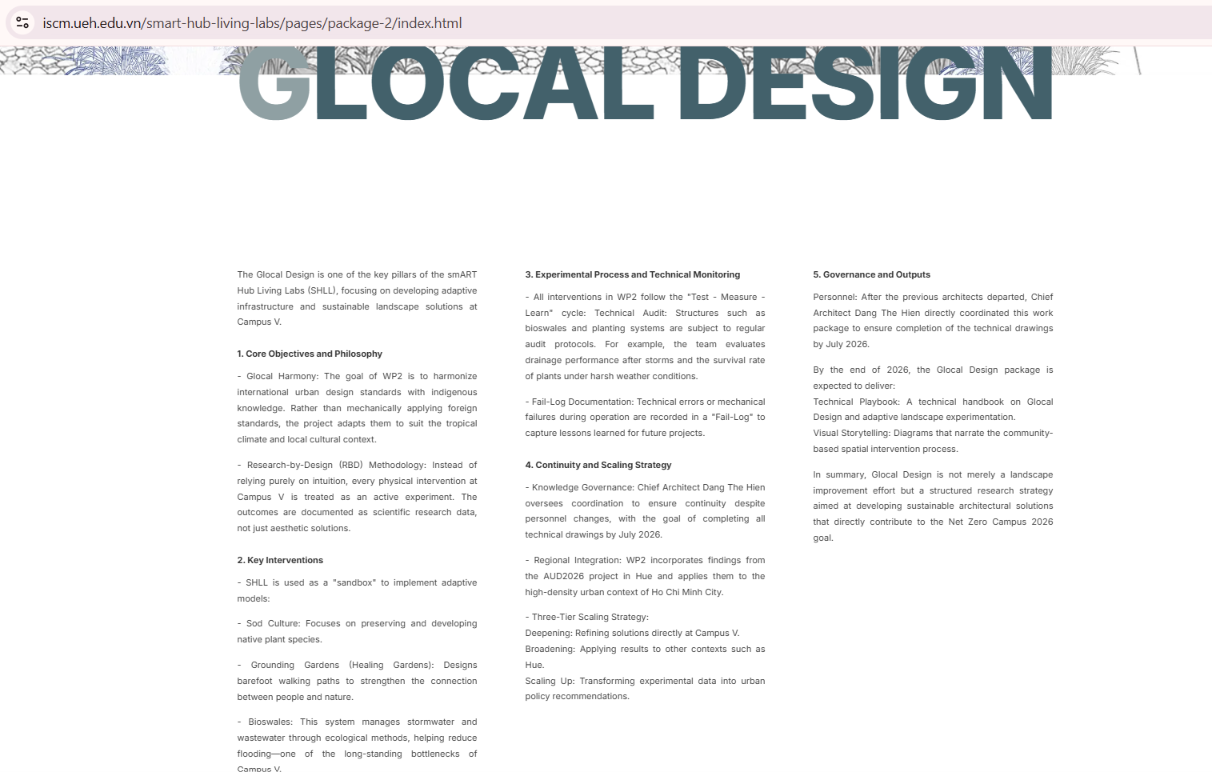
Specific solutions included:
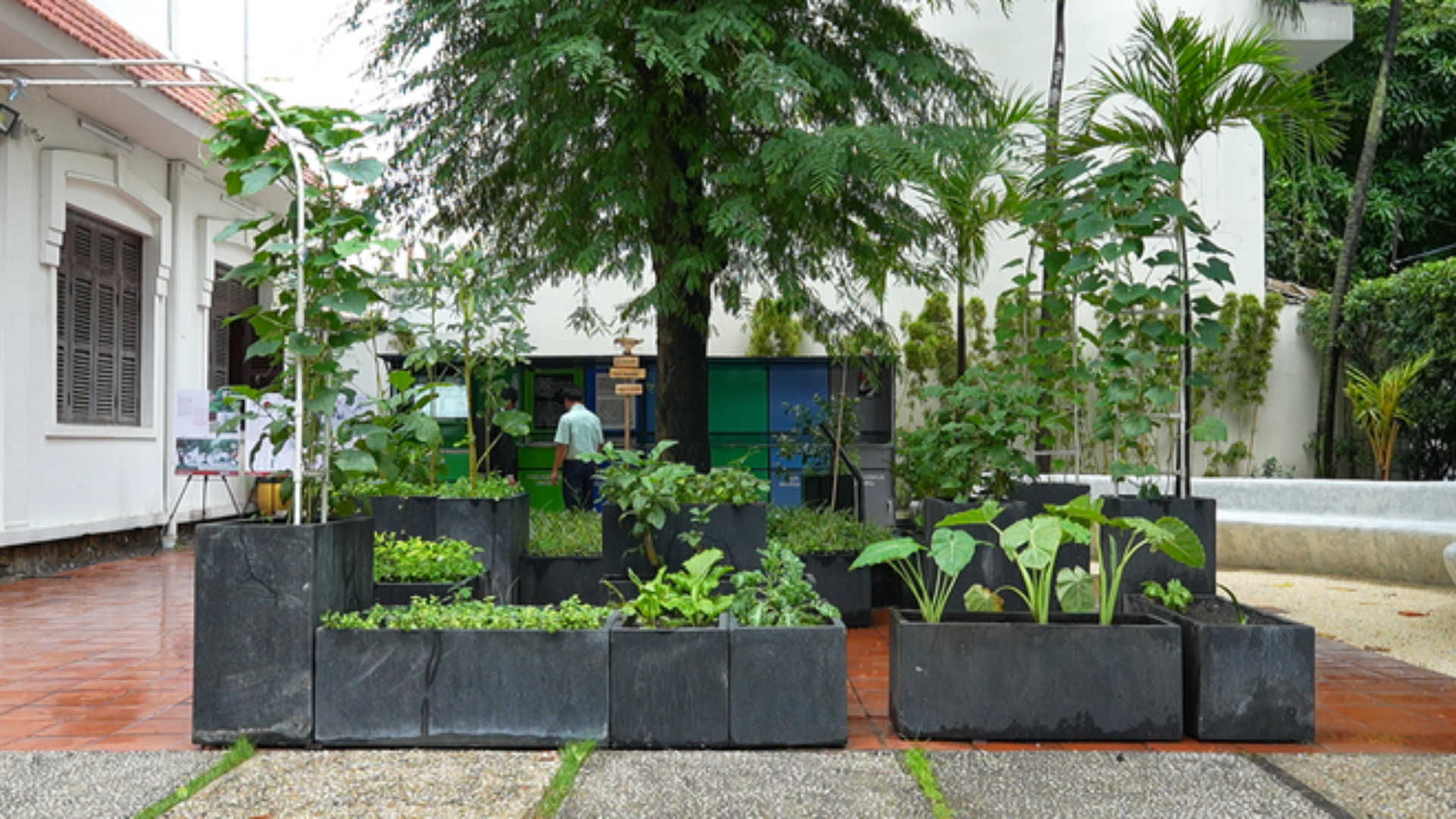
The Sod Culture Testbed at the Vo Thi Sau campus supports research on and conservation of native plant species. 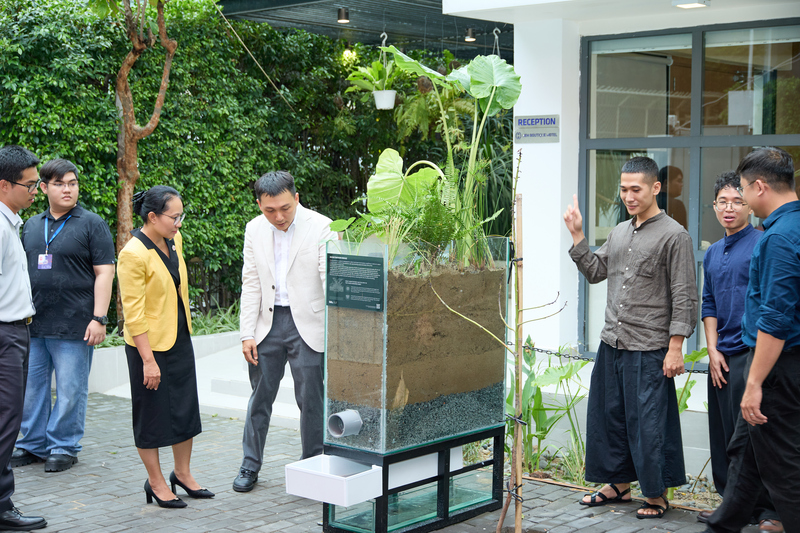
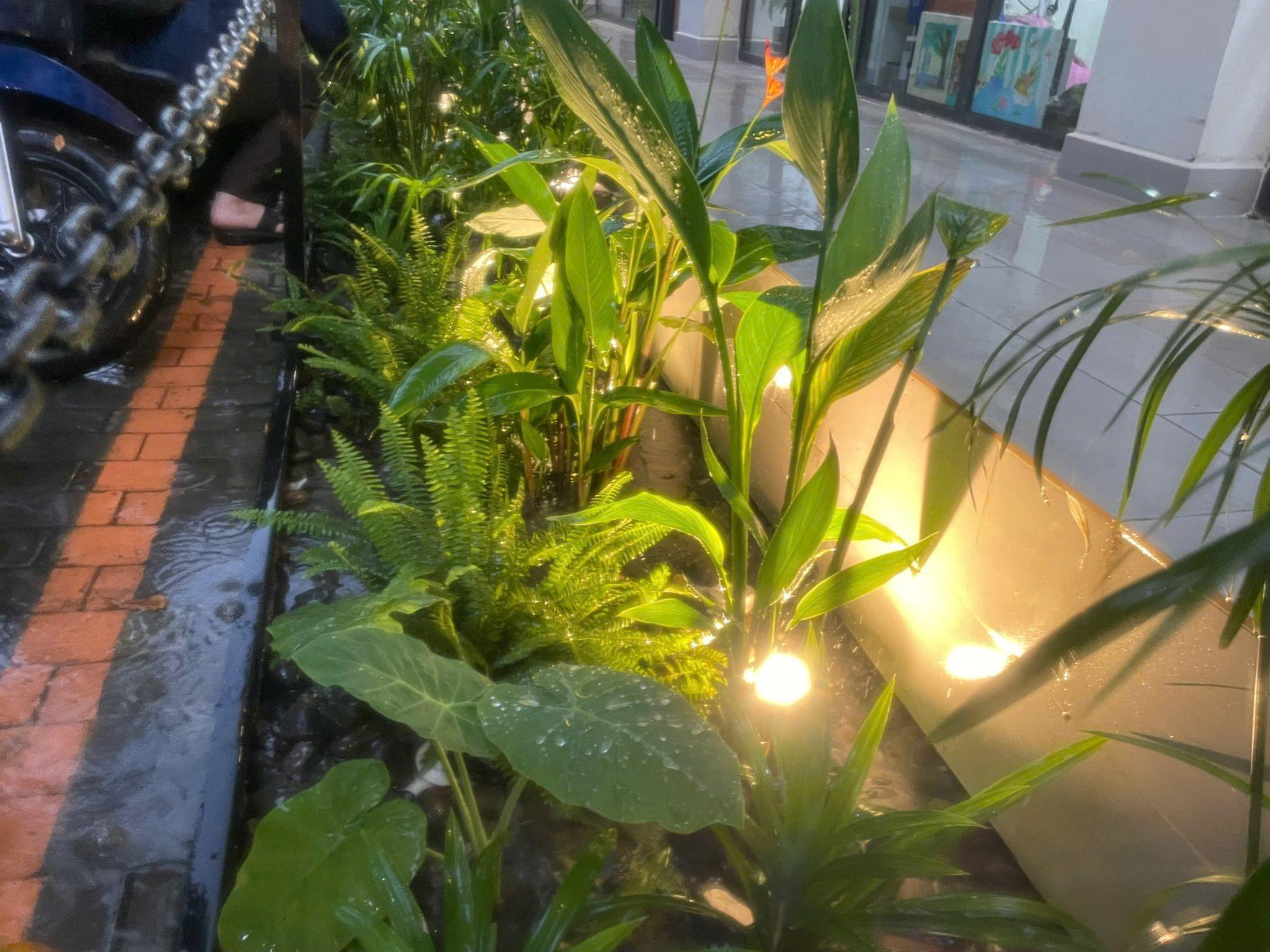
The Bioswales model studies the capacity of native plants to collect, infiltrate, filter, and regulate rainwater. 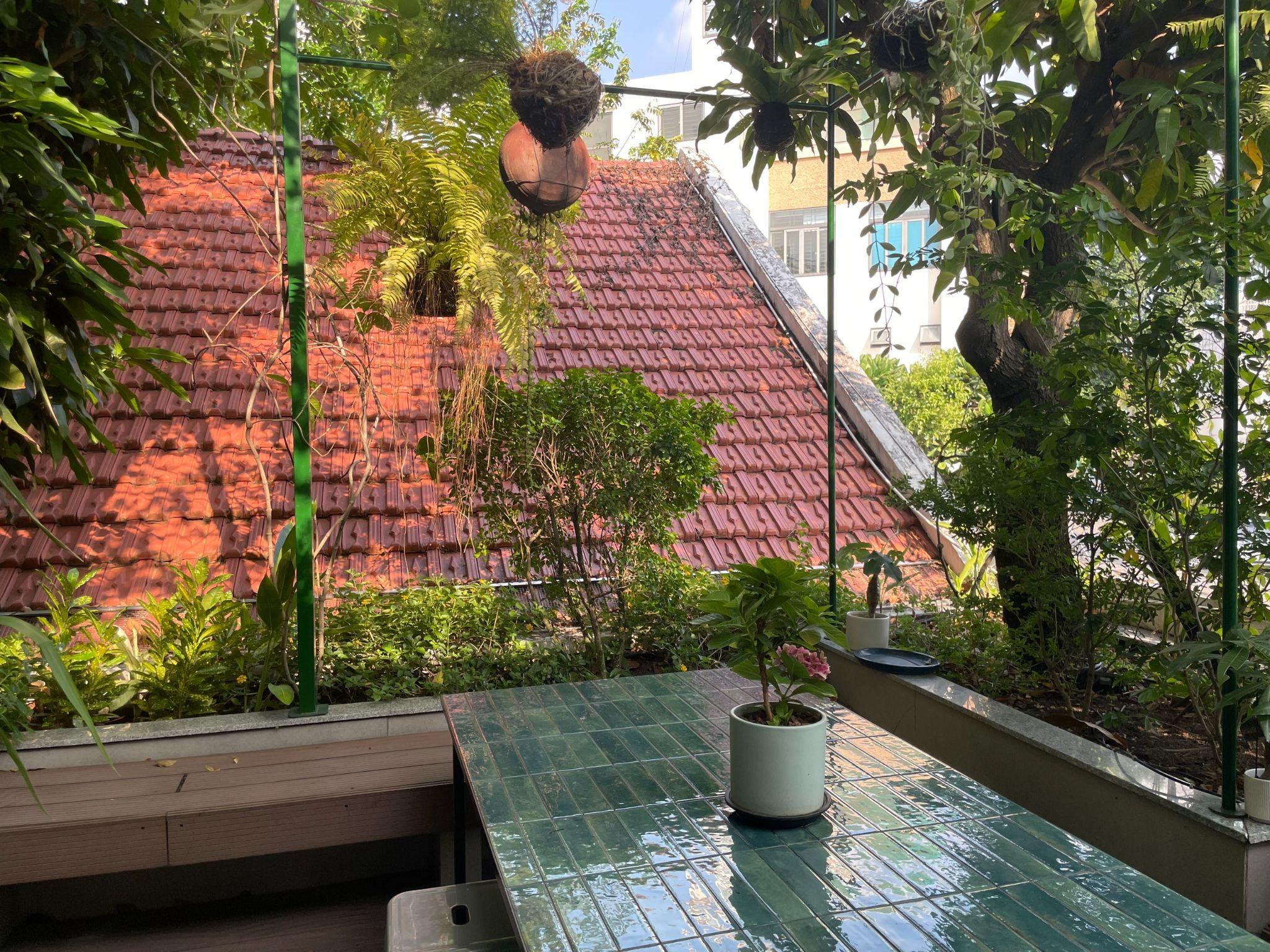
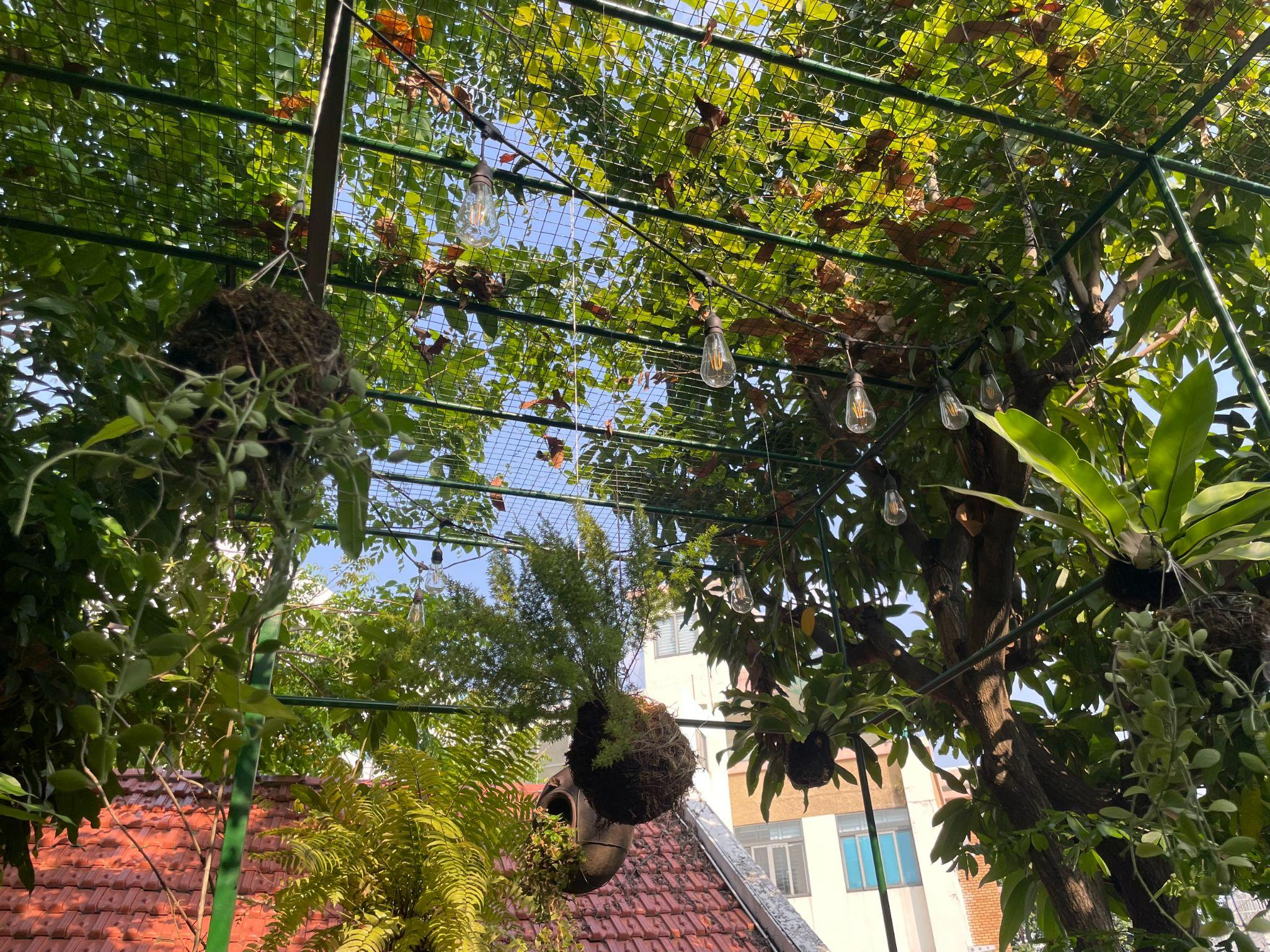
Healing Gardens and Green Roof areas at the Vo Thi Sau campus |
smART Hub Living Labs Website
https://iscm.ueh.edu.vn/smart-hub-living-labs/pages/package-2/index.html |
| 2 | Development of UEH Nexus Campus Nha Trang with green spaces and a sustainable campus environment | Integration of green-space development and native-plant conservation into the planning and construction of a new educational campus | In 2025, UEH broke ground on UEH Nexus Campus, aiming to develop a teaching and research facility aligned with the natural conditions and distinctive characteristics of Khanh Hoa Province. According to the published design, the campus buildings are connected by hanging gardens, expanding planting areas, improving the microclimate, and increasing the presence of vegetation throughout the campus. During the groundbreaking activities, UEH also organized the planting of 300 trees to reinforce its commitment to green development.
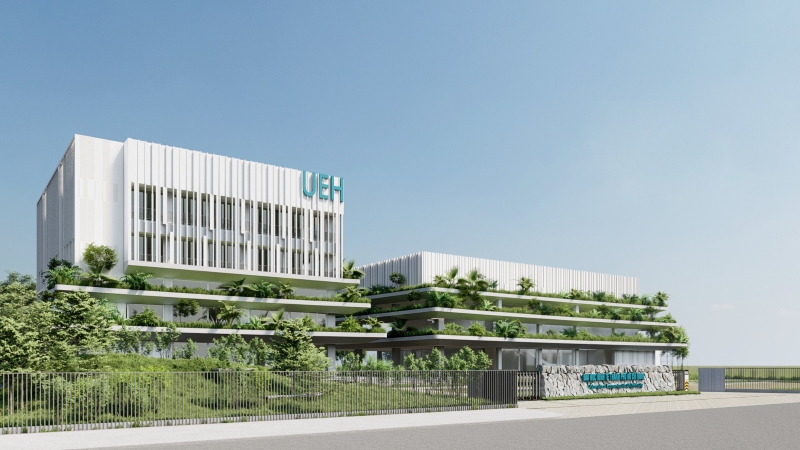
Overall rendering of UEH Nexus Campus, featuring hanging gardens to expand the area devoted to vegetation 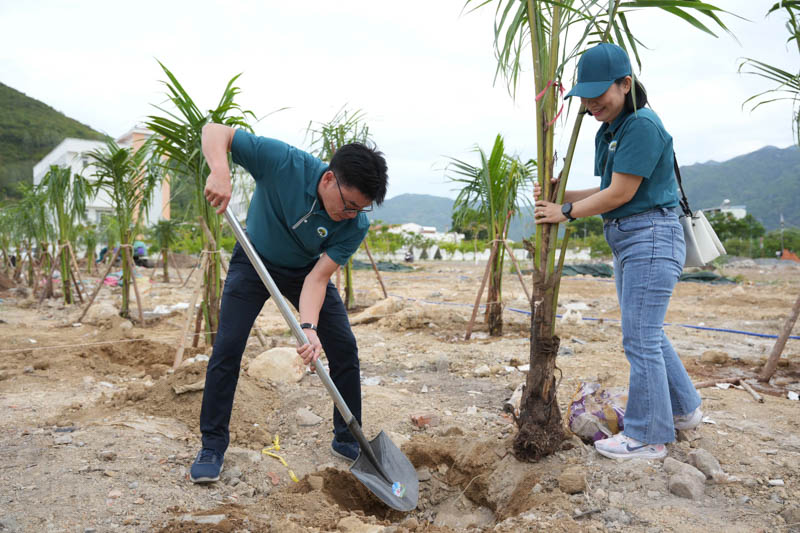
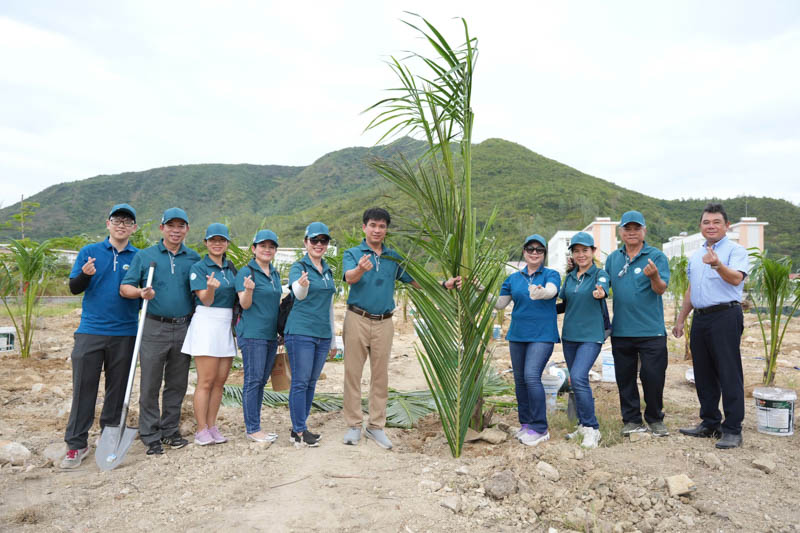
UEH faculty and staff planted more than 300 trees at UEH Nexus Campus in Khanh Hoa. |
UEH Portal, ‘Community and Environmental Activities with UEH – Together We Share’, 24 July 2025 |
| 3 | UEH Mekong Campus 2 – Integration of an interior green courtyard | Integration of green-space development into the planning and investment of a new educational campus | In 2025, UEH pursued the development of UEH Mekong Campus 2 as a green and sustainable campus. The proposed design includes an internal garden courtyard forming a green core, based on the concept of a ‘park within a university’. Incorporating garden space into the building layout shows that UEH considered natural landscapes from the design stage, with the aim of creating an open, environmentally friendly learning environment, developing green spaces, and making use of natural resources.
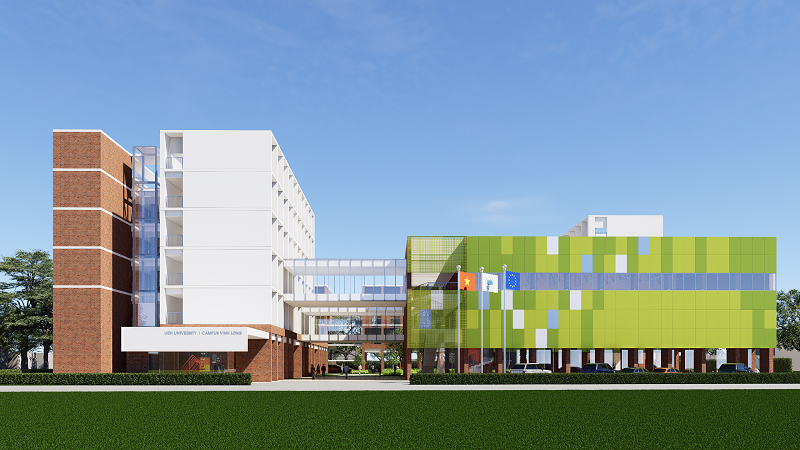
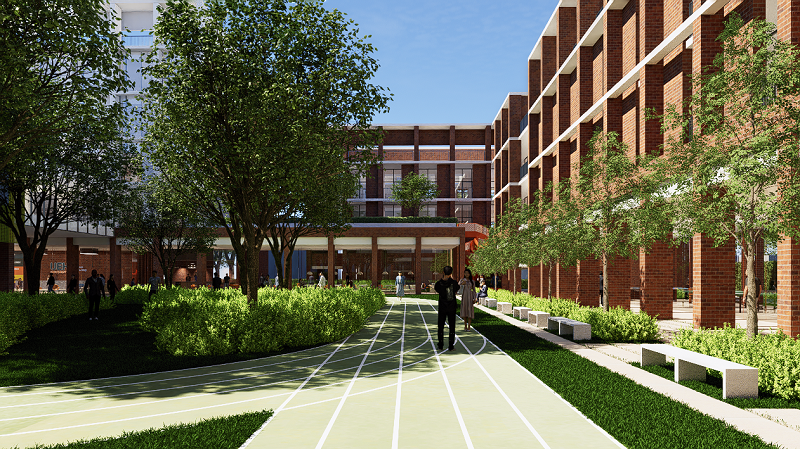
The UEH Mekong Campus 2 project was designed around the principles of ‘green – smart – sustainable’ development. |
UEH Portal, ‘UEH Mekong: From Brand Positioning to Modern Infrastructure for Sustainable Education’, 3 July 2025, https://www.ueh.edu.vn/cuoc-song-ueh/tin-tuc/ueh-mekong-tu-dinh-vi-thuong-hieu-den-ha-tang-hien-dai-cho-giao-duc-ben-vung-74402 |
| 4 | Fourth International Design Competition – Sustainable Economic and Cultural Development through Urban Landscape Connectivity in the Cai River Area, Khanh Hoa Province | International design competition; Proposed solutions for landscape restoration and sustainable land use | In 2025, the Institute of Smart City and Management (ISCM), UEH Nexus Campus, and the Khanh Hoa Provincial People’s Committee jointly organized a competition to identify solutions for sustainable development of the urban riverside landscape along the Cai River in Khanh Hoa Province. Several proposals focused on restoring wetlands and vegetation and adapting to riverside ecological conditions. In particular, ‘Nha Trang Elasticity’ and ‘Threshold – Design within the Pulse of Rising Water’ emphasized wetland restoration, native planting systems, and public spaces adaptable to rising water levels. These proposals promoted natural landscape conservation, riverside ecosystem restoration, and sustainable use of urban land.
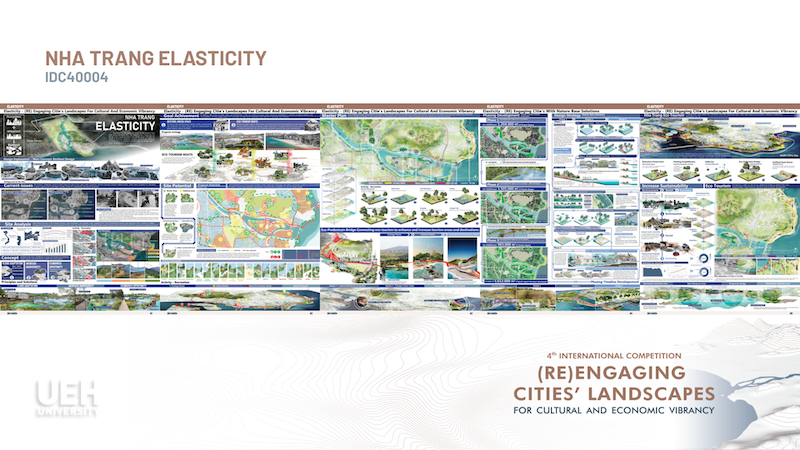
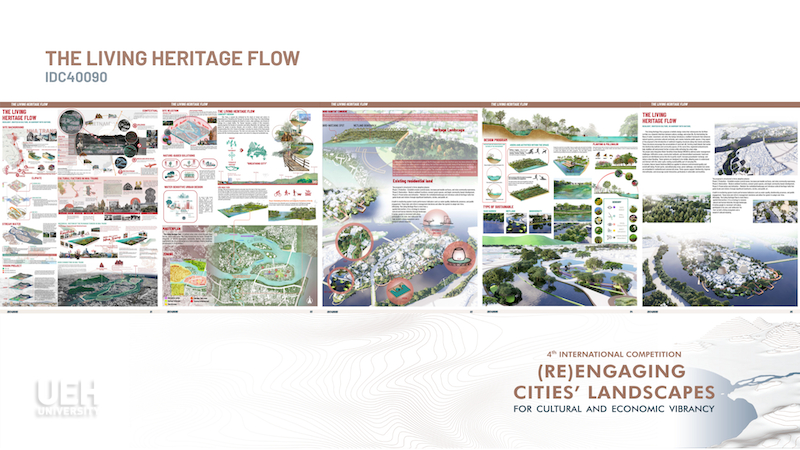
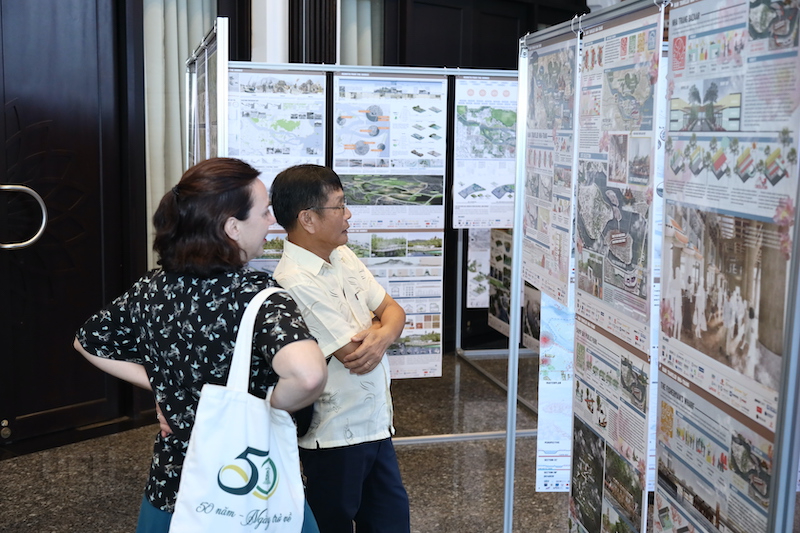
Exhibition of design solutions to enhance urban landscape connectivity in the Cai River area, Khanh Hoa Province |
UEH Portal, ‘Fourth International Design Competition Awards Ceremony: Bringing Together Expertise and Co-Creating Solutions for Urban Landscape Connectivity in the Cai River Area, Khanh Hoa Province’, 29 September 2025 |
3. Conclusion
Building on the 2024 approach to landscape planning and campus development associated with green spaces and biodiversity, UEH continued to integrate ecological considerations into research, design, renovation, and spatial development in 2025. A prominent example was the smART Hub Living Labs project at the Vo Thi Sau campus, which converted portions of concrete surfaces into planting areas for native vegetation, introduced rain gardens, and expanded vegetation on campus rooftops and walls. UEH also planned to incorporate hanging gardens into the design of the new UEH Nexus Campus, planted 300 trees during its groundbreaking phase, and further developed the internal green courtyard concept for UEH Mekong Campus 2.
These activities demonstrate a transition from landscape protection objectives toward integrating ecological solutions directly into planning, design, and development at UEH campuses and in local collaborative projects. They provide practical foundations for UEH to further integrate local biodiversity into spatial and facilities development, in alignment with indicator 15.3.3 and SDG 15.